Unknown's avatar

About Grace Lessageing

I am writer of novels, short stories, flash fiction, blogs. I lead a creative writing group. I am an Ex infant teacher, living in Christchurch, Dorset, UK. My brand new novel, The Conways at Earthsend was published on January 28th 2021 can be found on Amazon, Waterstones, Hive and Goodreads and is available in either paperback or e-book versions. You can also read The Year of Familiar Strangers, available as an e-book from Amazon. You can visit my website: janedeans.com or my author page on Facebook: https://www.facebook.com/Jane-Deans-Novellist-Short-Fiction-and-Blog-102757711838272 Happy reading!

Jez and Badger

This week you have an entire, brand new short story; a tale of two old mates meeting and reliving their past together…

              It’s almost midday in Benidorm, the sun approaching peak heat as two old friends share a bench on the prom. One pulls his T-shirt up and over his head.

              ‘Christ, man! You shouldn’t be exposing yourself like that! Think of the public!’

Badger chuckles, casting a rueful glance down at his pasty, bulbous belly. ‘Ah Jez, you’re not seriously expecting anyone to recognise us, are you? They’d hardly have known us then, let alone now.’

              His companion grins. ‘I wasn’t thinking of recognition-who is ever going to recognise a drummer and a base player? I’m just trying to save innocent holiday makers from unpleasant sights.’

              Jez is tanned, wiry. He pulls a tobacco pouch from a pocket of his leather waistcoat and begins to roll a cigarette. ‘Want one?’

Badger shoves his sunglasses up and rubs his eyes. ‘Gave up fifteen years ago. One less vice! Still have a couple though’

               ‘Let me guess’ ventures Jez, blowing out a plume of smoke, ‘Beer and women’.

              Out on the beach a group of scantily clad teenagers is arranged on towels, listening to hip-hop, exclaiming over their phone messages, snapping selfies.

Badger tugs at his once luxuriant pony tail and grunts. ‘Probably not women so much these days. So how does it feel to be back in blighty? Like you’ve never been away?’

              The base player sighs and flicks his cigarette end to the sand. ‘To be honest I’m thinking of giving up the bar, selling up and coming back, except I don’t know if we’ll get a buyer. Trade isn’t so good. Nobody’s heard of ‘Satan’s Spawn’ these days, let alone Jez Jarwood. People in Spain don’t have the money to spend boozing like they did. They’ll come in, buy one beer, nurse it for the whole of a sports fixture then go and drink at home.’ He coughs then begins pulling more tobacco from the pouch, yellowing fingers still string-hardened.  ‘Then me and Paulette haven’t been getting along that well since the profits dropped. How about you? Still enjoying marital bliss?’

              Badger’s face is turned up to the sun, his rounded belly glistening under it’s heat like a tight, sweating marrow. ‘We broke up. The lifestyle of a session musician doesn’t lend itself to family life. I see the kid sometimes-not as often as I should. Do you ever hear from her, from Jillie?’

              Jez has his elbows on his knees, squinting, smoking like he’s facing the firing squad. ‘No. You?’

              ‘No. I thought she might turn up though. First gig for twenty years.’

              ‘We don’t know if she’s even alive, Badge; or where she lives, or if she knows about the gig or cares! She might be married, have kids- grandkids, even!’

              Over on the sand two of the teenagers have returned from swimming and are chasing each other with handfuls of wet sand, screeching with laughter.

              ‘Did you-?’

              ‘No. Did you?’

              ‘No. I wanted to. We all wanted her, didn’t we? The other two.’

              ‘Yes. They did. Christ, it was messy, wasn’t it?’ He launches into a throaty coughing fit, bony shoulders shaking then he spits on to the sand between his boots.

              Badger sits up and begins to struggle into his T-shirt. ‘They were good times, Jez, back then; even the fights. I’d go back and do it all again, wouldn’t you?’

              Jez straightens up and flicks a few specks of ash from the faded denim covering his skinny knees. Who were they trying to fool with a ‘comeback’ gig? There was no trace, now of the taught body and blond curls he flaunted as a twenty something. Badger’s trademark white streak of hair amongst the black was lost in a mangy, grey comb-over. And Jillie, their brilliant, beautiful constant, their shared muse, she’d have aged, gathered weight, be mired in domestic life.

              ‘I don’t know, mate. We’ll see how tonight goes.’

              Jez takes his case from the boot as Badger heaves his bulk from behind the wheel of his battered Audi and lumbers, wheezing, around to make his farewells. He takes Jez’s yellowed fingers in his huge grasp and pumps. ‘It was a gas wasn’t it?’

              There is only a slight nod in answer and a small smile. ‘Come over, Badge when you get a break. Bring the boy! Constant sunshine and all the paella you can eat!’

Badger grins. ‘Yeah. I might do that. Keep in touch, brother. See you at the next gig!’

He watches as Jez trundles the battered case into the gloom of the arrivals hall, where he turns one last time and raises a hand before joining the queue, then he squeezes back behind the wheel, selects Iron Maiden’s ‘Run to the Hills’, turns up the volume and drives away.

Many thanks for visiting Anecdotage. Please stop by again!

Grace is the alter ego of novelist and short story writer, Jane Deans. To date I have two published novels to my name: The Conways at Earthsend [https://www.amazon.co.uk/Conways-at-Earthsend-Jane-Deans-ebook/dp/B08VNQT5YC/ref=sr_1_1?crid=2ZHXO7687MYXE&keywords=the+conways+at+earthsend&qid=1673350649&sprefix=the+conways+at+earthsend%2Caps%2C79&sr=8-1 and The Year of Familiar Strangers [https://www.amazon.co.uk/Year-Familiar-Strangers-Jane-Deans-ebook/dp/B00EWNXIFA/ref=sr_1_1?crid=2EQHJGCF8DSSL&keywords=The+year+of+familiar+strangers&qid=1673350789&sprefix=the+year+of+familiar+strangers%2Caps%2C82&sr=8-1 Visit my writer Facebook page [https://www.facebook.com/search/top?q=jane%20deans%2C%20novellist%2C%20short%20fiction%20and%20blog or my website: https://www.janedeans.com/

The Subway. [Episode 2]

This is the second and concluding part of the new, short fiction, The Subway, which began in last week’s post. Our narrator discovers something about her friendship with Cindy and about herself as the subway drama plays out.

‘I don’t have my phone’ I stammered. What an idiot I was! One or two of the bystanders trotted past me, back up the steps, phone in hand and I gazed after them, feeling like the last runner in a marathon to arrive at the finish line.

              The heroic coffee shop woman had the homeless person on their back now, covers off and she was pumping away on his chest as she knelt there amidst the grime and filth.

              ‘What can I do?’ I asked her and she told me to go and look out for the ambulance. The subway was becoming crowded now as more spectators gathered to watch the spectacle of fragile life hanging by a desperate, dangling thread. As I climbed back up, I could hear her scalding the rubber-neckers as she pumped away, telling them to keep out of the way.

              It seemed like a whole day of waiting, standing in the rain, straining for a sight or sound of the ambulance and it was a long time, too; but at last, the vehicle came careering around the roundabout, sirens wailing, pulled up and issued two paramedics. I led them down the steps and the hoard of onlookers parted like The Red Sea. The heroic coffee shop lady was still doing press ups on the man’s chest, which was astonishing given that the ambulance had taken so long. They did their stuff, the paramedics, checking the man over, giving him oxygen then manoeuvring him into a wheelchair before lifting the chair up the steps and into the ambulance. They closed the doors and one had a word with the woman who’d helped him. We watched the vehicle depart.

              ‘He’ll be alright, I think’ she said. The onlookers had dispersed and the rain was ebbing.

              ‘You were amazing,’ I told her.

              She laughed. ‘Tell you what- my coffee will be cold by now, so why don’t you come and join me in the café.’ I looked at her then. I hadn’t had a chance to before. She was about my age, I judged, but with grey hair and no make-up, not glamorous, just a pleasant smile. I was soaked and she had grubby stains on her jeans but I followed her back inside the café, which was now almost empty of customers, as most had been outside spectating. The café staff were kind enough to offer us towels to blot the worst of the wet from ourselves.

              We settled at a table and introduced ourselves. Greta, she was called. I asked her where she’d learned about first aid.

              ‘I used to work for the Red Cross before I retired,’ she said. ‘That was a while ago but every few years I get myself on a refresher course. It comes in handy sometimes. There’s nothing to prevent anyone from learning a few basic life-saving skills. You could do it, too, if you wanted.’

              I shook my head. ‘I’m hopeless in emergencies. I can organise things ahead of time but when I’m faced with a crisis, I’m no good at all.’

              She leaned across the table. ‘That’s not true, though, is it? You took control out there. You did what you could then went for help. It’s much more than most people would do. All those gawpers just stood there.’

              We talked. I discovered that she also lived alone and that she loved to visit new places, although sometimes found it difficult to find companions to travel with. We had a lot in common, Greta and I, including walking, theatre, cinema, cooking and literature. Before we left the café, we exchanged phone numbers and email addresses and made tentative arrangements to visit the cinema in the following week.

              My head was full of the mornings events and it was only as I turned into my street that I remembered Cindy. Not only was I now impossibly late but I was without biscuits. As there was no sign of her pink Fiat in the road, I had to assume she’d given up waiting and left. She’d be angry, I thought.

              I could hear my phone screeching as soon as I opened the front door and as I picked it up, I counted the text messages- eleven. Eleven! And five missed calls. I turned the phone off and went to change my clothes, then sat at my laptop and Googled ‘first aid courses’, of which there were several I could sign up for.

              Later in the evening I read a few of the messages, the first couple concerned then morphing through irritation and on to anger at being left waiting. When I rang her, she said she’d been worried about me, that I’d been in an accident. I explained everything but it was a mistake to mention Greta. She became very cold when I described our conversation over coffee.

              ‘You went for coffee with this…this stranger, when I was waiting outside your house?’

              ‘I’m sorry, Cindy. A lot happened. I just forgot.’

              ‘You forgot? What about our holiday planning?

              There was a pause while I thought of what to say. I felt calm, detached. ‘Cindy,’ I said. ‘I don’t think I’ll be coming on holiday now. I’ve just signed up to go on a first aid course. I won’t mind if you want to take someone else though.’

              There was a further pause. ‘Oh, don’t you worry,’ she spat. ‘I’ll be taking someone else for sure.’ And with that, she hung up.

              That was the last I saw of Cindy, except from afar when she was browsing the make-up counter in Boots and I was searching for crepe bandages. I went to see a film with Greta and we’ve been on a few walks since. Now we’re talking about doing a weekend in Devon with a walking group. I’ll take my first aid kit, of course- you never know what’s around the corner!

Many thanks for visiting and taking the time to read my fiction. For the next couple of weeks Anecdotage will feature more short stories, then will return to travel tales.

Grace is the alter ego of novelist and short story writer, Jane Deans. To date I have two published novels to my name: The Conways at Earthsend [https://www.amazon.co.uk/Conways-at-Earthsend-Jane-Deans-ebook/dp/B08VNQT5YC/ref=sr_1_1?crid=2ZHXO7687MYXE&keywords=the+conways+at+earthsend&qid=1673350649&sprefix=the+conways+at+earthsend%2Caps%2C79&sr=8-1 and The Year of Familiar Strangers [https://www.amazon.co.uk/Year-Familiar-Strangers-Jane-Deans-ebook/dp/B00EWNXIFA/ref=sr_1_1?crid=2EQHJGCF8DSSL&keywords=The+year+of+familiar+strangers&qid=1673350789&sprefix=the+year+of+familiar+strangers%2Caps%2C82&sr=8-1 Visit my writer Facebook page [https://www.facebook.com/search/top?q=jane%20deans%2C%20novellist%2C%20short%20fiction%20and%20blog or my website: https://www.janedeans.com/

The Subway. Episode 1.

So here begins a brand new, two part story in which the intricacies of female friendship are explored…

It would take eight minutes, I figured, to walk to the bank and return. I could be back in time for Cindy’s visit; even a short diversion to the shop for milk and a packet of biscuits wouldn’t add much more.

              Grabbing my purse and keys I stepped out into the overcast street and set off, brisk, mindful of the time.

              I walked fast, overtaking the stymied snake of traffic that choked the High Street most days and reaching the underpass just as the first, fat drops of rain began to spot the pavement. I descended the slope, feeling the usual frisson of tension at the mouth of the subway, an apprehension I fought each time I crossed under the busy road despite there being a steady flow of pedestrians in both directions.

              As I entered a thunderous deluge fell outside, a roar magnified by the dark echo inside the rounded tunnel and glancing behind me I glimpsed the flicker the lightning made while a rivulet formed to pool at the base of the slope. I had a fleeting vision of how my hair was going to look after it had been plastered to my scalp and my heart sank at what Cindy would say, given that she is inclined to criticise my hair care and indeed, all aspects of my appearance. Still, I pressed on.

              He was there, towards the end of the subway, about two thirds along, propped up and swaddled in a bulky sleeping bag. The homeless man; head slumped. There was no one else, no other pedestrians in the tunnel. They must all be sheltering in shops and doorways. I dropped my chin and walked, tormented by the usual questions. Should I look? Should I speak? Should I donate? Most days I’d stare straight ahead, fumble in my bag or look away at others but today there was no one, no solidarity in ignorance.

              I was almost level now. With nobody else to pass the buck to I paused to glance sideways, just a quick shifty to make sure he was alive. I wouldn’t want to pass by a corpse, or almost a corpse. That would make me heedless, callous. On the other hand, I didn’t have long. Cindy would be round soon, wanting her coffee. We needed to get together to plan our holiday which would require booking soon before the prices went up.

              His head hung over his chest but I could see enough face to note that the skin had an unhealthy, greyish pallor and a thin string of saliva hung from the corner of his mouth, dribbling on to a dark, spreading patch on the blue nylon of the sleeping bag. I stepped nearer and caught the dry, musty smell of him in the damp air of the tunnel.

              Normally he’s sitting in the bag, surrounded by empty styro-foam cups and dog-ends, gazing at passers-by and wishing them the time of day in the interests of his income. Normally he follows my progress through the tunnel with patient optimism and a murmured ‘Morning’. Normally his head is tilted upwards to engage pedestrians, eye-to-eye. It’s harder to ignore someone when they’re looking into your eyes.

              I looked both ways again in vain hopes of a passing Samaritan, only to see the stair-rod rain step up a level, a thunderous, roaring wall of rain. I bent slightly towards the inert body and cleared my throat. “Are you ok?” I croaked, unheard above the crashing rain. In a moment I realised that I would have to be the Samaritan and in a simultaneous recognition understood that I was ill-equipped for the task, having no medical experience or expertise and being an impractical nincompoop.  I experienced a hot flush as I remembered Cindy’s biscuits. There was nothing I could do about them now. I extended a tentative finger towards his forehead, which felt cold and clammy, like a newly caught mackerel from the fish counter. His eyelids were translucent and papery, trembling with each quick, shallow breath. When his lips parted to mumble an incoherent utterance, I jumped back as if stung.

              It had taken me a long time to get friendly with Cindy. I’d been a member of the singles club for more than five years when she joined. I was never after romance after Brian went, more that I needed to make new friends but I’d tended to be on the fringe of the group. I don’t have the gift of the gab-not like Brian had and like Cindy. As soon as she joined, she was the centre of the crowd like a bullseye in a darts board with everyone radiating around her. Then one club night they’d organised a board games session and I was sitting it out because Monopoly isn’t my thing and she came and sat with me, said she wasn’t keen either. We talked about what we did like and it turned out we both love holidays and sunny destinations but find it hard to travel alone. We’ve been away a few times since then. Cindy’s the gregarious type, starting up conversations with strangers, chatting up waiters. But she’s an air-head. She can’t get organised and she’s hopeless with money. I used to work in management so I’m used to dealing with money, timetables and plans, so I suppose we’re the perfect travel companions. I don’t mind that she’s so glamorous and a man magnet because I’d be hopeless on my own. But I often worry that she’ll meet someone, remarry and I’ll be back to how I was, back to being lonely.

              I took off my coat and draped it over the man the best I could, thinking perhaps he was cold. I don’t know a lot about first aid but it’s what people do in accidents, isn’t it? For shock or heart attack? Now I’d have to get to someone with a phone. I’d have to go out into the storm without a coat, find a stranger and accost them. Cindy would have no trouble with this but Cindy is not a mouse.

              I took the town side steps, reasoning it was more likely there’d be passers-by that side. I was soaked in seconds and once I gained the top, I scanned the precinct for someone. An individual rushed by, head down, ignoring my approach. Spotting a couple sheltering in the jeweller’s doorway I ran to them, gasping. They shook their heads, assuming, I imagine, that I was asking for money. I suppose by now I had the look of a vagrant myself with hair plastered to my face and clothes sticking to my skin. Desperate, I pushed open the door to the coffee shop next door and stood, dripping on the doormat.

              The entire clientele and all of the counter staff froze in a collective stare, which was mortifying in itself. I must have looked wild, as if I was about to draw a gun and shoot the lot of them where they sat hobnobbing over their cappuccinos and lattes and toasted tea cakes, but I took a deep breath and blurted, ‘Can someone ring for an ambulance? There’s a sick guy down in the subway!’ There was a short pause then a lone figure rose from the corner.

              ‘Show me’ was all she said. I led her to the steps and stood aside while she galloped down and was swallowed up by the tunnel. I began to follow, as did a number of café patrons, intrigued by the prospect of some pavement entertainment on a rainy afternoon. The café woman was kneeling over the recumbent man talking to him but with no response. She shouted. ‘Ring an ambulance. Do it now!’

Episode 2 of The Subway can be read in next week’s post. Thanks for visiting!

Grace is the alter ego of novelist and short story writer, Jane Deans. To date I have two published novels to my name: The Conways at Earthsend [https://www.amazon.co.uk/Conways-at-Earthsend-Jane-Deans-ebook/dp/B08VNQT5YC/ref=sr_1_1?crid=2ZHXO7687MYXE&keywords=the+conways+at+earthsend&qid=1673350649&sprefix=the+conways+at+earthsend%2Caps%2C79&sr=8-1 and The Year of Familiar Strangers [https://www.amazon.co.uk/Year-Familiar-Strangers-Jane-Deans-ebook/dp/B00EWNXIFA/ref=sr_1_1?crid=2EQHJGCF8DSSL&keywords=The+year+of+familiar+strangers&qid=1673350789&sprefix=the+year+of+familiar+strangers%2Caps%2C82&sr=8-1 Visit my writer Facebook page [https://www.facebook.com/search/top?q=jane%20deans%2C%20novellist%2C%20short%20fiction%20and%20blog or my website: https://www.janedeans.com/
Winter Water Wonderland

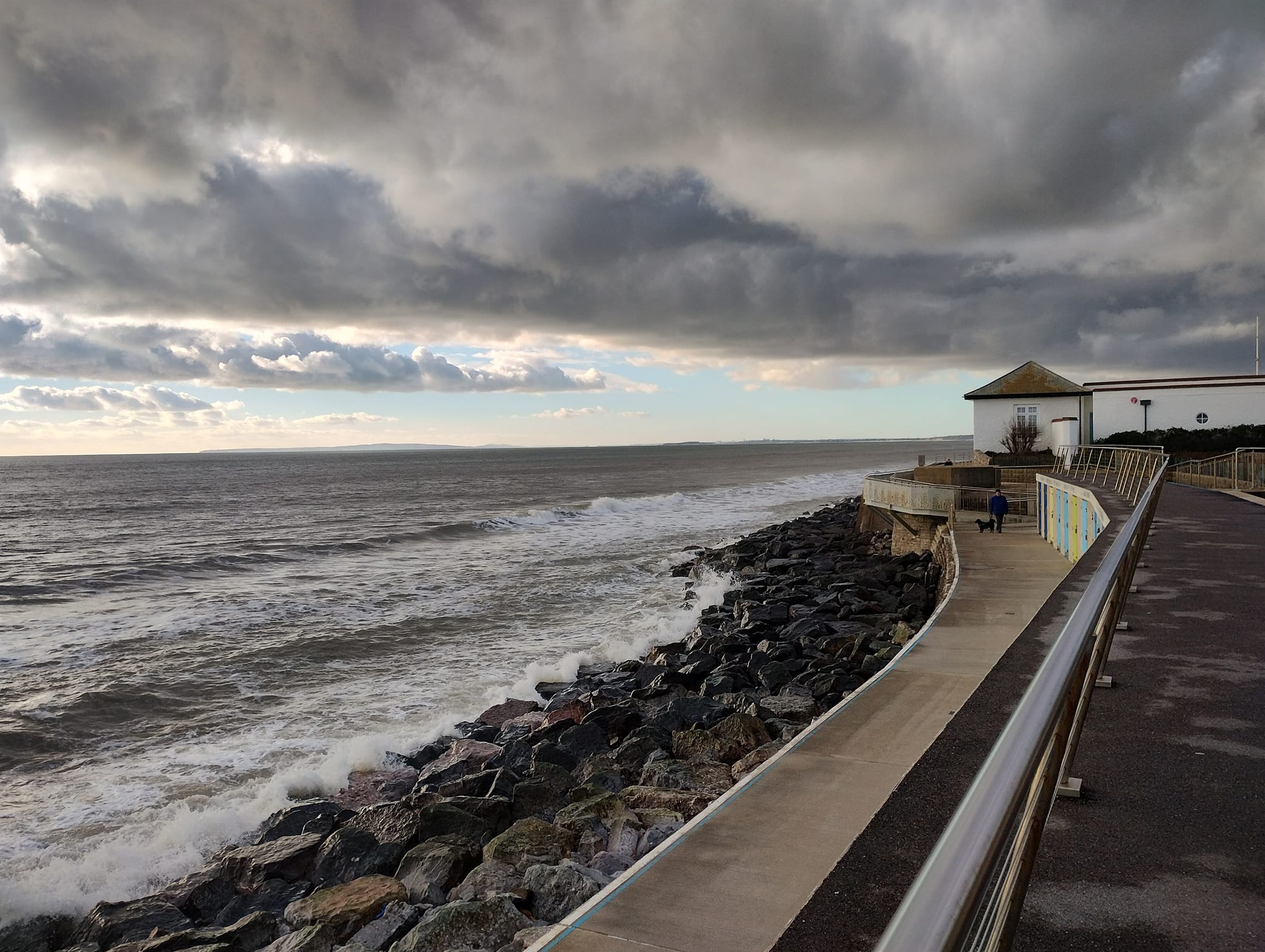
Here in the UK, January is a dismal month; to my mind, the most dreary month of the year. And this, 2023’s January is worst than most, because added to the woes of the relentless wet or freezing weather are sky-high fuel prices, rampant inflation, impossible grocery price hikes, frightening scenes in our health service and a whole raft of strikes driven by working peoples’ rightful indignation at their inadequate salaries. Oh, and on top of it all, brutal war rages in Europe, where Ukraine slogs it out with Russia on our behalf.

Outside the rear boundary of our house lies a footpath and beyond that, water meadows. They are aptly named, currently under water from the seasonal flooding. In the early days of our occupancy I was anxious over the proximity of the freshwater sea which seems perilously close, but after six years have grown used to our watery outlook during the winter, which is partially tidal due to our nearness to the estuary where the river ends its journey. The views were a useful stimulus for writing The Conways at Earthsend [see footnote].

To drag ourselves from the trough of gloom we’ve cast around for some cultural distractions, last week to a meal, an evening of Cream and Hendrix music, a night away and a British breakfast [an indulgence seldom taken]. In my late teens I was very familiar with Cream’s music, as I was with so many bands of the late 60s, so to hear classics like ‘White Room’, ‘Badge’ and the iconic version of ‘Crossroads’ played [in whatever fashion] was a transport to my youth- a tiny [and loud] morsel of escapism alongside the excellent braised beef and creme brulee of the meal.

On an occasional day when it hasn’t rained I’ve ventured into the garden to make some sense of the ravages of winter. We’ve also walked when the weather allowed, rewarding ourselves with scooting into cafes on the return.

I’ve reserved seats at our local, regional theatre to see a couple of things, including pantomime, to which I’m dragging Offspring and Grandoffspring and to a broadcast screening of the National Theatre’s offering of The Crucible.

And then, having dithered and procrastinated our way through the last few weeks we did, at last get around to seeking some winter sun and booking it [about which- more later].

It’s tempting during these winter months to climb under a thick blanket and hunker down with all manner of TV offerings [which, let’s face it are not universally of top quality] but while the occasional session of television is fine, catching up on anything worth watching, constant binging becomes mind-numbing.

Winter, then is a time for cultural visits and pursuits, of which there are more than in the summer, which is full of festivals. Hooray for the arts!

Grace is the alter ego of novelist and short story writer, Jane Deans. To date I have two published novels to my name: The Conways at Earthsend [https://www.amazon.co.uk/Conways-at-Earthsend-Jane-Deans-ebook/dp/B08VNQT5YC/ref=sr_1_1?crid=2ZHXO7687MYXE&keywords=the+conways+at+earthsend&qid=1673350649&sprefix=the+conways+at+earthsend%2Caps%2C79&sr=8-1 and The Year of Familiar Strangers [https://www.amazon.co.uk/Year-Familiar-Strangers-Jane-Deans-ebook/dp/B00EWNXIFA/ref=sr_1_1?crid=2EQHJGCF8DSSL&keywords=The+year+of+familiar+strangers&qid=1673350789&sprefix=the+year+of+familiar+strangers%2Caps%2C82&sr=8-1 Visit my writer Facebook page [https://www.facebook.com/search/top?q=jane%20deans%2C%20novellist%2C%20short%20fiction%20and%20blog or my website: https://www.janedeans.com/

The Emerald Cave [Episode 4]

In this, the concluding part of The Emerald Cave, Kate hears Emerald’s story and has a chance to put her side of the experience to her former friend. Will Kate find peace in the sharing of her trauma, and will her relationship Emerald be rekindled? Read on here to find out. We begin as the two have begun to converse. To read from the beginning of the story, check into previous posts…

She half shrugs. ‘We left the UK, Lincoln and I. We came here to France. We worked, mostly casual jobs like helping with the grape harvest. We…split up.’  She pauses. ‘Lincoln moved on. I stayed. I met Henri. We’ve lived here, in this village ever since. How about you, Kate? Are you married?’

She glances up, catches my expression of incredulity.

Me? How am I? I’m aware of my rapid breathing and knowing this is the prelude to a panic attack, I close my eyes and count the breaths in for a slow ten and out. After a minute I open my eyes and meet her gaze. She looks away. I snatch my chance.

‘My life was ruined, Emerald. It’s only through meeting my husband, David that I’ve been able to come to terms with my own, near-death experience and your drowning. I suppose you had it all planned out, did you? Befriending me, the hopeless, mousey loner, pretending to like me then luring me to that inaccessible place, drugging me and leaving me to fate?’ I lean forward and she recoils. Her eyes become moist. ‘Have you any idea at all,’ I ask her, ‘how terrified I was and how cold and desperate?’

She’s studying the table, tracing the wrought-iron pattern with a finger as she moves her head from side to side.

‘And the aftermath!’ I continue. ‘The circus of hospitalisation, police, journalists! My whole family spending weeks of creeping in and out of their own house; the curtains drawn day and night, the phone off the hook, the constant ringing on the doorbell! And you! You were swanning around France with your boyfriend having fun! Thanks, Emerald!’ I sit back. There’s silence.

‘It wasn’t like that.’ Her voice is low, almost a whisper. ‘My life then- maybe it looked fun and free. Maybe other girls envied me, I don’t know. But I wasn’t happy, Kate. I was alone, insecure. My Mum wasn’t there, ever in the house. She was with her boyfriend. At first it was just occasional nights, then weekends, then she moved in with him.’

‘Why didn’t you go, too, Emerald? Why did you stay in the house alone, if you were so unhappy?’

She shrugs; looks away. ‘Emerald?’ I persist. She stares at her lap.

‘He…’ she stops. Then I realise. She’d stayed in the house alone because the boyfriend she’d described as boring had been abusing her.

‘Did your Mum know? Why didn’t you tell her?’

‘I…couldn’t. Maybe she guessed; I don’t know. He threatened me. He said I’d never see her again if I told her. In any case she chose him instead of me, didn’t she, so I suppose she didn’t care much either way.’

I am aghast. ‘But after you disappeared, she was devastated. She was all over the news crying and telling her story.’

She nods. ‘She’s made money from it; selling her story to the tabloid press.’

We sit in silence while I try to digest what she’s told me. ‘How did you do it, Emerald? When did you start hatching your plan to escape?’

She sighs. ‘At the beginning, when we met up, I just saw you as a kind of ‘project’, I suppose. I liked the idea of befriending you. You seemed so lost and lonely. I told Lincoln I’d had enough and wanted to leave, to make a new start somewhere where my Mum and Geoff couldn’t find me, he came up with the idea of faking my death. Somehow, he thought of involving you, to make it more realistic.’

‘Is that where the drugs came from? From Lincoln? Was that the ‘occasional work’ you told me he did?’

She nods. ‘Yes.’

‘But you took them, too, Emerald! Why didn’t you pass out like I did?’

There’s a pause. She looks at me, her eyes wet with tears. ‘I didn’t Kate. I’m sorry. I just pretended to take them. But I knew the dose we gave you wouldn’t do you any harm.’

‘How? How did you know?’

She shakes her head, staring down at her lap; blows her nose on a tissue. Her voice is small, almost a whisper. ‘How did you get out, Kate? What happened?’

‘Do you care? Why?’

‘I’m an adult, now. I understand that what I did was shocking and criminal. But then I was a child and I was a victim, too.’

She’s right. ‘OK. Well, when I woke, I was terrified. I was cold and wet and thought you had drowned. It was dark. I couldn’t see a way to get out. All I could do was wait and wait. It was hours, Emerald, hours later that I heard a helicopter noise. I waded as far towards the entrance as I could and waved into their search lights. Then they dropped a line down with someone and hauled me up. I was in hospital for a couple of days but they said I was lucky. In the aftermath I became a recluse, refusing to go to school or anything else. My parents got me a home tutor. I started a university course but dropped out before the end of the first year. I drifted, living at home, doing dead end jobs. I started seeing a counsellor, David. He and I are married now.’

I sit back. I’m bone tired.

‘It didn’t last with Lincoln. He smuggled me out of the country. We did various jobs like fruit picking and we ended up here, doing odd jobs like helping with the grape harvest. He left. I stayed. I met Henri, the tour guide here and we got together. We live in the village and have three children.’

‘Does he know? Henri? Does he know about your past?’

‘Yes. I had no papers, Kate, so we could never get married and I can never go anywhere, either.’

I look around at the view of the vineyards and surrounding countryside. ‘There are worse places to be captive’ I say.

‘Yes, but I know I’ll have to confess at some point. I need to tell my children, for a start.’

              The gravel crunches as David approaches our table. He looks from me to her and back again, an enquiring expression on his face.

              ‘This is Emerald, David. Emerald, this is my husband, David.’

              She squints up at him. ‘Pleased to meet you,’ she says. He holds out his hand and shakes hers then pulls out a chair and sits.

              ‘I should get back to work,’ Emerald murmurs.

              ‘And we should go.’ David touches my arm, jerking me from the trance I feel I’ve been in.

I nod. ‘Yes, we won’t want to be cycling back too late.’ Emerald stands and holds a hand out to me. She doesn’t comment or ask where we’re staying. I take her hand. We don’t hug. We don’t arrange to meet up again. ‘Goodbye’ I say. She nods, turns and walks away. I look at David and he takes my hand as we wander back down and through the sleepy village, bathed in late afternoon sunshine.

              We unlock the bikes and set off along the lanes, the rhythmic peddling soothing, the sun -drenched vegetation exuding a relaxing, earthy smell. I’m barely aware that I’m cycling as my mind processes what I now know.

              Later I drift off to sleep in the barge’s cosy cabin and it’s a solid, dream-free slumber. When I wake it’s morning and I feel like a child waking on Christmas day, as though a weight has lifted from me.

              We breakfast out on the deck. I’ve told David everything now. He’s anointing his croissant with jam, then leans across the small bistro table. ‘I’ve been thinking. Shall we go somewhere different next year? Italy, maybe? What do you think?’ I smile back. ‘Italy sounds good! We’re not tied to here, are we? We’re free to go anywhere we like!’ And it’s true. I am free; freer than I’ve ever felt in my entire life.

Here we leave Kate to get on with her life. How was the story? Did you read from the beginning? Feedback , as always will be very much appreciated. Feel free to comment . Visitors to my blog, Anecdotage are extremely welcome!

Grace is the alter ego of novelist and short story writer, Jane Deans. To date I have two published novels to my name: The Conways at Earthsend [https://www.amazon.co.uk/Conways-at-Earthsend-Jane-Deans-ebook/dp/B08VNQT5YC/ref=sr_1_1?crid=2ZHXO7687MYXE&keywords=the+conways+at+earthsend&qid=1673350649&sprefix=the+conways+at+earthsend%2Caps%2C79&sr=8-1 and The Year of Familiar Strangers [https://www.amazon.co.uk/Year-Familiar-Strangers-Jane-Deans-ebook/dp/B00EWNXIFA/ref=sr_1_1?crid=2EQHJGCF8DSSL&keywords=The+year+of+familiar+strangers&qid=1673350789&sprefix=the+year+of+familiar+strangers%2Caps%2C82&sr=8-1 Visit my writer Facebook page [https://www.facebook.com/search/top?q=jane%20deans%2C%20novellist%2C%20short%20fiction%20and%20blog or my website: https://www.janedeans.com/

The Emerald Cave [Episode 3]

In Part 3 of the story Kate describes her experience of the events that day she spent with Emerald and discovers something astonishing as she looks round the Chateau gift shop…Parts 1 and 2 of The Emerald Cave can be found in the previous 2 posts.

The area of coast Emerald and I travelled to that day is renowned for its towering cliffs and rocky shores and many of the bays are fringed by huge rocks and cave complexes. As a family we’d spent many days on the beaches there but Emerald told me of a small cove we could walk to where few people went, because it was less accessible and had no facilities such as toilets and cafes.

‘We’ll have to pee in the sea or behind a rock!’ she suggested, which threw us into hysterics again.

It was a fair walk to her cove and hard work in the increasing heat but she was right, only a handful of people had bothered to clamber down the steep, rudimentary steps to the small, curving bay, which curved round between two protruding cliffs so that the beaches on either side were obscured. We went to one end, where banks of rocks piled up against the cliff and small cave entrances were visible. Here we were a fair distance away from any other bathers. We wriggled into swim gear and laid our towels down on the sand, then ran into the sea, shrieking. It felt good after the long, hot walk and we played about, splashing and somersaulting before lying on our backs and floating gently in the waves.

When we’d had enough, we ate some snacks and basked in the sun, until I could feel my skin burning. Emerald said we should get some shade and why didn’t we explore the caves? We clambered up the boulders and peered into one, but it was small and didn’t extend far back. Emerald led me further round towards the end of the cliff, stooping to climb over rocks and hauling herself up until she stood above me. I glanced below us. Here, the sea lapped up against the shore, slapping against the strewn boulders, the tide having come in quite a lot since our swim. Emerald was gesticulating and grinning, beckoning me to hurry up then she disappeared from view. I followed her path up the rocks to where a much larger cave entrance lay. After the glare of the sun, it was hard to see into the aperture, although I could hear her calling me from inside. I stumbled in. It was spacious and had a sandy floor littered with rocks and pebbles. She was perched on a boulder looking delighted.

‘It’s so cool!’

‘Cooler than out there’ I replied and she laughed. I sat down and she began delving in her bag, pulling out a bottle of water and a small package.

‘We can have a rest here in the shade before we trek back to the station,’ she said. ‘Here, catch!’ and the tossed one of two small envelopes across to me. I frowned at the envelope.

‘What is it?’

‘Have a look.’

I undid the flap and looked inside. There were two, tiny pink tablets in there. I frowned at her. ‘What are they?’

She laughed, tipping the contents of the other envelope into her hand. ‘They’re cool stuff that makes you feel great!’ Try them! She tipped her tablets into her mouth and swigged some water before tossing the bottle to me.

I’ve asked myself thousands of times why I took the drugs but there’s no answer to it. I loved Emerald and wanted to please her, wanted the fun, happy-go-lucky times she’d given me to continue, so I followed suit, swallowing down the tiny pills, then waited for something to happen. It wasn’t as if we hadn’t been told a hundred times about the perils drug-taking, lectures both at home and at school. It was as if none of it was now relevant. All that mattered was having a good time with my best friend.

At the end of our wine tasting session, David buys an over-priced bottle of red and we drift off, he with his camera to do some creative photography and I to the gift shop, in which a half a dozen people are browsing. We agree to meet in about half an hour at the café on the terrace. I take my time in the shop, even though there’s nothing I want. I’m looking through a stand of silk, hand painted scarves when the sound of a voice jerks me round. I look for the source. There are two women serving at the counter, one of whom is tall and willowy, grey-blond hair piled up in a wispy bun. She is wrapping up an item in gift paper. While she is older, she has a voice and a face I can never forget. It is Emerald. I stare. She finishes the wrapping, handing over the parcel and offering the card machine, bidding the customer ‘bon journee’.

I feel my heart pounding, a beat in my ears as I swallow, my throat suddenly dry. She tidies the counter, putting scissors away, chatting to her colleague and I know that any minute she will look up, look over and see me. Will she recognise me? Do I want her to?

It was dark when I woke in the cave, light only filtering in from an almost full moon. I was lying up on a flat ledge near the back. Sea water was slopping against my legs and almost all of the cave floor was submerged. I was disorientated, shivering with cold, dressed as I’d been before in only shorts and vest top. An empty water bottle floated back and forth with the waves but of my bag, towel and phone there was no sign. I sat up, looked around and discovered I was alone. My stomach lurched as I realised that Emerald must also have been asleep and must have been washed out to sea along with everything else. Waves of nausea swept over me and I retched over the ledge into the dark, foamy water.

I sat up and waited for the dizziness to pass before taking stock of my situation. Where was Emerald? Was she even alive? How could I raise an alarm? How long would it take for my parents to call someone and how would they know where to look for me? I was cold and wet. I bit my lip and folded my arms around my knees in a bid to limit the shivers. My only chance of alerting someone would be to try and get to the cave entrance and out past the water then shuffle round the rocks and back to the bay. I felt sick and faint and it seemed a mountainous, challenging task. I had no idea what the time was. The enormity of my problem overwhelmed me as I wept, crying for myself, for my one and only best friend.

I’m unable to take my eyes from the older, adult Emerald at the gift shop counter. She’s tidying up and talking to her colleague. When she’s done, she’ll look up and she’ll see me. She straightens and glances across the shop floor, stopping still at the sight of me. There is a moment when we’re both held in the gaze. The blood drains from her face as she grips the counter and I begin walking towards her. She says a few words to the other woman then comes out and around to the front where I’m standing.

‘Let’s go outside’ she says, leading me out through the hallway and around to the café. We sit at a wrought iron table. There’s a silence between us that has to break.

‘Tell me’ I say. She sighs, stares down at the table. Her face is made up, her nails immaculate. A pastel wisp of scarf is slung around her neck, the epitome of French elegance. She begins to talk.

‘You don’t know how glad I am that you are alright, Kate. You cannot imagine the guilt and worry I’ve suffered all these years.’

I’m at a loss for words. I’m alright? She has suffered? I clear my throat.

‘Tell me what happened.’

Check into next week’s Anecdotage to read Episode 4 of ‘The Emerald Cave’.

Grace is also known as the novelist, Jane Deans. She is the author of two novels. Eco thriller, The Conways at Earthsend is available from Amazon, Waterstones, Goodreads, W H Smith, Pegasus Publishing and many more sites. Mystery, The Year of Familiar Strangers is available to download from Amazon. Visit my website: janedeans.com or my author page on Facebook: (1) Jane Deans, Novelist, Short Fiction and Blog | Facebook.

The Emerald Cave [Episode 2]

In Episode 2 of The Emerald Cave, Kate reveals some more about how she became friends with Emerald and more on the subject of Emerald’s unorthodox existence. Episode 1 of the story can be found in the previous week’s post.

I sneaked a few glances at Emerald’s boyfriend, Lincoln, noticing he was good-looking in that boyband way, floppy brown hair and flawless skin. I wondered how old he was. Young men often look younger than their female peers. He was a driver, though so he had to be at least seventeen. I wanted to question her about him but was too timid to ask, especially as he was sitting opposite us.

I’d lost track of time but it was Emerald who asked me what time I should be home. I was going to be late and would have some explaining to do. Back in the car she wanted to know if I was doing anything on Saturday and would I like to go round to hers? I dithered again, feeling my cheeks burn, but said I’d like to, thinking I’d have persuading to do as well as apologising for lateness. I got Lincoln to stop at the end of our road in the small village where we live, so that I wouldn’t have to justify travel in an unreliable car with an unknown driver.

In the event, once I’d said I’d missed the bus and been chatting to a friend, my parents accepted the excuse and left it at that. My sister Sarah, however was more probing once we were alone and quizzed me about Emerald.

‘That new girl in your class? How come she is friendly with you, all of a sudden?’

I shrugged, not wanting to get into one of my sister’s superior sneering sessions. I left it until Friday to mention I was going into town to have a look round the shops next day. I don’t know why I felt the need to lie, but something told me my family wouldn’t approve of my visiting Emerald.

David has found somewhere for us to have lunch, a few miles away from the canal but through quiet, country lanes. It’s a small town but has one or two restaurants and a beautiful chateau where wine tours and tastings are available. I tell him we’d better not drink too much or we’ll be wobbling into the canal on our return and he replies that we’ve got all day and can even walk back if we need to.

Emerald’s home wasn’t what I expected. I met her at the salon where she worked, alone this time and we walked to her place, a meagre, terraced house in a large, modern development. There was a scruffy patch of paving leading up to a scuffed white door. She took out a key and unlocked it and I followed her into a cramped hallway half filled by a row of coat pegs bulging with assorted jackets. She led me to the end, into a tiny kitchen with two stools under a counter. It had a cold, empty smell like a disused canteen and I wondered if Emerald’s mum cooked much.

‘Take a seat’ she said and I perched on a counter stool while she made us mugs of hot chocolate in a microwave and sprinkled mini marshmallows on top. There was no sign of an adult in the house. We took our drinks up the narrow stairs to her box bedroom, which had a single bed with only the narrowest of gaps between it and the wall, a small desk and chair under the window and a hanging rail with assorted clothes. She put her mug on the desk and threw herself on to the bed and I did the same. Her walls were covered with posters, mostly music artists, some I knew and others I didn’t. On subsequent visits to her house, I began to think that, other than her bedroom, the house had an unlived-in look, the small, narrow living room spartan, with no books on the shelves, no photos or pictures, no cushions on the beige, faux-leather sofas, no ornament. Emerald had a small TV on a bracket in her room so I guessed she watched programmes there. I wondered if she felt lonely in the evenings or at weekends, but she seemed to have a lot of friends and there was Lincoln, of course and now, me.

‘Is your mum working today?’ I asked her.

‘Yep. She works in a care home. She’s on lates, so she won’t be back til about half ten. We can get pizza if you like?’

If my parents were worried or surprised that I’d gained a best friend, they didn’t express it, displaying little curiosity beyond ‘what does her father do?’; this from my father, who was stuck in some Victorian notion of husbands as providers. I’d explained that Emerald’s parents had separated, a situation my mother described as a ‘broken home’. As long as I was back by our curfew of nine o’clock and made sure they knew where I was, they were relaxed over my visiting my friend’s house. As much as they knew, Emerald and I were doing homework together under the supervision of her mother, not gallivanting about town, trying on makeup in Boots and spending hours in Hard Mock with various friends of hers, none of whom seemed to be school pupils. Sometimes Lincoln was around, often not. She was vague about what he did, saying he did ‘occasional’ work, whatever that meant.

At school I was now part of Emerald’s inner circle and as such my status became elevated and I was one of the gang. At home I was more vocal, entering into mealtime discussions and more prepared to stand up to my sister, Sarah. I had the feeling my mother was relieved as I overheard her telling my grandmother on the phone that I was ‘growing up at last’ and that I had a friend who was doing me good.

If anyone has done me good, it’s David. He’s made me stop worrying about events that are beyond my control and that what has occurred in the past need not blight someone for life. He’s taught me strategies that make me calm, like this cycling. We’re on the outskirts of the town he’s chosen for lunch. We lock the bikes up and stroll the streets on foot, perusing the menus of the cafes and bistros as we go. It’s a characterful, old town full of medieval, stone cottages, their gardens a riot of vines and flowers. We choose a restaurant by the bridge over the river, the tables placed across the road by the water.

I’d been friends with Emerald for a few weeks but had yet to meet her mum, who seemed to be working all hours. She also had a boyfriend whom Emerald tended to avoid, not for any sinister reason but due to his being ‘boring’. The Easter holiday came and went and I spent a fair bit of it hanging around with Emerald, when she wasn’t working in the salon. She’d offered to get me some hours there but I declined, knowing my parents would baulk at the idea. If I had spare time, it should be used for school work, they’d have said. Sarah, Jo and I had small allowances, for which we were expected to do chores around the house like ironing, hoovering and cleaning bathrooms.

The days became warmer and we swapped the café for going to the park, taking a rug and snacks and being joined by others. We larked about, often screeching with laughter, although I can’t recall over what now. When you’re fifteen the most trivial things can set you off giggling. I think what I loved most about Emerald was her ability to make me laugh; sometimes even remembering the laughter would set me off again afterwards, at home and I’d have to try and explain the joke to my perplexed family, never a success.

At the beginning of June, the weather became hot. One Friday, as we were in the lunch queue Emerald told me she was taking a Saturday off from the salon and did I fancy a day out? I nodded without hesitation. Where?

‘We could go to the seaside’ she suggested. ‘Take our swimming stuff.’

Our town was about an hour from the coast at the nearest point. ‘How will we get there?’ I asked her and she shrugged. ‘We can get a train, or Linc can take us.’

I told my mother the backpack with my towel and swimming costume I was taking was full of textbooks. After my initial misgivings about lying to my family I’d developed a strange indifference to fabricating the truth, as if it had developed with practice. I told myself it was kinder, that it would save them from worrying; a notion that now seems astonishing in the light of subsequent events.

We met at the station. I felt both jittery and excited to be having a day out. It was hot, the platform tarmac radiating warmth as we waited. We’d both brought snacks, my mother even providing a few food items ‘because Emerald’s mother is always feeding you’. I’d never told her that I hadn’t so much as met Emerald’s mother, who was always absent from the house whenever I visited, either working or with Geoff, the boring boyfriend, according to Emerald.

When the train pulled in, we fell into seats, giggling. Somehow, everything was funny, from the wheezing man in the ticket office to the elderly woman dragging a reluctant pug along the aisle. When a woman sitting behind us told her companion ‘I bought this coat last week. I thought it would see me out’ we both convulsed with silent mirth, hands over our mouths. So it was in a jovial mood that we stepped off the train into the bright, already searing sunlight of the small provincial station and walked in the direction of the beaches.

Once we’ve finished our lunch, David and I walk back across the bridge and up towards the chateau, a little way out of the town. There are vineyards either side of the lane, as far as the eye can see, except that the chateau itself protrudes from the rows of vines like a mountain rising from green, frothy waves. There’s a driveway and once we’re closer, a cute pedestrian bridge across a moat in which the rounded honey-coloured walls and turrets of the edifice are reflected. We enter through the elegant main gate and across a flagstone courtyard then in through heavy, wooden, open doors studded with black metal. To the right of the great hall is a ticket booth, to the left is a glass partition behind which is a gift shop, where I’m sure we’ll have to exit.

Soon we’re following our guide for the tour, Henri, along sumptuous corridors carpeted with a central red strip bordered by gold stripes and walls lined with statues and paintings. He tells us about the portraits, the previous inhabitants of the castle and entertains us with some stories. There is only one other couple for the tour today, a middle-aged German pair, happy for Henri to narrate in his near-perfect English. We follow him around the state rooms, ogling the elegant furniture, the long dining table, the chandeliers and the four posters, then we descend to the vast kitchen with its burnished copper cooking pots, its enormous fireplace and range. Finally, we descend down the stone steps to the cellars, a honeycomb of stone alcoves lined with dusty bottles and further still, tall racks of oak barrels. The smell is wonderful; a mix of smoky oak and ripe fruit. A small table is laid with a pristine white cloth and glistening wine glasses. Henri asks us about our preferences and goes to pluck a bottle or two from a rack.

Meanwhile we chat with the German couple who’ve been touring the south and are making their way back home, stopping where they fancy. We compare notes about this area and they recommend some more places to visit.

Read next week’s episode to find out what happened in the The Emerald Cave

Grace is also known as the novelist, Jane Deans. Her latest novel, The Conways at Earthsend is available from Amazon, Waterstones, Goodreads, W H Smith, Pegasus Publishing and many more sites. Visit my website: janedeans.com or my author page on Facebook: (1) Jane Deans, Novelist, Short Fiction and Blog | Facebook

The Emerald Cave [Episode 1]

The next month’s posts will feature brand new fiction, beginning today with Part 1 of ‘The Emerald Cave, a psychological drama. In Part 1, Kate begins to look back at an event from her teens that caused her mental illness…

There was a period years ago when I lost my memory. At the time it was said by the counsellor to be caused by the trauma. I suppose these days you’d call it PTSD. I’ve always worried that I’d suffer more bouts of memory loss as I got older, but since adulthood it hasn’t happened; in fact, I feel I can recall more and more of the events of my childhood and teenage years as I age.

                While I wasn’t bullied at school, it’s safe to say I was ignored. Why? I was a quiet, nondescript child. I was neither beautiful nor ugly. I had no stand-out features. Back then I’d have been described as ‘mousy’, my father even calling me ‘Mouse’, thinking it a term of endearment. I was the middle child of three girls; my elder sister, Sarah being the one of whom great academic things were expected, my younger sister, Jo, the vivacious, pretty all-rounder, loved by everyone.

 I attracted no attention either way from my peers at our all-girls grammar school, ticking along with average results, the teachers barely acknowledging my existence, so when Emerald Blackman began engaging with me and involving me in her life, nobody was more surprised than I was.

Emerald. She joined my class when I was fourteen, making a swift and dynamic impact, imbuing every girl with a desire to be her friend, to belong to her circle. It was not only that she was beautiful, blond and blue-eyed with clear skin and a svelte, athletic body but that she exuded such confidence, even the teaching staff were in awe of her. We learned that she’d moved to the area with her mother following the split of her parents, a situation that in itself seemed glamorous and exciting to those of us who lived in humdrum, nuclear families with two parents. She also appeared to enjoy a remarkable level of freedom for a fifteen-year-old, by all accounts and was already working at a Saturday job, sweeping up and making tea in a salon and earning enough to get out and about at weekends.

At some point during the first term, she acquired a boyfriend, further elevating her status in our eyes. The fact that the boyfriend had a car thrilled everyone to fever pitch, inducing most of us to press our eyes to the window each afternoon at the end of the school day, when the young man’s battered, black, souped-up Ford Fiesta swerved up the school driveway and squealed to a halt beside our exit. There would be a pause. Emerald, lingering in the cloakroom, didn’t dash outside and leap into the passenger seat, preferring to raise a languid arm and pull a brush through her long, blond hair, releasing it from the confines of its regulation tied back style. Then she’d sigh, pack a few things into her bag and dawdle to the exit, looking everywhere except at the boyfriend as she opened the car door; a masterclass in cool. Once the car had swooshed away down the drive, we’d sigh and begin our own plodding walks to bus stops.

I’m daydreaming all this as my feet turn the bike pedals and we follow the easy, shaded tow path along the Canal du Midi, a trail we’ve taken on many occasions during our forays into the South of France. I got lucky with David, meeting him in my late twenties and marrying at thirty-two, later than most did, then. We were old enough to understand that sharing common interests and backgrounds was as good a basis as any for a strong marriage. A few weeks after we met, when I was comfortable enough to confide in him, I told him what happened with Emerald when I was fourteen, a story I’d never been able to tell anyone else outside of the family, a story that still dogs my dreams, entering my consciousness uninvited. I asked David, a clinical psychologist, if he thought the effects of that time had shaped me and he said he couldn’t say, since he hadn’t known me before then, but that our teens are an impressionable age and it’s likely that some aspects of my character may have been enhanced or suppressed by it. But I was never a socialite, never gregarious or popular, never one for small talk or banter. I’m an introvert, a trait that has continued into adulthood. For that brief, early period of my life though, my standing amongst my peers became elevated as a result of my friendship with Emerald Blackman, as if I’d inhaled some of the magic that surrounded her and been transformed into a teenage socialite.

We take most of our holidays in France, David and I. We find a gite, one that is near to centres of historic interest or natural beauty. We like to explore by bike or on foot. This time we’re staying in a Dutch barge on the canal between the coast and Narbonne, from where we can cycle down to Gruissan at the coast, or up as far as medieval Carcassonne and beyond. We might pick up groceries and cook in the barge’s galley kitchen or we might find a brasserie and eat there. The barge has a comfortable deck area where I like to read, or often to sit with a glass of wine and watch the water drift past carrying ducks, driftwood or weed. The canal is flanked by a row of plane trees along each side, their canopy of leaves casting a soothing green glow on to the water, glints of sunshine filtering through as the breeze blows.

It’s a therapeutic space to sit and process painful life events. I may be much older now but I still need to replay the scenes that led up to what happened with Emerald and how it played out in the immediate aftermath. My problem is not knowing. I will never know what happened to her, or to me, in the cave; the cave I’ve come to think of as ‘The Emerald Cave’.

I’d been waiting at the bus stop for half an hour when the noisy, smoky Fiesta pulled up and she wound the window down. I’d mislaid a text book in our form room and had missed the school special as a result. At first, I didn’t register that it was her, that she was calling to me. I remember looking round at the other people waiting, thinking she must know one of them. She opened the window and beckoned me over.

‘Need a lift?’

I couldn’t recall that she’d ever spoken a single word to me before. I walked across to the window and leaned down, conscious of the lank strands of hair that had escaped from my inexpert pony tail and the crop of spots that had sprung up on my chin the day before in preparation for my period. She put a hand out and pulled the lapel on my blazer so that my face was inches from hers. I felt my cheeks burn and knew the boyfriend was looking my way as he revved the engine, making noxious, grey smoke billow around the bus stop.

‘I’m not…I don’t…’ I spluttered in a pathetic squeak.

‘Come on, Kate. We’re going for a quick coffee. Hop in the back. We’ll take you home after!’ She beamed at me, continuing to pull on my lapel.

‘I don’t have any cash on me’, I managed to blurt.

‘Oh, don’t worry about that! Lincoln’ll get them, won’t you, Linc?’ She relinquished the blazer and grinned at the lad beside her, who rolled his eyes.

I cast a sheepish glance over my shoulder at the waiting passengers before grasping the rear door handle and sliding in, pulling my backpack in next to me. The car smelt of stale cigarettes and there were discarded cans, crisp packets and polystyrene cartons strewn around the floor. Just as I was wondering how late I’d be getting home Emerald turned to me.

‘Are your folks cool with what time you get home?’

‘Um…not really, I mean I don’t know.’ I looked out of the window.

‘You could call them.’

There was a pause while the car, driven by a silent Lincoln, swerved round a corner and into Tesco car park.

‘I don’t, um…I don’t have my phone.’

We three girls had phones, the cheapest, most basic pay-as-you-go’ type that could be bought, for what my mother called ‘safety’ purposes, although we were not allowed to take them to school and were only to use them for ‘emergencies’. What type of emergency there could be she’d never elaborated, but we rarely did anything independently, which was what I was doing now.

Emerald did not scoff or laugh or make a scornful remark. She tossed her phone at me.

‘Use mine.’

I knew my parents were not home yet. I called and left a message to say I’d missed the bus and would be a bit later than usual. Then we all got out and went to the coffee bar on the High Street.

There’s a small, canal-side café ahead of David and me. It’s bathed in sunshine, wrought-iron tables and chairs arranged outside and a blackboard of delicious-sounding snacks. It isn’t lunchtime yet but we feel we’ve cycled enough miles this morning to have earned a slice of tarte-au-citron and a café-au-lait. It’s a far cry from the fare on offer at the ‘Hard Mock’ café, a long, thin diner offering CDs, posters, T-shirts and rock band memorabilia, alongside coffee, toasted sandwiches and doughnuts. David locks up the bikes and I settle in the sunshine.

We slid into one of Hard Mock’s booths on a plastic-covered bench, Emerald squeezing in next to me, leaving Lincoln, who’d gone to the counter, to order our drinks- cappuccino for Emerald and flat white for me, to occupy the opposite seat. I’d taken a quick look at the price list and selected the cheapest Item I could find.

‘Fancy a doughnut?’ Emerald spoke into my ear to be heard over the top of the music which was playing at a high decibel level, heavy metal of some kind. I shook my head.

Lincoln brought the coffees to our table. ‘Thanks Babe’, Emerald cooed, pursing her lips. My mind flipped at the idea of one of my peers calling a boy ‘babe’. I nodded and muttered my own thanks. Lincoln continued to look at his phone while Emerald chatted with me, asking what music I liked, what I did outside school, did I get on with my sisters? I began to relax as she seemed so interested in me, making me laugh with tales of her own home life and sly digs at Lincoln, who did not appear to be listening.

‘I wish I had a sister’ she sighed. ‘It must be so cool to always have someone to hang out with.’

‘It’s not always like that,’ I told her, ‘We’re all different. My older sister doesn’t lower herself to fraternise with me and my younger sister has so many friends she doesn’t need me.’

Emerald threw an arm around my shoulders and pulled me close. ‘Well,’ she whispered, ‘you’ve got me, now.’

David is accustomed to my long silences, having known me for so many years. He’s pouring over a small map of our route for the day on his phone, searching for somewhere to explore this afternoon, somewhere we’ve not been before. He is not handsome, my husband, but he does have a calm, restful face, which is what attracted me to him after I began my weekly visits to his surgery. He inspired, and continues to inspire confidence in me, deftly foiling my panic attacks and cheering me with gentle humour.

Before he was my husband, David was my trauma counsellor. It wasn’t until I was in my twenties that I experienced the mental health crisis that led me to seek him out and he helped me to understand that I’d never fully processed what had happened in my teens.

Check in next week to read Episode 2 of ‘The Emerald Cave’…

Grace is also known as the novelist, Jane Deans. Her latest novel, The Conways at Earthsend is available from Amazon, Waterstones, Goodreads, W H Smith, Pegasus Publishing and many more sites. Visit my website: janedeans.com or my author page on Facebook: (1) Jane Deans, Novelist, Short Fiction and Blog | Facebook.

Starting Back

4 Revisions

After leaving Caunes Minervois in the far south of France, and an arty interlude, we set off north. And while we’ve journeyed up through France many, many times it’s still a pleasure to meander up through the country and experience the differing landscapes, the changing crops, the divers architecture. We’ve crossed the fantastic bridge at Millau on numerous occasions but it continues to inspire awe, even though this time there is work being done.

We opt for autoroutes for a good deal of the way on this occasion. We head up towards the Loire. We’re constrained, now by campsites that are still open this late in the season but there will be enough places to stay on the way home. It helps, too, if there are sites near to towns or villages where we can enjoy an evening, perhaps get a drink in a bar or a meal.

There’s a likely place across the bridge at Chateauneuf-sur-Loire. We think we’ve stayed at the site before but once we arrive and enter the long avenue that is their driveway we realise it isn’t the one we thought it was. This happens often- either we think we’ve stayed somewhere and haven’t, or we think it’s new to us and then remember we’ve been at the site before. This is a combination of memory loss and sheer number of sites visited!

We park on the long avenue/driveway and go to reception, where there is a lengthy wait while someone booking in enjoys a chat with the receptionist about where they’re from etc and the receptionist tells the someone how much she enjoys speaking in her fluent English. Once we get our turn in the small office, the young woman is determined to use her English once more, even though it is not so fluent and we’d have got on better in French. Still, we eventually book in and can choose where to go except not near the river, where it is decidedly soggy.

There is still enough sunshine to sit outside the van, although we’re accosted by an English couple from the VW van opposite who are keen to talk about their grandchildren and how they’ve had to go home and return in order not to fall foul of the 90/180 day rule. This rule is news to us, and when we check it transpires we’ve used 87 of our 90 days. Phew!

We wander across the bridge to the town, which is pleasant enough, with a tiny chateau and park. The shop windows are full of autumn displays. Nothing restaurant-related pops out, but a riverside bar has tables in the sun so it seems churlish not to take advantage for a beer in the sunshine.

Next day we’re unable to detect anything resembling a hosepipe for water filling and the waste emptying is coyly concealed. We make an exit and embark on the next hop- up to Falaise, which holds some pleasant surprises! The municipal site is beautiful, with excellent, modern services and a stunning view of the stand-out castle- William the Conqueror’s castle, no less! By the time we get up the hill to look at it there’s only about half an hour of visiting time left, so it’s not worth buying tickets, but the exterior is lovely and boasts great views of the surroundings.

It’s just as well we’re on our way home, since the van’s leisure batteries have now given up and there’s no point in hooking up as nothing seems to happen when we do. So we’re without electricity.

Then we’re off up to Caen-via a supermarket, of course, for a good stock-up. The trusty campsite at Ouistreham is open and, best of all, the lovely canal-side restaurant has a table available. Husband drops me off to rush in and do a booking. It’s all getting end-of-trip now and I’m experiencing my usual mix of regret and anticipation. What kind of state will the house be in? And the garden? We’re limping home with some van problems to sort out. There will be plenty to do!

Grace is also known as the novelist, Jane Deans. Her latest novel, The Conways at Earthsend is available from Amazon, Waterstones, Goodreads, W H Smith, Pegasus Publishing and many more sites. Visit my website: janedeans.com or my author page on Facebook: (1) Jane Deans, Novelist, Short Fiction and Blog | Facebook.

The Lost Van and the Art Village

Our Ferry from Corsica arrives back to Toulon, south on the French mainland. It’s early enough to still be dark and I’m feeling stretched from lack of sleep, having spent a wakeful night on a mattress I’ve dragged from the top bunk. But we stumble out and make our way out of the cabin decks and in the general direction of the car decks. But which one? We came up from our deck in a lift, but there is more than one. I definitely recall a large, shiny space when we exited the lift- but where is it?

We begin to search all exits, trying staircases, of which there are many, descending to car decks, lorry decks, dead ends. Which deck is ours? Which side? And which end? We squeeze between gigantic lorries, searching for our van. Outside in the half-light of dawn, vehicles are streaming out and off while we continue to do a frantic search for our campervan. We’re starting to despair as we go back upstairs to try again to find our lift area- then we spot a group of foot passengers in a waiting area which is…shiny, spacious and outside some lifts. At last! We push through the foot passengers and go down to the depths. And there is our van, in almost solitary splendour except for a few vehicles trapped behind it, their drivers waiting for us to arrive and a few extremely irritated ferry crew members. We’re sheepish as we drive off and I’m mouthing ‘sorry’, although it doesn’t feel entirely our fault.

We’ve to navigate Toulon in the half-light then off up the motorways. We’re heading towards home now, although France is big [by our terms] and we’ll be making a small diversion to see a friend and ex-colleague of Husband’s. Nick was an art teacher and is now a successful painter living in a small village in the Minervois area. This entire region is almost entirely given over to wine production, with a spot of tourism thrown in- as well as art, of course.

The village where Nick lives, Caunes Minervois, has a community of artists including potters as well as painters. We arrive mid-afternoon and search for the village’s handy campsite, which, as Nick has established for us, is open. The entrance isn’t obvious, although it’s by the sport complex, which is commonplace for a municipal site. There’s nobody manning reception but we’re directed, via a notice, to find a place and see someone later. The site is tiny but lovely, with a view of the cute village. It’s beautifully maintained and has everything we need- and all for 12 Euros per night!

Husband strides off up the village to see his friend while I get an hour or so of sleep. We wander up to Nick’s cottage later in the evening, strolling through the lanes. It’s hilly, narrow streets flanked by stone, terraced cottages. There’s a stone cross and a beautiful bell tower on the church. It’s all idyllic. Opposite Nick’s house, on the sloping lane, lives a potter, Lionel- examples of his ceramics adorning his front yard.

The inside of Nick’s house is as quaint and cute as everywhere else, with small rooms leading on to a courtyard partly covered by a vine. The rooms are filled with his art works, large canvases, swirling and vigorous. Across the courtyard is his huge studio, rustic and criss-crossed with beams. It’s warm enough to sit in the courtyard to eat.

It’s late when we walk back through the village to the campsite. Nick has warned us that the streetlights will be off and indeed, it is dark, but there’s enough light to see to walk and there’s something lovely about the ancient village, silent in the dark.

In the morning Nick comes to us for coffee and we ask to buy a painting, making a quick second visit to the studio to choose. It’s tricky! Nick’s work is shown in many, prestigious exhibitions, including the Saatchi Gallery and Brazilian locations. https://www.saatchiart.com/account/profile/938067 But we reach an agreement and he wraps it carefully for us to take away.

I feel reluctant to leave but we must make progress north now that Autumn has taken firm hold so we bid Nick ‘au revoir’ and we’re off again…

You can visit Nick’s Facebook page here: https://www.facebook.com/search/top?q=nick%20rands

Grace is also known as the novelist, Jane Deans. Her new novel, The Conways at Earthsend is available from Amazon, Waterstones, Goodreads, W H Smith, Pegasus Publishing and many more sites. Visit my website: janedeans.com or my author page on Facebook: (1) Jane Deans, Novelist, Short Fiction and Blog | Facebook.