Unknown's avatar

About Grace Lessageing

I am writer of novels, short stories, flash fiction, blogs. I lead a creative writing group. I am an Ex infant teacher, living in Christchurch, Dorset, UK. My brand new novel, The Conways at Earthsend was published on January 28th 2021 can be found on Amazon, Waterstones, Hive and Goodreads and is available in either paperback or e-book versions. You can also read The Year of Familiar Strangers, available as an e-book from Amazon. You can visit my website: janedeans.com or my author page on Facebook: https://www.facebook.com/Jane-Deans-Novellist-Short-Fiction-and-Blog-102757711838272 Happy reading!

New Year Fiction: Extract. The Year of Familiar Strangers

16.             Spain. August 1990.

To round up this month of fiction, I’m finishing with a chapter of my novel, ‘The Year of Familiar Strangers’ [available to read here:https://www.amazon.co.uk/Year-Familiar-Strangers-Jane-Deans-ebook/dp/B00EWNXIFA/ref=sr_1_1?crid=9CMNW442QEAC&keywords=the+year+of+familiar+strangers&qid=1642020119&sprefix=the+year+of+familiar+strangers%2Caps%2C117&sr=8-1] Helen’s husband, Robert disappears as they are about to embark on the return ferry from Spain after their holiday. In this chapter Helen and Lydia try to ascertain his whereabouts and work out what they should do…

Spain. August 1990           

The world appeared to drop away in a swooning, sickening drag as Helen stood motionless beside the abandoned car staring at the space in the open boot. She shouted to Lydia.

“He must be ill. He must be in the toilets or something. We have to find him!”

“He’s taken his bag, though. Why would he take his bag to the loo?”

Helen slammed the boot closed, went to pull the keys from the ignition and closed the door.

“Come on. We’ve got to find him.”

They ran back across to the building. Lydia pulled at her sleeve.

“We can’t just walk into the men’s loo. We’ll have to ask someone.”

A couple were standing beside a tall table drinking machine-bought coffees from plastic cups. Helen imposed a calm, rational expression on to her panicky face before addressing the man.

“Senor…”

He broke in. “It’s ok, we’re English.”

She began again. “I’m so sorry to interrupt you,” she glanced at the woman then back to the man. “It’s just that my husband left the car to visit the toilet some time ago and hasn’t come back yet. I wonder…I mean would you mind very much checking to see if he’s in there and if he’s alright?”

He put his cup on the table. “Of course I’ll look.” The woman had adopted a sympathetic smile.

“I expect he’s gone to stretch his legs. Have you had a long drive, dear?” She was a little older than Helen, who thought she would not be able to tolerate the woman’s well-meaning, motherly platitudes and could only give a weak nod. Robert had not gone to ‘stretch his legs’ taking his suitcase along. The husband emerged from the gents.

“No one in there. I looked in the cubicles just to make sure, but it’s empty.”

“Well, thanks anyway.” She grabbed Lydia’s arm and propelled her away and out of the building to stand in the bright sunlight, where more vehicles had joined the lines of waiting cars and caravans.

“We’ll have to talk to an official. Let’s go to the ticket office and find someone in charge. They can do a proper search of the terminal buildings.”

“Wait, Mum!” ‘Mum’ was a term she seldom used. “Dad’s taken his case. He won’t still be here, will he? He’s gone off somewhere. We don’t know where or why. What can the officials do about it?”

“I know! I know he has his case!” Helen snapped at her and saw her flinch at the unaccustomed rebuke. “But he must be ill, surely. His mind must be unbalanced, or he’s had a lapse of memory. We have to find him. What else can we do?”

            They were escorted into an office and invited to sit in front of a desk. A bearded man in a blue, short-sleeved shirt appeared a few minutes later, greeted them and sat down behind the desk.

“Senora…?”

“Thurrock, Mrs Thurrock.”

“You have a problem, Senora?”

            Behind him on the wall a clock in the shape of a ship’s tiller ticked away. Helen glanced at Lydia and was rewarded by an expression of consternation before looking across at the ticket office manager.

“Yes. It’s my husband, Robert; Robert Thurrock.” She paused, expecting that he might need to write it down, but he sat immobile, waiting for her to continue.

“He has disappeared. He was in the car, in the queue for the ferry. My daughter and I came into the passenger building and when we came out he was not there.”

He shrugged. “Senora, your husband has gone, perhaps to the toilets or he has seen an acquaintance, or to walk.”

Feeling that she wanted to shake, or to slap him, Helen narrowed her eyes and was aware of Lydia watching her, fearfully.

“Senor, my husband has taken his luggage from the car.” She chewed her lip, looking down at her hands twisted together in her lap then met his concentrated gaze. He leaned his elbows on the desk, steepling his fingers together. The clock’s ticking filled the ensuing moments like a dripping tap. At last he spoke again, matter of fact but not unkind.

“Senor Thurrock must have an appointment; somewhere he has to go. Perhaps he forgot to say to you, or you have not understood? If he takes the luggage then he needs it for his appointment, no?”

“We cannot leave without my husband.”

The clock’s ticking seemed louder, insistent. The bearded manager sat back in his chair.

“Senora, if you do not depart on the next ship your ticket will be lost. You will have to reserve a new departure. What can we do? It will be best, I think, if you embark with the next sailing. Your husband can follow when he returns.” He stood and held out his hand. The interview was over.

            They returned to the waiting line of vehicles which extended to three new lanes now, as the shadows began to lengthen. A woman got out of the car in front of theirs. Lydia nudged her mother.

“It’s her; from the passenger lounge.”

The coffee-drinking couple were in the adjacent car and had spotted them. The woman came round.

“Any luck, dear?” They uttered a simultaneous ‘yes’ and ‘no’.

“He went to get a shower,” said Helen. “He’ll be back in a bit.” Lydia turned on her as they got into the car. “They’ll see he isn’t with us when we drive on to the ferry!”

“What does it matter? I don’t care about them. What are we going to do?” She got into the passenger seat as if Robert would be occupying the driver’s place. Lydia came around and opened the door to sit next to her, sitting at an angle where she could see her mother’s face.

“We have to go. We have to get on the ferry when it loads. We can’t do anything else.”

“There’s still more than three hours left. Let’s walk. I’ll go crazy if I have to stay in this car and wait!”

Across the road from the queuing lanes there was a formal park laid out with palm trees and a network of paths punctuated by wooden benches in the shade. They wandered into the park and sat on a bench; a cool, green space away from the desultory, tarmac, fume-laden ferry queue. Silent, they stared unseeing at the mottled shadows dancing on the path, each lost in respective thoughts. Helen chewed her lip, trying to decide what their course of action should be, but came to the same, desperate, hopeless conclusion every time. They would have to go without him.

“Supposing he’s ill…” She looked at Lydia, who shook her head.

“He isn’t ill, at least, not desperately ill like he needs hospitalisation. He can’t be because he was fine driving here, wasn’t he? Apart from the speeding and the risky overtaking, I mean.” She stood up. “I’m dying for a coke or something. Can we find a bar? There must be one around here.”

They exited the park to walk along a road next to the quayside where there were a number of seafood cafés with plastic tables out on the pavement, none of them much patronised although peering through the open doors into the gloom there were figures standing at the bar in each of them; sipping late afternoon brandies or small glasses of lager. Seeing them made Helen think that she, too, would very much like a brandy and she stopped at a small bar on a corner, leading the way to a table outside in a patch of sun. A waitress bustled out with menus.

“Just drinks please,” Helen told her. “A brandy for me and… a coke?” she asked Lydia. Her daughter pouted, leaning her arms on the table. “Better make it a brandy and coke.”

The fiery liquid trickled a burning trail down into her churning stomach, laying a protective coating over the raw, painful reality of the day’s events. She finished it and ordered another, her daughter eyeing her with a nervous glance.

“Do you want another one?”

Lydia shook her head. A semblance of rational thought took shape in Helen’s mind, in that nothing could be done until they got home, then telephone calls could be made and questions asked.

            The second brandy came. She sipped it, leaning back and closing her eyes; feeling the evening sun’s warmth, wondering how a sensation could feel pleasant under circumstances so dire.

“Alright,” she said, “We’ll have to go without him.”

            The queuing lanes were full of vehicles now. As they approached the car Helen began to realise with a tremor of nerves that she would have to drive Robert’s car up the ramp and on to the ship, a task that seemed impossible in her shredded, light-headed state. She rested her elbows on the BMW’s roof, her face dropping into her hands in a turmoil of frustration and anger. How could he do this? How could he disappear without explanation, leaving them alone at the quayside? Tears coursed down between her fingers and dripped on to the black roof of the car, creating streaky runnels in the dust. She felt a hand on her shoulder. “Oh, Mami!”

She turned to her daughter. “How am I going to get this thing on to the ferry?”

Lydia put her arms around her. “It’s OK. Don’t worry. I can do it. I’ll drive it on.” She walked round to the driver’s side and got in. “Give me the keys. It’s not as if I haven’t driven it before.”

Half an hour later the lines of cars began to move. The girl started the engine and followed the car in front, concentration frozen on her face in her rigid stare and the determined set of her lips. Helen remained silent while they moved along on their way to the ramp then began to inch up it; hoping they wouldn’t have to stop the BMW on the slope and have to use the handbrake. As they gained the top she let out a breath, not realising she’d been holding it in. They rolled on into the position the deck hand wanted before stopping as he held up his hand. Perfect. She turned to Lydia, who had now relaxed in a slump, allowing herself a small smile of triumph.

“God! That was brilliant! Well done, love!” She reached over to pat her on the back, receiving a delighted grin in return.

“Right, come on Mami, let’s get our bags out. We can go and find the cabins. Don’t forget to bring the tickets!”

Helen found she was moving like an automaton, acting on her daughter’s instructions in a bizarre role reversal, although she was grateful for the direction in her confused and brandy-soaked state.

“I want to go outside and look,” she said as they ascended the stairs to the passenger decks. “One more look along the quay, just in case he’s there. We’ll be able to see more from up on deck.”

Standing at the rail a breeze ruffled her hair and made her shiver. The last of the vehicles were crawling up the ramp like beetles and getting swallowed up by the mouth of the car deck; a stream of container lorries continuing to rumble their way into the hold. She scanned the whole of the quayside, emptying now of traffic; looked further to the road. Was he out there somewhere watching, waiting for the vessel to depart? Was he searching the ship for them as she searched the area around it for him? Or was he long gone into another journey to who knew where?

            An announcement over the tannoy about collecting cabin keys from the purser’s office prompted them to go inside, where they waited in line and picked up the two keys; a double and a single. They located the corridor, unlocked the door to the double, threw the bags then themselves onto the beds. Helen lay on her back and stared at the low ceiling.

“We may as well share this one. It will only be more miserable if we’re on our own.” Lydia swung her legs down and sat up.

“We might be able to get the money back for the single cabin. Shall we try?” Helen shook her head, eyes still on the ceiling.

“Let’s not. We have enough to deal with.”

“Well I’m going to get a shower then. You might feel a bit better, Mami, if you do the same.”

Helen looked across at the girl-woman who was taking charge. “Shower,” she agreed, “then the bar. I anticipate the need for another brandy, and you must eat!” She lay down, closing her eyes, seeing again the empty space in the car boot like a gaping chasm.

Grace is also known as the novelist, Jane Deans. Her new novel, The Conways at Earthsend is now out and available from Amazon, Waterstones, Goodreads, W H Smith, Pegasus Publishing and many more sites. Visit my website: janedeans.com or my author page on Facebook: (1) Jane Deans, Novellist, Short Fiction and Blog | Facebook.

New Year Fiction 2

Here’s another fiction short telling of two women meeting during a family Christmas gathering. As the saying goes- you can choose your friends but not your family…

Christmas with Julia

                I am standing in the kitchen, tea towel in hand. I am drying cutlery and have just plucked the newly sharpened, steel carving knife from the rack. I can feel the weight of it and its smooth, shiny blade beneath the cotton fabric of the tea towel.

“Julia,” I say.

She totters towards me on spindly heels, expression composed into beatific, engineered grin.

“Oh Eve, can we be friends now? Can we? You and me?”

                Her features have grown sharp and pointed from all the years of anorexic self deprivation and she has begun to pencil dark arches of eyebrows beneath the highlighted fringe of her expensive, West End bob, giving her an uncanny resemblance to the Wicked Witch of the West so that I expect, at any moment, she will cackle, wave her wand and change me into a frog.

“How about a smile? Come on! Give me a smile!”

                She leans nearer and I recoil, catching her hot, sour, wine-laden breath as she lurches forwards. I try to force my lips into the shape she demands.

“That’s not a real smile. It’s false. You are false. You are like my next door neighbour; false.”

                I don’t know the luckless neighbour; nevertheless I experience an empathetic warming towards them. I am still holding the heavy blade inside the towel. The insult sidles in to nestle amongst all the malicious comments Julia has dredged up and heaped upon me over the years. They roll through my thoughts now, like cine film. She is raising her arms, heralding the strong possibility that she may drape them around my neck in a repugnant embrace.

“Tell me what’s wrong. What’s stopping us from being friends?” She frowns, head on one side, her lips downturned in clown-like caricature.

                “This is not really the time or the place”, I tell her, as her arms drop to her sides. My fingers have settled comfortably around the handle of the knife, the blade continuing to rest in my left hand. She straightens, lifting her chin. “Yes it is! Tell me now! I want to know!” Her voice has risen, become a high pitched bark, threatening to summon the others from the Christmas table.

“Alright. If you must know, Julia, it’s because in all the years I’ve known you, you have never passed up an opportunity to make a spiteful remark.” I look down at the tea towel while I say this, sliding the cloth back and forth along the length of the implement as if it were a precious item of silver. When I raise my eyes to hers her thin lips are open in an outraged ‘O’ above the drop of her pointed chin and she splutters as a burst of laughter drifts through from the dining room.

                “You’re making that up. I’ve never said anything nasty to you. I always try to be friendly to everyone. You’re just a cow! A jealous cow!”

                I glance at her shiny, yellow, Jimmy Choo stilettos and her green Dior dress. Outside, her sleek, black Mercedes gloats over my second hand Nissan, sneering. I think of her ‘off-plan’, ‘Berkeley’, limited edition, cul-de-sac home, her time-share villa in Tenerife, the new Rolex watch my brother has just bought her and as I smile at how wrong she is she takes it for agreement, lifting her arms once more and moving in to encircle my neck, her face against mine. I try to draw back in her strangling grip but I am caught like a rabbit in the jaws of a trap, my hands and the towel-clad knife pillowed between us. I squirm, manoeuvring the bundle as I propel my lower legs back to create a space then take my left hand off and thrust the lethal blade up and forwards, where it enters in a swift, effortless slide through the flimsy fabric of the dress, encountering little resistance in the wasted flesh beneath her ribs. She grunts, stiffening, pulling back and away, her eyes stretched wide in surprise, a quick glance down at the knife’s sturdy handle protruding and a red stain spreading now on the shimmering silk across her abdomen. She sways for a brief moment, her mouth working to form words, her arms flailing.

                She grasps the worktop on her way to the floor, slithering down the cupboard door to leave a long, vivid, scarlet smear like spilt Claret and finally making contact with the tiles, the surprised expression frozen now, the skinny legs at unnatural angles, still punctuated by patent yellow caps.

                There is a clack-clacking of heels as she enters, startling me from a trance.

                “Eve!” she exclaims, “Penny for them!”

                “Oh Julia” I say, “I was just finishing off, and thinking about desert.”

                “None for me. I never touch it, but you love puddings, don’t you? Anyone can see that!” She pivots on the spiky, yellow heel, exiting with a satisfied smirk, leaving me to caress the carving knife like a secret lover.

Grace is also known as the novelist, Jane Deans. Her new novel, The Conways at Earthsend is now out and available from Amazon, Waterstones, Goodreads, W H Smith, Pegasus Publishing and many more sites. Visit my website: janedeans.com or my author page on Facebook: (1) Jane Deans, Novellist, Short Fiction and Blog | Facebook.

New Year Fiction

I’m starting 2022 with a complete short story, written entirely in dialogue. The character of Roger is based on someone I met long ago, when on a similar journey to Erica’s…

Blind Date

“Erica, is it?”

“Yes; Hello and you must be Roger.”

“That’s me! Roger the Dodger! Not really-just my bit of fun. What can I get you, Erica? Glass of champagne? You do like champagne, I hope?”

“Just a small glass of white, please. I do drink champagne but only on special occasions. Pinot Grigio is fine.”

“So what are you saying? This is not a special occasion, is that it?”

“Oh no, of course I didn’t mean…”

“Don’t worry love. I’m not offended. I’m only having a laugh. A glass of your best Pinot for the lady, my man, and I’ll have a single malt, no ice.

Did you find this place alright, Erica? Didn’t get lost?”

“No. I am familiar with the area. I have one or two friends who live around Fratton. That’s not far, is it?”

“No, but this side of the golf course is better; nicer properties. You can see my place from the first fairway. Did you notice my motor on your way in? Remember I said on the phone, look out for the Merc with the special plate-did you see it?”

“Yes. ‘RU55BIT’. Was that it?”

“That’s the one. Do you get it? RU-that’s me, Roger Urquart, then the 55-that’s meant to be two Fs. That spells RUFF. Then there is BIT. It says ‘Rough Bit’. It’s rather droll, don’t you think?

Well, Erica, what sort of things do you get up to? What ‘floats your boat’ as they say?”

“All the usual things, I suppose. I like to read, go to the theatre, see friends. I go for an occasional meal, go to the gym; but work takes up a lot of my time.”

“No special hobbies then? How’s the wine? OK?

Tell you what; I bet you’d like a spin in my little kite, wouldn’t you? It’s a thing that’s dear to my heart. She’s a Piper Cherokee, a little cracker! I don’t mean she’s got cracks in! I’m only joking! She flies like a dream. I take her over to Le Touquet some weekends. Do you like France? I can go over there for lunch and be back home for dinner. Do you like the sound of that?”

“It sounds…interesting.”

“Oh it is. It always goes down very well with the ladies. I don’t mean ‘goes down’ as in crashes! I’m jesting! You’ll soon get to know me. I’m a laugh-a-minute bloke.

Did you say you were divorced?”

“Yes, three years ago, but it is all quite amicable now and the children spend plenty of time with their father.”

“Ha! I’ve been married three times. That’s a triumph of optimism over bankruptcy, you might say! Especially now I’m young, free and single again. I get on alright with Mary, my first wife, but the other two; they’re a couple of scroungers. Gold diggers, I call them, the pair of them; always after something. If I had all the dosh I’ve spent on maintenance payments I’d be minted now. You know what Rod Stewart said? ‘I’m not getting married again, I’m just going to find a woman I don’t like and give her a house’-So true!”

“I wonder why he did get married then, if he didn’t like the woman.”

“Fancied the pants off her, I expect, if you’ll excuse the expression. Doesn’t last though, does it, Erica? ‘Once the thrill is gone’ and all that?

So have you done a lot of this Internet dating malarkey? Met many blokes yet?”

“No, you are only the third person I’ve met.”

“What was wrong with the other two then?”

“Nothing was wrong with them. They were perfectly pleasant people. There just wasn’t a connection, a spark. Perhaps I didn’t have much in common with either of them.”

“What do you reckon it is that gives you a spark? Give us a clue! If I can find out where the other two went wrong I’m in with a chance. What sort of men do you go for?”

“I like the people I meet to be well mannered, I enjoy stimulating conversation and of course a sense of humour is a very attractive quality, I think.”

“Phew! That’s lucky. I’m doing alright so far.

I must tell you, Erica that I’ve met quite a lot of ladies in this Internet game and you are by far the most attractive. In fact I’d say you are in a different league to all the other ones. For a start most are very economical with the truth where their age is concerned. Some of the ones who say they’re in their mid forties, they’re either lying or they’ve lived hard lives. Mid sixties would be nearer the mark. How’s the wine? Can I get you another?”

“I shouldn’t have another, thanks. I can’t be late or drink too much. I have an early meeting to get to in the morning.”

“Soft drink then or a coffee?”

“I won’t, thank you. I must be getting home.”

“What a shame! We should have met up at the weekend. We’d have had more time to get to know each other. Still, there’s always next time. When are you free? I’ll take you up in my little plane; show you my joystick! Boom boom!”

“It is a tempting offer, Roger, but I’m going to decline. If I have to be honest I don’t really think I’m your type. I wish you luck with your future Internet dating though, and thanks for the drink.”

“Ah well, you can’t win them all. I can’t say I’m not disappointed, but you know my number if you change your mind. It was lovely meeting you. Don’t forget your coat, love. Bye bye.

It’s your loss.”

Grace is also known as the novelist, Jane Deans. Her new novel, The Conways at Earthsend is now out and available from Amazon, Waterstones, Goodreads, W H Smith, Pegasus Publishing and many more sites. Visit my website: janedeans.com or my author page on Facebook: (1) Jane Deans, Novellist, Short Fiction and Blog | Facebook.

December Fiction 2

Today’s post sees the conclusion of a short story. You can read the first part in last week’s Anecdotage. Lena has a puzzling encounter, Imogen learns some home truths from a surprising source and Richard astonishes his wife with some revelations she does not expect.

A Neighbourly Manner [Part 2]

We saw nothing of our new neighbours in the ensuing two weeks, but before we’d left that afternoon I’d elicited permission from Jackson to walk our dog, Molly, in the grounds of the manor and for Richard and me to continue to walk across them as a short cut to the pub.

‘Do as you like, my dear!’ he’d roared, throwing a gangly arm around my shoulders, ‘It’s Liberty Hall!’

And so it was the next weekend, while walking with Molly down the driveway, pausing to admire the view of the house with infinite swathes of daffodils surrounding it that I spotted a figure striding along ahead of me, dressed in a voluminous raincoat, wellington boots and a sou’wester hat; a vigorous, purposeful gait, head erect, hands in pockets.

‘Not Jackson Agnew’, I surmised, since he was taller and I’d the distinct impression that it was a woman; yet the figure lacked Imogen’s neat style, from the rear at least.

Our gregarious Jack Russell terrier had rushed ahead to greet the walker, who stopped and bent to the little dog. I could see from the profile it was indeed female and not Imogen. As I drew close the woman grinned as she made a fuss of Molly.

‘Good Morning! Friendly dog! I am Kristina and I guess you must be our neighbour-Lena, perhaps?’

I may have looked as confused as I felt, for she waited for my response, continuing to grin in an abstract, good natured way. Since she appeared older than Imogen I assumed she must be a relative, possibly a sister of Jackson’s, except that she spoke in a heavy enough accent to demonstrate that she was not of British origin, perhaps Scandinavian. She had a flamboyant, Bohemian look; red curls escaping from the sou’wester, bare legs between the Mac and the boots.

We strolled on together. A scud of spring rain began to sprinkle us. ‘Are you here for long?’ I asked her. She tilted her head to the sky, allowing drops of rain to fall on to her face and into her open mouth.

‘Isn’t this wonderful?’ she laughed. ‘I love English weather! We are just here for the weekend. My daughter must not be left alone for too long. She is supposed to study for her exams but without supervision, well I guess you know what teenagers are like. But these builders, they must also be supervised.’

We were almost at the house, which was encased in the cage of scaffolding that had arrived and been erected during the week in readiness for the replacement of the roof, a renovation that had prompted Richard to describe Jackson Agnew as having money to burn.

I remained silent, absorbing the ‘we’. Imogen had also used ‘we’. Was she here at the manor too? Who was Kristina? She was surely too old to be the stepdaughter Imogen had mentioned.

            We parted company with a ‘see you again’ from Kristina as I made my way around to the rear of the manor, where Jackson’s BMW was parked, though not Imogen’s Fiesta. ‘She could be out’, I thought, ‘she could be shopping or running an errand’ but I felt this couldn’t be true. The most likely thing was that she was working.

            Richard, when I described the events of my walk declared that he was neither surprised nor interested in ‘that man’s affairs’, but I was disappointed not to have seen Imogen, who I’d hoped to involve in village life. I’d saved some literature for her about parish activities and was hoping to have a conversation with her about the village History Society. I couldn’t help wondering if she knew Kristina was there, or even if she knew of the other woman’s existence.

            We left Chiddlehampton and the UK a few days later to spend April in Marbella with our son, who works there as an architect. We prefer to visit in spring or autumn when the Spanish temperatures are less sweltering than in summer.

            On the day following our return I collected Molly from some friends in the village who look after her when we are away and decided from her disgruntled expression and affronted manner that I should offer a brisk walk as a placatory gesture, so I combined this with a route through the estate. I was keen to learn what changes had occurred and who might be in residence.

            In our absence the mature trees in the grounds had taken advantage of the balmy May sunshine to burst into blossom so that intermittent drifts of white or pink petals showered across in a light breeze. Scaffolding was still in place around the creamy walls, although the roof replacement looked to be almost complete.

            Around the back in the car park area I noticed that an unsightly, corrugated pergola had been removed to reveal a semi-circle of elegant columns, a stunning feature. Jackson then had not been idle. His car was parked next to one of the sets of French windows facing the lawns. I loitered for a few minutes in hopes of spotting him or Imogen, or even Kristina, but with no obvious signs of human activity I continued through to the meadows with Molly.

            That evening, when Richard suggested we stroll down to the pub and catch up with some village news, I needed no persuasion. Since the evenings had drawn out and drawn the locals out, the garden of the Cuckoo was as busy as the two bars, making it tricky work getting to buy a drink. I noticed that most of the tables were occupied with diners, too.

             We’d just managed to gain access to the counter and the attention of the bar staff when I felt a rangy arm clamp around my neck and winced as a deafening voice boomed in my ear.

            ‘Well, well! The wanderers have returned! Welcome back you two. Did you have a good time? You must come down and see all the changes we’ve made. You won’t recognise the place! We have a table over in the alcove. Come and join us. You will let me get those, won’t you, old chap?’

            This was addressed to Richard, who’d not turned his head during the greeting, but responded while taking a note from his wallet and handing it across the counter.

            ‘We only came in for a quick one.’

            I could have predicted my husband’s reply, however I was not about to allow an opportunity to talk with one of the two women pass me by.

            ‘But we’ll come and say Hello. Where are you sitting?’ A quick scan of the tables revealed no one resembling either of them.

            We picked up our drinks and followed Jackson through the throng to the alcove. A woman was seated there, not Imogen, not Kristina; a young woman with a mane of dark curls and a heavy pasting of make-up, dark, sooty eyelids and a scarlet gash of lips. Jackson introduced us. When she stood she revealed a swell of cleavage above the line of her blouse.

            ‘This is my friend Liliana. She is an architect and has come to help with the interior design plans.’

            The woman placed her hands on Richard’s shoulders and kissed his cheek, one side followed by the other, continental style. Her fingers, resting on my husband’s upper arms were long and tapered, nails topped with the same livid red as her mouth; as she leaned to offer the same treatment to me I caught a whiff of sweet, pungent perfume.

            ‘I am happy to meet you’ she breathed; her speech coloured with a strong Latin accent which was confirmed by Jackson’s adjunct.

            ‘Liliana is Italian.’

            Beside me on the bench, Richard was silent, concentrating his attention on his pint of Best as Jackson continued.

            ‘She is also a terrific artist. We’ve brought some of her canvases down to see where they’ll hang. You must come and take a look.’

            As he spoke the woman’s lips smiled in their red slash, her eyes narrowing until I thought she might purr like a pampered cat stretched on a hearthrug. To fill the conversational void I murmured something non-committal and took a sip of my wine.       Richard lifted his glass and tipped it back it in uncharacteristic gulps before turning to me.

            ‘We can’t be too long, Lena. Don’t forget Bob is coming round this evening.’

As we walked back along the lane I asked him, ‘Who on Earth is Bob?’

            ‘No one. Anyone. What does it matter?’ he replied, ‘I just couldn’t spend any more of my time with that insufferable man.’

            The May weather turned unsettled as some gusty showers blew over in the middle of the next week and it was during a heavy downpour on Wednesday evening that the bell rang. I’d been clearing up the kitchen and Richard was upstairs in the study editing his latest batch of Spanish photographs. I hadn’t heard a car pull up so I assumed it was someone from the village as I opened the door.

            It was Imogen, though barely recognisable as the radiant girl of six weeks ago. With her hair plastered to her head and her thin shirt stuck to her, soaking, she looked bedraggled. She also appeared to be in some distress, from her red-rimmed eyes and stricken expression. I reached out and all but tugged her inside the hallway, where she stood dripping, her thin shoulders shuddering. I wasted no time.

            ‘Whatever has happened?’ I asked her. ‘Come into the lounge. I’ll put the fire on!’

             Her mouth opened to speak and produced only a shivering sob as she allowed me to tow her into the living room.

            ‘Wait here,’ I told her, ‘I’ll get you something dry to wear.’

            I went upstairs and hissed at Richard’s enquiring face as I grabbed a towelling robe then I dashed back and pulled it around her before sitting her down in an armchair like a child. ‘I’m going to put the kettle on,’ I said, and by the time I’d returned my husband had seated himself in the chair next to her. He glanced at me.

            ‘Let’s all have a cup of tea,’ he suggested.

            As I left the room she began to mumble in halting sentences dotted with ‘sorrys’ and ‘thank yous’ until Richard leaned forward, put his fingers together and asked her, ‘Can you tell us what is wrong?’

            By the time I’d set the tray down she was into her dismal story, which was no less depressing for being predictable; a whirlwind, fairy tale romance rising from a chance meeting with a charming, wealthy, practised, older suitor who’d promised the world before exposing her fully to the circles in which he moved. Circles which included a whole host of other women; ex-wives, of which Kristina was one, ex-partners, ex-girlfriends, ‘friends’ who would like to be girlfriends, ‘friends’ who were ‘helping with the designs’ like Liliana, married women, single women and all with one purpose-to be Jackson’s wife.

            Having swapped a ward shift and wangled a couple of days off Imogen had planned to turn up without warning and give her intended a surprise, but when she left the car and approached the house she looked in at the un-curtained window and saw him with Liliana; the two of them dancing in the stark emptiness of the drawing room, one of his long arms around her waist, another with a glass of wine in hand. She’d stood in the rain and watched them, watched as they laughed together at the intimacies he whispered in the woman’s ears making her throw her head back in delight. She didn’t know how long she stood in the rain watching. She’d felt panic rising, welling up, threatening to overflow into a scream and then she’d run, back along the curving drive and through the gateway up the lane to our front door. The girl’s breathless narrative ground to a halt as she sniffed; taking another tissue from the box I’d placed beside her.

            Richard sat back in his chair, crossing one of his legs over the other and turning his head a little in Imogen’s direction without looking at her face. He began to speak in a quiet monotone. He told her that she may feel distraught now, but that she would recover. He reminded her that she was a strong, independent woman and had proved it by raising a child on her own and following a responsible, highly valued career. He said she must remember that she’d led a good, happy life before Jackson and would do so again; that she must never allow any man to control and manipulate her feelings or treat her as an object to be owned and cast aside like a painting or a house; that a relationship should be based on mutual love and respect and she should look at me, Lena for an example of a resilient, capable woman; that our marriage might not look glamorous but he’d never been in any doubt that he’d chosen the right person. Throughout this monologue she sat motionless, her shuddering sobs subsiding, her narrow shoulders lowering, her eyes fixed hard upon Richard as if he were dragging her from a swamp.

‘Right,’ he concluded, ‘it’s far too late for you to be driving back tonight. You can stay in our guest room, which is always ready’. He looked up at me. ‘My wife can lend you anything you need. Shall we open that bottle of brandy we brought back with us? This would seem to be a suitable occasion to try it.’ He winked. I have a feeling my mouth was hanging open.

He asked Imogen for her car keys, declaring that he would fetch her car from the Manor.

Later on, I ran a hot bath for our guest, after which she was subdued enough to submit to being tucked up in bed.

I extracted a promise from Imogen as she left next morning that she would under no circumstances email, ring or visit Jackson Agnew, neither should she respond to invitations from him, all of which she agreed to with a solemn nod. Her puffy face and red eyes showed that she’d wept the night away, but as she drove off Richard assured me it would pass.

‘Let’s go out for lunch,’ he said and I knew the subject was closed.

            Some unspoken agreement kept us from cutting through Chiddlehampton Manor’s grounds for a couple of weeks and we were relieved to see no sign of Jackson or any of his paramours in the pub, or anywhere else in the vicinity.

            It was June when we returned from a week in Torquay and saw the sign on the gate at the end of their drive. ‘For Sale- Grade Two listed Manor House with OPP for eight apartments’, it read. It was to be sold by the agent ‘Knight and Rutter’ who are known for their upmarket properties.

            Doctor Jackson Agnew and his entourage, it seemed, had moved on.

Wishing all regular readers and visitors a very happy and peaceful New Year

Grace is also known as the novelist, Jane Deans. Her new novel, The Conways at Earthsend is now out and available from Amazon, Waterstones, Goodreads, W H Smith, Pegasus Publishing and many more sites. Visit my website: janedeans.com or my author page on Facebook: (1) Jane Deans, Novellist, Short Fiction and Blog | Facebook.

December Fiction

Regular readers of Anecdotage may have noticed that November’s Fiction Month was missing this year, replaced by the last few episodes of Australia 2011. In recognition of this, December’s posts will feature short fiction. Here, then, is the first part of a story about a larger-than-life character who is not all he seems at the beginning. The story concludes in next weeks post:

A Neighbourly Manner [part 1]

‘I wonder what she sees in him?’ I kept saying.

            ‘Leave it alone, can’t you?’ Richard grumbled, or he would shake out a new page of his newspaper in a crackling signal of finality. But one month on the events following that afternoon dogged me as I weeded the border or strolled along the lane to the farm for eggs.

After we’d received the invitation I’d been full of excited zeal, wanting to make a reciprocal gesture before we’d even taken a step along the wide sweep of their driveway, but Richard had curbed my ambitions by frowning,

‘Let’s wait and see how it goes. We haven’t met them yet. We are only neighbours, nothing more. By all accounts they are society people so I don’t suppose we will be of any interest to them except as a kind of ‘country bumpkin’ story for their London friends.’

Despite my husband’s dashing of cold water, I continued to harbour fanciful thoughts of what might transpire. I knew that the manor house next door received a constant flow of visitors despite the seedy state of its accommodation. Some were well known figures in publishing, the media or the arts, invoking thrilling fantasies of meeting someone famous. Who knew what might transpire? This could be the beginning of a series of gatherings to which we were part. I began to run a mental inventory of the contents of my wardrobe and concluded it was lacking in some areas.

The previous occupant’s attempt to run Chiddlehampton Manor as a hotel had failed in a gurgling whirlpool of bankruptcy, depression and alcohol dependency. Villagers who had worked there told of stained carpets and mouldy en suites in the twenty three bedrooms; slimy, brown grease covering kitchen surfaces, dwindling bottles in the wine cellar, failed initiatives such as ‘poker breaks’ or ‘murder mystery weekends’ attracting a desultory handful of revellers and resulting in increasing event cancellations.     

            The parlous nature of the building lent even more urgency to my desire to see it and to meet the latest occupants, who wanted it for a country retreat, no less. A country retreat! Twenty three bedrooms and bathrooms, a ballroom, eight acres of grounds containing stables and seven cottages for staff plus a vast, walled garden with endless greenhouses-all now fallen into disrepair; disintegrating into the chalky, Dorset soil from which it had risen.

            There was a blustery March wind gusting across the fields as we walked through the open gate into the driveway; gaps in the two rows of elegant beeches that bordered the sweeping drive, and fallen branches. Weeds punctuated the centre of the crumbling tarmac as it curled around to reveal the yellow stone manor house nestling in a dip below.

            I stopped for a moment to admire it, tucking the box of homemade shortbread under my arm. Richard had scoffed.

‘They won’t want that. Their sort is used to posh nosh; Fortnum and Mason, Harrods, all that sort of thing’. I’d ignored him of course, as only one who is shackled to a curmudgeon for thirty two years can.

            Even in a decadent state the manor is beautiful. A graceful old house whose romantic symmetry complements the rustic setting of rolling Dorset countryside. As we approached the columns of the grand portico I shivered, hanging back as Richard strode up to the vast, oak door and pressed the bell in his no-nonsense way.

            In the ensuing hiatus my misgivings expanded. ‘Do you think they’ve forgotten?’

            Richard snorted. ‘Let’s hope so! Then we can go home and have a cup of tea.’ But steps could be heard echoing inside.

            I’d heard plenty about him from villagers, in the pub or at the community shop but I was still unprepared for the experience of meeting Jackson Agnew. That he was ‘upper class’, ‘stinking rich’and ‘ponsy’ was circulating the public bar of The Cuckoo, with ‘a bleeding, towny nob’ thrown in by Noah Barnes, Bendick Farm’s cowman, who was not known for holding back on his opinions. Little had been expressed about Dr Agnew’s companion; whether she was partner or wife or daughter no one knew, only that she was ‘posh totty’ [Noah Barnes again] and thought by some to be a model or an actress.

            The door was not so much opened as flung wide and filled with him; with Jackson Agnew. His frame crammed the doorway, everything broad, everything extended, from his lengthy arm and thin fingers reaching out to shake Richard’s to his gaping grin and booming ‘Hello hello-Welcome to my humble abode!’

            Once I’d followed my husband into the hallway my own hand was enveloped and squeezed. ‘We meet at last!’ he said and his voice was like a deep, mellow gong echoing around the cavern of a hall with its bare walls and floorboards. After I’d glanced around the barren space I noticed he was scrutinising our faces, hungry for our reactions.

            ‘I expect you’ve been in here hundreds of times, haven’t you?’

            Richard was peering up at the ceiling, eager for a sign of damp, death watch or woodworm. He avoided Jackson’s gaze as he replied.

            ‘We haven’t lived in the village all that long ourselves; retired here from Bristol eighteen months ago. We had no cause to come to the hotel. If we want a drink we go to the pub.’

            ‘We met the Judds, of course, out and about, you know, when walking the dog,’ I added.

            Jackson grinned. ‘Yes. Pour souls. What a state they got into. Shall we move into the lounge and we can rustle up a cup of tea, or something stronger if you like?’ He looked beyond us to an open doorway, calling, ‘Darling, our neighbours are here.’

            We walked through into what had been the hotel bar but was now being used as a makeshift kitchen and dining room. Here, overhead the ceiling was adorned in an ornate series of murals decorated in gold leaf portraying rotund cherubs cavorting with plump maidens in diaphanous robes. Jackson caught me scrutinising it and barked in noisy mirth.

‘What do you think of that? Someone went to town, didn’t they? Are you familiar with the Baroque style at all? Ah, there she is! Darling! These are our nearest neighbours, Richard and er…’

I broke in. ‘Lena’

‘Lena, of course. Richard and Lena.’

She was standing behind the bar, motionless, an almost smile on her lips; eyes that had been fixed upon him moving in a slow turn towards Richard and myself. In that moment I understood why all of the descriptions of her had been correct and at the same time wrong, because while she was young and undeniably beautiful there was no element of Hollywood style; no trappings that could be considered cosmetic enhancement. And one thing was clear. She could not in any way be mistaken for his daughter, since no daughter in the world would ever look at her father like that.

She moved around to join us, extending a hand, first to me.

‘Imogen.’

Her voice was soft and low and her neat features dominated by intense, deep blue eyes that held mine; her short, glossy cap of black hair a stark contrast with the near translucent pallor of her skin. She took my proffered shortbread, murmuring ‘how kind’ before placing the plastic box on the bar.

While Richard’s responses are never obvious I noticed from the widening of his eyes and a slight flare of his nostrils when she took his hand that he was impressed.

‘Now’

We swung towards the master of the estate. He had a look of Christopher Plummer as Captain Von Trapp mustering his numerous children as he addressed us.

‘Shall I take you for a tour before we have tea?’

I nodded before catching my husband’s expression, which was set into ‘I don’t want to be here much longer’ mode. He glanced at his watch.

‘Perhaps just a short tour’ I suggested, and we followed Jackson through the connecting doors at the end of the bar into the adjoining drawing room; another vast, empty space with tall windows facing on to the grounds and adorned with only a huge, stone fireplace.

As we wandered through the network of rooms I hung back to allow Richard and Jackson to get beyond earshot and Imogen to draw level with me as I pretended to examine a carved mantel.

‘It’s all so big,’ I began, gesturing at the room. ‘Whatever will you do with it all? Do you have a large family to fill it up?’

‘Oh no,’ she shrugged. ‘I have one son and Jackson has a stepdaughter. But he loves large rooms and he wants a project now that he is semi retired.’

‘And how about you?’ I asked her.

‘I won’t be retiring any time soon.’ She gave that enigmatic half smile, yet I was undeterred.

‘And do you work in the same field, in art dealing?’

            She smiled a little wider then, as if enjoying a private joke. ‘Oh no, no-nothing so glamorous; I am a nurse.’ Though my surprise must have registered on my face she was disinclined to elaborate. I pressed on. ‘It will be difficult for you to spend so much time here then.’

She began to walk in the direction of the men’s voices, speaking swiftly, clandestine-voiced, over her shoulder.

‘We don’t live together, Jackson and I. He lives in Kensington and I am not so far from here, in Dorchester. We meet at weekends.’

            I caught her up, wanting to know more but she was intent on reuniting our group.

Jackson was explaining his plans to Richard, his long arms waving about and his cultured vowels bouncing around the bare walls. When we approached my husband gave me a meaningful stare, which I chose to disregard.

‘We thought we’d make this our kitchen as it’s so sunny. Imo would like to turn it into a monument to Monet-all yellow walls and blue tiles, but I like a bit of sexy steel and glass myself.’ He beamed at us, ruffling Imogen’s glossy hair and she closed her eyes, liquefying under his touch. Throughout the remainder of the tour she stayed close to her man as if every moment without him was wasted.

All attempts to engage Richard in feedback regarding the visit were quashed, his only remark being ‘bought himself a trophy wife.’ I knew better than to argue, but it was obvious to me that beautiful Imogen was infatuated with her distinguished, older lover, wealthy or not. 

Grace is also known as the novelist, Jane Deans. Her new novel, The Conways at Earthsend is now out and available from Amazon, Waterstones, Goodreads, W H Smith, Pegasus Publishing and many more sites. Visit my website: janedeans.com or my author page on Facebook: (1) Jane Deans, Novellist, Short Fiction and Blog | Facebook.

Hong Kong- Out and About

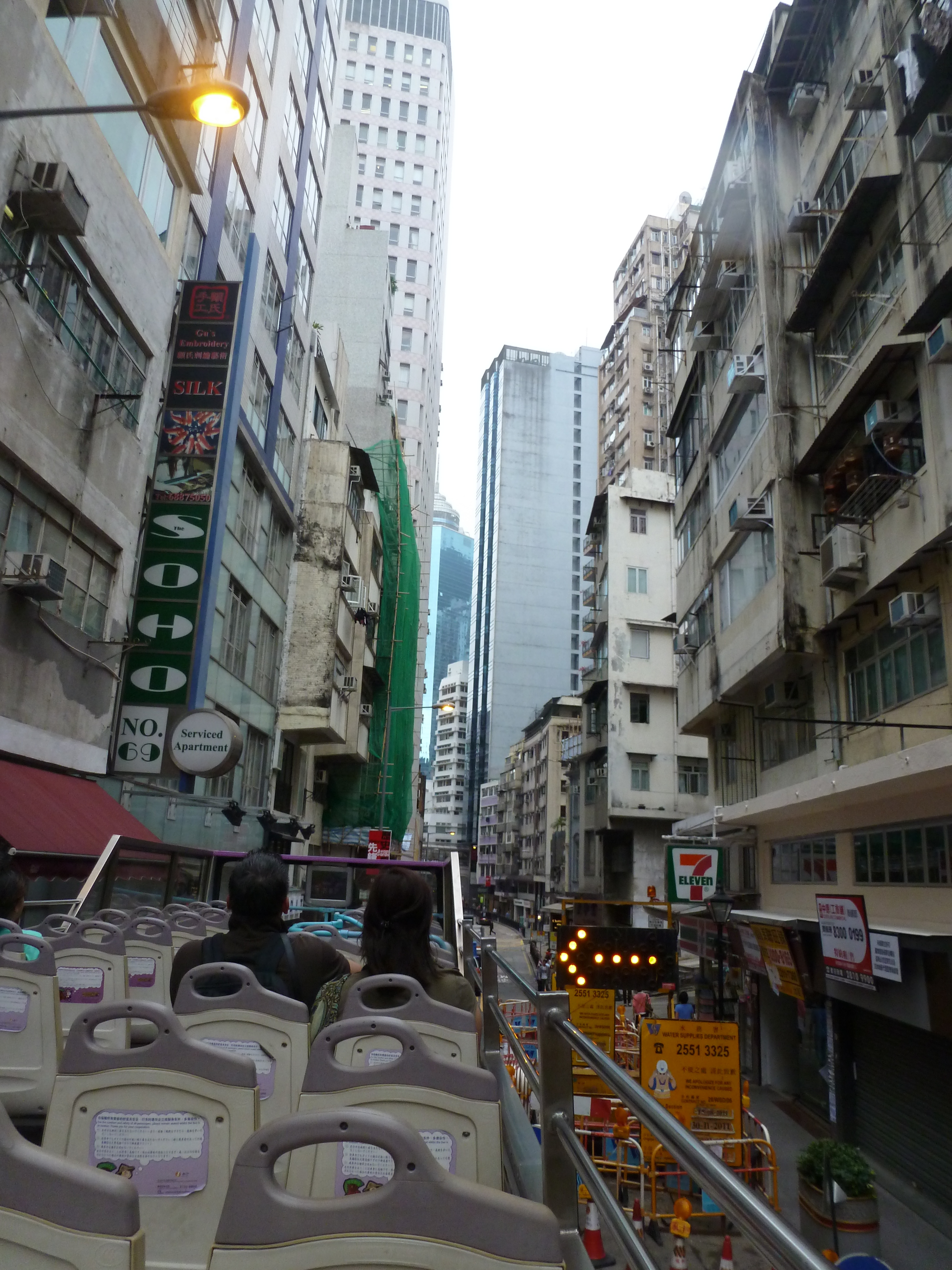
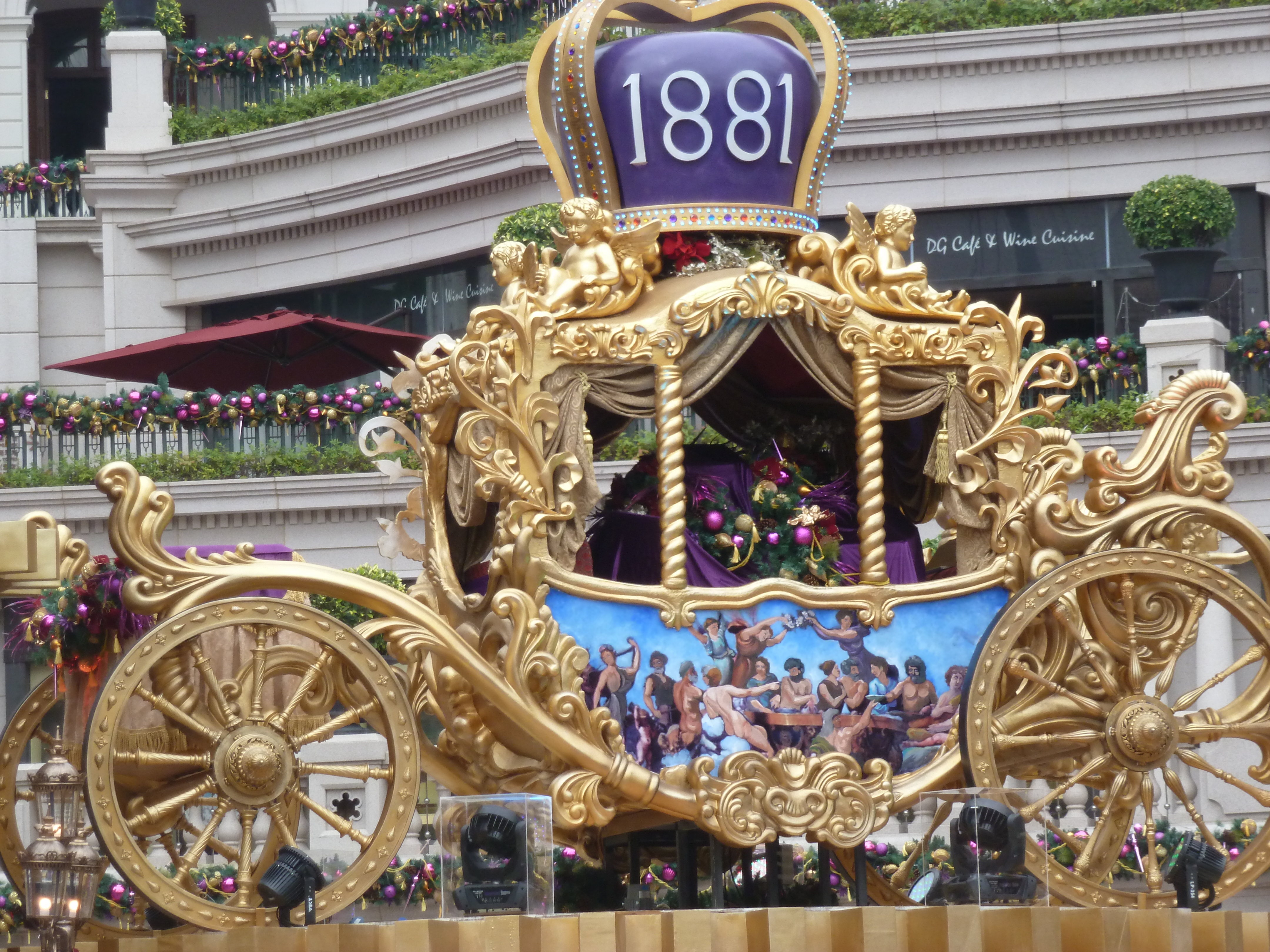
If in Adelaide and Melbourne you couldn’t fail to notice that Christmas was imminent, despite the blistering weather, in Hong Kong the festive season was underway with a vengeance, displays on speed. In the smoggy, humid atmosphere, enormous, glittering decorations hung eveyrwhere, vast Christmas trees constructed from lurid toy figures, a full sized, glitzy, Cinderella-style coach.

I often like to pick up a small Christmas tree decoration from places we travel. They are a welcome reminder, in the depths of a UK winter, of our trips and travels and take up very little space in the luggage. In the night markets of Hong Kong there there was no shortage of knick-knacks along the rows of stalls lining the streets in a blaze of light, colour and sound. It was a simple matter to find gift items like beautiful silk scarves in jewel-like colours.

A must-do tourist activity is going up Victoria Peak, from where there can be stunning views. We got our funicular tickets and duly rode up to the top, which was entirely shrouded in thick cloud. All there was to look at was a tawdry collection of stalls selling trinkets.

Friends who’d been following the same trail [from New Zealand and the Rugby World Cup, to Australia and now to Hong Kong] were staying in a hotel on Hong Kong Island and we’d decided to meet up for an evening meal. Wanting to sample something authentic, we spent some time selecting a restaurant, eventually choosing one with a first floor dining room that looked comfortable and smart. It was quiet, only a couple of other tables occupied. When the waiter came and gave us menus we couldn’t make head nor tail of them, but looking at the other diners, it seemed as if we were to cook the food at our table! Who knew? We were baffled, the staff knowing neglible English [this was before the advent of Google translate, you understand]. Our friend, D, peered at the waiter and asked if we could ‘just have a stir fry’ which, I have to admit, struck me as so amusing at the time that I became quite helpless with laughter.

Eventually we ordered something or other and it was edible. But I’d so have liked to have had a gourmet guide on our trip to Hong Kong because I’m certain we missed out on a wonderful gastronomic experience.

Another day we got the gondola ride up and over to Ngong Ping village to look at the big Buddha, a statue which looks out over the mountains and green landscape. Again, the humidity had prompted thick mist to descend, resulting in low visibilty for the ride, although once we’d gained the top it was sunny and clear, the Buddha impressive in its inscrutability. And there, in another surprise, were our friends again! We wandered around the inevitable tourist stalls then climbed into a gondola car together for the descent.

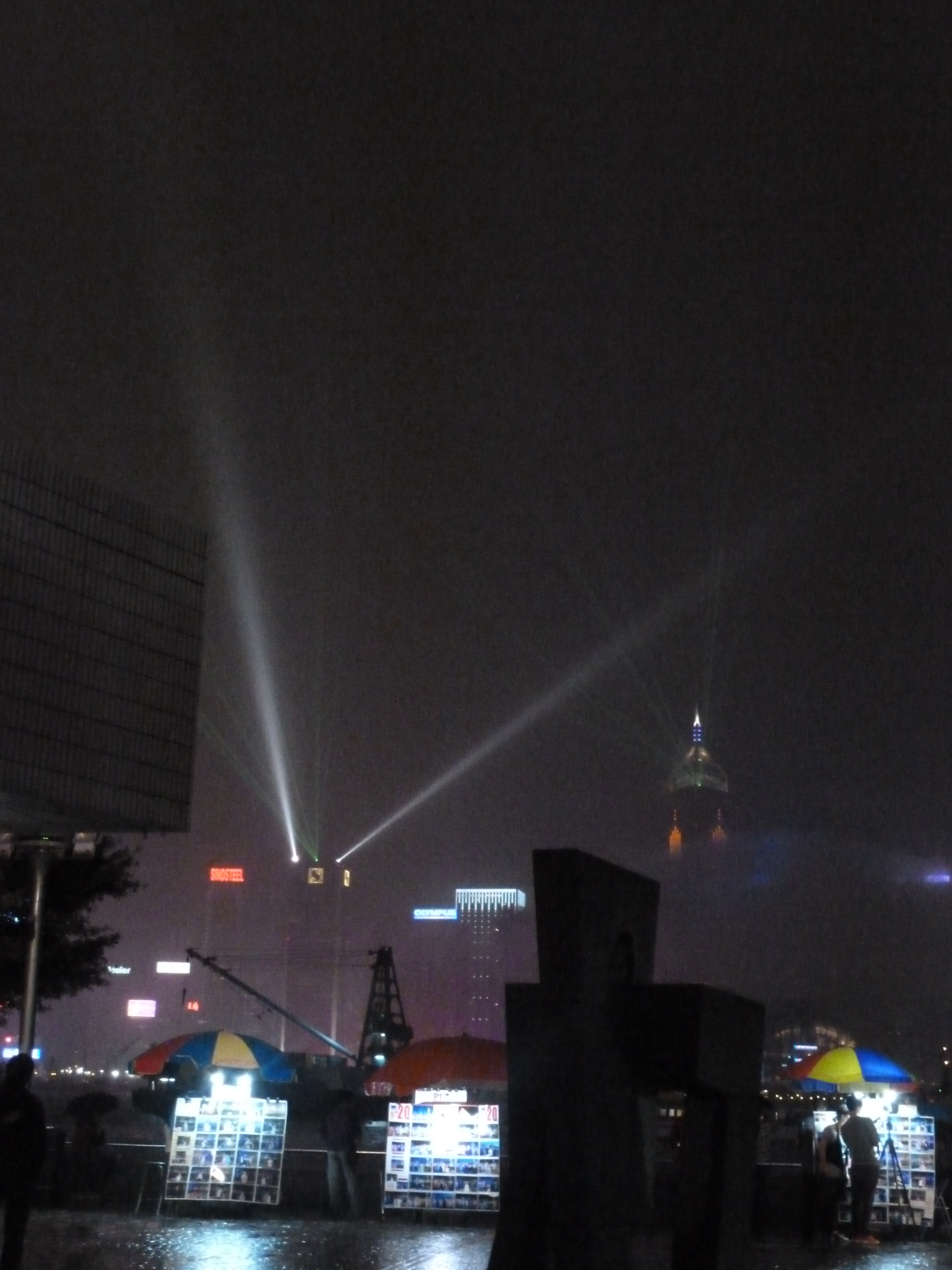
For our last evening in Hong Kong we joined the spectators at the harbourside for Victoria Harbour’s nightly sound and light show, which was impressive.

By now Christmas was very close. It was, at last, time to turn towards home. We’d been away for three months, the longest trip we’ve ever taken, before or since.

Grace is also known as the novelist, Jane Deans. Her new novel, The Conways at Earthsend is now out and available from Amazon, Waterstones, Goodreads, W H Smith, Pegasus Publishing and many more sites. Visit my website: janedeans.com or my author page on Facebook: (1) Jane Deans, Novellist, Short Fiction and Blog | Facebook.

Hong Kong- and an Explosion of Experiences

We left Australia, flying out of Melbourne and knowing that this elongated excursion had little more time to run.

But there was one more set of thrills to be had before we turned our noses towards home. Australia, as we all know, is a long way from the UK and anyone with a brain cell realises that the civilized way to do it is to have a stopover. And if you aren’t time-poor, it’s even better to stretch the stopover into a few days.

This means, of course that you need to choose somewhere you want to see, somewhere worth the time. We’d opted for Hong Kong, the nearest thing to China but with a westernised twist. These days I’d be uneasy about visiting this commercial outpost of China, fearful of unrest or draconian laws since it was hauled, kicking and screaming under Chinese government rule. But this was before the protests and the unrest and all was calm.

Our hotel was in Kowloon, which is across Victoria Harbour from Hong Kong Island. Our immediate area was teeming with commerce, especially street food stalls selling a plethora of foods- some recognisable but many not. Plucked fowl were hung by their feet from the tops of stalls as were other, unidentifiable body parts. We needed to eat, of course and were keen to sample street food, but didn’t know where to start. Eventually we found a stall selling pork balls and settled for those; unadventurous but safe!

In order to see Hong Kong Island we had to get across Victoria Harbour. There are ferries but we opted to go via the metro, which runs underneath. Navigating and understanding the vagaries of ticketing and where to go was not easy- it never is in a foreign city- but we managed it. On the crowded train I was struck by the fashion sense of the beautiful young women passengers, most of whom were dressed wonderfully and with immensely vertiginous footwear.

On the Hong Kong Island side there were more bustling alleys full of food stalls and I wondered how it was possible to sell such an abundance of meals and snacks. But then, the entire place is packed solid with people, notoriously so, as is evident in the forest of skyscrapers soaring up to dizzying heights. New blocks were being constructed everywhere despite the fact that there didn’t seem to be any more room for them. The scaffolding for these constructions was all of bamboo poles, which was an eye-opener!

The trams that ran along the main streets had a character of their own. Unlike the long, sleek, snaking trams of European cities they were individual vehicles, quaintly old-fashioned and colourful, begging to be ridden!

Next week; Night markets, the misty peak, the restaurant conundrum and a foray to the mainland via unusual transport.

Grace is also known as the novelist, Jane Deans. Her new novel, The Conways at Earthsend is now out and available from Amazon, Waterstones, Goodreads, W H Smith, Pegasus Publishing and many more sites. Visit my website: janedeans.com or my author page on Facebook: (1) Jane Deans, Novellist, Short Fiction and Blog | Facebook

Australia 2011: Melbourne and Around

My cousin and her partner went above and beyond to make us welcome. As well as accommodating us they took us around Victoria, showing us the sights and being wonderful tour guides. We met up with my aunt for meals, coffees and plenty of ‘catching up’.

We visited areas that had been devastated by catastrophic fires some years before- and further fires have ravaged huge swathes of Australia since we were there. We visited ‘Hanging Rock’, famous for its true tale of missing girls which was made into a feature film in 1975.

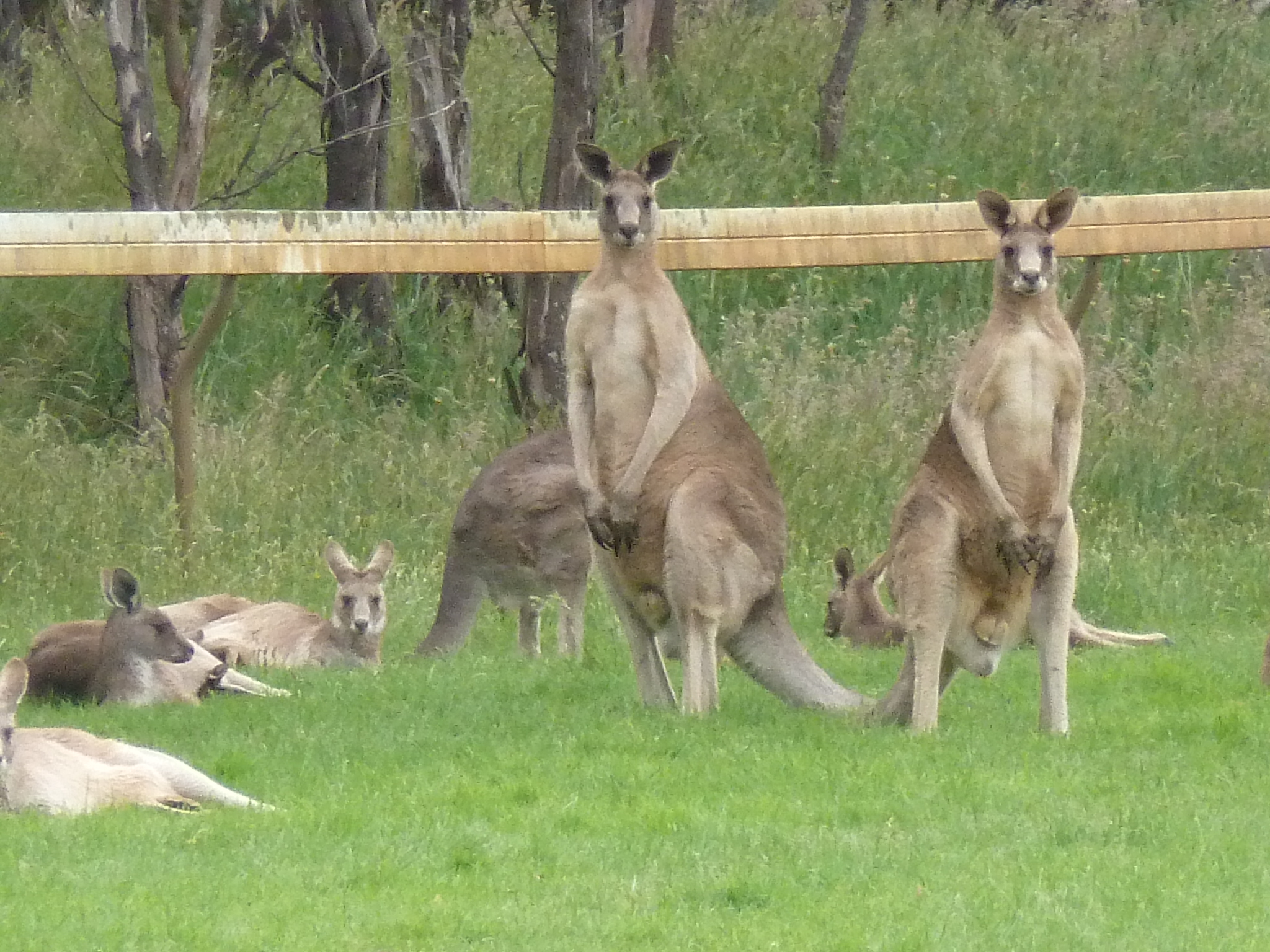
One odd anomaly about our travels in Australia until then was that we’d seen almost no kangaroos- animals I’d expected to have seen almost daily. But here, at last, we were treated to sightings of dozens of the creatures, lounging about casually or standing brazenly to gaze around them.

Our hosts live on the outskirts of Melbourne, so following my cousin’s instructions regarding transport we set off unaccompanied to explore the city. Melbourne has a character of its own, quite different from Sydney, Adelaide or Cairns- other metropoli we’d looked at. It felt more like a modern, cosmopolitan European city. It bustled with life and commerce, its streets busy with shoppers, traders and the occasional busker. We stopped to listen to a couple performing their songs on the pavement- he playing an unusual, stringed instrument and she the singer. While we were taken enough with it to buy one of their CDs, I have to admit to not really having listened to it since we returned. Like those unusual bottles of spirits you become passionate about in a foreign land, it was destined to languish in the back of a cupboard until the next de-cluttering session.

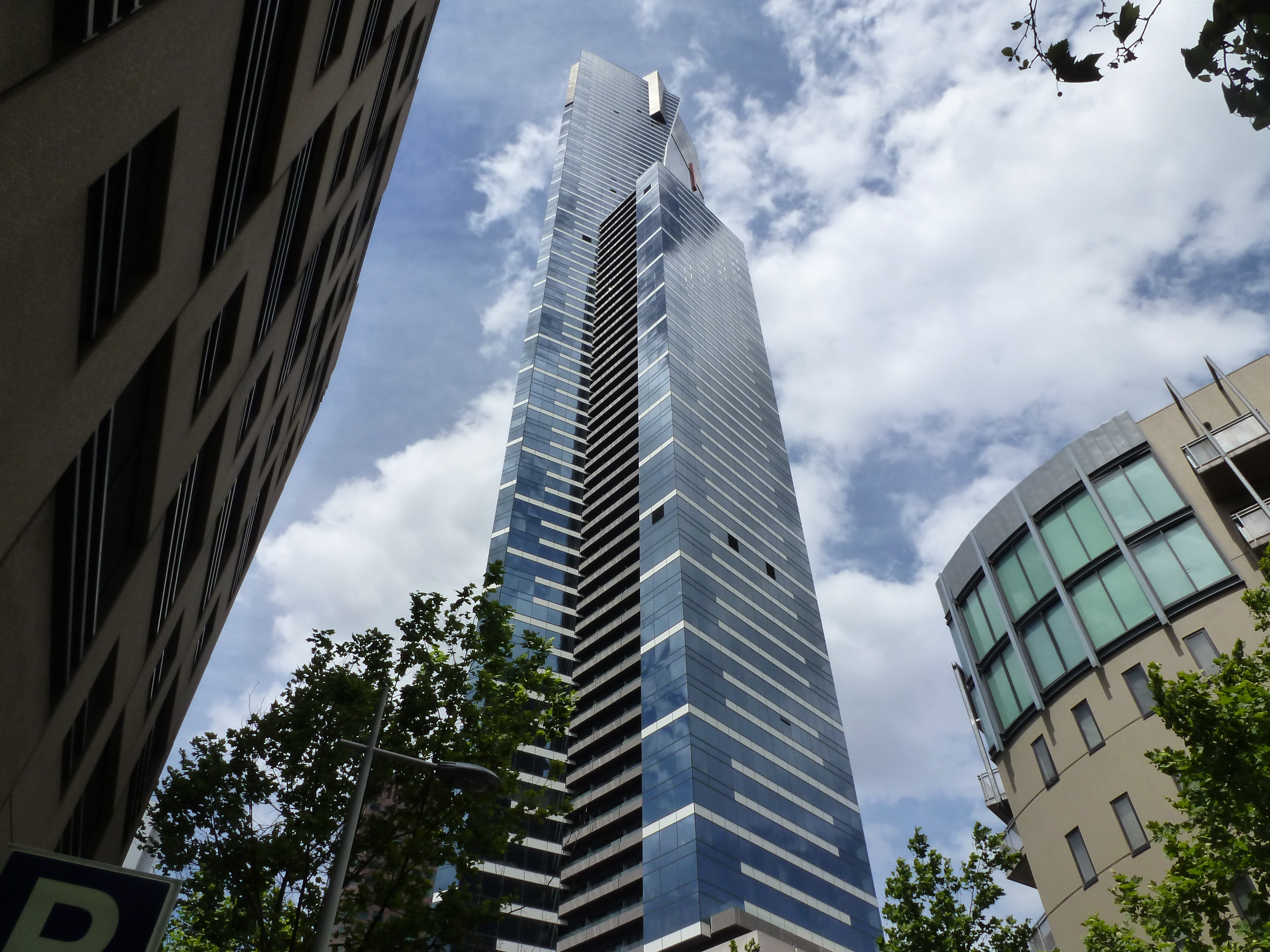
Melbourne has its own iconic, tall skyscraper- the Eureka Tower.https://en.wikipedia.org/wiki/Eureka_Tower

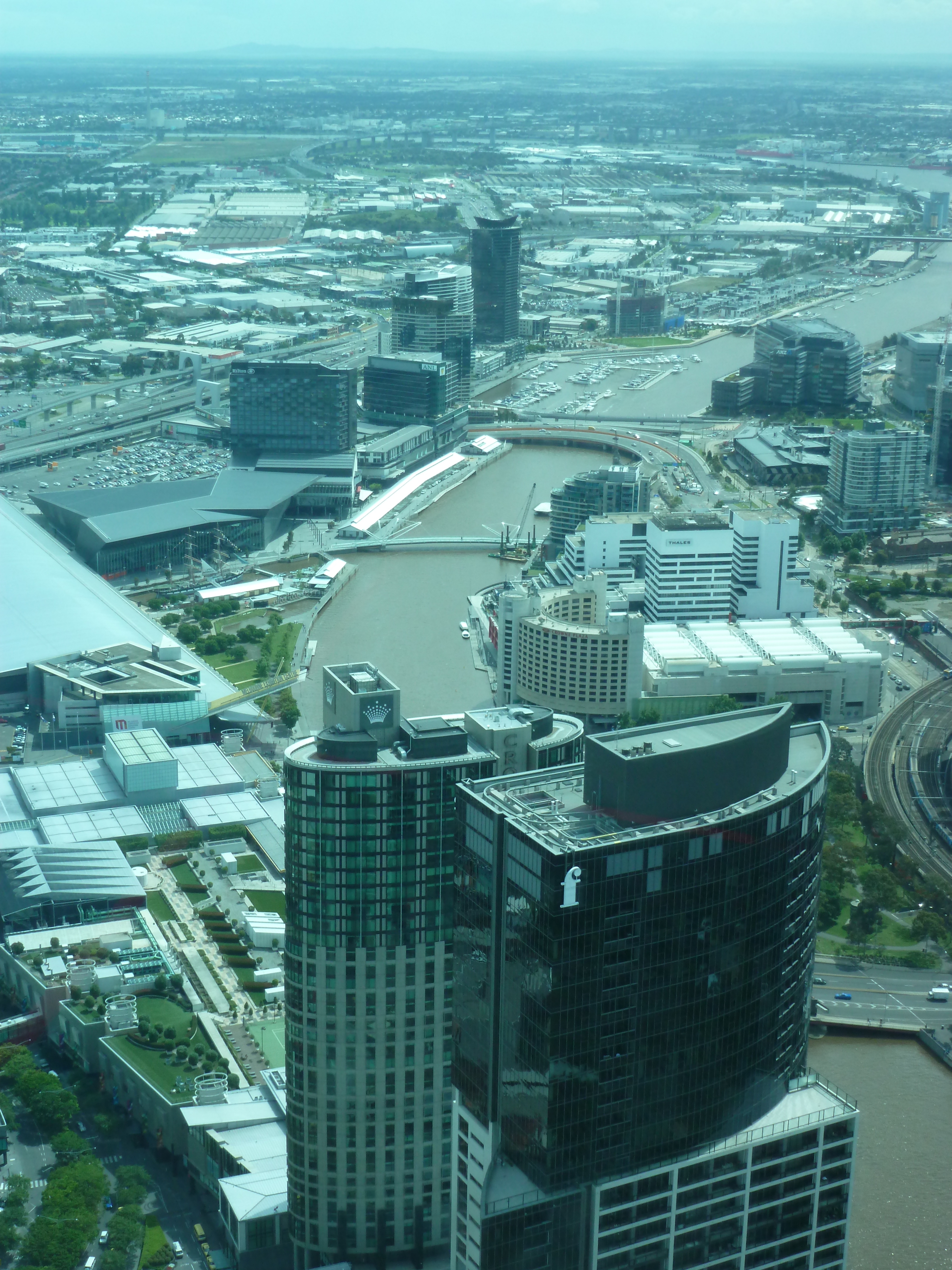
We had fun in the lift up to the top of the tower, then enjoyed some time looking at the views over Melbourne and beyond. When the time came for us to return to the suburbs, and to my cousin’s house, we got into a bit of a pickle. We’d forgotten our instructions and needed to let her know when we’d be back, but had no clue as to her email. This trip pre-dated smartphones, of course. But one thing I was sure of- if I could find and internet cafe I’d have my aunt’s email address saved and I’d be able to ask her for my cousin’s address. Phew! How things have changed in the entervening years since 2011! Anybody would think it was all a long time ago!

In the event it was all fine, and we got back ok. There was precious little time left. My kindly cousin took us to the airport to drop off our van, in advance of our flight. We had a last supper together at the airport before saying our final goodbyes and I felt emotional at leaving my cousin and her partner- strangers at first, shy at meeting, then we’d bonded over memories and family knowledge shared.

Grace is also known as the novelist, Jane Deans. Her new novel, The Conways at Earthsend is now out and available from Amazon, Waterstones, Goodreads, W H Smith, Pegasus Publishing and many more sites. Visit my website: janedeans.com or my author page on Facebook: (1) Jane Deans, Novellist, Short Fiction and Blog | Facebook

Australia. On to Melbourne

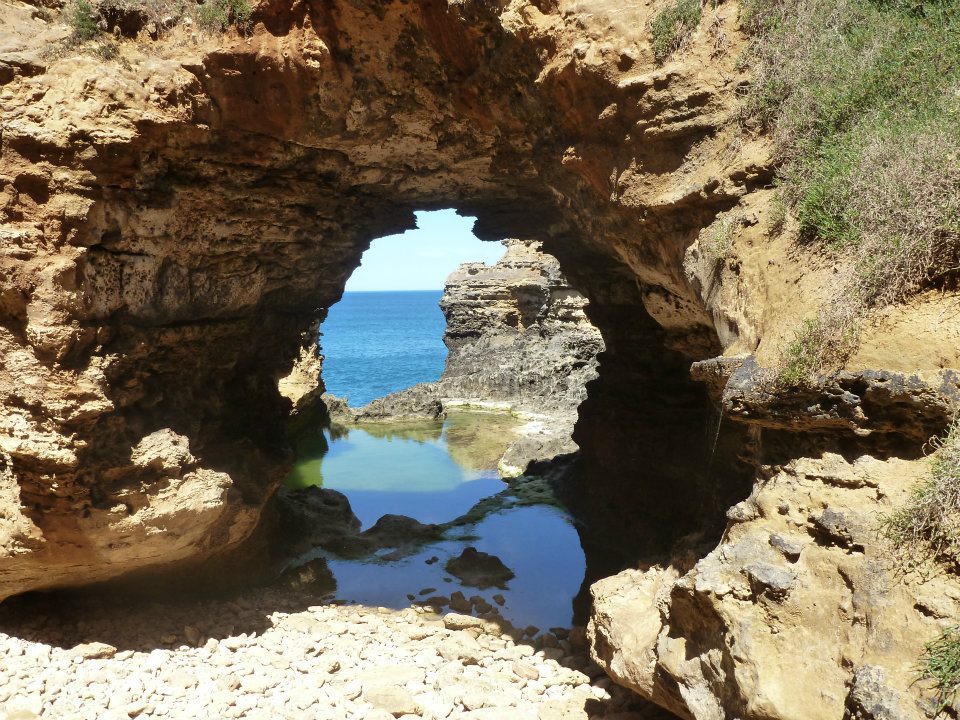
Having collected our third and final van at Adelaide we set off for the next chapter of our Antipodean Odyssey, The Great Ocean Road, which would take us to Victoria and to Melbourne. While the weather continued to be very warm, the landscape morphed into a contrasting character to the arid surroundings of The Outback, becoming more familiar and more in common with many parts of coastlines in Europe and in our own UK.

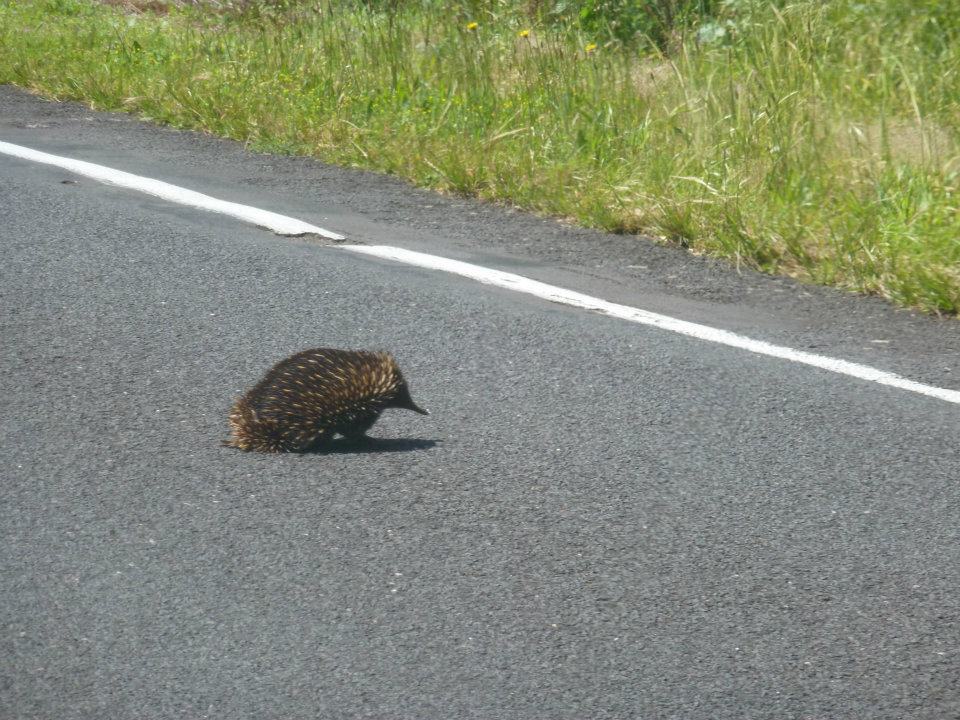
The wildlife, however was vastly different and we were treated to a multitude of wonderful encounters, such as arrays of brightly coloured parrots and the time we needed to pull up and allow an echidna to meander across the road in front of us.

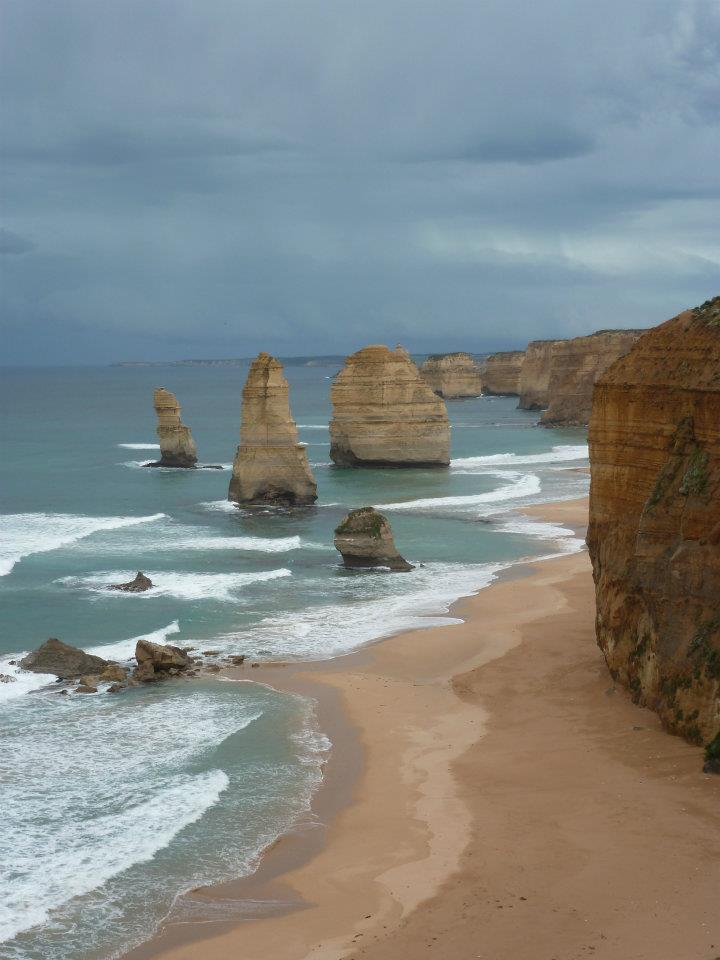
The Great Ocean Road is famous for ‘The Twelve Apostles’, tall stacks of rock which protrude from the waves like a watery hall of columns, but they are fewer now- eight left, according to Wikipedia. Altogether it is a stunning coast line, although many such rock formations exist around the world.

Once we were into Victoria there was also a more familiar, homely atmosphere, the communities less foreign with their coffee shops, bookshops and so on.

One thing that struck us with both New Zealand and Australia was that other than in large cities such as Sydney, bars and restaurants, where they existed, shut up shop early in the evenings. The vast majority of them existed only for betting purposes and housed screens and machines purely for this purpose. If we were lucky enough to find a bar or a pub open we could sometimes get a drink, only to be told the place would be closing at around 9pm, once the gambling was finished. We’ve visited quite a few countries and have found many areas away from large cities to be lacking in any sort of evening opening, notably the USA and the more rural areas of Europe. This leaves me with an impression that the UK is unique in having pubs and restaurants throughout its shires, although in recent times pubs have been disappearing from many of our villages.

When I was about ten years old I was a bridesmaid at the wedding of my uncle and aunt. I don’t remember much about it but I do remember seeing a photo of myself plus my two cousins, decked out in stiff, knee-length frocks and carrying little posies. A few years [and two babies] later the couple emigrated, like so many, to Australia where my uncle set up a business that was to become very successful, settled into Australian life and had a third child. In the years that followed there was scant contact between our families. We cousins all grew up. My uncle, sadly, passed away. But before we left the UK to embark on this long trip I knew I couldn’t go so far and not meet up with my long, lost aunt and perhaps my cousins.

It was a little tricky getting in touch but we managed it and arranged to meet. My aunt had moved and downsized from their large family home but still lived in Victoria in a small community, whereas the cousin I’d never met, who’d been born in Australia, lived in Melbourne. In a spontaneous gesture of hospitality, she and her partner offered to accommodate us for the remainder of our time, which is a huge step to take for those you’ve never met!

Grace is also known as the novelist, Jane Deans. Her new novel, The Conways at Earthsend is now out and available from Amazon, Waterstones, Goodreads, W H Smith, Pegasus Publishing and many more sites. Visit my website: janedeans.com or my author page on Facebook: (1) Jane Deans, Novellist, Short Fiction and Blog | Facebook.
Australia 2011: Alice Springs and Adelaide

We’d arrived to Alice Springs and the end of our exploration of this enormous country’s red heart. True, we’d only scratched the surface, only had time for a brief flavour of the extraordinary landscapes, but we’d still a lot more to see and do. We had time for a peremptory examination of Alice Springs, a town I’d hitherto mainly associated with the Nevil Shute novel, ‘A Town Like Alice’ and film of the same.

Modern Alice is a pleasing place with a hint of wild west about it and enough shops, bars and restaurants to satisfy passing tourists. I still have [and wear] the rust coloured safari shirt patterned with Australian wildlife that I bought there. By now we’d passed a substantial part of the UK autumn in the southern hemisphere- their spring, and Christmas was not too far ahead, would be upon us once we got back home. But there was little in Alice to herald the event, and it was hot, although by this time we were well acclimatised.

We had a domestic flight arranged for Adelaide, where we were to spend a couple of nights before picking up the next [and final] van for our trip along the south coast. Our hotel in central Adelaide was swanky indeed, the room uber modern with one of those glass bathrooms in the centre that leaves you exposed to your room-mate whatever activity you may be engaged in. Hmmm…

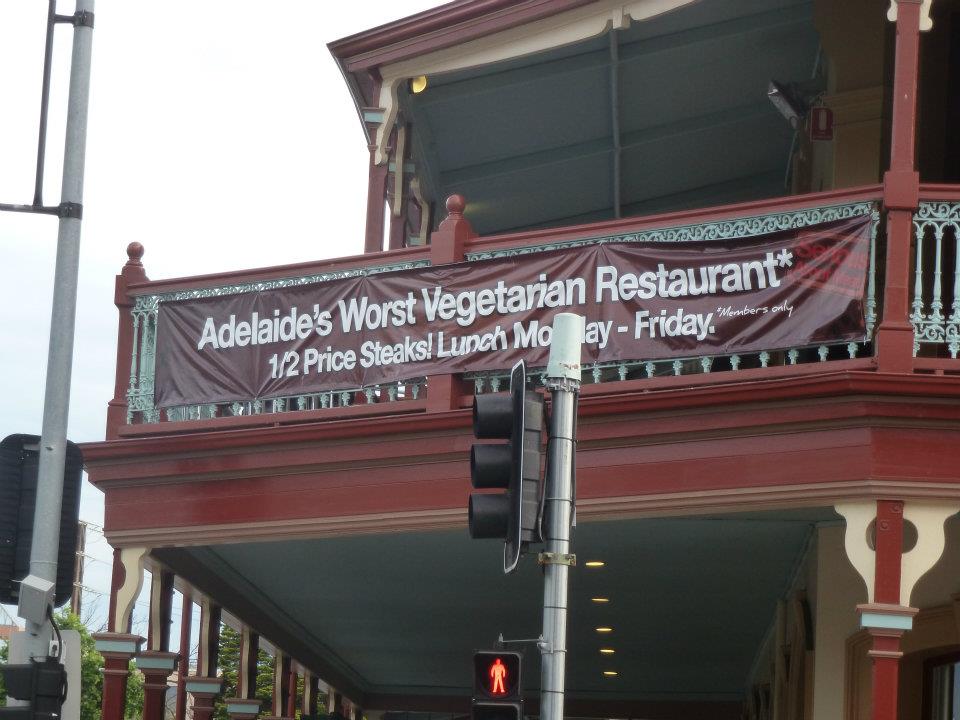
Unlike Alice, Adelaide had moved into full Christmas mode, our hotel foyer bedecked with decorations and Christmas trees and across the street, a department store entrance bore a sleigh complete with reindeer and Santa Claus. And all of this in sweltering heat, the tinsel glinting in sunshine as the air wobbled above the pavements. I suppose anyone who has grown up in what to us is a topsy-turvy climate is accustomed to snowy scenes in stifling temperatures, but it felt incongruous to me.

Adelaide itself I considered to be an elegant, beautifully laid out town with attractive parks and wide avenues. It also seemed to be a bit of a party central, the restaurants and bars not short of revellers of various kinds.

All too soon it was time to leave and to collect our third van of the trip, which was to take us along the famous South Coast Highway and a spectacular coastline, if the guide books were to be believed. There were to be more sights and experiences before our arrival to Melbourne, but best of all, if all went well I’d get to meet up with someone I hadn’t seen since childhood!

Grace is also known as the novelist, Jane Deans. Her new novel, The Conways at Earthsend is now out and available from Amazon, Waterstones, Goodreads, W H Smith, Pegasus Publishing and many more sites. Visit my website: janedeans.com or my author page on Facebook: (1) Jane Deans, Novellist, Short Fiction and Blog | Facebook.