Unknown's avatar

About Grace Lessageing

I am writer of novels, short stories, flash fiction, blogs. I lead a creative writing group. I am an Ex infant teacher, living in Christchurch, Dorset, UK. My brand new novel, The Conways at Earthsend was published on January 28th 2021 can be found on Amazon, Waterstones, Hive and Goodreads and is available in either paperback or e-book versions. You can also read The Year of Familiar Strangers, available as an e-book from Amazon. You can visit my website: janedeans.com or my author page on Facebook: https://www.facebook.com/Jane-Deans-Novellist-Short-Fiction-and-Blog-102757711838272 Happy reading!

NZ 2011. Fjordland.

By the time we’d arrived to Te Anau in the far south of South Island we’d settled well into the trip, although the grin was still permanently fixed to my face. I should mention here that packing for a three month trip to another hemisphere was a tricky business. We’d bought large, soft, wheeled, valise-style bags and were aware we’d need to cover all weather eventualities. Here in Fjordland I was very glad of my thick fleece jacket and the layers beneath it and we made good use of the electric heater in the van. The site at Te Anau was one of the ‘chain’ variety, for which we held a discount card and had luxurious amenities with underfloor heating- much appreciated!

Despite the cold, Te Anau was an unearthly place- snow topped mountains reflected in the lake, which was opposite our site. The plan was to get a tour to Milford Sound, which I knew to be an iconic sight. We could get a coach and boat combined trip, better than trying to drive ourselves as the snow-laden roads promised to be difficult.

Having settled at the site and arranged our trip we strolled out in the bitter night air and found a bar where we could watch the day’s match [Japan and the Allblacks, as I recall].

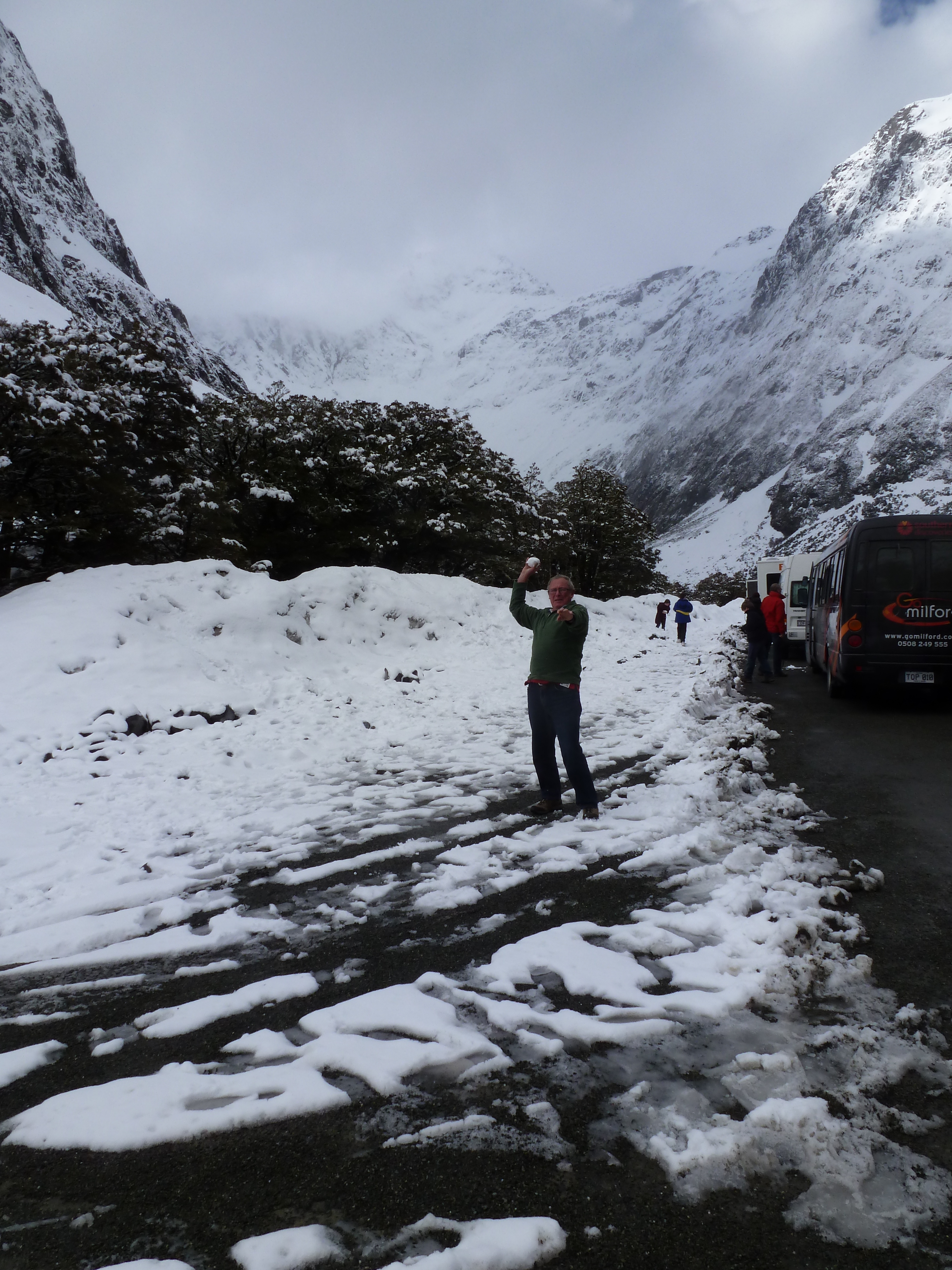
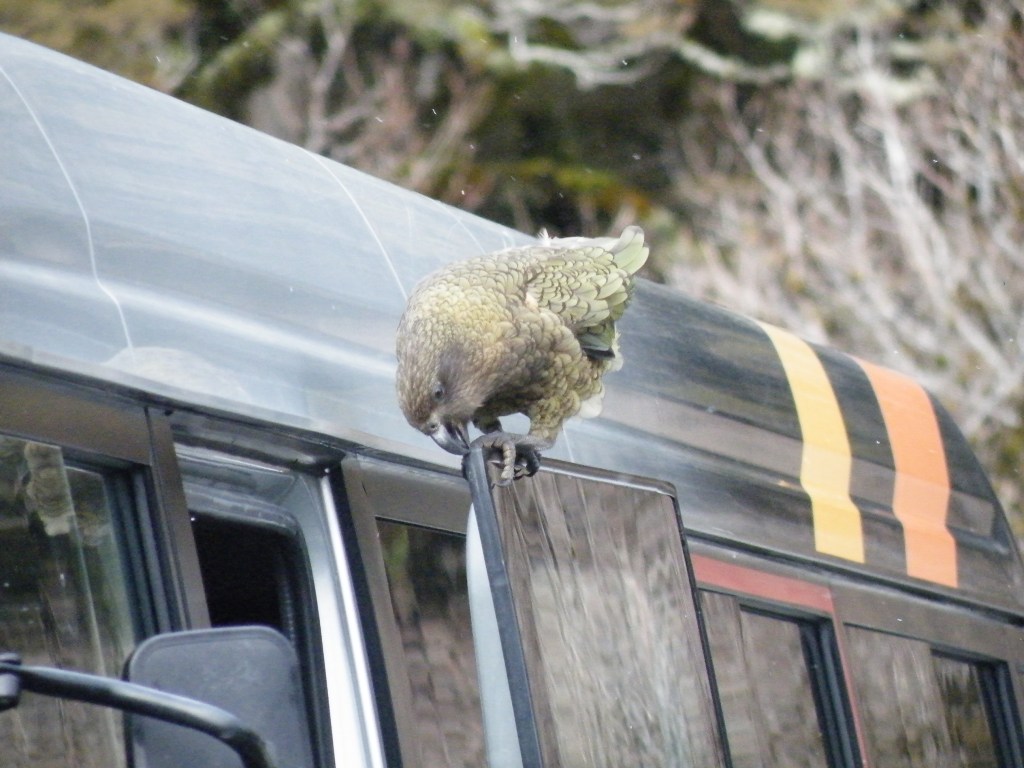
We got an early start on our bus next day but the driver was informative and chatty, making stops for us to see places of interest en route, increasingly snowy as we went. Once we stopped and clambered out into the snow to make snowballs and photograph the landscape and in one of the places cheeky Kea parrots were busy dismantling the rubber trim around a vehicle’s windows. On arrival to Milford Sound we had lunch, then boarded the boat for a tour around the cliffs, inlets and waterfalls of the sound.

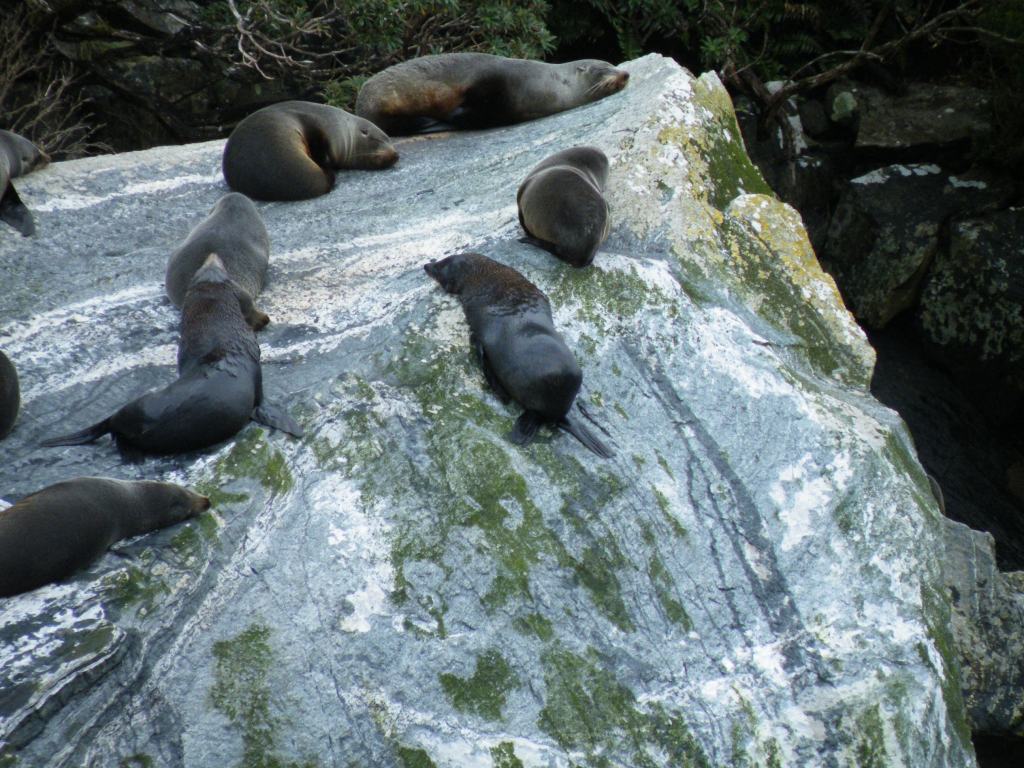
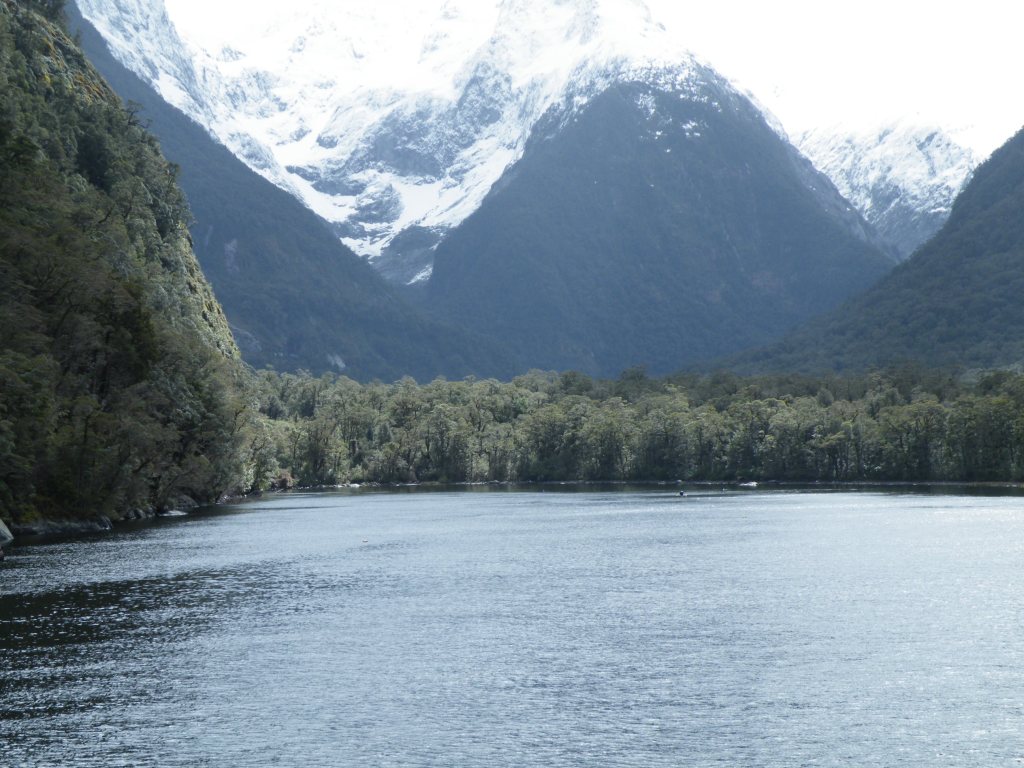
This is a place where weather is immaterial. On our day the sky was heavy with grey cloud, the water iron-grey. An occasional sunbeam brushed the tops of the towering mountains with a bright glow. Our skipper took us along the cliffs to where tumults of waterfalls fell, close enough to be drenched, or near to huge expanses of rock where fat sea lions basked. It is impossible to fully describe the majesty of the towering cliff walls of the sound, or the thundering foam of the waterfalls, but it is an unforgettable experience.

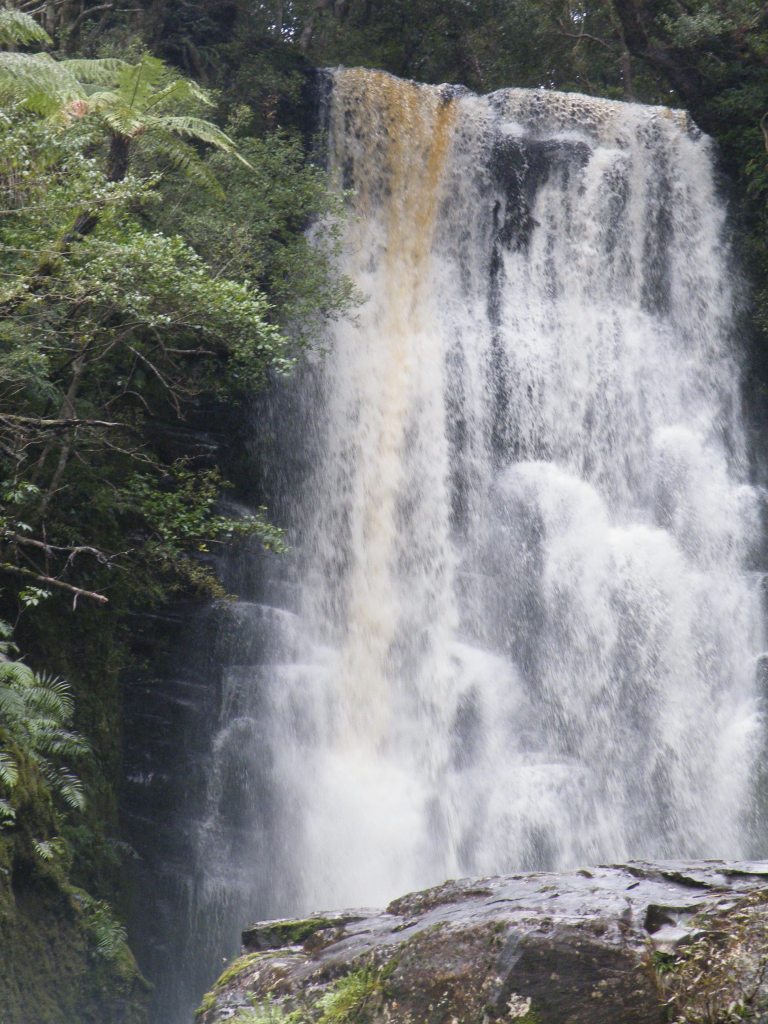
We returned to Te Anau via more wonderful places. At ‘The Chasm’, foaming water thundered along deep beneath a huge rock with natural viewing tunnels and in the temperate rainforest I decided I’d fallen completely in love with tree ferns which were everywhere, casting their umbrella fronds in graceful arcs.

Next day we were off again, this time to New Zealand’s great activity playground and with outrageously gorgeous scenery to boot…

Grace is also known as the novelist, Jane Deans. Her new novel, The Conways at Earthsend is now out and available from Amazon, Waterstones, Goodreads, W H Smith, Pegasus Publishing and many more sites. Visit my author page on Facebook: (1) Jane Deans, Novellist, Short Fiction and Blog | Facebook

New Zealand 2011. Ever South…

We’d left the Dunedin rugby pitch in the early morning, following a cold, cold night during which we’d barely slept, and continued our route southwards, this time towards Invercargill. Along the single lane road we would drive through villages and small towns, striking in their rural, agricultural ethos, with strong references to local industry. Most place names were qualified with ‘famous for…’, adding such produce as peppers or apples, and sometimes an extra-large facsimile of a fruit or vegetable adorned a roundabout or a roadside hoarding.

The architecture charmed me in that pavements and sidewalks alongside parades of shops were shaded by overhanging canopies reminiscent of the wild west. Once we’d visited a ‘dairy’ which could be located in every town or village, we never looked back as there were t delicious arrays of cakes, bakes and scones, ruinous for the waistline but scrumptious for lunches. My most overriding feeling during that trip south was that I’d been transported back to my childhood into a gentle reconstruction of the 1950s.

One place we loved was Oamaru, where even the wildlife seemed delighted to welcome us. There were various contraptions in Oamaru’s streets, including a ‘steampunk’ machine that wheezed and blew steam. With all the RWC international visitors, campsites were busy but the sites were clean and comfortable, often with underfloor-heated showers and a variety of accommodation, including simple rooms and an option to share use of a well equipped kitchen. This made for sociable travel as well as convenience. We were often to meet like travellers along the road to the next rugby match or at a site.

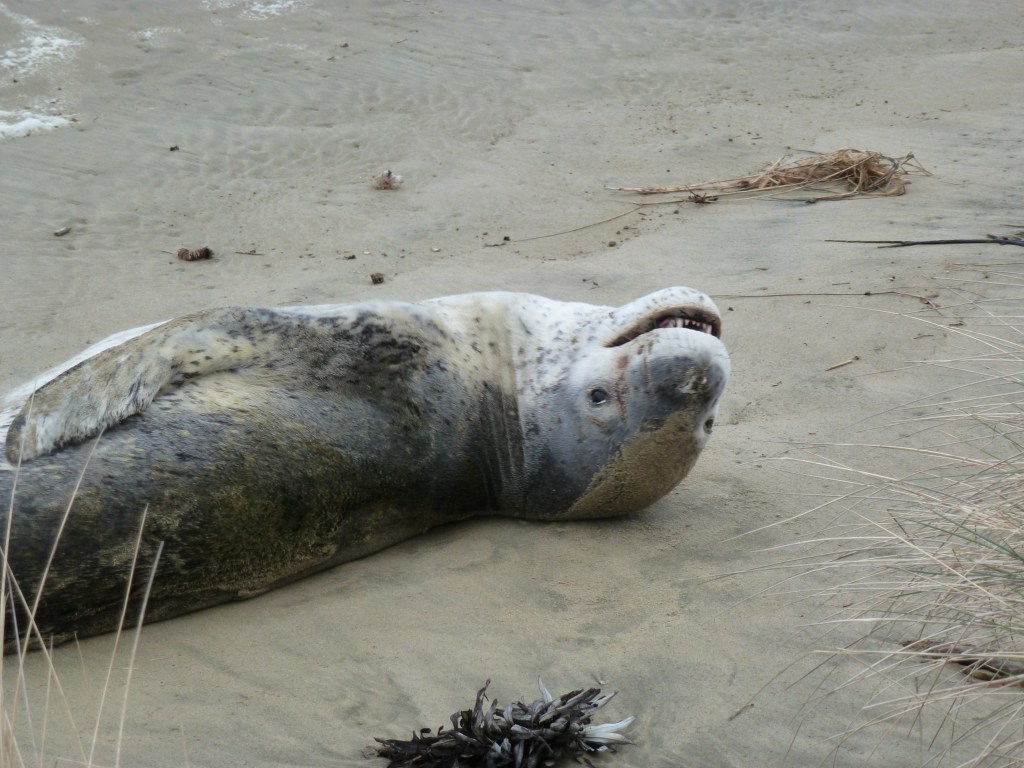
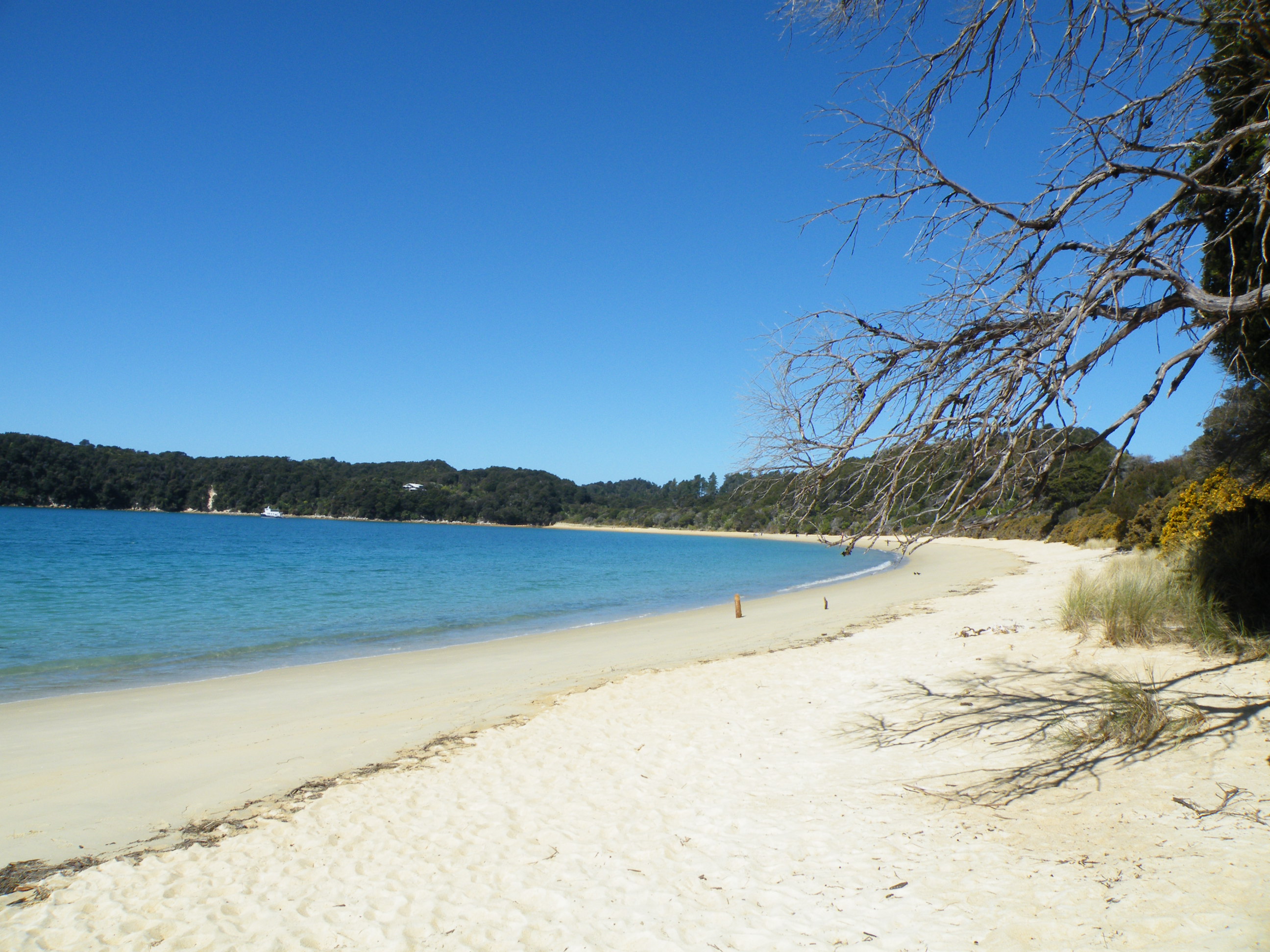
We were able to find quiet spots to park up and have lunch-often by a secluded beach. Once we ventured out for a post lunch stroll on the sand, only to be confronted by a beligerent sea lion which reared up in a growling, menacing stance between ouselves and the waves. Husband, in a bid to draw him off, dashed into the water then became cut off by the animal, who’d pursued him. At last the sea lion seemed satisfied that he’d terrified us into submission and loped away.

We reached the Catlins Coast and had our first views of penguins- yellow-eyed penguins along the beach.The coastline had begun to be rugged, waves crashing and foaming on to rocks and at times, a fierce wind. Inland, paths through rainforests held magnificent displays of tree ferns and vegetation dripping with moss and lichen as well as tumbling waterfalls. All was pristine. But this was not a trip for sun worshippers. The weather was cold and often wet, although it never once dampened our spirits.

We reached the southernmost point of mainland New Zealand, Slope Point, where all was bent before the fierce wind. This is the furthest south I have been on this planet.

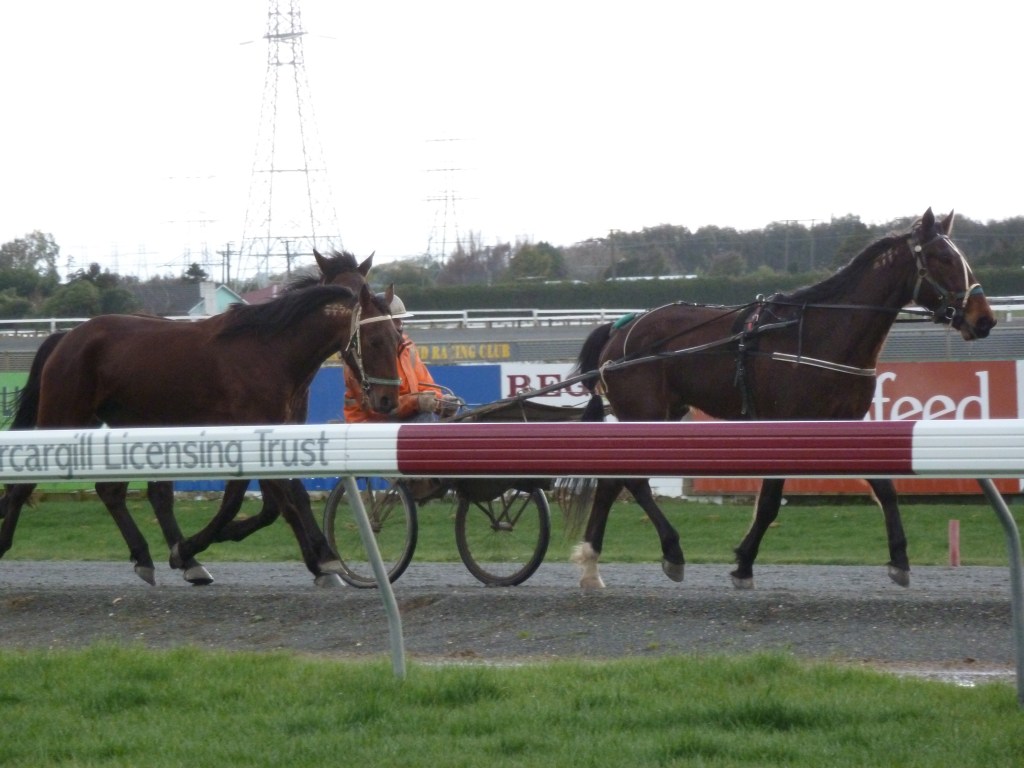
At Invercargill we stayed at the racetrack and were treated to a view of a trotting cart as we woke up and readied ourselves for the next match. Later, down in the town the pubs and bars were full of kilted Scotsmen, then a thrilling parade of pipers through the streets.What could top this? We were to move on to what became, for me, the most memorable part of the entire trip…

My brand new novel, the eco-thriller, The Conways at Earthsend is now out and available from Amazon, Waterstones, Goodreads, W H Smith, Pegasus Publishing and many more sites. Visit my author page on Facebook: (1) Jane Deans, Novellist, Short Fiction and Blog | Facebook

NZ 2011. Heading South.

Having collected our beautiful campervan and stocked it with everything we thought we needed, and armed with the helpful map booklet, the list of camp sites [with discount cards] we headed south out of poor, earthquake stricken Christchurch.

First of interest in our guide book were the Moeraki Boulders. These are astonishing. Pefectly spherical boulders lay strewn about along the beach of the Otago Peninsula. They are of varying sizes, some split open but most intact. They make for an engaging sight, looking like an Anthony Gormley sculpture along the sand. As with most of the attractions we were to see in New Zealand it was quiet, with only a couple of other sightseers to share the beach.

We were heading for Dunedin, where we’d be watching an England v Argentina rugby match. Driving was a simple matter- a single lane road that wound south following the railway line, so closely that we were to cross the track dozens of times. Aside from ourselves there were fellow travellers in vans of various sizes and some trucks, but not much else.

When we arrived at the Dunedin Holiday Park, St Kilda we were directed to the annexed, adjoining rugby pitch, sharing with hundreds of fans, the Argentine contingent dressed in their blue and white outfits and wigs, one group a perfectly executed group of Smurfs in pale blue.

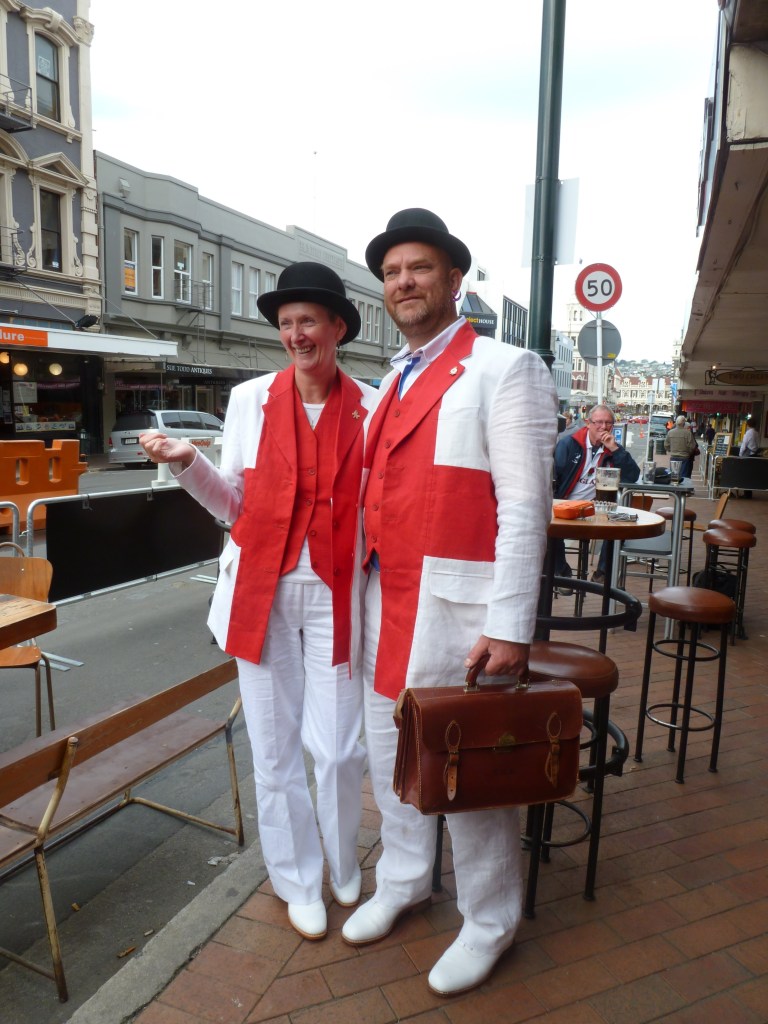
Not to be outdone, the English fans assembled their own, often outrageous outfits.

Every match was preceded by carnival-type activities outside the ground-a real party atmosphere, and began with the blowing of a conch shell by a Maori dressed in traditional costume.

This first match was, however marred by the behaviour of some of the Argentine fans, who refused to applaud or acknowledge the arrival of the English team onto the pitch, then afterwards we waited in line for a bus to return to our site and having got to the front of the queue were elbowed off by some. It was upsetting at the time. I suppose a level of resentment and bitterness endures from The Falklands War, and there was no opportunity to tell them how I’d been opposed to it, how I don’t believe England should ‘own’ lands on the other side of the world. We are British=we are culpable. We took a taxi back to the site.

The days were warmish and sunny but the nights were cold-and we were in an area with no electric hook-up. Next day we were keen to see some more of the area and our guide book suggested that the Taieri Gorge Railway was a popular option. Dunedin station is beautiful and elegant and the ochre-yellow train was waiting at the platform.

This was a spectacular train ride up the Taieri Gorge, four hours into hill country with a few stops at railway holts for photos or to stretch legs.

Our second night at Dunedin was one of the coldest we’ve ever had in a van. Without electric hook-up we dared not use up all our gas for heating, and so we piled everything we had on top of the duvet, including towels, coats and all our clothing. Even so, as dawn broke we gave up and packed up to set off for our next stop!

My brand new novel, the eco-thriller, The Conways at Earthsend is now out and available from Amazon, Waterstones, Goodreads, W H Smith, Pegasus Publishing and many more sites. Visit my author page on Facebook: (1) Jane Deans, Novellist, Short Fiction and Blog | Facebook

2011. A Great Year for Travel.

We’d arrived to Christchurch, New Zealand, frazzled by the failings of Quantas and having missed our first night at the hotel. I was stupefied by lack of sleep and could manage nothing more then a drop into bed, whatever time it was, although Husband, an expert flight sleeper, was determined to stride out and around the area closest to us, in spite of the long, tedious journey. It was a great thrill for him to spot our surname everywhere in the area!

I should say at this point that since we had booked our trip earlier in the year, New Zealand’s South Island had suffered a catastrophic earthquake, the epicentre of which was Christchurch. It had rendered the centre of the city unsafe and our original hotel was within the fenced off zone. We’d been relocated to a hotel outside the fenced area, which was fine except for the alarming forest of accro supports holding it up.

Arriving a day late meant less time to explore Christchurch, but much of it was off limits, horrendous cracks in the streets and tumbled down buildings visible through the fencing. Once we’d slept off our jet lag we walked across nearby Hagley Park to see as much as we were able. The plucky inhabitants of Christchurch were already planning the renaissance of the city and an exhibition of the ideas could be seen in the park.

After one more night we needed to go and collect the campervan we’d hired and set off on our travels. At the van depot we were treated to a tour, during which I fell completely in love with the beautiful van-a panel van with toilet and shower, fully equipped with bedding, kitchen untensils, wine glasses and everything you could think of [plus more that you couldn’t]. It was all stored in clever, customised ways. We also had electric and gas heating. Heaven!

Husband needed to collect the rugby tickets he’d reserved so we found the place and while he queued to verify things and sort it out I made my way to the Woolworths supermarket to stock us up with everything we’d need for the road. I was charmed that it was Woolworths, as the store will be familiar to anyone of my generation, although not as a supermarket. Inside I managed to find most things we needed, but not tomato puree. When I asked a fellow shopper if she knew where it might be she walked around the shop with me, helping me with everything, making me feel truly welcome.

We had the van. We were stocked up. We were raring to go. We stowed everything away and, using the map book thoughtfully provided in our van hire pack we set off towards the coast on the start of our magnificent odyssey. I couldn’t help smiling- a state that was to continue for three whole months…

My brand new novel, the eco-thriller, The Conways at Earthsend is now out and available from Amazon, Waterstones, Goodreads, W H Smith, Pegasus Publishing and many more sites. Visit my author page on Facebook: (1) Jane Deans, Novellist, Short Fiction and Blog | Facebook

Best Trip to Date…

The words ‘holiday of a lifetime’ are strange and dispiriting, I feel, implying that future excursions are off the cards. How are we to know that a trip is a ‘holiday of a lifetime’? It is something you cannot say until the possibility of travel is no longer there for some reason. For the majority of us, this reason is only going to be extinction, or such catastrophic incapacity as to make travel impossible.

There are places and explorations, however that render all other trips insignificant, that if asked where are favourite holiday or travel experience was we would answer without hestitation. For me, that trip is our tour of New Zealand in 2011. And I will endeavour to write and show all the reasons why this experience tops everything else to date.

For a start, the idea was hatched [by Husband] as a grand retirement jaunt, both of us having turned in the towel on teaching that year. Then it happened to be New Zealand’s turn to host the rugby world cup, which was an obvious lure for Husband. Myself, I’m not as averse to rugby as I am to other sports and the watching of international games was to provide an extra frisson and reason to love these very special islands.

In order to take in as much of the rugby as possible whilst also seeing most of New Zealand we opted for campervan hire, and given that we were acccustomed to vans and camping this seemed the most suitable way for us to travel.

The expedition did not have a great start, since on arrival to Heathrow we queued up to be told that our Quantas flight to Brisbane was cancelled and we’d have to go next day, spending the night at an airport hotel. This meant that our onward connecting flight to New Zealand would no longer be possible. With no options, we gnashed teeth and went to the hotel, returning next day for a flight to Australia-but to Singapore, which we duly boarded, having been blithely assured we’d be ‘sorted out’ once we got there.

At Singapore it was about 2.00am and we queued up, bleary-eyed, at a Quantas desk, finding ourselves at the very end of a long, snaking line of disgruntled passengers. Much later, at the desk, the staff member seemed to be at a loss to know what to do with us, finally adding us to the next flight to Sidney, which is at least Australia, so we’d be nearer to our destination!

Who knows what time it was when we arrived to Sidney? It was late. Dark. We dragged ourselves to the airport hotel, to wake after what seemed no time at all for another flight-to Christchurch! At check-in I believed I was hallucinating when the woman at the desk asked us to open all our luggage for scrutiny, after which we barely made it on to the plane. By the time we touched down at Christchurch I was beyond calculating how many hours we’d travelled, or how many hours we’d missed or gained.

But arrival to the small, homely airport was like stepping out of a blizzard into a warm bath; the staff friendly, the arrival pain-free. Then we walked out into spring sunshine, to where a taxi driver waited, his door open ready for us to sink into a seat and we were off to see if the hotel that had expected us 24 hours ago still had our room available…

My brand new novel, the eco-thriller, The Conways at Earthsend is now out and available from Amazon, Waterstones, Goodreads, W H Smith, Pegasus Publishing and many more sites. Visit my author page on Facebook: (1) Jane Deans, Novellist, Short Fiction and Blog | Facebook

First Flight

Until I was in my twenties I had never flown anywhere. I’d been on camping holidays with my family as a teenager, to France and even once a driving holiday to Switzerland, which seemed intrepid at the time.

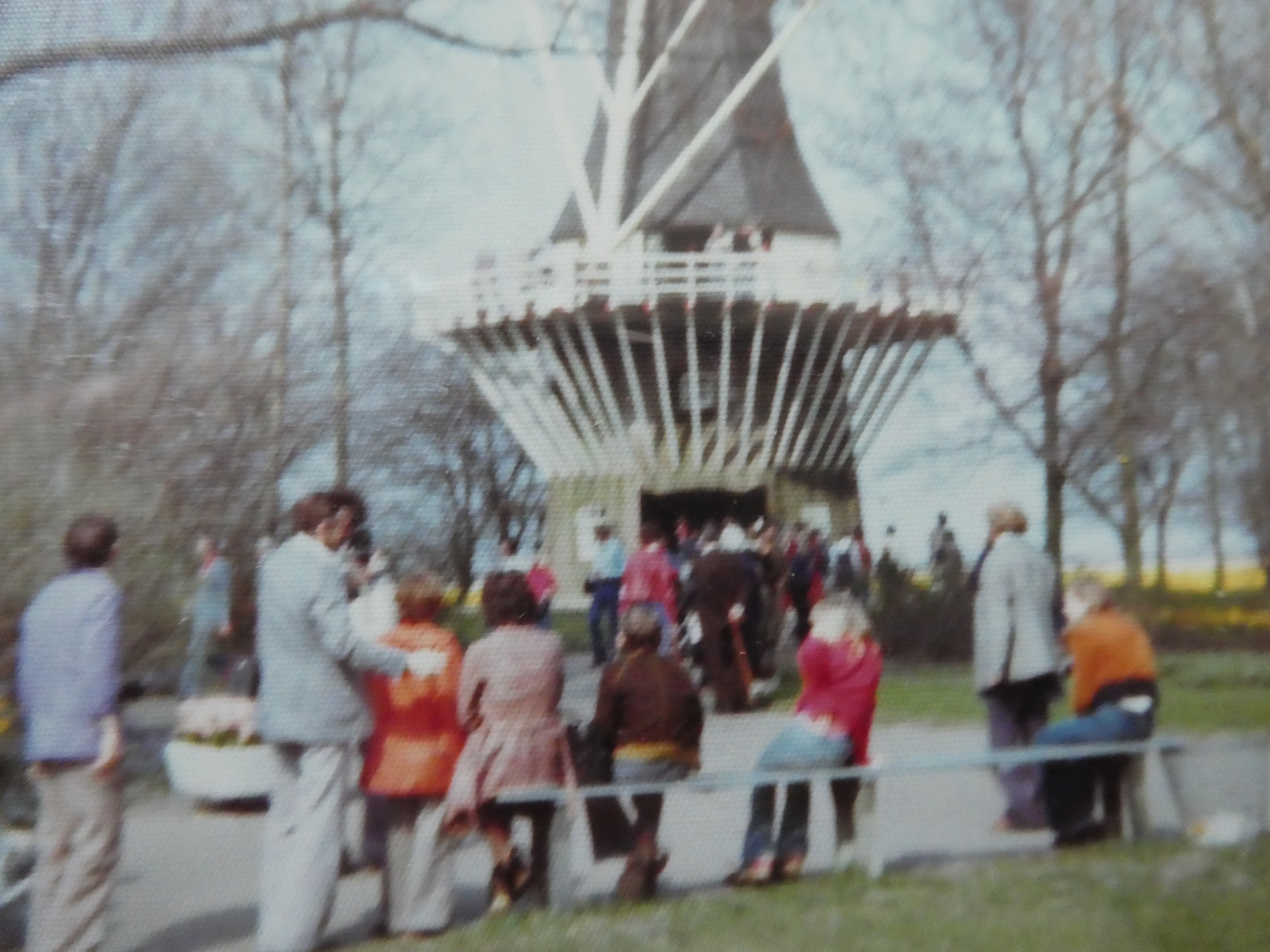
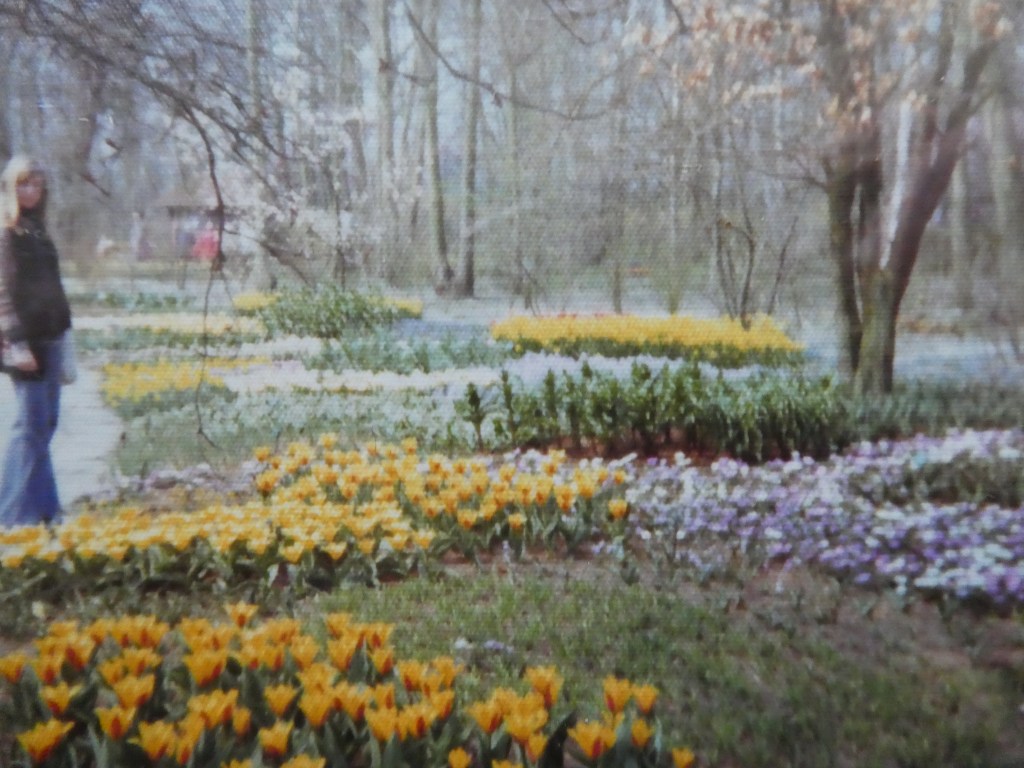
After a couple of years of work, and having become established in a pleasant, shared flat in Putney, one of my flat-mates suggested we take a trip to Amsterdam during our Easter holiday. We’d still be doing it on the cheap, taking standard flights and staying in the youth hostel; but Easter is a fine time to visit The Netherlands and we’d be able to take a coach out to Keukenhof, where acres of bulbs are grown, a spectacular sight in the spring.

I was as excited about the flight as anything else. At this time [the mid 70s] air travel still held a hint of glamour, influenced by Freddie Laker’s entrepeneurial innovations, the TV ads full of inviting images. I am ancient enough to remember the Imperial Leather soap commercial, in which a couple are bathing in an aircraft. These days any sense of luxury or comfort on an aeroplane can only be accessed via flying business class and paying extortionate sums for tickets.

But Amsterdam is a short flight away and a trip we would never undertake by air now. My friend, Deirdre had come up with another cunning plan. Her ex-boyfriend was living in Amsterdam, having moved on to live with his latest squeeze, a Dutch girl in a flat near the centre. According to Deirdre, Dale was a confident, charming but egocentric womaniser who would love nothing more than to provide free tours and guidance during our stay. We never discovered what the Dutch girlfriend thought of it all…

Everything was straightforward with our travel and we got into the centre of Amsterdam with no trouble, but locating the youth hostel was another matter. There were, however various ‘hostels’ and we checked into one, assuming it was indeed the official, kosher, accredited real deal. It was certainly cheap. But in that time-honoured way of ‘getting what you pay for’, it was a dump, the shared washing facilities spartan, the dorms quite nasty.

We managed a night then rose and set off to meet Dale, who was delighted to see us and show us around, He also explained that our accommodation was not the Youth Hostel and took us to find the YHA property, which was located bang slap in the centre of the red light district [which, for anyone who would like to know, is near Amsterdam’s grand railway station].

We removed ourselves from the first place and went to the YHA, where we were allocated bunks in a dormitory, mine being the top one. There were strict rules, one being a denial of entry after 10.00pm, which seemed a little draconian. We’d also have to take our turn with clearing up breakfast etc. But it was clean and safe.

So during our week we walked all over Amsterdam, taking a canal boat ride, visiting the Rijksmuseum, all the major squares, the flower market and most memorable, a tour of Anne Frank’s house, when we were almost alone and in silence to look at the cramped attic where she hid with her family. I’ve returned to Amsterdam on a number of occasions but have never wanted to revisit the house, to queue up and shuffle around in a crowd of chattering tourists.

As twenty somethings, we threw ourselves with gusto into the city’s nightlife, but our 10pm curfew was a severe obstacle to fully enjoy the evenings. Most nights we rushed in with seconds to spare, to find the dorm dark and full of slumbering women, then I’d have to scramble up past two levels to reach my bunk, hoping not to insert my foot into someone’s face.
It was a packed week. The Netherlands’ capital is always a captivating trip to make, but you never forget your first sight of iconic places-and you never forget the first time you flew, either!

Banjo Wakes

This month sees the debut of my novel, eco-thriller ‘The Conways at Earthsend’ , published by Pegasus. [The Conways at Earthsend by Jane Deans | Waterstones, or The Conways at Earthsend: Amazon.co.uk: Deans, Jane: 9781784659615: Books]. For more information, please visit my author page on: Facebook. In celebration of this event I’m posting up a new short story for readers, followers and visitors.

This story describes a different kind of journey:

Banjo Wakes

When he wakes it’s dark. He waits for an outline, for a glow or a contrast but there is none. He becomes aware by degrees, lying on his back, his right hand caught underneath him so that he must shift. He is able to move a little but his hand and arm that are trapped feel numb. He reaches across with his left hand and tugs at his right, a coat sleeve, some kind of woolly fabric. He needs to stop and rest between tugs but at last his arm is freed, although there’s no sensation in it. He rubs his left hand and arm until prickly pins and needles run up and down his fingers and his wrist, then some feeling begins to return.

He moves his head from side to side and touches the floor where he’s lying. It’s a little warm and smooth with a few knobbly protuberances and it’s damp with some kind of viscous deposit. Reaching up and to the side it feels identical, except that the wall he’s lying against seems to curve inwards as it rises and has the same, slimy residue. It is odourless.

Can he sit up? Should he try? His arm and hand are restored and he tries rolling, throwing his right shoulder across until he’s on his front then pushing up on his elbows. He’s out of breath now and stays, leaning down on his elbows to wait for the panting to subside. That’s when he feels the vibration under his fingertips and hears a dull, pounding beat like a machine.

He sways a little and some awareness seeps in. Where is Judy? Is she here in this place with him, or is he alone? How did he get here? He takes a shallow breath and pushes himself into a seated position. Now he’s gulping and heaving with the effort but if there was a glimmer of light, he’d have more chance of spotting it by seeing both ways. He leans back against the curved wall until he’s recovered his breath.

Every part of him aches; every joint, muscle and organ heavy and sore, as if he’s been run over by a steamroller. Is that it? Has he been in a road traffic accident, pushed into a drainage pipe? Perhaps he should try and call for help? Does he have a phone? He roots around, feeling for a pocket in the woolly coat and finding one, but with nothing in it. His legs though, are bare and he is not wearing shoes. Where is Judy? He tries to remember where he was before he came here and what he was doing. The dull throb continues in a relentless rhythm, the beat familiar, a song he knows, music he’s played himself, with the band. The band! Of course, he is a musician and plays a stringed instrument-a banjo! And something else; it’s his name. His name is Banjo, too.

When he tries to hum the tune, nothing comes out but he moves his fingers as if on the banjo strings and in his mind’s eye there is an image of Judy, next to him, playing bass and belting out a harmony to the chorus. Now he knows the song. It’s ‘Copperhead Road’, Steve Earl’s country number about bootlegging and drug running and he runs through the lyrics in his head: ‘Now my name’s John Lee Pettimore…’ He can hear Judy’s strong vocals as she stands by him at the mike, close enough to smell her fresh, citrussy scent and see the light dusting of freckles across her cheek.

He has to find a way out. And he has to find Judy.

He turns his head to the left and stares long and hard into the dark void but can make out no shape or line, then turns to the right, thrusting his head forward and gazing, holding his laboured breathing back until there, at last he detects a minute, white pinprick.

It’s something. Maybe it’s a light or maybe not. But to ascertain the source is better than sitting here doing nothing. He takes stock. He is neither hungry nor thirsty, which is just as well as there is nothing here. Nothing except darkness.

He takes a breath before manoeuvring back onto elbows and knees facing the white dot and begins to move towards it, Copperhead Road playing in his head along to the pulsing throb of the tunnel. After a few seconds he must rest, flopping down on his stomach this time and it seems as if the vibrating beat is faster as he listens. Then it slows again. He pushes up, labouring to get back on his knees and moves forward.

Banjo has no idea of time here or how much has elapsed since he began to move, resting between bursts. Sometimes, when he stops he sleeps, waking on his stomach, neither hot nor cold, thirsty or hungry. Whenever he wakes the pounding of the tunnel is slow.

It occurs to him that he might be dead, in which case, what is he crawling towards? Is he making his way towards an afterlife? He feels himself crumple inwards like an eggshell. It’s too soon; he hasn’t said goodbye to Judy. There is still so much to do. He’s not ready. He frowns and grits his teeth. ‘Get on with it, Banjo!’ he tells himself. Whatever is there, he needs to find out, needs to get there and this is no time to wallow in self-pity.

Next time he stops he pulls up into sitting again for a proper rest and to check the dot. The curve of the tunnel wall supports his back as he leans in, noting that his clothes are soggy with slime from the deposit he’s picked up. Now, when turns to look at the white speck he sees that it’s bigger and when he concentrates, he thinks there may be faint, pale shafts radiating inwards from it. If he’s correct this will be a light. His heart pounds. If it’s a light can it be the tunnel entrance?

He’s encouraged, and crawls on with renewed energy, his heart beating along with the tunnel’s throb…’Now Daddy ran whisky in a big, black Dodge’…the lyrics ring through his head as he goes, coming back to him now. Other than aching he’s not injured so he couldn’t have been in an accident. Was he abducted? Imprisoned here? But why would he be? He is neither rich nor famous.

He doesn’t allow himself another look until he’s managed another five bursts of crawling, but when he does stop to sit up the circle has grown much larger, light shafts illuminating the tunnel entrance, enabling him to see a grey and purplish glow, textured with something like threads. It’s puzzling, almost as if the tunnel was a living thing; the inside of a creature. Has he been swallowed up by an enormous beast? That would explain the warmth, although not the fact that he is still alive-if he is alive. If he isn’t alive, he has not much further to go to discover what the afterlife has in store for him. Either way he must plough on.

When he stops again to gather strength it’s clear that one more effort will take him to the tunnel entrance, and now he can see that outside is a clear, pale blue, indicating that the tunnel will exit to the outside somewhere and that it is a bright, sunny day. He considers this, feeling around in his woolly pockets once more for something that will help when he’s out. He has no means of communicating with Judy. He can remember where he lives but will he know the way back from wherever this is? Supposing he’s miles from anywhere? It could be a desert, or a mountaintop. And the lack of footwear is going to be a problem. He shivers, in spite of the tunnel’s warmth.

Banjo readies himself for the last push and crawls towards the big, blue mouth, his heart beating fast and his eyes squinting in the blinding light as he arrives at last, breathless, lying on his back across the threshold. He squeezes his eyes closed for a moment against the glare.

The pounding has stopped. There is a voice.

“Banjo? Are you with us at last? Hello!”

He stares into the blue, realising it isn’t as he’d thought, sky. It’s blue fabric on the arms and torso of a person. Now he can hear a high-pitched bleeping and when he plucks at the woolly sleeve of his coat, he finds it’s a blanket. He frowns as the someone leans down to peer at his face.

“Do you know where you are? You’ve been asleep a long time. Lie still now and we’ll let your wife know you’re awake. Judy, isn’t it?”

Banjo blinks, looking around at the array of tubing and machinery surrounding his hospital bed, remembering nothing of the circumstances that brought him here but feeling that the journey he made as he fought his way along and out of the tunnel has been the hardest of his life. He looks up at the blue-clad nurse and mouths the words, ‘thank you’, and she places her gloved hand on his arm for a brief moment and smiles.

A Turkey Tale 2

As documented in last Sunday’s post, we were having a quick, slightly off-season break in sunny Turkey, based in the pleasant coastal town of Cesme in a lack-lustre, budget hotel.

I’d had a week in Turkey a few years before and had taken a mini excursion to Ephesus and Pamukkale, an experience I was happy to repeat and knew Husband would like. The trip would be by coach, with a tour guide. It would also mean a stopover in a hotel, providing us [hopefully] with a break from Donna Summer’s ‘Hot Stuff’, our Cesme hotel pool man’s obsession.

There are various ways to visit archaelogical sites. You can do your own thing, either with or without a guide book, but you will miss out on a wealth of historical background. You can take up an offer of one of those audio-guides that hangs around your neck, although more often than not the narration will be out of sync with the points of interest [this often happens on open-top bus tours] or the sound will give up half way round. Then there are tour guides, who may be earnest, well-meaning and deathly dull or knowledgable and entertaining. On this occasion we got lucky and our guide, Uys was charming and urbane, maximising our experience of exploring beautiful Ephesus by feeding us interesting stories and giving us plenty of time to wander by ourselves, too.

It is an extensive site, notable for the remains of its iconic library and a stunning paved road, lined with roadside columns and statues and all well worth a visit.

Though I harboured no expectations of the hotel we were to overnight in it was a vastly different experience to our Cesme place, a vision in marble with a grand entrance lobby and rooms spread throughout the grounds. There was also a buffet style dinner which was more than adequate. We were able to relax and chat with Uys, our tour guide, who seemed more than happy to socialise.

The second day of our trip consisted of a visit to Pammukale, a stunning natural formation of calcium pools that cascade down a mountainside. I’d visited before, when none of it was fenced off and visitors could wander down and in and out of the warm, cloudy water in the saucer-shaped pools as they pleased. By the time I went with Husband the powers that be had grown wise and cordoned off the majority of it, leaving just one or two areas for a paddle or a bathe. Before I’d ever visited Turkey I’d never heard of Pammukale and I’ve subsequently wondered why it isn’t much better-known, as it is a natrual wonder of the world!

Above Pammukale lie the ruins of Hierapolis and a hotel where we lunched after swimming in the warm, sulphorous waters of its pool, among columns and relics long fallen. To swim in such a place leaves a lasting memory. We journeyed back to Cesme and I was struck by the vast amount of ancient history, aged architectural remains strewn around in the open, uncatalogued and unremarked.

A Turkey Tale

Years before I ever went to Turkey I imagined it to be an exotic, other-worldly and faintly menacing country, where west meets east; a land of flying carpets and genies, of spice markets and steamy bath houses. And in some respects, as I found on my first trip there, I was not too far wrong.

For a start Turkey has a long and successful history of catering for tourists and has been embraced and courted by the package holiday industry for many years-and why not? The weather is as reliably warm and sunny as Greece, the coastlines are beautiful and there is a wealth of history to be explored in the numerous archealogical sites scattered everywhere.

For all of these reasons-plus the fact that we could afford a week in spring [when more northerly travel would preclude tent camping] in a basic hotel despite all the calls on our income, we got a package holiday to Cesme, an attractive enough seaside town in the Bodrum region. It would be my second visit to Turkey.

The two star hotel was on the outskirts of the town, but the room was small. It had a miniscule balcony, of sorts, overlooking the pool, where we were soon to discover that the pool barman had an obsession with Donna Summer-and more specifically with her disco hit ‘Hot Stuff’. The song played on a continous loop day and night-not condusive to peaceful sleep. In addition to this, in the ‘en suite’, a shower room barely spacious enough to accommodate a skinny body, the dangling light fixture dripped water. Horrors!

We moved room, although nowhere was far enough to escape Donna Summer. Other than the shortcomings of the hotel though, we were happy with our location.

Though there are limits to what you can do and see in a week’s holiday we like to do more than loll around on a pool side and we were eager to look at the local beaches so despite the heat we decided to walk to ‘Altinkum’ [Golden Sands] and once we’d set off it became clear that few others used feet to get to this stunning stretch of coast, but get there we did, via roads past fields of luscious water melons. En route, on a quiet stretch we passed a lonely roadside restaurant which looked a good bet for our evening meal.

We spent the day at the beach, snacking on freshly roasted corn cobs from beach sellers when we felt peckish.

When we were ready to return we decided to try a Dolmus. They are cunning minibuses that zoom about and stop to pick people up when they are hailed from the roadside. You simply take a seat inside and pass the fare up to the driver via the other passengers. It is a fine idea and works well. We took the Dolmus back as far as our restaurant and stepped inside the cool interior.

When we discovered that there was no menu we realised this out-of-town restaurant was a favourite for locals and that, as tourists we were a little unusual. There was no English spoken and Turkish is not a language I’ve studied, but the smiling restauranteurs were undeterred and we knew ‘meze’ so we could start with that. We sat on the shady veranda with our small sharing plates of tasty things and glasses of wine. When it came to ordering our main course we were shown a large polystyrene box containing a variety of enormous fish and invited to choose one, which we did, pointing to the nearest.

We’d stopped quite early at this out-of-the-way restaurant so it was quiet, except for an occasional Turkish diner arriving by car.

In fact, so delicious was our out-of-town meal we returned to our hotel with a more indulgent attitude towards Donna. But then we were to escape the hotel for a couple of days for a thrilling excursion…

Tented Travels. Portuguese Tours and Tribulations.

After having explored the area around Ancora and its beaches and experienced an eventful time in Porto [as described in last week’s post] we determined it was time to up tent poles and meander southwards down the coast.

There is as much of an art to dissassembling tents as there is to erecting them-more so sometimes. The borrowed pyramid tent was large and we were only beginning to get a technique for using it, especially folding it small enough to cram into the bag. When we came to collapse the tent ready for folding we discovered, to our horror that the beautiful conifer that had provided our shade in this corner of the site had also dripped unsightly resin all over the pale beige canvas, leaving it stained and blotchy. We were horrified. This tent had been kindly loaned by one of Husband’s colleagues. Whatever would they think of us returning it in such a terrible condition?

Perhaps the elderly Portuguese neighbours who’d been so ready with the advice we didn’t understand had been trying to tell us this all along?

For now though, there was nothing to be done so we packed up and departed to have a look at some more of Portugal, winding up at the whimsically named Figueira da Foz, which was then a modest seaside town with an attractive sea front and of course, beautiful, surfable waves. I believe that, like most places Figueira has undergone significant development in subsequent years but then it all seemed quite basic and unspoilt.

After we’d settled we wandered along for an evening drink at what appeared to be the only seafront bar. The night was breezy and the prom almost deserted, but there were lights on and as we pushed the door and entered there was only one group of revellers inside-a family enjoying a birthday celebration. We sat down to enjoy a glass of wine, making for a table a little apart but soon we were sucked into the revelries just as if we were distant relations, and plied with slices of birthday cake.

At the time, there were few sites near enough to Lisbon to make it easily accessible, but we could drop into the beautiful old city for a day en route south towards Portugal’s corner, which we did, strolling the lanes and gazing at the iconic funiculars and elevators. This first visit to Lisbon was quiet and untroubled by traffic whereas a subsequent trip saw us mired in gridlocked jams and breathing in noxious fumes during an open-top bus tour. How times change!

On we went to Sagres, in the south west corner before the coast turns into the popular Algarve. Here it was wild and breezy. We camped in a small, wooded site and were delighted to help out our young, Portuguese neighbours with the loan of a tin opener! At sundown people congregate to watch the sun set on this furthest west point of mainland Europe, perching on the rocky clifftops above frothing waves. It is a lovely place.

We bimbled [Husband’s word] along the Algarve, avoiding the high-rise hotel developments where possible and eventually on back up through Spain and France. At some point we had to pack the ill-fated pyramid tent wet and discovered it had torn in a couple of places. Horrors! Now it was stained, wet, torn and sporting gaffer tape. Stopping at a motorway service station we removed it and attempted to dry it out, with limited success. There was no way we’d be able to return it in this parlous condition. We’d simply have to buy the kind lenders a new one-and keep this one….which we did!