Unholy Trinite

A British woman in the pitch next door to ours drones on and on, a constant monologue, a commentary to her husband about her activities: ‘I’m putting this in here’, ‘I’m going to take these in’, the pegs are under there’, ‘you’ll need to wash that’. Later, once they’ve cooked their evening meal on a grill- accompanied by the commentary- she launches into a new monologue about rose wine- how the deeper the colour, the sweeter it is, or something. She intersperses each comment with ‘but I don’t know anything about wine’ or ‘I know bugger all about wine’.

When I meet her at our shared water tap she treats me to a story about her new, grey top and how the wind blew their washing rack on to their teapot, which in turn tipped over on to it and she doesn’t know how she’ll get it dry.

Next morning they’re engaged in the commentary-laden project of moving their caravan into a new position- a task that seems to require emptying it entirely and using their car to manoevre it round. This is apparently [or so I can’t help hearing] due to their lack of shade. So when a member of staff comes along to tell us we must either leave or move because we only booked three nights it’s not too much of a catastrophe- except that I feel incensed that there’s no acknowledgement that we did, in fact, reserve for four nights.
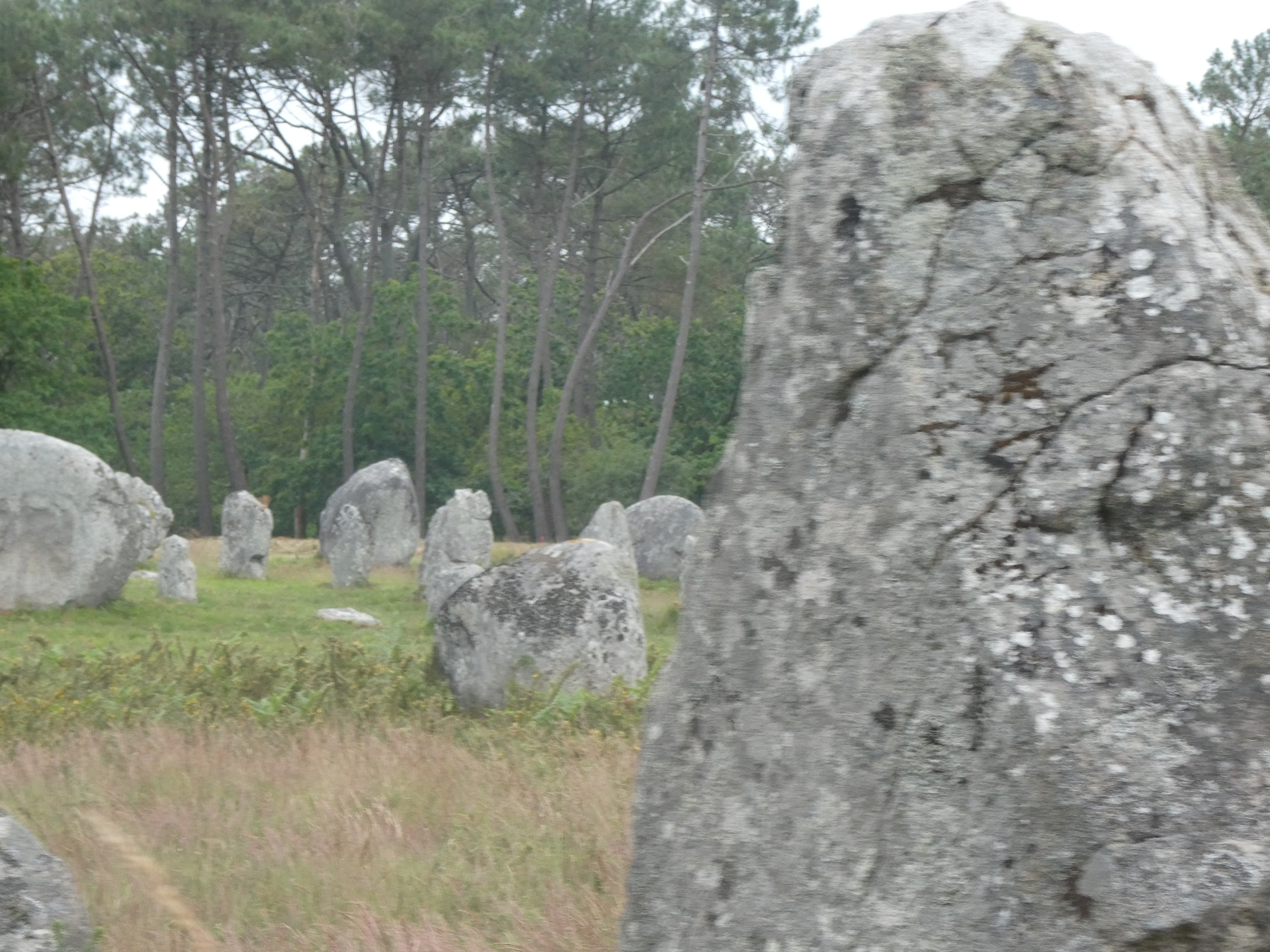
We’ve been here, at La Trinite sur Mer, for a couple of days. For our first day, which was a little overcast and breezy, we walked around the town then, on a whim, took the ‘Noddy’ train trip out to the Standing Stones at next door Carnac- which are an amazing, vast, neolithic site, although we’ve been before. The little train is relaxing and there’s information on the headphones, of course. Back in town we get a coffee, served by [yet another, for those following this blog] ill-tempered woman. Not all the bars and cafes along the prom are open.
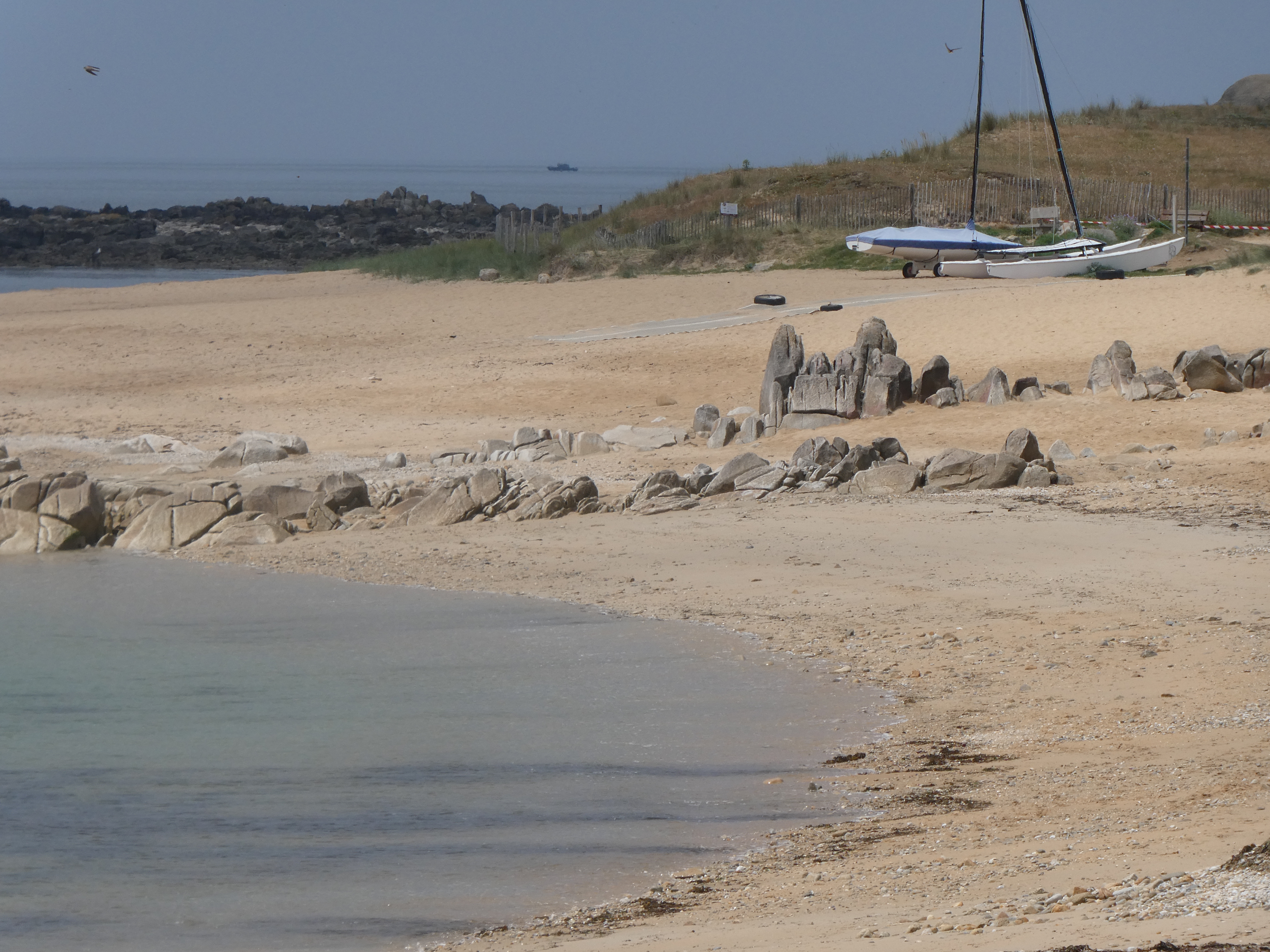
Yesterday we took the van out [partly in the interests of battery charging] and looked at a few places- some beautiful wild dunes by a deserted beach where we lunched, Port Louis, which hadn’t yielded a coffee shop. The weahter was hot, sultry and sticky, making walking and sightseeing hard work. Then thunderstorms moved in, the rain so heavy we needed to pull in and stop to wait it out.
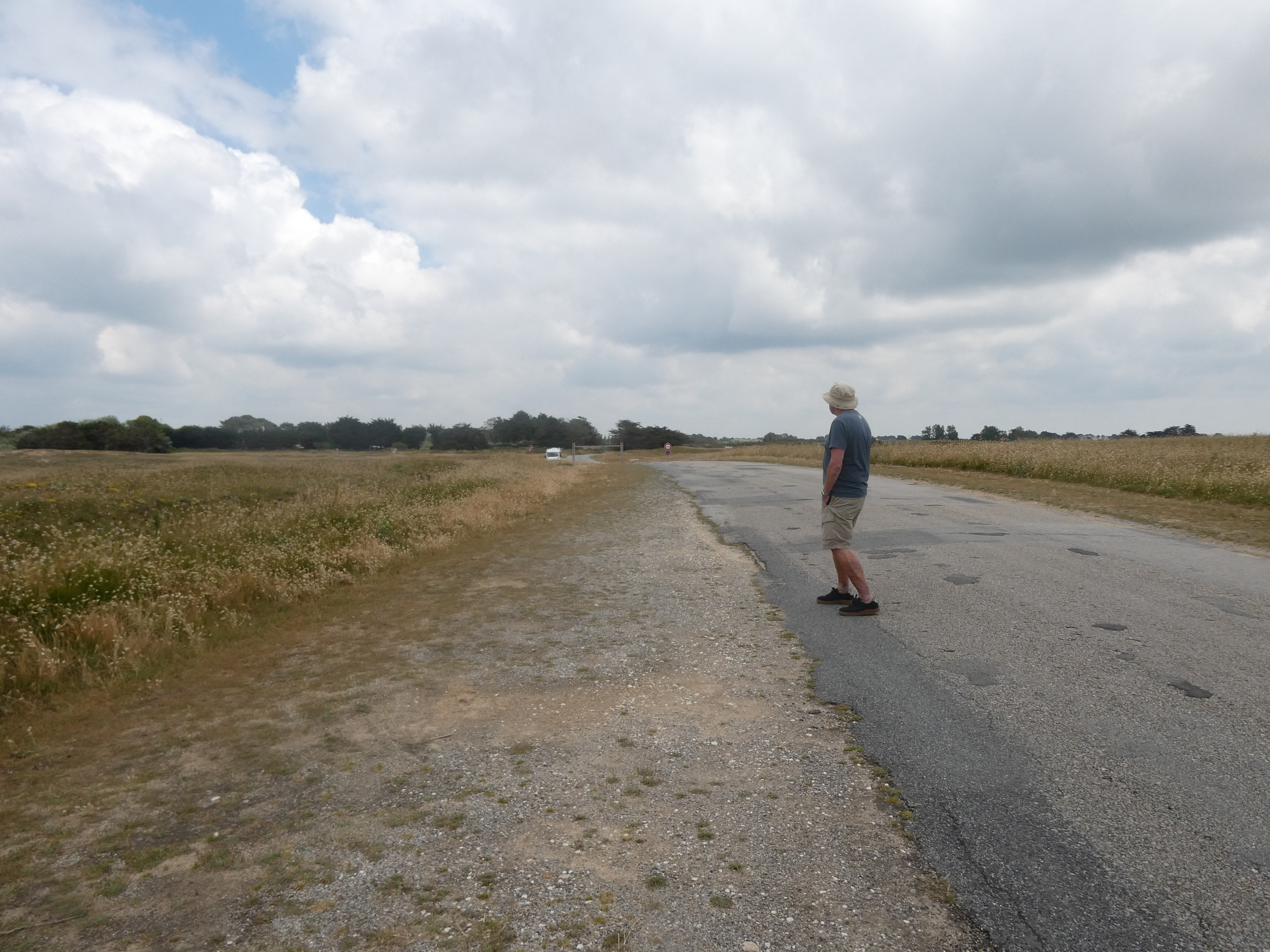
When I wake on the third morning there’s sune pouring in and a fresher feel. We can sit outside, have coffee in the sunshine, read a book. In the afternoon we walk down a cute footpath outside the entrance to the site and up around the headland, the coast rock-strewn and rugged, then it turns along the beside small beaches and back towards the town.

We’re off again next day, heading south towards an area we’ve visited several times- around Pornic. To get there we must cross the stunning bridge at Saint Nazaire which crosses the Loire at its estuary- then we’re over and heading on in blue skies and sunshine…

For fiction by me, Jane Deans, search for novels: The Conways at Earthsend [an eco-thriller] and The Year of Familiar Strangers [mystery drama]Visit my website: janedeans.com

It Never Rains but it Pours

When we arrive to Villedieu les Poeles, a little old Normandy town where we’ll spend a couple of nights, the road to our chosen campsite is barricaded off and a large expanse of the town square car park is occupied by teams of Petanque players- it’s a Sunday afternoon. It seems the only way round it is to drive the wrong way along a one-way street, which we do, having watched others. the street up to the site is narrow and blocked by a Belgian car and caravan, but we make it in and get a pitch.

Regular readers of Anecdotage will have learned of our issues earlier this year on a jinxed trip to Spain. when we were without internet and devoid of plug-in electricity…and surprise! The same things happen again.

We are lucky in having excellent batteries, which can keep us going as long as we move every couple of days, but when we move on we’ll attempt to get it fixed. We can also go to the ‘Orange’ shop and get a SIM for our mobile wifi device- so that will be sorted.

In the evening we drift into town, find a restaurant and have a compensatory meal.

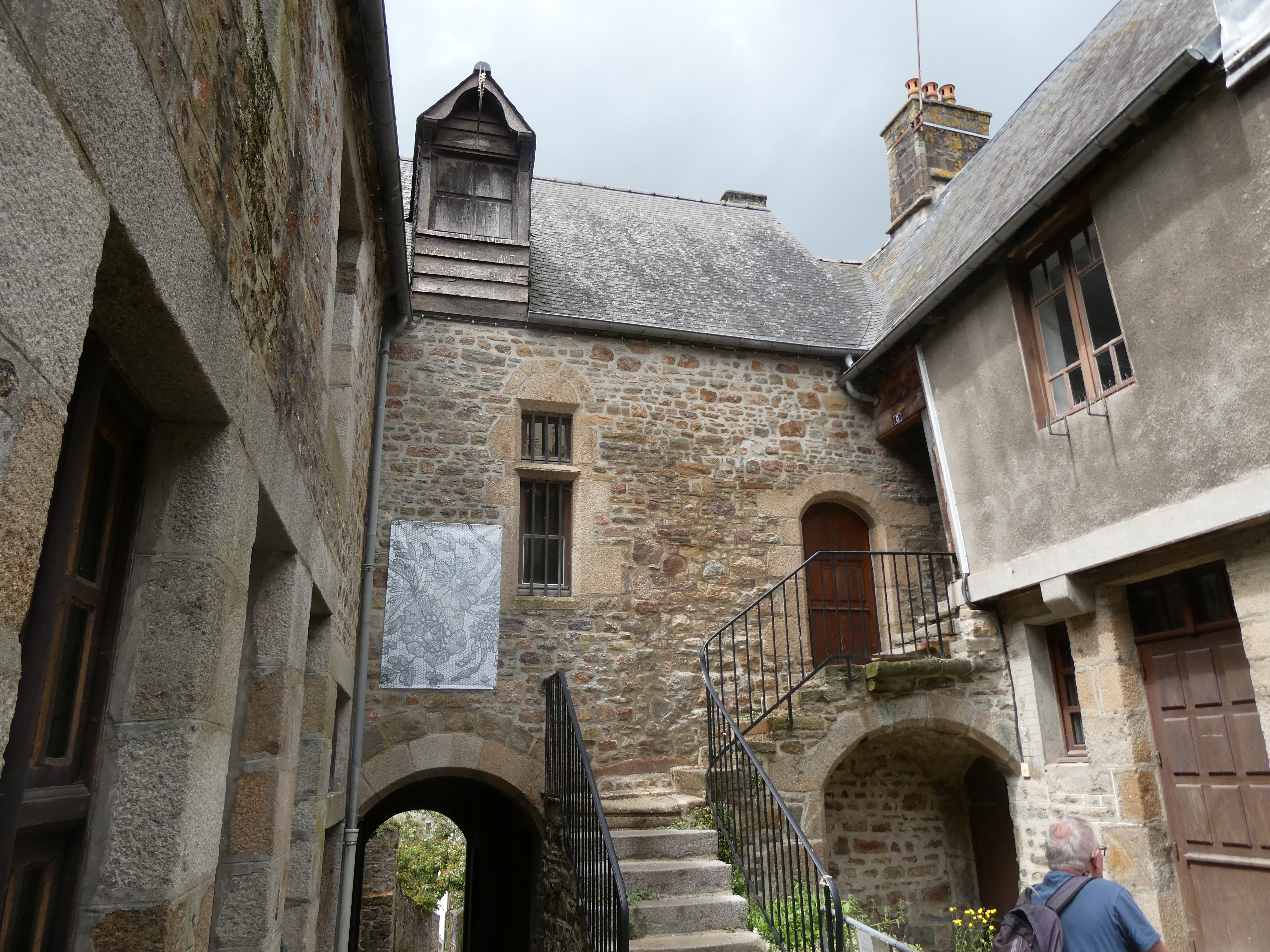
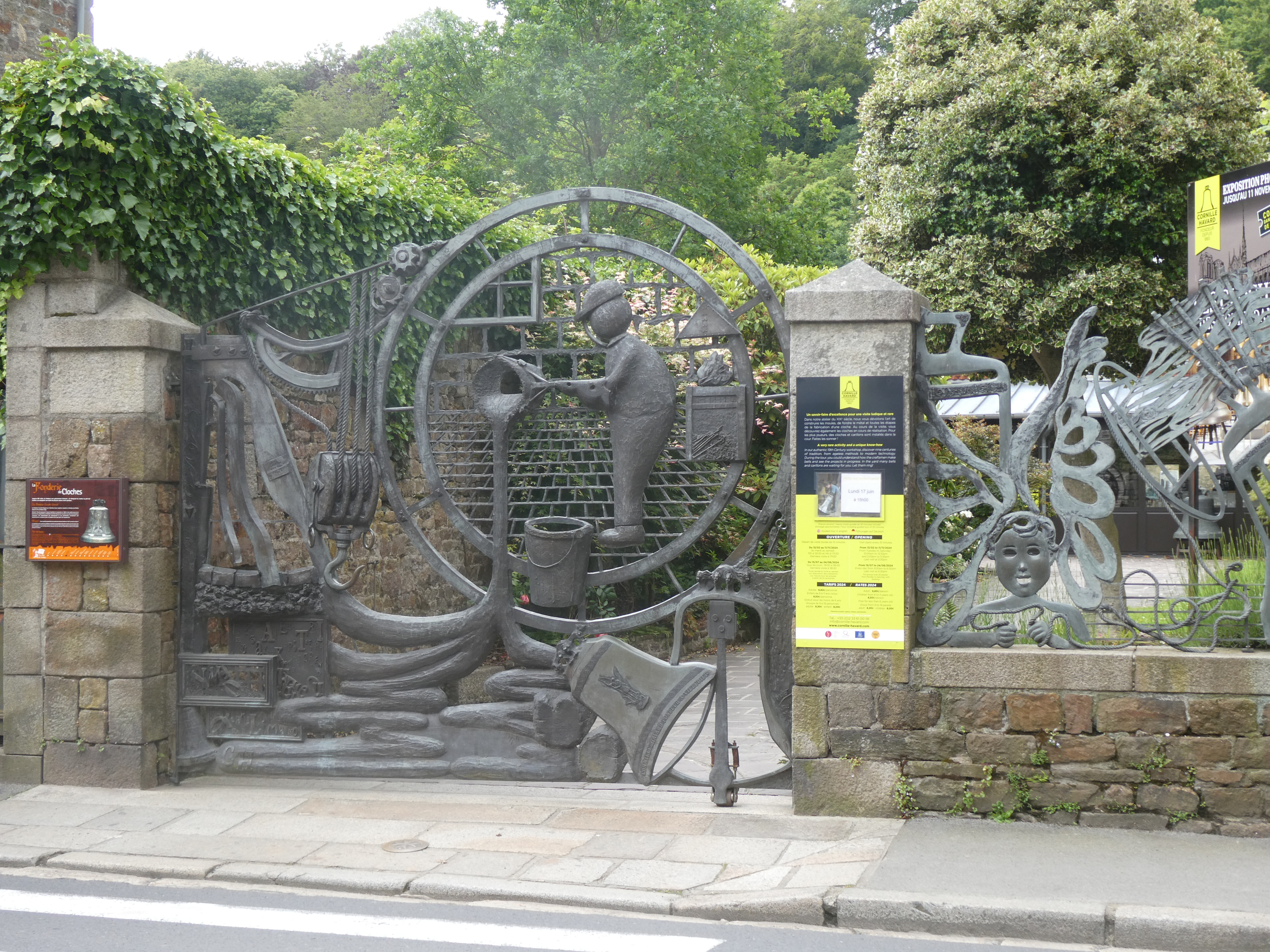
Next day we’re in need of a walk, so after lunch we set off to explore Villedieu les Poeles, which rewards our efforts with loads of interesting and historical information. Iy used to be a town of copper foundries, in particular the making of bells, and the copper workers lived in small courtyards accessed by passageways, which are still there. The courtyards consist of small stone houses with external staircases and many connecting alleys and passages.

Down at the end of the main street and around a corner is the great bell foundry- still working, but we’re unable to see it on a Sunday. All in all it’s a delightful town and well worth a visit.

We spend another night here then we’re off, first to a motorhome service place we’ve found. It’s not far, however we arrive to the forecourt and a notice to say it’s closed today. Then we pop over to Saint Lo and the ‘Orange’ shop, where it’s easy enough to arm ourselves with internet, at last!

We opt to stay in the area for one more night and try the motorhome place tomorrow, but we’ll go and visit Vire to make the most of the day. It’s not a charming, historic town like Villedieu, although it does have the remnants of old Norman walls and a towering archway, decked out with D-Day flags. We wander some more streets then decide there’s not a lot else of interest. The next site is at Torigni-sur Vire but it’s a tortuous trip on country lanes to get there.

By now the weather has closed in and rain has started, nevertheless we decide to take a walk into town and to a creperie that’s been recommended to us. Taking a detour by the lake adjoining the site we find the restaurant- and it’s closed, so we continue into the village where a sign for ‘pub’ beckons us and when we get there it’s very quaint amd olde worlde inside, so we get beers, then I ask if we can eat there- there are boards outside touting various meals. The publican, who is busy peeling potatoes on the bar- answers with a stream of incomprehensible French, too fast for me- and looks very disgruntled, at which we finish the beers and repair to our campsite’s snack bar for pork and chips- and very welcome it is, too!

For fiction by me, Jane Deans, search for novels: The Conways at Earthsend [an eco-thriller] and The Year of Familiar Strangers [mystery drama]Visit my website: janedeans.com

Village on a Chocolate Box

Years ago, when I was a child [the 50s, mainly], boxes of chocolates were a favourite gift and were almost always adorned with pictures- most often totally unrelated to their contents. A common theme was cosy, thatched cottages with roses around the door. My mother was very fond of boxes of chocolates, so this made buying her a birthday or a Christmas gift very simple.

So all these twee designs on chocolate boxes led to a well-known catch-phrase [at the time] of comparing country cottages to chocolate boxes. If you said a home was like a chocolate box, everyone would know what you meant.

Nowadays though, I doubt very many people would understand the phrase at all. Boxes of chocolates have largely fallen out of fashion and favour and those that do still exist are unlikely to have photos of thatched cottages on the front and a huge red ribbon around them.

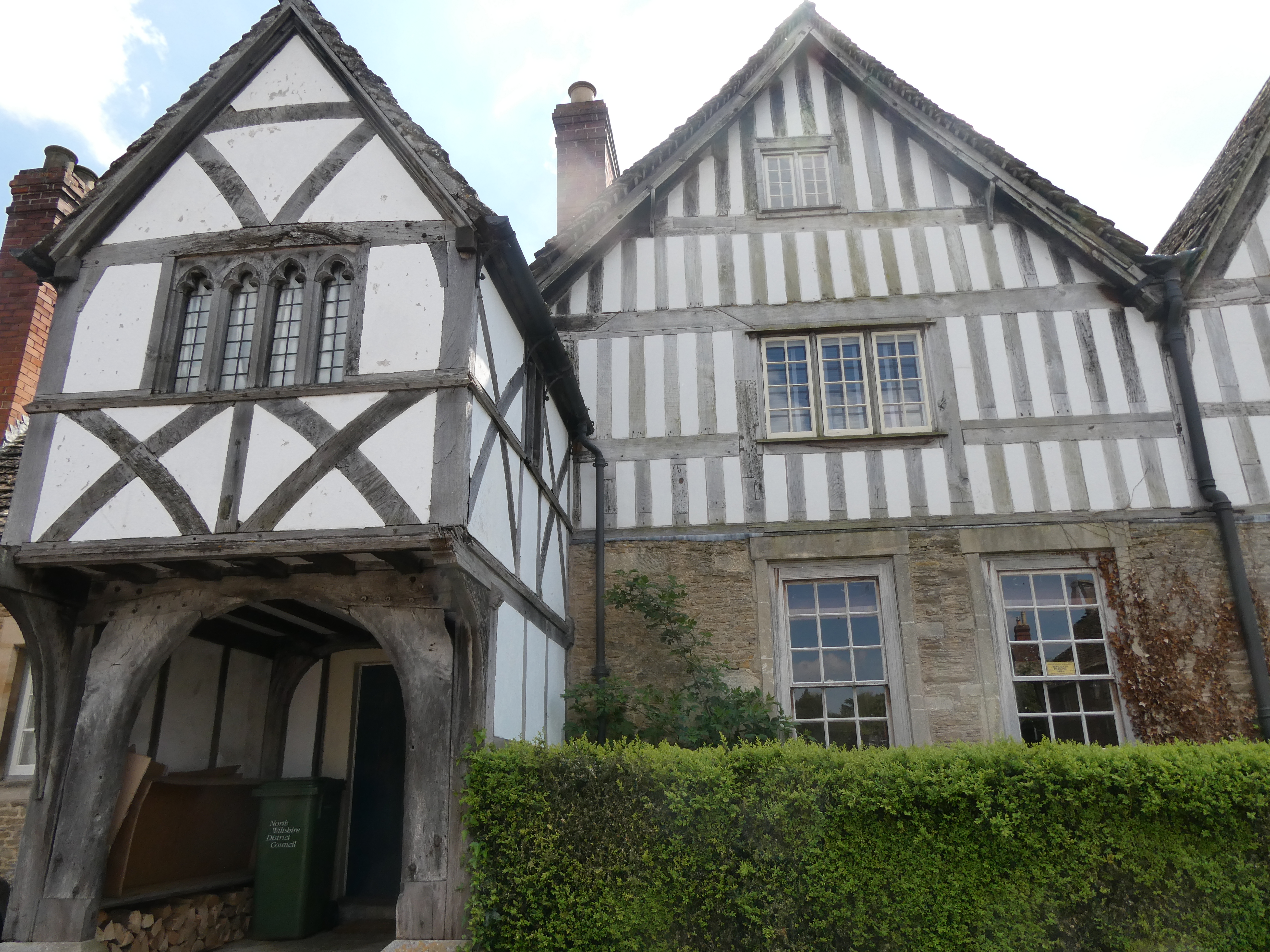
The village of Lacock in Wiltshire, though, boasts enough chocolate box cottages to stock large numbers of sweet shops and is the kind of village I imagine overseas tourists dream of visiting, should they want to see traditional British life.

Here, the two main streets host terraces of ancient buildings- half-timbered, thatched, tiny or rambling- all tended and primped for visitors. Among the homes is a village store, a post office, bakery, cafes, pub and gift shops. Outside some of the houses, shelves of home-grown garden plants are on offer- even offering ‘honesty boxes’ for payment!

In addition to all of this historic twee-ness there is the beautiful attraction that is Lacock Abbey [National Trust of course], a huge, majestic pile sitting in vast and beautiful grounds, all as meticulously tended as you would expect from a NT property.

One stunning aspect of the abbey grounds is a buttercup meadow, a sea of yellow cris-crossed with mown paths, the flowers almost tall enough to conceal a person [at least- a short person like myself!]. In the centre is an old tree, wound with something at the top [possibly willow twigs?] looking like a woody planet, and hung with beautiful bracket fungus.

The wooded area is another sea- white this time, of wild garlic, which seems to be having a good year, perhaps due to March’s incessant rain? There is an unmistakeable aroma of garlic as we wind our way nearer to the abbey.

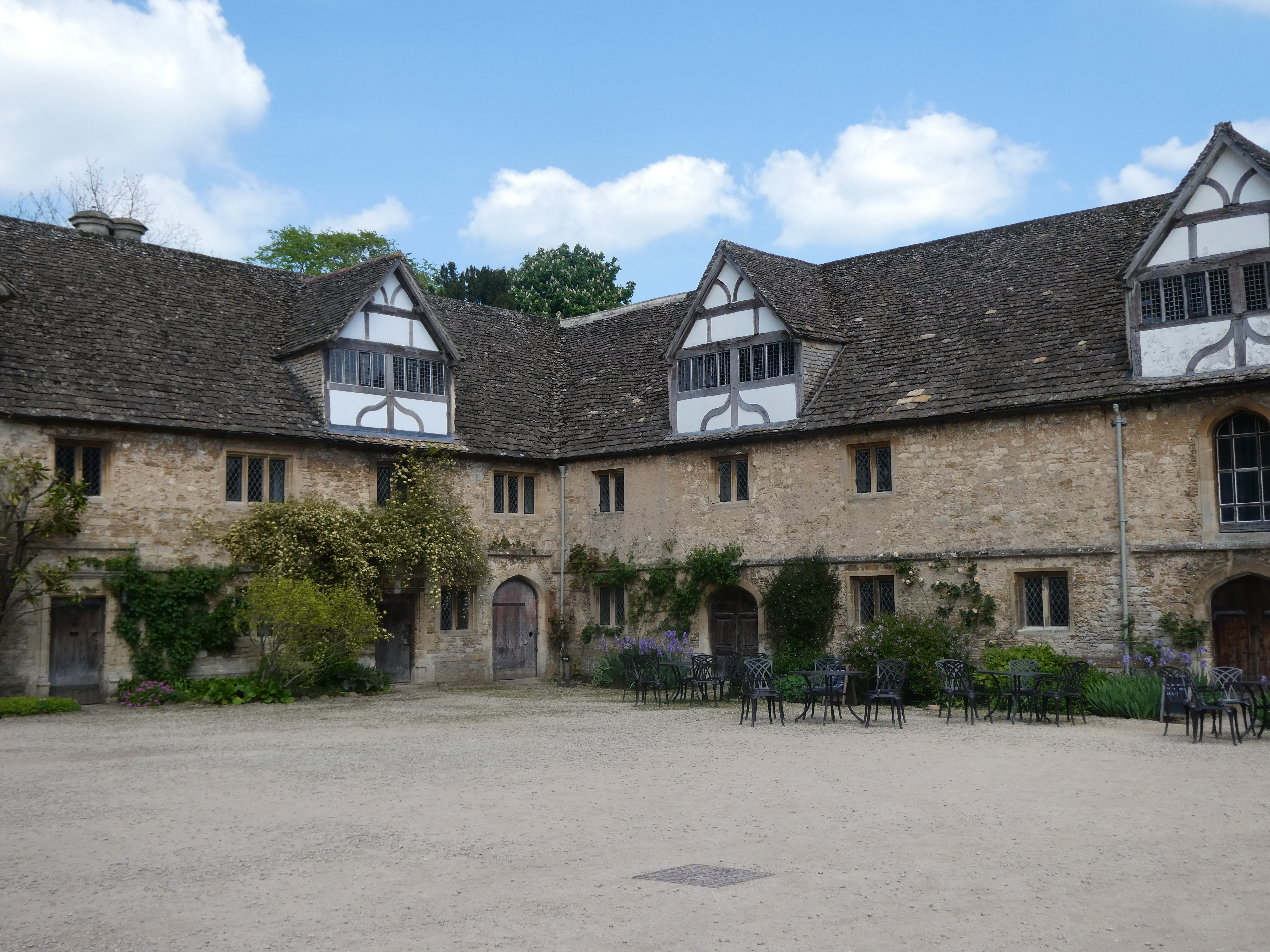
We stop for a quick look at the courtyard- presumably accomodation for the abbey inmates, then pop inside the abbey itself, which is beautiful, hung with paintings and dressed with age appropriate furniture. We finish in the enormous hall which is decked with statues around the walls and an enormous fireplace.

Back outside, we take a moment to visit the large pond, before leaving and going to the cafe, always an obligatory deviation. The sun is out and a cheeky robin visits our table to beg for cake crumbs…now as afternoons go it’s pretty good…

For fiction by me, Jane Deans, search for novels: The Conways at Earthsend [an eco-thriller] and The Year of Familiar Strangers [mystery drama]. Visit my website: janedeans.com

In the Company of Trees

Though it’s not on the plan, as we leave Tobacconist Farm, Minchinhampton I remember that we’re not so far from somewhere I’ve wanted to visit for a long time- the national arboretum at Westonbirt. The arboretum is home to a huge collection of trees and since we’re passing very close it seems a good chance to go and see it.

It’s a warm, bright day. We pull into the coach and motorhome, where we’re almost alone, park and decide to have coffee before we set off around the plantation.

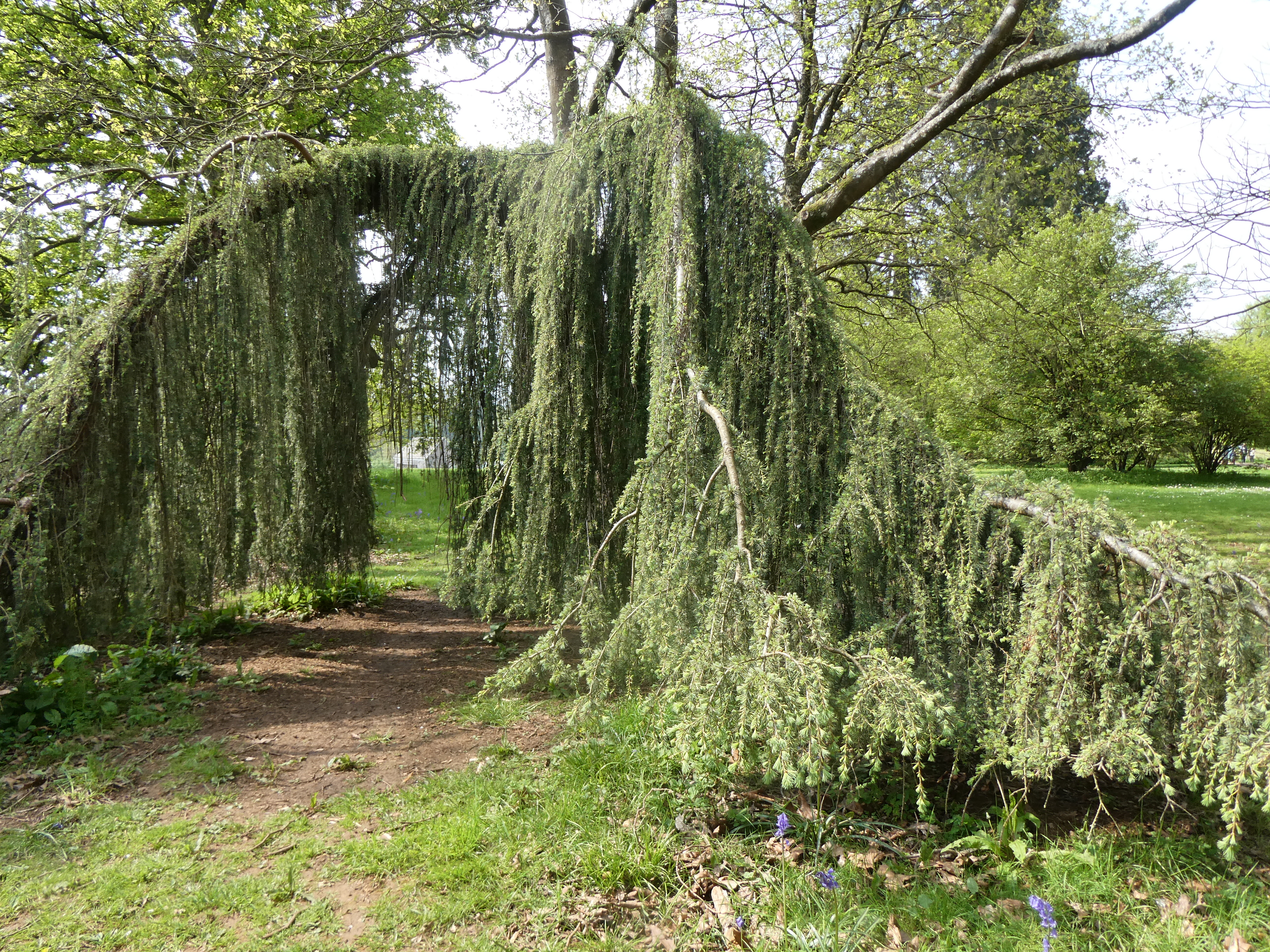
It’s not busy on this weekday, so as we begin to stroll around the vast area we’re often out of sight of anyone. The trees here are extraordinary. As well as the well-known, indigenous trees of the UK, there are many unusual specimens from all over the globe and they’ve made a great job of labelling most of them.

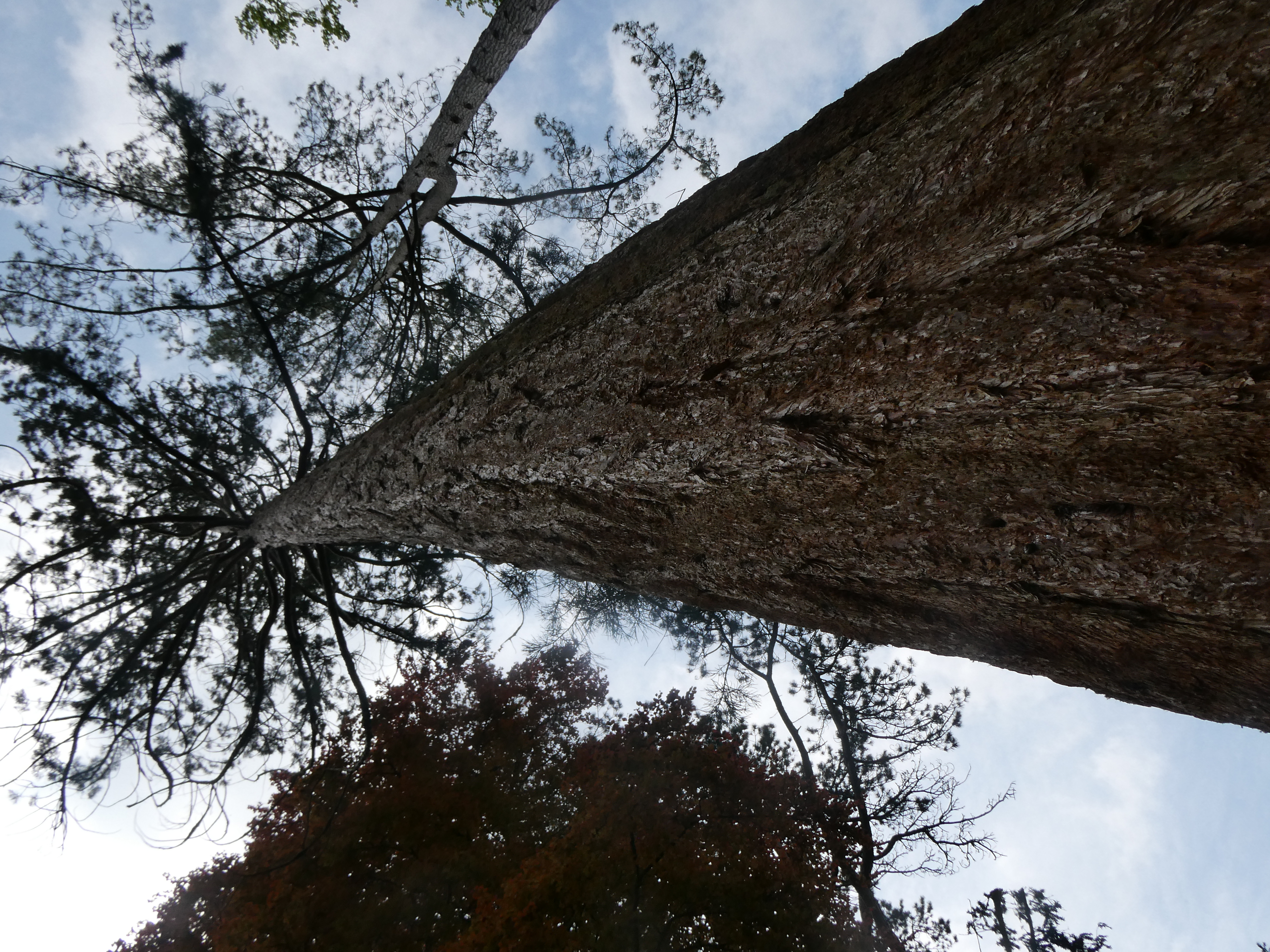
This is a beautiful time to visit, as in between the trees there are huge carpets of proper British bluebells and glorious, vivid rhododendrons in eye-popping colours. The plantation is divided into areas- a lime tree grove, an oak walk, a maple loop. The maples are displaying their finest foliage, with an array of colours from lime green through to the brightest scarlet. There are, of course, some real giants here, too- towering redwoods and huge horse chestnuts.

There’s a lot to see and it requires a lot of walking, which is good for us, although for those who find it harder there’s a shuttle service to take around the site. It’s well organised. In the end we decide there’s so much to see here that we should probably have some lunch at the small cafe and continue.

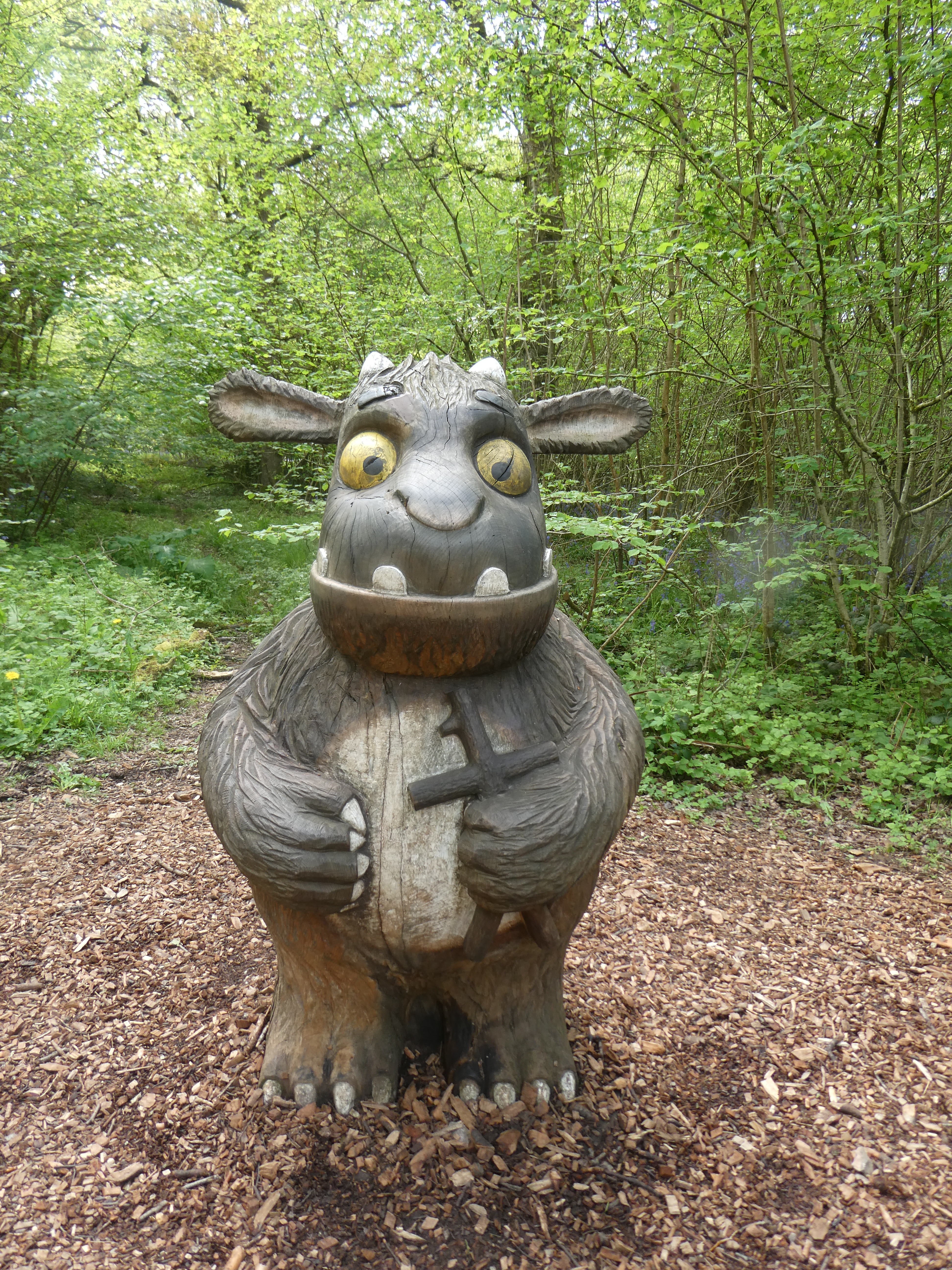
After a sandwich and coffee, we’re up for finishing the circuit of the place. which means going up the other side and a wilder part, wooded and canopied. On one pathway there is the Gruffalo- and I noticed that childrens’ parties can be held here-. I think I’d have loved a birthday party in the woods as a child! [also I wish I was Julia Donaldson but that’s another [childrens’] story.

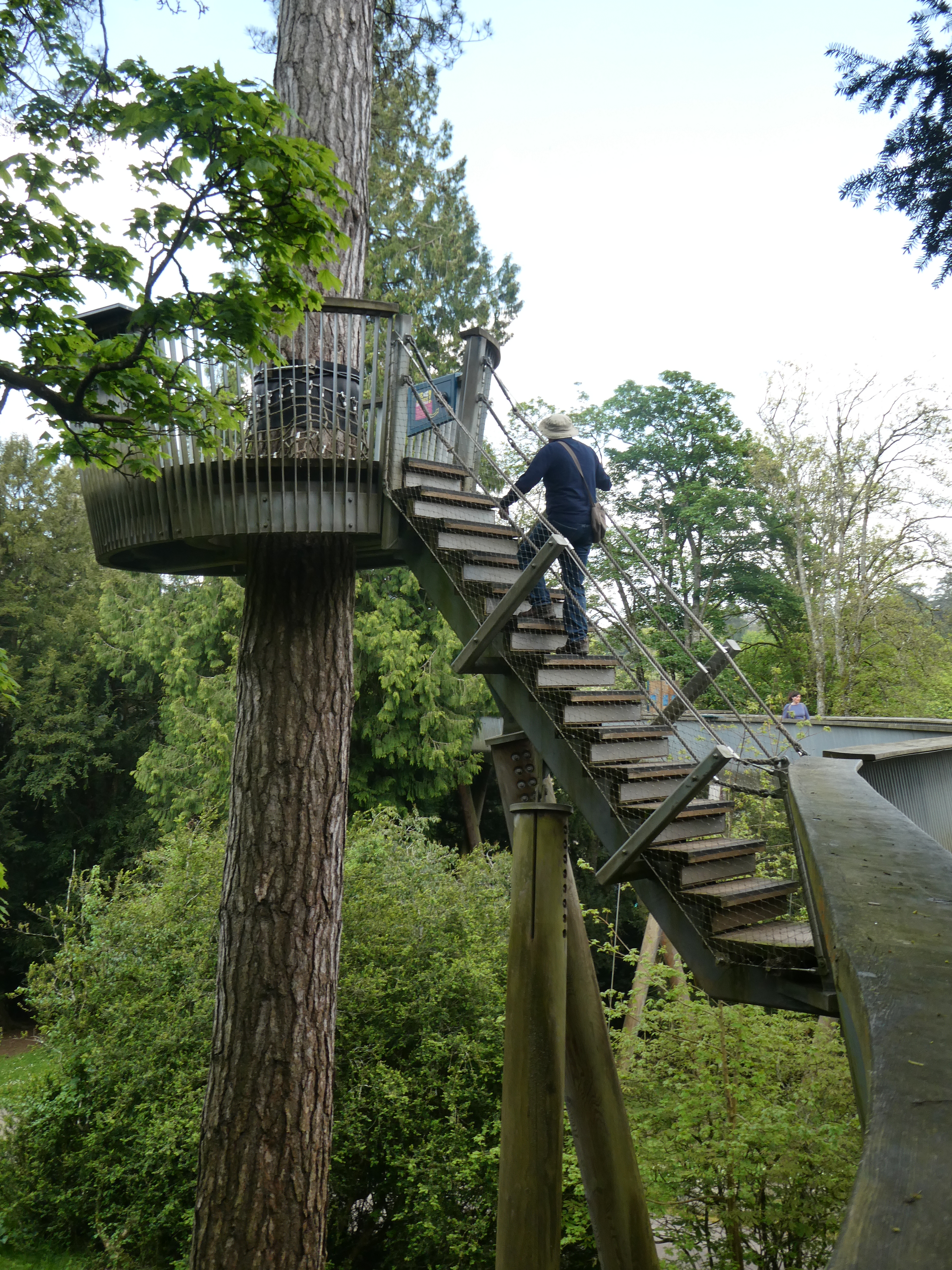
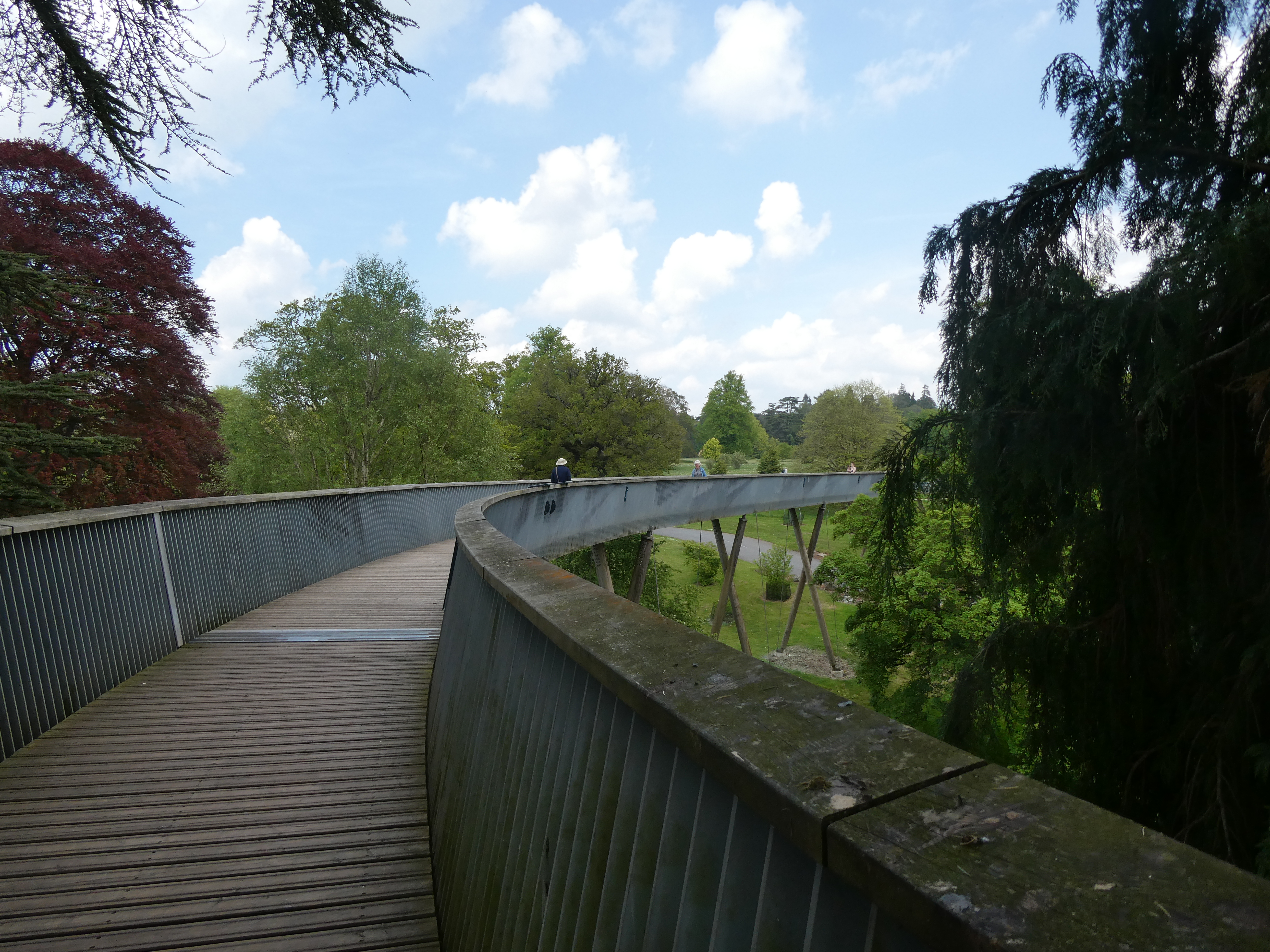
We’re working our way towards the elevated tree-top walk, which can be seen from the entrance, then we’re climbing up and getting the views. Below us there’s a woodworking workshop where furniture is being made; above us a short set of steps up to a rounded tower- all, of course, in timber.

We feel we’ve earned tea and cake, conveniently available from a kiosk near the entrance. It’s time to move on and to our next site in the village of Lacock. This site is a world away from ‘Tobacconist Farm’, which was basically a field with a shower block. This one is landscaped, the hard standing pitches meticulously lined up with their own patches of mown grass. There are carefully tended flower beds, a thoughful play area [this site is not adults only], a separate tent field, the beginnings of some glamping units. We’ve booked and already have a pitch number, so there’s no checking in- just finding the pitch and plugging in.

We take a quick stroll down the hill and across the busy road to the village for a very quick recce, then back. The day is still warm and it’s pleasant enough to cook and eat outside- which we do….

For fiction by me, Jane Deans, search for novels: The Conways at Earthsend [an eco-thriller] and The Year of Familiar Strangers [mystery drama]. Visit my website: janedeans.com
Cotswold Jaunt

So following the unedifying debacle of a van trip to Spain in March, which nasty weather and electrical failure prompted us to abort, we settle down at home for a while, to undertake chores, take stock and have the van repaired.

It transpires that [according to the repair man] the Spanish campsite sockets were the culprits of our calamity in the electrical department. At home, April continues the soggy theme and it’s not until May comes around and there’s enough time between various obligations [health appointments] to chance a short break closer to home.

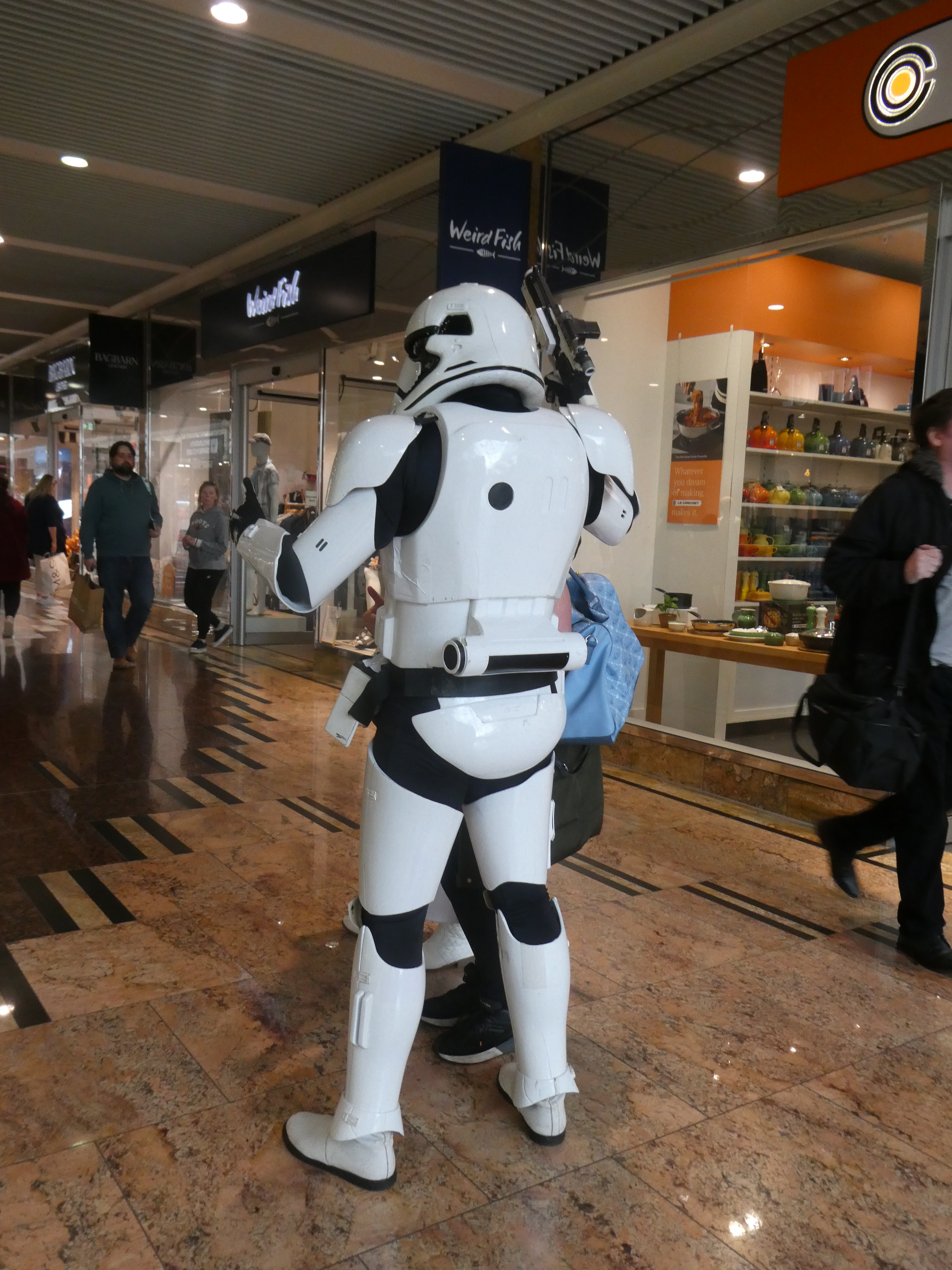
Husband is a devotee of Gloucester Rugby and has expressed a desire to watch them at their ground and this seems like an incentive to travel onwards into the Cotswolds, even though we went last year. This gives me an afternoon wander around the shopping areas, although I’m disappointed in the range of stores, which are predominantly fashion. There are some odd characters roaming the shopping centre, too…

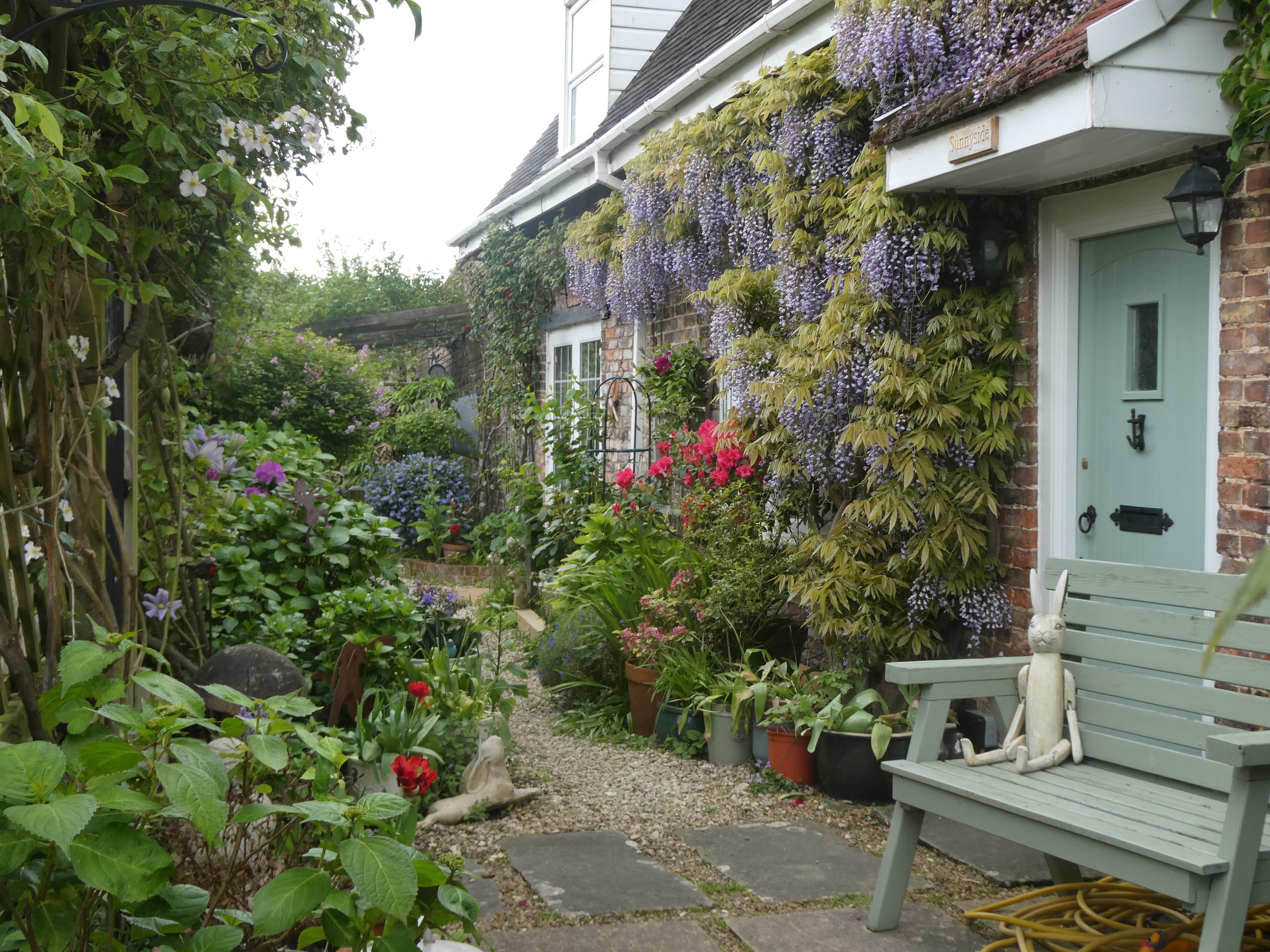
Our onward journey takes us through some archetypal British villages-

We’re on our way again next day and on to Minchinhampton, a typical Cotswold village with pubs, church, cafe, grocery shop, a miniscule market area, allotments and a vast, open common. We’re booked in at ‘Tobacconist Farm’ and I can’t help running the old song, ‘Tobacco Road’ [first recorded in 1964 by The Nashville Teens] through my head. Access to the site is tucked away in a corner by the allotments and not easy to find, but when we do get in it’s a simple, open meadow next to a donkeys’ field, with a small shower block down at the end.

We’re not quite alone, but there are only a handful of vans around the edges of the meadow. The owner is a larger-than-life woman who clearly likes to talk and rides around on a quad bike.

Once installed, we go to stroll around the village, which is soon accomplished.

The following afternoon we go to visit Cirencester. It’s not a large town but has an enormous parish church that is easily cathedral sized! There are beautiful grounds to the rear of it and a tiny section of old Roman wall as well as a Norman arch. There isn’t a whole lot else to the town but it’s pleasant enough.

The weather deteriorates a little and there are a few showers, but next day, after a slow morning. we stride out across the common, which is undulating and dotted with communities of cowslips. There’s a huge pub which is clearly popular on this bank holiday weekend, judging by the throng of cars parked everywhere. We walk until we reach the brow of a hill overlooking a valley then turn to loop back, getting somewhat lost by attempting a different route back.

For our final night at Tobacconist Farm, we eat at the village pub on the square, which is more than acceptable and has a lovely decor.

Then we’re off towards the next destination, but not before we’ve visited a stunning plantation…

For fiction by me, Jane Deans, search for novels: The Conways at Earthsend [an eco-thriller] and The Year of Familiar Strangers [mystery drama]. Visit my website: janedeans.com
A Brief Sunny Interval at Islares

We’ve stayed here, at Islares, before, another occasion when we’d needed to get home earlier than planned. I recognise the site when we pull in; a green, daisy- strewn field next to the sea. There’s loads of space, and, best of all, the sun is out. The journey here has been pleasant and I remember how beautiful the north coast of Spain is- rugged and glorious.

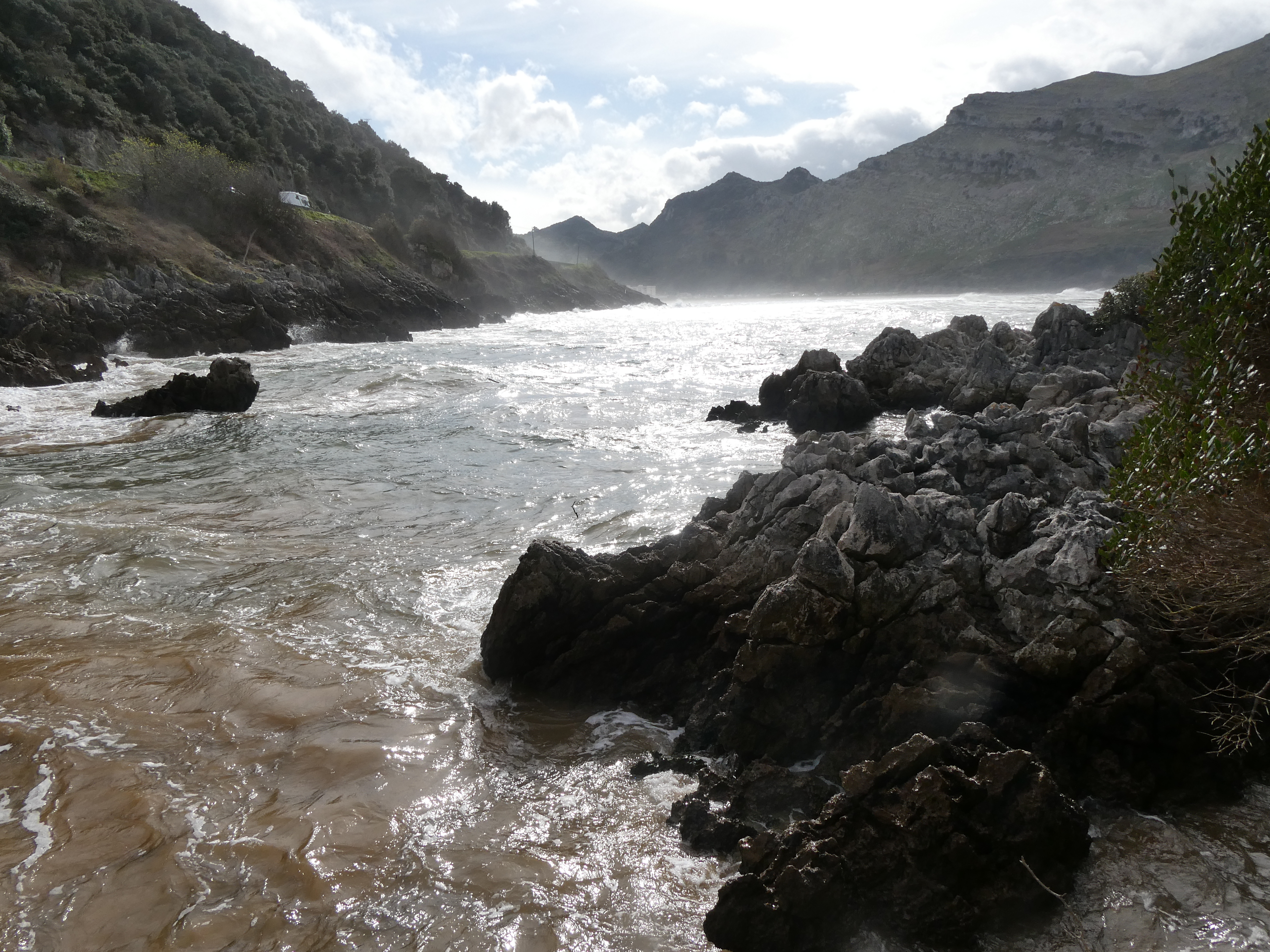
There aren’t many places to walk here, but outside the camp site gates you can stroll up to the seaside bar and watch the waves crashing in against the rocks in fluffy plumes. When the sun comes out it actually feels hot, so having walked up and around the path a little we return, plonk down at a table and have beers in the sunshine. It feels, on this penultimate day, like a proper holiday at last- except we’ll be setting off home the day after tomorrow.

Back at the site, we scrutinise the bus timetable for tomorrow’s jaunt- a day’s sighseeing before we depart. We can get to Bilbao by bus from Islares, although it’s two buses.

The site here has its own, modest cafe/bar and we opt for this, rather than the posher place where we had our beers. It just has a few tables, formica topped and a small selection of meals, from burgers to paella. Since we can’t order until 8.00pm, we choose to prop up the bar with a beer. At 8 a few people drift in and sit and we decide on paella which, at 12 euros is a no-brainer, besides- a Dutch couple who’ve arrived to the site after us and parked nearby have ordered it and it’s looking delicious.

The paella arrives in a large, traditional dish. We dig into the fragrant rice and it’s full of wonderful, fresh seafood as well as topped off with giant langoustines. We’re happy.

Next morning we trudge up to the main road above our site and walk along but there’s no sign of a bus stop. We backtrack a little but by now the bus is due, which is worrying. I waylay a passer-by and launch into my woeful Spanish: ‘Senor- donde esta autobus?’ It will do! He gestures further along the main road, gabbling furiously, then gets into a car. He pulls alongside us and indicates that we should get in, then takes us up the road to the bus stop- a kind stranger!

After a while a few other passengers arrive to wait, then a small bus comes along and we’re off towards a town called Castro Urdiales, where we must change buses, ‘at the bull-ring’ as we’ve been advised.

The older I get, the more I enjoy bus rides and there are all kinds of reasons to use public transport, not least the convenience of not needing to find a parking place or worry about traffic, or the route. So we settle back to enjoy the ride and the scenery as the bus meanders in and out of villages and round the houses, until at last we’re in the outskirts of the town and we must pay attention in order to get off at the right place. Castro Urdiales is a sizeable town, with a seafront, all attractively landscaped and an obvious tourist destination.

We spot the bull-ring and get off, although there’s no obvious sign to where we catch the next bus. But there is a large coach parked in a space by the wall of the bull-ring and it’s complete with driver, who assures us that yes- it’s the bus for Bilbao. Hooray!

For fiction by me, Jane Deans, search for novels: The Conways at Earthsend [an eco-thriller] and The Year of Familiar Strangers [mystery drama]. Visit my website: janedeans.com

Back and Back…

It’s become clear, on this terraced camp site opposite an industrial estate in Caceres, Spain, that our electrics are not going to work in any of their sockets. Worse still, it seems that the problem is ours, not theirs. Everyone else’s van is plugged in and working fine. This is a major hitch to our plans. We can cope for two days on battery power before we need to move and charge up, but we’d planned to stay longer in some of the sites we’ve booked- one, on the coast, almost a week.

Husband goes down to reception and returns triumphant, bearing the name and address of someone in the industrial estate who could help. The man in reception had been kind and helpful. We pin our hopes on the name and address and settle in for the evening. I’m relieved to have had a shower in the cleaner bathroom, as although the ranting French lady and her husband have moved on, they’ve been replaced by a Dutch couple.

By morning the weather hasn’t improved and it’s colder, overcast and breezy. With the address of the electrician in the SATNAV, we plunge into the industrial estate, pulling in at a forecourt. The helpful campsite reception man has phoned ahead to alert him, explaining that we are English and a youngish man appears, brandishing a phone, on which he has downloaded the language app. It takes no more than 30 seconds for him to shrug and shake his head, once he’s seen the set-up. That’s a ‘no’ then.

We trundle round the roads of the industrial estate in the remote hope that there’s somewhere that might help and I try one or two likely places as well as some unlikely ones. Eventually we decide it’s no-go. I begin to feel that this lack of interest is more to do with the impending Easter holiday than anything else. Everywhere is winding down. Everyone is focused on their time off.

There’s nothing for it but to turn back, so we set the SAT back to Salamanca and get back on the motorway. At the whizzo services I go inside for over-the-top chocolatey pastries to revive our flagging spirits, then we’re on again, back to Salamanca, where, at least we know there’s plenty of space. The weather continues to get colder and there’s a nasty, biting edge to the wind.

When we turn into the entrance to ‘Don Quijote’, the lovely Salamanca site, I notice a building we hadn’t seen before- ‘Motorhome Services’. Motorhome Services! I experience a frisson of excitement. We’ll check in and investigate, though it has some hefty gates and they are closed. We check in and enquire at reception, where the man says they might help, although holidays are fast approaching and they’ll be wanting to get their existing work finished beforehand.

On the site, everyone is swathed in puffa jackets, hats and scarves. It is perishing cold now- 3 degrees! We won’t be getting chairs out for a bask in the sunshine. We wait until the motorhome place is open then take the van along there. A woman emerges from a large hanger and beckons us in. She looks. She has us plug in to their socket. It blows. She shrugs, shakes her head. I feel my shoulders sag.

In the morning we track back towards Burgos. It’s now Wednesday and we can’t get a ferry home until Saturday so we opt to spend two nights. We can hunker down with books and at least now we have internet. We check back in. The wind is blowing horizontally across the site and I’m hoping a tree doesn’t fall on anyone. In the evening we go to the restaurant for a change of scene.

The afternoon of the following day is brighter and we stretch our legs with a bracing walk around the extensive park by the site. It’s been landscaped with barbecues and footpaths, one of which follows the river. Along the way we encounter more pilgrims with their walking poles and large backpacks. Presumably they’ll be trekking to Burgos for the Easter shindig.

We leave next day and head to a site on the coast between Santander and Bilbao where we’ve stayed before. We’ll stay our final two nights there- and we have a plan for our final day…

For fiction by me, Jane Deans, search for novels: The Conways at Earthsend [an eco-thriller] and The Year of Familiar Strangers [mystery drama]. Visit my website: janedeans.com
On to Salamanca

So we leave Burgos and continue down towards our next stop, Salamanca. The Spanish motorways are excellent; toll-free, quiet and well served with service areas, although they do vary quite a bit, some being right by the roadside, others a detour into a village. Some of the roadside ones boast modest hotels, together with a host of facilities including cafes and shops. Others may just be a petrol station with a coffee machine.

We take a break, veering off to a village gas station where a man emerges and dolls out the diesel rather than it being self-service. This is endearing, a step back in time for us. There is a small parking area and three picnic tables beside the petrol station and as it’s fine enough to sit outside we have coffee at one of the tables, entertained by a stream of hikers, pilgrims making their way along the path towards Santiago de Compostela. At this stage, close to Easter, it seems unlikely that they’ll achieve Santiago, but perhaps they use a cheeky bit of public transport? Or is part of the way enough? At one point an entire family turns up in a 4×4, get out, smoke cigarettes, change their shoes and set off walking…

It’s not too far to Salamanca. For those who haven’t been to this most gorgeous of cities, it is well worth a visit- a historic centre of beautiful buildings of golden stone- best seen in sunshine, when the yellow stone zings. But again, we’ve been before and it’s not our destination this time so we check in for one night. I remember the site, tidy and tree strewn, by a river, with a cycle/footpath leading into the city. The sun has enough warmth for us to get chairs out for a bask, which we do. There’s also a tempting looking restaurant at which we just about manage to squeeze a booking by saying we’ll go at 9.30pm. It’s a wonderful meal, though and worth the wait, and while we feel it’s late for us to be eating there are many coming in later still on this Saturday night- some at 10.30pm! This is Spain, after all, with a culture of late evening dining that includes small children, too.

We’re off again in the morning, the weather having turned more gloomy, but we strike out on the road to Caceres- another city we’ve visited in the past, memorable for its nesting storks on every lofty perch, its wacky Easter parades of floats and pointy-hat adorned bearers and its huge plates of beef. En route we stop at a wonderful service area with a fruit and veg stall, shop and cafe, where coaches are pulling in, presumably carrying Easter travellers. Easter is a big holiday for the Spanish and everyone, it seems, is on the move.

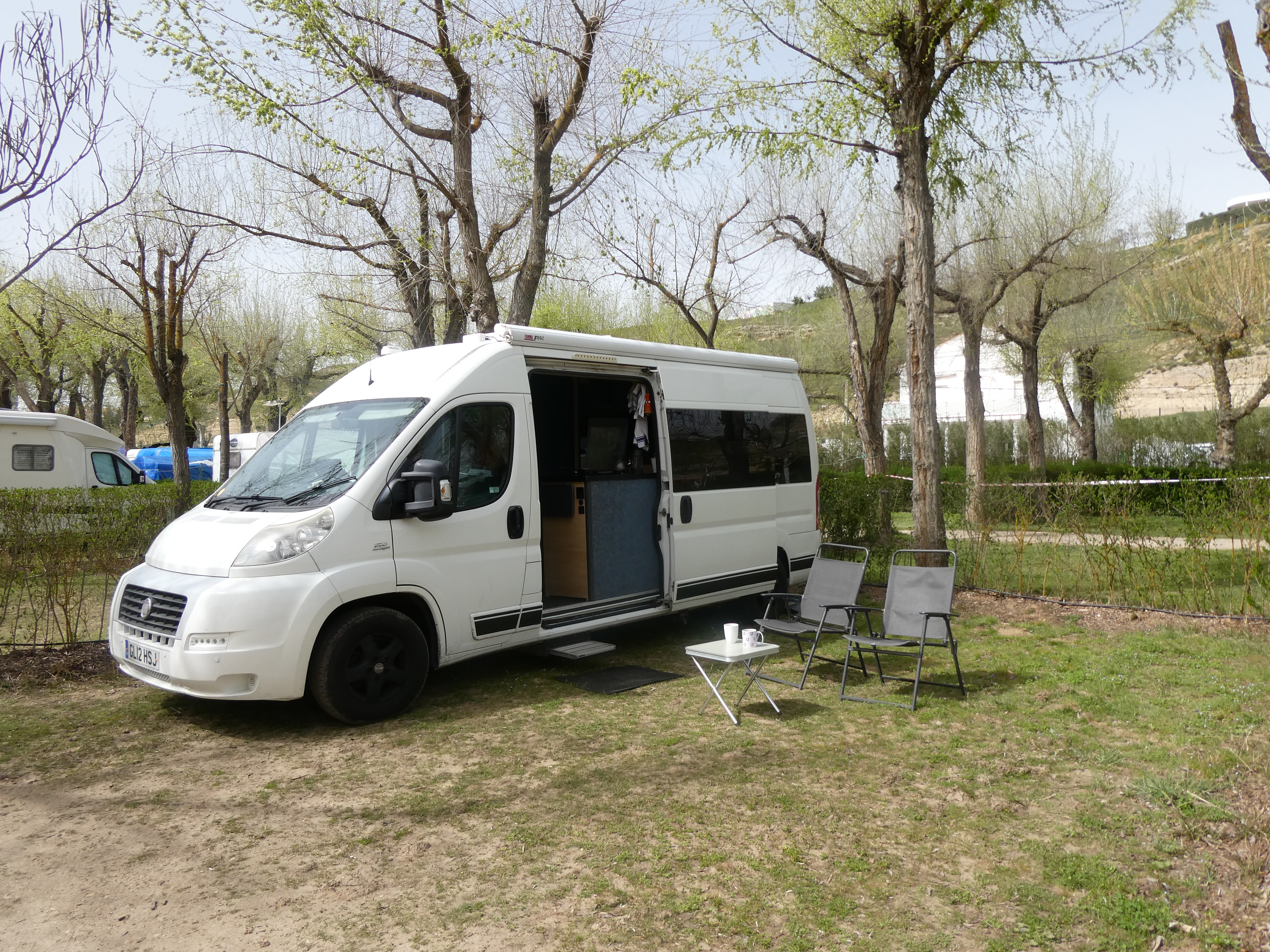
By the time we get to Caceres there’s a strong breeze blowing. We locate the camp site but it’s not one we recognise and I’m at a loss to recall where we staryed last time. This site is opposite and industrial estate and is terraced, with pitches housing individual bathrooms, according to our ACSI book. We check in and find our pitch, which is under a large tree. When I take a look at the bathroom I’m less than impressed. It’s grubby, with leaves blown inside and furniture piled up in the shower cubicle.

I go in to put the kettle on while Husband grabs the cable to plug the van in. But there’s no power. He tries the socket in the neighbouring [empty] pitch. No power. He goes to reception, where he’s told it’s ok to use next-door’s socket, although it’s becoming clear that something is badly amiss. Next door’s bathroom, however, is altogether cleaner, so I get a shower in there before anyone else turns up- which they do- a massive motorhome and a woman gabbling a tirade of French at us with no thought that we might not be compatriots on this Spanish site…

For fiction by me, Jane Deans, search for novels: The Conways at Earthsend [an eco-thriller] and The Year of Familiar Strangers [mystery drama]. Visit my website: janedeans.com

Caught without a Web

We arrive to the camp site at Burgos. We’ve been here before, years ago [and a similar time of year] when the weather was bitter cold and miserable and everyone was wrapped up in thick coats and woolly hats. Today, though, it’s warm and sunny, and since we didn’t get to look at Burgos last time it seems like we can now.

But there’s trouble ahead. Having parked up, plugged in and put the kettle on it looks like the swanky, new Avtex internet device Husband got installed into the van isn’t working, although it certainly did work at home in the UK. We try various options, type in assorted numbers on devices, turn off and on [as one does]. On my laptop, a page prompts me to type in a phone number and all numbers are rejected. I begin to feel frustrated. I call ‘3’, the provider whose page comes up. I have an increasingly stressful conversation with a distant, heavily accented ‘3’ assistant. I feel hot and irritated and am told to stop by Husband, which I do. Worse still, the site has no wifi.

In reception, Husband is given directions to a shopping centre which we can visit tomorrow to seek out, perhaps, a solution.

Next morning is sunny again and after coffee we set off to ‘Al Campo’ in the town, which turns out to be a large shopping complex with plenty of parking opposite. Inside, the first sighting is a small booth of a phone shop. The assistant shrugs when we ask for help and shrugs again when we ask if there’s somewhere else. Upstairs it’s the same story. Defeated, we descend to the ground floor again and there!, there is a Vodaphone shop next door to an Orange shop, almost opposite the small phone shop. In France we get Orange sim cards for our mobile wifi device, so it’s clear we’ll have to ditch the wondrous Avtex and return to our tried and tested method. We enter the shop. An able and amiable assistant tells us ‘yes- sure we can do it’, speaking near-perfect English, too. I feel my shoulders relax. There’s the usual wait for paperwork then we’re set. Hooray! We go across the road and have a tapas lunch to celebrate.

Of course, we survived years of tent camping trips before the internet was conceived of…

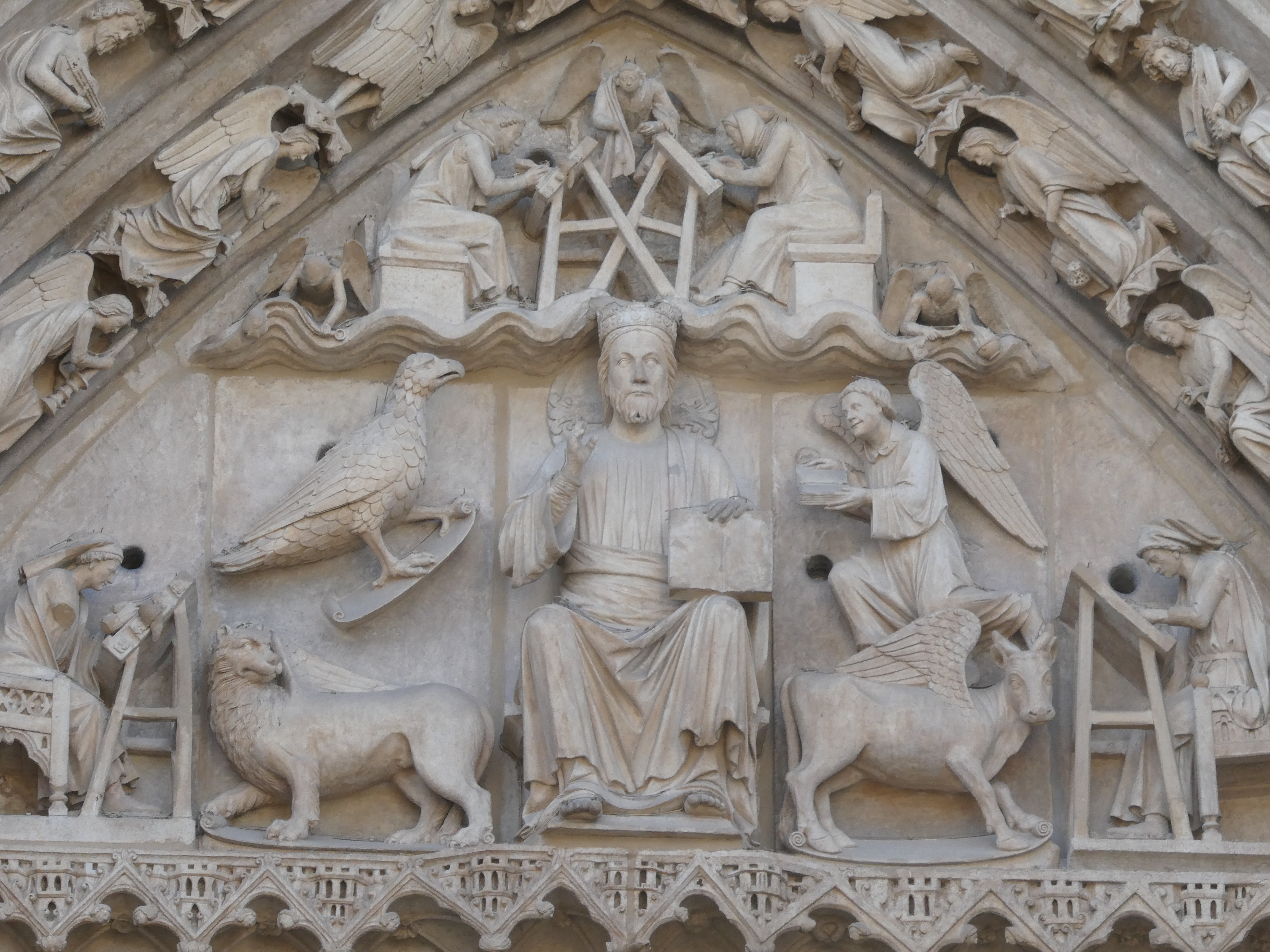
Back on site, we allow ourselves a short bask in the sunshine before getting a late afternoon bus into Burgos centre. It’s still hot and walking round feels like hard work, but we find our way to the cathedral, which is the city’s main attraction, the Catedral de Santa Maria. It’s a UNESCO site and well deserved. While the outer parts of Burgos are modern and high-rise, the old centre is beautiful and characterful.

At last we give up sightseeing in the heat, get an early evening beer and people watch. We’ll be off again in the morning, heading ever southwards…

For fiction by me, Jane Deans, search for novels: The Conways at Earthsend [an eco-thriller] and The Year of Familiar Strangers [mystery drama]. Visit my website: janedeans.com

Hopeful Travels

It’s fair to say our time at Calgary Airport was not especially happy. Airports, on the whole are never wonderful places to spend time. Many hopeful travellers arrive and like to pass the hours quaffing beers in the nearest bar- even in the early morning- . Having dropped the deficient campervan off at Cruise Canada depot and been told that ‘we don’t supply that’ to the long list of missing items we’d compiled, we’d got a taxi to the airport. But since we’d had to deposit the van before midday, the remaining time until eight pm would have to be passed waiting for the flight, which would be overnight.

Our morning had been dogged by difficulty. I’d been trying [and failing] to upgrade our seats. Air Canada had, in its wisdom, allocated us seats in the middle of the plane [never my favourite] and one behind the other; also the middle of the middle. I’d managed to get on to what I thought was Air Canada’s website and had been trying to upload various documents and photos of things to a man I [erroneously, as it turned out] assumed to be an airline staff member. I had failed in this- and thank goodness I had! I continued to ‘hold’ [as instructed] until I felt like I was welded to the phone- and all the way into Calgary. The journey [which I’d been dreading] was nowhere near as difficult as anticipated, but even in the taxi to the airport I was still talking to the supposed Air Canada employee…

On our arrival it was far too early to drop the bags. At last I gave up on the upgrade, feeling exhausted. We went to get a coffee. My phone rang. It was someone from Air Canada. ‘Have you been speaking to a travel agent?’ he asked. I explained I’d been trying to upgrade our seats, to be told I had not been communicating with an Air Canada employee at all. I blanched, horrified. I’d need to cancel my bank cards straight away. This meant an extraordinarily long ‘hold’ once more on my phone. Once I’d managed to cancel both bank cards and get off the line my reaction was to burst into tears of relief.

Clearly we had to put up with the middle-of-the-middle seats.

The time passed and we rid ourselves of the suitcases then went to departure. By now I was reeling with relief that I hadn’t gifted a large sum of money to the scammers and was happy enough to sit somewhere and read or to peruse the meagre selection of gift shops [minus bank cards is by far the best way to do this].
At last it was time to board the plane and we located the seats. I sat down next to a portly Scot, whose wife was- yes- in the seat in front of him, and we chatted while the plane was readied for take-off. As it taxied to the runway Husband tapped my shoulder. There was an empty seat next to him! Once we were in the air I moved back next to him, freeing a seat so that the Scottish pair could sit together too. The plane was, otherwise, full and presumably the empty seat was a ‘no-show’.

We were served drinks and edible food. The cabin staff were affable and friendly. I was handed a second drink. We even slept.

Arrival home to the UK in late September heralded the start of a different, difficult kind of journey, involving many, many trips; one that I have not chosen, one that is ongoing but maybe… just maybe…the destination is drawing nearer and may even be in sight as 2024 begins.

Happy New Year to all followers and visitors. And may 2024 be filled with joyful discovery, adventurous travel and most of all, good health.

Novels by Jane Deans, author: The Conways at Earthsend, The Year of Familiar Strangers.