

Thursday of our week in Malta and time to take out second bus tour- this time to see the south of the island. Whilst in the ‘Queen Elizabeth’ pub I’d become absorbed by a tourist video of a fishing village. I thought I’d love to go there. It turns out the village is on the bus tour of the south. Hooray! We can stop off and have a quick look. The village is called Marsaxlokk and it’s anybody’s guess how it’s pronounced.
The day is just a little less breezy and slightly warmer than the previous day, when we’d had to sit inside to avoid getting blown to smithereens, so when the open-top comes we clamber upstairs and sit as near to the front, undercover part as we can, which is not under, but nearly!
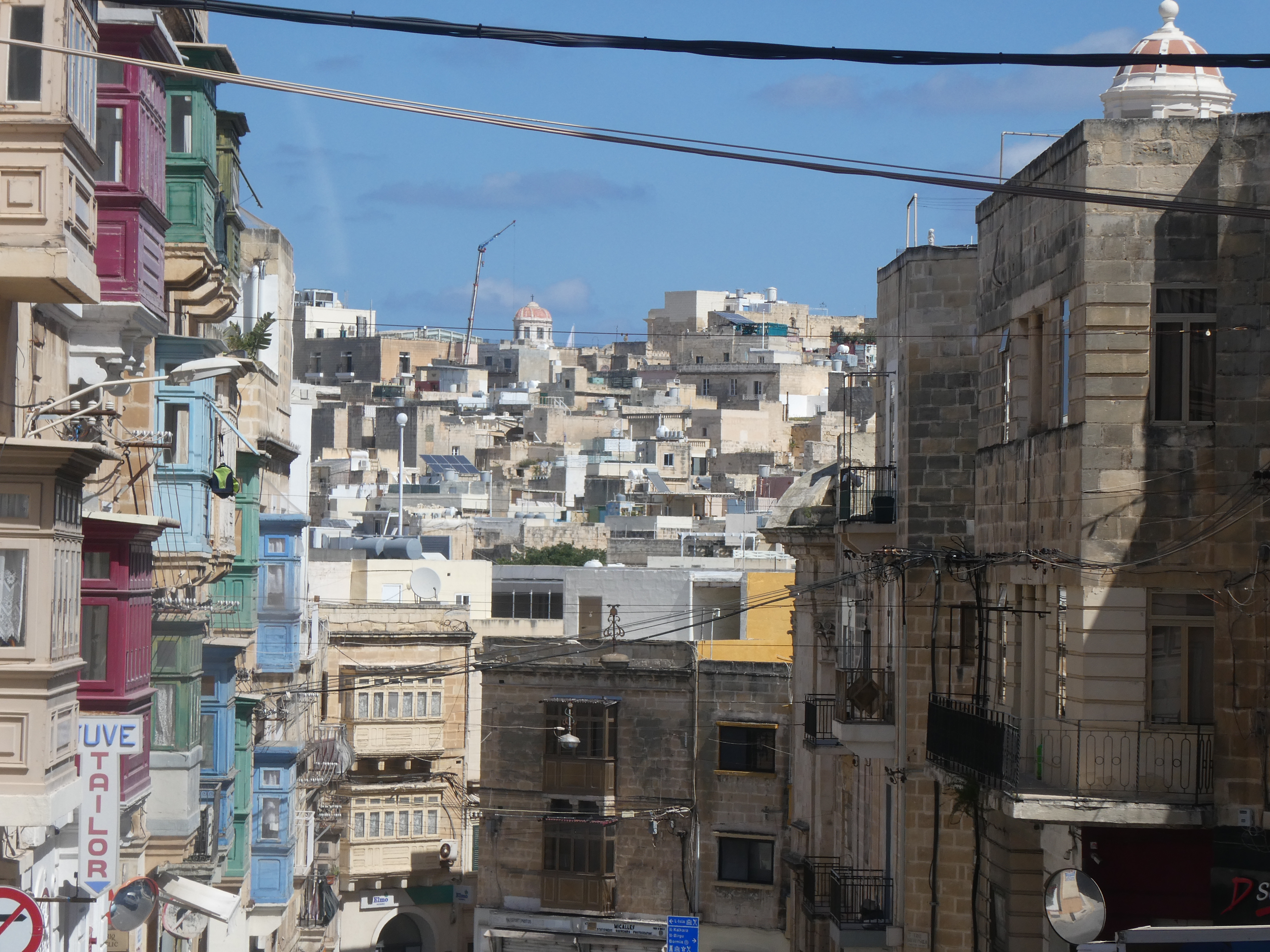
Our first stop is in Valletta, which is familiar territory by now, then there’s a lot of twisty turns and narrow streets to negotiate before we’re out in the countryside. The outskirts of the city are densely built, blocks of flats piled in, pastel coloured and higgledy-piggledy, a forest of aerials flying above.
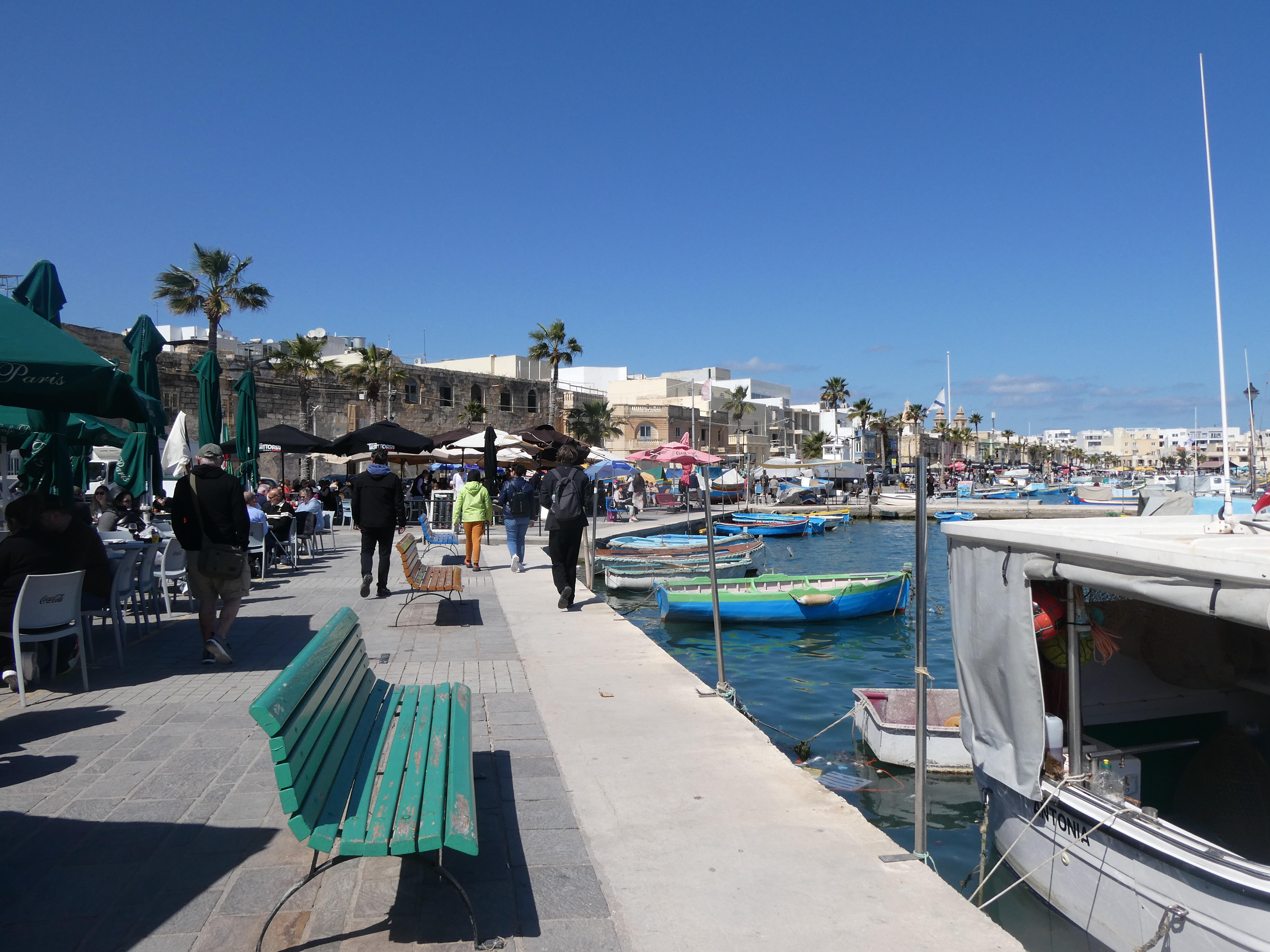
Driving out of Valletta this way is a complicated business of circling around each harbour as well as a lot of ups and downs, but at last we’re in the open.
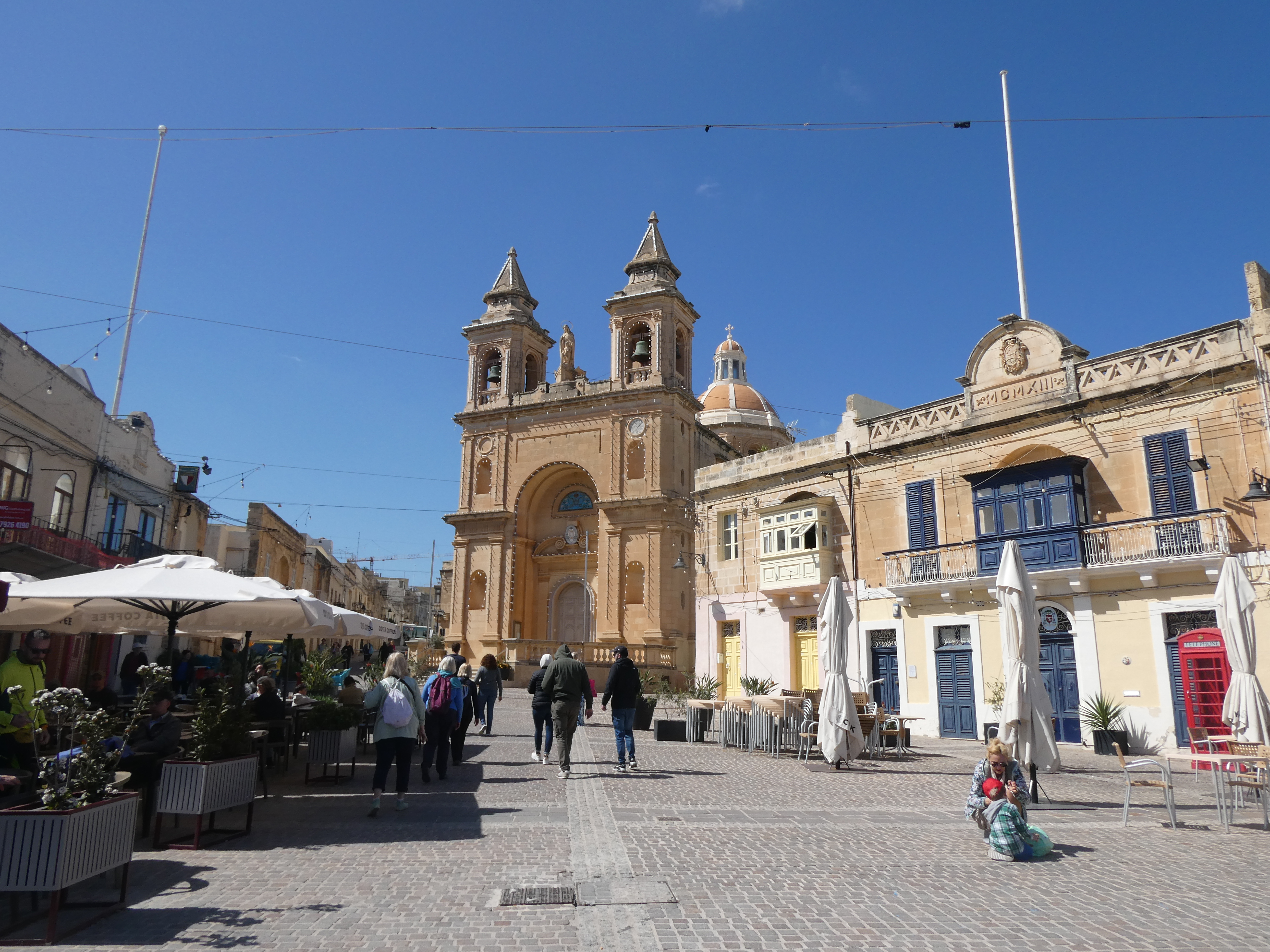
We arrive to Marsaxlokk, stopping at the end of a curving quayside where a string of restaurants are serving luscious looking seafood- and all look busy. We’ve an hour to wander before the next bus comes but first we make for a bakery selling coffee and a range of delicious things. We opt for spherical apple pies and sit in the sunshine. The far end of the quay hosts a tourist market, stalls selling all manner of edibles, ceramics, flags, lace etc
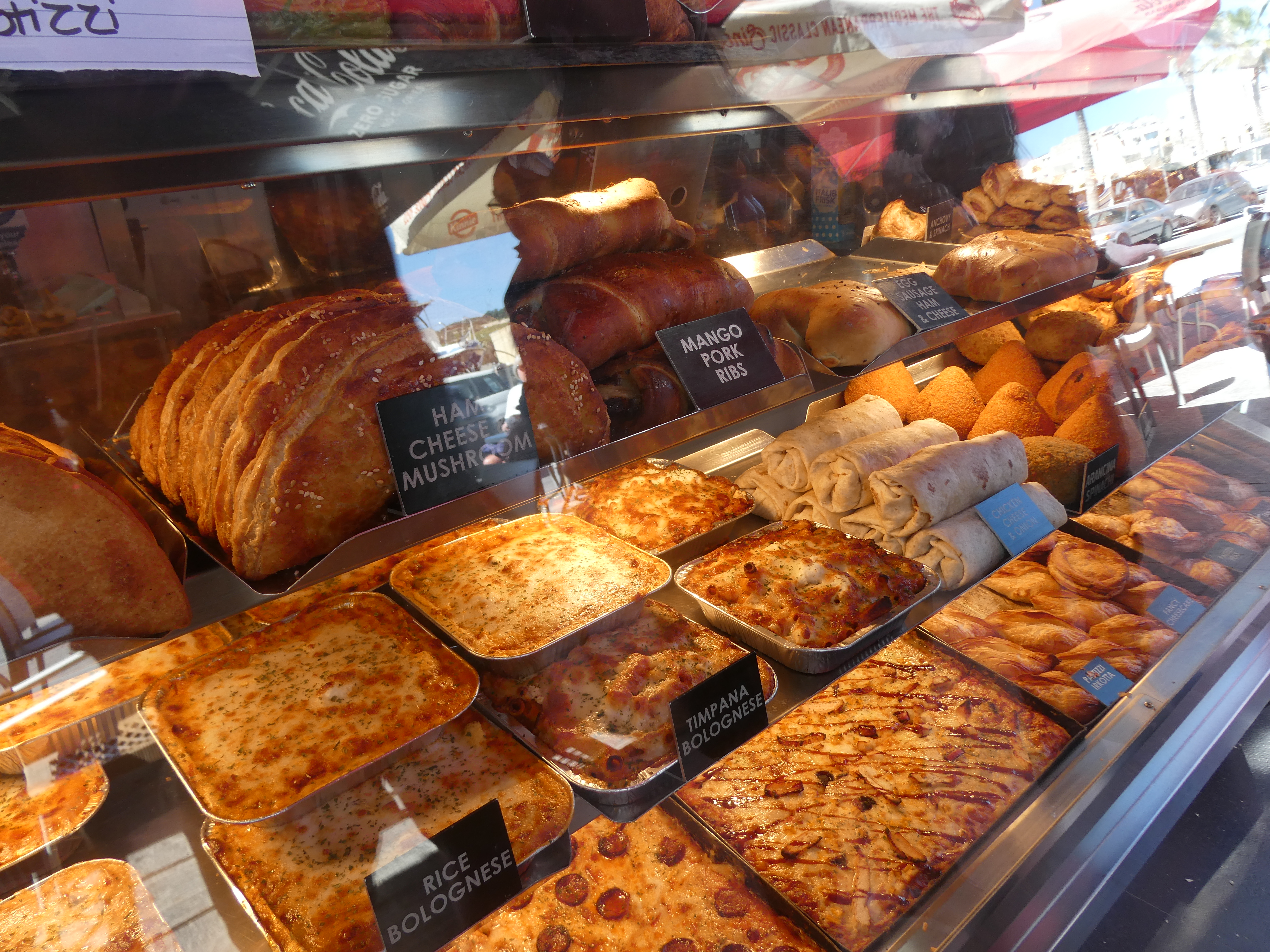
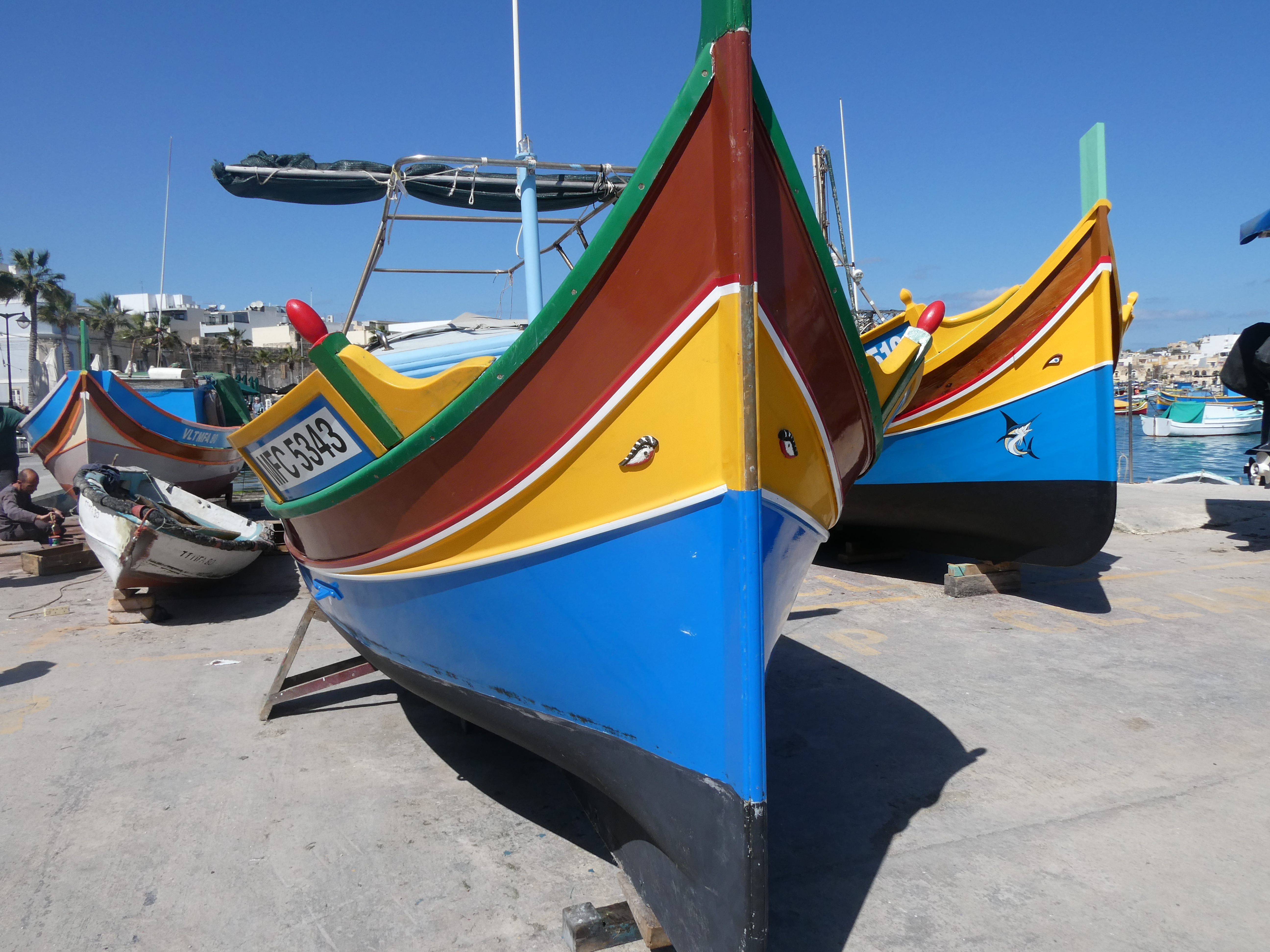
It’s all very beautiful here- and by far the most spectacular sight is the fishing boats, which are painted in bright, primary colours and have a protruding eye of Horus either side of the prow. Most are bobbing about in the little bay but some are drawn up on the slipway or in the process of getting refurbished.
the hour passes quickly and we walk to the bus stop. Soon we’re underway again. We’ve no interest in the ‘Popeye’ village- an ageing film set for the Popeye film, which, I have to admit passed me by when it came out in the early eighties. I’d no idea there was such a film, which apparently starred Robin Williams.
Back in Sliema, we attempt a read by the hotel’s pool, which is across the road, or can be accessed by a tunnel underneath, past the spa and beauty salon. We manage an hour before the cool wind drives us back into the building.

In the evening we decide to try another pub, further down the street. It’s tiny, but looks promising, initially. We order a pizza [Husband] and pasta [me]. There is a loyal gathering of Brits who clearly love this place and return- not only to Malta, but to this pub, year in and out.
The meals come, remarkable only in that they are two of the worst meals out we’ve ever had. We won’t be joining the loyal clientele here…
Novels by Jane Deans [Grace]: The Year of Familiar Strangers and The Conways at Earthsend. Visit my website: janedeans.com


 Anecdotage