Les Portes and the Marais

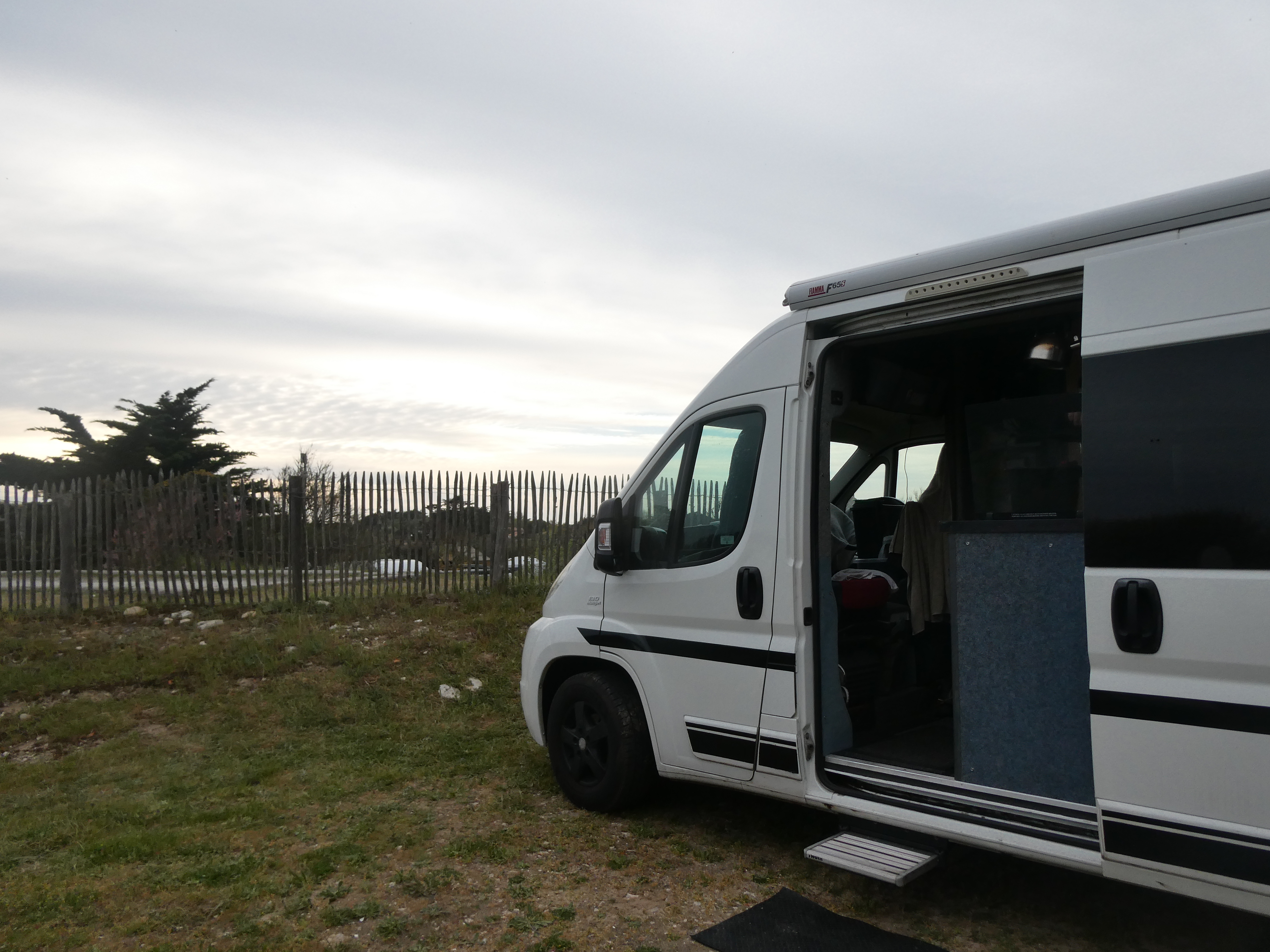
Seasonova campsite at Les Portes en Re is very quiet and relaxing, with only a few neighbouring tourers and scarce occupants of the chalets. We can see that in high season there might be a bar, a re-purposed container near to the tiny pool, but so far there’s no sign of activity or opening. We’re close to the little town though, which has one or two bars and cafes.

The site does not have beach access but is close, meaning that we can walk and find a coast path, which we do. Les Portes has a wide, rocky bay and a sea wall. To begin with, the path leads down to the road and above us there’s a tiny chapel, apparently used as a weapons store during the war, destroyed by missiles and later rebuilt. I want to look inside, however it’s being swept and tidied by two women and there’s not really room for a third in the minute room, which has an altar and half a dozen chairs. I wonder if services are conducted here?

The road changes to a country lane, the verges bursting with wild flowers. We dive through a gap and get back towards the beach, where we’re almost entirely alone, walking along by the dunes, which are fiercely protected with fences and signs.

When the weather turns changeable, with some rain, we become tired of incarceration, put on rainwear and set off into the marshes. The marais has a character of its own, flat, windswept, dotted with reed beds and old salt production ponds- some still in use, as forlorn signs proclaim. It’s a paradise for bird life, of course. The rain becomes more serious, then we stumble upon a barn-like visitor centre with displays, videos and a wealth of information about the marshes, as well as a small gift shop. This occupies us until the rain subsides enough for us to return.

The main bar/restaurant in the town square has a good menu, ideal after an inclement day, so we take advantage. This time we go for crevettes instead of oysters and I’m not disappointed, but I’m hoping this isn’t the last chance for them before we go home! It’s too chilly and drizzly to sit outside and the small indoor area is busy with customers- one big group next to our table enjoying drinks.

Next day we’re off to the coast path again- this time in the opposite direction, which requires clambering up on to the wall and a careful step along it, then on to rocks before the path plunges into woodland. At last we emerge into a small car park sporting a cute, rustic composting toilet…On our way back past the supermarket we’re delighted to discover an oyster vending machine.

By now we’ve probably exhausted all Les Porte’s offerings and it’s time to leave the small town and leave Ile de Re. We’ll begin the gentle meander back north, but we’ve not finished with seeing places yet. We’re about to go and look at a city we’ve driven past and round many times but never stopped to explore-

Novels by Jane Deans [Grace]: The Year of Familiar Strangers and The Conways at Earthsend. Visit my website: janedeans.com

The End of the Ile

We’ve done Bois de la Plage but we’re keen to stay somewhere different on Ile de Re, this time to the very end of the island. But first we make a stop at tiny Sainte Marie de Re, a very beautiful and cute village we’d driven around on arrival. Now we know that negotiating the narrow, twisty lanes of Sainte Marie is a very tricky business, so we park just outside and walk in.

When we’d driven round a few days ago, we’d been looking for a particular site, one which the SATNAV had decided was here [in fact it most certainly was not]. We’d eventually found our way to this first, chosen site then, after a quick look round, determined that it would not suit us at all- being very shady and a long way from everywhere].

It doesn’t take long to see Sainte Marie, which has little besides a quaint village shop, a cafe in a large, open square and a lot of pretty lanes.

Before we head off to the next option for a site, we need to shop. The major supermarkets [Intermarche, Leclerc and Lidl] are based at Ile de Re’s capital, Saint Martin. It’s a beautiful town but we’ve seen [and photographed] it before. This visit is purely for supplies. Leclerc is in the SATNAV, which is certain that we have arrived- but can we see it? No. It takes some time, driving backwards and forwards, into mysterious car parks and out again, before the supermarket is revealed- cleverly disguised as a barn in black timber cladding- with nothing to advertise its existence.

Stocked up, we make our way along to ‘Seasonova’, a site at Les Portes en Re, a quiet part of the island, passing the picturesque lighthouse [which we’ve visited previously]. Seasonova’s reception is closed for lunch, which is commonplace for French sites. Nobody is going to deprive the French from their leisurely lunches! The site is on the outskirts of the little town, by a large car park where the buses stop and turn, which is useful for us as we can also have lunch while we wait.

But we can also wander into the site to look round. It’s very quiet, with only three of four tourers parked up; even the chalets at the end are sparsely occupied.

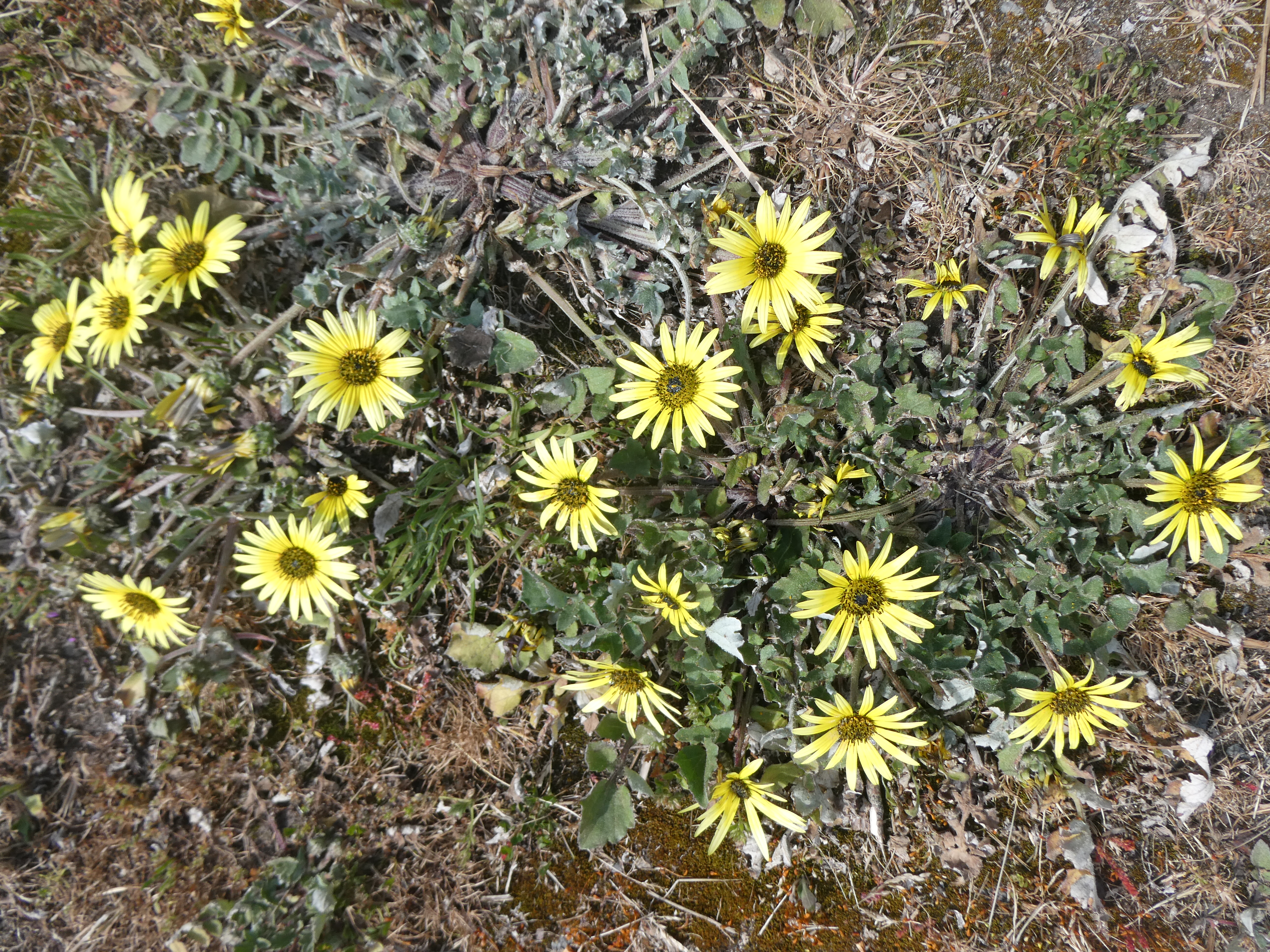
Reception opens and I go to check in, although the young woman behind the counter is pleasant but disorganised, answering the phone whilst attempting to get my details. But we’re in and on to a sunny, open pitch strewn with a carpet of yellow flowers- lovely.

Les Portes is clearly less visited than the towns and villages at the other end of Ile de Re. It’s bordered by the sea and the marshlands, a flat, wild landscape.

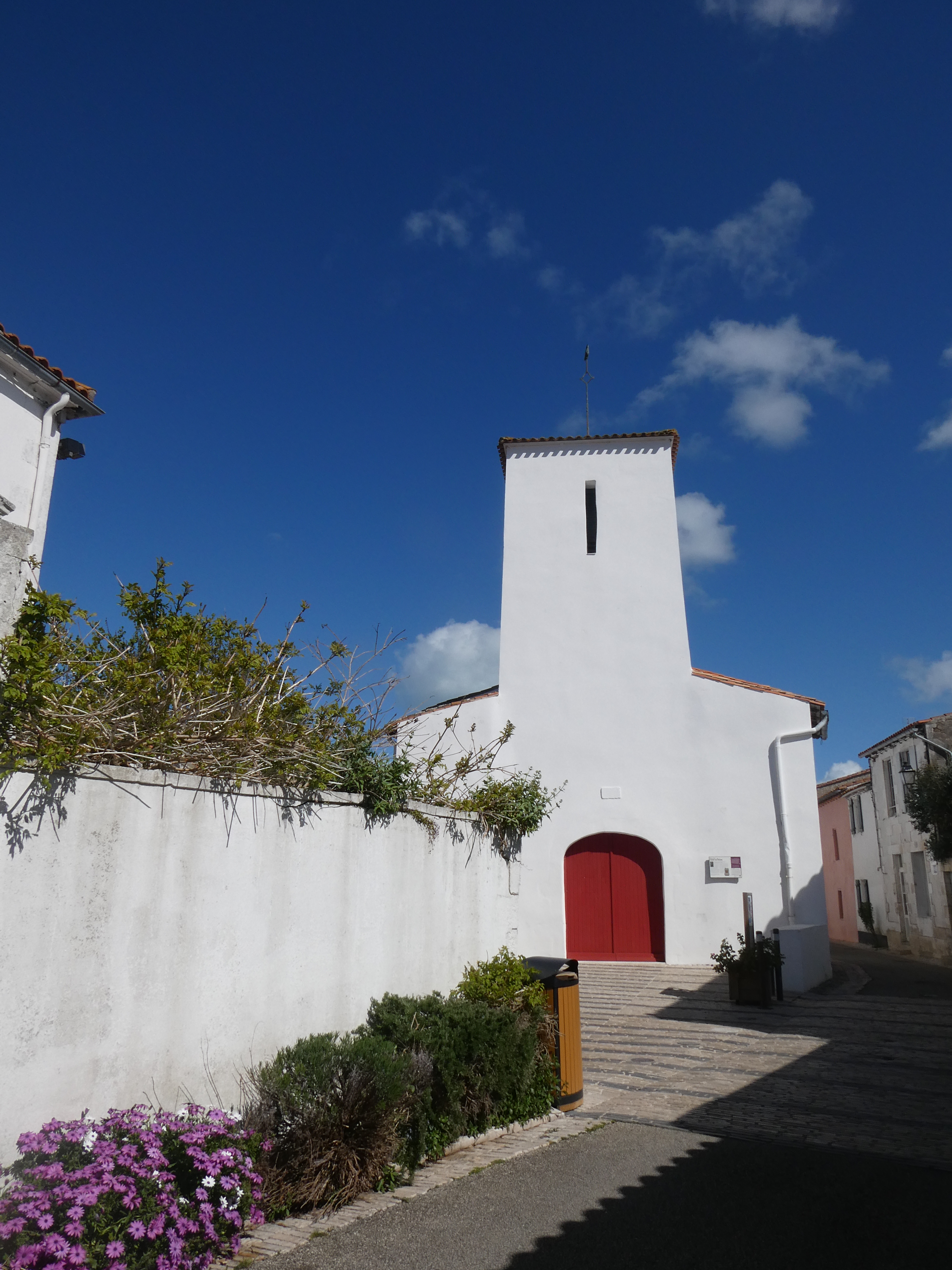
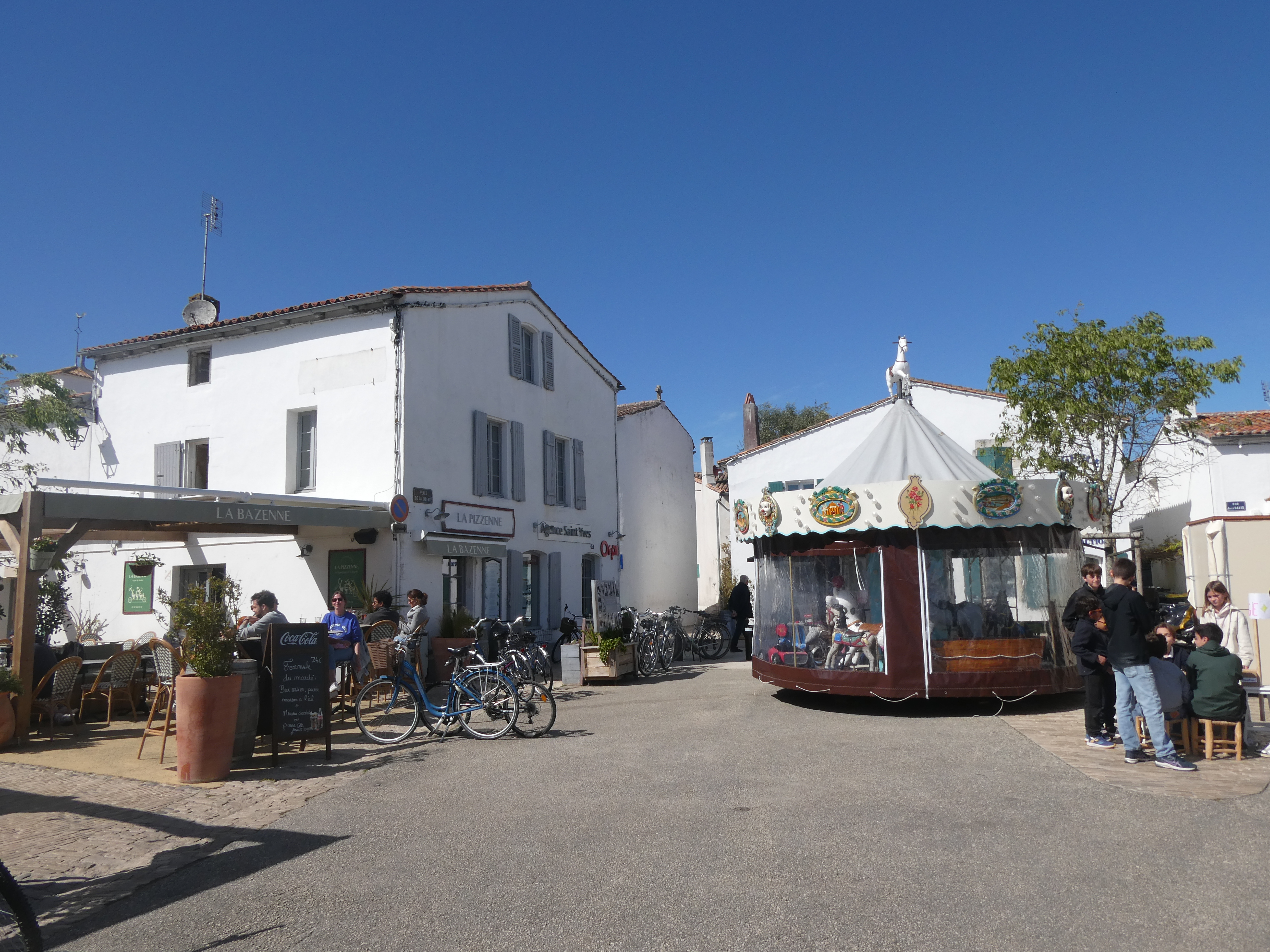
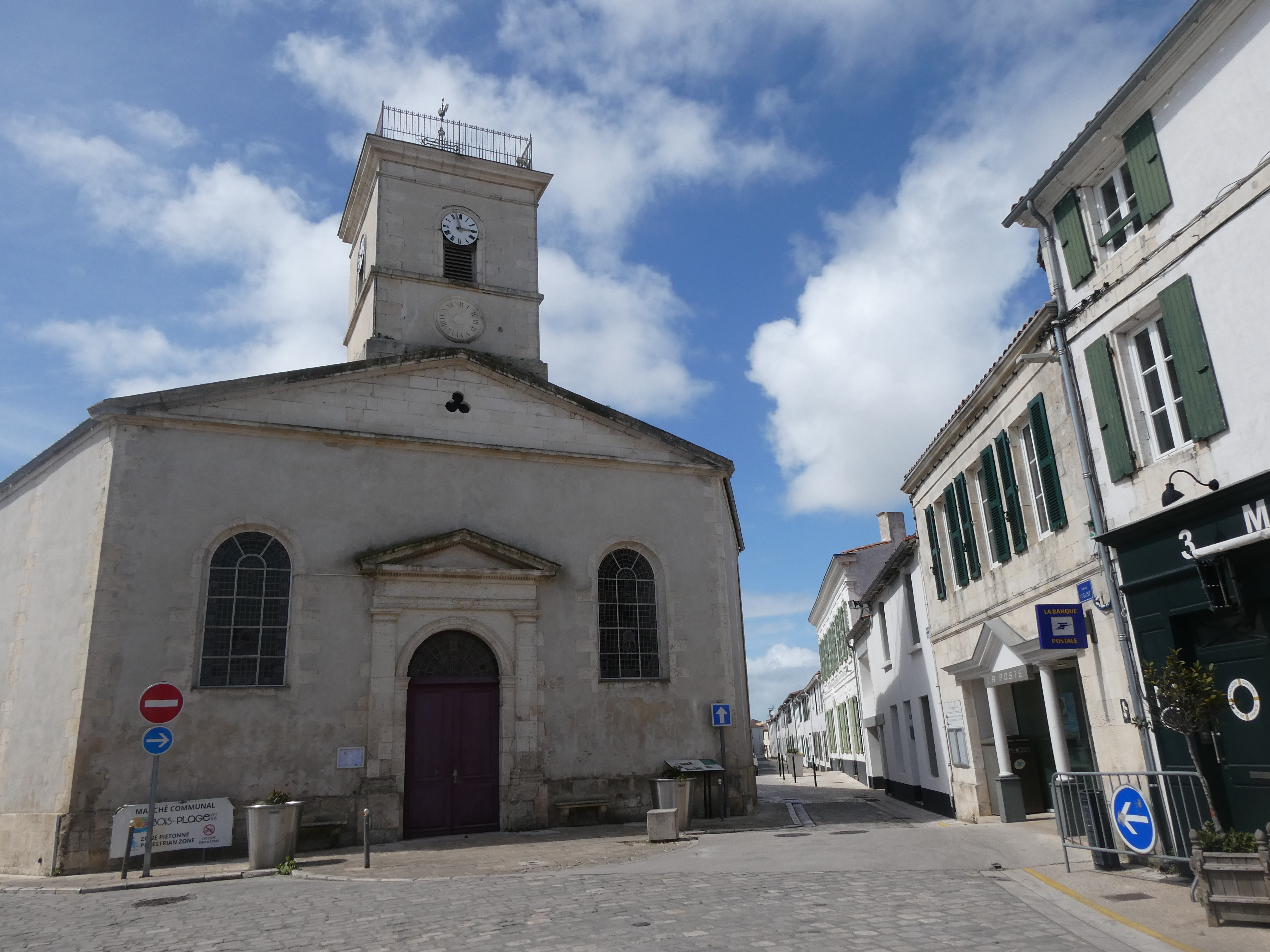
It’s an easy walk into the town, which has a few shops and a couple of bar/restaurants as well as a pretty church. The centre is bustling, with bikes, dog trailers and child trailers parked up by a tiny roundabout. We get a beer- and establish that yes- of course we can get oysters here!

Novels by Jane Deans [Grace]: The Year of Familiar Strangers and The Conways at Earthsend. Visit my website: janedeans.com

Wine and Oysters

The islands off the west coast, the Atlantic coast of France are all beautiful and all worth visiting for their individual attributes, but Ile de Re has a special place in the hearts of many, for a plethora of reasons. We haven’t visited for years, so this is the destination for this jaunt to France.

To get to this small island you only need to cross a bridge from La Rochelle- first paying a toll, of course, which pays for your trip there and back.

Once across, we only have a couple of miles to our first, chosen site, at Bois de la Plage. And it’s much as its name describes, a wood at the beach, the site nestling in the dunes, which makes it undulating but with a good choice of pitches. We select from the options- an elevated pitch, although the beach and sea are not visible over the next line of dunes.

There are more tourers here, even a few British, the first we’ve seen on this trip. however there’s a brisk, cool wind, so lolling around in the sunshine is less likely than at Vannes.

The island is a cyclists heaven and you could be forgiven for thinking it was The Netherlands, since the off-road cycle tracks are everywhere and busy with whole families or individuals in the saddle, enjoying the easy, flat terrain. Besides beaches and oyster beds there are acres of vineyards between the communities.

Nowhere here is large or sprawling, the biggest town being the island’s capital, Saint-Martin-de-Re. We’ve visited before [and photographed] so we’ll by-pass it this time. But we’ll take a look at Bois de la Plage while we’re here. It’s just a 15 minute walk from our site, along residential lanes, the homes white-painted, single storey with shutters and neat gardens- some clearly holiday homes.

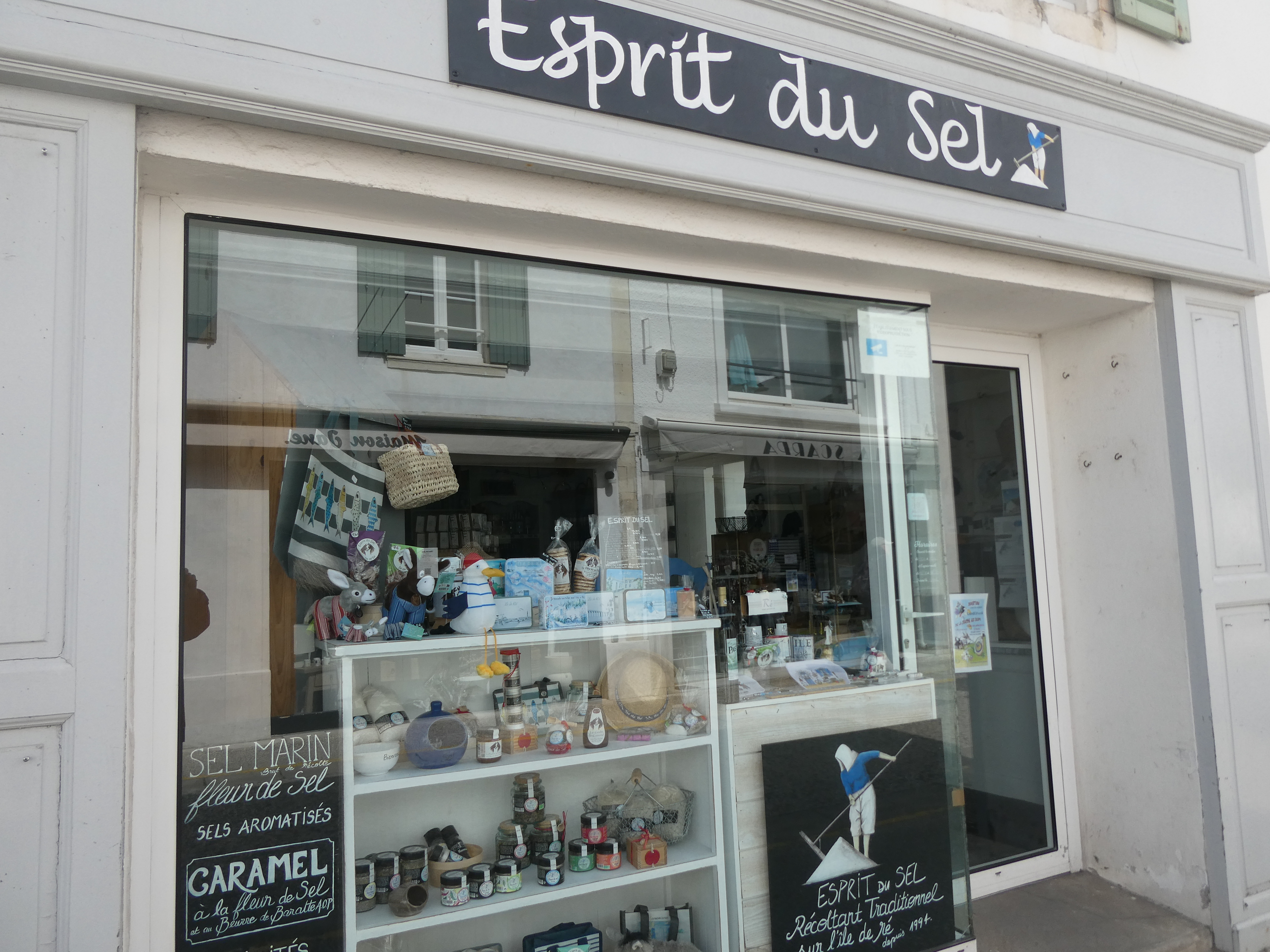
Bois de la Plage is not a throbbing metropolis and has a few small shops- a salt seller, shoe shop, florist, tobacconist. There’s an indoor market, closed today, a picturesque church and a few cafes. We’re on the lookout for somewhere to eat, and while a restaurant near the beach looks lovely, the menu is offering too much ‘tartare’ for our liking. One on a corner in the little town centre, though, Le Moulin a Cafe, offers a good looking menu and, crucially, oysters.

At the entrance to our site there is a bar/cafe, which is fine for a drink- and even has a selection of cocktails, although the food offerings are of the burger and pizza variety. It’s noticeable that French diners appear to be going for more fast food options these days. We wander down in the early evening but there’s a chilly wind and it’s not cosy inside the canvas dining and drinking area, as the breeze blows in.

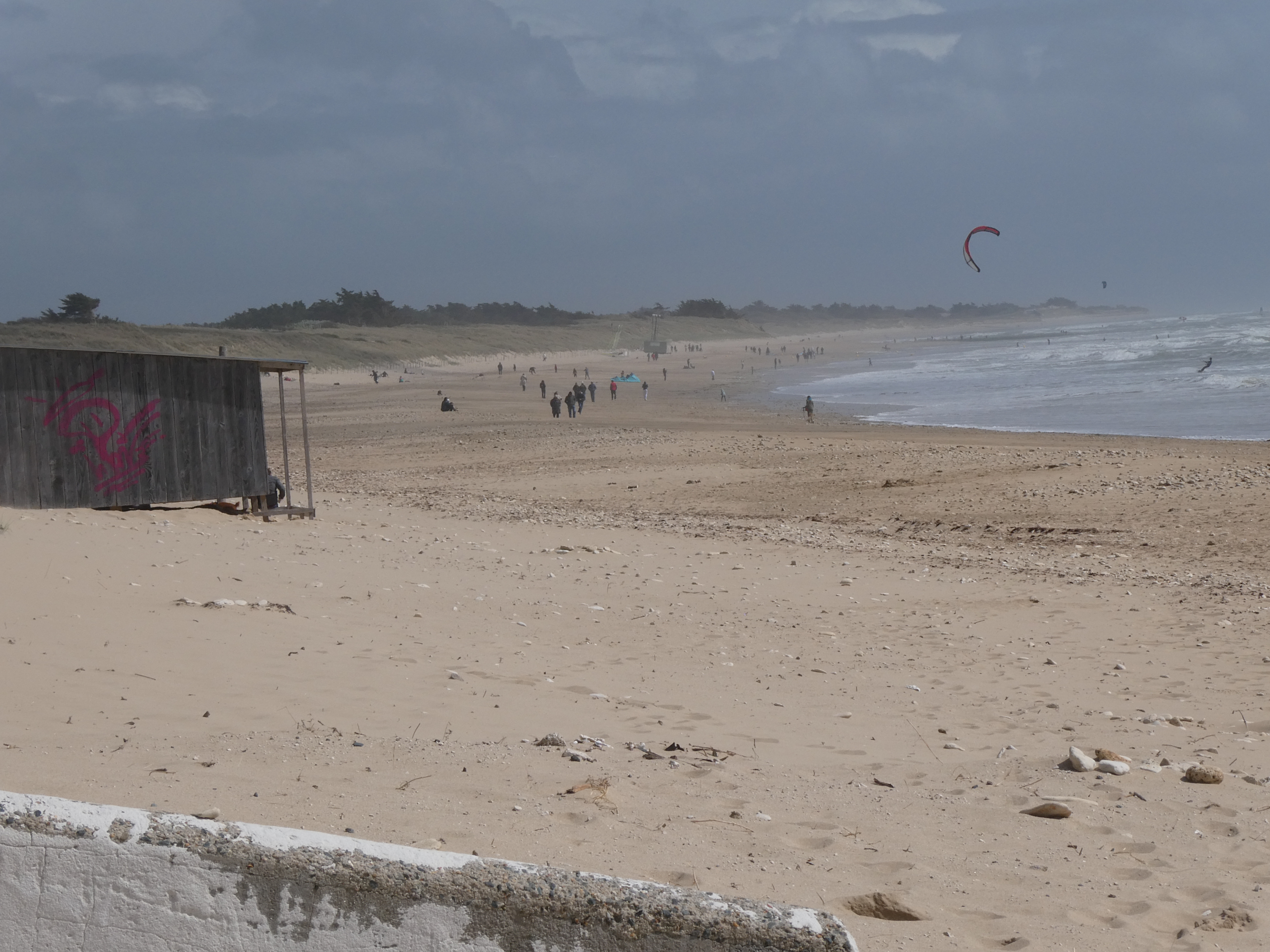
The beach here is typical of this French Atlantic coast, vast, sandy and with lively rolling waves, the kind of beach that surfers love, and one afternoon we return to our site along the sand, turning into the site beach access.

We go to eat at the Moulin. It’s a little quiet, which is unnerving, and we’re led into the back, but as usual we’re out to eat much earlier than the French so as the evening progresses more diners arrive. We have oysters. I didn’t try an oyster until I was in my fifties and immediately became a fan, which was a surprise!

It’s time to move on- but we’re not done with Ile de Re yet…