Tented Travels. Portuguese Tours and Tribulations.

After having explored the area around Ancora and its beaches and experienced an eventful time in Porto [as described in last week’s post] we determined it was time to up tent poles and meander southwards down the coast.

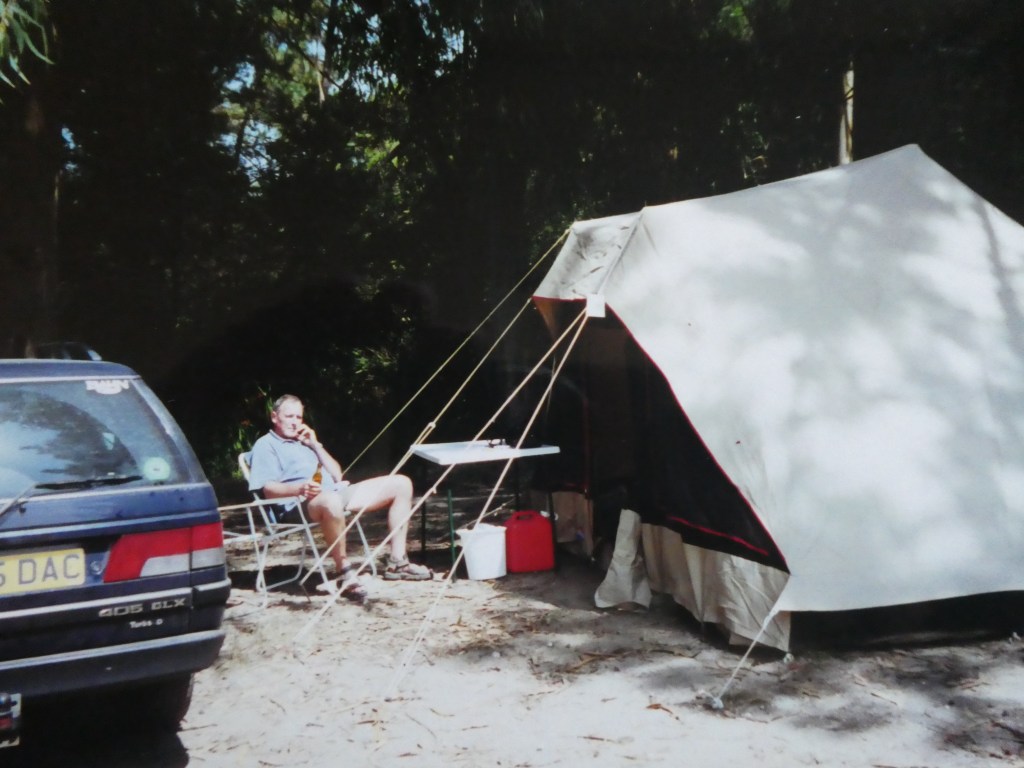
There is as much of an art to dissassembling tents as there is to erecting them-more so sometimes. The borrowed pyramid tent was large and we were only beginning to get a technique for using it, especially folding it small enough to cram into the bag. When we came to collapse the tent ready for folding we discovered, to our horror that the beautiful conifer that had provided our shade in this corner of the site had also dripped unsightly resin all over the pale beige canvas, leaving it stained and blotchy. We were horrified. This tent had been kindly loaned by one of Husband’s colleagues. Whatever would they think of us returning it in such a terrible condition?

Perhaps the elderly Portuguese neighbours who’d been so ready with the advice we didn’t understand had been trying to tell us this all along?

For now though, there was nothing to be done so we packed up and departed to have a look at some more of Portugal, winding up at the whimsically named Figueira da Foz, which was then a modest seaside town with an attractive sea front and of course, beautiful, surfable waves. I believe that, like most places Figueira has undergone significant development in subsequent years but then it all seemed quite basic and unspoilt.

After we’d settled we wandered along for an evening drink at what appeared to be the only seafront bar. The night was breezy and the prom almost deserted, but there were lights on and as we pushed the door and entered there was only one group of revellers inside-a family enjoying a birthday celebration. We sat down to enjoy a glass of wine, making for a table a little apart but soon we were sucked into the revelries just as if we were distant relations, and plied with slices of birthday cake.

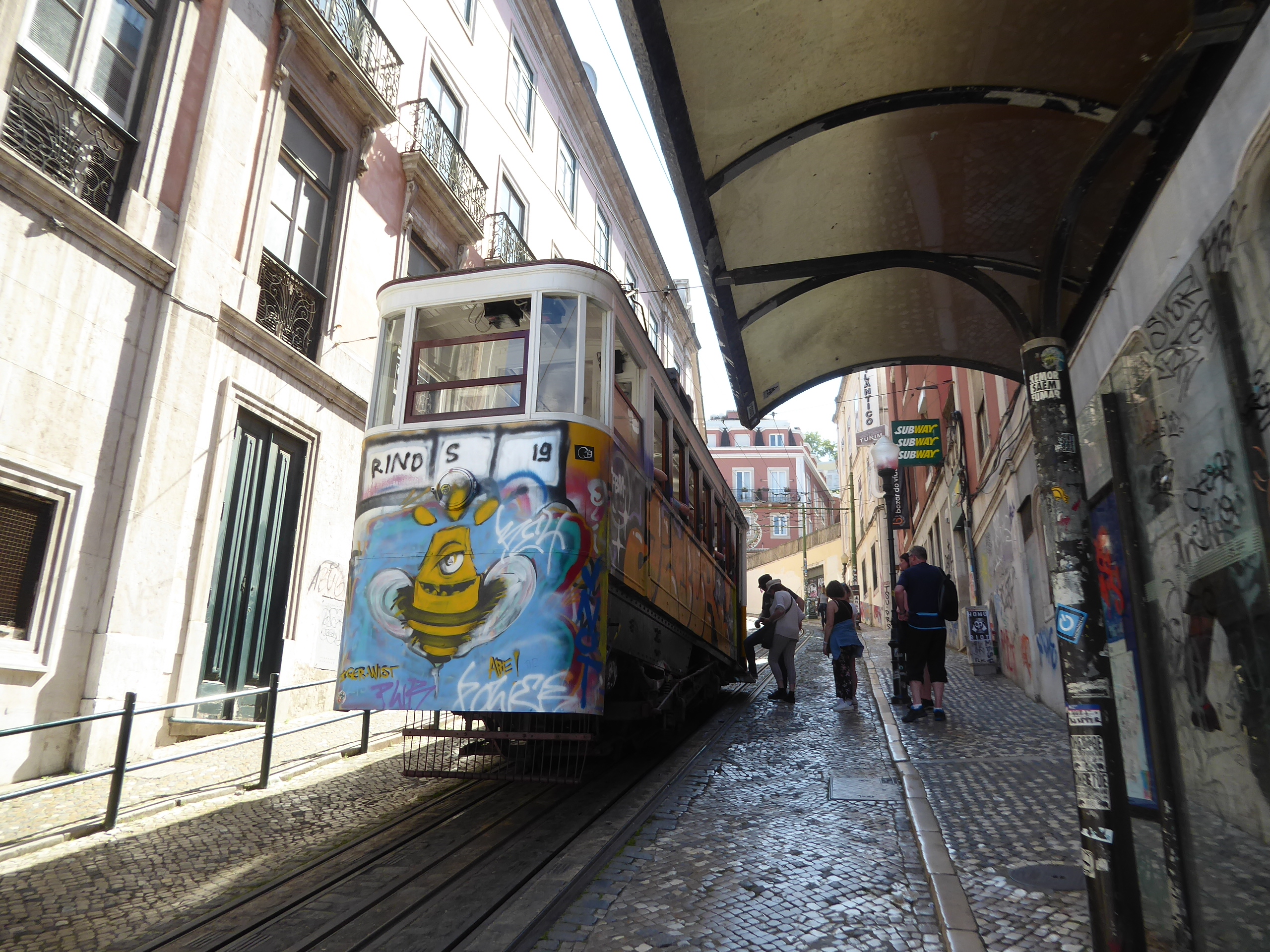
At the time, there were few sites near enough to Lisbon to make it easily accessible, but we could drop into the beautiful old city for a day en route south towards Portugal’s corner, which we did, strolling the lanes and gazing at the iconic funiculars and elevators. This first visit to Lisbon was quiet and untroubled by traffic whereas a subsequent trip saw us mired in gridlocked jams and breathing in noxious fumes during an open-top bus tour. How times change!

On we went to Sagres, in the south west corner before the coast turns into the popular Algarve. Here it was wild and breezy. We camped in a small, wooded site and were delighted to help out our young, Portuguese neighbours with the loan of a tin opener! At sundown people congregate to watch the sun set on this furthest west point of mainland Europe, perching on the rocky clifftops above frothing waves. It is a lovely place.

We bimbled [Husband’s word] along the Algarve, avoiding the high-rise hotel developments where possible and eventually on back up through Spain and France. At some point we had to pack the ill-fated pyramid tent wet and discovered it had torn in a couple of places. Horrors! Now it was stained, wet, torn and sporting gaffer tape. Stopping at a motorway service station we removed it and attempted to dry it out, with limited success. There was no way we’d be able to return it in this parlous condition. We’d simply have to buy the kind lenders a new one-and keep this one….which we did!

Tented Travels: Porto-a Divine Debacle

Now where were we? Ah yes-Portugal, the west coast, staying at Praia di Ancora, having pitched our borrowed, pyramid tent [disregarding advice from our elderly Portuguese neighbours, whose comments we could safely disregard by claiming ignorance of their language]. A few kilometers down the road lay the attactive town of Viana do Costello where we could get a train to Porto, thus avoiding the need to find a parking place in a city where streets are narrow enough to string laundry across between the homes.

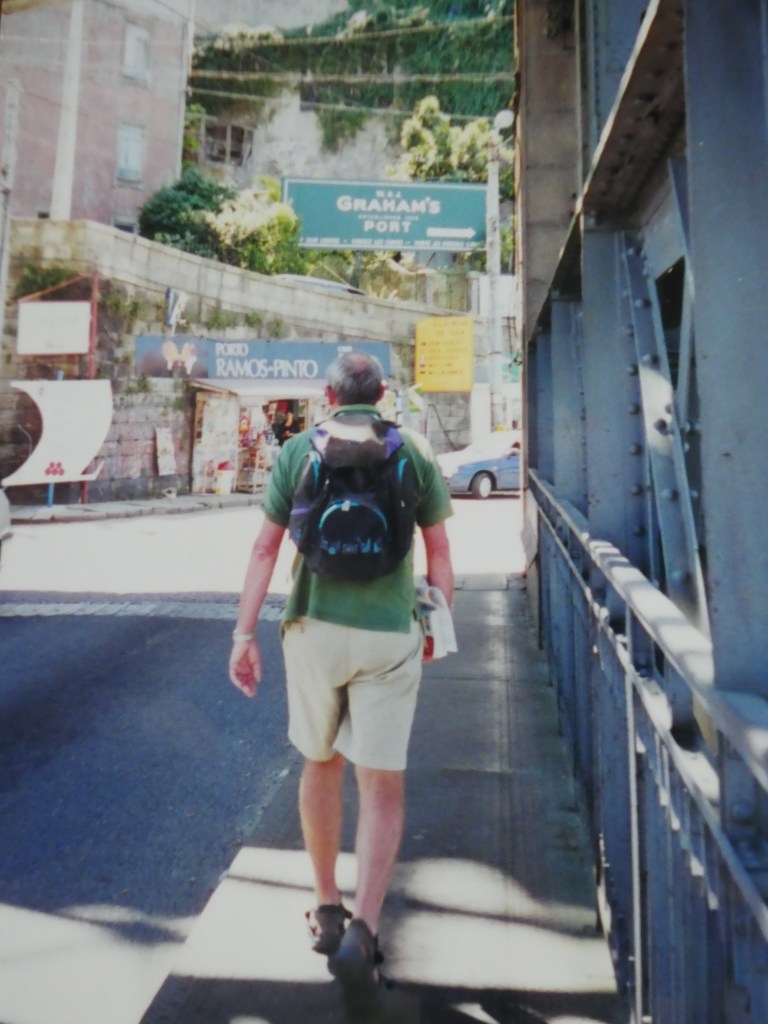
We parked the trusty Peugeot in the station car park and went to buy tickets. But what a spectacle the interior of the station was! Every wall boasted stunning tiled murals in customary blue and white. Here was a beautiful art gallery before we’d even left! In our innocence we bought return rail tickets and established the latest return time. Then we boarded and sat back as the wheezing, rumbling train took us down the coast.

Porto [or Oporto to the Portuguese] is a stunner of a city, tall umber houses squeezed together on the slopes down to the Douro river and dotted with old churches, frescoes, balconies-all with that beautiful decadence that only grand old cities display. My favourite streets are the narrowest, cobbled and where the balconies almost meet in the middle, as I said-strings of laundry across them.

On the River Douro there are traditional Rabelo boats that were once used for transporting wine barrels but can now be used for tourist trips. As we sat down by the riverside we peered into the waters where the river was boiling with thousands of fish, so that you might be tempted to reach in with a net and scoop some out-until you notice that what is attracting them is a sewage outlet…

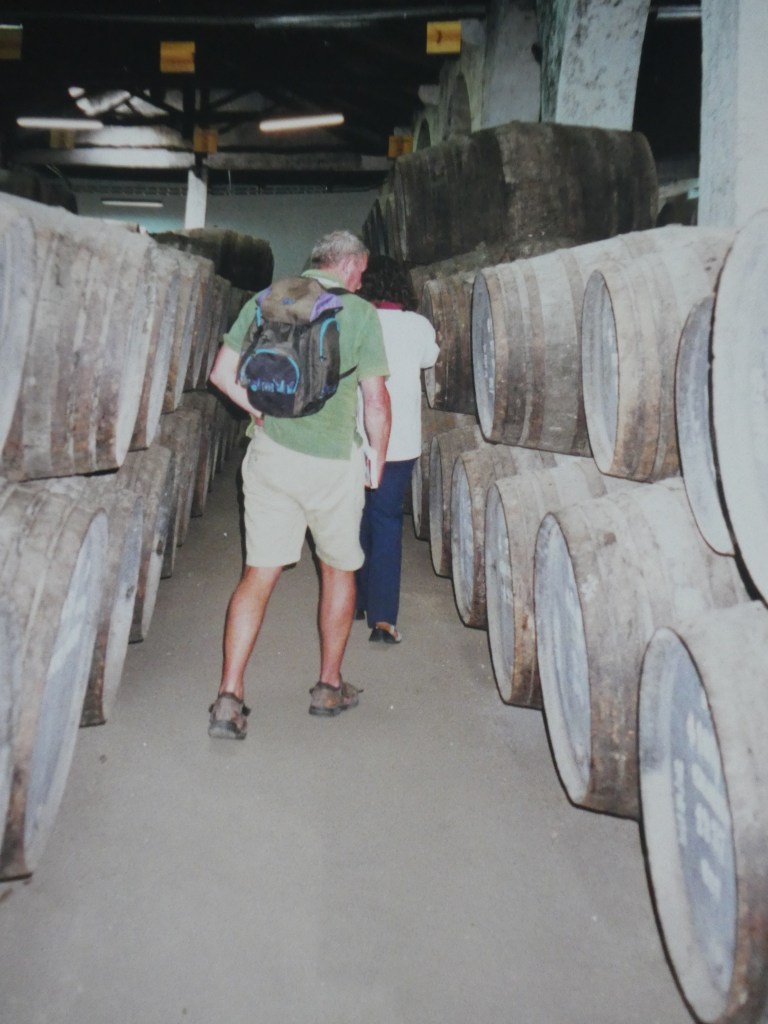
No visit to Porto is complete without looking at a Port lodge, of which there are many; cool, cavernous warehouses accommodating rows and rows of barrels full of delicious port in various stages of maturity; Heaven for Husband, who has a penchant for port.

At last we felt we’d done Porto justice and began to consider our return to Viana do costelo. We wouldn’t want to miss the last train back. We returned, footsore by now to the station and presented our tickets. And this is where the vagaries of timetables, coupled with breakdowns in communication failed us. ‘Ah no’, declared the gentleman in the ticket booth. ‘The return train does not leave from here.’ Who knew? How foolish of us to imagine for one moment that our train would be returning from the point where we’d left it? And of course, the station from which it would leave was now too far to get to. We had missed it. But he offfered us one glimmer of hope. A late, late ‘milk’ train would be trundling up the coast in the small hours and we could get back on that.

While it was a relief to learn we weren’t entirely stranded we were left with the conundrum of what to do with our evening and opted for a long, leisurely meal. We found ourselves drifting along to the port area, where a swathe of restaurants fringed the dockside, then selected one. It was quiet, early and there were pleanty of empty tables in the long, thin dining area past the bar. We soon had the feeling that tourists were not regular visitors and this was reinforced by the way the waiter ran to get me clean cutlery when I knocked a knife on to the floor! Though I’m sure the meal was delicious and would have been fish-biased my memory of it is eclipsed by the thrilling sight of a regular who’d been drinking at the bar being roundly ejected by the seat of his pants-an entertaining event.

We spent as long as we were able with our meal, then with drinks, until we could reasonably toddle off to get our train, by which time we were full of food and wine and very sleepy. The train’s old-style compartments seemed inviting and I felt anxious that we’d travel past our destination if we slept too soundly, but we managed to exit the train at Viana and arrived, very late to our site. We’ve been caught out by timetables on plenty more occasions since then!

Tented Travels-Portugal

Back in the 70s and 8os I seem to remember Portugal having a reputation for being expensive, but one of our early tenting expeditions in the 90s was to this small, sunny, friendly country tacked on to the side of Spain.

By the time we got round to our Portugal trip we’d upgraded from my ancient Volvo hatchback to ‘Mick’, Husband’s beloved Peugeot Estate, a heroic vehicle that took us thousands of miles and accommodated tons of equipment. We’d also swapped the aged, leaking frame tent inherited from my parents for a [admittedly borrowed] ‘pyramid’ tent, which was beautiful and roomy, but involved someone [ie me] crawling underneath the skirt of the tent to hold the central pole up while Husband secured the guy ropes. In hot weather this could be a sweaty task.

We still needed to make overnight stops in hotels and since a road trip to Portugal involves passing through Spain we had no option of a ‘Formule 1’ as we did in France, so we had to find somewhere en route, which we did, and perfectly acceptable I believe it was.

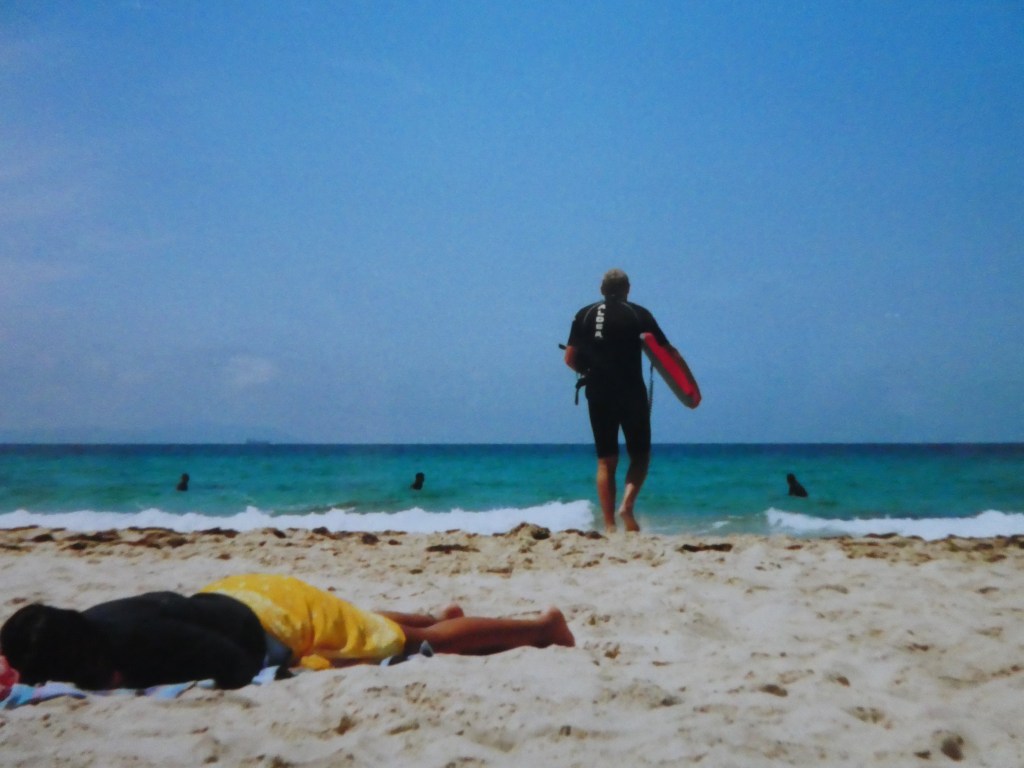
We cut off the corner of Spain and entered into the north of Portugal and to the coast. The west coast is green and less built up than the popular Algarve, which accommodates large numbers of package tourists every year. Husband was into body-boarding and was keen to try the waves in this area, which are great for surfing. We stopped at the small seaside town of Vila Praia de Ancora, where a large, wooded site gave access to the beach across a railway line and found a corner to begin setting up the pyramid tent.

It is customary on a site for those already installed to show an interest in new arrivals. On this occasion we were ‘helped’ by a Portuguese gentleman nearby, who was keen to advise where our entrance should face etc., whereupon we determined the entrance should face away from our neighbours.

The little town was [and still is-we’ve been back since] delightful, boasting beautiful sandy beaches and characterful streets with restaurants and bars [then, at any rate]. We got our first experience of Portuguese hospitality and cuisine, eating in a modest town restaurant, characteristic of so many in the area, with simple but delicious food and wine sourced from the local district. And as tradition dictates, our menus were accompanied by tasty nibbles-a lovely touch.

Our site was a short walk from the town and also close to a handy Intermarche supermarket. We also discovered that the railway behind our site could give us easy access to Porto, further south down the coast, which meant we would not have to up poles and move from this perfect spot. We’d need to drive to Viano do Costelo, a short way south, and park there to get a train. Wonderful! What could possibly go wrong? …

Tented Travels Portugal continues in the New Year 2021. Anecdotage’s next post will be my travel review of the year-a little different this year. In the meantime, I’d like to wish all regular readers, followers and visitors a safe, healthy and happy Christmas, wherever you are. And thank you for visiting!

Turning Portuguese

P1070246

The first time we visited Portugal was with a tent, a giant, swish ‘pyramid’ tent that we’d borrowed from Husband’s colleague. I had to crawl in and hold the central pole, getting hot and sweaty while Husband hammered the pegs in outside. On a site at Ancora [north Portugal] where an interested neighbour ‘advised’ us on where to have our doorway, we pitched under some sap-dropping trees that stained said tent for ever, resulting in our having to buy the colleague a brand new pyramid tent when we returned. [We’d also torn the fabric attempting to dry it out in a French motorway services car park].

P1070338

This was also the trip when we visited Porto by train from Viano do Costelo, buying return tickets and discovered on our return to the station to get back, that the train ‘does not return from here’. We had a wonderful, dockside meal and returned on a ‘milk’ train, from a different station at about 2am.

During this and subsequent visits, with various vans we’ve done the major must-sees of Portugal: Porto, Lisbon, Guimares, Coimbra, Sagres, Faro-

Mostly we’ve found the west coast to be more pleasant and less developed than the Algarve, but there are exceptions.

P1070360

Portugal, like Greece is one of those countries that never fails, with luscious countryside, beautiful historic cities, reliable, warm weather, delicious food [including the famous ‘pastel de nata’ custard pies], a gorgeous coast line and friendly people.

We find Lisbon much changed, with the addition of hideous cruise ships blocking views and throngs of tourists everywhere. Our previous visit was quiet and we were able to stroll the narrow lanes without stepping around selfie-takers. To anyone intending to visit Lisbon and considering an open top bus tour I’d say, ‘Don’t!’ You pay 11 euros to inch along for hours in stifling traffic, a woman wailing Fado songs in your ears. You get to see very little and anything of interest is zipped past or around before you’ve got your finger on your camera shutter.

I can get no purchase on the Portuguese language whatsoever. Spoken, it sounds eastern European with lots of sch, z and cz. Written, it looks remarkably like Spanish and meaning can often be deduced. We know we must take care not to speak Spanish to the Portuguese in spite of so many words being similar, nevertheless Husband is inclined to say ‘gracias’ instead of ‘obrigado/a’ for the first few days. My own knowledge of Portuguese is restricted to ‘obrigado/a’, ‘Bom dia’ and ‘ola’ so it is fortunate that almost everyone here speaks English very well indeed.

The Portuguese are fond of tiling the outside of their homes, which can look beautiful or tawdry; railway stations, hotels, churches-no building is safe from this treatment.

P1070332

And neither are the bone-shaking, tooth-grating streets, which are tiled in cobbles.

The Portuguese countryside is strewn with cork oak trees, the cork continues to be harvested and goods such as cork handbags can be seen in the shops. Perhaps the backlash against plastic will see a resurgence of the cork industry? It does seem to be a versatile material with useful properties: lightweight, water repellent, attractive.

In recent years, wildfires have decimated much of Portugal’s forests and evidence of this is everywhere.

Orange and lemon trees abound, in gardens, parks and along the streets. They are all hung with tons of fruit which nobody seems bothered to pick, the ground around the trees littered with fruit just as the plums lie fallow in Gloucestershire.

P1070325

Before using the [very quiet] motorways you must register your bank card and attempt to forecast how much toll you will be using, which is tricky. Otherwise you can register at the first ‘portagem’ [toll booths] but then you’ll have no clue as to what is being deducted.

We’ll soon be leaving Portugal and crossing back to Spain-but I’ve no doubt at all that we’ll be back!