Some Yarns and a Departure…

We’re about to leave Cunningsburgh. But before we do we’ll be taking a look at some traditional Shetland knitwear. We noticed a sign to ‘Barbara Isbister, Knitwear Designer’ on the way here and have promised ourselves something knitted to take home. It’s fun to bring something home from your travels. We’ve already purchased a beautiful, atmospheric lithograph of the Ring of Brodgar from Kirkwall on Orkney, although on this occasion we haven’t acquired any objects for the naff shelves. [See: ‘The Ghastly Gathering’].
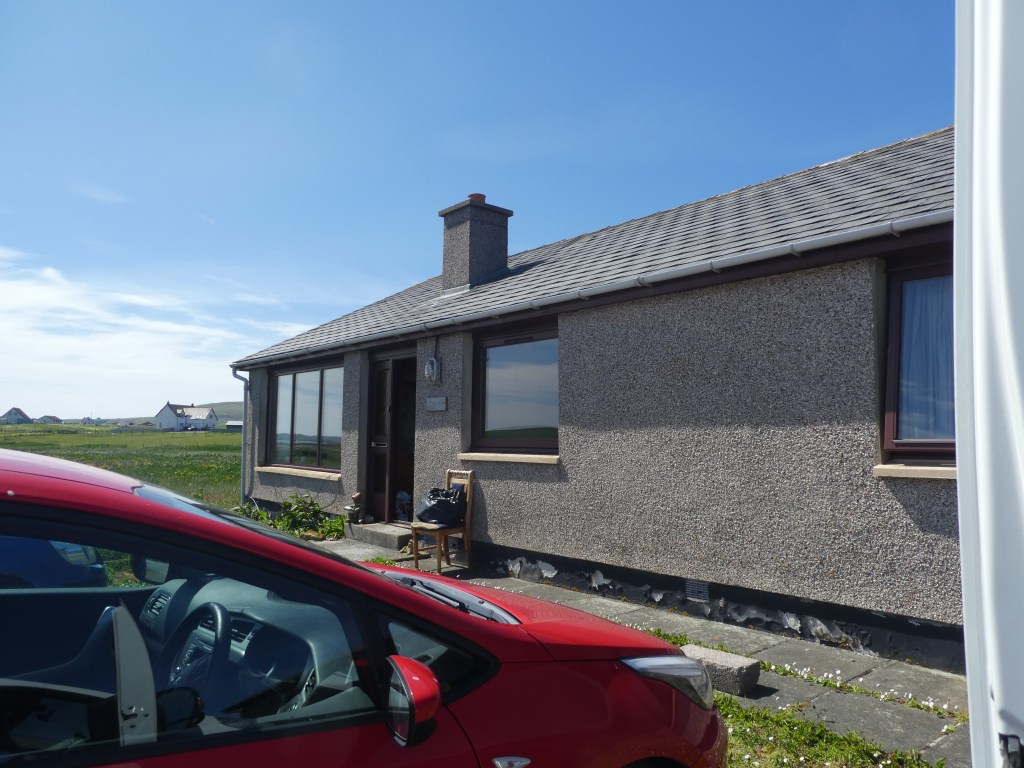
We trundle round to Barbara’s house. It’s inauspicious, a small, semi-detached, pebble-dashed bungalow. We ring the bell, although the front door is open. Barbara invites us in. She’s a tall, mature lady. We walk through a living room and into what must be her work studio. This is a chaotic home, spools of yarn, half-knitted or completed woollen garments and knitting paraphernalia piled up on every available surface. Barbara is clearly an artist! We look through a rack and through knitted items on a table, selecting a traditional jumper for Husband and some hats for the grand-offspring.

We take our leave and head off to Lerwick, which we’ve left until this last day to explore. Parking is easy in the large, quayside car park. It’s a working port, more fishing boat than leisure. A jumble of shops and cafes ranges along the front, with more gift and knitwear stores than other towns, presumably catering for cruise ships, which I gather do stop here in non-pandemic times.

But today it’s quiet, as everywhere else and we can walk down the centre of the narrow, slabbed streets without worrying too much about traffic. Away from the centre, on the seafront street I search for Jimmy Perez’ house. I downloaded several Ann Cleeves books before we came and have seen a couple of the televised versions of her Shetland detective novels. There is nothing to indicate which grey, stone, waterside cottage is his- but then of course he isn’t real and is not deserving of a blue plaque. I narrow it down to two possibilities. Perhaps you, reader, can enlighten me?
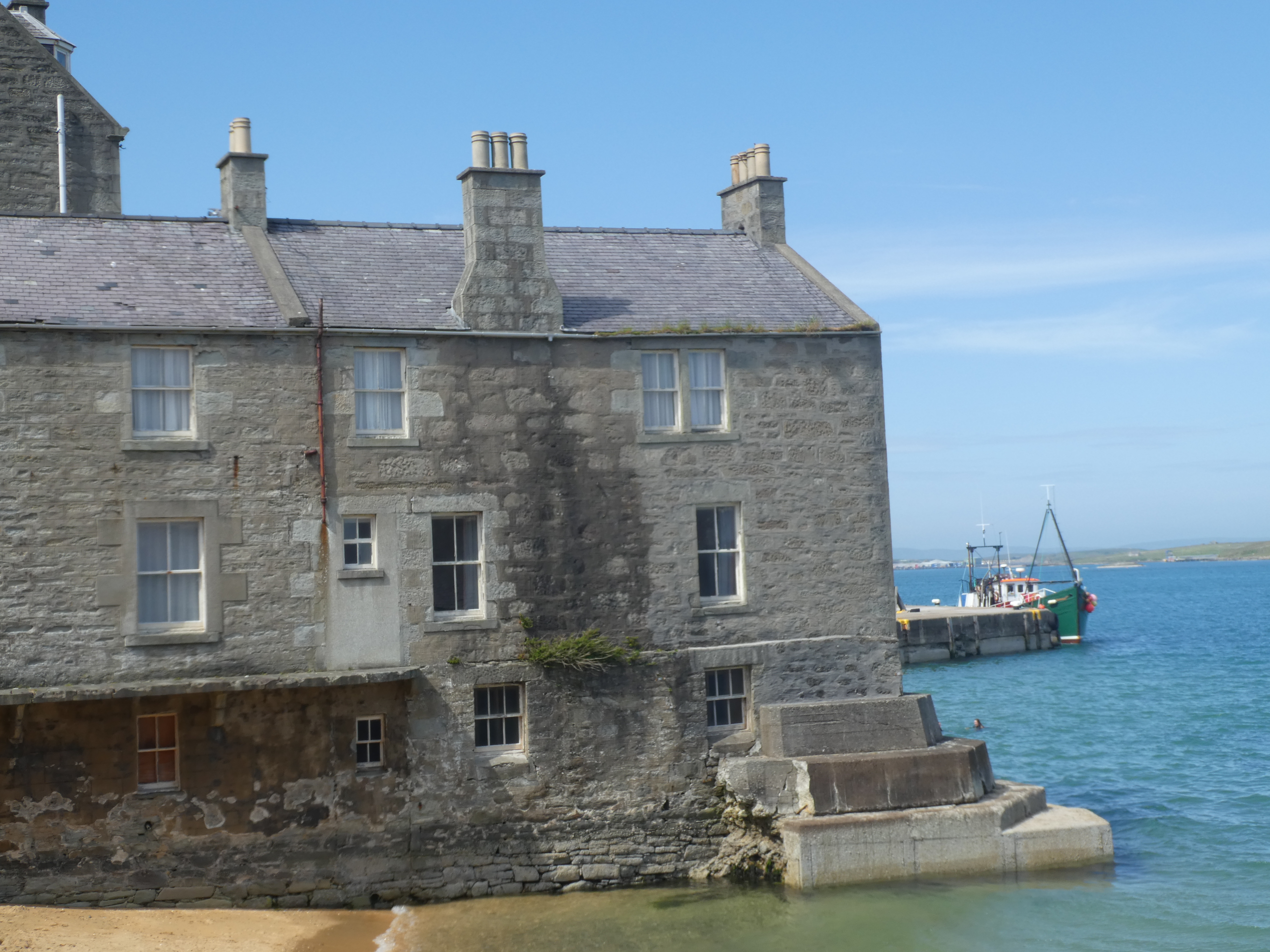
We have lunch, then wander up to what was a fort and up around the back of town. Up behind the centre there are large, sprawling estates as well as Tesco- the largest supermarket we’ve seen since the Scottish mainland. There isn’t much more to Lerwick, although the couple of streets nearest the port are attractive and characterful.
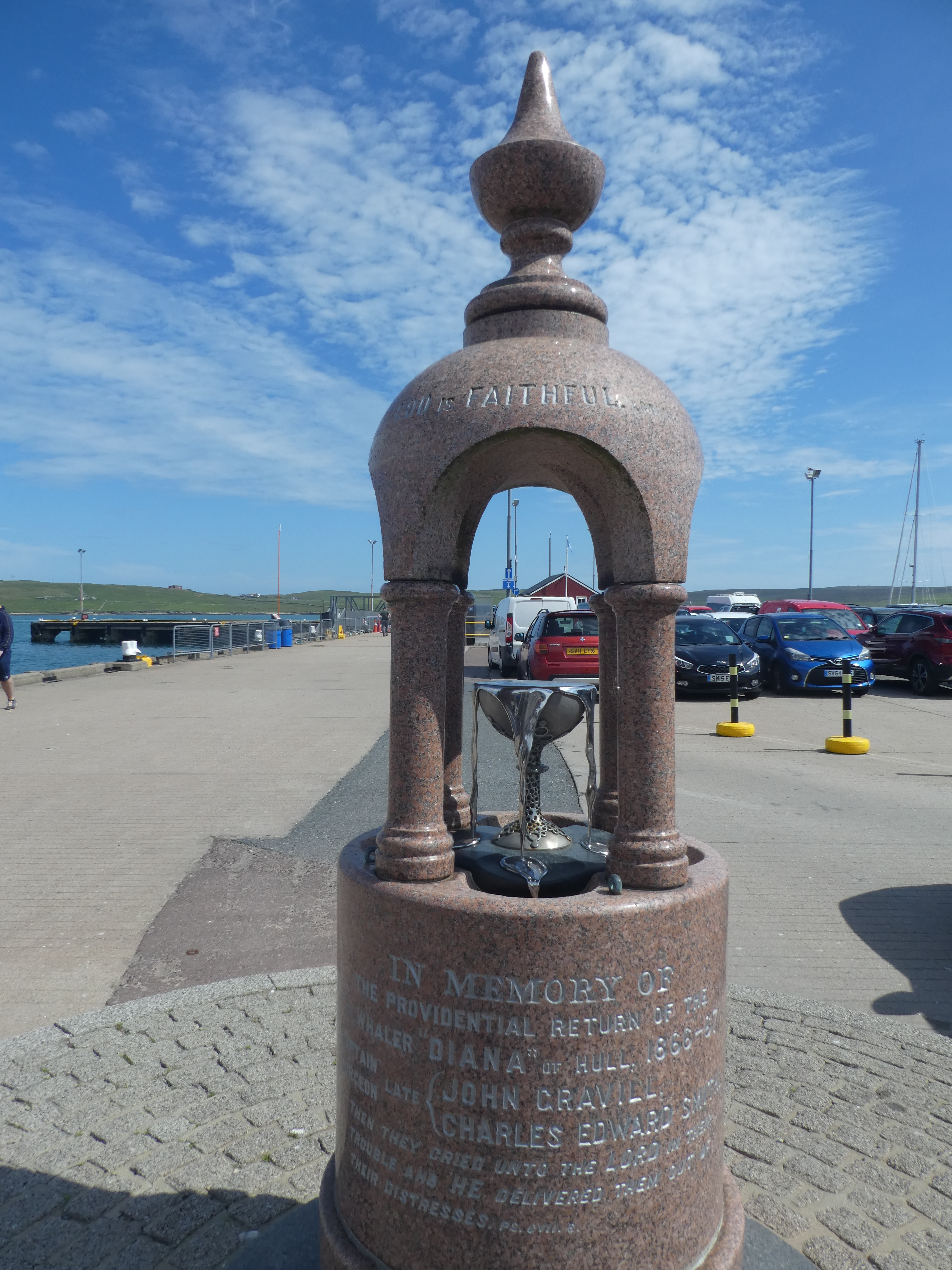
Back at the car park we meet and chat with a young man who also has a van, one he’s meaning to convert. He’s moved to Shetland from Cambridge and his mother is a Shetlander. ‘How are the winters?’ I ask him and he shrugs. ‘People have hobbies’ he tells me. It’s hard to imagine the long, hard winter nights on a day like this.

Our ferry to Aberdeen leaves at 5pm and it’s with reluctance that we go to join the check-in queue further round at the ferry departure point. We’re waved on by a kilt-wearing, pony-tailed port worker then we’re rumbling up the ramp and into the ferry. As the ship departs there’s time for one more look at Shetland, bathed in afternoon sunshine, then we’re off back to the mainland and a long haul home.

Grace is also known as the novelist, Jane Deans. Her new novel, The Conways at Earthsend is now out and available from Amazon, Waterstones, Goodreads, W H Smith, Pegasus Publishing and many more sites. Visit my author page on Facebook: (1) Jane Deans, Novellist, Short Fiction and Blog | Facebook
Shetland. Sumburgh.

Having looked at the north of Shetland, we leave Deltings Marina at Brae and head south towards Sumburgh. We’ve booked to stay at the Sumburgh Hotel- not in a room, but in our van, hooked up to one of several points in their roomy car park.

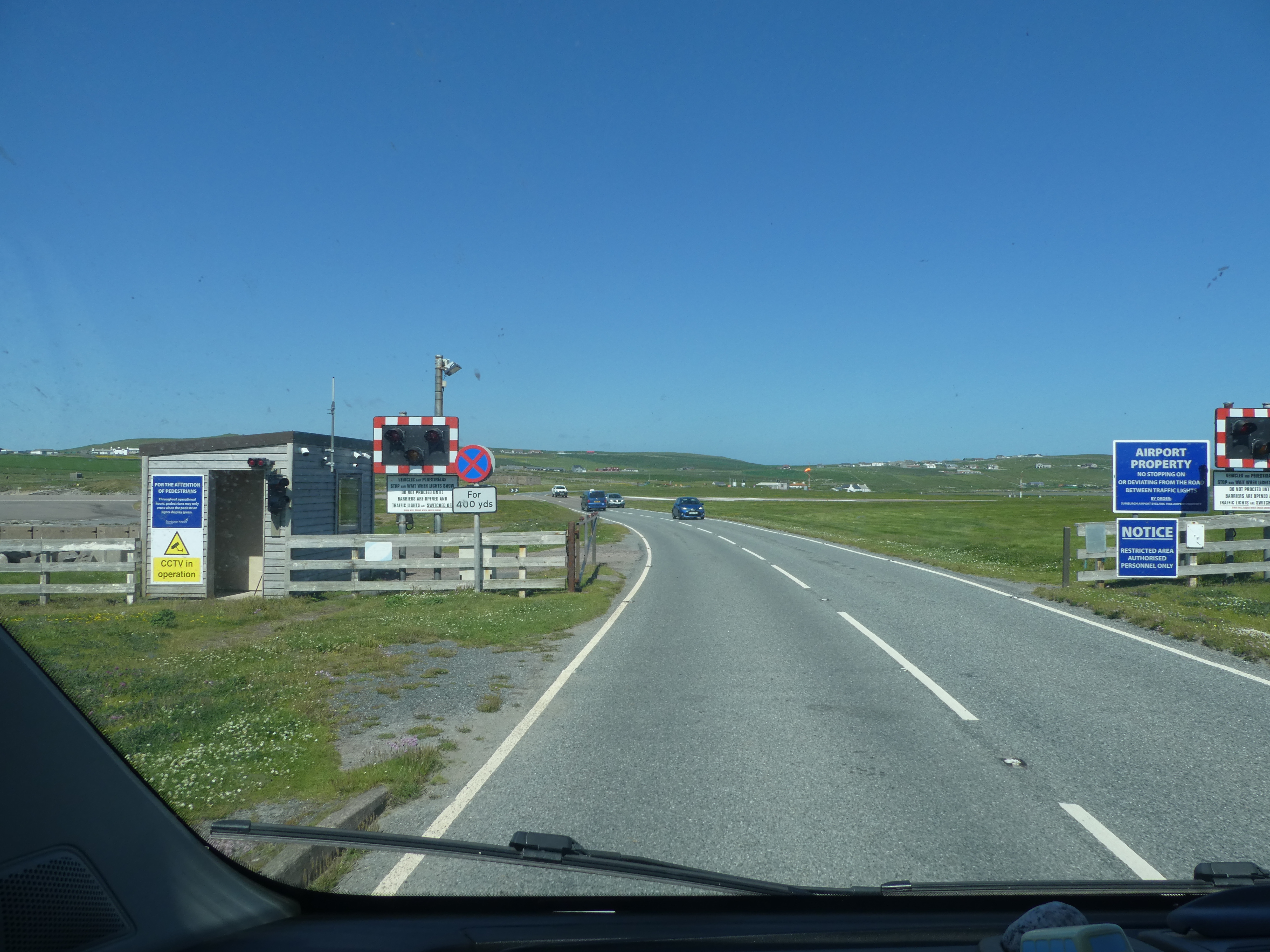
On the way we get to drive across Sumburgh Airport runway, which would be unnerving were it not for warning lights on the road. We stop to look at a historic, bronze age encampment just beyond the runway, although due to closure we can only look from the fence.

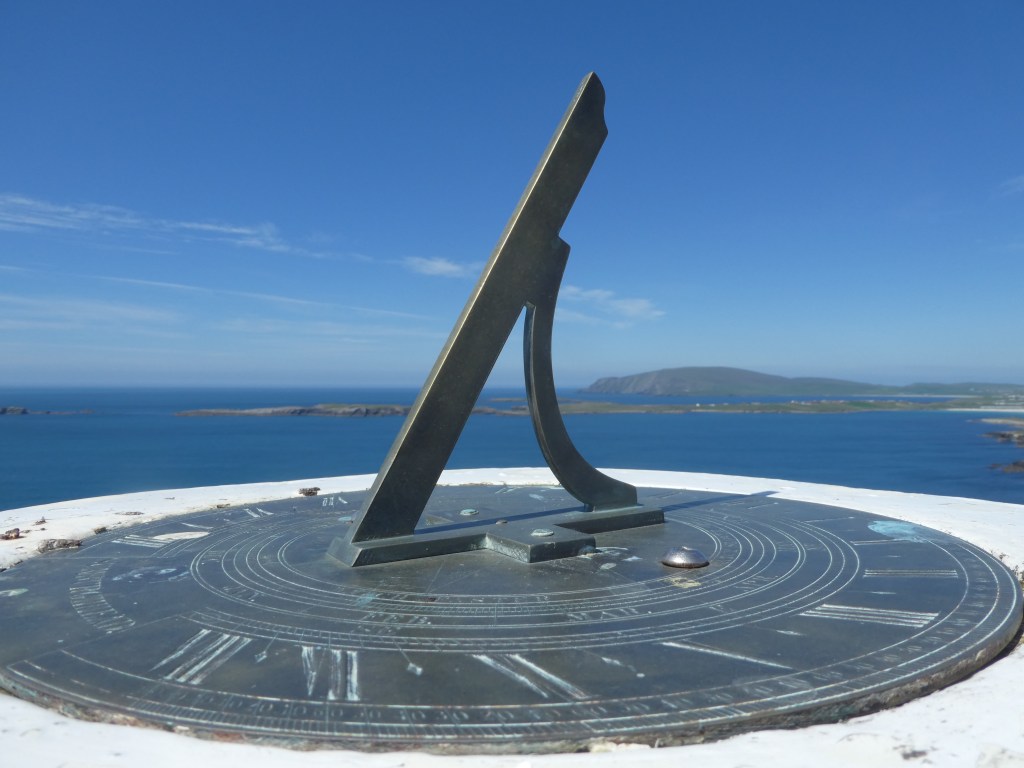
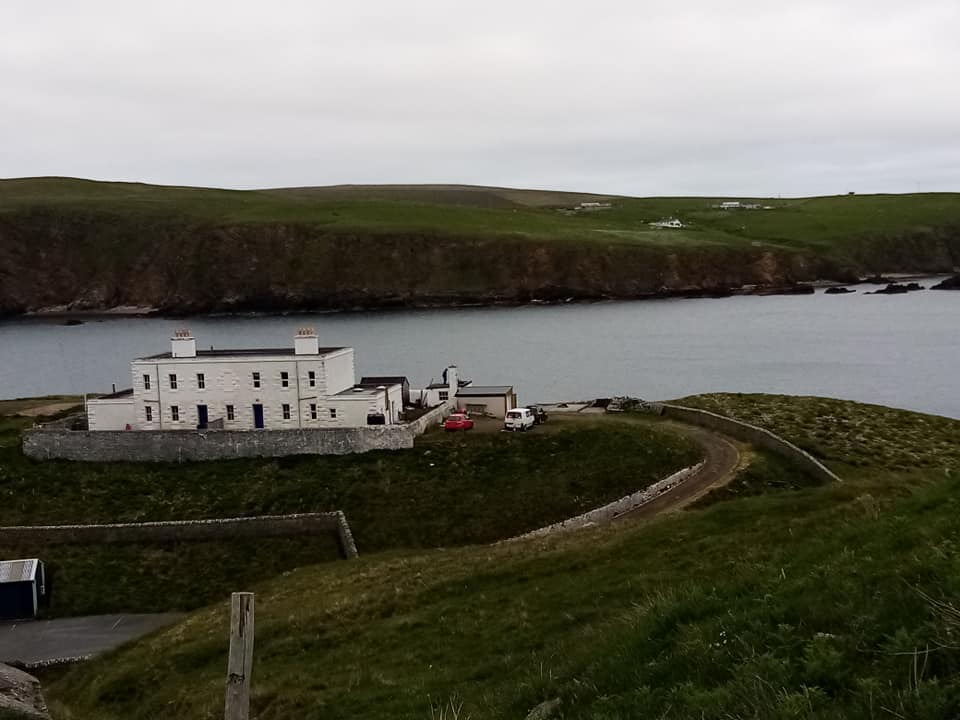
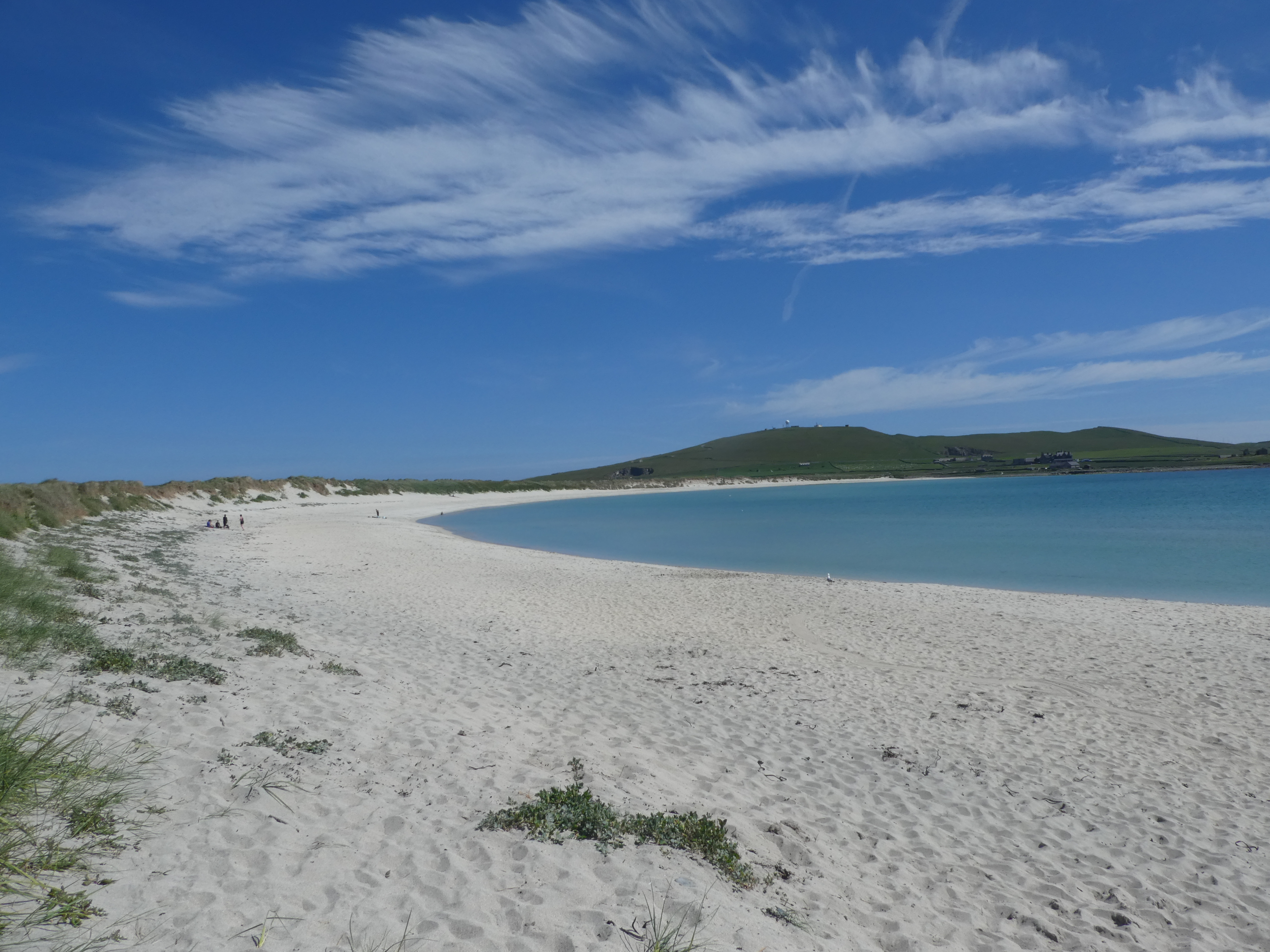
Opposite the airport, and out of sight but not earshot, is a curving, white-sand beach with barely another soul on it. Today is warm and sunny and we opt for a couple of hours enjoying the weather and the view, which takes in Sumburgh Head, topped with a lighthouse. From time to time a plane or a helicopter glides across, otherwise it’s peaceful and pleasant.

We make our way to the Sumburgh Hotel, where we are to stay and given that there’s nobody around we park up and plug in. We’ve reserved a table for dinner. There’s a sudden invasion of flies and they’re everywhere, prompting us to close the van up and fight back with swats. Later they are also plaguing the hotel restaurant, for which the waiter apologises.

In the morning we take the van up towards the car park near the top of Sumburgh Head and find it packed with vehicles so we park further down and walk up the sloping path. There are fewer visitors than the jam-packed car park suggests so perhaps many are not willing to climb up to the lighthouse. But it is worth the effort. Peering over the low wall there is a sheer rock-face and far below, a large outcrop protruding from the waves, almost covered in chattering, squabbling razorbills.

We continue on up and through a gate, up to where there is a wall and a viewing platform. There are a few others standing on the platform or by the wall and they are all looking at the same thing. Husband gets to the wall first then turns and beckons me, grinning. I can just about see over the wall and I get to see what is attracting all the attention. In the sheer, rocky wall there are small crevices and ledges, and from the crevices Puffins are emerging to stand in the sunshine. We are close, although behind the wall. The Puffins stand around nonchalently, preening or simply gazing out to sea. It’s as if they’re paid to do shifts for the spectators. While they’re unperturbed by we humans, they quickly withdraw into their holes when gulls swoop a little low over them.

At last we tear ourselves away and go on to take a look at the views and the lighthouse. On the way back down, as we reach the Puffin spot we stop to chat to the RSPB man, who’s tasked with recruiting subscribers today. I agree to listen if he’ll take some publicity leaflets for The Conways at Earthsend: Amazon.co.uk: Deans, Jane: 9781784659615: Books, which he does! Over the wall a cheeky Puffin is nearer still, posing like a pro.

Next to the hotel is Jarlshof, an ancient site that has housed stone age, bronze age and Vikings in its time. It’s extensive and well preserved and we spend some time there before we leave.

Our stop for the night is at Cunningsburgh, halfway back to Lerwick, another small marina site but with outstanding kitchen and showers.It’s away from the village, which seems to be flung all over the place, but we’ve noticed a sign for ‘designer knitwear’ en route, so we’re planning to stop and take a look.

Grace is also known as the novelist, Jane Deans. Her new novel, The Conways at Earthsend is now out and available from Amazon, Waterstones, Goodreads, W H Smith, Pegasus Publishing and many more sites. Visit my author page on Facebook: (1) Jane Deans, Novellist, Short Fiction and Blog | Facebook

Shetland. Eshaness.

It’s a wrench to leave beautiful Unst and make our way back to Shetland, but we’ve lots more to see, so we return via the ferries, first to Yell. Slightly larger than Unst, Yell seems almost entirely to consist of peat bog, swathes of bog cotton decorating it and areas where it’s been cut and bagged ready for collection. I get a sense it’s even more sparsely populated than Unst although it may not be so. The aptly named ‘Midyell’, half way across the island looks to be the biggest community.

Then we take the ferry from Yell over to Shetland. We are headed to Brae and Deltings Marina, where we are booked in. Many of the Shetland island sites are at marinas, where there are electric hook-ups, showers and sometimes kitchen facilities, too. These services are shared with boat users, of which, of course there are many as on all islands.

Brae is quite a large village in Shetland terms, sprawling around a large bay, and even has a small co-op supermarket, something we haven’t seen for days! It is also home to an award-winning fish and chip restaurant, which is a pleasant find.

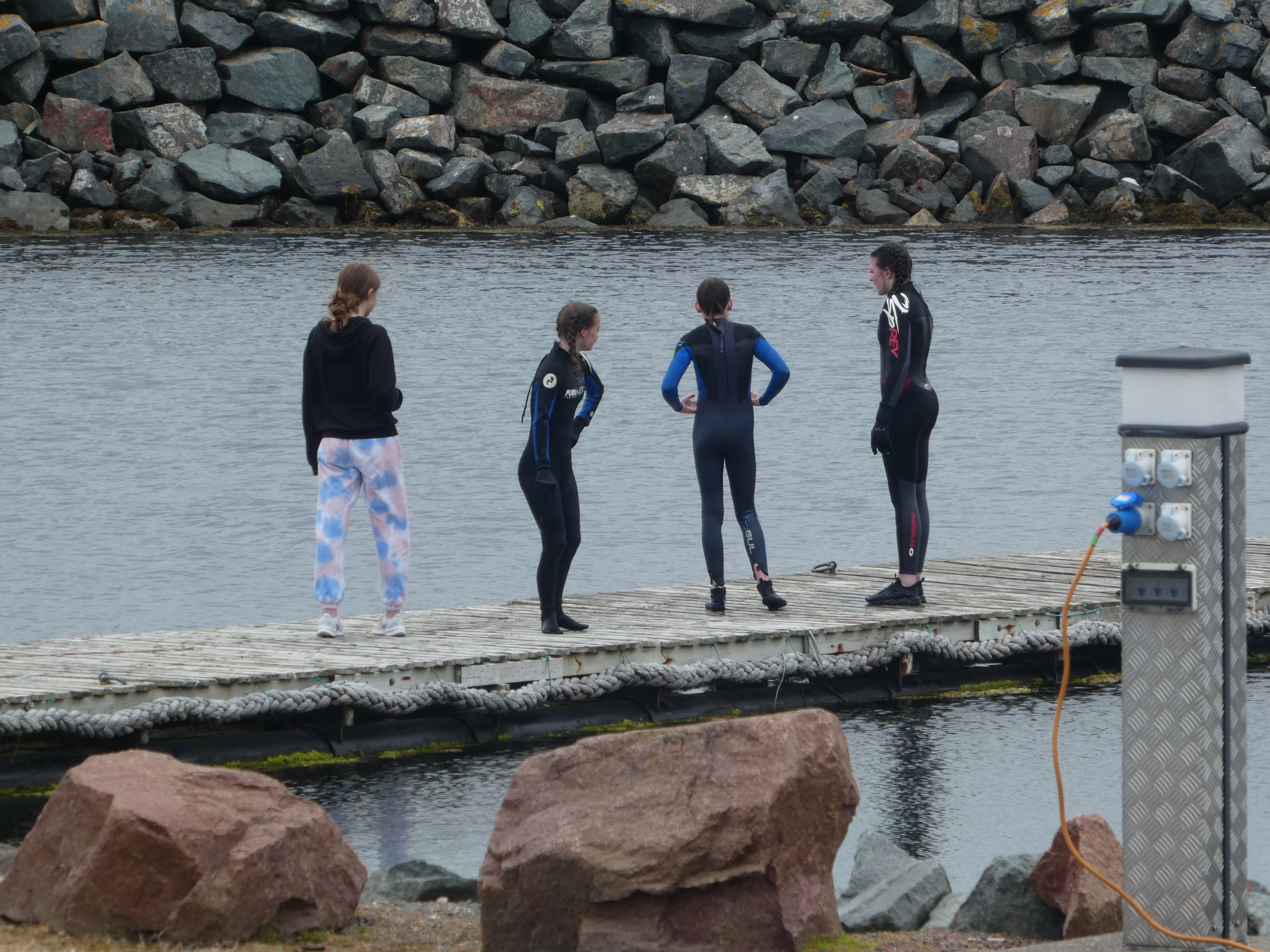
Above the marina building there’s a patch of grass where a few tents are pitched, housing a group of young girls who are clearly enjoying the start of their school holidays. They appear on the jetty in wet suits and proceed to leap into the harbour or push each other in, shrieking, climbing out and beginning again. After their dip they clamber up on to the quay and shower using the hosepipe. Later they wander down in pyjamas for an impromptu game of badminton. They are a lovely, uplifting sight as they enjoy the outdoors and each others’ company.

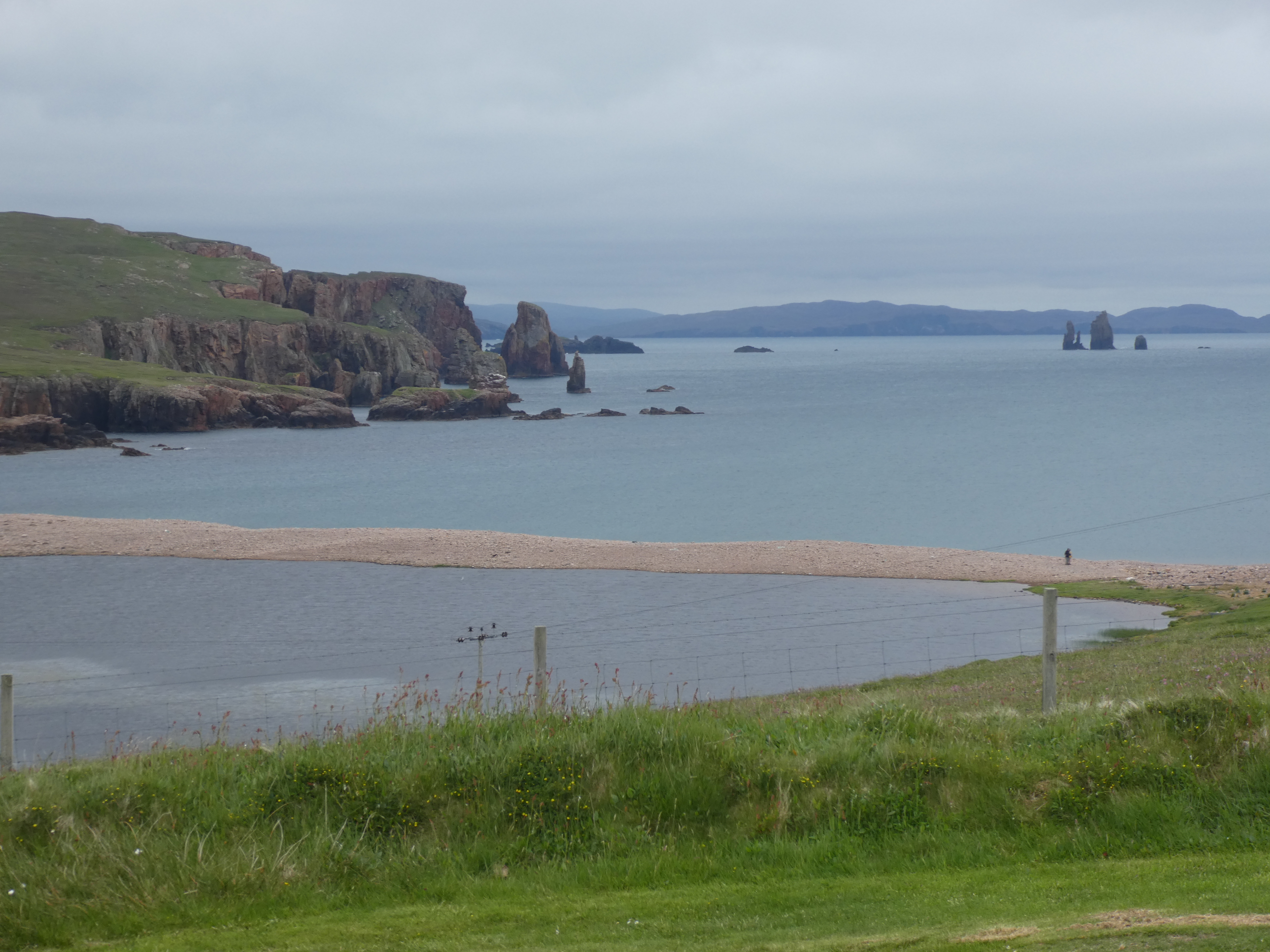
We set off towards the north of Shetland, travelling to the north west, where the landscape becomes wilder and more rugged than ever and when the coastline appears it’s spectacular and can rival any coastline in the world for views. On the way towards Eshaness Lighthouse we pass a cafe/campsite, perched high above the sea with a stunning outlook, although there is nothing else around except for the cafe.

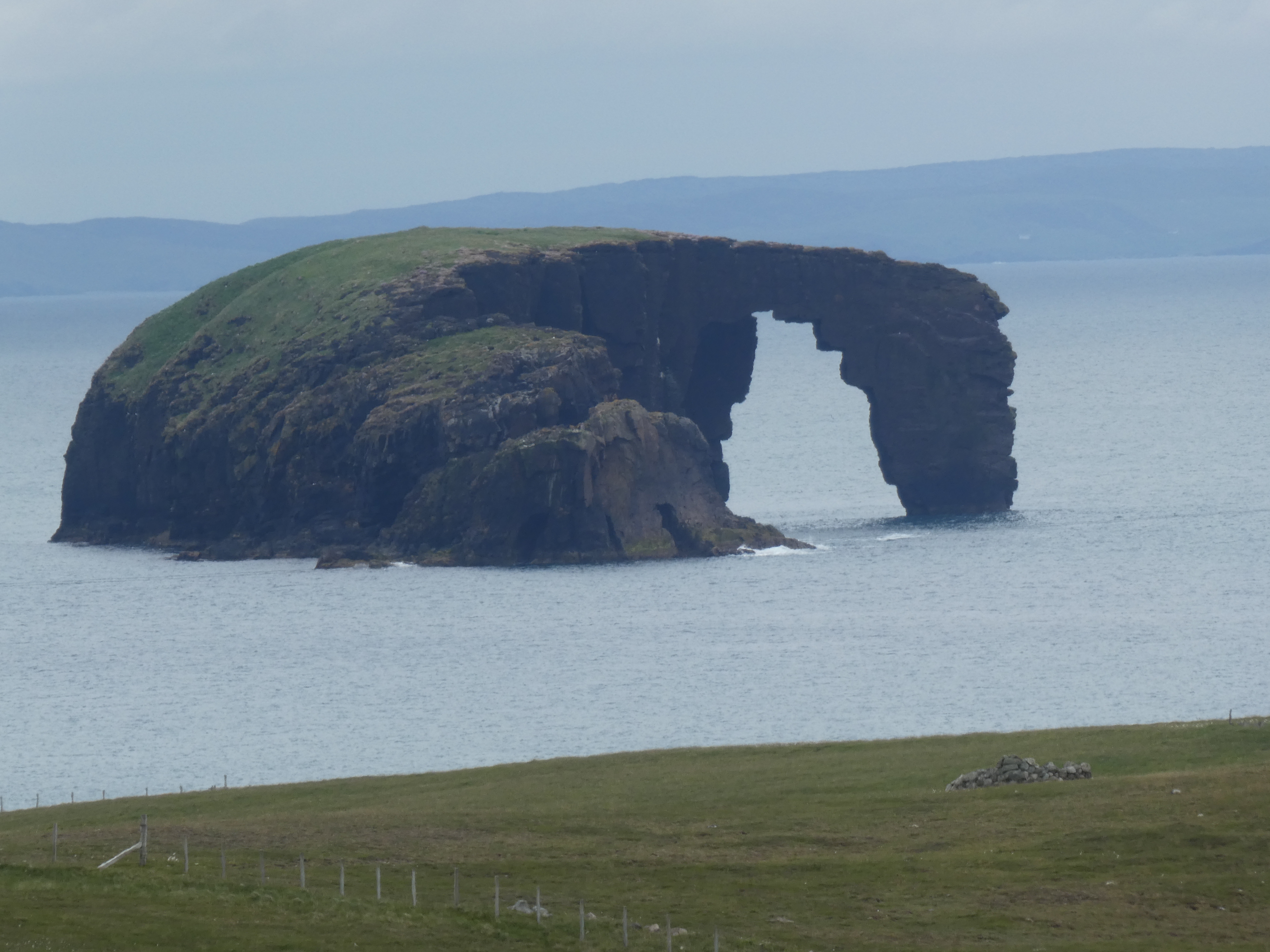
Further along, out to sea there’s an amazing island with an archway that looks as if it’s suspended somehow, an unearthly sight. This is Dore Holm, looking like a horse drinking the sea, its neck stretching down into the waves.

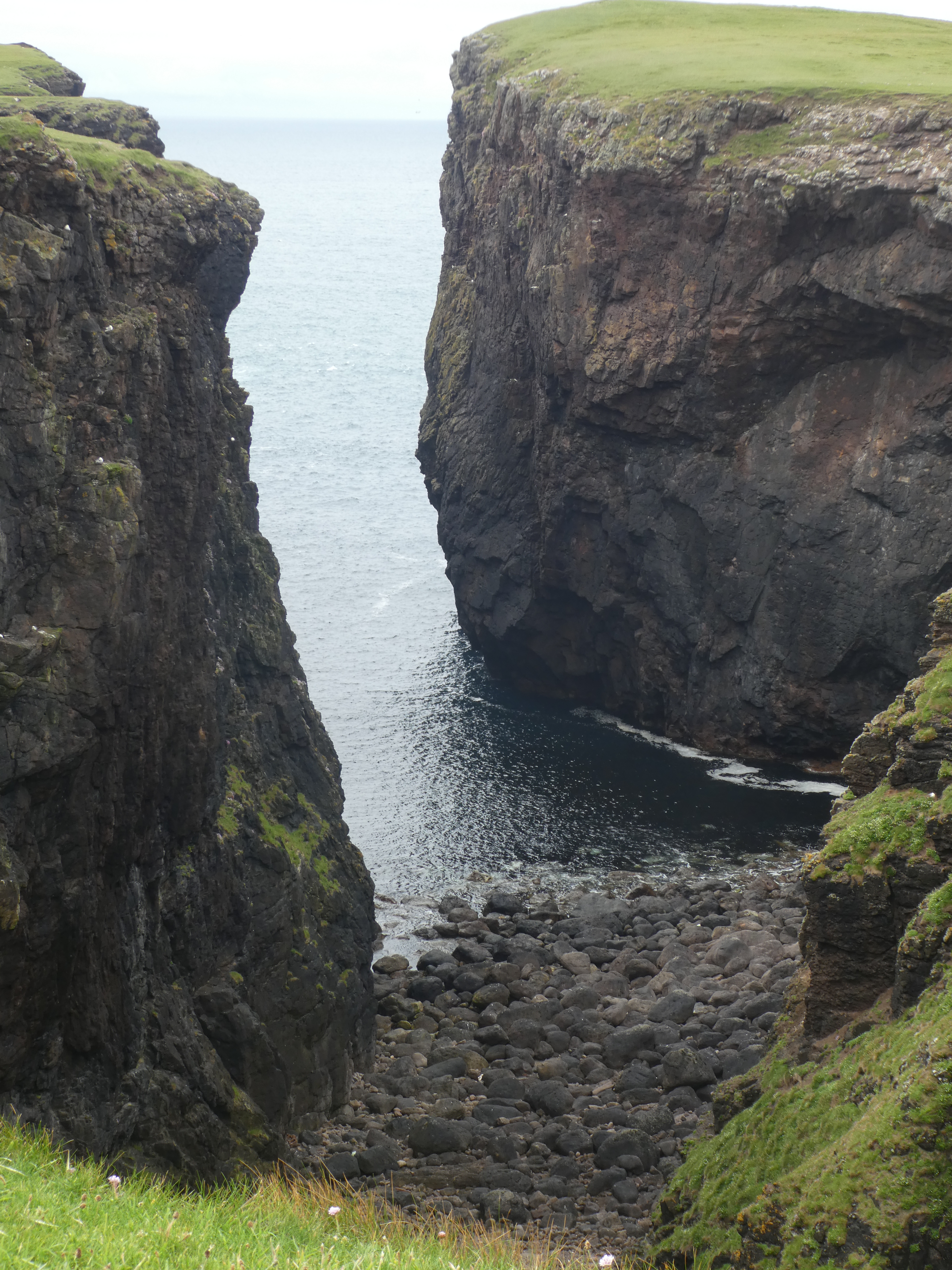
At Eshaness there’s the remnants of an ancient volcano. We pull up by the lighthouse and walk down across the springy, peaty turf to a giant scar in the earth, a gorge with sheer rock walls and dark, oily sea at the bottom. It’s a haven for seabirds who’ve taken over every tiny ledge. Again, we’ve got this wild, beautiful place almost to ourselves. We walk around the end and to the cliff edge and I spot what looks very much like an ancient spear head, lying on the turf. Husband is convinced, although it seems unlikely. But I pick it up anyway, because we can always say that it is!!

Next week: Sumburgh and the Puffins!

Grace is also known as the novelist, Jane Deans. Her new novel, The Conways at Earthsend is now out and available from Amazon, Waterstones, Goodreads, W H Smith, Pegasus Publishing and many more sites. Visit my author page on Facebook: (1) Jane Deans, Novellist, Short Fiction and Blog | Facebook

Exploring Unst

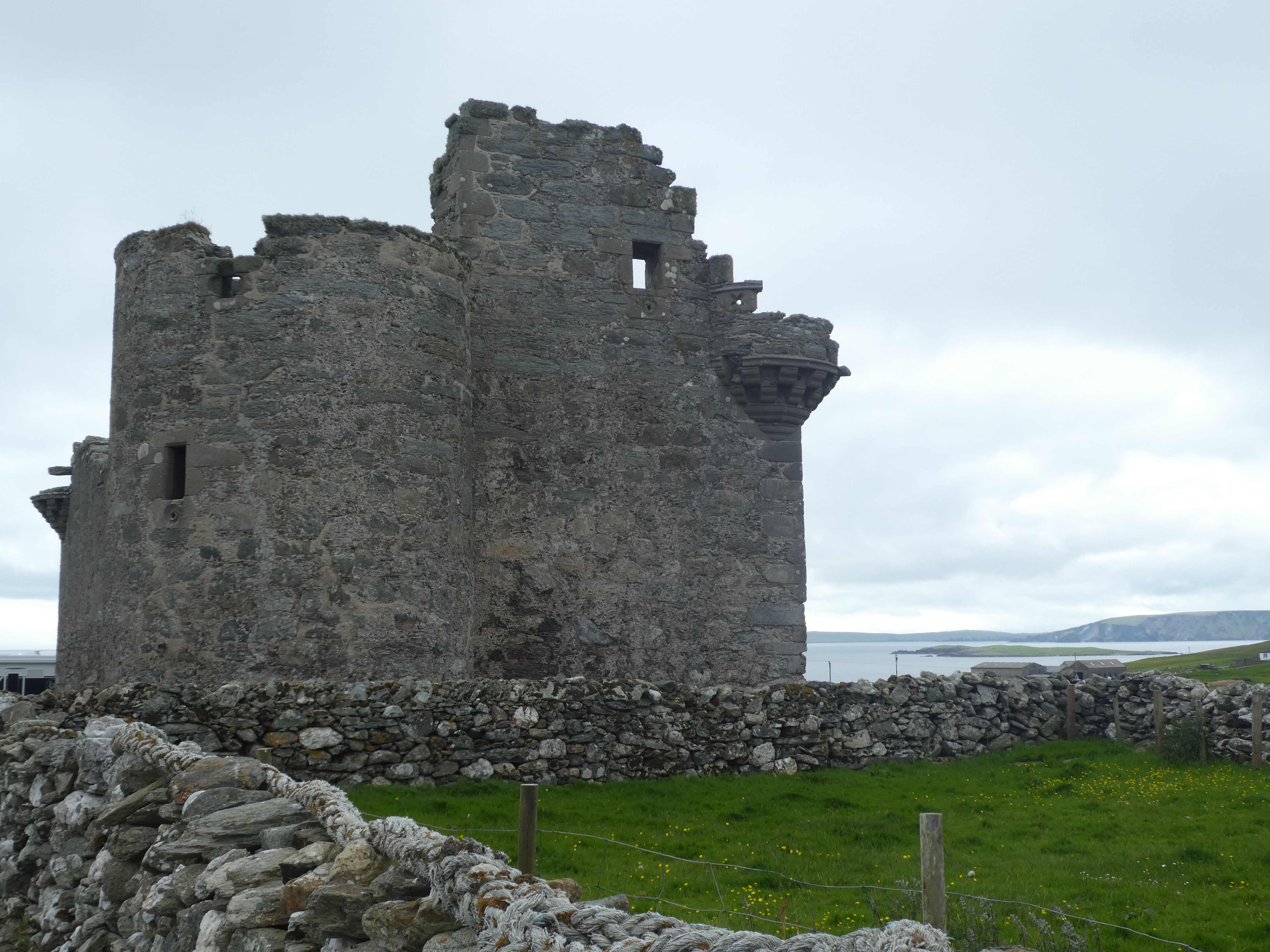
We set out from our base at Gardiesfauld, to explore the tiny island of Unst, which lies at the northern end of the Shetland Islands. Typical of the islands, Unst has no motorways, no dual carriageways or major roads. Most routes are single track, with passing places [if you’re lucky!]. Having said this, traffic is sparse. Just short drive away from our site is Muness Castle, small but relatively intact, sitting in an imposing position above the sea. We can walk around the structure and it’s quiet, with only one other couple stopping to look.

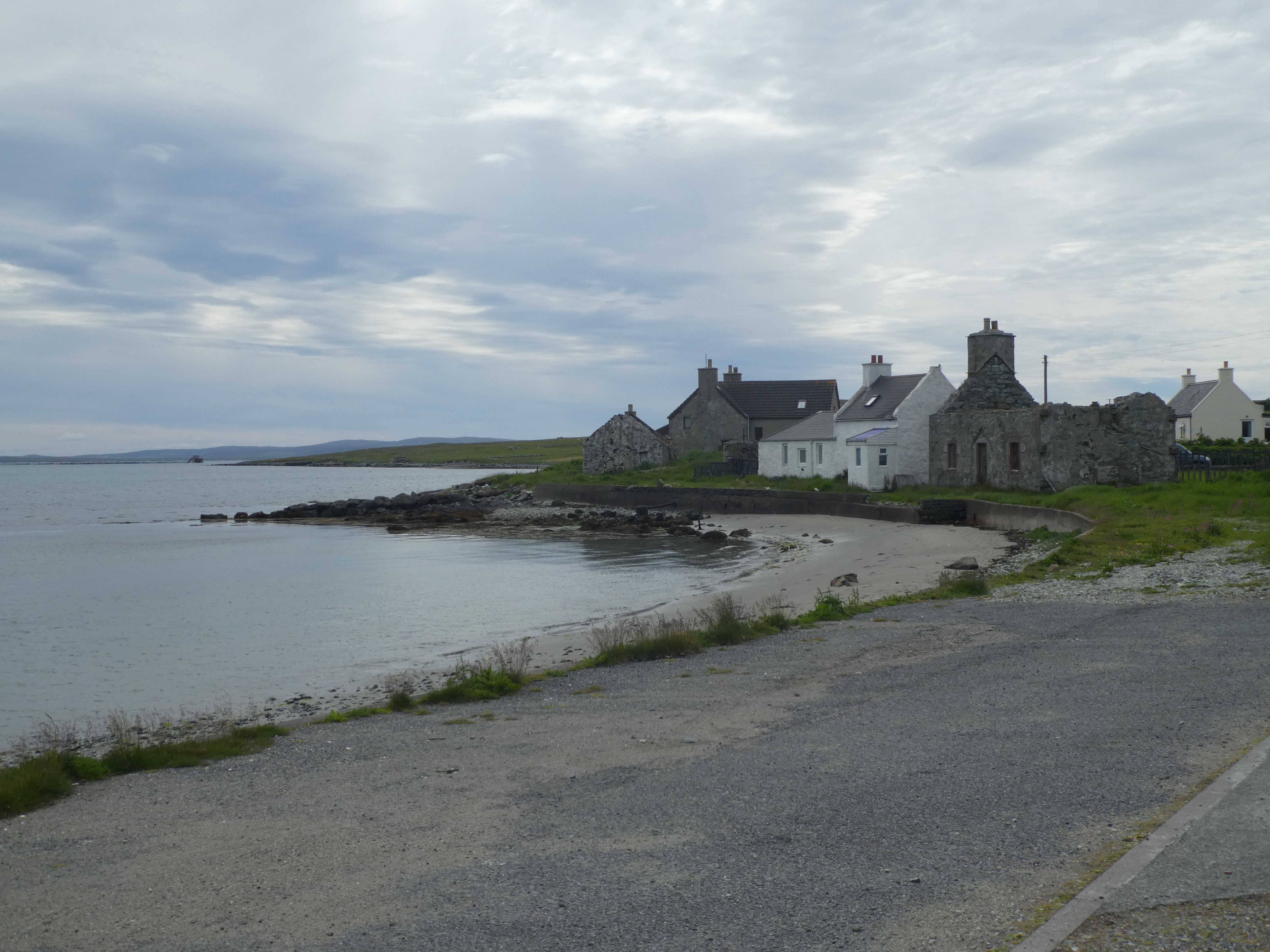
Like the other islands, Unst is littered with abandoned, ruined, stone cottages and in a nearby cove these buildings are everywhere, although the sole inhabitants of the bay now are Shetland ponies, skittish when we approach. Contemporary homes on Shetland are less glamorous; low, pebble-dashed houses, presumably easier to insulate against unforgiving winter weather.

There is also, scattered around the landscape much evidence of early settlements, with many remains of Viking long houses and burial mounds.

On a trip up to the north of Unst- the north of the north- at Baltisound, we happen upon Bobby’s Bus Shelter, a place of pilgrimage for tourists. Situated on a corner, it is embellished with all manner of creature comforts- a chair with a cushion, a TV [not real] bookshelves complete with books. There is even a ‘bus shelter visitors book’. Outside, a house-shaped box contains eggs and home-baked items for sale. A customer to the box informs me the bus shelter is customised each year. Inside the box there is a plethora of delicious baked items, from cheese scones to lemon drizzle cake. I choose a pack of cinnamon muffins for us, although finding the correst cash for payment is tricky. Tucked inside with the bakes is a cash box, open, with the notes and coins that customers have left. I’m humbled by the honesty of the customers and the trust of the baker. The muffins are delicious!

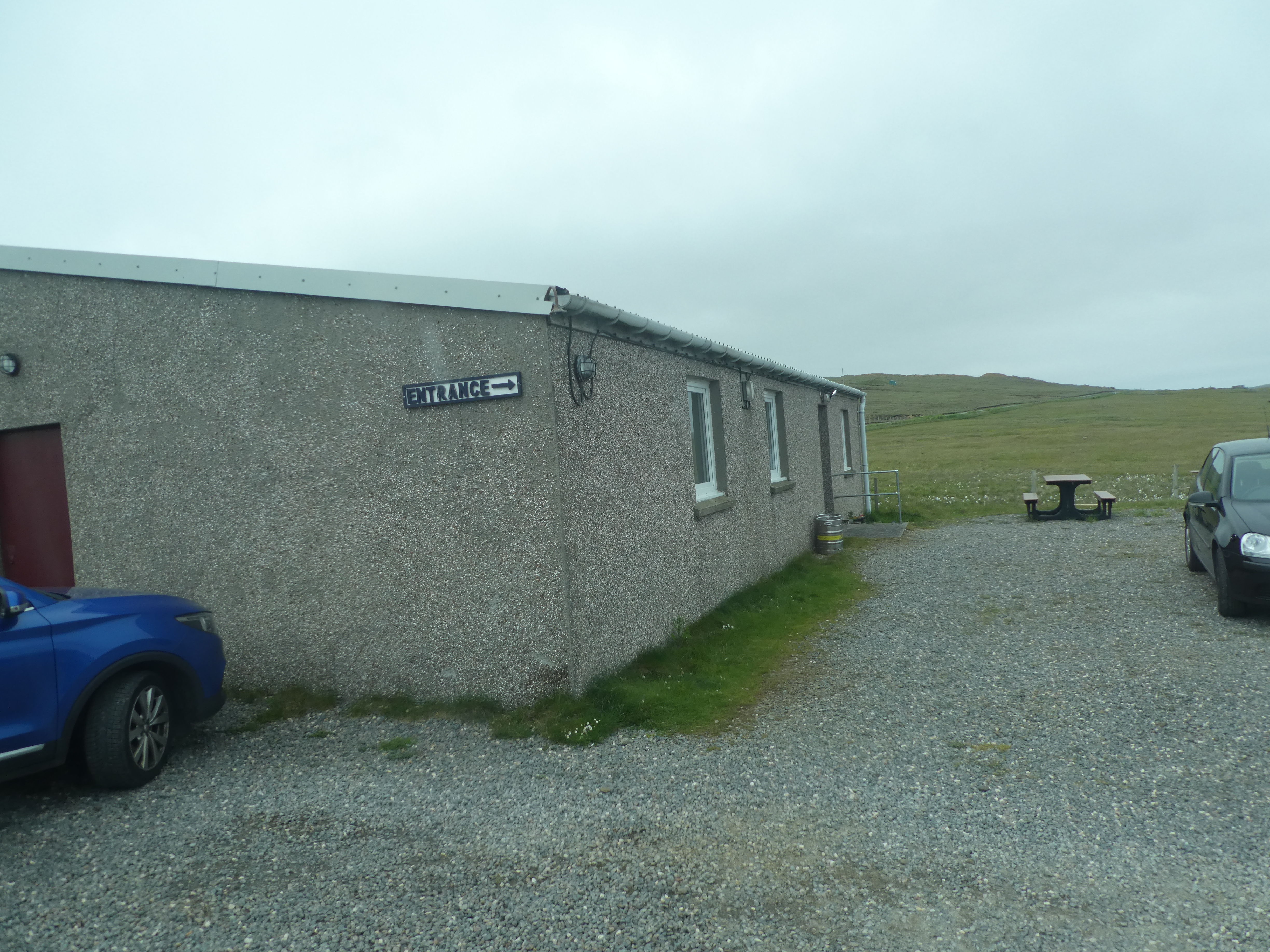
Baltisound also seems to be home to Unst’s one and only bar, although it’s an unprepossessing building. Beyond Baltisound we happen upon a replica Viking ship and a replica long house, immaculate and beautiful…and deserted! We have it all to ourselves.

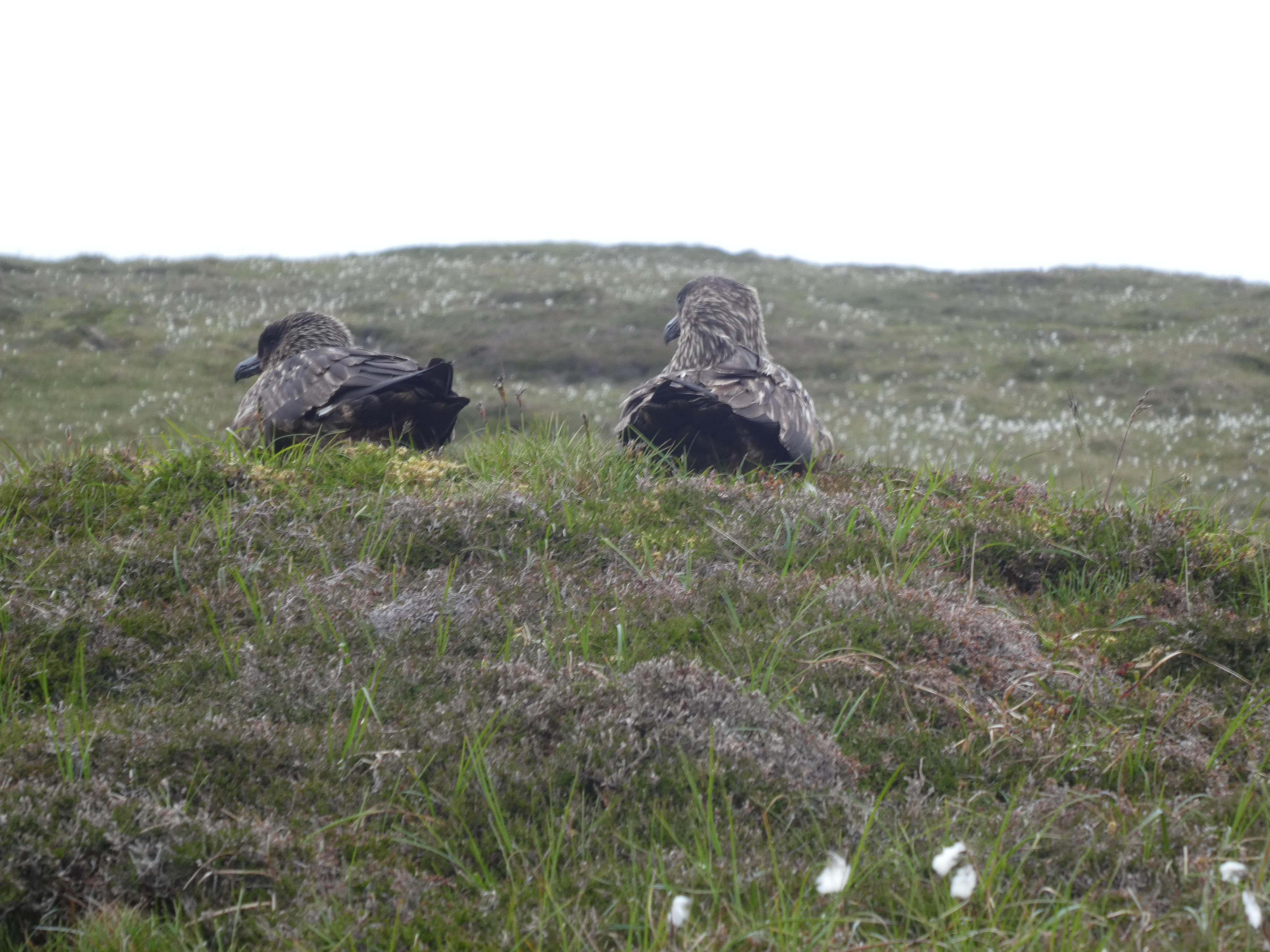
Then we are up at the very tip of Unst and it feels remote, although there are a few homes. From the beach, we wind up a narrow track and around a bend to a car park at Hermaness Nature Reserve, above a rocky semi-island with a couple of houses that must be holiday homes. There are skuas nesting here and I spot what I think is a Lapland bunting.

Here on the islands I feel I’ve been transported back to a previous era, to a time when communities were small, people knew each other. The shops are community shops, packed from floor to ceiling with essentials. The pace of life is slow, the outdoors a precious resource for work and leisure. Each village has a community hall, essential for socialising. No other part of the UK I’ve visited is like this now, like the UK of my childhood, the 50s.

Our time on lovely Unst is up, but we’ve much more to see yet as we return to Shetland itself…

Grace is also known as the novelist, Jane Deans. Her new novel, The Conways at Earthsend is now out and available from Amazon, Waterstones, Goodreads, W H Smith, Pegasus Publishing and many more sites. Visit my author page on Facebook: (1) Jane Deans, Novellist, Short Fiction and Blog | Facebook

Orkney to Shetland

It’s our last couple of days on Orkney and we move out to a newly opened, relaxing site overlooking Kirkwall Bay, where the island ferries come past all day and the big Northlink ship stops in the port opposite every evening. Once installed we pull out chairs for an hour or so in the warm sunshine.

The weather turns wet for a last afternoon and evening to while away in Kirkwall. We shop, lunch and go to visit the Orkney museum, which is free entry and has a small but lovely garden as well as a few interesting exhibits.

Later we make our way round to Hatston Port to wait for the Northlink ship to pick us up on its way from Aberdeen to Shetland, though not until 11.45pm. It’s still twilight when the ship arrives to collect us, along with a half a dozen other vehicles waiting. Once boarded we go straight to find our cabin as our arrival time to Lerwick is 7am.

The en suite cabin is cozy and comfortable, if a little stuffy, but sleep is, at best intermittent with the ship juddering, pitching and rolling on this blustery night. Neither of us is especially well rested when the tannoy announces our arrival to Lerwick. It is a rude awakening, rolling from the bowels of the ferry into a cold, drizzly morning at the ferry terminal and up and out into a bleak, unforgiving landscape of hills dotted with sheep. At this stage we’re only interested in catching up on sleep so we park up and get a nap. It’s an inauspicious start to our Shetland visit but by the time we rally and drive out to Sandness in the west and lunch overlooking tiny Papa Stour island the weather has improved and the rugged scenery seems to have an appeal of its own.

For our first night we’re staying at Skeld, again in the west of this skinny island. There’s a chilly wind and some drizzle as we descend to the small marina below the hills and it feels remote. There’s no internet or TV signal and the services are a complicated system of keys and coin-slots, although there’s water and hook-up.

Next day we’re off north towards our main destination of Unst, the most northerly part of the UK. It must be accessed via two ferries- one to Yell then a second to Yell’s miniscule sister island, Unst, just two miles long. The ferries run like clockwork, backwards and forwards all day, efficient and quick. As we traverse Yell the surroundings become even more barren- vast areas of peat bog, the peat cut and stacked in many places, or bagged up for collection. With time to spare before the next ferry we park by a small loch for lunch then we’re off across to Unst and to our site, at Gardiesfauld. It’s a youth hostel [currently closed] and camp site on a small bay, the few pitches overlooking the beach. It is charming, a few stone cottages fringing the beach and a soft light over the water. Out in the bay there are circular constructions for a fish farm.

Unst may lack size but there is a lot to explore and we are about to do it!

Grace is also known as the novelist, Jane Deans. Her new novel, The Conways at Earthsend is now out and available from Amazon, Waterstones, Goodreads, W H Smith, Pegasus Publishing and many more sites. Visit my author page on Facebook: (1) Jane Deans, Novellist, Short Fiction and Blog | Facebook