The Best of the Rest

In the middle of our week in Seville, the weather turns sultry and cloudy. We are setting off to walk what we’d discovered was the route to the ‘sights’ and as we leave the hotel, are warned by a doorman that a big storm is coming, which was good of him. We determine, however that we’ll be back before any harm befalls us.

On this day, the parks and gardens are all firmly shut and locked, the result of accidental tree falls in previous storms. The authorities are taking no chances! These closures include the park in which the Plaza de Espana is located, although we are able to get into it by ascending steps and through a doorway.

In the event, there are a few grumbles of thunder and some gloomy, electric -looking clouds plus a few spots of drizzle. On our way back, and wanting brunch, we stop at one cafe, sparsely peopled and are asked if we have booked a table! We move to the next cafe, which is quiet. We have to use the QR code method for the menu [a system I’m not fond of] but manage to order a few items. We wait. We begin to realise why the cafe might be quiet when the wait extends and becomes over-long. A large party of Frenchmen arrive and order a lot of things, some of which arrive before our brunch, which is annoying. Husband is nervous about the coming storm [although this does not become an issue]. At long last, our meals arrive. It’s not so far to walk back to the hotel and as it happens, there isn’t really a storm.

The afternoon is still warm and, wanting to relax with a book by the pool, we get the lift to the third floor. The pool area, however has been stripped of all its comfortable cushions and quite a few of the loungers are gone, presumably in preparation for the ‘storm’ which hasn’t arrived! We make the best of it, using the loungers that remain and we have the place to ourselves.

In the evening, we venture to the top of our street and across to a restaurant we’ve spotted. It has evening outside heaters and a very cosy interior, plus a promising menu. We both choose steaks, which arrive on slates, mine still sizzling on arrival and it ranks amongst the very best steaks I’ve had, simply accompanied by chips [fries], tomatoes and okra. We order a glass each of their house wine. It is all delicious.

Another meal, at the ‘California Burger’ is a resounding failure and epitomises everything loathsome about fast food- a nasty, greasy, falling-apart in my hand load of gloop served in disposable cardboard- and resulting in a morning’s incarceration in the toilet for me and my UC-inflicted gut.

I’ve learned that if we want to visit the ‘Alcazar’ [which we do], we need to book tickets. We can do this at our hotel reception, which we do, choosing our penultimate day. This is something I am looking forward to!

Novels by Jane Deans [Grace]: The Year of Familiar Strangers and The Conways at Earthsend. Visit my website: janedeans.com

Orientation

An exploration of the locality surrounding our Seville hotel reveals two useful supermarkets [one exactly opposite us] and a network of small streets in which there are plenty of cafes, bars and restaurants. Every one has outside tables with people sitting and partaking. One reason could be that we’re in an area of university student accommodation blocks.

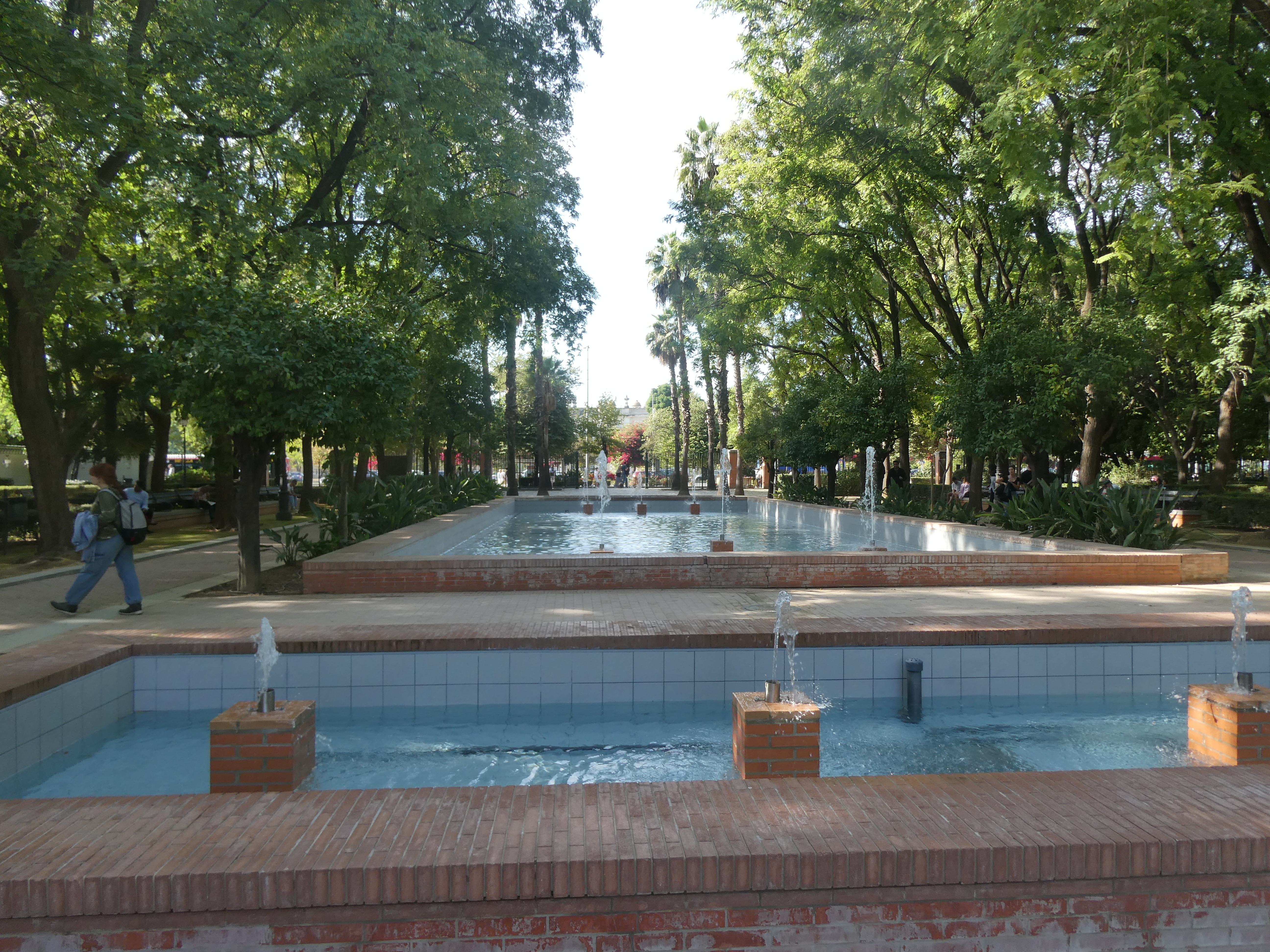
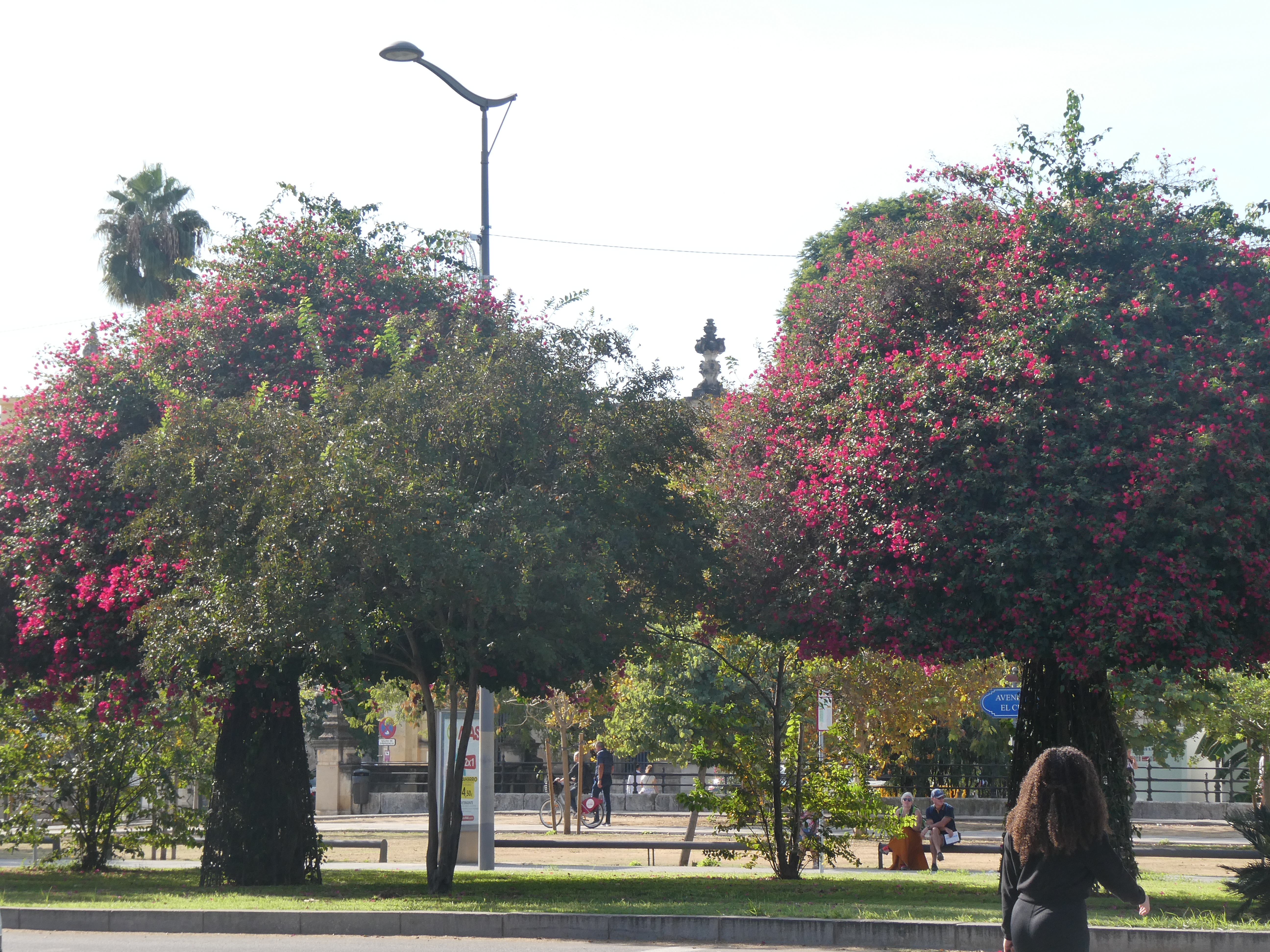
Exploring further, we meander towards the historic part of the city. Seville is blessed with a network of green spaces- gardens and parks- many with water features and all with beautiful, landscaped planting; palms, exotic trees and flowers and of course, the ubiquitous citrus trees.

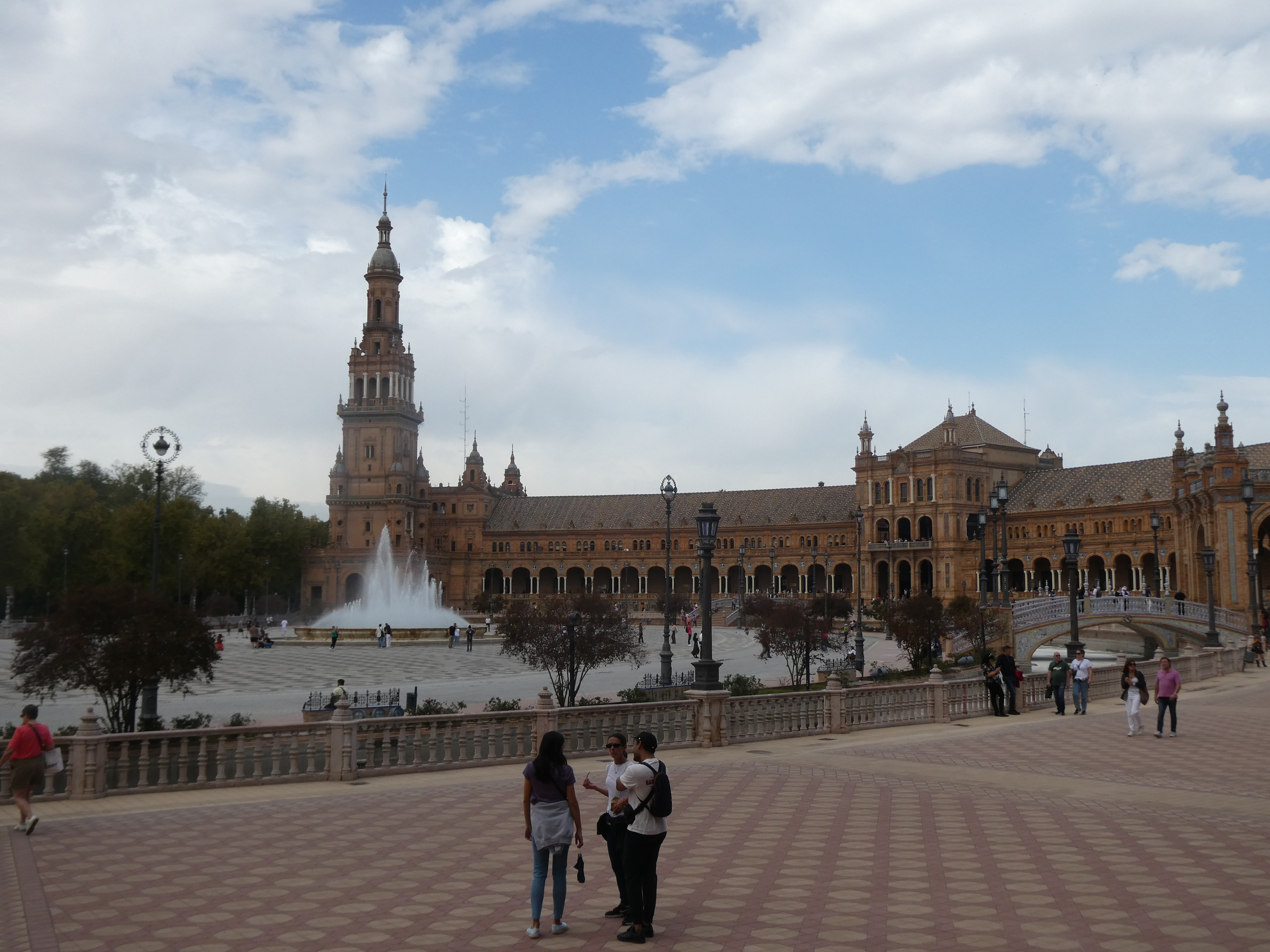
At last we arrive at Plaza de Espana, an iconic space that was built in 1929. It is vast, a Spanish square, though the curved canal and semi surround render it less ‘square’- like. It’s hard not to be impressed, even though the ornamental canal is depleted of water. The park the square sits in is closed off due to storm warnings, but we are able to access the Plaza via steps and through the building [which houses a military museum]. The lower part of the curved wall of the museum displays mosaic maps of the Spanish provinces. Today, at the base of the main steps, a Flamenco dancer accompanied by a singing Spanish guitarist is entertaining a crowd.

An open top bus tour seems a good idea next day. It’s something we often do in an unknown city- a good way to understand the layout of a place and identify sights we may wish to visit.

One issue we find is that, like Madrid, there is a dearth of public lavatories, although we get lucky and having bought the bus tickets we are directed to one attached to a cafe in the park opposite the bus stop. Husband declines the use of the commentary on board the open top bus, resulting in my having to hiss information to him piecemeal as I receive it. The bus drives us past a lot of famous bits we’d never have time to visit on foot- the ‘pavilions’, a set of buildings from south American countries, the palace of justice, the golden tower, the river Guadalquivir and its beautiful bridges, the technology centre with a replica of Europe’s Ariane space rocket, the old Romany quarter, an area famous for tile-making and the Macarena district- an area I especially like, with its narrow streets of historic houses and beautiful squares.

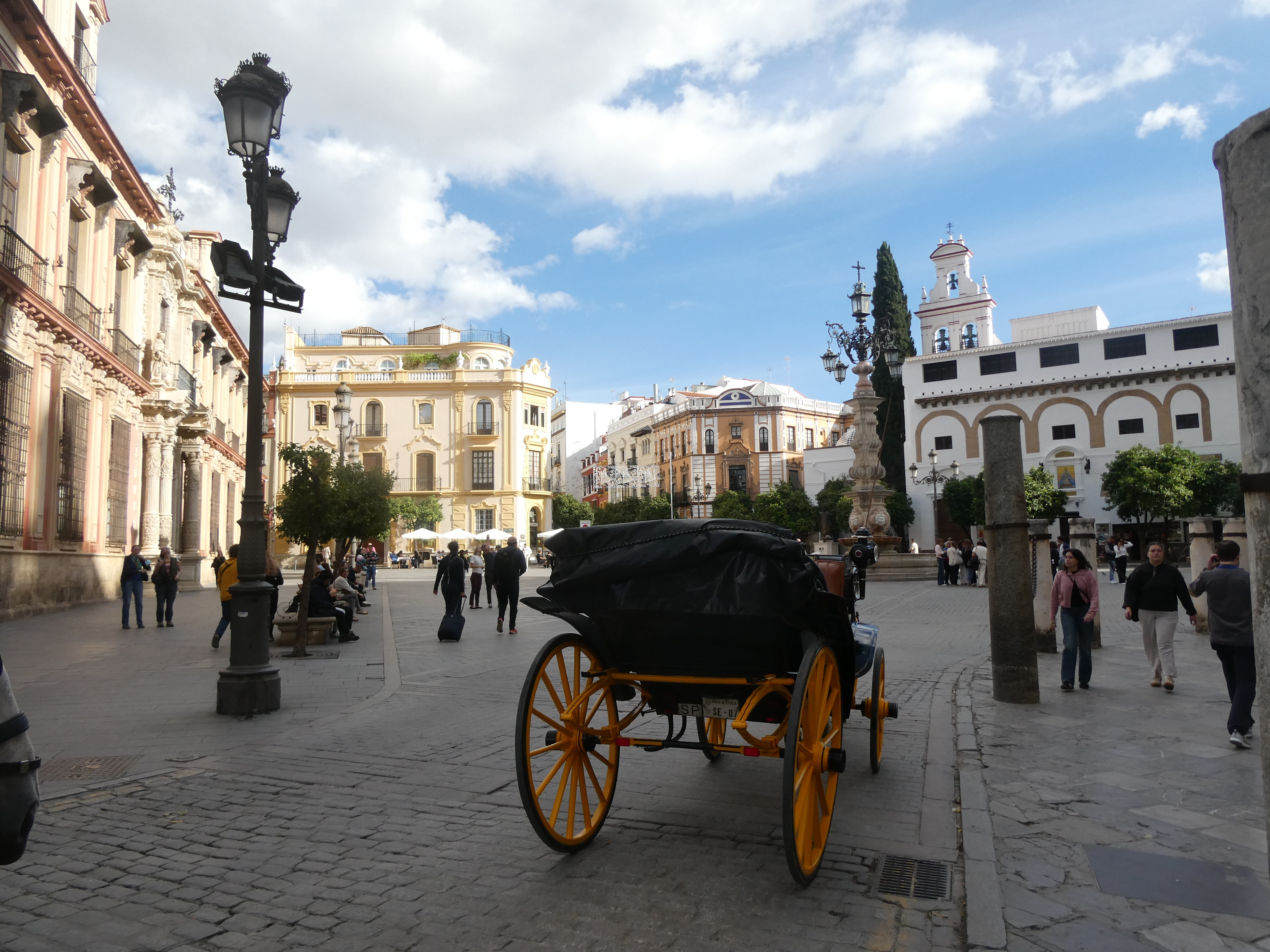
Seville’s streets are decked with Christmas decorations, all ready for the festive season, although [just as in Adelaide] it feels bizarre to see sparkly Christmas baubles in warm sunshine. When the bus loops back to the river we get off by the golden tower- the Torre del Oro. It’s a wide promenade overlooking the water where there’s a ‘galleon’ moored.

We’re in need of some refreshment by now and have walked back into the city centre and to the area housing the huge cathedral, the street thronged with visitors and trams swishing by. There is an inevitable Starbucks and we dive in there, as much for the toilet facilities as anything else, although there is no lock on the ladies’ ,which makes for a nerve-wracking few minutes for me!

As with so many iconic buildings these days, we are supposed to have bought tickets for the cathedral, but we discover we can buy them from a counter, which we do, then we’re in straight away…

Novels by Jane Deans [Grace]: The Year of Familiar Strangers and The Conways at Earthsend. Visit my website: janedeans.com
Flight from Gloom

It’s a return to travel tales in this week’s post…

The UK autumn descended into gloom with the clock hands depriving of us light and the weather becoming unsettled.

At the end of October, we got the go-ahead to collect Jazzer, the campervan from its enforced incarceration in a French garage, where it had finally been repaired. Husband went off to collect it, retracing the steps we’d taken as foot passengers a couple of months before when we’d had to abort our late summer trip and come home.

Once the van was back, we could reclaim all the things we’d missed, plus a lot of things we’d forgotten about. Items of clothing, items of kitchenware- even a few food items were still in date and edible!

Having had weeks of waiting and telephoning, writing emails and stressing, now we were ready for some kind of holiday. I’d been Googling ‘warmest place in Europe today’ for weeks. Now we could go. The warmest places, I’d learned, were not Majorca or the Canary Islands- no- the warmest place was Seville, Spain.

We’d been to Seville many years ago, with our first van, a little, white VW with a pop-up roof- a thing of beauty and gorgeousness- but no longer suitable for our needs. At that time, we were still constrained by school holidays and been restricted to the hottest, summer months, so It was mega-hot in inland Spain. We’d found a site somewhere near the airport and although we’d planned to visit the city, we spent the stifling daytime in the site’s swimming pool. We’d managed a trip into town later in the day but sightseeing was impossible due to searing heat.

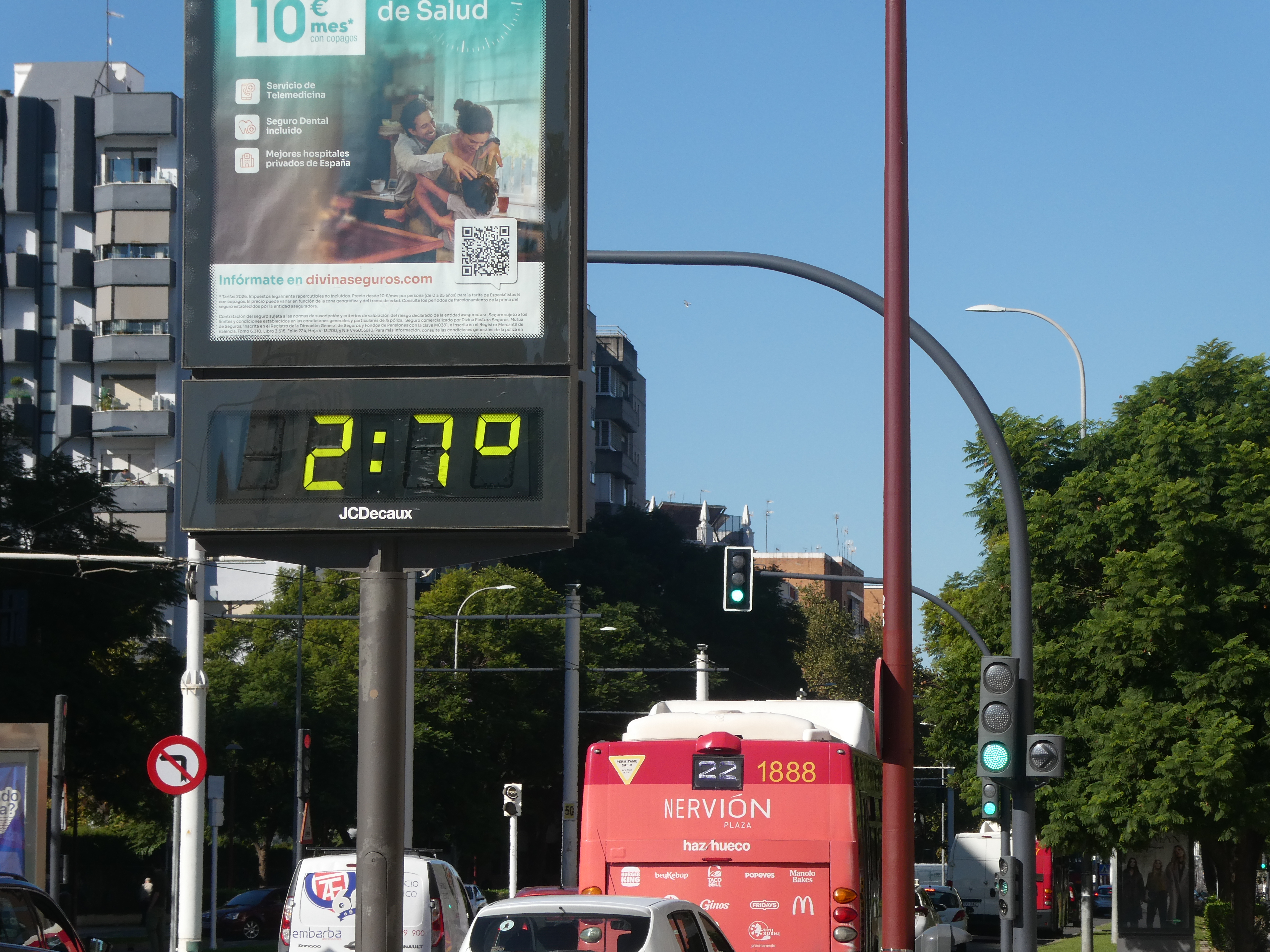
Similarly, Seville has languished this last summer in temperatures of C40+, brutal conditions for everyday life. No wonder that we are greeted on our first morning’s reccy by the sight of locals wrapped up in woollies and puffa jackets in the moderate 20+ temperature.! Meanwhile we’re attired in shorts and T-shirts, which must look bizarre to them.

We got picked up from the airport [eventually] and dropped at our hotel a little later than expected, due to a flight delay. The hotel- which is a massive structure, has a ground floor cafe serving a range of light meals, drinks etc and is open until midnight. Having checked in, we descend the nine floors from our room and get perfectly acceptable meals. So far so good.

The next morning, we set off [in our shorts and T-shirts] in search of brunch, having first bought a phone charger due to not packing one, from a store at the end of our street. There’s a breakfast cafe just around the corner which looks promising, although the menu is beyond my rusty Spanish skills [which were never great to start with] and the staff seem unwilling to engage in a ‘Spanglais’ garbled conversation. Plates of toasted baguettes with delicious toppings keep emerging, which we decide would be perfect for us- but what are they?

We sit at a table. A nearby diner indicates that we need to queue at the counter first and order. Husband, who considers that I must take responsibility for linguistics, prods me in the direction of said counter. I put on what I hope is a winning smile and attempt to engage with the harassed woman on the other side. ‘Er…tostado?’ I splutter, at which she looks baffled. She calls a man from the other end of the bar. He speaks English, at which I am both relieved and feel a failure. At last we are seated and get a delicious brunch and luscious, freshly squeezed orange juice. There is no shortage of oranges in Seville in November. The pavements are lined with orange trees and ripe fruit covers the ground beneath each tree.

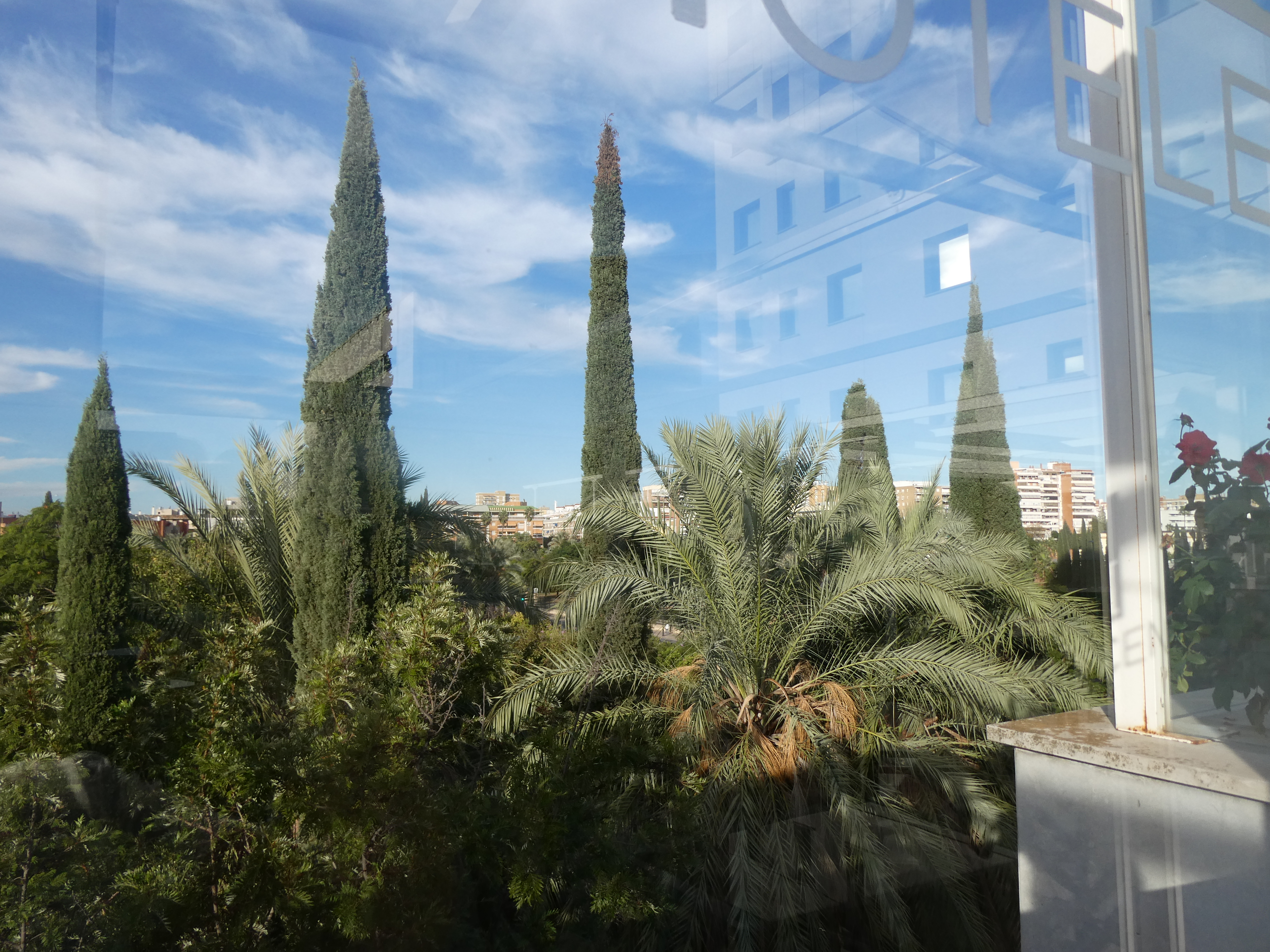
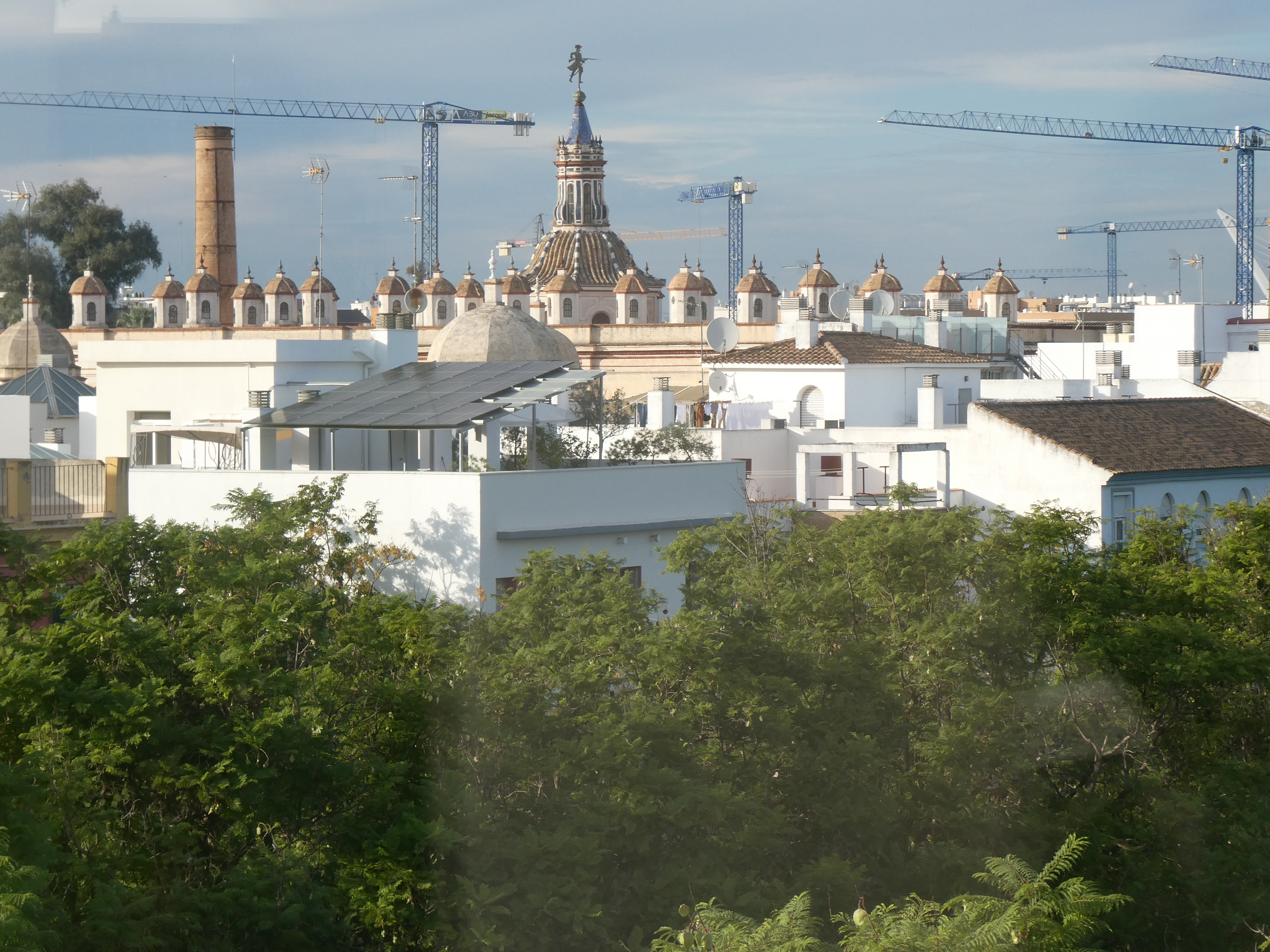
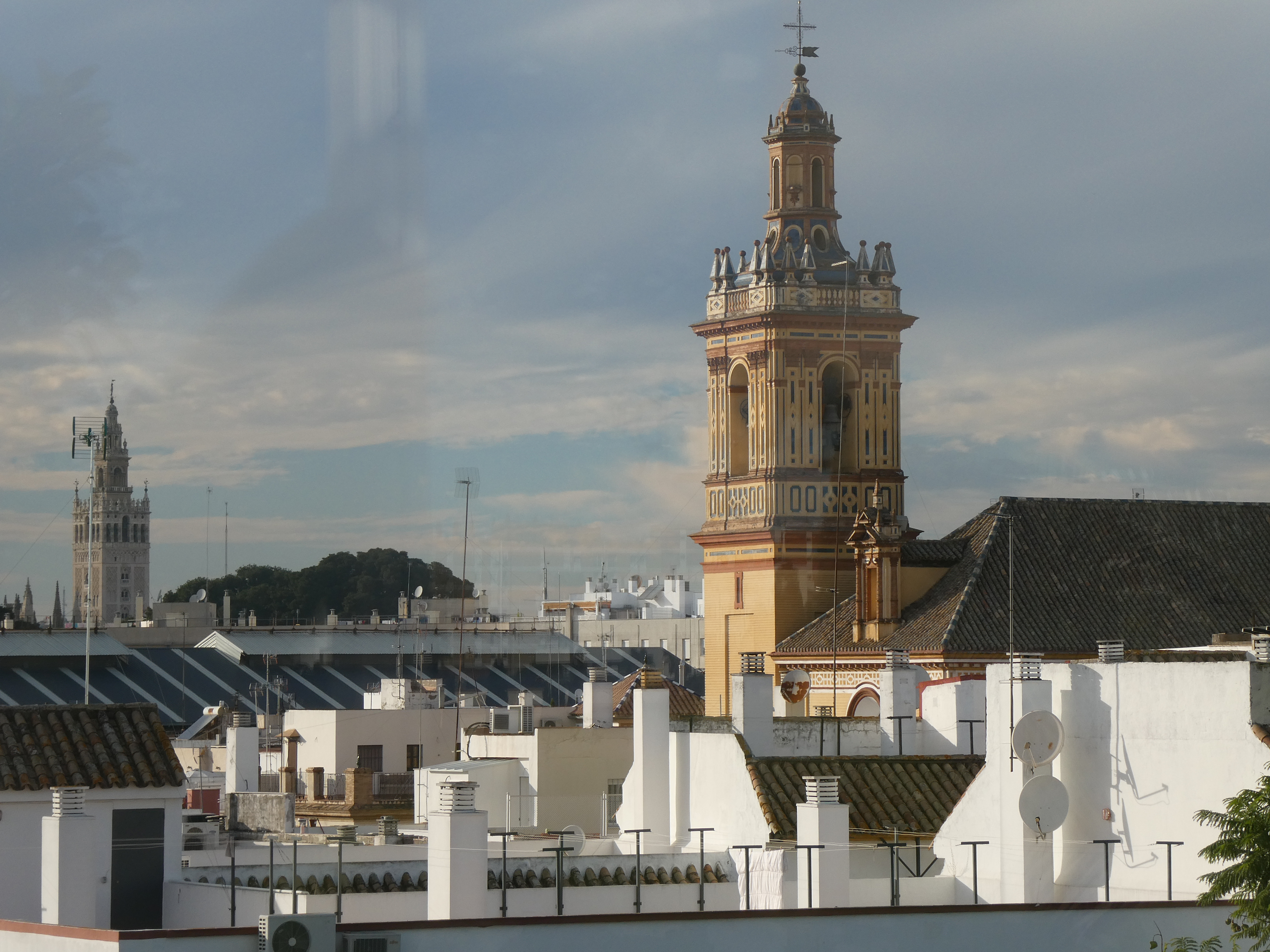
The day begins to heat up and it feels like some relaxation might be in order. The hotel has a third floor swimming pool and sun deck- minus a bar at this time of year, but with comfortable loungers and sofas with cushions. We can explore a bit once we’ve acclimatised and it isn’t so hot. For now- we take books to the sun deck and take in the views over the city- phew!

Novels by Jane Deans [Grace]: The Year of Familiar Strangers and The Conways at Earthsend. Visit my website: janedeans.com

The Beastly Buses of Bilbao

We’ve had a brilliant time at the Guggenheim Gallery in Bilbao, looking at a magnificent pop-art exhibition. Now we retrace our steps to Bilbao’s ‘international’ bus station to get the first of the two buses we need to take, back to our camp site at Islares.

The buses themselves are on the ground floor of the station and we enter on the first floor. But I notice there are ticket barriers, which I mention to Husband, who shrugs and tells me we can pay on the bus. This is what we did when we came. We paid the driver. But how are we to get through the ticket barriers?

We go around to the back and spot a staircase. Hooray! We can go downstairs to the buses, which we do. And there- THERE is our bus- the bus to Castro Urdiales that we need to take to get another bus back to Islares. It’s the 5.00pm bus, which is perfect timing. We join the queue and soon it moves along as people begin to board the bus, their tickets being checked by the driver. Then it’s our turn. But no- we can’t board the bus. We don’t have a ticket. We are turned away.

We dash upstairs to the first floor and to the manned icket windows. ‘No’ says the ticket seller, ‘you can pay the driver’. ‘But we can’t!’ we tell her. And she shrugs.

5.oopm comes and goes- and so does the bus.

While we are standing helpless and hopeless we are joined by the Dutch couple from our site- the ones who’d turned up after us and had eaten paella in the restaurant as we had. Now the four of us are attempting to get back to Islares. We turn our attention to the ticket machines, a row of them along a wall. They are not all identical but we try a few. We press buttons. Some destinations appear on a list. Castro Urdiales, however, is not among them.

We return to the ticket windows, where we are variously told to pay the driver, shrugged at or ignored. By now we have bonded with the friendly Dutch couple, united in our difficulties. We all return to the machines. Then we’re joined by a kind Nigerian who seems very keen to help- for a while, although as he tries machines and accompanies us to the ticket windows it becomes clear that his attempts to help are eclipsed by his ignorance of the entire procedure. We are no further on with our ticket purchasing. And the next bus is the 6.00pm.

We return to the windows with no improvement in results. ‘Why doesn’t she help us?’ says the Dutch lady- and it is a mystery.

Then we get a breakthrough. One of the ticket machines- one of the smaller ones at the end of the line- displays our stop, Castro Urdiales. Eureka! We quickly begin buying tickets, using credit cards. It has to be done one by one. Then we’re done and have 4 tickets! But there’s a wait now for the six o’clock bus, so we repair to the bar and chat.

At last we board our bus, quieter now than the 5pm one. We set off for Castro Urdiales, with deteriorating weather. Once we reach the town we peer out to look for the bullring, then we’re there; the bus parks and we get out and go to our stop, although we must wait on the opposite side of the road. Sadly, although it’s now raining, the side where we must wait has no bus shelter- and it’s also become much colder. We’ve no idea of the bus schedule, but a look on the internet suggests there won’t be a bus for about an hour. An hour!

There’s nowhere close to retreat to- not a bar or a coffee shop where we could see a bus approaching. We sit in the bus shelter, ready to leap across the road should a bus come. We get very cold but are glad of the company of our new Dutch friends. Now and again a taxi zooms by and I wave madly- and in vain.

At long last the bus arrives and we can get back to Islares. By the time we’re there the rain is falling in bucketloads and it’s gone 8pm. We all go to the cafe and have a convivial meal.

Next day we’re off to the ferry at Santander. Our friends have not emerged so I leave them a note. Then we drive away and to the port for the [tedious] sailing home to the UK-

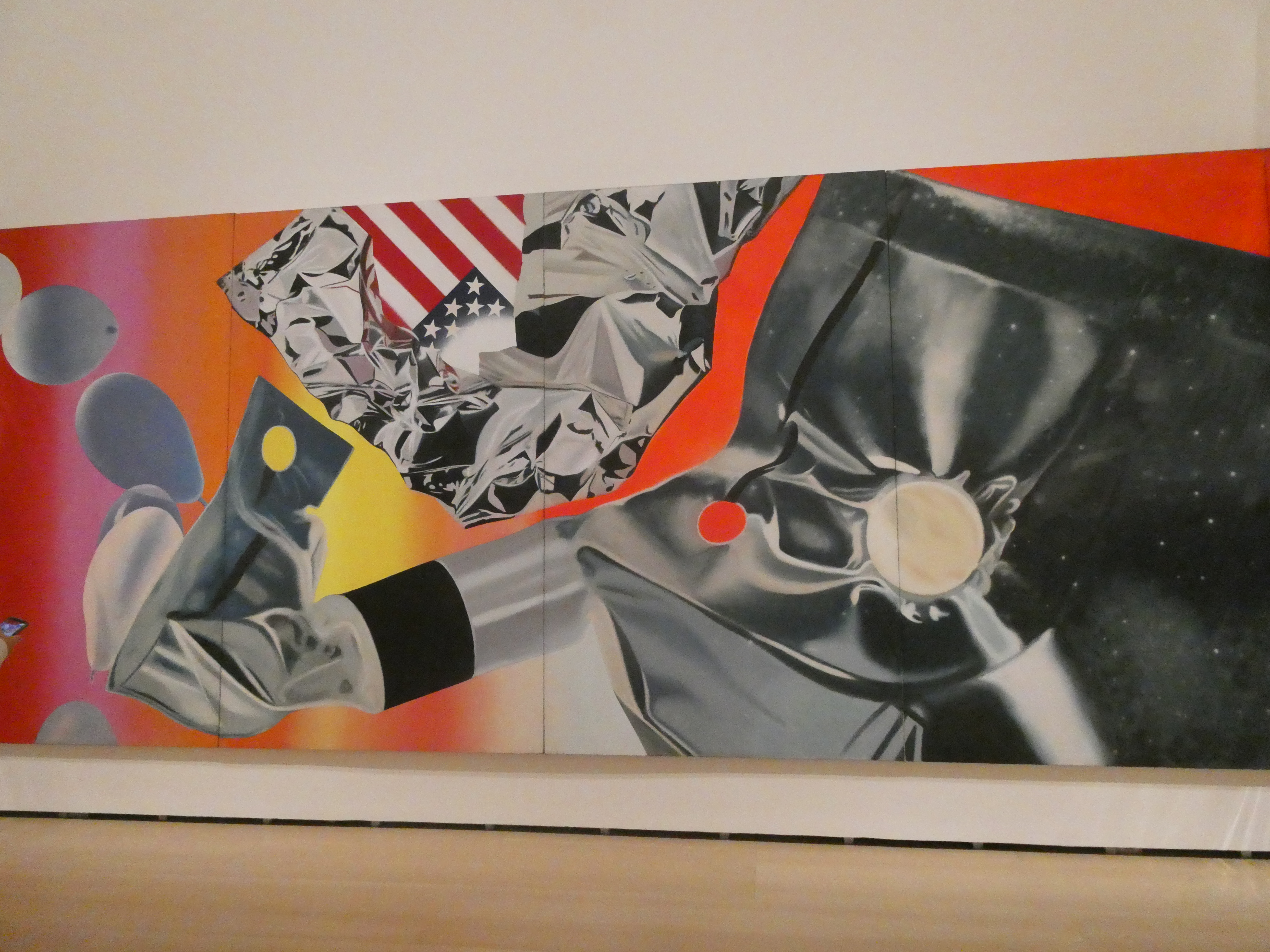
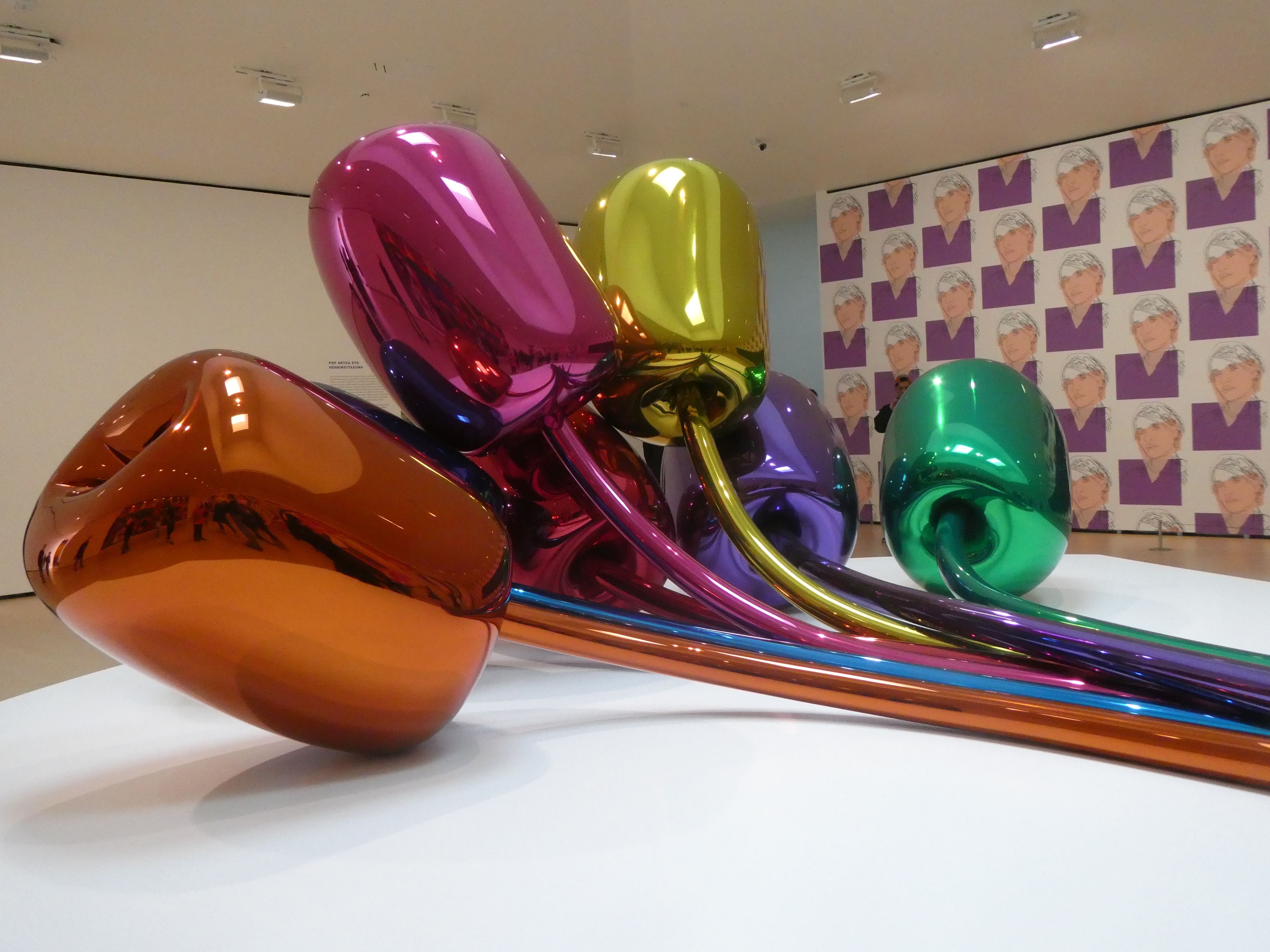
Needless to add- I did not photograph any of our grim return journey, so instead I’ve added some more pop-art!

For fiction by me, Jane Deans, search for novels: The Conways at Earthsend [an eco-thriller] and The Year of Familiar Strangers [mystery drama]. Visit my website: janedeans.com
Popping out for Pop-Art

Bilbao’s bus station is impressive- a large, modern, red cube with escalators, ticket barriers and a tapas bar. As we exit into a large square next to the equally impressive stadium, we make sure to imprint the position and road names in order to find our way back. We’ve neglected to pick up a tourist map for this excursion, which has been impromptu.

We’ve one main aim in mind for this trip to, which is to visit the Guggenheim. Previous visits to Bilbao have only been for ferry purposes, so it’s high time we looked at the city and this iconic gallery.

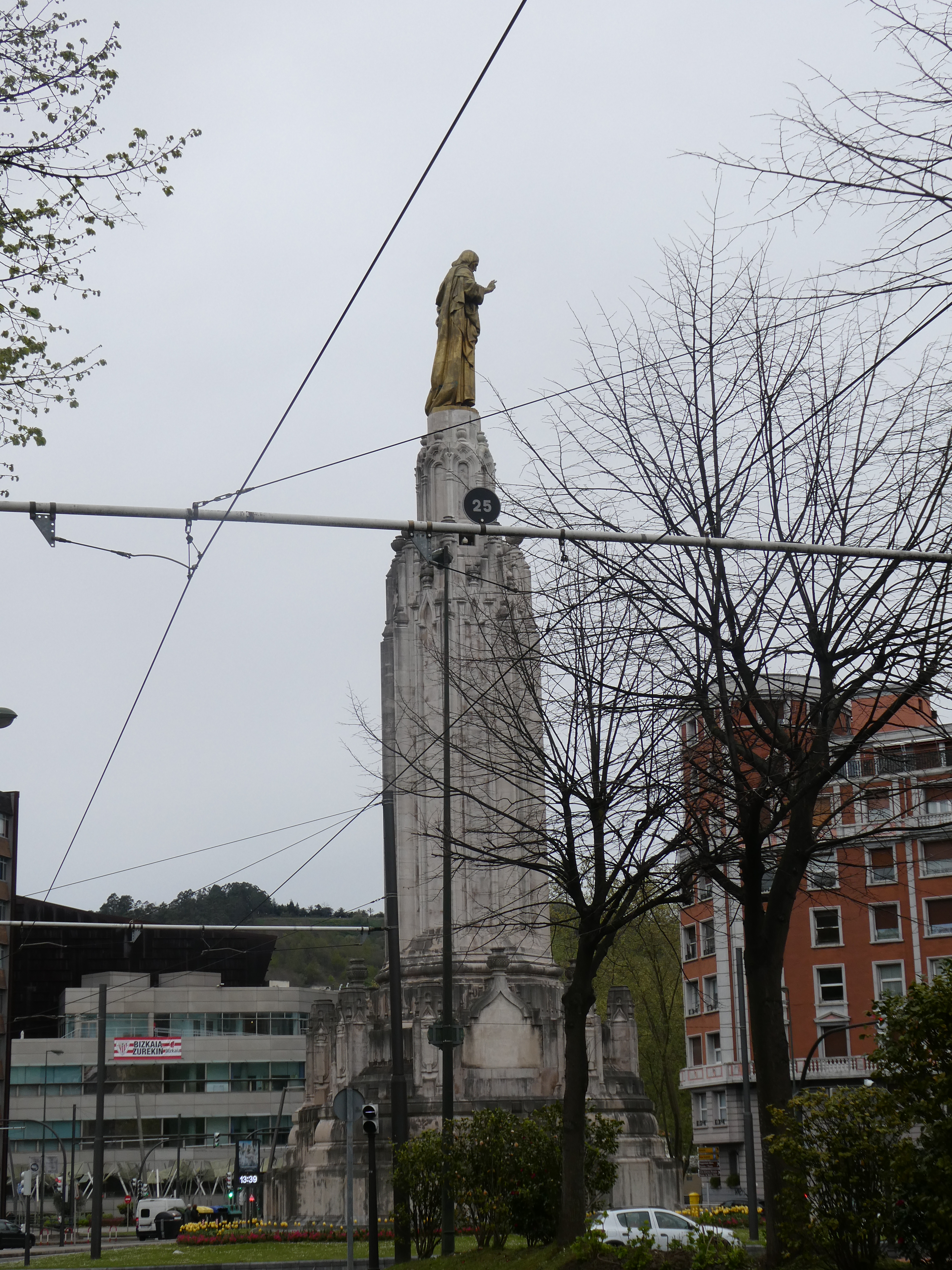
With no map and no indication of where the gallery is, we turn left out of the bus station and vaguely downhill. I know the Guggenheim is by the water so it seems to make sense to go downhill and this turns out to be correct as at last we find some signs. Further down the hill there’s a big roundabout with a very tall statue of Christ and we need to negotiate our way around and avoid occasional trams, taking a right hand turning- then there’s a beautiful park containing elegant pergolas, followed by some hugely tall skyscrapers. We walk on until, at last, the iconic Guggenheim comes into view, sitting in landscaped gardens and yes- by the water.

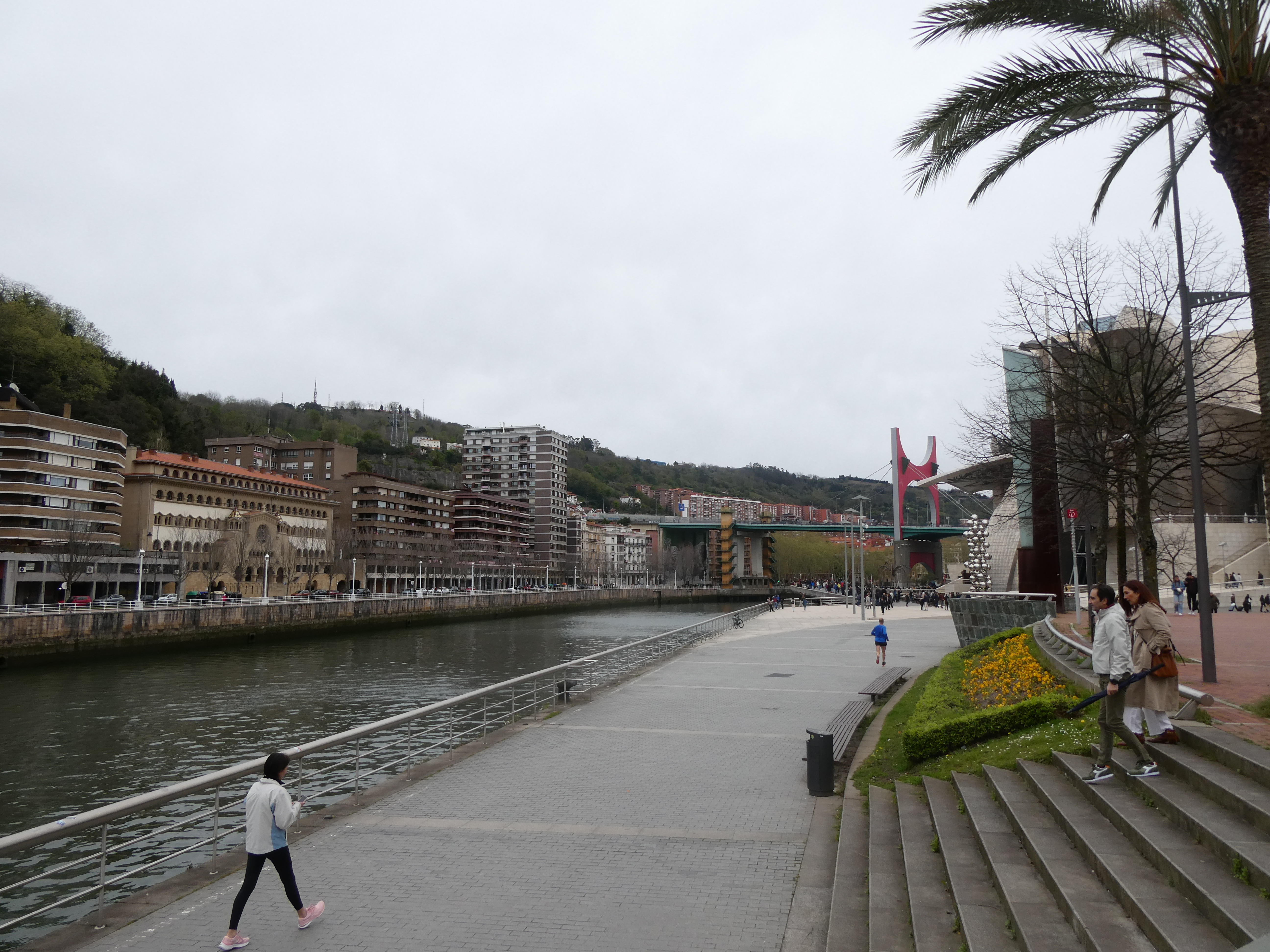
People’s views on architecture differ, but I like any building, old or new, as long as it is characterful- and the Guggenheim has character in spades. Of course, I’d have preferred to have seen it on a sunny day, nevertheless the sinuous, glossy walls of the building are glorious- organic, bulging curves. To begin with, we walk past, along the waterside and past the stallholders with their trinkets. Outside, here on the pedestrian-only walkway theres a giant, sculpted spider and of course, many of the stalls sport mini versions of it.

We’ve got one bit of luck [after a miserable run of glitches] in that the Guggenheim is showing a pop art exhibition with some extremely famous artists’ work, which is irresistible. We walk up the wide steps to the entrance and buy tickets. The inside of the building is equally mind-blowing as you look up towards the top floors and it’s light, with vast, twisty columns, a voluminous space.

We go first to a vast hall containg one, gargantuan sculpture by Richard Serra, an artist who has only just died a couple of days ago, which gives it all a poignancy. The sculture.called ‘A Matter of Time’, consists of huge steel curves, some concentric, others independent, the steel weathered to a rusty bronze. It’s beautiful and sensual and can be walked around and touched, the surfaces smooth or textured. We spend some time here- at one point getting uqite lost among the maze-like structures.

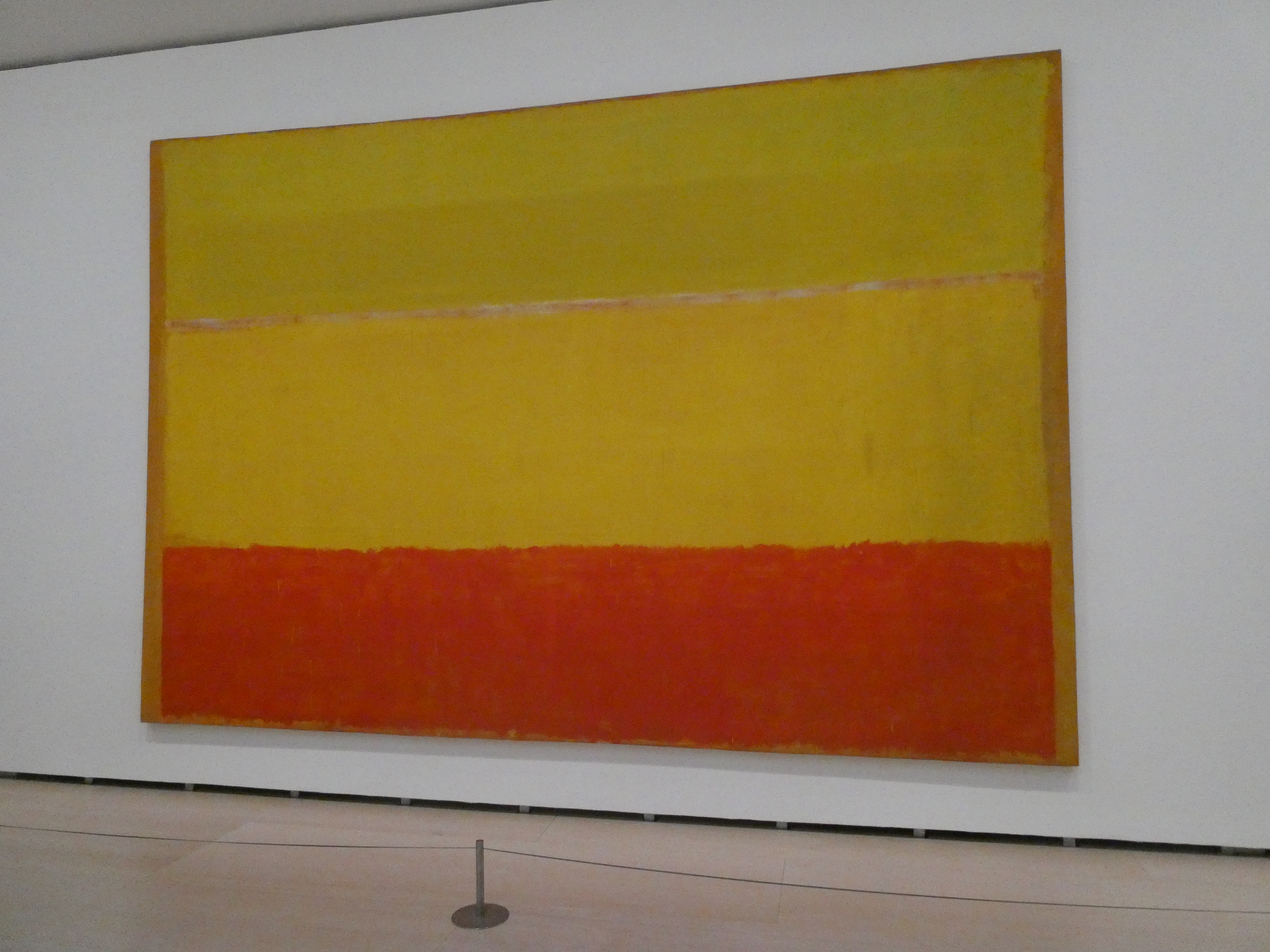
On the upper floors we find Warhols, Lichtensteins, Rothkos and much more besides- in one room a large Gilbert and George mural. It’s all thrilling and absorbing and comes some way to compensating for the wretched time we’ve had on this, our first foray overseas since serious illness and major surgery blighted last autumn.

There’s not a lot of time left after the gallery- just enough for a visit to the cafe and a look at Jeff Koons playful, planted sculpture of a puppy, all covered in living flowers.

We walk back to the bus station and the trouble really starts…

For fiction by me, Jane Deans, search for novels: The Conways at Earthsend [an eco-thriller] and The Year of Familiar Strangers [mystery drama]. Visit my website: janedeans.com
A Brief Sunny Interval at Islares

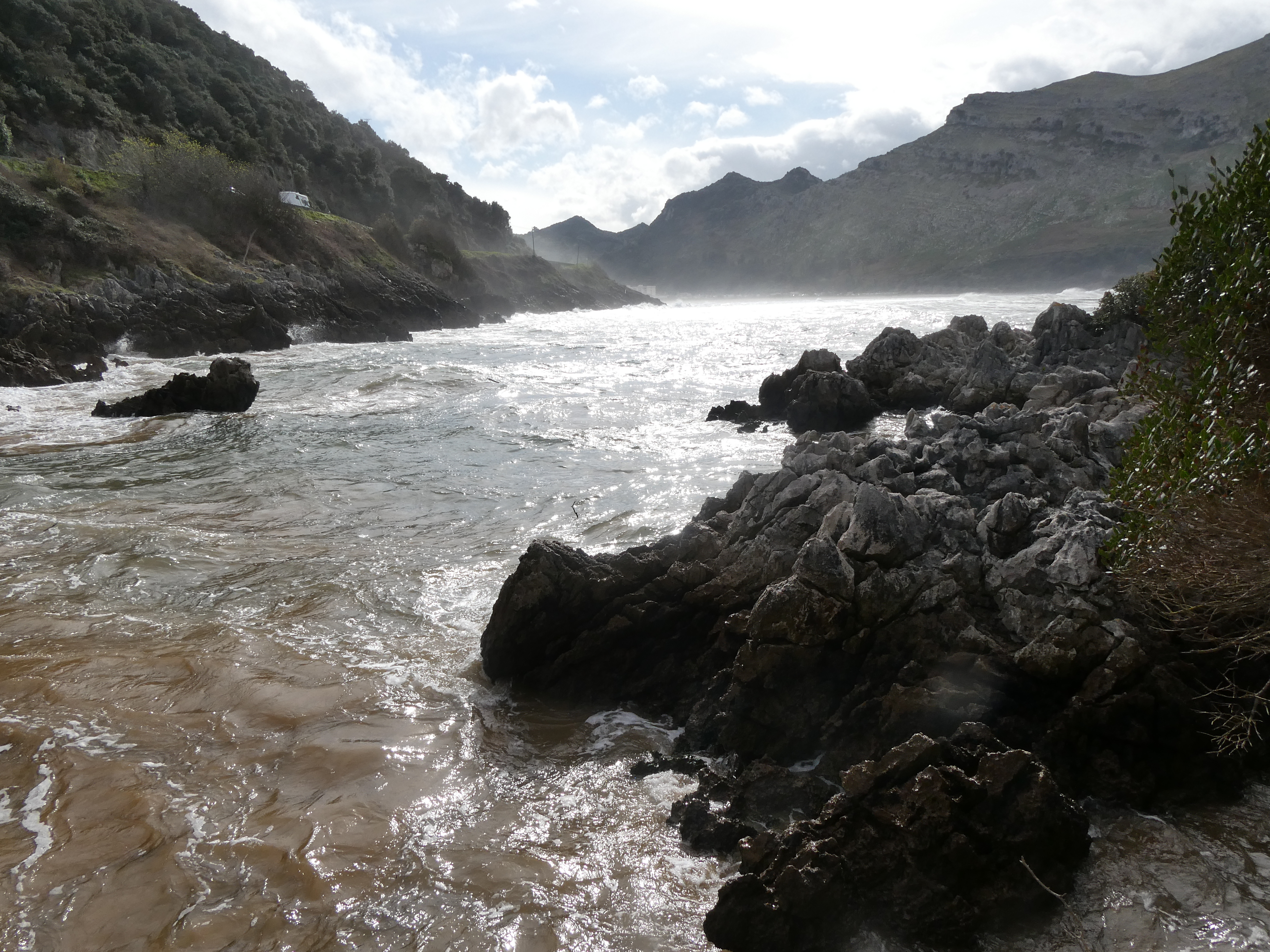
We’ve stayed here, at Islares, before, another occasion when we’d needed to get home earlier than planned. I recognise the site when we pull in; a green, daisy- strewn field next to the sea. There’s loads of space, and, best of all, the sun is out. The journey here has been pleasant and I remember how beautiful the north coast of Spain is- rugged and glorious.

There aren’t many places to walk here, but outside the camp site gates you can stroll up to the seaside bar and watch the waves crashing in against the rocks in fluffy plumes. When the sun comes out it actually feels hot, so having walked up and around the path a little we return, plonk down at a table and have beers in the sunshine. It feels, on this penultimate day, like a proper holiday at last- except we’ll be setting off home the day after tomorrow.

Back at the site, we scrutinise the bus timetable for tomorrow’s jaunt- a day’s sighseeing before we depart. We can get to Bilbao by bus from Islares, although it’s two buses.

The site here has its own, modest cafe/bar and we opt for this, rather than the posher place where we had our beers. It just has a few tables, formica topped and a small selection of meals, from burgers to paella. Since we can’t order until 8.00pm, we choose to prop up the bar with a beer. At 8 a few people drift in and sit and we decide on paella which, at 12 euros is a no-brainer, besides- a Dutch couple who’ve arrived to the site after us and parked nearby have ordered it and it’s looking delicious.

The paella arrives in a large, traditional dish. We dig into the fragrant rice and it’s full of wonderful, fresh seafood as well as topped off with giant langoustines. We’re happy.

Next morning we trudge up to the main road above our site and walk along but there’s no sign of a bus stop. We backtrack a little but by now the bus is due, which is worrying. I waylay a passer-by and launch into my woeful Spanish: ‘Senor- donde esta autobus?’ It will do! He gestures further along the main road, gabbling furiously, then gets into a car. He pulls alongside us and indicates that we should get in, then takes us up the road to the bus stop- a kind stranger!

After a while a few other passengers arrive to wait, then a small bus comes along and we’re off towards a town called Castro Urdiales, where we must change buses, ‘at the bull-ring’ as we’ve been advised.

The older I get, the more I enjoy bus rides and there are all kinds of reasons to use public transport, not least the convenience of not needing to find a parking place or worry about traffic, or the route. So we settle back to enjoy the ride and the scenery as the bus meanders in and out of villages and round the houses, until at last we’re in the outskirts of the town and we must pay attention in order to get off at the right place. Castro Urdiales is a sizeable town, with a seafront, all attractively landscaped and an obvious tourist destination.

We spot the bull-ring and get off, although there’s no obvious sign to where we catch the next bus. But there is a large coach parked in a space by the wall of the bull-ring and it’s complete with driver, who assures us that yes- it’s the bus for Bilbao. Hooray!

For fiction by me, Jane Deans, search for novels: The Conways at Earthsend [an eco-thriller] and The Year of Familiar Strangers [mystery drama]. Visit my website: janedeans.com

On to Salamanca

So we leave Burgos and continue down towards our next stop, Salamanca. The Spanish motorways are excellent; toll-free, quiet and well served with service areas, although they do vary quite a bit, some being right by the roadside, others a detour into a village. Some of the roadside ones boast modest hotels, together with a host of facilities including cafes and shops. Others may just be a petrol station with a coffee machine.

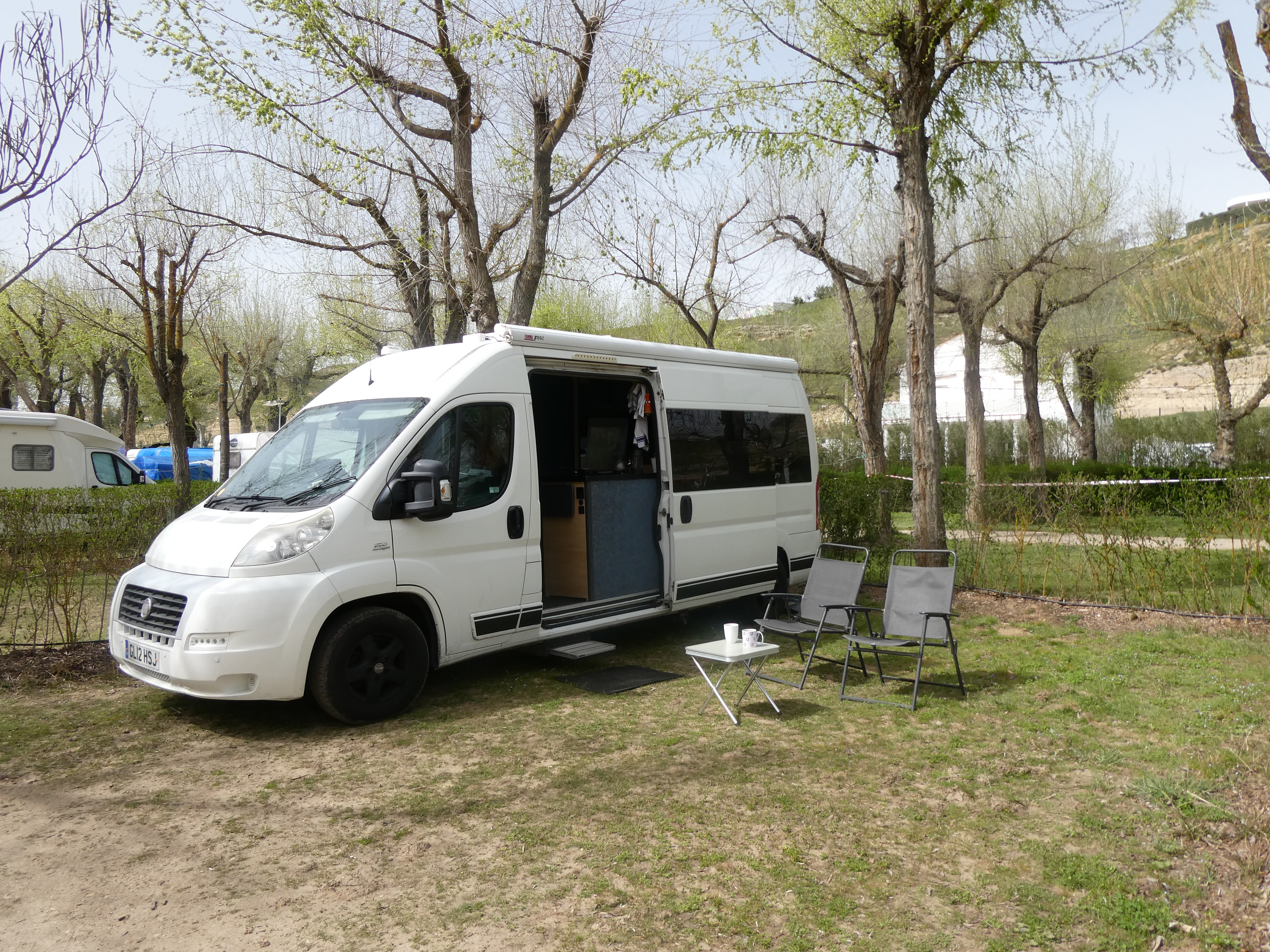
We take a break, veering off to a village gas station where a man emerges and dolls out the diesel rather than it being self-service. This is endearing, a step back in time for us. There is a small parking area and three picnic tables beside the petrol station and as it’s fine enough to sit outside we have coffee at one of the tables, entertained by a stream of hikers, pilgrims making their way along the path towards Santiago de Compostela. At this stage, close to Easter, it seems unlikely that they’ll achieve Santiago, but perhaps they use a cheeky bit of public transport? Or is part of the way enough? At one point an entire family turns up in a 4×4, get out, smoke cigarettes, change their shoes and set off walking…

It’s not too far to Salamanca. For those who haven’t been to this most gorgeous of cities, it is well worth a visit- a historic centre of beautiful buildings of golden stone- best seen in sunshine, when the yellow stone zings. But again, we’ve been before and it’s not our destination this time so we check in for one night. I remember the site, tidy and tree strewn, by a river, with a cycle/footpath leading into the city. The sun has enough warmth for us to get chairs out for a bask, which we do. There’s also a tempting looking restaurant at which we just about manage to squeeze a booking by saying we’ll go at 9.30pm. It’s a wonderful meal, though and worth the wait, and while we feel it’s late for us to be eating there are many coming in later still on this Saturday night- some at 10.30pm! This is Spain, after all, with a culture of late evening dining that includes small children, too.

We’re off again in the morning, the weather having turned more gloomy, but we strike out on the road to Caceres- another city we’ve visited in the past, memorable for its nesting storks on every lofty perch, its wacky Easter parades of floats and pointy-hat adorned bearers and its huge plates of beef. En route we stop at a wonderful service area with a fruit and veg stall, shop and cafe, where coaches are pulling in, presumably carrying Easter travellers. Easter is a big holiday for the Spanish and everyone, it seems, is on the move.

By the time we get to Caceres there’s a strong breeze blowing. We locate the camp site but it’s not one we recognise and I’m at a loss to recall where we staryed last time. This site is opposite and industrial estate and is terraced, with pitches housing individual bathrooms, according to our ACSI book. We check in and find our pitch, which is under a large tree. When I take a look at the bathroom I’m less than impressed. It’s grubby, with leaves blown inside and furniture piled up in the shower cubicle.

I go in to put the kettle on while Husband grabs the cable to plug the van in. But there’s no power. He tries the socket in the neighbouring [empty] pitch. No power. He goes to reception, where he’s told it’s ok to use next-door’s socket, although it’s becoming clear that something is badly amiss. Next door’s bathroom, however, is altogether cleaner, so I get a shower in there before anyone else turns up- which they do- a massive motorhome and a woman gabbling a tirade of French at us with no thought that we might not be compatriots on this Spanish site…

For fiction by me, Jane Deans, search for novels: The Conways at Earthsend [an eco-thriller] and The Year of Familiar Strangers [mystery drama]. Visit my website: janedeans.com
Caught without a Web

We arrive to the camp site at Burgos. We’ve been here before, years ago [and a similar time of year] when the weather was bitter cold and miserable and everyone was wrapped up in thick coats and woolly hats. Today, though, it’s warm and sunny, and since we didn’t get to look at Burgos last time it seems like we can now.

But there’s trouble ahead. Having parked up, plugged in and put the kettle on it looks like the swanky, new Avtex internet device Husband got installed into the van isn’t working, although it certainly did work at home in the UK. We try various options, type in assorted numbers on devices, turn off and on [as one does]. On my laptop, a page prompts me to type in a phone number and all numbers are rejected. I begin to feel frustrated. I call ‘3’, the provider whose page comes up. I have an increasingly stressful conversation with a distant, heavily accented ‘3’ assistant. I feel hot and irritated and am told to stop by Husband, which I do. Worse still, the site has no wifi.

In reception, Husband is given directions to a shopping centre which we can visit tomorrow to seek out, perhaps, a solution.

Next morning is sunny again and after coffee we set off to ‘Al Campo’ in the town, which turns out to be a large shopping complex with plenty of parking opposite. Inside, the first sighting is a small booth of a phone shop. The assistant shrugs when we ask for help and shrugs again when we ask if there’s somewhere else. Upstairs it’s the same story. Defeated, we descend to the ground floor again and there!, there is a Vodaphone shop next door to an Orange shop, almost opposite the small phone shop. In France we get Orange sim cards for our mobile wifi device, so it’s clear we’ll have to ditch the wondrous Avtex and return to our tried and tested method. We enter the shop. An able and amiable assistant tells us ‘yes- sure we can do it’, speaking near-perfect English, too. I feel my shoulders relax. There’s the usual wait for paperwork then we’re set. Hooray! We go across the road and have a tapas lunch to celebrate.

Of course, we survived years of tent camping trips before the internet was conceived of…

Back on site, we allow ourselves a short bask in the sunshine before getting a late afternoon bus into Burgos centre. It’s still hot and walking round feels like hard work, but we find our way to the cathedral, which is the city’s main attraction, the Catedral de Santa Maria. It’s a UNESCO site and well deserved. While the outer parts of Burgos are modern and high-rise, the old centre is beautiful and characterful.

At last we give up sightseeing in the heat, get an early evening beer and people watch. We’ll be off again in the morning, heading ever southwards…

For fiction by me, Jane Deans, search for novels: The Conways at Earthsend [an eco-thriller] and The Year of Familiar Strangers [mystery drama]. Visit my website: janedeans.com

A Toe in the Water

It’s a return to travel writing in this week’s post…

Not literally- at least I hope not!

The ferry from Portsmouth, UK to Santander in northern Spain leaves sometime after 11pm; after the last, remaining motorhomes, lorries, cars and motorbikes have been fitted into the jigsaw slots in the ferry’s capacious hold. This boat is one of Brittany Ferries’ newest, boasting ingenious ramps and contraptions in order to accomodate as many vehicles as possible. Similarly, there is more cabin capacity than public area, although the bar/lounge, once we’ve managed to get loaded on, found our cabin and got there, is bursting with life, a roaring trade, with drinks and platters of charcuterie and cheese flying out like the end of the world is at hand. Once we’ve sat down with a drink ourselves, all the dreary waiting in queues, yawning, is forgotten.

I don’t sleep well on ferries. In fact, I don’t sleep well at all, these days, but after this first cabin night there’s no rush to get up. It’s a dinky 4-berth, which is lucky because neither of us is cabable of clambering up and down off a high bunk, especiallly in the dark. Next morning there’s a cafe queue for huge breakfasts, and since we’re not huge breakfasters we grab coffee and a pastry, then…what? We can walk around the boat for a look, which we do. We can look at the one, modest shop, which we do. We can go to the ‘reading room’, which we also do, although it isn’t as comfortable as it looks and not as warm as the other areas. We spend an hour or so then get another coffee.

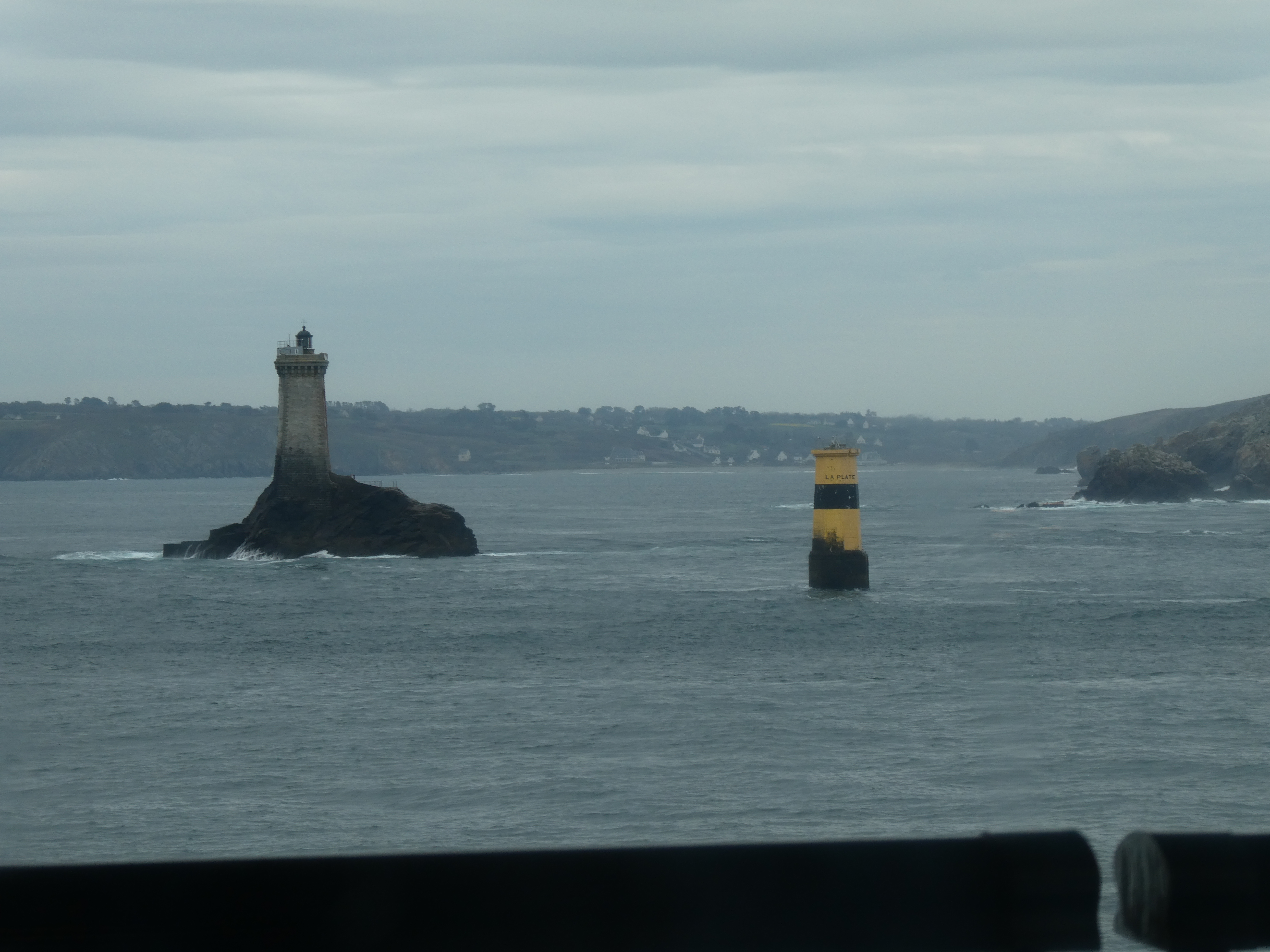
We have lunch. We read, We take another tour. We resist the urge to drink the day away as some are doing. The views in the Bay of Biscay become, briefly interesting as we glide past Brittany, with the lighthouse at Finistere a feature. The afternoon becomes bright with sunlight and the skies clear, until the sun is a tangerine orb that sinks into the sea. We go to shower in the tiny ensuite inside our cabin then go for dinner.

I’m awake before the tannoy announces our imminent arrival to Santander. It’s 7.00am, so 1 hour before we must disembark, but there’s very little to do except wash, dress and pack. In the cafe some are scoffing down ‘full English’ breakfasts as if they’ll never eat an edible morsel again. Santander port begins to slide past then the boat slows and we’re docking. We’re called to the car decks and descend through the hoards to ours- which we’ve taken care to remember! [I’ve described in a long ago post how we failed to locate our van on the Sardinia ferry and were mortified to be the last remaining vehicle as well as confronted by scowling ferrymen].

It takes an age to unload everyone and we’re one of the last to trundle off the boat and on to Spanish shores, then out into the outskirts of town, driving south and west. This first part of our journey is mountainous [the Cantabrian Mountains] and it’s exciting to see snow caps. We stop at a convenient supermarket for supplies and the bright sun feels warm. The autovia is easy and quiet and we’re on our way to Burgos…

For fiction by me, Jane Deans, search for novels: The Conways at Earthsend and The Year of Familiar Strangers. Visit my website: janedeans.com

Tented Travels-Portugal

Back in the 70s and 8os I seem to remember Portugal having a reputation for being expensive, but one of our early tenting expeditions in the 90s was to this small, sunny, friendly country tacked on to the side of Spain.

By the time we got round to our Portugal trip we’d upgraded from my ancient Volvo hatchback to ‘Mick’, Husband’s beloved Peugeot Estate, a heroic vehicle that took us thousands of miles and accommodated tons of equipment. We’d also swapped the aged, leaking frame tent inherited from my parents for a [admittedly borrowed] ‘pyramid’ tent, which was beautiful and roomy, but involved someone [ie me] crawling underneath the skirt of the tent to hold the central pole up while Husband secured the guy ropes. In hot weather this could be a sweaty task.
We still needed to make overnight stops in hotels and since a road trip to Portugal involves passing through Spain we had no option of a ‘Formule 1’ as we did in France, so we had to find somewhere en route, which we did, and perfectly acceptable I believe it was.

We cut off the corner of Spain and entered into the north of Portugal and to the coast. The west coast is green and less built up than the popular Algarve, which accommodates large numbers of package tourists every year. Husband was into body-boarding and was keen to try the waves in this area, which are great for surfing. We stopped at the small seaside town of Vila Praia de Ancora, where a large, wooded site gave access to the beach across a railway line and found a corner to begin setting up the pyramid tent.

It is customary on a site for those already installed to show an interest in new arrivals. On this occasion we were ‘helped’ by a Portuguese gentleman nearby, who was keen to advise where our entrance should face etc., whereupon we determined the entrance should face away from our neighbours.

The little town was [and still is-we’ve been back since] delightful, boasting beautiful sandy beaches and characterful streets with restaurants and bars [then, at any rate]. We got our first experience of Portuguese hospitality and cuisine, eating in a modest town restaurant, characteristic of so many in the area, with simple but delicious food and wine sourced from the local district. And as tradition dictates, our menus were accompanied by tasty nibbles-a lovely touch.

Our site was a short walk from the town and also close to a handy Intermarche supermarket. We also discovered that the railway behind our site could give us easy access to Porto, further south down the coast, which meant we would not have to up poles and move from this perfect spot. We’d need to drive to Viano do Costelo, a short way south, and park there to get a train. Wonderful! What could possibly go wrong? …

Tented Travels Portugal continues in the New Year 2021. Anecdotage’s next post will be my travel review of the year-a little different this year. In the meantime, I’d like to wish all regular readers, followers and visitors a safe, healthy and happy Christmas, wherever you are. And thank you for visiting!