The Power and the Story

A chance meeting with neighbours on our site at Felixstowe, who’d recommended a site to us, had sent us scuttling back to the coast at Sizewell. Sizewell was an old fishing village once. Now it is better known for accommodating a notorious nuclear power station, Sizewell ‘A’, now decommissioned and encased in 3 metres of concrete. Sizewell ‘B’ sits next door to this huge, grey, man-made monolith and is sky-blue with a white dome, like a space-age cathedral. On arrival to Sizewell I experienced an irrational frisson of trepidation, perhaps brought on by a recent viewing of the hit series, ‘Chernobyl’.

Sizewell ‘C’ is now on the agenda, unpopular with many, judging by the signs dotted around the surrounding villages.

An extensive wind farm, Greater Gabbard was just about visible on the horizon out to sea. Once we were installed at our site and settled outside the bar, [which overlooks the wild beach], I eavesdropped on a neighbouring conversation in which a woman expressed vitriolic hatred for the wind farm, barely visible even on this clear, sunny evening. To her near left the twin power stations rose up menacingly, compounding the irony of her invective.

But despite the power monsters in their varied forms, this is a wonderfully wild and unspoilt piece of coastline, rich in wildlife. There are extensive marshes, forests and beach habitats. At the entrance to the beach car park a jaunty cafe, ‘Sizewell ‘T”, was doing a roaring trade in chips and ice creams.

It is a popular spot for locals and the touring section of our site was busy with a steady stream of visitors, although the shower blocks are closed.

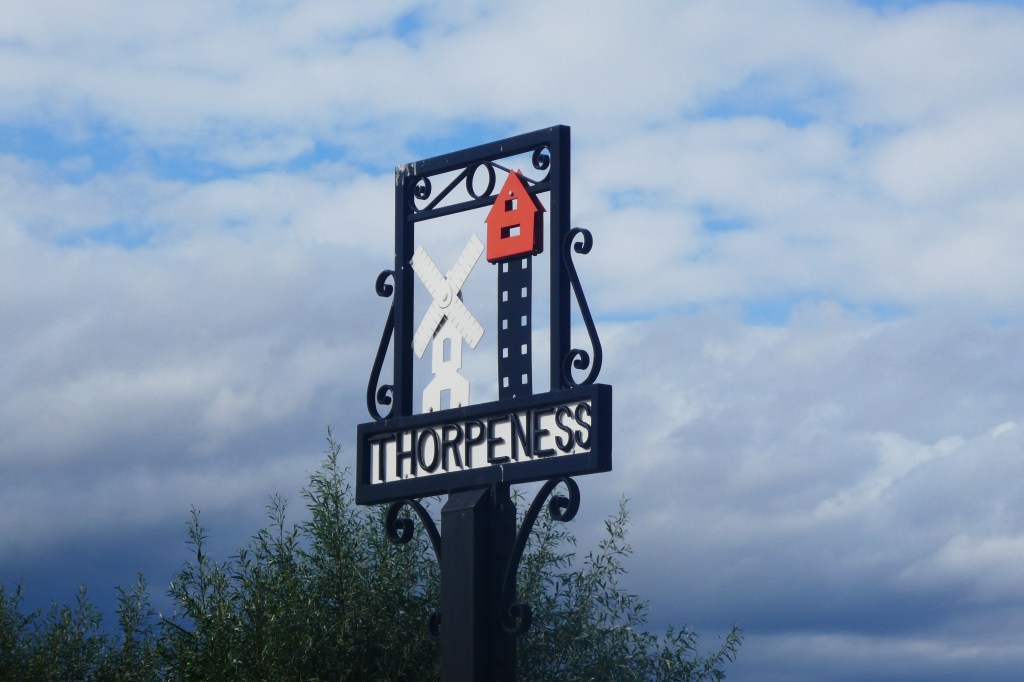
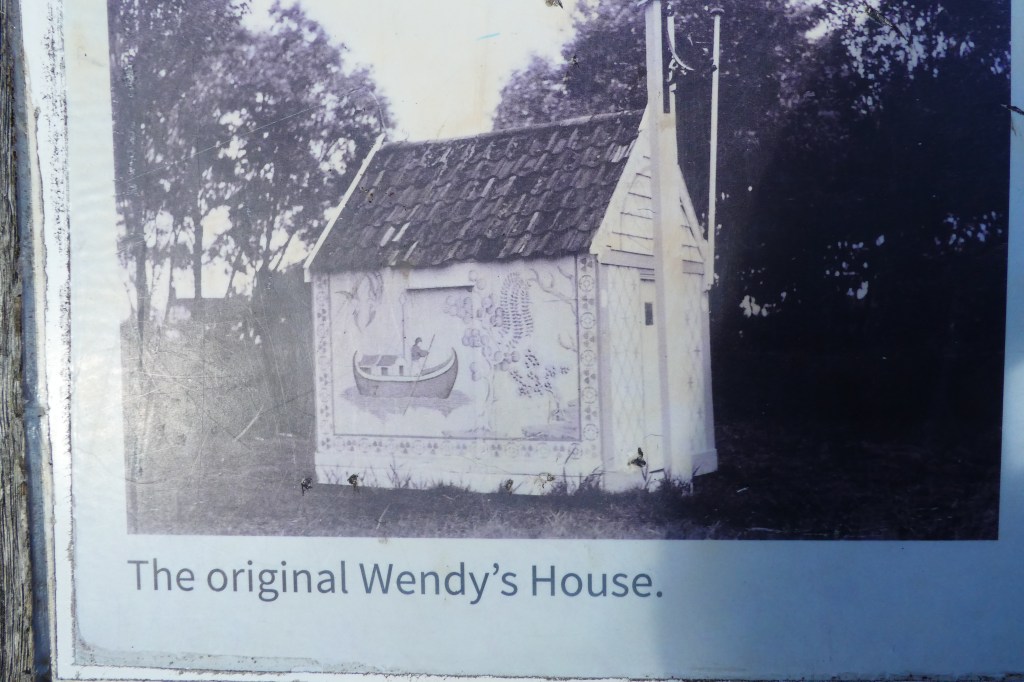
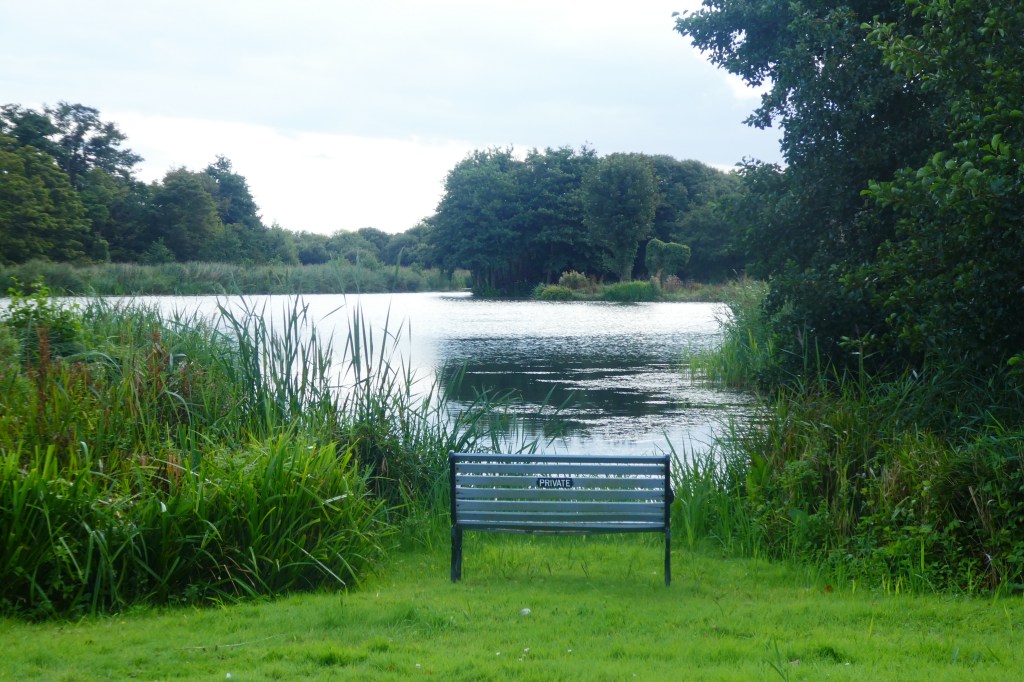
We strode out along the beach, the weather clear and balmy and then down into Thorpeness, a cute, coastal village, thronged with visitors on this sunny afternoon. The village boasts a ‘mere’. Here was the original ‘Wendy’s House’ of J M Barry fame, also an immaculate windmill and the famous ‘house in the clouds’, which can be rented for holiday stays.

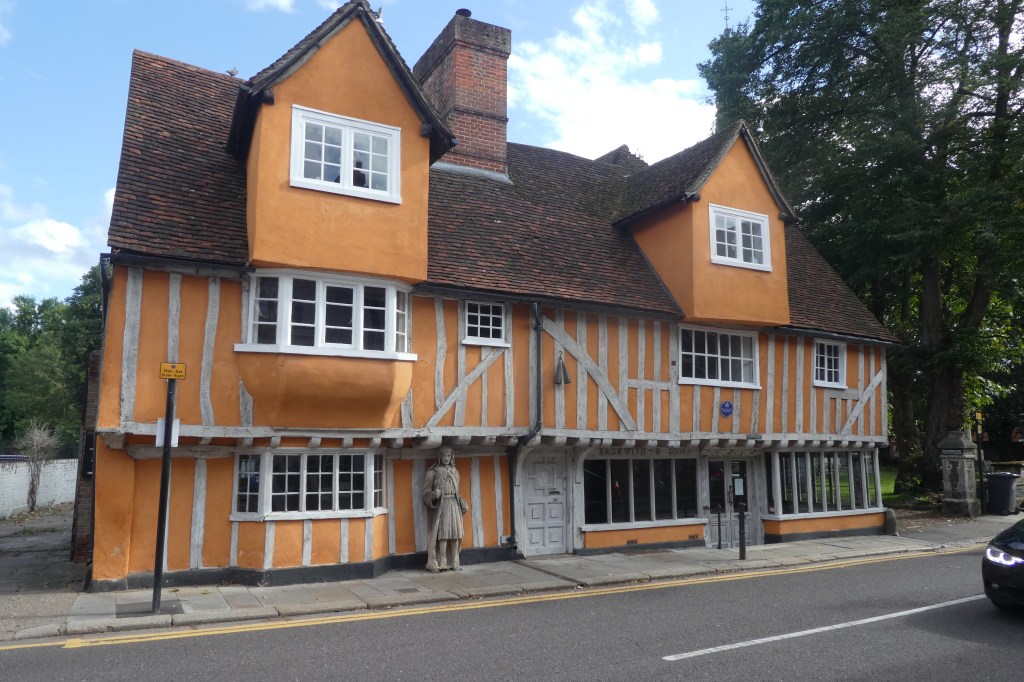
Aldeburgh is supposedly a simple cycle away from our site, though the path morphed from flat tarmac to rutted, sandy track in no time. Again, the town was busy with tourists, too many for the High Street pavements to cope with. It’s a pleasant seafront with fish smokeries and a broad, green swathe on which stands the ‘Moot House’, a half-timbered building housing what must be a tiny museum.

It took longer to queue for the checkouts at Aldeburgh’s High Street co-op than to explore its two or three streets. Provisions were running low and Sizewell is short on grocery stores [there are none].

Next day, with the promise of rain on our last day we cycled again, this time to Dunwich. The route was hilly, a surprise for the knees. Dunwich is a minute village, one street of cottages dominated by a pub/hotel, but with a cafe and kiosk near the beach. There is also a ruined abbey and a museum of sorts. Taking what Husband termed a ‘short cut’ back to our site at Beach view, we found ourselves in the National Trust reserve. ‘Strictly no Admittance without Tickets’ stated the sign as Husband rode through, oblivious. A second turning before the entrance booth took us along a heather lined track. ‘No Horses, no Bikes!!’ proclaimed the sign, which Husband peddled past, heedless. After several wrong turnings we arrived at a ‘kissing gate’ and were obliged to manhandle the bikes through it by up-ending them.

Our last day at Sizewell dawned humid and drizzly. After lunch we walked, taking in the beach and a dripping forest, sweltering in rainwear; and returning to our site for tea and cake.
The Back and Front of Beyond

Kessingland may sound like it’s a theme park, but it’s a sprawling village on the Suffolk coast between Lowestoft and Southwold.

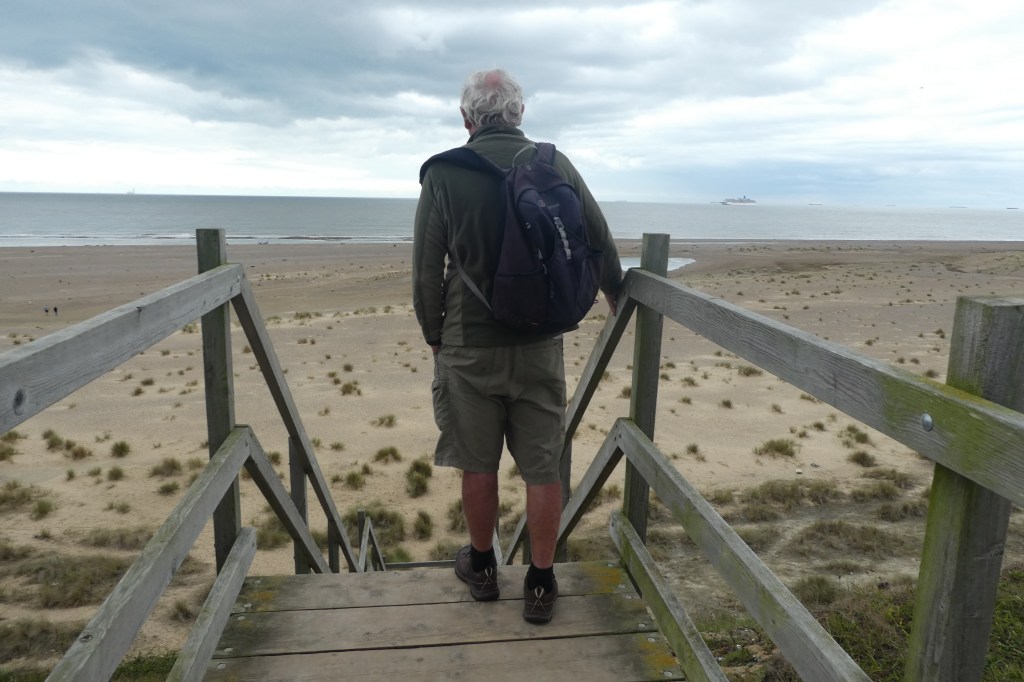
We arrived to our first site, located at the ‘top’ end of the village next to a zoo. i’ve no complaints, but to access the very best part of Kessingland, the bit at the ‘bottom’, by the sea entailed a long, boring walk down a street in which the immaculate allotments provided the only interest. During a wild, windy walk along Kessingland’s unspoilt, shingle beach we discovered another, beachfront site and, feeling a little treacherous for having booked 4 nights at the top end site, we moved.

On the new pitch we faced the iron grey North Sea and a wide shingle beach dotted only with clumps of hardy vegetation and a few dog walkers, miniature tankers and container ships making stately progress towards Harwich broke the horizon, lit up like decorations at night.

Kessingland is devoid of massed terraces of gift shops or coffee shops, boasting only 2 pubs and a tiny Tardis of a shop, ‘The Beach Hut’, in which a customer must vacate before another can enter [and this, even before the advent of the dastardly virus!].

Too windy for cycling, we opted for a long walk along the broad beach and dunes, almost to Lowestoft, meeting few others. Back at Kessingland we ‘helped out’ by eating at the pub, ‘The Sailors’ Home’, where the meals are a triumph of economy over gourmet dining.

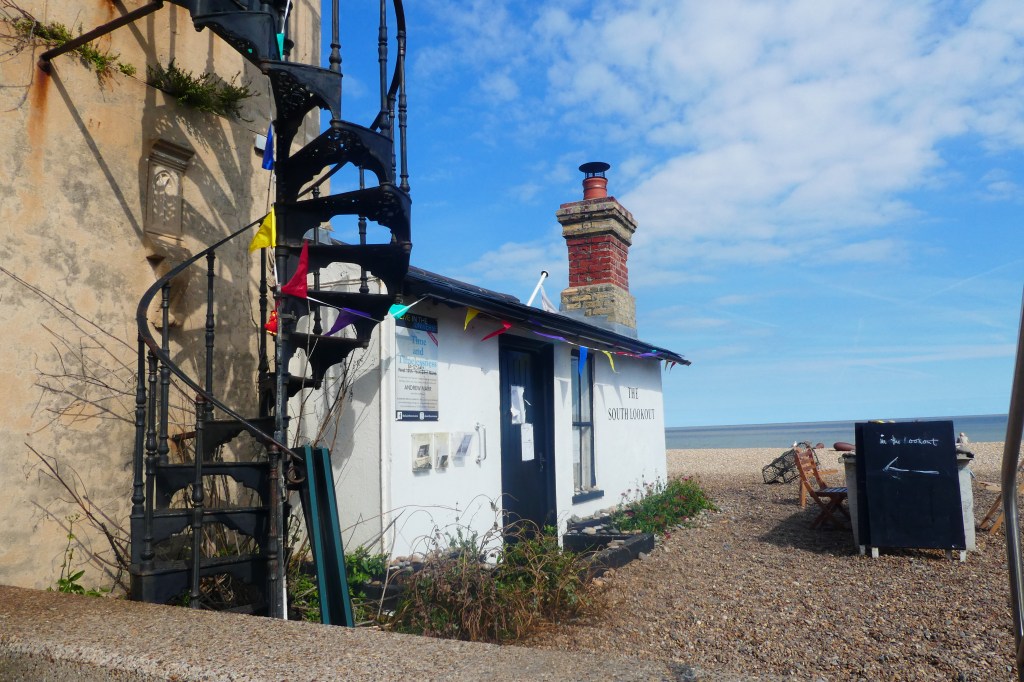
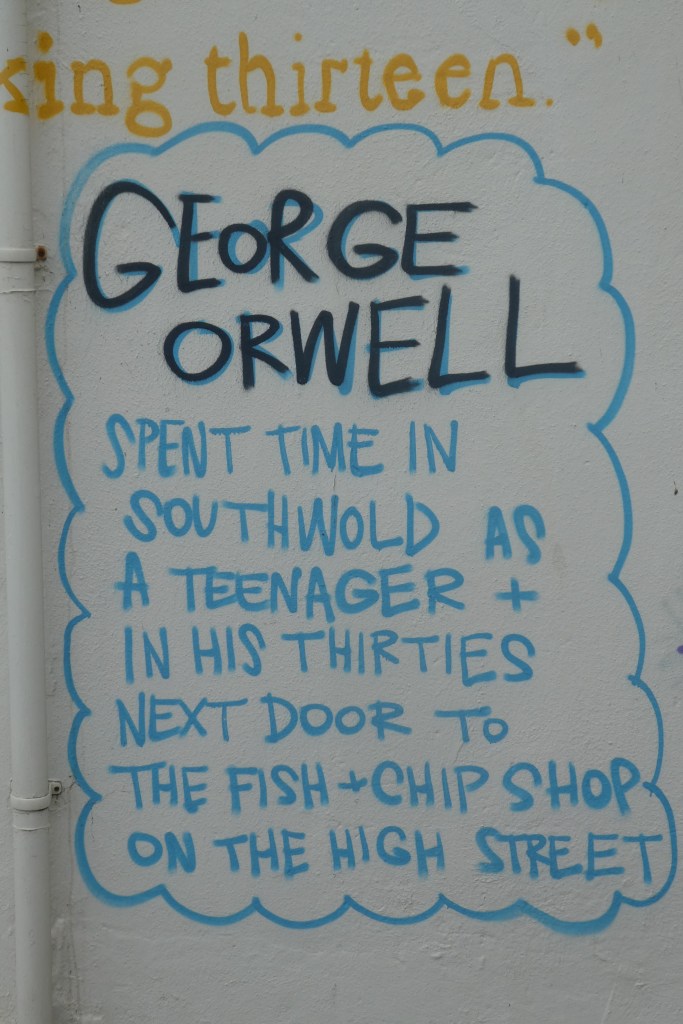
Next day we took a bus into Southwold, Kessingland’s opposite; tourist Mecca, with gifts, galleries, bakeries, coffee shops, a pier, a market, rows of colourful beach huts, amusements and thousands of visitors, few of whom seem able to observe the pedestrian one-way system. There are some tenuous links to George Orwell, a dedication to whom is splattered over a large wall on the pier.

Following our 4 nights in Kessingland, we headed inland, first to Oulton Broad, a large lake and a marginal draw for visitors, although the neglected pleasure boats languishing at their moorings tell a Covid story of their own. Some access to the lake is restricted due to private homes but we could see the old ‘wherries’, flat, barge-like vessels that were once used for freight. In the afternoon we struck off into the marsh, following paths through the reed beds.

Then it was off to our next destination, a pub site in an inland village near Diss, Norfolk. The weather was turning gloomy and rain threatened as we turned into the entrance. Here a few pitches had been carved out of the land behind the pub and a shower shed constructed for the half dozen units. We adopted a ‘beggars can’t be choosers’ mentality as the rain closed in. The pub is clearly in difficulties, offering some meals and entertainment but attracting few revellers.

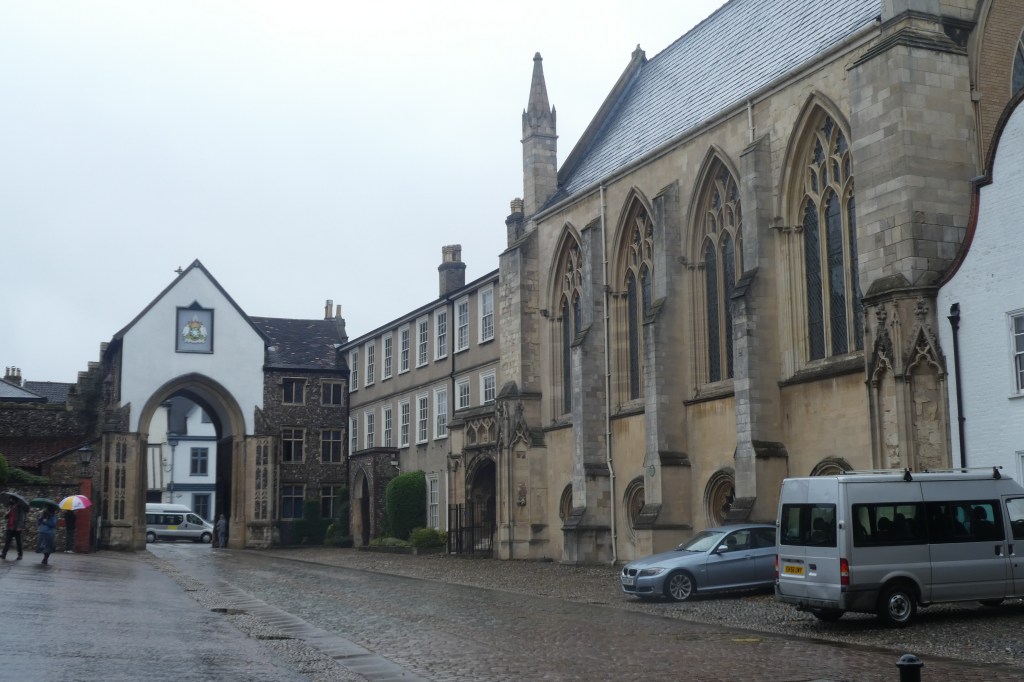
Next day rain was firmly established and we set off to Norwich, using the ‘park and ride’ system and well prepared with raincoats and umbrellas. Norwich is a beautiful and historic city, which compensates, perhaps for some of Norfolk’s less gorgeous attributes. There is a magnificent cathedral, a renowned market, numerous museums [closed], a castle [closed] and ‘the lanes’, a series of narrow, cobbled streets flanked by old buildings. Having met friends for lunch we wandered for as long as we could manage in the rain.

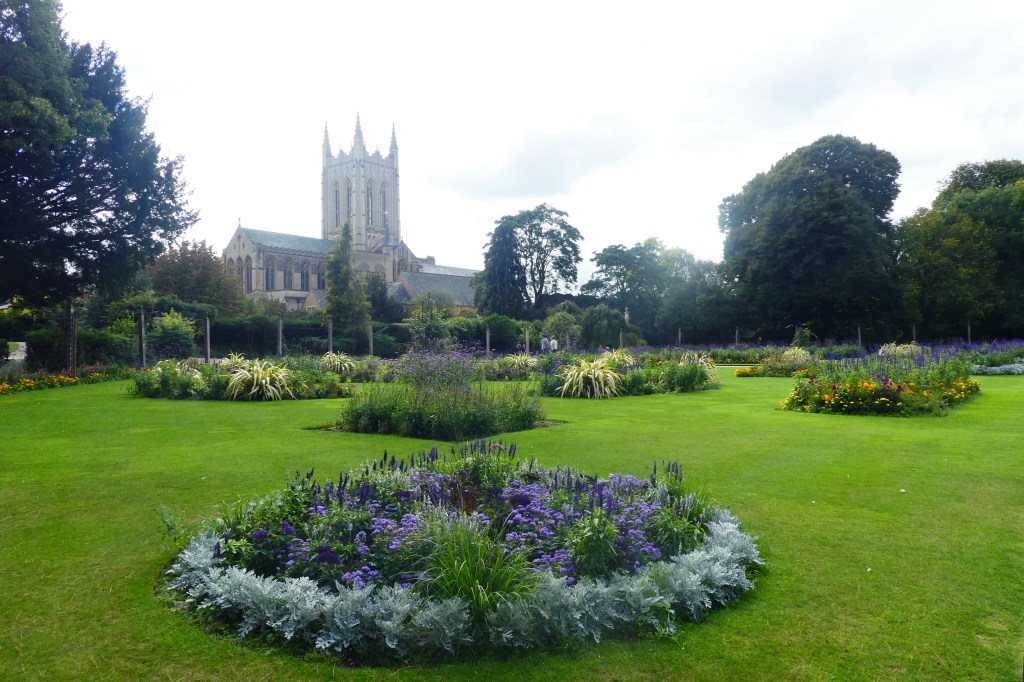
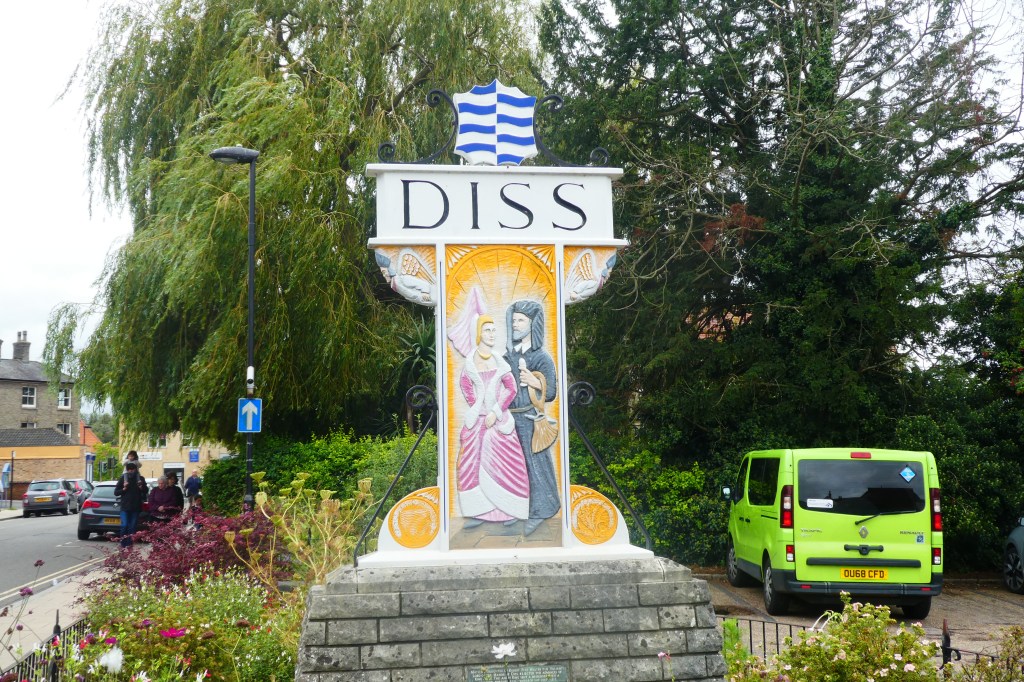
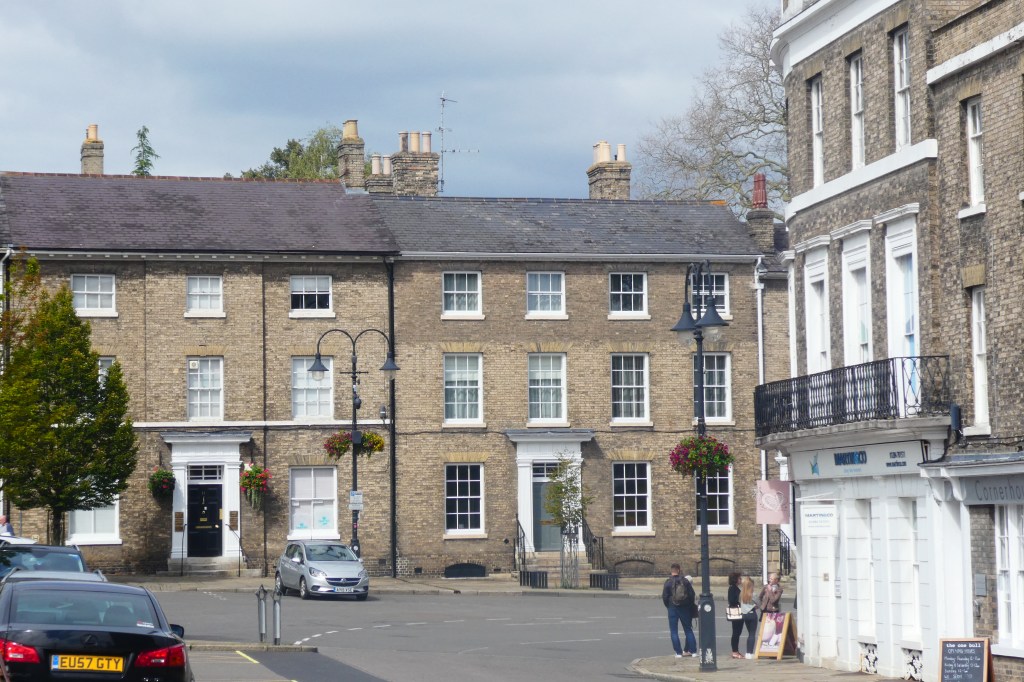
Though dry, the next day was cold and having cast around for a nearby sightseeing tour we decided on Diss and Bury St Edmunds, Diss being a smallish but not unattractive place with a ‘mere’ and Bury St Edmunds a well-to-do town with an abbey and immaculate gardens.

I was not sorry to leave the pub site. We were to head back out to the coast and the sun was shining…

Unknown Territory in our Back Yard

Four years of my childhood were spent in north Norfolk, in the environs of ‘The Wash’, a flat, featureless, agricultural landscape devoid of trees or anything of interest. You would only consider holidaying there if you were an obsessive ‘twitcher’. The Wash has a large population of water and shore-loving birds.

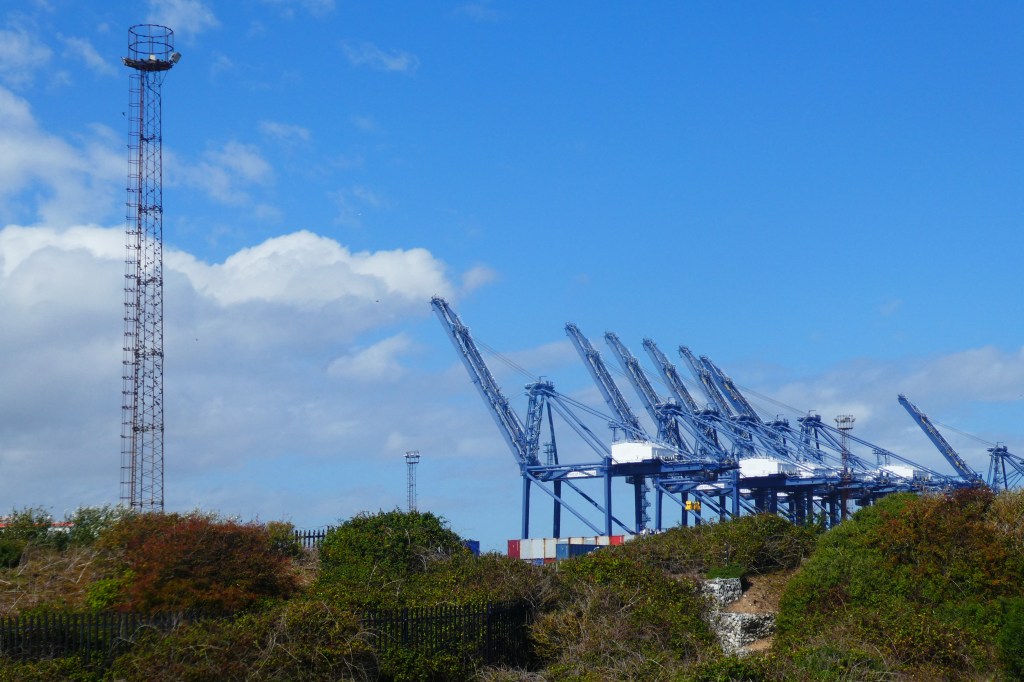
Other than this area, I know little of the area of the UK known as East Anglia, the part that sticks into the North Sea like a rounded carbuncle and boasts the largest container port in the UK, Felixstowe, in Suffolk. The town is also a seaside resort of the traditional British kind, with an abundance of fish and chip shops, ice cream vendors and gaudy amusement arcades. If you look along down along the handsome promenade from the north end, towards the pier you will see the pier head and rows of tall, port pylons rising above it. It makes for an interesting view.

Looking for hitherto unexplored parts of our island we stop at a site here, near enough to hear the cranes grinding and clanging at night as they reach down for each container and hoist it up high on to the impossible stack of the ship that is to transport them somewhere.

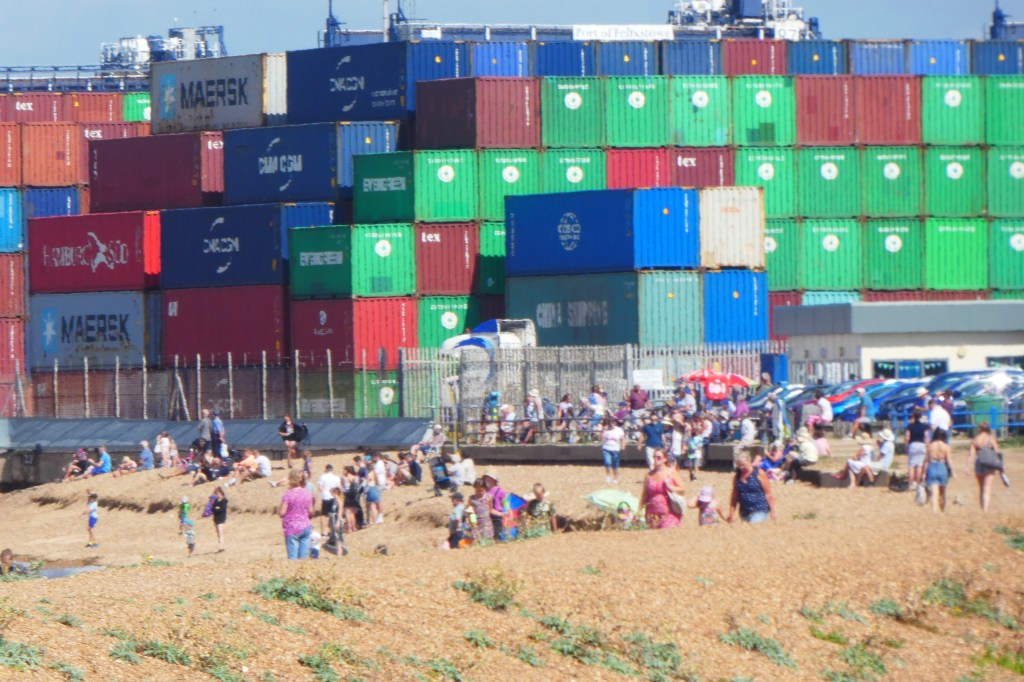
Next day we cycle through the nature reserve on a stony track dotted with clumps of hardy sea cabbage and when we reach the end the giant ship with its towering cargo is almost within touching distance, rearing up behind a shingle beach scattered with bathers and sunbathers.

Away from here, back at the seafront, the prom and gardens are pristine monuments to tourism, without a trace of irony. After a cycle northwards up the coast we take a ferry ride across the Orwell estuary, a staggering £12 return for a 2 minute voyage! But the last ferry returns at 5pm and we’ve scarcely half an hour’s cycling. When we get back the cafes and kiosks have closed.

On a patch of grass by the prom we can sit in the sunshine with a beer and watch the container ships queuing to get into port. Later we dine at the Steak and Lobster Restaurant, taking advantage of the cut-price, early weekday deal the government has provided, though we need no motivation!

The UK weather unleashes its predictable inclemency and a whole day is spent confined to van, writing. Valuable but not physically tiring enough to allow sleep.

Unable to reserve nearby sites we are forced outwards to Hertfordshire, to spend 3 nights outside the county town, which is ok, since neither of us has visited before. A late afternoon stroll around the town in the sunshine is enough to see the place-a pseudo castle, one or two historic buildings and a welter of pubs besides the usual high street carrying the usual stores.

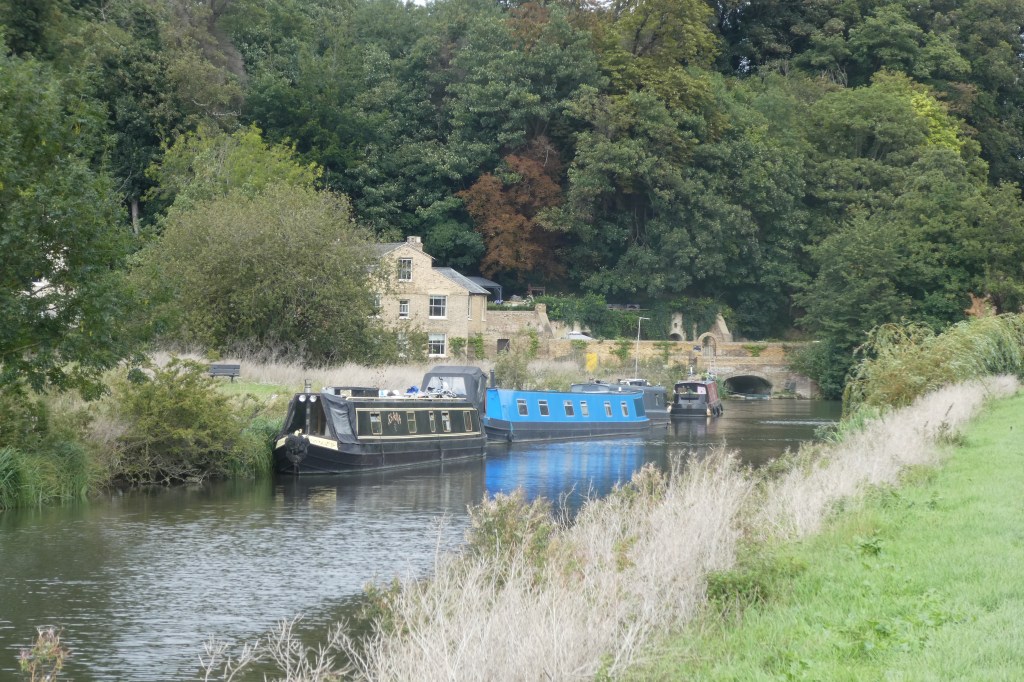
But it does have a creditable cycle path along the Herford canal, continuing along the River Lea, and with a dry-ish day we spend a few hours cycling the tow path, past more narrow boats and barges than I’ve seen on one stretch, ever. The water is busy with river revellers, shouting, splashing, occupying locks, attempting to open/close locks, or [for those whose boats are their homes] pottering on their rooftop gardens and undertaking repairs.

Later, in a quiet, more picturesque part of town we find ‘The Barge’, a beautiful old pub by the canal offering splendid food in a lovely setting.

Then it’s time to move back East…