Winding Down

The day of the Alcazar visit arrives- the penultimate day of our week in Seville. And it’s hot- possibly the hottest day of a very warm week.

During the second half of the week, we’ve been using the supermarkets opposite the hotel to gather brunch items- baguettes, cheese and cold meats, which is all very handy. Judging by the fellow guests by the swimming pool, this is what everyone else is doing, too!
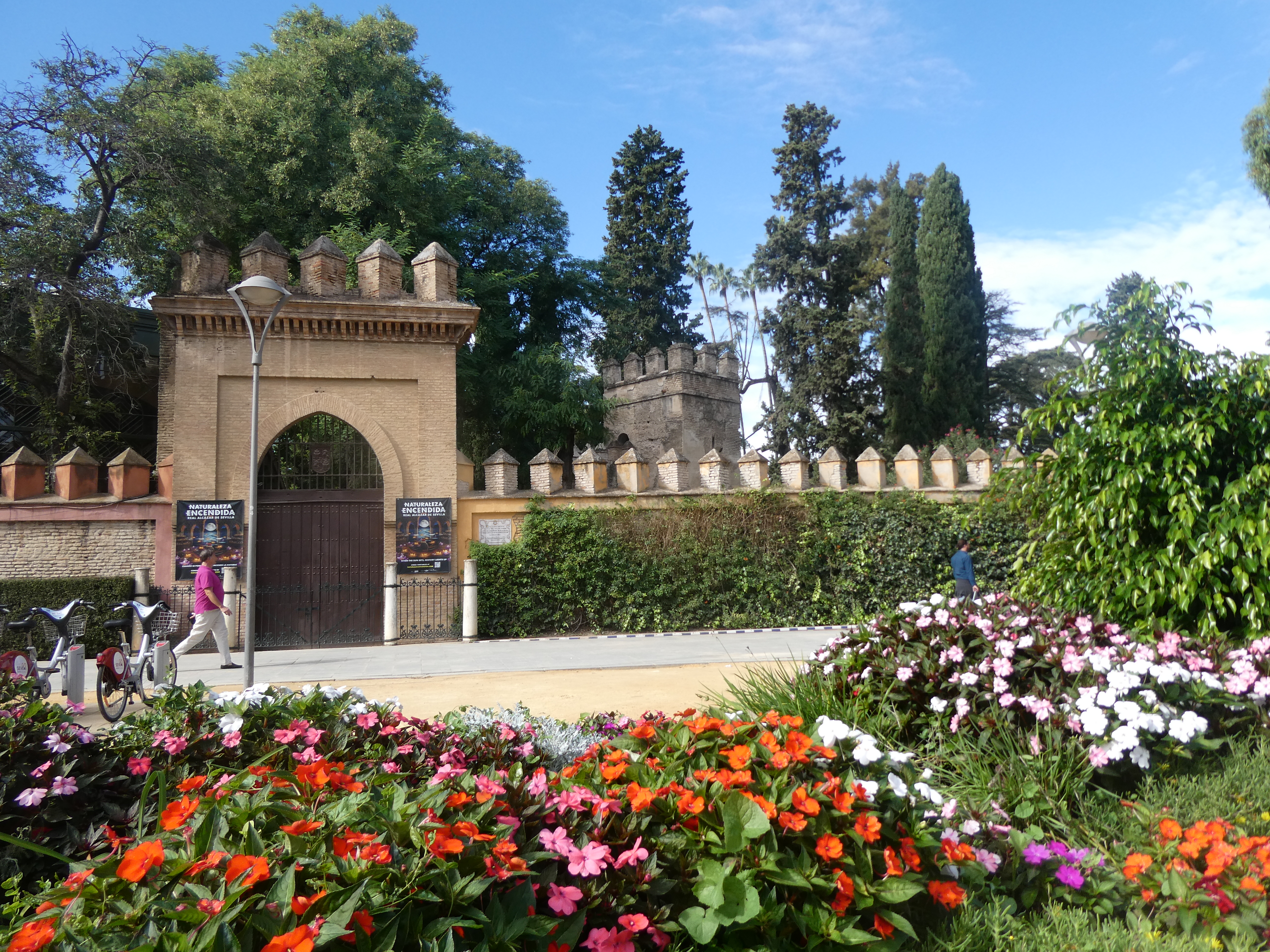
We have our tickets for the visit and a time slot, so we set off down to Seville centre- a route we’ve become familiar with now, except that although we’ve visited the cathedral- and we know the Alcazar is nearby somewhere- we can’t seem to find it.
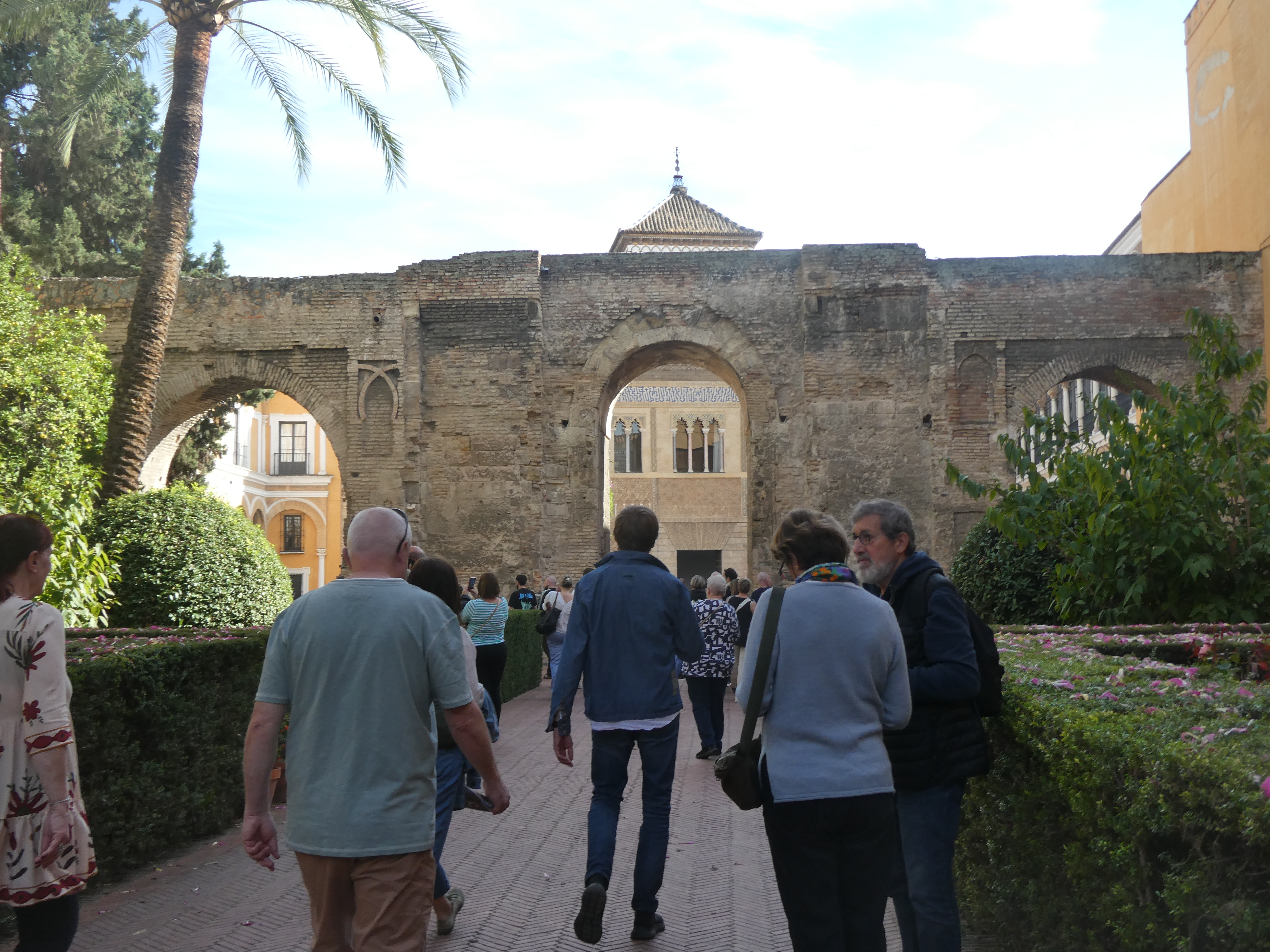
We wander round, scrutinise our map, walk again. It’s hot. I feel for the poor horses, lined up- albeit in the shade, to pull tourists around on carts.

Finally, we trudge up a narrow lane at the side of the cathedral and there it is, which makes me feel foolish, as it was behind the cathedral all the time. At first, on seeing long queues for the Alcazar, we feel smug to have bought tickets- that is until we see that of course- so has everyone else. Despite the allotted time slot, we must queue with everyone else. There are some pockets of shade though, thank goodness!
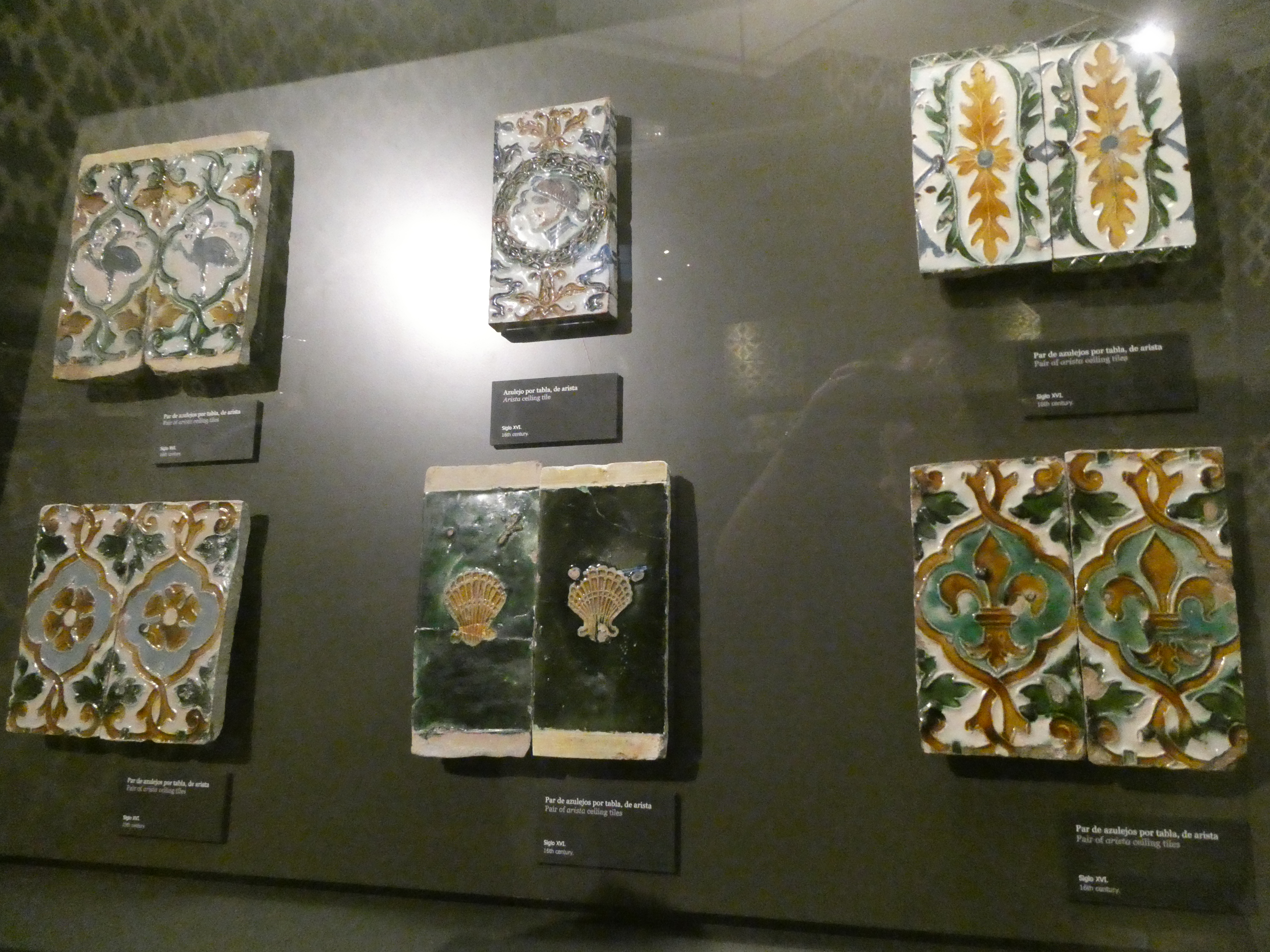
At last we’re through the gate and at first there’s nothing to hint at what lies inside the tall, ancient walls. We go first inside the building and up the stairs, where there’s an exhibition of very old tiles- 16th and 17th century- so astonishingly fresh and contemporary-looking, I’d be happy for my bathroom to be clothed in them! There is also a tiled portrayal of the crucifixion.

Downstairs the building consists of a series of small courtyards, shaded and charming. but the real beauty of the Alcazar lies in its vast and gorgeous garden, Moorish in design and set out in garden ‘rooms’. It’s very formal and there is a sense of calm in the lines of hedging, the squares, the symmetry and the planting.

We descend steps to a raised pond, where a few hopeful ducks swim within arm’s reach. A woman holds out a carefully manicured finger and I hold my breath until the nearest duck snaps at it, then I’m disappointed when she withdraws just in time.
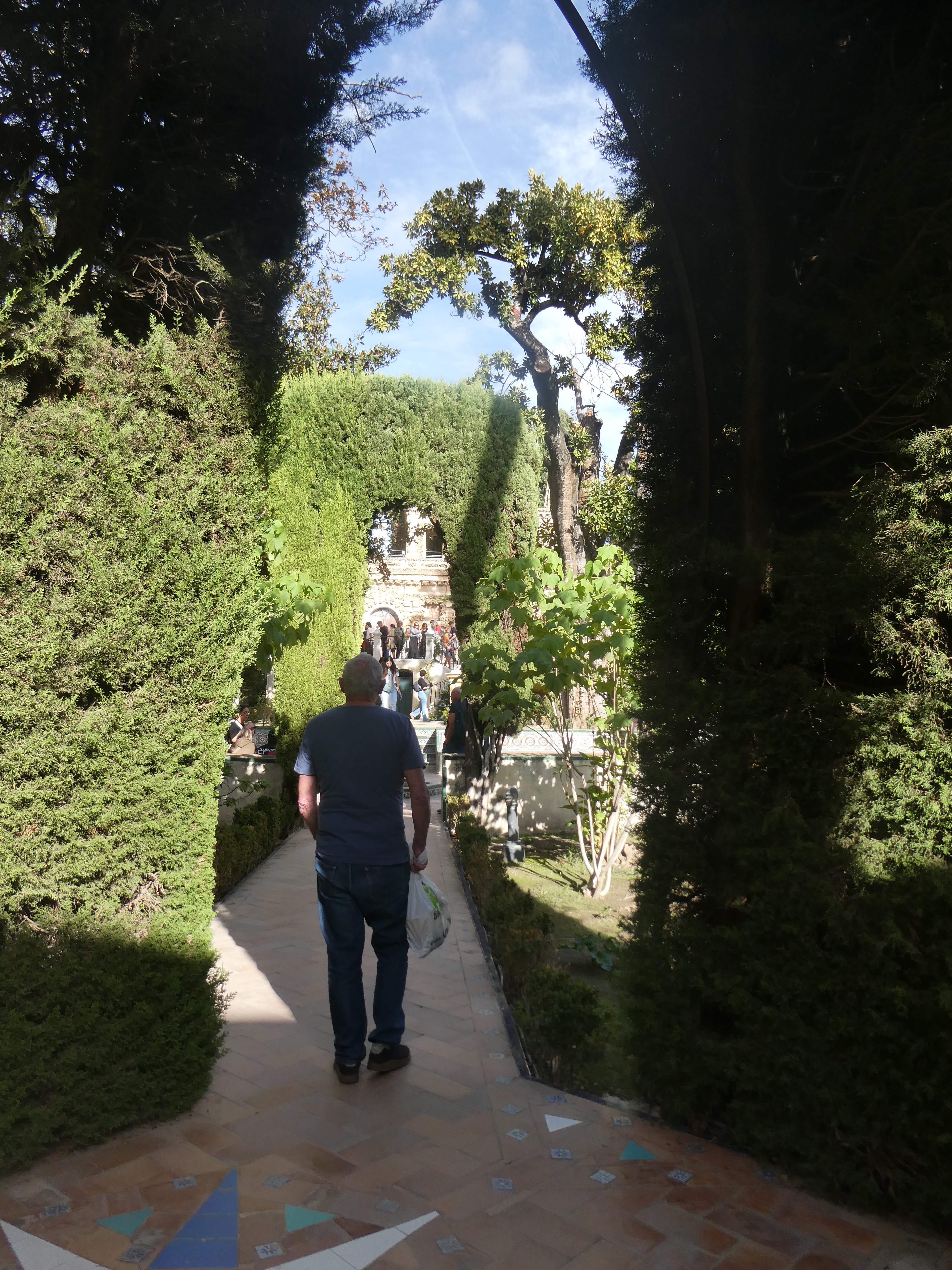
Each area, marked by low hedges, is planted with shrubs, palms, trees and flowers- a rose garden being one. It’s a riot of flowers and colour for November. Further on the garden becomes less formal and wooded, a sea of green Mediterranean shrubs beneath the trees.

A staircase leads up to the top of the retaining wall, a covered corridor with views over the garden; a great way to end the visit.

At the end of our week, we make one more visit to the restaurant we found where we had a simple but delicious steak, then it’s time to take our leave of Seville- an elegant and beautiful city with a thrilling array of grand, historic sights…

Novels by Jane Deans [Grace]: The Year of Familiar Strangers and The Conways at Earthsend. Visit my website: janedeans.com

Turning Portuguese

P1070246

The first time we visited Portugal was with a tent, a giant, swish ‘pyramid’ tent that we’d borrowed from Husband’s colleague. I had to crawl in and hold the central pole, getting hot and sweaty while Husband hammered the pegs in outside. On a site at Ancora [north Portugal] where an interested neighbour ‘advised’ us on where to have our doorway, we pitched under some sap-dropping trees that stained said tent for ever, resulting in our having to buy the colleague a brand new pyramid tent when we returned. [We’d also torn the fabric attempting to dry it out in a French motorway services car park].

P1070338

This was also the trip when we visited Porto by train from Viano do Costelo, buying return tickets and discovered on our return to the station to get back, that the train ‘does not return from here’. We had a wonderful, dockside meal and returned on a ‘milk’ train, from a different station at about 2am.

During this and subsequent visits, with various vans we’ve done the major must-sees of Portugal: Porto, Lisbon, Guimares, Coimbra, Sagres, Faro-

Mostly we’ve found the west coast to be more pleasant and less developed than the Algarve, but there are exceptions.

P1070360

Portugal, like Greece is one of those countries that never fails, with luscious countryside, beautiful historic cities, reliable, warm weather, delicious food [including the famous ‘pastel de nata’ custard pies], a gorgeous coast line and friendly people.

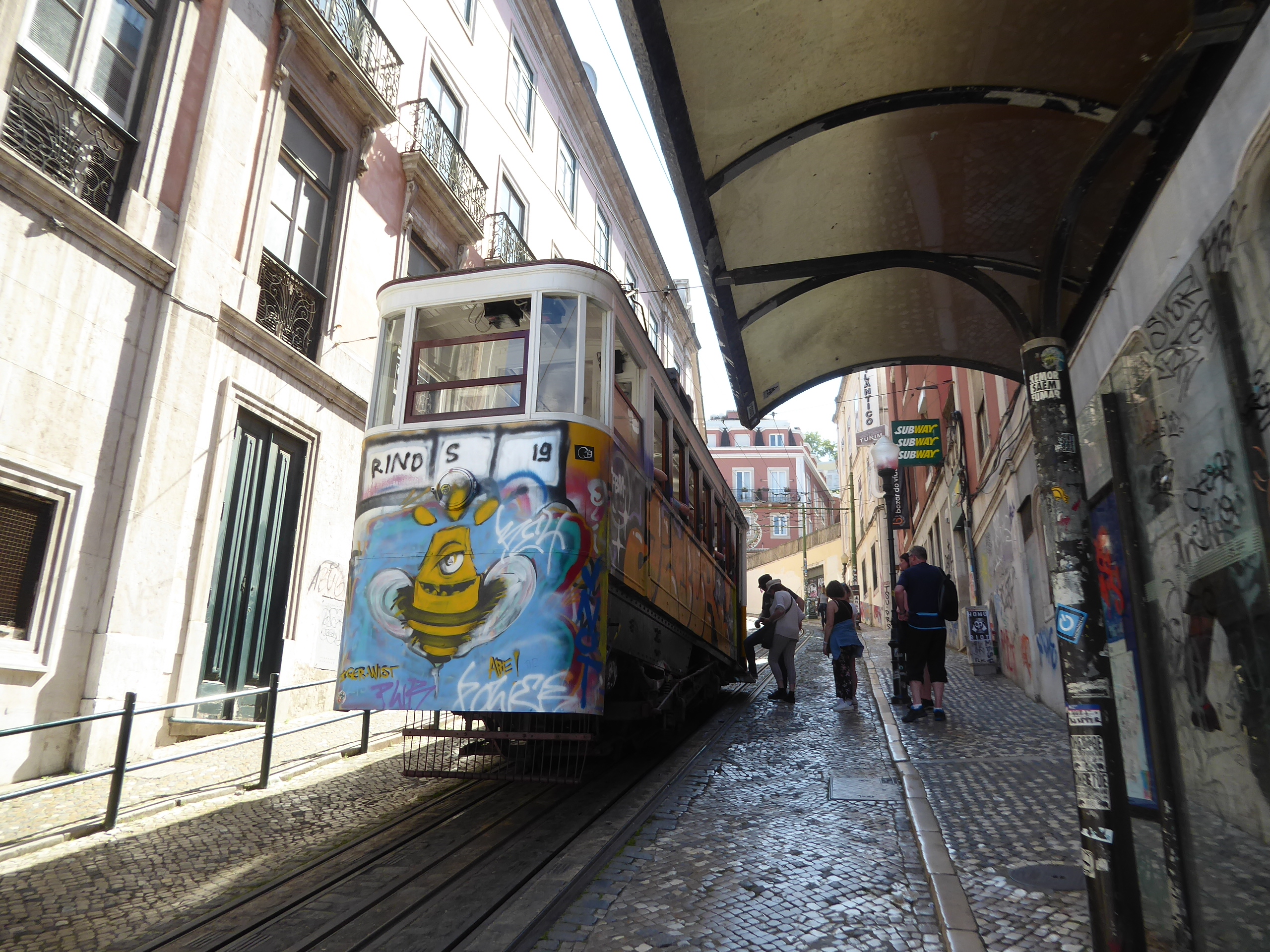
We find Lisbon much changed, with the addition of hideous cruise ships blocking views and throngs of tourists everywhere. Our previous visit was quiet and we were able to stroll the narrow lanes without stepping around selfie-takers. To anyone intending to visit Lisbon and considering an open top bus tour I’d say, ‘Don’t!’ You pay 11 euros to inch along for hours in stifling traffic, a woman wailing Fado songs in your ears. You get to see very little and anything of interest is zipped past or around before you’ve got your finger on your camera shutter.

I can get no purchase on the Portuguese language whatsoever. Spoken, it sounds eastern European with lots of sch, z and cz. Written, it looks remarkably like Spanish and meaning can often be deduced. We know we must take care not to speak Spanish to the Portuguese in spite of so many words being similar, nevertheless Husband is inclined to say ‘gracias’ instead of ‘obrigado/a’ for the first few days. My own knowledge of Portuguese is restricted to ‘obrigado/a’, ‘Bom dia’ and ‘ola’ so it is fortunate that almost everyone here speaks English very well indeed.

The Portuguese are fond of tiling the outside of their homes, which can look beautiful or tawdry; railway stations, hotels, churches-no building is safe from this treatment.

P1070332

And neither are the bone-shaking, tooth-grating streets, which are tiled in cobbles.

The Portuguese countryside is strewn with cork oak trees, the cork continues to be harvested and goods such as cork handbags can be seen in the shops. Perhaps the backlash against plastic will see a resurgence of the cork industry? It does seem to be a versatile material with useful properties: lightweight, water repellent, attractive.

In recent years, wildfires have decimated much of Portugal’s forests and evidence of this is everywhere.

Orange and lemon trees abound, in gardens, parks and along the streets. They are all hung with tons of fruit which nobody seems bothered to pick, the ground around the trees littered with fruit just as the plums lie fallow in Gloucestershire.

P1070325

Before using the [very quiet] motorways you must register your bank card and attempt to forecast how much toll you will be using, which is tricky. Otherwise you can register at the first ‘portagem’ [toll booths] but then you’ll have no clue as to what is being deducted.

We’ll soon be leaving Portugal and crossing back to Spain-but I’ve no doubt at all that we’ll be back!


Baths, Bowls and Bogs

You can have too much choice in life. We are in the throes of browsing for bathroom parts. In the showroom there is a plethora of porcelain, sparkling white and clamouring to be purchased. Whereas in the seventies the choice would have been all about colour-Pampas? Whisper Peach? Avocado? These days it is the shape you must consider. Take basins. There is a trend for bowl-shaped basins perched on top of dinky cupboards-sometimes ‘his ‘n hers’. It prompts a vision of the morning ablutions, a harassed couple; he is shaving, flicking flecks of foam with abandon as she applies her lipstick-a recipe for a squabble. No. We are opting for an old favourite here-plain, rounded basin on a white pedestal. It is also the cheapest. This is no accident.

Toilets, then. As a very young child in rural Wiltshire I’d make my way out of the house and up the garden towards the run that accommodated the hen house where there was a rustic, timber shed with a rickety door. Inside was a bench in which two holes had been made, one larger and one child-sized. It allowed a child and an adult to sit in companionable contemplation whilst performing their bodily functions. A thick wad of cut newspaper hung suspended on a string from a nail in the wall. This, together with a tin bath in front of the fire in the kitchen is what constituted our bathroom facilities. At night there was an ornate chamber pot tucked discreetly under my bed to avoid hazardous, dark forays down the garden. I wonder what the constructor of the garden privy would think if they were to wander around a bathroom showroom today.

Now most of us in the developed world at least, are lucky enough not to have to walk outside to an old shed with a wooden seat to do the necessary. Not so in many countries where an outside privy would be considered and un-dreamt of luxury; the only option being an open field. Years of camping holidays taught me that there are worse things than having to nip behind a bush  to relieve oneself although most camp sites now have glorious, tiled, heated blocks-often with piped [no pun meant] music to boot. One flower-adorned, Swiss chalet style building in Germany’s Black Forest sports a dog shower that would put most people’s bathrooms to shame and the children’s bathing option is a masterpiece of tiled, underwater cavern complete with mermaids and sea creatures.

Back in the showroom we ponder wall-mounted, square-ish, close-coupled or bog [no pun] standard? We select the standard. It is the cheapest. This is no accident. On to the taps, where an array of designs awaits, including the standard. Toilet seats? It’s tricky. The seat shape must match the toilet shape. The French avoid this problem by having no seats. You can’t complain, since many of their toilets are still the ‘squatty’ kind-that is- square porcelain trays with central holes and places for your feet. I think I’ll be a man next time…