First Flight

Until I was in my twenties I had never flown anywhere. I’d been on camping holidays with my family as a teenager, to France and even once a driving holiday to Switzerland, which seemed intrepid at the time.

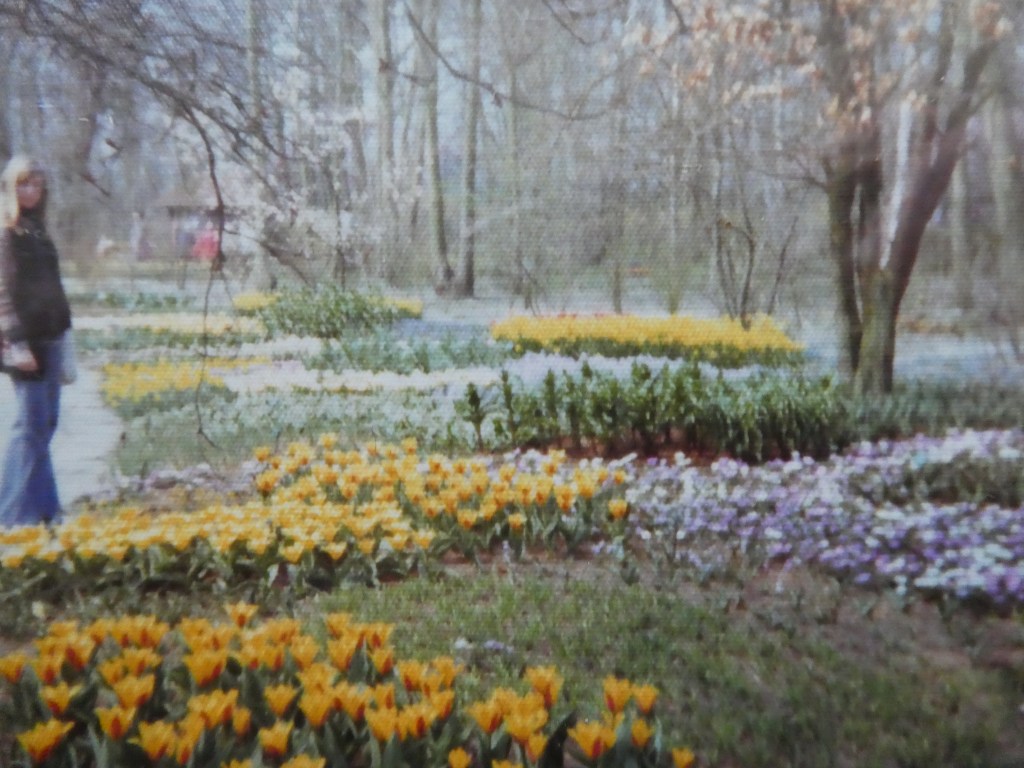
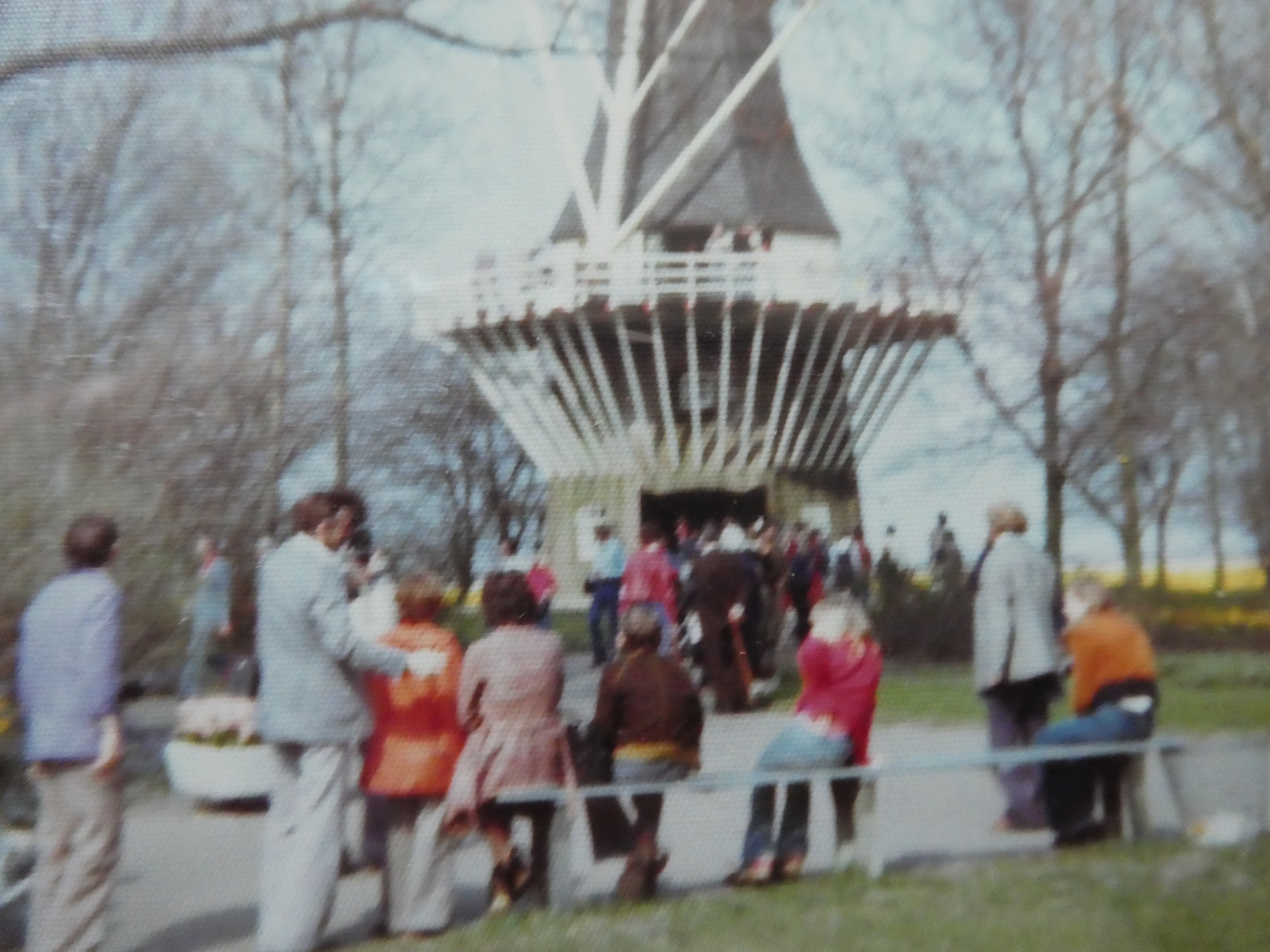
After a couple of years of work, and having become established in a pleasant, shared flat in Putney, one of my flat-mates suggested we take a trip to Amsterdam during our Easter holiday. We’d still be doing it on the cheap, taking standard flights and staying in the youth hostel; but Easter is a fine time to visit The Netherlands and we’d be able to take a coach out to Keukenhof, where acres of bulbs are grown, a spectacular sight in the spring.

I was as excited about the flight as anything else. At this time [the mid 70s] air travel still held a hint of glamour, influenced by Freddie Laker’s entrepeneurial innovations, the TV ads full of inviting images. I am ancient enough to remember the Imperial Leather soap commercial, in which a couple are bathing in an aircraft. These days any sense of luxury or comfort on an aeroplane can only be accessed via flying business class and paying extortionate sums for tickets.

But Amsterdam is a short flight away and a trip we would never undertake by air now. My friend, Deirdre had come up with another cunning plan. Her ex-boyfriend was living in Amsterdam, having moved on to live with his latest squeeze, a Dutch girl in a flat near the centre. According to Deirdre, Dale was a confident, charming but egocentric womaniser who would love nothing more than to provide free tours and guidance during our stay. We never discovered what the Dutch girlfriend thought of it all…

Everything was straightforward with our travel and we got into the centre of Amsterdam with no trouble, but locating the youth hostel was another matter. There were, however various ‘hostels’ and we checked into one, assuming it was indeed the official, kosher, accredited real deal. It was certainly cheap. But in that time-honoured way of ‘getting what you pay for’, it was a dump, the shared washing facilities spartan, the dorms quite nasty.

We managed a night then rose and set off to meet Dale, who was delighted to see us and show us around, He also explained that our accommodation was not the Youth Hostel and took us to find the YHA property, which was located bang slap in the centre of the red light district [which, for anyone who would like to know, is near Amsterdam’s grand railway station].

We removed ourselves from the first place and went to the YHA, where we were allocated bunks in a dormitory, mine being the top one. There were strict rules, one being a denial of entry after 10.00pm, which seemed a little draconian. We’d also have to take our turn with clearing up breakfast etc. But it was clean and safe.

So during our week we walked all over Amsterdam, taking a canal boat ride, visiting the Rijksmuseum, all the major squares, the flower market and most memorable, a tour of Anne Frank’s house, when we were almost alone and in silence to look at the cramped attic where she hid with her family. I’ve returned to Amsterdam on a number of occasions but have never wanted to revisit the house, to queue up and shuffle around in a crowd of chattering tourists.

As twenty somethings, we threw ourselves with gusto into the city’s nightlife, but our 10pm curfew was a severe obstacle to fully enjoy the evenings. Most nights we rushed in with seconds to spare, to find the dorm dark and full of slumbering women, then I’d have to scramble up past two levels to reach my bunk, hoping not to insert my foot into someone’s face.

It was a packed week. The Netherlands’ capital is always a captivating trip to make, but you never forget your first sight of iconic places-and you never forget the first time you flew, either!

Banjo Wakes

This month sees the debut of my novel, eco-thriller ‘The Conways at Earthsend’ , published by Pegasus. [The Conways at Earthsend by Jane Deans | Waterstones, or The Conways at Earthsend: Amazon.co.uk: Deans, Jane: 9781784659615: Books]. For more information, please visit my author page on: Facebook. In celebration of this event I’m posting up a new short story for readers, followers and visitors.

This story describes a different kind of journey:

Banjo Wakes

When he wakes it’s dark. He waits for an outline, for a glow or a contrast but there is none. He becomes aware by degrees, lying on his back, his right hand caught underneath him so that he must shift. He is able to move a little but his hand and arm that are trapped feel numb. He reaches across with his left hand and tugs at his right, a coat sleeve, some kind of woolly fabric. He needs to stop and rest between tugs but at last his arm is freed, although there’s no sensation in it. He rubs his left hand and arm until prickly pins and needles run up and down his fingers and his wrist, then some feeling begins to return.

He moves his head from side to side and touches the floor where he’s lying. It’s a little warm and smooth with a few knobbly protuberances and it’s damp with some kind of viscous deposit. Reaching up and to the side it feels identical, except that the wall he’s lying against seems to curve inwards as it rises and has the same, slimy residue. It is odourless.

Can he sit up? Should he try? His arm and hand are restored and he tries rolling, throwing his right shoulder across until he’s on his front then pushing up on his elbows. He’s out of breath now and stays, leaning down on his elbows to wait for the panting to subside. That’s when he feels the vibration under his fingertips and hears a dull, pounding beat like a machine.

He sways a little and some awareness seeps in. Where is Judy? Is she here in this place with him, or is he alone? How did he get here? He takes a shallow breath and pushes himself into a seated position. Now he’s gulping and heaving with the effort but if there was a glimmer of light, he’d have more chance of spotting it by seeing both ways. He leans back against the curved wall until he’s recovered his breath.

Every part of him aches; every joint, muscle and organ heavy and sore, as if he’s been run over by a steamroller. Is that it? Has he been in a road traffic accident, pushed into a drainage pipe? Perhaps he should try and call for help? Does he have a phone? He roots around, feeling for a pocket in the woolly coat and finding one, but with nothing in it. His legs though, are bare and he is not wearing shoes. Where is Judy? He tries to remember where he was before he came here and what he was doing. The dull throb continues in a relentless rhythm, the beat familiar, a song he knows, music he’s played himself, with the band. The band! Of course, he is a musician and plays a stringed instrument-a banjo! And something else; it’s his name. His name is Banjo, too.

When he tries to hum the tune, nothing comes out but he moves his fingers as if on the banjo strings and in his mind’s eye there is an image of Judy, next to him, playing bass and belting out a harmony to the chorus. Now he knows the song. It’s ‘Copperhead Road’, Steve Earl’s country number about bootlegging and drug running and he runs through the lyrics in his head: ‘Now my name’s John Lee Pettimore…’ He can hear Judy’s strong vocals as she stands by him at the mike, close enough to smell her fresh, citrussy scent and see the light dusting of freckles across her cheek.

He has to find a way out. And he has to find Judy.

He turns his head to the left and stares long and hard into the dark void but can make out no shape or line, then turns to the right, thrusting his head forward and gazing, holding his laboured breathing back until there, at last he detects a minute, white pinprick.

It’s something. Maybe it’s a light or maybe not. But to ascertain the source is better than sitting here doing nothing. He takes stock. He is neither hungry nor thirsty, which is just as well as there is nothing here. Nothing except darkness.

He takes a breath before manoeuvring back onto elbows and knees facing the white dot and begins to move towards it, Copperhead Road playing in his head along to the pulsing throb of the tunnel. After a few seconds he must rest, flopping down on his stomach this time and it seems as if the vibrating beat is faster as he listens. Then it slows again. He pushes up, labouring to get back on his knees and moves forward.

Banjo has no idea of time here or how much has elapsed since he began to move, resting between bursts. Sometimes, when he stops he sleeps, waking on his stomach, neither hot nor cold, thirsty or hungry. Whenever he wakes the pounding of the tunnel is slow.

It occurs to him that he might be dead, in which case, what is he crawling towards? Is he making his way towards an afterlife? He feels himself crumple inwards like an eggshell. It’s too soon; he hasn’t said goodbye to Judy. There is still so much to do. He’s not ready. He frowns and grits his teeth. ‘Get on with it, Banjo!’ he tells himself. Whatever is there, he needs to find out, needs to get there and this is no time to wallow in self-pity.

Next time he stops he pulls up into sitting again for a proper rest and to check the dot. The curve of the tunnel wall supports his back as he leans in, noting that his clothes are soggy with slime from the deposit he’s picked up. Now, when turns to look at the white speck he sees that it’s bigger and when he concentrates, he thinks there may be faint, pale shafts radiating inwards from it. If he’s correct this will be a light. His heart pounds. If it’s a light can it be the tunnel entrance?

He’s encouraged, and crawls on with renewed energy, his heart beating along with the tunnel’s throb…’Now Daddy ran whisky in a big, black Dodge’…the lyrics ring through his head as he goes, coming back to him now. Other than aching he’s not injured so he couldn’t have been in an accident. Was he abducted? Imprisoned here? But why would he be? He is neither rich nor famous.

He doesn’t allow himself another look until he’s managed another five bursts of crawling, but when he does stop to sit up the circle has grown much larger, light shafts illuminating the tunnel entrance, enabling him to see a grey and purplish glow, textured with something like threads. It’s puzzling, almost as if the tunnel was a living thing; the inside of a creature. Has he been swallowed up by an enormous beast? That would explain the warmth, although not the fact that he is still alive-if he is alive. If he isn’t alive, he has not much further to go to discover what the afterlife has in store for him. Either way he must plough on.

When he stops again to gather strength it’s clear that one more effort will take him to the tunnel entrance, and now he can see that outside is a clear, pale blue, indicating that the tunnel will exit to the outside somewhere and that it is a bright, sunny day. He considers this, feeling around in his woolly pockets once more for something that will help when he’s out. He has no means of communicating with Judy. He can remember where he lives but will he know the way back from wherever this is? Supposing he’s miles from anywhere? It could be a desert, or a mountaintop. And the lack of footwear is going to be a problem. He shivers, in spite of the tunnel’s warmth.

Banjo readies himself for the last push and crawls towards the big, blue mouth, his heart beating fast and his eyes squinting in the blinding light as he arrives at last, breathless, lying on his back across the threshold. He squeezes his eyes closed for a moment against the glare.

The pounding has stopped. There is a voice.

“Banjo? Are you with us at last? Hello!”

He stares into the blue, realising it isn’t as he’d thought, sky. It’s blue fabric on the arms and torso of a person. Now he can hear a high-pitched bleeping and when he plucks at the woolly sleeve of his coat, he finds it’s a blanket. He frowns as the someone leans down to peer at his face.

“Do you know where you are? You’ve been asleep a long time. Lie still now and we’ll let your wife know you’re awake. Judy, isn’t it?”

Banjo blinks, looking around at the array of tubing and machinery surrounding his hospital bed, remembering nothing of the circumstances that brought him here but feeling that the journey he made as he fought his way along and out of the tunnel has been the hardest of his life. He looks up at the blue-clad nurse and mouths the words, ‘thank you’, and she places her gloved hand on his arm for a brief moment and smiles.

A Turkey Tale 2

As documented in last Sunday’s post, we were having a quick, slightly off-season break in sunny Turkey, based in the pleasant coastal town of Cesme in a lack-lustre, budget hotel.

I’d had a week in Turkey a few years before and had taken a mini excursion to Ephesus and Pamukkale, an experience I was happy to repeat and knew Husband would like. The trip would be by coach, with a tour guide. It would also mean a stopover in a hotel, providing us [hopefully] with a break from Donna Summer’s ‘Hot Stuff’, our Cesme hotel pool man’s obsession.

There are various ways to visit archaelogical sites. You can do your own thing, either with or without a guide book, but you will miss out on a wealth of historical background. You can take up an offer of one of those audio-guides that hangs around your neck, although more often than not the narration will be out of sync with the points of interest [this often happens on open-top bus tours] or the sound will give up half way round. Then there are tour guides, who may be earnest, well-meaning and deathly dull or knowledgable and entertaining. On this occasion we got lucky and our guide, Uys was charming and urbane, maximising our experience of exploring beautiful Ephesus by feeding us interesting stories and giving us plenty of time to wander by ourselves, too.

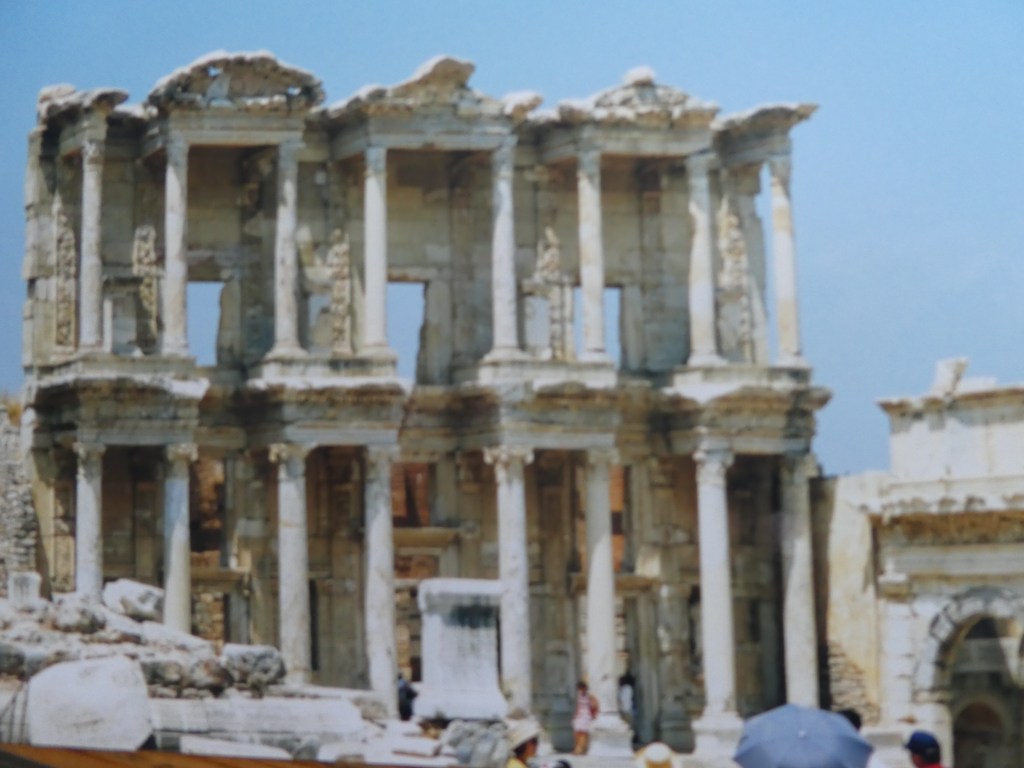
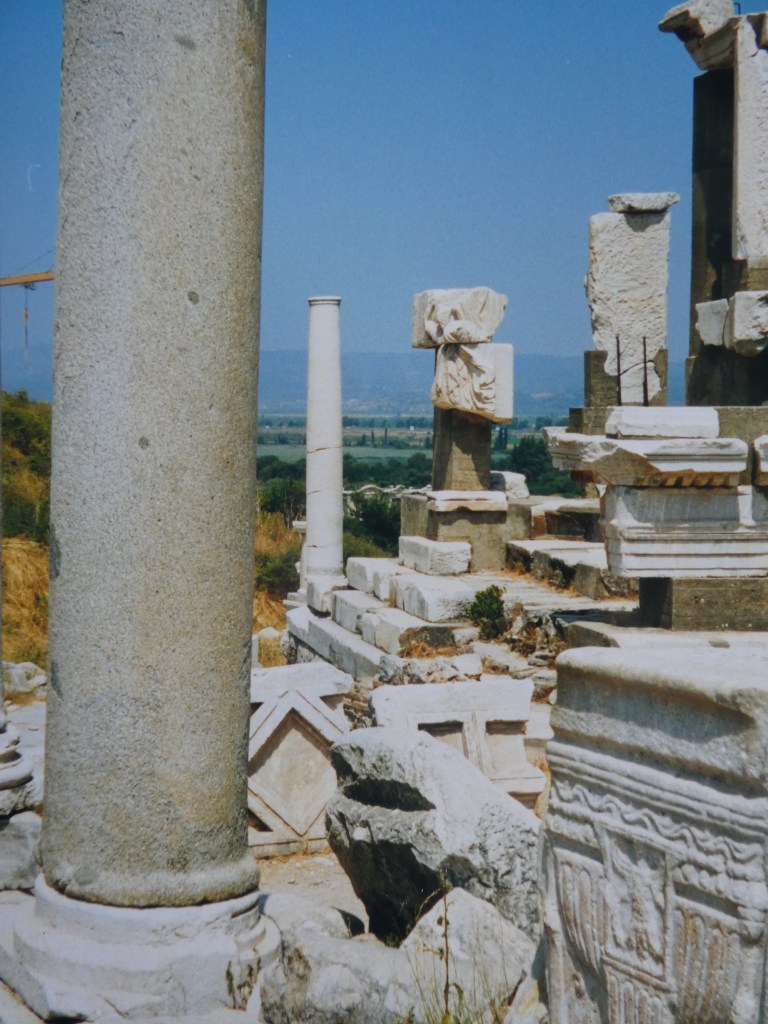
It is an extensive site, notable for the remains of its iconic library and a stunning paved road, lined with roadside columns and statues and all well worth a visit.

Though I harboured no expectations of the hotel we were to overnight in it was a vastly different experience to our Cesme place, a vision in marble with a grand entrance lobby and rooms spread throughout the grounds. There was also a buffet style dinner which was more than adequate. We were able to relax and chat with Uys, our tour guide, who seemed more than happy to socialise.

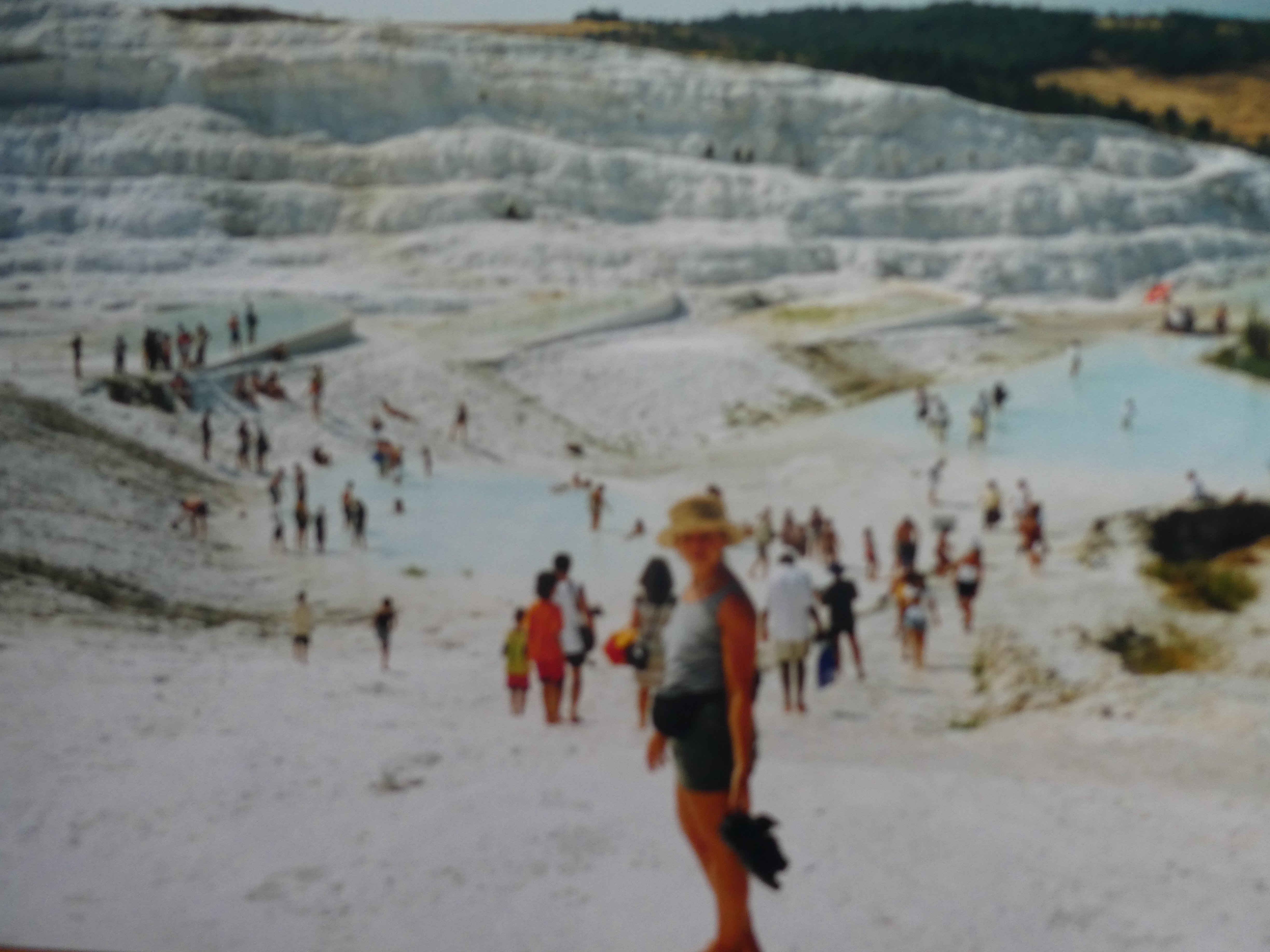
The second day of our trip consisted of a visit to Pammukale, a stunning natural formation of calcium pools that cascade down a mountainside. I’d visited before, when none of it was fenced off and visitors could wander down and in and out of the warm, cloudy water in the saucer-shaped pools as they pleased. By the time I went with Husband the powers that be had grown wise and cordoned off the majority of it, leaving just one or two areas for a paddle or a bathe. Before I’d ever visited Turkey I’d never heard of Pammukale and I’ve subsequently wondered why it isn’t much better-known, as it is a natrual wonder of the world!

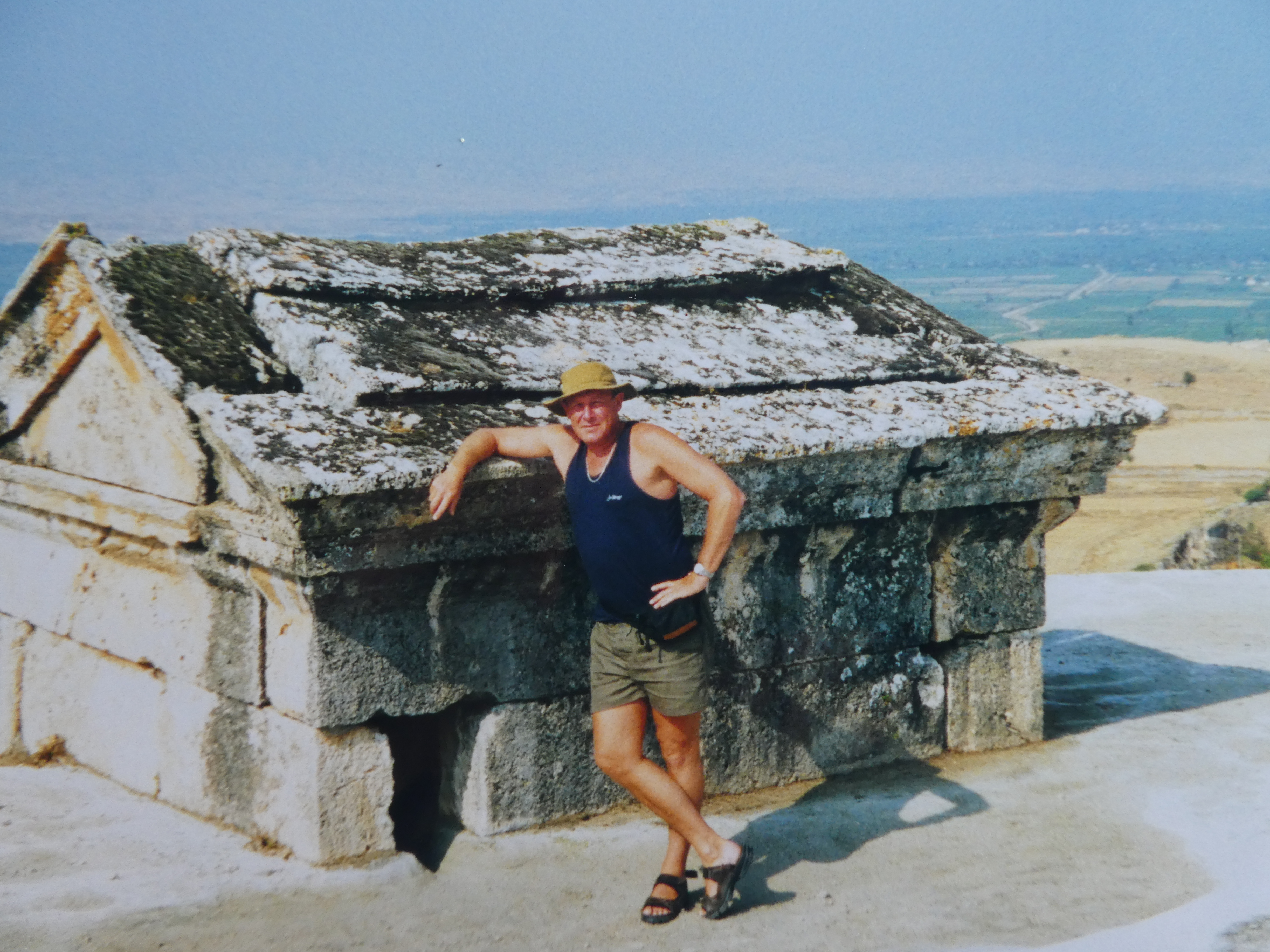
Above Pammukale lie the ruins of Hierapolis and a hotel where we lunched after swimming in the warm, sulphorous waters of its pool, among columns and relics long fallen. To swim in such a place leaves a lasting memory. We journeyed back to Cesme and I was struck by the vast amount of ancient history, aged architectural remains strewn around in the open, uncatalogued and unremarked.

A Turkey Tale

Years before I ever went to Turkey I imagined it to be an exotic, other-worldly and faintly menacing country, where west meets east; a land of flying carpets and genies, of spice markets and steamy bath houses. And in some respects, as I found on my first trip there, I was not too far wrong.

For a start Turkey has a long and successful history of catering for tourists and has been embraced and courted by the package holiday industry for many years-and why not? The weather is as reliably warm and sunny as Greece, the coastlines are beautiful and there is a wealth of history to be explored in the numerous archealogical sites scattered everywhere.

For all of these reasons-plus the fact that we could afford a week in spring [when more northerly travel would preclude tent camping] in a basic hotel despite all the calls on our income, we got a package holiday to Cesme, an attractive enough seaside town in the Bodrum region. It would be my second visit to Turkey.

The two star hotel was on the outskirts of the town, but the room was small. It had a miniscule balcony, of sorts, overlooking the pool, where we were soon to discover that the pool barman had an obsession with Donna Summer-and more specifically with her disco hit ‘Hot Stuff’. The song played on a continous loop day and night-not condusive to peaceful sleep. In addition to this, in the ‘en suite’, a shower room barely spacious enough to accommodate a skinny body, the dangling light fixture dripped water. Horrors!

We moved room, although nowhere was far enough to escape Donna Summer. Other than the shortcomings of the hotel though, we were happy with our location.

Though there are limits to what you can do and see in a week’s holiday we like to do more than loll around on a pool side and we were eager to look at the local beaches so despite the heat we decided to walk to ‘Altinkum’ [Golden Sands] and once we’d set off it became clear that few others used feet to get to this stunning stretch of coast, but get there we did, via roads past fields of luscious water melons. En route, on a quiet stretch we passed a lonely roadside restaurant which looked a good bet for our evening meal.

We spent the day at the beach, snacking on freshly roasted corn cobs from beach sellers when we felt peckish.

When we were ready to return we decided to try a Dolmus. They are cunning minibuses that zoom about and stop to pick people up when they are hailed from the roadside. You simply take a seat inside and pass the fare up to the driver via the other passengers. It is a fine idea and works well. We took the Dolmus back as far as our restaurant and stepped inside the cool interior.

When we discovered that there was no menu we realised this out-of-town restaurant was a favourite for locals and that, as tourists we were a little unusual. There was no English spoken and Turkish is not a language I’ve studied, but the smiling restauranteurs were undeterred and we knew ‘meze’ so we could start with that. We sat on the shady veranda with our small sharing plates of tasty things and glasses of wine. When it came to ordering our main course we were shown a large polystyrene box containing a variety of enormous fish and invited to choose one, which we did, pointing to the nearest.

We’d stopped quite early at this out-of-the-way restaurant so it was quiet, except for an occasional Turkish diner arriving by car.

In fact, so delicious was our out-of-town meal we returned to our hotel with a more indulgent attitude towards Donna. But then we were to escape the hotel for a couple of days for a thrilling excursion…

Tented Travels. Portuguese Tours and Tribulations.

After having explored the area around Ancora and its beaches and experienced an eventful time in Porto [as described in last week’s post] we determined it was time to up tent poles and meander southwards down the coast.

There is as much of an art to dissassembling tents as there is to erecting them-more so sometimes. The borrowed pyramid tent was large and we were only beginning to get a technique for using it, especially folding it small enough to cram into the bag. When we came to collapse the tent ready for folding we discovered, to our horror that the beautiful conifer that had provided our shade in this corner of the site had also dripped unsightly resin all over the pale beige canvas, leaving it stained and blotchy. We were horrified. This tent had been kindly loaned by one of Husband’s colleagues. Whatever would they think of us returning it in such a terrible condition?

Perhaps the elderly Portuguese neighbours who’d been so ready with the advice we didn’t understand had been trying to tell us this all along?

For now though, there was nothing to be done so we packed up and departed to have a look at some more of Portugal, winding up at the whimsically named Figueira da Foz, which was then a modest seaside town with an attractive sea front and of course, beautiful, surfable waves. I believe that, like most places Figueira has undergone significant development in subsequent years but then it all seemed quite basic and unspoilt.

After we’d settled we wandered along for an evening drink at what appeared to be the only seafront bar. The night was breezy and the prom almost deserted, but there were lights on and as we pushed the door and entered there was only one group of revellers inside-a family enjoying a birthday celebration. We sat down to enjoy a glass of wine, making for a table a little apart but soon we were sucked into the revelries just as if we were distant relations, and plied with slices of birthday cake.

At the time, there were few sites near enough to Lisbon to make it easily accessible, but we could drop into the beautiful old city for a day en route south towards Portugal’s corner, which we did, strolling the lanes and gazing at the iconic funiculars and elevators. This first visit to Lisbon was quiet and untroubled by traffic whereas a subsequent trip saw us mired in gridlocked jams and breathing in noxious fumes during an open-top bus tour. How times change!

On we went to Sagres, in the south west corner before the coast turns into the popular Algarve. Here it was wild and breezy. We camped in a small, wooded site and were delighted to help out our young, Portuguese neighbours with the loan of a tin opener! At sundown people congregate to watch the sun set on this furthest west point of mainland Europe, perching on the rocky clifftops above frothing waves. It is a lovely place.

We bimbled [Husband’s word] along the Algarve, avoiding the high-rise hotel developments where possible and eventually on back up through Spain and France. At some point we had to pack the ill-fated pyramid tent wet and discovered it had torn in a couple of places. Horrors! Now it was stained, wet, torn and sporting gaffer tape. Stopping at a motorway service station we removed it and attempted to dry it out, with limited success. There was no way we’d be able to return it in this parlous condition. We’d simply have to buy the kind lenders a new one-and keep this one….which we did!

Tented Travels: Porto-a Divine Debacle

Now where were we? Ah yes-Portugal, the west coast, staying at Praia di Ancora, having pitched our borrowed, pyramid tent [disregarding advice from our elderly Portuguese neighbours, whose comments we could safely disregard by claiming ignorance of their language]. A few kilometers down the road lay the attactive town of Viana do Costello where we could get a train to Porto, thus avoiding the need to find a parking place in a city where streets are narrow enough to string laundry across between the homes.

We parked the trusty Peugeot in the station car park and went to buy tickets. But what a spectacle the interior of the station was! Every wall boasted stunning tiled murals in customary blue and white. Here was a beautiful art gallery before we’d even left! In our innocence we bought return rail tickets and established the latest return time. Then we boarded and sat back as the wheezing, rumbling train took us down the coast.

Porto [or Oporto to the Portuguese] is a stunner of a city, tall umber houses squeezed together on the slopes down to the Douro river and dotted with old churches, frescoes, balconies-all with that beautiful decadence that only grand old cities display. My favourite streets are the narrowest, cobbled and where the balconies almost meet in the middle, as I said-strings of laundry across them.

On the River Douro there are traditional Rabelo boats that were once used for transporting wine barrels but can now be used for tourist trips. As we sat down by the riverside we peered into the waters where the river was boiling with thousands of fish, so that you might be tempted to reach in with a net and scoop some out-until you notice that what is attracting them is a sewage outlet…

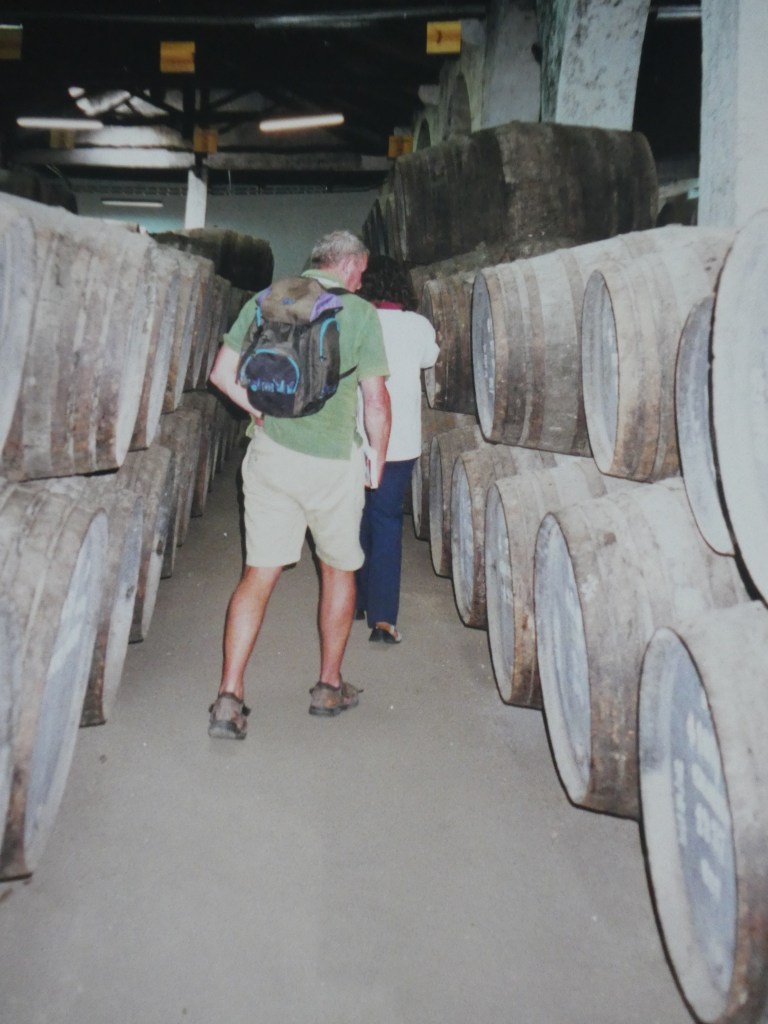
No visit to Porto is complete without looking at a Port lodge, of which there are many; cool, cavernous warehouses accommodating rows and rows of barrels full of delicious port in various stages of maturity; Heaven for Husband, who has a penchant for port.

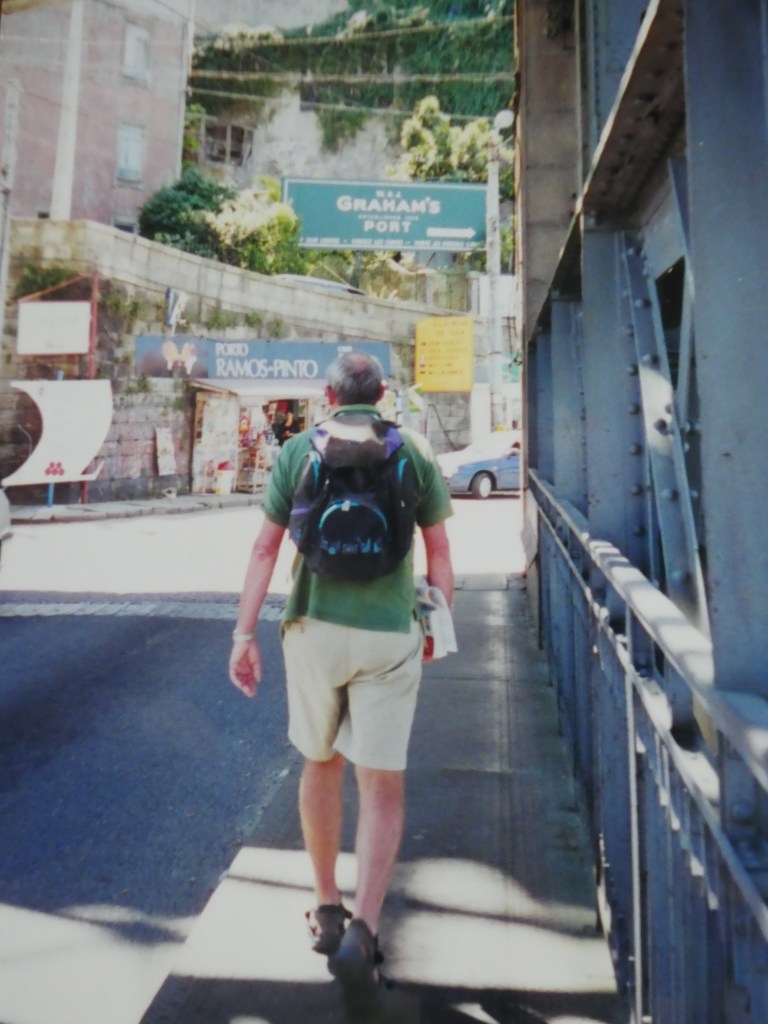
At last we felt we’d done Porto justice and began to consider our return to Viana do costelo. We wouldn’t want to miss the last train back. We returned, footsore by now to the station and presented our tickets. And this is where the vagaries of timetables, coupled with breakdowns in communication failed us. ‘Ah no’, declared the gentleman in the ticket booth. ‘The return train does not leave from here.’ Who knew? How foolish of us to imagine for one moment that our train would be returning from the point where we’d left it? And of course, the station from which it would leave was now too far to get to. We had missed it. But he offfered us one glimmer of hope. A late, late ‘milk’ train would be trundling up the coast in the small hours and we could get back on that.

While it was a relief to learn we weren’t entirely stranded we were left with the conundrum of what to do with our evening and opted for a long, leisurely meal. We found ourselves drifting along to the port area, where a swathe of restaurants fringed the dockside, then selected one. It was quiet, early and there were pleanty of empty tables in the long, thin dining area past the bar. We soon had the feeling that tourists were not regular visitors and this was reinforced by the way the waiter ran to get me clean cutlery when I knocked a knife on to the floor! Though I’m sure the meal was delicious and would have been fish-biased my memory of it is eclipsed by the thrilling sight of a regular who’d been drinking at the bar being roundly ejected by the seat of his pants-an entertaining event.

We spent as long as we were able with our meal, then with drinks, until we could reasonably toddle off to get our train, by which time we were full of food and wine and very sleepy. The train’s old-style compartments seemed inviting and I felt anxious that we’d travel past our destination if we slept too soundly, but we managed to exit the train at Viana and arrived, very late to our site. We’ve been caught out by timetables on plenty more occasions since then!

The Travelling Sofa of 2020

We must not complain. It’s been my silent mantra this year. Be glad we are safe, well and adequately fed, live in a lovely home in a pleasant place. Nevertheless this has been the first year for almost thirty years we haven’t crossed the water to Europe and set off, meandering with no fixed plans and half an eye on the weather forecast.

We have, in fact holidayed during 2020. Way back in February, in what seems like a century ago we took the plunge and went off on our pre-booked, long-haul, winter sun trip to Thailand, to Koh Samui. We deliberated, yes, worried, yes, took advice, yes-and then went, carrying face masks, hand gel and all the paraphernalia we have subsequently become accustomed to. It was tricky; hot, suffocating queueing in Bankok airport wearing masks, but now I look back and am so glad we braved it. Our ten days was wonderful, with no virus on Koh Samui, everything relaxed and easy.

In the summer we were able to get away to UK destinations in our camper van, starting with a cautious outing locally, down the coast to Osmington near Weymouth. We became more confident and travelled to Suffolk for a couple of weeks, looking at a part of the UK we are unfamiliar with. Later on we stayed in Cornwall, the sites busy but safe so that the trip felt almost ‘normal’. All these trips are documented on Anecdotage in previous posts.

We have not planned any travel for 2021. Unlike many, I’m not expecting a miraculous transformation of our viral fortunes just because it’s a new year. We are consistently [and annoyingly] reminded that ‘the virus doesn’t recognise Christmas’ so why should it then recognise that the date has changed?

Instead I’ve daydreamed, ogled at and imagined all the places I’d still love to go, as yet unvisited or fond favourites we’ve returned to many times. Here then, in no particular order is my list.

New to us

* Canada. We went to Canada for a few hours, once, walking across the border at Niagara from the USA. Perhaps we’ve watched too many snowy landscaped serial killer thrillers [including the excellent ‘Cardinal’] during lockdown, but I feel myself drawn to those vast frozen expanses and opportunities to see bears and whales. A rail trip through the Rockies would make a wonderful addition to a visit, too!

*Likewise, Iceland. Without the polar bears and whales but with hot springs and a chance to see the Northern Lights, perhaps. Scandinavia has been another source of serial killer TV entertainment this year, with Iceland’s own, bleak contributions.

*Santorini. I’ve visited many of Greece’s gorgeous islands, but have still to set foot on Santorini, with its towering cliffs and nearby volcano. I believe it does suffer from heavy tourist footfall but this does not prevent me dreaming about standing and taking in those views with a stunning sunset.

*St Petersburg. I may be basing my desire to see St Petersburg on screenings of films like Dr Zivago, but portrayals of this iconic city look impossibly romantic.

*Rorke’s Drift. I’d like to visit this site, famous for a battle during the Zulu wars, for personal reasons. An uncle on my mother’s side of our family won the VC at the battle, for defending the place [which was a hospital and stores]. He is depicted in the film, ‘Zulu’. I’ve little interest in safari holidays, but this is a part of Africa that tempts me. I’d also be excited to go to the Victoria Falls, of course!

*In due course, the USA may become visitable again, now that a sensible choice of president has been made. I’d love to see southern states and also to explore more of the East Coast.

Old Favourites

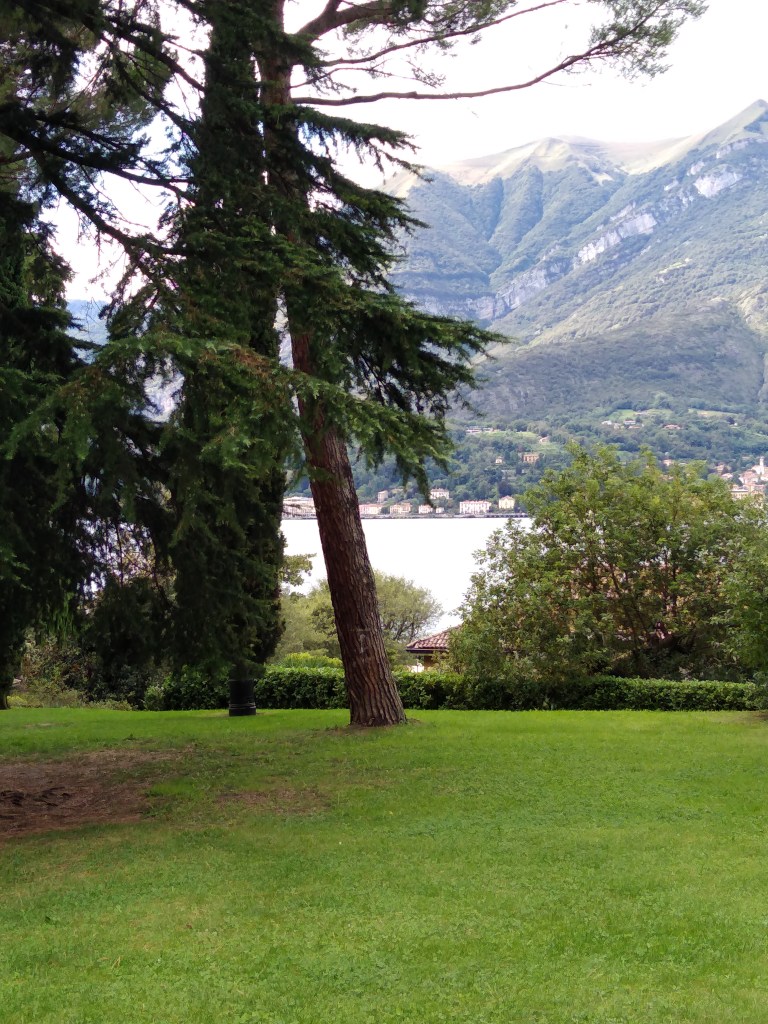
*The Italian Lakes. In 2019 we made a late summer trip to Lakes Lugano, Como, Iseo, Garda and Maggiore. Every lake was sheer magic, each with its own character and features. Each lake was a wrench to leave-until we arrived at the next. The lakes are like a siren call, with their beguiling sunsets and abundance of art. Let me at them!

*Croatia. A stunning, unbeatable coastline and islands. And Dubrovnik is one of my favourite European cities. Then there is Plitvice-a world heritage lake site with astonishing waterfalls, an unforgettable experience.

*Romania. Strictly speaking it isn’t an old favourite, as we whisked through on our return from the Greek mainland, but the brief glimpses we got made me long to go back and explore properly. Transylvania next time!

*South West France. We’ve spent more holiday time here than anywhere else, so much that there is nowhere from Bordeaux to the Spanish border we havent been! But it is beautiful and feels like home each time we go.

There are countless more places-places I only visit on my travelling sofa. I can’t complain. Until we are set free again I’ll continue to sofa-travel-and maybe you, reader can achieve some sofa-trips of your own? Have a Happy New Year in whatever way you are able!

Tented Travels-Portugal

Back in the 70s and 8os I seem to remember Portugal having a reputation for being expensive, but one of our early tenting expeditions in the 90s was to this small, sunny, friendly country tacked on to the side of Spain.

By the time we got round to our Portugal trip we’d upgraded from my ancient Volvo hatchback to ‘Mick’, Husband’s beloved Peugeot Estate, a heroic vehicle that took us thousands of miles and accommodated tons of equipment. We’d also swapped the aged, leaking frame tent inherited from my parents for a [admittedly borrowed] ‘pyramid’ tent, which was beautiful and roomy, but involved someone [ie me] crawling underneath the skirt of the tent to hold the central pole up while Husband secured the guy ropes. In hot weather this could be a sweaty task.

We still needed to make overnight stops in hotels and since a road trip to Portugal involves passing through Spain we had no option of a ‘Formule 1’ as we did in France, so we had to find somewhere en route, which we did, and perfectly acceptable I believe it was.

We cut off the corner of Spain and entered into the north of Portugal and to the coast. The west coast is green and less built up than the popular Algarve, which accommodates large numbers of package tourists every year. Husband was into body-boarding and was keen to try the waves in this area, which are great for surfing. We stopped at the small seaside town of Vila Praia de Ancora, where a large, wooded site gave access to the beach across a railway line and found a corner to begin setting up the pyramid tent.

It is customary on a site for those already installed to show an interest in new arrivals. On this occasion we were ‘helped’ by a Portuguese gentleman nearby, who was keen to advise where our entrance should face etc., whereupon we determined the entrance should face away from our neighbours.

The little town was [and still is-we’ve been back since] delightful, boasting beautiful sandy beaches and characterful streets with restaurants and bars [then, at any rate]. We got our first experience of Portuguese hospitality and cuisine, eating in a modest town restaurant, characteristic of so many in the area, with simple but delicious food and wine sourced from the local district. And as tradition dictates, our menus were accompanied by tasty nibbles-a lovely touch.

Our site was a short walk from the town and also close to a handy Intermarche supermarket. We also discovered that the railway behind our site could give us easy access to Porto, further south down the coast, which meant we would not have to up poles and move from this perfect spot. We’d need to drive to Viano do Costelo, a short way south, and park there to get a train. Wonderful! What could possibly go wrong? …

Tented Travels Portugal continues in the New Year 2021. Anecdotage’s next post will be my travel review of the year-a little different this year. In the meantime, I’d like to wish all regular readers, followers and visitors a safe, healthy and happy Christmas, wherever you are. And thank you for visiting!

Tented Travels 2. Early Days.

Looking at old photos from our 90s camping expeditions, it’s easy to assume that the sun always shone, that nothing ever went wrong, that there were no problems to overcome. The trips were lengthy [as they often are nowadays, too], we needed to work out where campsites were, public transport options, timetables, routes. There was no internet to consult, no smartphone to rely on, no holiday ‘rep’ to ask, no coach tour. We relied on publications like ‘Rough Guide’, which were ground-breaking in their day, as well as atlases and local tourist information.

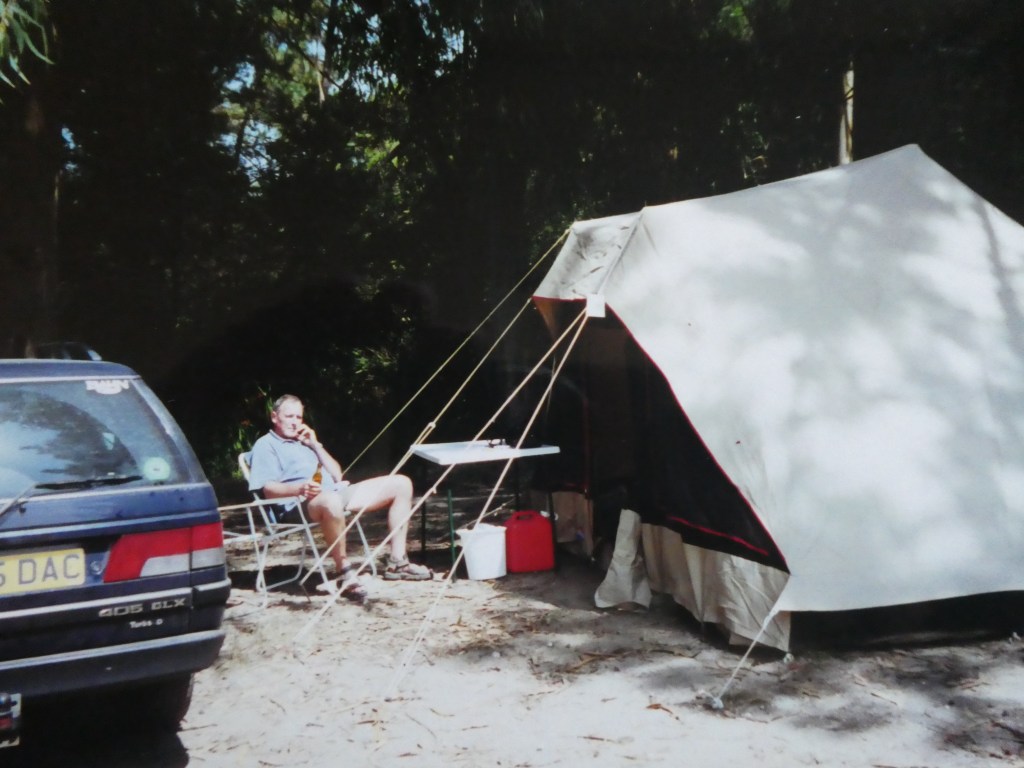
A photo of that first, thrilling trip to Italy in my ancient Volvo with a roof-rack [which I’d been lucky to pick up at a local auction] shows a typical scene-pitched up old frame tent on a sunny, pine dotted site, a glimpse of the bikes [useful for local shopping and for leisure rides], a towel draped over a wing mirror. I’ve no clue where we were at that point, but I’d guess at the south of France, since the scene could be any one of hundreds of sites in that area and we’ve visited or passed through more there than anywhere else.

Back then our trips were confined to the long summer holidays, when we’d have the time to go long distance and forget about the stresses of our busy teaching jobs.

I do remember wandering around Monaco [my second visit] and pursuing a mission to get Husband’s passport stamped. This was something I’d got on my first visit and was heartily proud of, a piece of bureaucracy long since abandoned. We travelled via both the French and Italian Riviera, taking a look at St Tropez, Juan les Pins, Nice and Cannes en route.

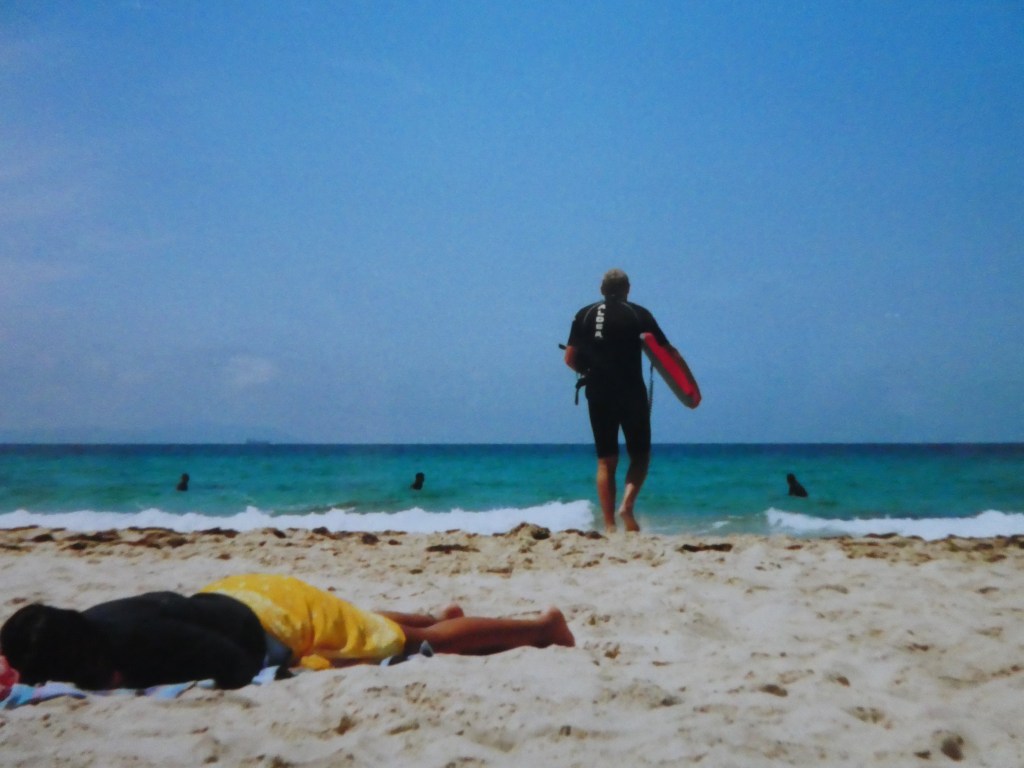
That time, we drove as far as Viareggio, on the Italian west coast, stopping at a site belonging to an eccentric collector of vintage cars. We spent some time on the beach, as well as making trips to both Florence and Pisa. In those days I’d need to sleep a great deal to get over the long summer term of teaching I’d had and had perfected the art of beach snoozing, despite it leading to unsightly dribbling and snoring.

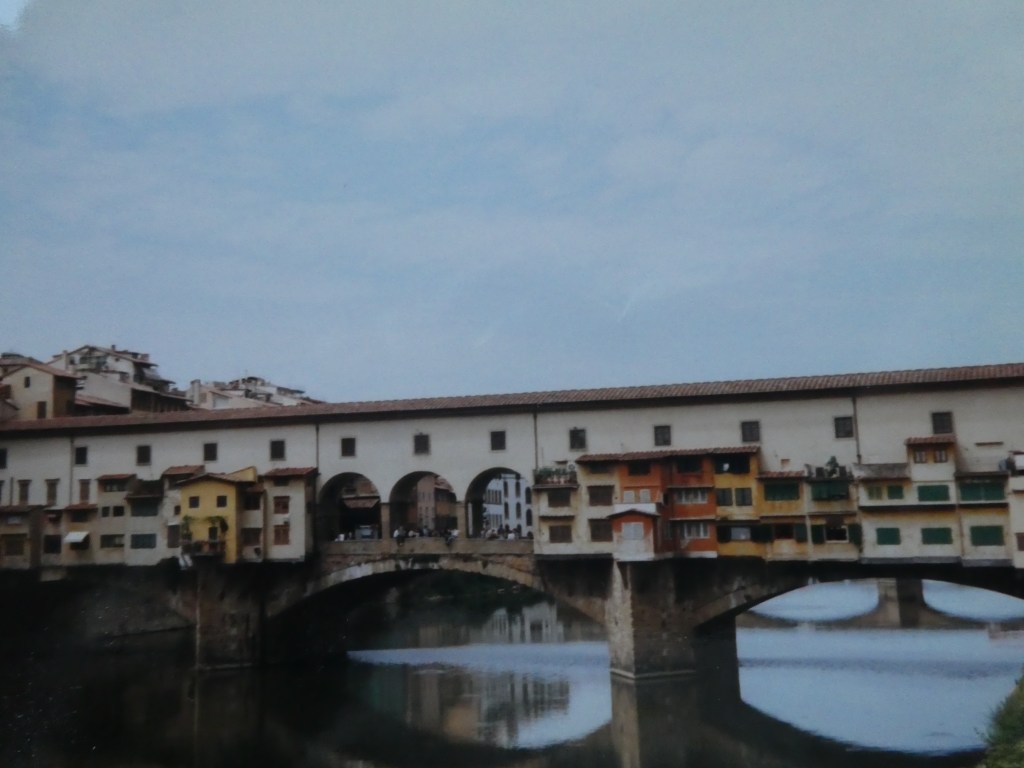
In one of those bizarre coincidences we happened upon one of my daughter’s school friends as we walked past a row of tourist stalls on the way to the Ponte Vecchio. She enthused to us over the array of tourist tat on display whilst standing with her back to Florence’s famously beautiful bridge with its umber and pink hues, straddling the Arno river. Walking across makes you think of how London Bridge must have been when it was similarly lined with shops and dwellings, their overhanging eves almost meeting in the middle.

We managed to be photographed in front of the leaning tower at Pisa without feeling obliged to pretend to hold it up. I suppose a passer-by must have taken the shot, since this was long before the ‘selfie’ era [regular readers will Know I’m not a devotee of the selfie cult].

So with very little in the way of swanky equipment we’d embarked on what was to be a long [and continuing] series of European tours, with many adventures thrown in!

Tented Travels-1

Before we got our first van, during our first few years together Husband and I toured European countries using tents. This was in part due to the penurious nature of our lives [we’d come together in similarly, newly-single circumstances] but also knowing that travel was a shared interest. We’d also both gained plenty of experience as campers from both childhood and as adults. I’d already single-handedly hauled four children off camping in my battered Volvo, with mixed results.

One of our very first trips as a couple was to the South of France and on round to the Italian Riviera, then Tuscany; an ambitious holiday to undertake in my ancient car with my parents’ cast-off frame tent. In its heyday, the tent had already been many miles, but still had some usage in it. Nowadays of course, tent technology is much advanced and bendy hoop tents have more or less taken over the camping market.

Husband, ever the map fanatic, is a competent route planner. We travelled down the centre of France. Overnight stops are tedious when using a frame tent, so we planned our sleepovers using Formule 1 hotels. For the uninitiated, these are remarkably cheap, chain hotels dotted all over France on industrial estates. They are clean and comfortable, and usually situated next to a budget chain restaurant, too. The drawback is that the rooms do not include en-suite and employ a colour-coded system for the bathrooms, which is tricky if you need the loo during the night, since the rooms are accessed by numbered code. We used to overcome this by leaving a shoe lodged in the doorway when we dived out at night. Red-doored rooms must use the red-doored lavatories, and so on, which might mean a bit of a trek.

On our odysseys through France we still see Formule 1 hotels, flanked by Buffalo Grills or some similar restaurant, although they’ve largely been superceded by Premier Classe hotels, superior only in that they have a tiny, integrated toilet and shower cubicle in one corner.

I’ve no idea whether, in these early days of tent touring, discount camping cards existed, but if they did we had no knowledge of them, no ACSI or Camping and Caravan Club cards. We simply did a day’s travel, stopped to look for a site and pitched up.

To begin with we had lilos, inflated by foot pump, and sleeping bags which zipped together. After a couple of trips I decided I’d become too old to dive out and across fields for the loo, so Husband recycled an old toilet seat by attaching it to a bucket. This became the precursor of the porta-loo.

Our tented trips were made not only from necessity, but for preference. We’ve always enjoyed the freedom of touring this way, but there is something magical about sleeping in a tent-a magic that I still feel nostalgic about, even though we’ve swapped tents for vans. It’s something about how close you are to the air, warm and cosy with a waft of breeze and a gentle flap of canvas…magic!