Popping out for Pop-Art

Bilbao’s bus station is impressive- a large, modern, red cube with escalators, ticket barriers and a tapas bar. As we exit into a large square next to the equally impressive stadium, we make sure to imprint the position and road names in order to find our way back. We’ve neglected to pick up a tourist map for this excursion, which has been impromptu.

We’ve one main aim in mind for this trip to, which is to visit the Guggenheim. Previous visits to Bilbao have only been for ferry purposes, so it’s high time we looked at the city and this iconic gallery.

With no map and no indication of where the gallery is, we turn left out of the bus station and vaguely downhill. I know the Guggenheim is by the water so it seems to make sense to go downhill and this turns out to be correct as at last we find some signs. Further down the hill there’s a big roundabout with a very tall statue of Christ and we need to negotiate our way around and avoid occasional trams, taking a right hand turning- then there’s a beautiful park containing elegant pergolas, followed by some hugely tall skyscrapers. We walk on until, at last, the iconic Guggenheim comes into view, sitting in landscaped gardens and yes- by the water.

People’s views on architecture differ, but I like any building, old or new, as long as it is characterful- and the Guggenheim has character in spades. Of course, I’d have preferred to have seen it on a sunny day, nevertheless the sinuous, glossy walls of the building are glorious- organic, bulging curves. To begin with, we walk past, along the waterside and past the stallholders with their trinkets. Outside, here on the pedestrian-only walkway theres a giant, sculpted spider and of course, many of the stalls sport mini versions of it.

We’ve got one bit of luck [after a miserable run of glitches] in that the Guggenheim is showing a pop art exhibition with some extremely famous artists’ work, which is irresistible. We walk up the wide steps to the entrance and buy tickets. The inside of the building is equally mind-blowing as you look up towards the top floors and it’s light, with vast, twisty columns, a voluminous space.

We go first to a vast hall containg one, gargantuan sculpture by Richard Serra, an artist who has only just died a couple of days ago, which gives it all a poignancy. The sculture.called ‘A Matter of Time’, consists of huge steel curves, some concentric, others independent, the steel weathered to a rusty bronze. It’s beautiful and sensual and can be walked around and touched, the surfaces smooth or textured. We spend some time here- at one point getting uqite lost among the maze-like structures.

On the upper floors we find Warhols, Lichtensteins, Rothkos and much more besides- in one room a large Gilbert and George mural. It’s all thrilling and absorbing and comes some way to compensating for the wretched time we’ve had on this, our first foray overseas since serious illness and major surgery blighted last autumn.

There’s not a lot of time left after the gallery- just enough for a visit to the cafe and a look at Jeff Koons playful, planted sculpture of a puppy, all covered in living flowers.

We walk back to the bus station and the trouble really starts…

For fiction by me, Jane Deans, search for novels: The Conways at Earthsend [an eco-thriller] and The Year of Familiar Strangers [mystery drama]. Visit my website: janedeans.com

A Brief Sunny Interval at Islares

We’ve stayed here, at Islares, before, another occasion when we’d needed to get home earlier than planned. I recognise the site when we pull in; a green, daisy- strewn field next to the sea. There’s loads of space, and, best of all, the sun is out. The journey here has been pleasant and I remember how beautiful the north coast of Spain is- rugged and glorious.

There aren’t many places to walk here, but outside the camp site gates you can stroll up to the seaside bar and watch the waves crashing in against the rocks in fluffy plumes. When the sun comes out it actually feels hot, so having walked up and around the path a little we return, plonk down at a table and have beers in the sunshine. It feels, on this penultimate day, like a proper holiday at last- except we’ll be setting off home the day after tomorrow.

Back at the site, we scrutinise the bus timetable for tomorrow’s jaunt- a day’s sighseeing before we depart. We can get to Bilbao by bus from Islares, although it’s two buses.

The site here has its own, modest cafe/bar and we opt for this, rather than the posher place where we had our beers. It just has a few tables, formica topped and a small selection of meals, from burgers to paella. Since we can’t order until 8.00pm, we choose to prop up the bar with a beer. At 8 a few people drift in and sit and we decide on paella which, at 12 euros is a no-brainer, besides- a Dutch couple who’ve arrived to the site after us and parked nearby have ordered it and it’s looking delicious.

The paella arrives in a large, traditional dish. We dig into the fragrant rice and it’s full of wonderful, fresh seafood as well as topped off with giant langoustines. We’re happy.

Next morning we trudge up to the main road above our site and walk along but there’s no sign of a bus stop. We backtrack a little but by now the bus is due, which is worrying. I waylay a passer-by and launch into my woeful Spanish: ‘Senor- donde esta autobus?’ It will do! He gestures further along the main road, gabbling furiously, then gets into a car. He pulls alongside us and indicates that we should get in, then takes us up the road to the bus stop- a kind stranger!

After a while a few other passengers arrive to wait, then a small bus comes along and we’re off towards a town called Castro Urdiales, where we must change buses, ‘at the bull-ring’ as we’ve been advised.

The older I get, the more I enjoy bus rides and there are all kinds of reasons to use public transport, not least the convenience of not needing to find a parking place or worry about traffic, or the route. So we settle back to enjoy the ride and the scenery as the bus meanders in and out of villages and round the houses, until at last we’re in the outskirts of the town and we must pay attention in order to get off at the right place. Castro Urdiales is a sizeable town, with a seafront, all attractively landscaped and an obvious tourist destination.

We spot the bull-ring and get off, although there’s no obvious sign to where we catch the next bus. But there is a large coach parked in a space by the wall of the bull-ring and it’s complete with driver, who assures us that yes- it’s the bus for Bilbao. Hooray!

For fiction by me, Jane Deans, search for novels: The Conways at Earthsend [an eco-thriller] and The Year of Familiar Strangers [mystery drama]. Visit my website: janedeans.com
Back and Back…

It’s become clear, on this terraced camp site opposite an industrial estate in Caceres, Spain, that our electrics are not going to work in any of their sockets. Worse still, it seems that the problem is ours, not theirs. Everyone else’s van is plugged in and working fine. This is a major hitch to our plans. We can cope for two days on battery power before we need to move and charge up, but we’d planned to stay longer in some of the sites we’ve booked- one, on the coast, almost a week.

Husband goes down to reception and returns triumphant, bearing the name and address of someone in the industrial estate who could help. The man in reception had been kind and helpful. We pin our hopes on the name and address and settle in for the evening. I’m relieved to have had a shower in the cleaner bathroom, as although the ranting French lady and her husband have moved on, they’ve been replaced by a Dutch couple.

By morning the weather hasn’t improved and it’s colder, overcast and breezy. With the address of the electrician in the SATNAV, we plunge into the industrial estate, pulling in at a forecourt. The helpful campsite reception man has phoned ahead to alert him, explaining that we are English and a youngish man appears, brandishing a phone, on which he has downloaded the language app. It takes no more than 30 seconds for him to shrug and shake his head, once he’s seen the set-up. That’s a ‘no’ then.

We trundle round the roads of the industrial estate in the remote hope that there’s somewhere that might help and I try one or two likely places as well as some unlikely ones. Eventually we decide it’s no-go. I begin to feel that this lack of interest is more to do with the impending Easter holiday than anything else. Everywhere is winding down. Everyone is focused on their time off.

There’s nothing for it but to turn back, so we set the SAT back to Salamanca and get back on the motorway. At the whizzo services I go inside for over-the-top chocolatey pastries to revive our flagging spirits, then we’re on again, back to Salamanca, where, at least we know there’s plenty of space. The weather continues to get colder and there’s a nasty, biting edge to the wind.

When we turn into the entrance to ‘Don Quijote’, the lovely Salamanca site, I notice a building we hadn’t seen before- ‘Motorhome Services’. Motorhome Services! I experience a frisson of excitement. We’ll check in and investigate, though it has some hefty gates and they are closed. We check in and enquire at reception, where the man says they might help, although holidays are fast approaching and they’ll be wanting to get their existing work finished beforehand.

On the site, everyone is swathed in puffa jackets, hats and scarves. It is perishing cold now- 3 degrees! We won’t be getting chairs out for a bask in the sunshine. We wait until the motorhome place is open then take the van along there. A woman emerges from a large hanger and beckons us in. She looks. She has us plug in to their socket. It blows. She shrugs, shakes her head. I feel my shoulders sag.

In the morning we track back towards Burgos. It’s now Wednesday and we can’t get a ferry home until Saturday so we opt to spend two nights. We can hunker down with books and at least now we have internet. We check back in. The wind is blowing horizontally across the site and I’m hoping a tree doesn’t fall on anyone. In the evening we go to the restaurant for a change of scene.

The afternoon of the following day is brighter and we stretch our legs with a bracing walk around the extensive park by the site. It’s been landscaped with barbecues and footpaths, one of which follows the river. Along the way we encounter more pilgrims with their walking poles and large backpacks. Presumably they’ll be trekking to Burgos for the Easter shindig.

We leave next day and head to a site on the coast between Santander and Bilbao where we’ve stayed before. We’ll stay our final two nights there- and we have a plan for our final day…

For fiction by me, Jane Deans, search for novels: The Conways at Earthsend [an eco-thriller] and The Year of Familiar Strangers [mystery drama]. Visit my website: janedeans.com

On to Salamanca

So we leave Burgos and continue down towards our next stop, Salamanca. The Spanish motorways are excellent; toll-free, quiet and well served with service areas, although they do vary quite a bit, some being right by the roadside, others a detour into a village. Some of the roadside ones boast modest hotels, together with a host of facilities including cafes and shops. Others may just be a petrol station with a coffee machine.

We take a break, veering off to a village gas station where a man emerges and dolls out the diesel rather than it being self-service. This is endearing, a step back in time for us. There is a small parking area and three picnic tables beside the petrol station and as it’s fine enough to sit outside we have coffee at one of the tables, entertained by a stream of hikers, pilgrims making their way along the path towards Santiago de Compostela. At this stage, close to Easter, it seems unlikely that they’ll achieve Santiago, but perhaps they use a cheeky bit of public transport? Or is part of the way enough? At one point an entire family turns up in a 4×4, get out, smoke cigarettes, change their shoes and set off walking…

It’s not too far to Salamanca. For those who haven’t been to this most gorgeous of cities, it is well worth a visit- a historic centre of beautiful buildings of golden stone- best seen in sunshine, when the yellow stone zings. But again, we’ve been before and it’s not our destination this time so we check in for one night. I remember the site, tidy and tree strewn, by a river, with a cycle/footpath leading into the city. The sun has enough warmth for us to get chairs out for a bask, which we do. There’s also a tempting looking restaurant at which we just about manage to squeeze a booking by saying we’ll go at 9.30pm. It’s a wonderful meal, though and worth the wait, and while we feel it’s late for us to be eating there are many coming in later still on this Saturday night- some at 10.30pm! This is Spain, after all, with a culture of late evening dining that includes small children, too.

We’re off again in the morning, the weather having turned more gloomy, but we strike out on the road to Caceres- another city we’ve visited in the past, memorable for its nesting storks on every lofty perch, its wacky Easter parades of floats and pointy-hat adorned bearers and its huge plates of beef. En route we stop at a wonderful service area with a fruit and veg stall, shop and cafe, where coaches are pulling in, presumably carrying Easter travellers. Easter is a big holiday for the Spanish and everyone, it seems, is on the move.

By the time we get to Caceres there’s a strong breeze blowing. We locate the camp site but it’s not one we recognise and I’m at a loss to recall where we staryed last time. This site is opposite and industrial estate and is terraced, with pitches housing individual bathrooms, according to our ACSI book. We check in and find our pitch, which is under a large tree. When I take a look at the bathroom I’m less than impressed. It’s grubby, with leaves blown inside and furniture piled up in the shower cubicle.

I go in to put the kettle on while Husband grabs the cable to plug the van in. But there’s no power. He tries the socket in the neighbouring [empty] pitch. No power. He goes to reception, where he’s told it’s ok to use next-door’s socket, although it’s becoming clear that something is badly amiss. Next door’s bathroom, however, is altogether cleaner, so I get a shower in there before anyone else turns up- which they do- a massive motorhome and a woman gabbling a tirade of French at us with no thought that we might not be compatriots on this Spanish site…

For fiction by me, Jane Deans, search for novels: The Conways at Earthsend [an eco-thriller] and The Year of Familiar Strangers [mystery drama]. Visit my website: janedeans.com

Caught without a Web

We arrive to the camp site at Burgos. We’ve been here before, years ago [and a similar time of year] when the weather was bitter cold and miserable and everyone was wrapped up in thick coats and woolly hats. Today, though, it’s warm and sunny, and since we didn’t get to look at Burgos last time it seems like we can now.

But there’s trouble ahead. Having parked up, plugged in and put the kettle on it looks like the swanky, new Avtex internet device Husband got installed into the van isn’t working, although it certainly did work at home in the UK. We try various options, type in assorted numbers on devices, turn off and on [as one does]. On my laptop, a page prompts me to type in a phone number and all numbers are rejected. I begin to feel frustrated. I call ‘3’, the provider whose page comes up. I have an increasingly stressful conversation with a distant, heavily accented ‘3’ assistant. I feel hot and irritated and am told to stop by Husband, which I do. Worse still, the site has no wifi.

In reception, Husband is given directions to a shopping centre which we can visit tomorrow to seek out, perhaps, a solution.

Next morning is sunny again and after coffee we set off to ‘Al Campo’ in the town, which turns out to be a large shopping complex with plenty of parking opposite. Inside, the first sighting is a small booth of a phone shop. The assistant shrugs when we ask for help and shrugs again when we ask if there’s somewhere else. Upstairs it’s the same story. Defeated, we descend to the ground floor again and there!, there is a Vodaphone shop next door to an Orange shop, almost opposite the small phone shop. In France we get Orange sim cards for our mobile wifi device, so it’s clear we’ll have to ditch the wondrous Avtex and return to our tried and tested method. We enter the shop. An able and amiable assistant tells us ‘yes- sure we can do it’, speaking near-perfect English, too. I feel my shoulders relax. There’s the usual wait for paperwork then we’re set. Hooray! We go across the road and have a tapas lunch to celebrate.

Of course, we survived years of tent camping trips before the internet was conceived of…

Back on site, we allow ourselves a short bask in the sunshine before getting a late afternoon bus into Burgos centre. It’s still hot and walking round feels like hard work, but we find our way to the cathedral, which is the city’s main attraction, the Catedral de Santa Maria. It’s a UNESCO site and well deserved. While the outer parts of Burgos are modern and high-rise, the old centre is beautiful and characterful.

At last we give up sightseeing in the heat, get an early evening beer and people watch. We’ll be off again in the morning, heading ever southwards…

For fiction by me, Jane Deans, search for novels: The Conways at Earthsend [an eco-thriller] and The Year of Familiar Strangers [mystery drama]. Visit my website: janedeans.com

A Toe in the Water

It’s a return to travel writing in this week’s post…

Not literally- at least I hope not!

The ferry from Portsmouth, UK to Santander in northern Spain leaves sometime after 11pm; after the last, remaining motorhomes, lorries, cars and motorbikes have been fitted into the jigsaw slots in the ferry’s capacious hold. This boat is one of Brittany Ferries’ newest, boasting ingenious ramps and contraptions in order to accomodate as many vehicles as possible. Similarly, there is more cabin capacity than public area, although the bar/lounge, once we’ve managed to get loaded on, found our cabin and got there, is bursting with life, a roaring trade, with drinks and platters of charcuterie and cheese flying out like the end of the world is at hand. Once we’ve sat down with a drink ourselves, all the dreary waiting in queues, yawning, is forgotten.

I don’t sleep well on ferries. In fact, I don’t sleep well at all, these days, but after this first cabin night there’s no rush to get up. It’s a dinky 4-berth, which is lucky because neither of us is cabable of clambering up and down off a high bunk, especiallly in the dark. Next morning there’s a cafe queue for huge breakfasts, and since we’re not huge breakfasters we grab coffee and a pastry, then…what? We can walk around the boat for a look, which we do. We can look at the one, modest shop, which we do. We can go to the ‘reading room’, which we also do, although it isn’t as comfortable as it looks and not as warm as the other areas. We spend an hour or so then get another coffee.

We have lunch. We read, We take another tour. We resist the urge to drink the day away as some are doing. The views in the Bay of Biscay become, briefly interesting as we glide past Brittany, with the lighthouse at Finistere a feature. The afternoon becomes bright with sunlight and the skies clear, until the sun is a tangerine orb that sinks into the sea. We go to shower in the tiny ensuite inside our cabin then go for dinner.

I’m awake before the tannoy announces our imminent arrival to Santander. It’s 7.00am, so 1 hour before we must disembark, but there’s very little to do except wash, dress and pack. In the cafe some are scoffing down ‘full English’ breakfasts as if they’ll never eat an edible morsel again. Santander port begins to slide past then the boat slows and we’re docking. We’re called to the car decks and descend through the hoards to ours- which we’ve taken care to remember! [I’ve described in a long ago post how we failed to locate our van on the Sardinia ferry and were mortified to be the last remaining vehicle as well as confronted by scowling ferrymen].

It takes an age to unload everyone and we’re one of the last to trundle off the boat and on to Spanish shores, then out into the outskirts of town, driving south and west. This first part of our journey is mountainous [the Cantabrian Mountains] and it’s exciting to see snow caps. We stop at a convenient supermarket for supplies and the bright sun feels warm. The autovia is easy and quiet and we’re on our way to Burgos…

For fiction by me, Jane Deans, search for novels: The Conways at Earthsend and The Year of Familiar Strangers. Visit my website: janedeans.com
Southsea- Ins and Outs

For our second day at Southsea we’ve decided to walk the prom/seafront and its environs, taking in a few places we know of and some we don’t.

From our hotel, we need to cross the common and turn left on to the promenade, which becomes smarter and free of the heavy machinery that’s employed in strengthening the flood defences.
I love the architecture here- tall, grand terraces, some of them five floors high, lining the streets leading to the sea or facing the sea itself, although on this January day the sea is iron-grey and visibility poor.
We come to a ‘tropical’ garden, with a faux mini-waterfall, pathways snaking around the palms. Even now, in the depths of a UK winter it’s attractive, with an assortment of green plants and trees providing a variety of textured leaves. Further along there’s [yet another!] pier, then on our left, across the road there is a park with a large boating lake, where swans and ducks have taken residence, coating the surrounding footpath in large dollops of excrement. These have to be negotiated in order to circumnavigate! At one end of the lake there’s a cafe, but we’re heading for the tiny museum, housed in an old house just outside the park.

We know that there’s a butterfly house inside the museum, although when we enter the warm enclosure it soon becomes clear that only one species is visible. They are interesting and spectacular but once we’ve seen them…

The museum is clearly aimed at visiting school parties, with its accent on environmental issues, the ‘only man is vile’ take. Amongst stuffed versions of our own wild birds and mammals there are, bizarrely, models of exotic creatures such as alligators. The lobby is dominated by a large, ambitious model of a dinosaur, looking a little battered and worse for wear. Presumably someone had harboured dreams of echoing the London Natural History Museum’s diplodocus…

It doesn’t take long to complete a tour of the museum, which, to be fair, is free to view. We exit and loop back away from the seafront towards the shopping centre, for tea.

For our last evening we choose to visit an Italian restaurant, Giuseppe’s, which is a stone’s throw from our hotel. On this Saturday evening the small place is packed out with diners, which bodes well, but we’re glad we’ve booked a table. It appears to be run by two brothers who are both gregarious and pleasingly Italian, greeting people in dramatic fashion and creating a fun atmosphere. It’s typically cosy in the restaurant and the decor is characterful and quirky.

The meals are delicious and filling- I’m unable to finish mine. We’re pleased to have chosen this place. We move on to the pub for a last drink before returning to the hotel.

During this short break, the sore throat I’d been harbouring for two days has morphed into a heavy, streaming cold. By the time we get home it has moved on into full-throttle flu, the worst bout of which that I can ever remember. So much for holidays!

Ticket to Ryde

Day two of our local jaunt to Southsea dawns gloomy and overcast, but we decide to press ahead with a hovercraft trip to the Isle of Wight anyway. At this time of year we can’t expect tropical temperatures or baking sun and it’s a bonus if there’s no rain.

We’ve had a good breakfast at the hotel. It’s just a couple of minutes walk across the common to the hovercraft ticket office and once we’re there there’s a short wait but even so a perusal of the key rings/pens/fridge magnets on offer does nothing to fill the time. Ferries continue to criss-cross on the water outside, beautifully coordinated so as not to collide.

We can see the hovercraft approaching long before it arrives, then it swoops up on to the beach, lifting its skirts and then dropping them in a wheezy curtsey as the air is expelled. The doors lift open at the end and the steps descend, followed swiftly by the passengers, before we’re ushered up and in. This is no sluggish turnaround! Once we’re seated, the vessel rises up and is soon up to speed, whisking across the waves for a ten minute trip to the island. Of course there are no vehicles on this crossing- they must go by ferry. This is an expensive stretch of water; the price of a car or van is quite outrageous, given the short distance; even these passenger tickets are not a bargain.

We’re soon at Ryde, swooping and curtseying then exiting- all over in a flash. Ryde seafront is undergoing a transformation, with new paving, signs and so on. The hovercraft terminal sits next to both the train and bus station- very fancy, although we fail to locate any public lavatories in spite of searching all over the place. Then it becomes clear that the workmen-type portaloos in front of the station are, in fact, the temporary public loos. Later I notice a tiny sign to the effect in the information office window- hmmm.

We catch a bus to Sandown, which has a decadent, neglected air, its once grand hotels and apartments tumbling down, windows boarded, ivy taking hold and mould blackening; and even on the seafront, where rooms and homes face the water providing a wonderful view. Further along, beyond the pier there is an unlovely block of flats and I wonder why anyone would prefer one of these to the grand old Victorian buildings that are becoming ruins.

The pier is dedicated almost entirely to slot machines and on this overcast Saturday, this is where people have come- to play ‘Penny Falls’ and virtual golf. Seaside resorts in winter can often feel melancholy but Sandown feels positively dismal.

We drift back to find a bus stop- there being little else to see.

Back at Ryde we have a look at the pier, which is spectacular, before calling it a day and going for the hovercraft. The later it’s fish and chips in the cosy pub and a nightcap before bed…

Jane Deans has published two novels: The Conways at Earthsend and The Year of Familiar Strangers. Visit my writer page on Facebook:https://www.facebook.com/people/Jane-Deans-Novellist-Short-Fiction-and-Blog/100063988575981/

An Hour Away

After having spent most of last autumn engaged in various hospital matters, we feel it’s time to make an amoebic foray into the world of excursion- but not too far and not too long!

Husband has reserved us a few nights in Southsea, a satellite of Portsmouth, only about an hour from us here on the UK’s south coast. Two months of only packing hospital necessities has not prepared me for any kind of hotel stay, so I have to think carefully about what I need- but the weather is cold, [as it should be in January here].

Portsmouth is a major south coast port and houses the Royal Navy Dockyard, as well as catering for ferries, across the English Channel and more. Southsea is the seaside part of the city, with [stoney] beaches, piers, street art, a castle and all the usual attractions and some hilarious signage. Besides all of this, it boasts a range of beautiful, historic architecture and some interesting sights as well as a vast, green swathe of common between the sea and the residential area.

The short drive and arrival are bathed in sunshine and clear blue skies so having checked in we wander out around the area and it’s a great location, just behind the stretch of common that borders the beach. The council are clearly using low season to reinforce the seafront, beefing up flood defences- cranes, diggers and piles of aggregate dominating the front. Ferries pass offshore, heading to harbour, also the Channel Islands’ hydrofoil as well as the hyperactive hovercraft to Ryde, Isle of Wight, which is what we’ll be doing tomorrow.

Portsmouth’s ancient dockyard, which houses Lord Nelson’s ship, HMS Victory, HMS Warrior [the first iron battleship] and The Mary Rose, Henry VIII’s flagship. In a previous life I’ve made regular trips to the dockyard with groups of children and know it very well. HMS Warrior is, to my mind, by far the most thrilling to visit with children as they can clamber over canons, handle objects and have a thoroughly good time. Still…

We don’t need to walk far to find a wide selection of places to eat, opting this first night for Chinese, although the meal is mediocre and the restaurant very brightly lit and not quite warm enough. There is just one other couple eating there and the experience is a little dispiriting. We decamp to the pub next door, which is cosy and welcoming and where we’ll eat tomorrow.

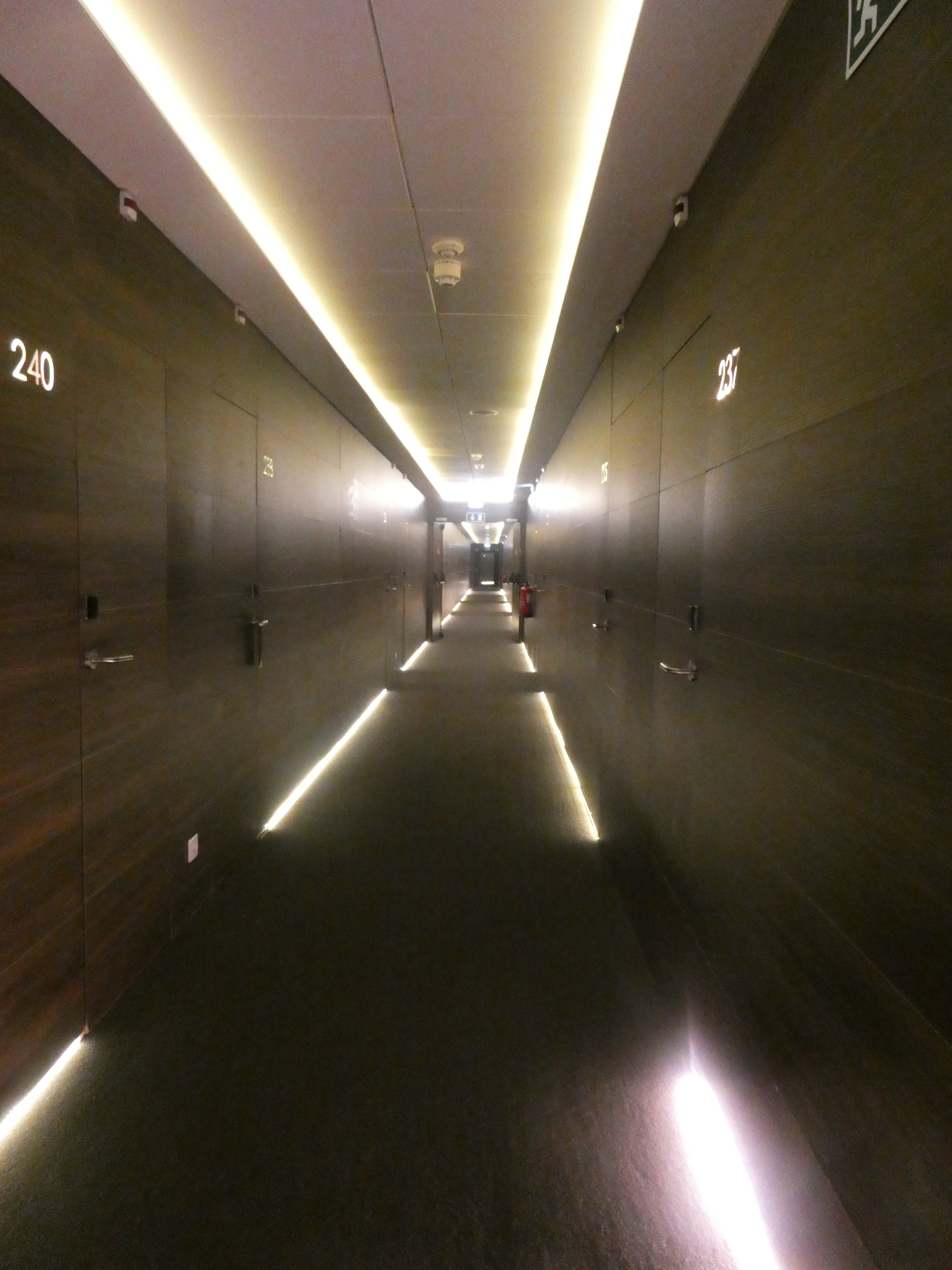
If I have one complaint about hotel rooms, it’s that they are too often too hot and dry, the duvets too thick. We do manage to turn off the radiator but I can only adjust the air-con down to 16, which has to do. I prefer a cool room for sleeping, even though the outside temperature is cold.

Breakfast next morning, however is very good and sets us up for some Isle of Wight exploration. Unlike yesterday though, it’s cloudy. We wrap up and head off to the hovercraft ticket office…

Jane Deans two novels: The Conways at Earsthend and The Year of Familiar Strangers are widely available

Hopeful Travels

It’s fair to say our time at Calgary Airport was not especially happy. Airports, on the whole are never wonderful places to spend time. Many hopeful travellers arrive and like to pass the hours quaffing beers in the nearest bar- even in the early morning- . Having dropped the deficient campervan off at Cruise Canada depot and been told that ‘we don’t supply that’ to the long list of missing items we’d compiled, we’d got a taxi to the airport. But since we’d had to deposit the van before midday, the remaining time until eight pm would have to be passed waiting for the flight, which would be overnight.

Our morning had been dogged by difficulty. I’d been trying [and failing] to upgrade our seats. Air Canada had, in its wisdom, allocated us seats in the middle of the plane [never my favourite] and one behind the other; also the middle of the middle. I’d managed to get on to what I thought was Air Canada’s website and had been trying to upload various documents and photos of things to a man I [erroneously, as it turned out] assumed to be an airline staff member. I had failed in this- and thank goodness I had! I continued to ‘hold’ [as instructed] until I felt like I was welded to the phone- and all the way into Calgary. The journey [which I’d been dreading] was nowhere near as difficult as anticipated, but even in the taxi to the airport I was still talking to the supposed Air Canada employee…

On our arrival it was far too early to drop the bags. At last I gave up on the upgrade, feeling exhausted. We went to get a coffee. My phone rang. It was someone from Air Canada. ‘Have you been speaking to a travel agent?’ he asked. I explained I’d been trying to upgrade our seats, to be told I had not been communicating with an Air Canada employee at all. I blanched, horrified. I’d need to cancel my bank cards straight away. This meant an extraordinarily long ‘hold’ once more on my phone. Once I’d managed to cancel both bank cards and get off the line my reaction was to burst into tears of relief.

Clearly we had to put up with the middle-of-the-middle seats.

The time passed and we rid ourselves of the suitcases then went to departure. By now I was reeling with relief that I hadn’t gifted a large sum of money to the scammers and was happy enough to sit somewhere and read or to peruse the meagre selection of gift shops [minus bank cards is by far the best way to do this].

At last it was time to board the plane and we located the seats. I sat down next to a portly Scot, whose wife was- yes- in the seat in front of him, and we chatted while the plane was readied for take-off. As it taxied to the runway Husband tapped my shoulder. There was an empty seat next to him! Once we were in the air I moved back next to him, freeing a seat so that the Scottish pair could sit together too. The plane was, otherwise, full and presumably the empty seat was a ‘no-show’.

We were served drinks and edible food. The cabin staff were affable and friendly. I was handed a second drink. We even slept.

Arrival home to the UK in late September heralded the start of a different, difficult kind of journey, involving many, many trips; one that I have not chosen, one that is ongoing but maybe… just maybe…the destination is drawing nearer and may even be in sight as 2024 begins.

Happy New Year to all followers and visitors. And may 2024 be filled with joyful discovery, adventurous travel and most of all, good health.

Novels by Jane Deans, author: The Conways at Earthsend, The Year of Familiar Strangers.