Unknown's avatar

About Grace Lessageing

I am writer of novels, short stories, flash fiction, blogs. I lead a creative writing group. I am an Ex infant teacher, living in Christchurch, Dorset, UK. My brand new novel, The Conways at Earthsend was published on January 28th 2021 can be found on Amazon, Waterstones, Hive and Goodreads and is available in either paperback or e-book versions. You can also read The Year of Familiar Strangers, available as an e-book from Amazon. You can visit my website: janedeans.com or my author page on Facebook: https://www.facebook.com/Jane-Deans-Novellist-Short-Fiction-and-Blog-102757711838272 Happy reading!

The Emerald Cave [Episode 2]

In Episode 2 of The Emerald Cave, Kate reveals some more about how she became friends with Emerald and more on the subject of Emerald’s unorthodox existence. Episode 1 of the story can be found in the previous week’s post.

I sneaked a few glances at Emerald’s boyfriend, Lincoln, noticing he was good-looking in that boyband way, floppy brown hair and flawless skin. I wondered how old he was. Young men often look younger than their female peers. He was a driver, though so he had to be at least seventeen. I wanted to question her about him but was too timid to ask, especially as he was sitting opposite us.

I’d lost track of time but it was Emerald who asked me what time I should be home. I was going to be late and would have some explaining to do. Back in the car she wanted to know if I was doing anything on Saturday and would I like to go round to hers? I dithered again, feeling my cheeks burn, but said I’d like to, thinking I’d have persuading to do as well as apologising for lateness. I got Lincoln to stop at the end of our road in the small village where we live, so that I wouldn’t have to justify travel in an unreliable car with an unknown driver.

In the event, once I’d said I’d missed the bus and been chatting to a friend, my parents accepted the excuse and left it at that. My sister Sarah, however was more probing once we were alone and quizzed me about Emerald.

‘That new girl in your class? How come she is friendly with you, all of a sudden?’

I shrugged, not wanting to get into one of my sister’s superior sneering sessions. I left it until Friday to mention I was going into town to have a look round the shops next day. I don’t know why I felt the need to lie, but something told me my family wouldn’t approve of my visiting Emerald.

David has found somewhere for us to have lunch, a few miles away from the canal but through quiet, country lanes. It’s a small town but has one or two restaurants and a beautiful chateau where wine tours and tastings are available. I tell him we’d better not drink too much or we’ll be wobbling into the canal on our return and he replies that we’ve got all day and can even walk back if we need to.

Emerald’s home wasn’t what I expected. I met her at the salon where she worked, alone this time and we walked to her place, a meagre, terraced house in a large, modern development. There was a scruffy patch of paving leading up to a scuffed white door. She took out a key and unlocked it and I followed her into a cramped hallway half filled by a row of coat pegs bulging with assorted jackets. She led me to the end, into a tiny kitchen with two stools under a counter. It had a cold, empty smell like a disused canteen and I wondered if Emerald’s mum cooked much.

‘Take a seat’ she said and I perched on a counter stool while she made us mugs of hot chocolate in a microwave and sprinkled mini marshmallows on top. There was no sign of an adult in the house. We took our drinks up the narrow stairs to her box bedroom, which had a single bed with only the narrowest of gaps between it and the wall, a small desk and chair under the window and a hanging rail with assorted clothes. She put her mug on the desk and threw herself on to the bed and I did the same. Her walls were covered with posters, mostly music artists, some I knew and others I didn’t. On subsequent visits to her house, I began to think that, other than her bedroom, the house had an unlived-in look, the small, narrow living room spartan, with no books on the shelves, no photos or pictures, no cushions on the beige, faux-leather sofas, no ornament. Emerald had a small TV on a bracket in her room so I guessed she watched programmes there. I wondered if she felt lonely in the evenings or at weekends, but she seemed to have a lot of friends and there was Lincoln, of course and now, me.

‘Is your mum working today?’ I asked her.

‘Yep. She works in a care home. She’s on lates, so she won’t be back til about half ten. We can get pizza if you like?’

If my parents were worried or surprised that I’d gained a best friend, they didn’t express it, displaying little curiosity beyond ‘what does her father do?’; this from my father, who was stuck in some Victorian notion of husbands as providers. I’d explained that Emerald’s parents had separated, a situation my mother described as a ‘broken home’. As long as I was back by our curfew of nine o’clock and made sure they knew where I was, they were relaxed over my visiting my friend’s house. As much as they knew, Emerald and I were doing homework together under the supervision of her mother, not gallivanting about town, trying on makeup in Boots and spending hours in Hard Mock with various friends of hers, none of whom seemed to be school pupils. Sometimes Lincoln was around, often not. She was vague about what he did, saying he did ‘occasional’ work, whatever that meant.

At school I was now part of Emerald’s inner circle and as such my status became elevated and I was one of the gang. At home I was more vocal, entering into mealtime discussions and more prepared to stand up to my sister, Sarah. I had the feeling my mother was relieved as I overheard her telling my grandmother on the phone that I was ‘growing up at last’ and that I had a friend who was doing me good.

If anyone has done me good, it’s David. He’s made me stop worrying about events that are beyond my control and that what has occurred in the past need not blight someone for life. He’s taught me strategies that make me calm, like this cycling. We’re on the outskirts of the town he’s chosen for lunch. We lock the bikes up and stroll the streets on foot, perusing the menus of the cafes and bistros as we go. It’s a characterful, old town full of medieval, stone cottages, their gardens a riot of vines and flowers. We choose a restaurant by the bridge over the river, the tables placed across the road by the water.

I’d been friends with Emerald for a few weeks but had yet to meet her mum, who seemed to be working all hours. She also had a boyfriend whom Emerald tended to avoid, not for any sinister reason but due to his being ‘boring’. The Easter holiday came and went and I spent a fair bit of it hanging around with Emerald, when she wasn’t working in the salon. She’d offered to get me some hours there but I declined, knowing my parents would baulk at the idea. If I had spare time, it should be used for school work, they’d have said. Sarah, Jo and I had small allowances, for which we were expected to do chores around the house like ironing, hoovering and cleaning bathrooms.

The days became warmer and we swapped the café for going to the park, taking a rug and snacks and being joined by others. We larked about, often screeching with laughter, although I can’t recall over what now. When you’re fifteen the most trivial things can set you off giggling. I think what I loved most about Emerald was her ability to make me laugh; sometimes even remembering the laughter would set me off again afterwards, at home and I’d have to try and explain the joke to my perplexed family, never a success.

At the beginning of June, the weather became hot. One Friday, as we were in the lunch queue Emerald told me she was taking a Saturday off from the salon and did I fancy a day out? I nodded without hesitation. Where?

‘We could go to the seaside’ she suggested. ‘Take our swimming stuff.’

Our town was about an hour from the coast at the nearest point. ‘How will we get there?’ I asked her and she shrugged. ‘We can get a train, or Linc can take us.’

I told my mother the backpack with my towel and swimming costume I was taking was full of textbooks. After my initial misgivings about lying to my family I’d developed a strange indifference to fabricating the truth, as if it had developed with practice. I told myself it was kinder, that it would save them from worrying; a notion that now seems astonishing in the light of subsequent events.

We met at the station. I felt both jittery and excited to be having a day out. It was hot, the platform tarmac radiating warmth as we waited. We’d both brought snacks, my mother even providing a few food items ‘because Emerald’s mother is always feeding you’. I’d never told her that I hadn’t so much as met Emerald’s mother, who was always absent from the house whenever I visited, either working or with Geoff, the boring boyfriend, according to Emerald.

When the train pulled in, we fell into seats, giggling. Somehow, everything was funny, from the wheezing man in the ticket office to the elderly woman dragging a reluctant pug along the aisle. When a woman sitting behind us told her companion ‘I bought this coat last week. I thought it would see me out’ we both convulsed with silent mirth, hands over our mouths. So it was in a jovial mood that we stepped off the train into the bright, already searing sunlight of the small provincial station and walked in the direction of the beaches.

Once we’ve finished our lunch, David and I walk back across the bridge and up towards the chateau, a little way out of the town. There are vineyards either side of the lane, as far as the eye can see, except that the chateau itself protrudes from the rows of vines like a mountain rising from green, frothy waves. There’s a driveway and once we’re closer, a cute pedestrian bridge across a moat in which the rounded honey-coloured walls and turrets of the edifice are reflected. We enter through the elegant main gate and across a flagstone courtyard then in through heavy, wooden, open doors studded with black metal. To the right of the great hall is a ticket booth, to the left is a glass partition behind which is a gift shop, where I’m sure we’ll have to exit.

Soon we’re following our guide for the tour, Henri, along sumptuous corridors carpeted with a central red strip bordered by gold stripes and walls lined with statues and paintings. He tells us about the portraits, the previous inhabitants of the castle and entertains us with some stories. There is only one other couple for the tour today, a middle-aged German pair, happy for Henri to narrate in his near-perfect English. We follow him around the state rooms, ogling the elegant furniture, the long dining table, the chandeliers and the four posters, then we descend to the vast kitchen with its burnished copper cooking pots, its enormous fireplace and range. Finally, we descend down the stone steps to the cellars, a honeycomb of stone alcoves lined with dusty bottles and further still, tall racks of oak barrels. The smell is wonderful; a mix of smoky oak and ripe fruit. A small table is laid with a pristine white cloth and glistening wine glasses. Henri asks us about our preferences and goes to pluck a bottle or two from a rack.

Meanwhile we chat with the German couple who’ve been touring the south and are making their way back home, stopping where they fancy. We compare notes about this area and they recommend some more places to visit.

Read next week’s episode to find out what happened in the The Emerald Cave

Grace is also known as the novelist, Jane Deans. Her latest novel, The Conways at Earthsend is available from Amazon, Waterstones, Goodreads, W H Smith, Pegasus Publishing and many more sites. Visit my website: janedeans.com or my author page on Facebook: (1) Jane Deans, Novelist, Short Fiction and Blog | Facebook
The Emerald Cave [Episode 1]

The next month’s posts will feature brand new fiction, beginning today with Part 1 of ‘The Emerald Cave, a psychological drama. In Part 1, Kate begins to look back at an event from her teens that caused her mental illness…

There was a period years ago when I lost my memory. At the time it was said by the counsellor to be caused by the trauma. I suppose these days you’d call it PTSD. I’ve always worried that I’d suffer more bouts of memory loss as I got older, but since adulthood it hasn’t happened; in fact, I feel I can recall more and more of the events of my childhood and teenage years as I age.

                While I wasn’t bullied at school, it’s safe to say I was ignored. Why? I was a quiet, nondescript child. I was neither beautiful nor ugly. I had no stand-out features. Back then I’d have been described as ‘mousy’, my father even calling me ‘Mouse’, thinking it a term of endearment. I was the middle child of three girls; my elder sister, Sarah being the one of whom great academic things were expected, my younger sister, Jo, the vivacious, pretty all-rounder, loved by everyone.

 I attracted no attention either way from my peers at our all-girls grammar school, ticking along with average results, the teachers barely acknowledging my existence, so when Emerald Blackman began engaging with me and involving me in her life, nobody was more surprised than I was.

Emerald. She joined my class when I was fourteen, making a swift and dynamic impact, imbuing every girl with a desire to be her friend, to belong to her circle. It was not only that she was beautiful, blond and blue-eyed with clear skin and a svelte, athletic body but that she exuded such confidence, even the teaching staff were in awe of her. We learned that she’d moved to the area with her mother following the split of her parents, a situation that in itself seemed glamorous and exciting to those of us who lived in humdrum, nuclear families with two parents. She also appeared to enjoy a remarkable level of freedom for a fifteen-year-old, by all accounts and was already working at a Saturday job, sweeping up and making tea in a salon and earning enough to get out and about at weekends.

At some point during the first term, she acquired a boyfriend, further elevating her status in our eyes. The fact that the boyfriend had a car thrilled everyone to fever pitch, inducing most of us to press our eyes to the window each afternoon at the end of the school day, when the young man’s battered, black, souped-up Ford Fiesta swerved up the school driveway and squealed to a halt beside our exit. There would be a pause. Emerald, lingering in the cloakroom, didn’t dash outside and leap into the passenger seat, preferring to raise a languid arm and pull a brush through her long, blond hair, releasing it from the confines of its regulation tied back style. Then she’d sigh, pack a few things into her bag and dawdle to the exit, looking everywhere except at the boyfriend as she opened the car door; a masterclass in cool. Once the car had swooshed away down the drive, we’d sigh and begin our own plodding walks to bus stops.

I’m daydreaming all this as my feet turn the bike pedals and we follow the easy, shaded tow path along the Canal du Midi, a trail we’ve taken on many occasions during our forays into the South of France. I got lucky with David, meeting him in my late twenties and marrying at thirty-two, later than most did, then. We were old enough to understand that sharing common interests and backgrounds was as good a basis as any for a strong marriage. A few weeks after we met, when I was comfortable enough to confide in him, I told him what happened with Emerald when I was fourteen, a story I’d never been able to tell anyone else outside of the family, a story that still dogs my dreams, entering my consciousness uninvited. I asked David, a clinical psychologist, if he thought the effects of that time had shaped me and he said he couldn’t say, since he hadn’t known me before then, but that our teens are an impressionable age and it’s likely that some aspects of my character may have been enhanced or suppressed by it. But I was never a socialite, never gregarious or popular, never one for small talk or banter. I’m an introvert, a trait that has continued into adulthood. For that brief, early period of my life though, my standing amongst my peers became elevated as a result of my friendship with Emerald Blackman, as if I’d inhaled some of the magic that surrounded her and been transformed into a teenage socialite.

We take most of our holidays in France, David and I. We find a gite, one that is near to centres of historic interest or natural beauty. We like to explore by bike or on foot. This time we’re staying in a Dutch barge on the canal between the coast and Narbonne, from where we can cycle down to Gruissan at the coast, or up as far as medieval Carcassonne and beyond. We might pick up groceries and cook in the barge’s galley kitchen or we might find a brasserie and eat there. The barge has a comfortable deck area where I like to read, or often to sit with a glass of wine and watch the water drift past carrying ducks, driftwood or weed. The canal is flanked by a row of plane trees along each side, their canopy of leaves casting a soothing green glow on to the water, glints of sunshine filtering through as the breeze blows.

It’s a therapeutic space to sit and process painful life events. I may be much older now but I still need to replay the scenes that led up to what happened with Emerald and how it played out in the immediate aftermath. My problem is not knowing. I will never know what happened to her, or to me, in the cave; the cave I’ve come to think of as ‘The Emerald Cave’.

I’d been waiting at the bus stop for half an hour when the noisy, smoky Fiesta pulled up and she wound the window down. I’d mislaid a text book in our form room and had missed the school special as a result. At first, I didn’t register that it was her, that she was calling to me. I remember looking round at the other people waiting, thinking she must know one of them. She opened the window and beckoned me over.

‘Need a lift?’

I couldn’t recall that she’d ever spoken a single word to me before. I walked across to the window and leaned down, conscious of the lank strands of hair that had escaped from my inexpert pony tail and the crop of spots that had sprung up on my chin the day before in preparation for my period. She put a hand out and pulled the lapel on my blazer so that my face was inches from hers. I felt my cheeks burn and knew the boyfriend was looking my way as he revved the engine, making noxious, grey smoke billow around the bus stop.

‘I’m not…I don’t…’ I spluttered in a pathetic squeak.

‘Come on, Kate. We’re going for a quick coffee. Hop in the back. We’ll take you home after!’ She beamed at me, continuing to pull on my lapel.

‘I don’t have any cash on me’, I managed to blurt.

‘Oh, don’t worry about that! Lincoln’ll get them, won’t you, Linc?’ She relinquished the blazer and grinned at the lad beside her, who rolled his eyes.

I cast a sheepish glance over my shoulder at the waiting passengers before grasping the rear door handle and sliding in, pulling my backpack in next to me. The car smelt of stale cigarettes and there were discarded cans, crisp packets and polystyrene cartons strewn around the floor. Just as I was wondering how late I’d be getting home Emerald turned to me.

‘Are your folks cool with what time you get home?’

‘Um…not really, I mean I don’t know.’ I looked out of the window.

‘You could call them.’

There was a pause while the car, driven by a silent Lincoln, swerved round a corner and into Tesco car park.

‘I don’t, um…I don’t have my phone.’

We three girls had phones, the cheapest, most basic pay-as-you-go’ type that could be bought, for what my mother called ‘safety’ purposes, although we were not allowed to take them to school and were only to use them for ‘emergencies’. What type of emergency there could be she’d never elaborated, but we rarely did anything independently, which was what I was doing now.

Emerald did not scoff or laugh or make a scornful remark. She tossed her phone at me.

‘Use mine.’

I knew my parents were not home yet. I called and left a message to say I’d missed the bus and would be a bit later than usual. Then we all got out and went to the coffee bar on the High Street.

There’s a small, canal-side café ahead of David and me. It’s bathed in sunshine, wrought-iron tables and chairs arranged outside and a blackboard of delicious-sounding snacks. It isn’t lunchtime yet but we feel we’ve cycled enough miles this morning to have earned a slice of tarte-au-citron and a café-au-lait. It’s a far cry from the fare on offer at the ‘Hard Mock’ café, a long, thin diner offering CDs, posters, T-shirts and rock band memorabilia, alongside coffee, toasted sandwiches and doughnuts. David locks up the bikes and I settle in the sunshine.

We slid into one of Hard Mock’s booths on a plastic-covered bench, Emerald squeezing in next to me, leaving Lincoln, who’d gone to the counter, to order our drinks- cappuccino for Emerald and flat white for me, to occupy the opposite seat. I’d taken a quick look at the price list and selected the cheapest Item I could find.

‘Fancy a doughnut?’ Emerald spoke into my ear to be heard over the top of the music which was playing at a high decibel level, heavy metal of some kind. I shook my head.

Lincoln brought the coffees to our table. ‘Thanks Babe’, Emerald cooed, pursing her lips. My mind flipped at the idea of one of my peers calling a boy ‘babe’. I nodded and muttered my own thanks. Lincoln continued to look at his phone while Emerald chatted with me, asking what music I liked, what I did outside school, did I get on with my sisters? I began to relax as she seemed so interested in me, making me laugh with tales of her own home life and sly digs at Lincoln, who did not appear to be listening.

‘I wish I had a sister’ she sighed. ‘It must be so cool to always have someone to hang out with.’

‘It’s not always like that,’ I told her, ‘We’re all different. My older sister doesn’t lower herself to fraternise with me and my younger sister has so many friends she doesn’t need me.’

Emerald threw an arm around my shoulders and pulled me close. ‘Well,’ she whispered, ‘you’ve got me, now.’

David is accustomed to my long silences, having known me for so many years. He’s pouring over a small map of our route for the day on his phone, searching for somewhere to explore this afternoon, somewhere we’ve not been before. He is not handsome, my husband, but he does have a calm, restful face, which is what attracted me to him after I began my weekly visits to his surgery. He inspired, and continues to inspire confidence in me, deftly foiling my panic attacks and cheering me with gentle humour.

Before he was my husband, David was my trauma counsellor. It wasn’t until I was in my twenties that I experienced the mental health crisis that led me to seek him out and he helped me to understand that I’d never fully processed what had happened in my teens.

Check in next week to read Episode 2 of ‘The Emerald Cave’…

Grace is also known as the novelist, Jane Deans. Her latest novel, The Conways at Earthsend is available from Amazon, Waterstones, Goodreads, W H Smith, Pegasus Publishing and many more sites. Visit my website: janedeans.com or my author page on Facebook: (1) Jane Deans, Novelist, Short Fiction and Blog | Facebook.

Starting Back

4 Revisions

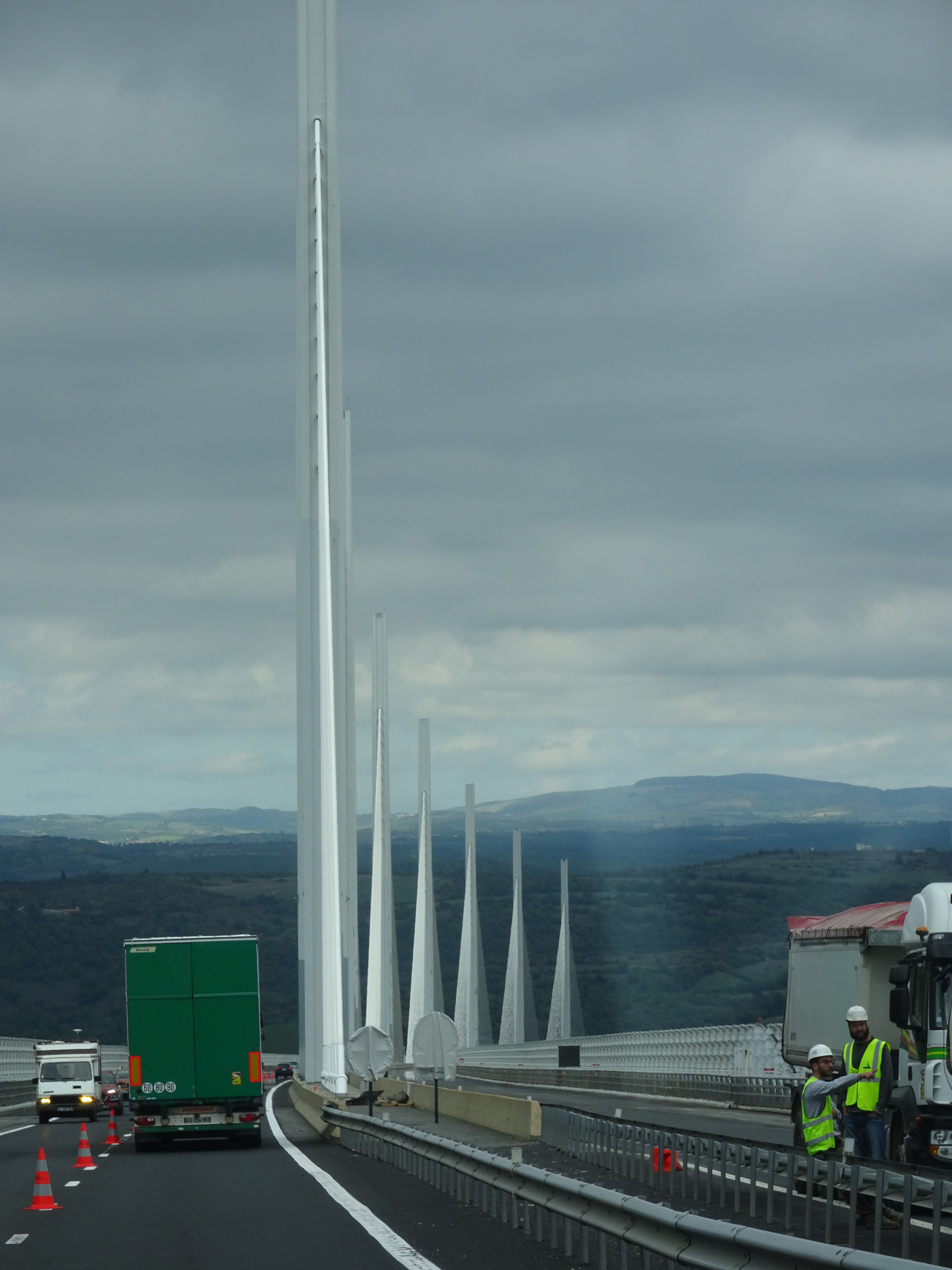
After leaving Caunes Minervois in the far south of France, and an arty interlude, we set off north. And while we’ve journeyed up through France many, many times it’s still a pleasure to meander up through the country and experience the differing landscapes, the changing crops, the divers architecture. We’ve crossed the fantastic bridge at Millau on numerous occasions but it continues to inspire awe, even though this time there is work being done.

We opt for autoroutes for a good deal of the way on this occasion. We head up towards the Loire. We’re constrained, now by campsites that are still open this late in the season but there will be enough places to stay on the way home. It helps, too, if there are sites near to towns or villages where we can enjoy an evening, perhaps get a drink in a bar or a meal.

There’s a likely place across the bridge at Chateauneuf-sur-Loire. We think we’ve stayed at the site before but once we arrive and enter the long avenue that is their driveway we realise it isn’t the one we thought it was. This happens often- either we think we’ve stayed somewhere and haven’t, or we think it’s new to us and then remember we’ve been at the site before. This is a combination of memory loss and sheer number of sites visited!

We park on the long avenue/driveway and go to reception, where there is a lengthy wait while someone booking in enjoys a chat with the receptionist about where they’re from etc and the receptionist tells the someone how much she enjoys speaking in her fluent English. Once we get our turn in the small office, the young woman is determined to use her English once more, even though it is not so fluent and we’d have got on better in French. Still, we eventually book in and can choose where to go except not near the river, where it is decidedly soggy.

There is still enough sunshine to sit outside the van, although we’re accosted by an English couple from the VW van opposite who are keen to talk about their grandchildren and how they’ve had to go home and return in order not to fall foul of the 90/180 day rule. This rule is news to us, and when we check it transpires we’ve used 87 of our 90 days. Phew!

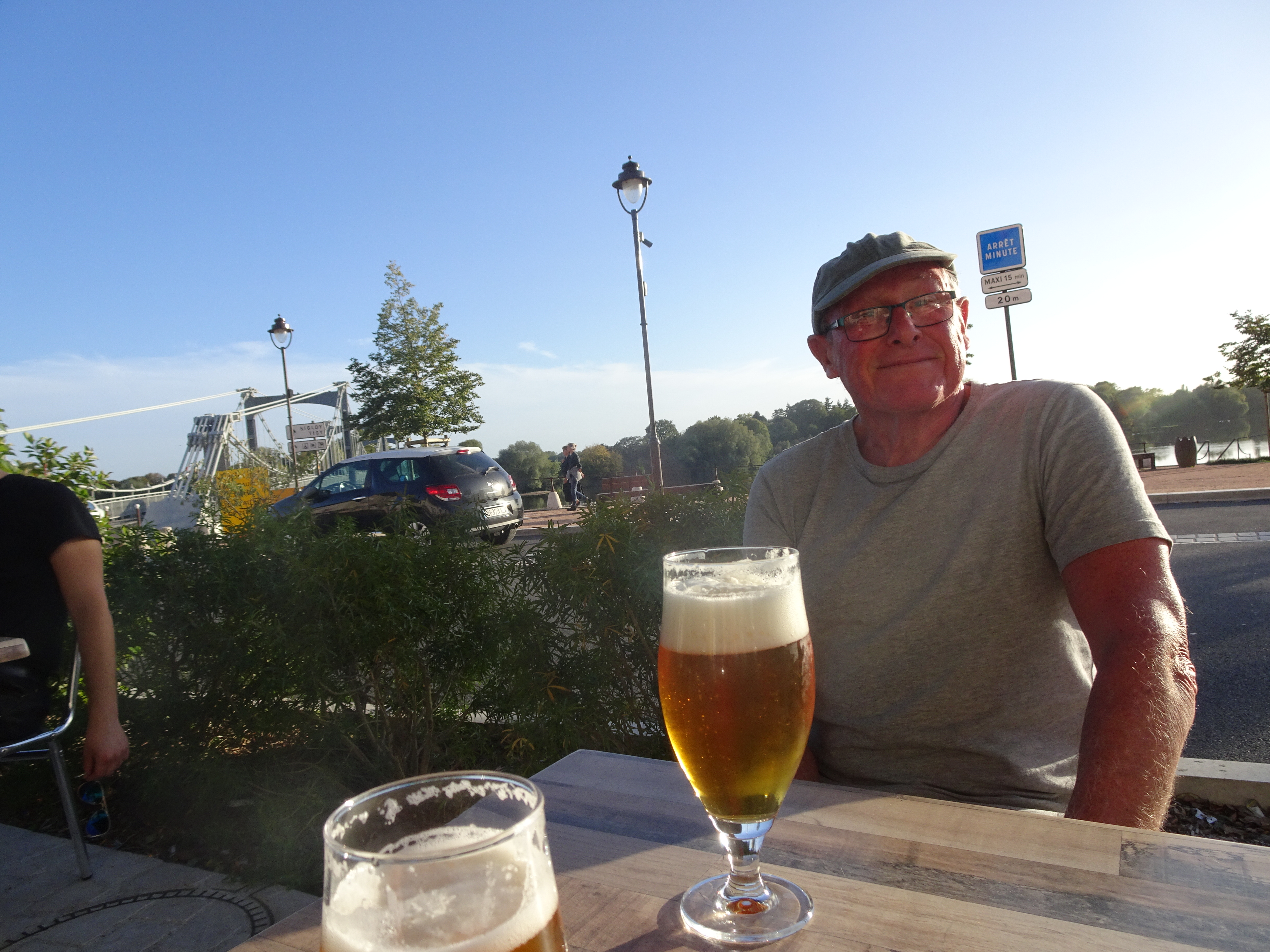
We wander across the bridge to the town, which is pleasant enough, with a tiny chateau and park. The shop windows are full of autumn displays. Nothing restaurant-related pops out, but a riverside bar has tables in the sun so it seems churlish not to take advantage for a beer in the sunshine.

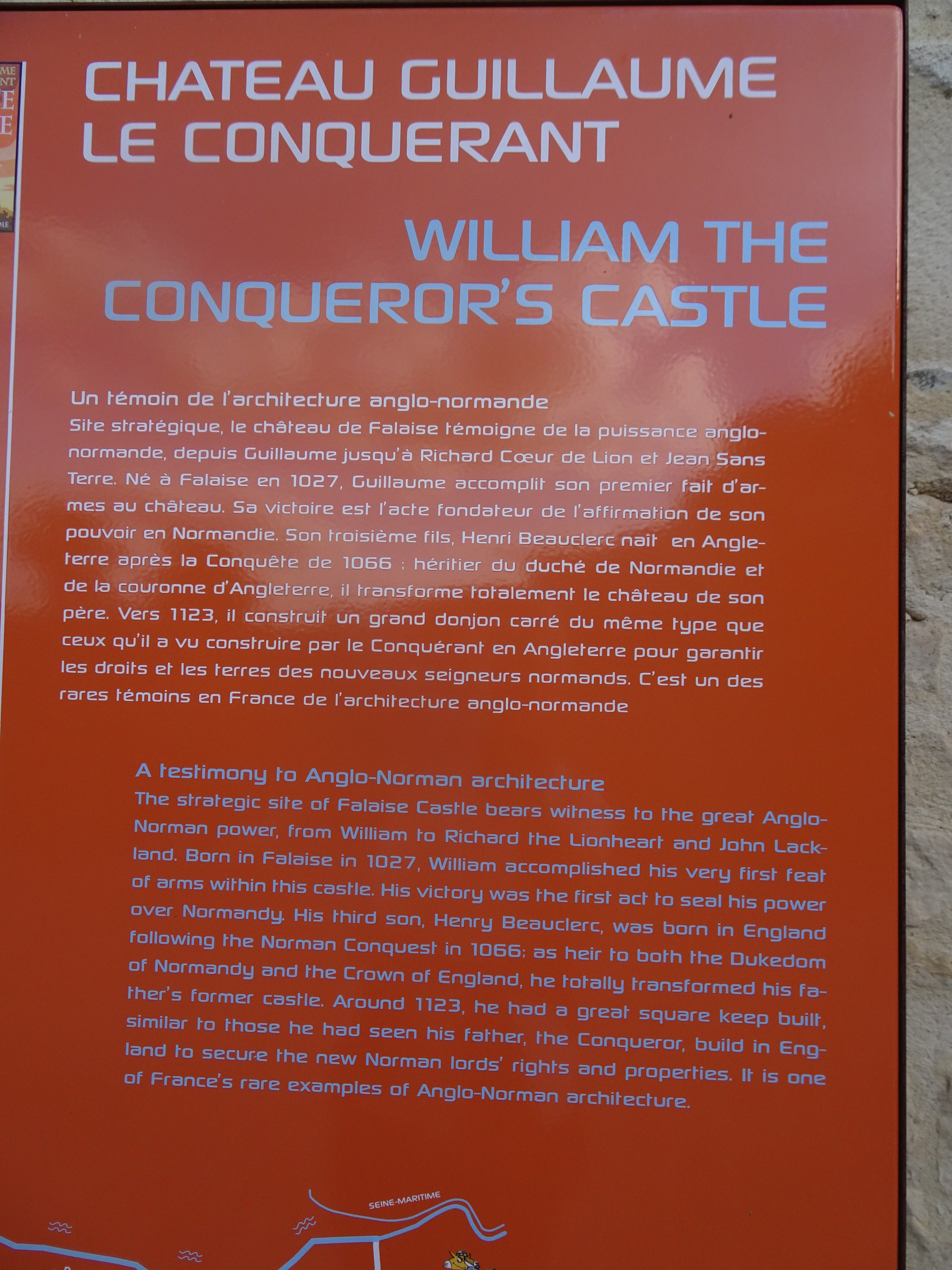
Next day we’re unable to detect anything resembling a hosepipe for water filling and the waste emptying is coyly concealed. We make an exit and embark on the next hop- up to Falaise, which holds some pleasant surprises! The municipal site is beautiful, with excellent, modern services and a stunning view of the stand-out castle- William the Conqueror’s castle, no less! By the time we get up the hill to look at it there’s only about half an hour of visiting time left, so it’s not worth buying tickets, but the exterior is lovely and boasts great views of the surroundings.

It’s just as well we’re on our way home, since the van’s leisure batteries have now given up and there’s no point in hooking up as nothing seems to happen when we do. So we’re without electricity.

Then we’re off up to Caen-via a supermarket, of course, for a good stock-up. The trusty campsite at Ouistreham is open and, best of all, the lovely canal-side restaurant has a table available. Husband drops me off to rush in and do a booking. It’s all getting end-of-trip now and I’m experiencing my usual mix of regret and anticipation. What kind of state will the house be in? And the garden? We’re limping home with some van problems to sort out. There will be plenty to do!

Grace is also known as the novelist, Jane Deans. Her latest novel, The Conways at Earthsend is available from Amazon, Waterstones, Goodreads, W H Smith, Pegasus Publishing and many more sites. Visit my website: janedeans.com or my author page on Facebook: (1) Jane Deans, Novelist, Short Fiction and Blog | Facebook.

The Lost Van and the Art Village

Our Ferry from Corsica arrives back to Toulon, south on the French mainland. It’s early enough to still be dark and I’m feeling stretched from lack of sleep, having spent a wakeful night on a mattress I’ve dragged from the top bunk. But we stumble out and make our way out of the cabin decks and in the general direction of the car decks. But which one? We came up from our deck in a lift, but there is more than one. I definitely recall a large, shiny space when we exited the lift- but where is it?

We begin to search all exits, trying staircases, of which there are many, descending to car decks, lorry decks, dead ends. Which deck is ours? Which side? And which end? We squeeze between gigantic lorries, searching for our van. Outside in the half-light of dawn, vehicles are streaming out and off while we continue to do a frantic search for our campervan. We’re starting to despair as we go back upstairs to try again to find our lift area- then we spot a group of foot passengers in a waiting area which is…shiny, spacious and outside some lifts. At last! We push through the foot passengers and go down to the depths. And there is our van, in almost solitary splendour except for a few vehicles trapped behind it, their drivers waiting for us to arrive and a few extremely irritated ferry crew members. We’re sheepish as we drive off and I’m mouthing ‘sorry’, although it doesn’t feel entirely our fault.

We’ve to navigate Toulon in the half-light then off up the motorways. We’re heading towards home now, although France is big [by our terms] and we’ll be making a small diversion to see a friend and ex-colleague of Husband’s. Nick was an art teacher and is now a successful painter living in a small village in the Minervois area. This entire region is almost entirely given over to wine production, with a spot of tourism thrown in- as well as art, of course.

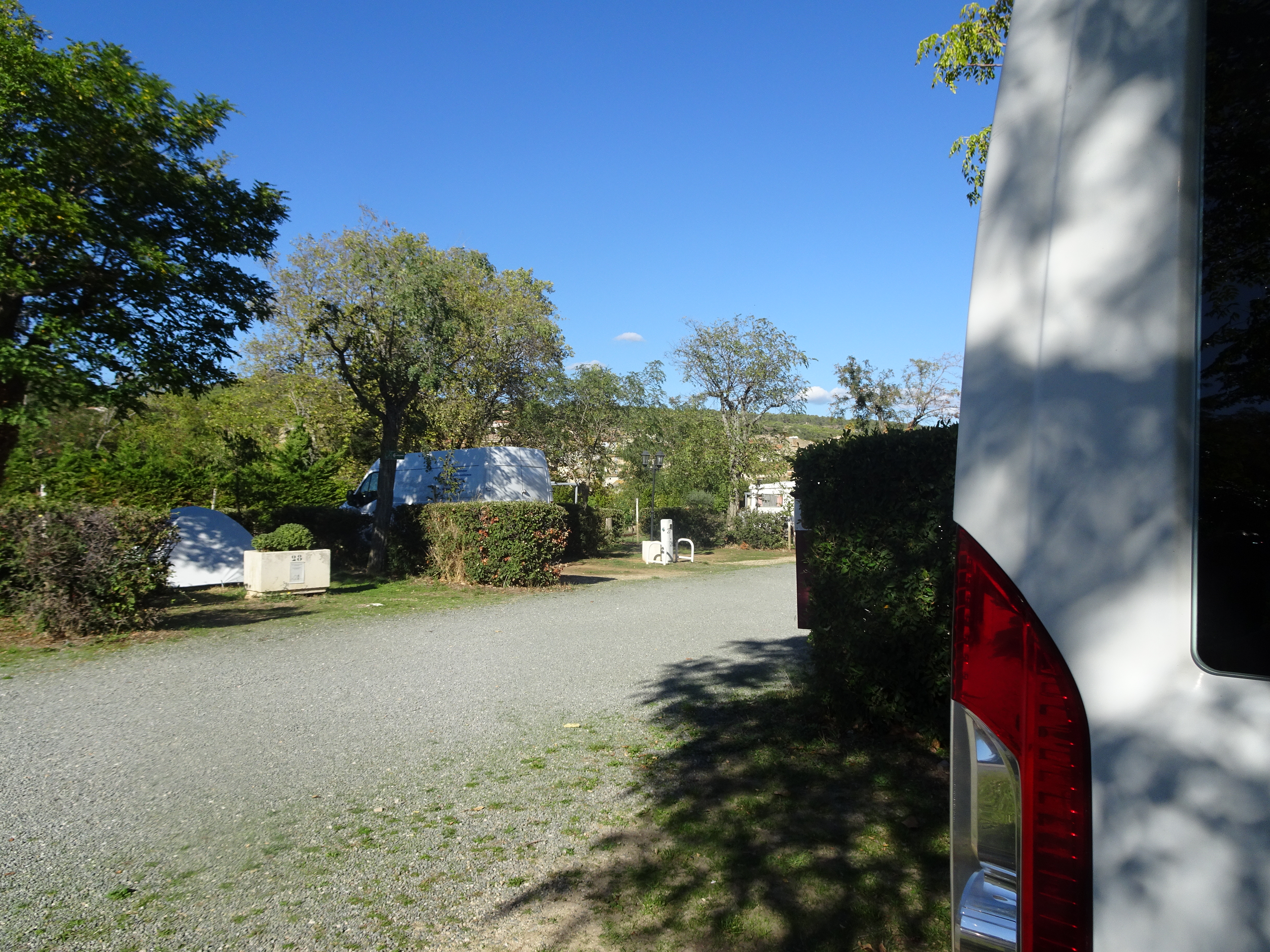
The village where Nick lives, Caunes Minervois, has a community of artists including potters as well as painters. We arrive mid-afternoon and search for the village’s handy campsite, which, as Nick has established for us, is open. The entrance isn’t obvious, although it’s by the sport complex, which is commonplace for a municipal site. There’s nobody manning reception but we’re directed, via a notice, to find a place and see someone later. The site is tiny but lovely, with a view of the cute village. It’s beautifully maintained and has everything we need- and all for 12 Euros per night!

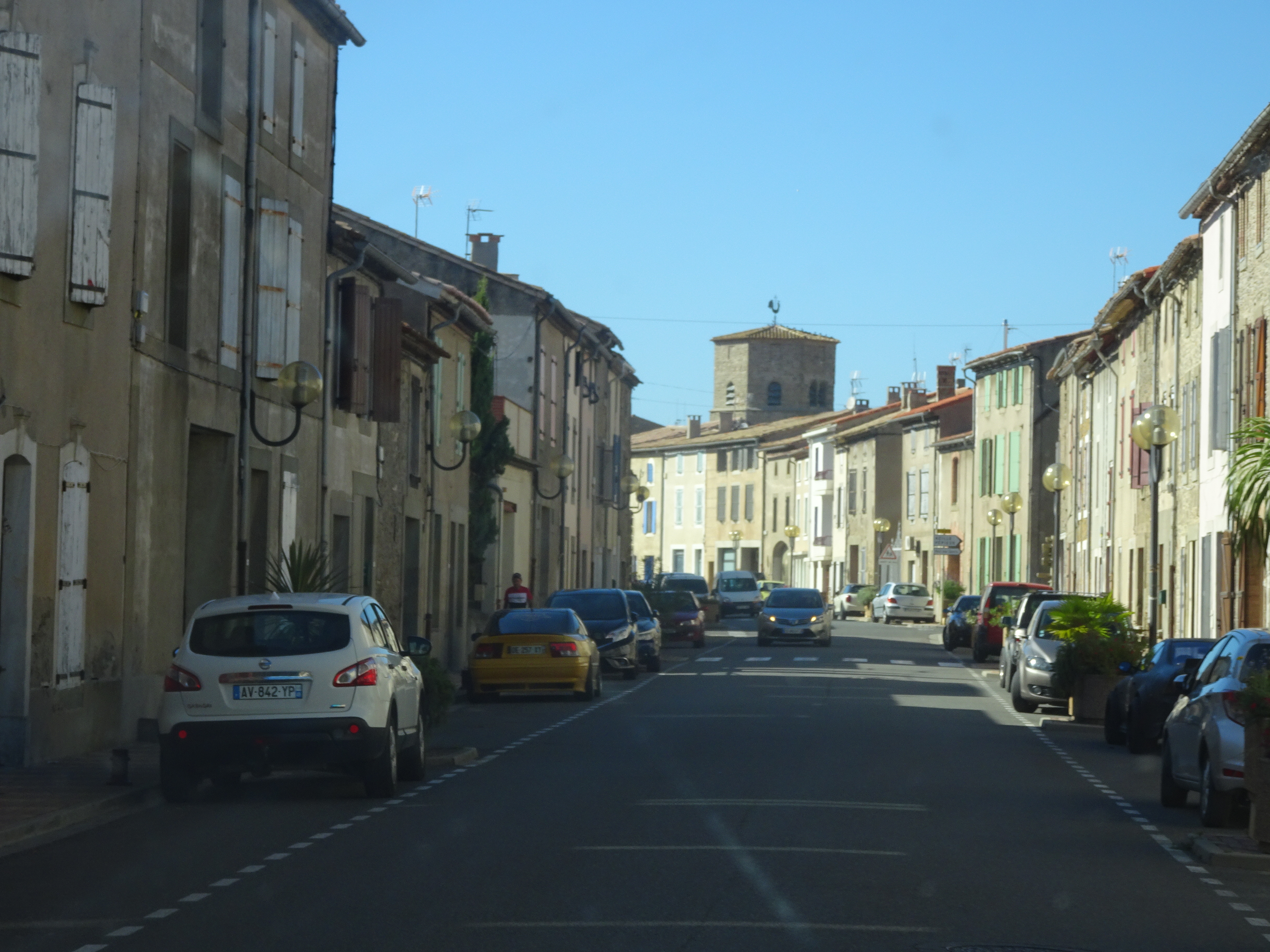
Husband strides off up the village to see his friend while I get an hour or so of sleep. We wander up to Nick’s cottage later in the evening, strolling through the lanes. It’s hilly, narrow streets flanked by stone, terraced cottages. There’s a stone cross and a beautiful bell tower on the church. It’s all idyllic. Opposite Nick’s house, on the sloping lane, lives a potter, Lionel- examples of his ceramics adorning his front yard.

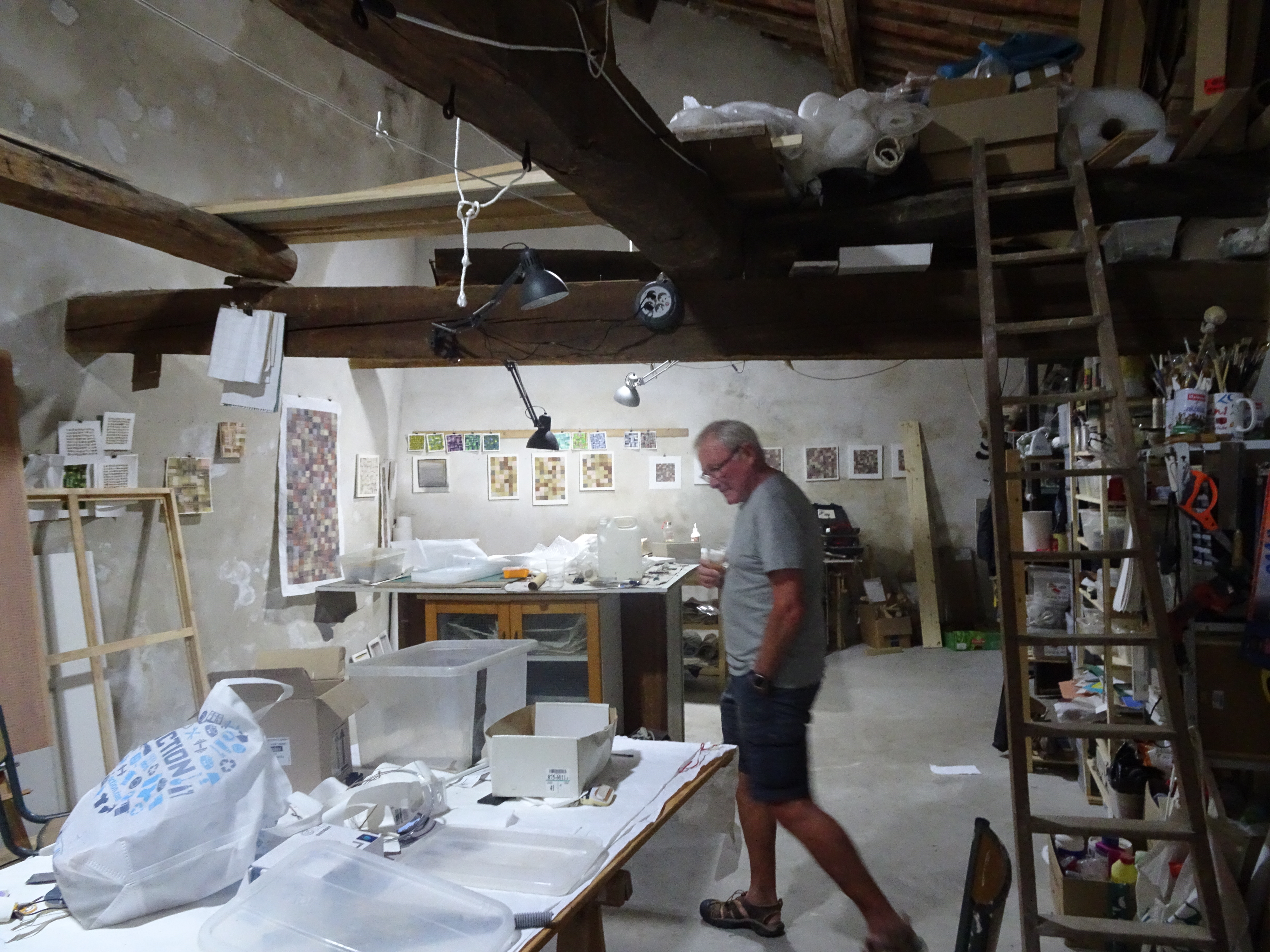
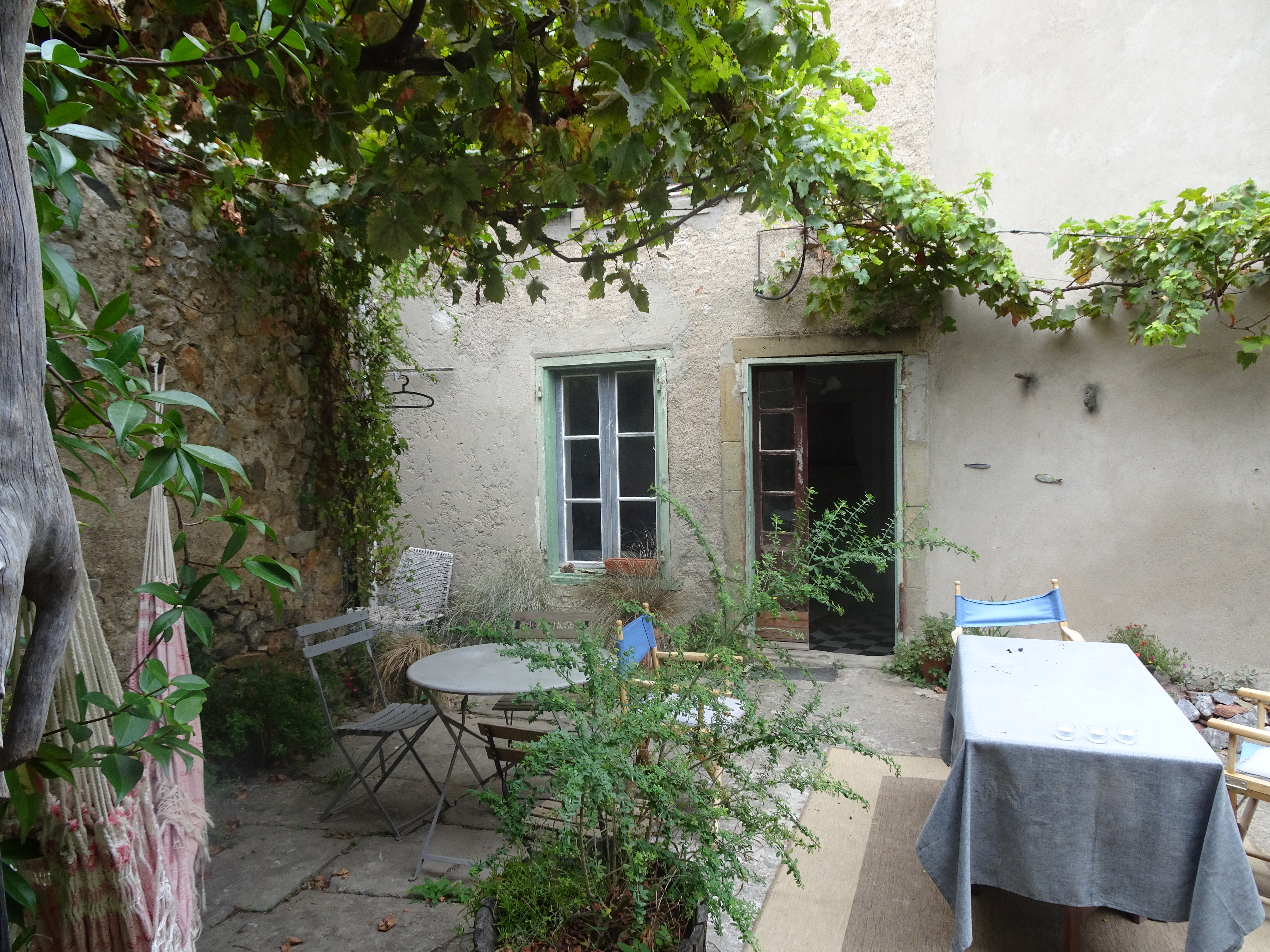
The inside of Nick’s house is as quaint and cute as everywhere else, with small rooms leading on to a courtyard partly covered by a vine. The rooms are filled with his art works, large canvases, swirling and vigorous. Across the courtyard is his huge studio, rustic and criss-crossed with beams. It’s warm enough to sit in the courtyard to eat.

It’s late when we walk back through the village to the campsite. Nick has warned us that the streetlights will be off and indeed, it is dark, but there’s enough light to see to walk and there’s something lovely about the ancient village, silent in the dark.

In the morning Nick comes to us for coffee and we ask to buy a painting, making a quick second visit to the studio to choose. It’s tricky! Nick’s work is shown in many, prestigious exhibitions, including the Saatchi Gallery and Brazilian locations. https://www.saatchiart.com/account/profile/938067 But we reach an agreement and he wraps it carefully for us to take away.

I feel reluctant to leave but we must make progress north now that Autumn has taken firm hold so we bid Nick ‘au revoir’ and we’re off again…

You can visit Nick’s Facebook page here: https://www.facebook.com/search/top?q=nick%20rands

Grace is also known as the novelist, Jane Deans. Her new novel, The Conways at Earthsend is available from Amazon, Waterstones, Goodreads, W H Smith, Pegasus Publishing and many more sites. Visit my website: janedeans.com or my author page on Facebook: (1) Jane Deans, Novelist, Short Fiction and Blog | Facebook.

Ajaccio and Away!

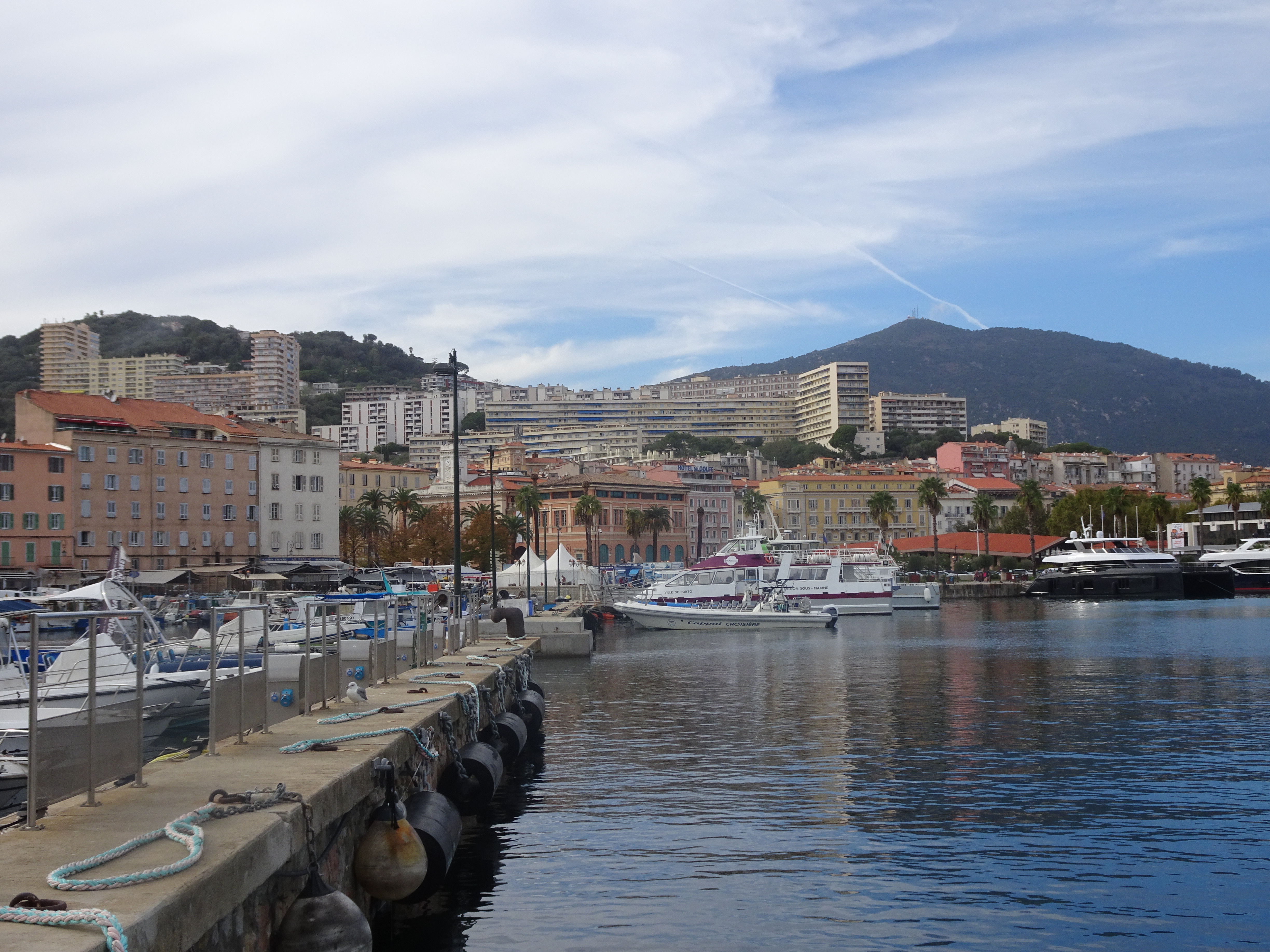
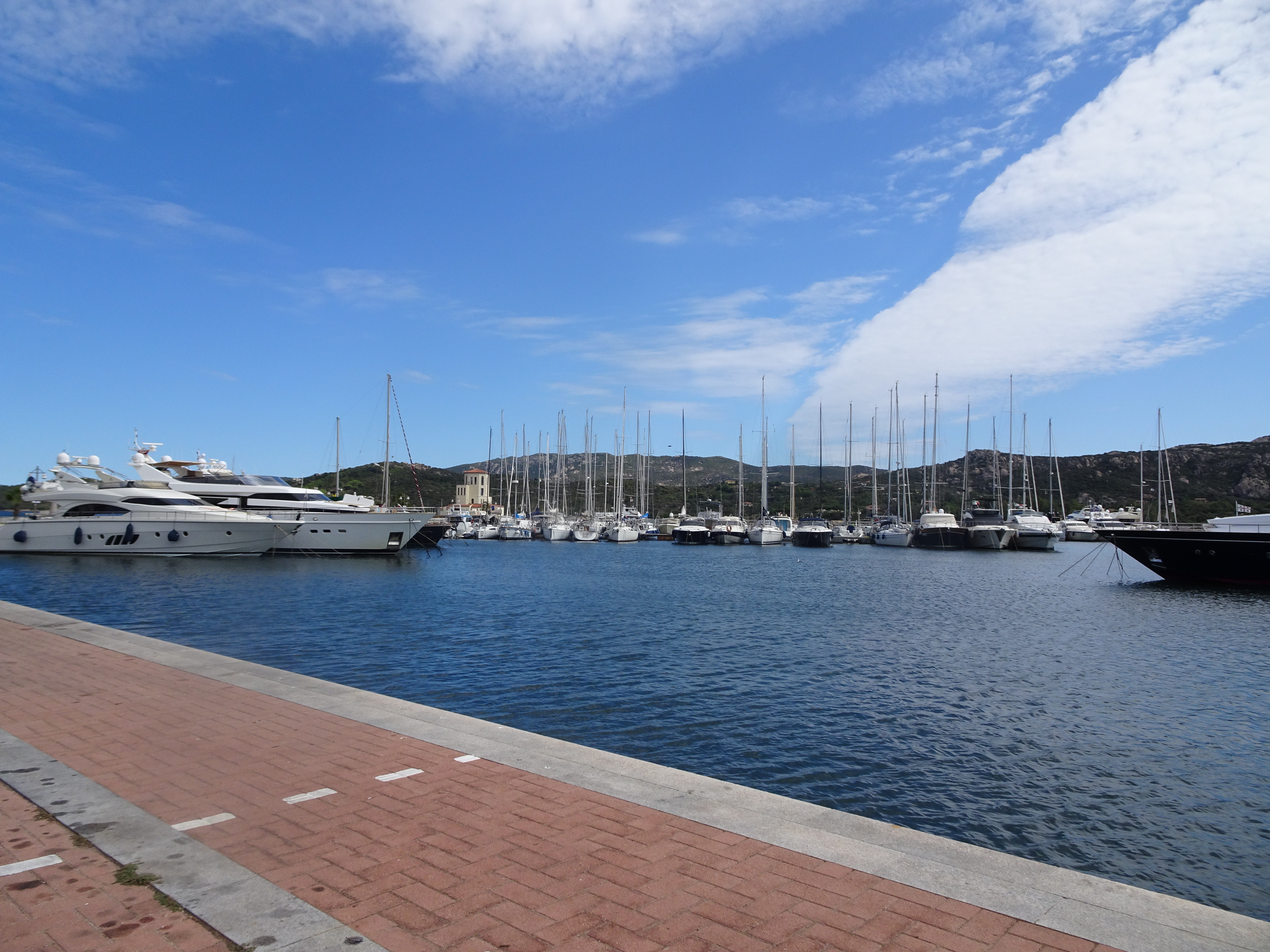
Ajaccio, Corsica’s capital, is a beautiful, pastel-coloured city sweeping around a bay in the west of the island. It has a busy port with ferries coming and going, a few cruise ships stopping by and a marina full of expensive yachts.

One of our first jobs in the town is to find the ‘Orange’ shop and renew the SIM card in our mobile wifi device. This is the only way, for now, that we know how to keep internet costs down while travelling in Europe and I’m nostalgic for the pre-Brexit days when we never had to consider such things.

The city is everything you’d expect from a grand, old Mediterranean municipality- narrow streets edged with tall, terraced buildings, grand squares dotted with palms and a beachside citadel, sadly not open to the public but picturesque all the same.

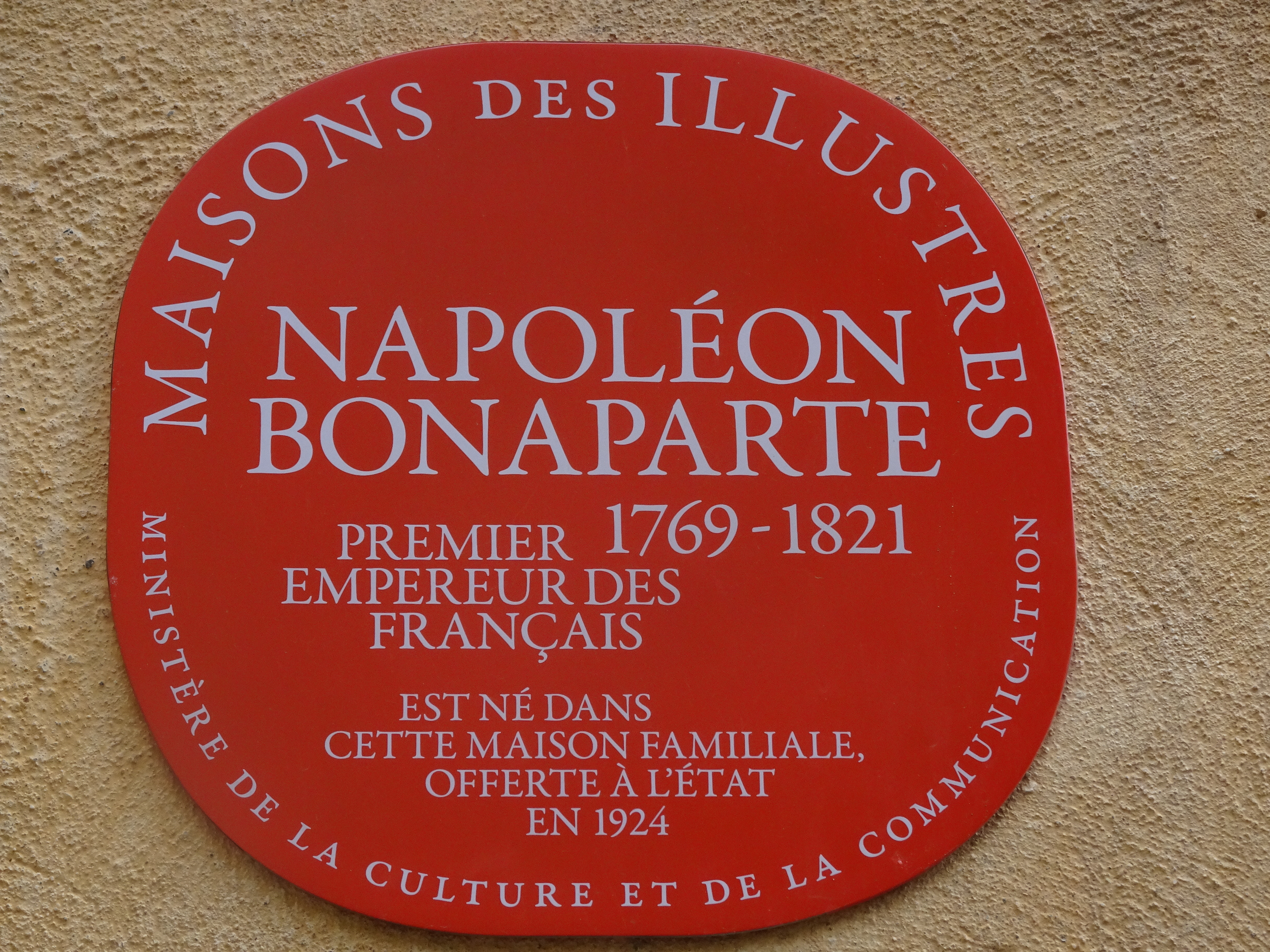
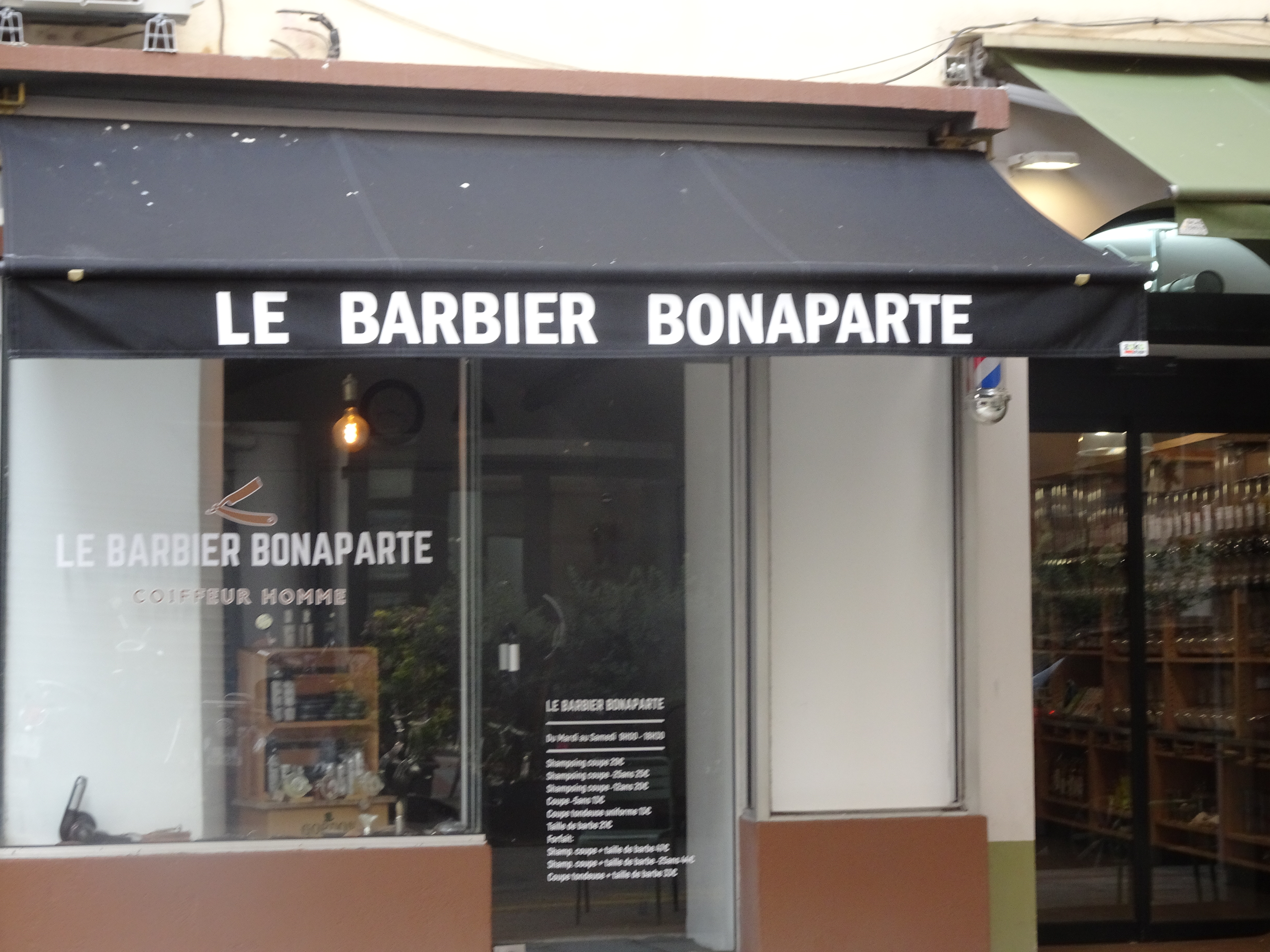
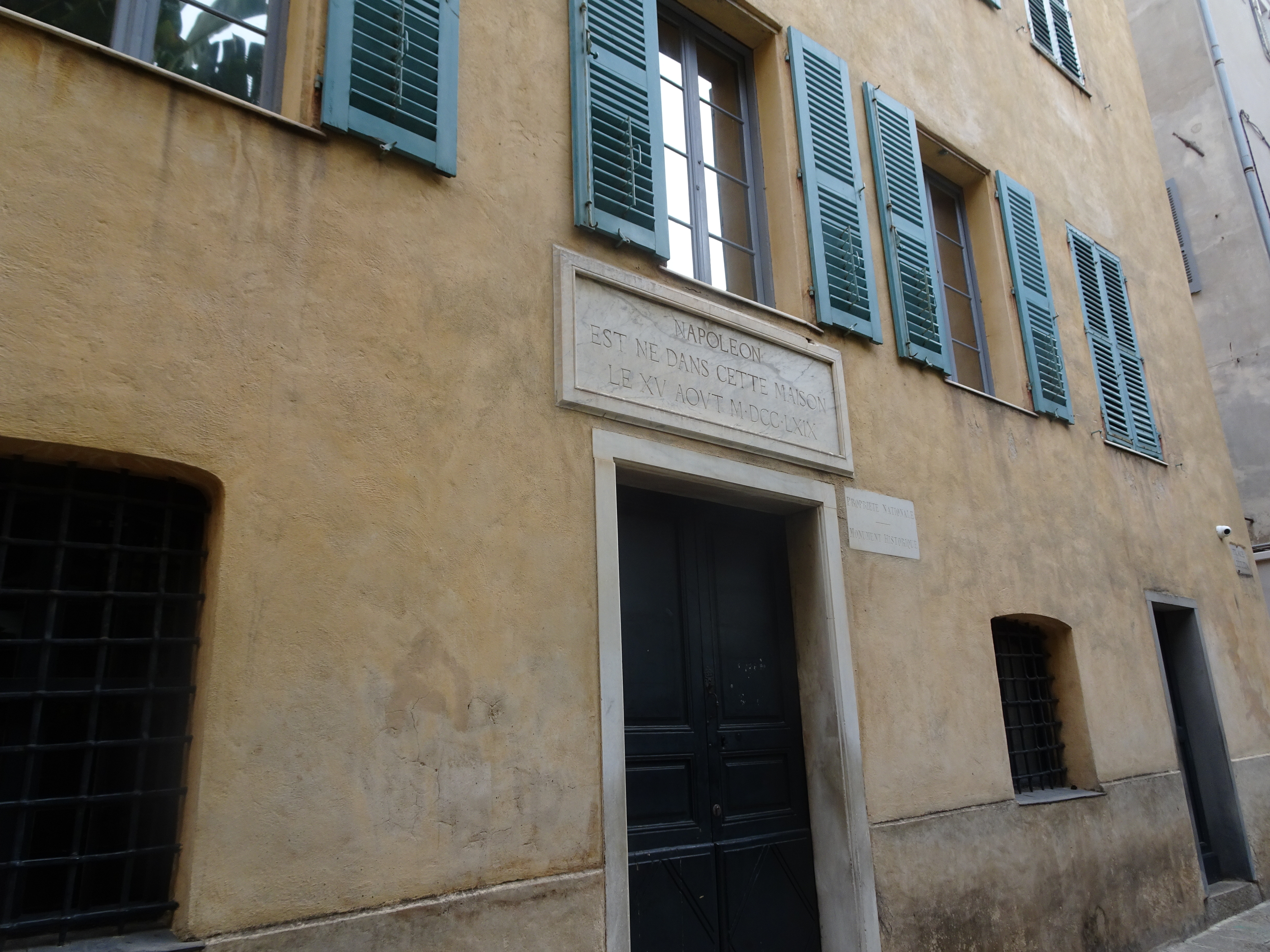
One of Ajaccio’s claims to fame is being the birthplace of Napolean Bonaparte, a historical event much capitalised upon. Boney is everywhere, from pubs to barbers’ shops. We find his actual house in a tiny, cluttered street; a modest building next to a bar. Almost everything in the street is Napolean-related and there are groups of tourists eagerly snapping away.

The town’s main square is huge and houses the Hotel de Ville as well as ornate fountains. There is, of course a plethora of gift shops, bars and cafes. They are competing for cruise passengers’ cash. There’s a huge, white floating hotel in the harbour and it’s easy to spot its occupants as they wander the town dressed in their cruise outfits. They’ll be returned on board by the time we begin to look for a restaurant, so we’ll have plenty of choice.

In the late afternoon we need to look for somewhere to eat, principally because we’ll need to get in the queue for the ferry in a couple of hours. It’s tricky. Here in the Med, folks tend to eat late, with or without children, which means the restaurants don’t open until late, either. But most have a 7.00pm opening, which is just about ok for us to be in time to queue. We gravitate towards the dockside, a location that we know from experience is likely to provide a good choice of eateries. It’s fair to say that the meal we choose is fine, though not as inexpensive as most of our restaurant meals on Sardinia and Corsica have been.

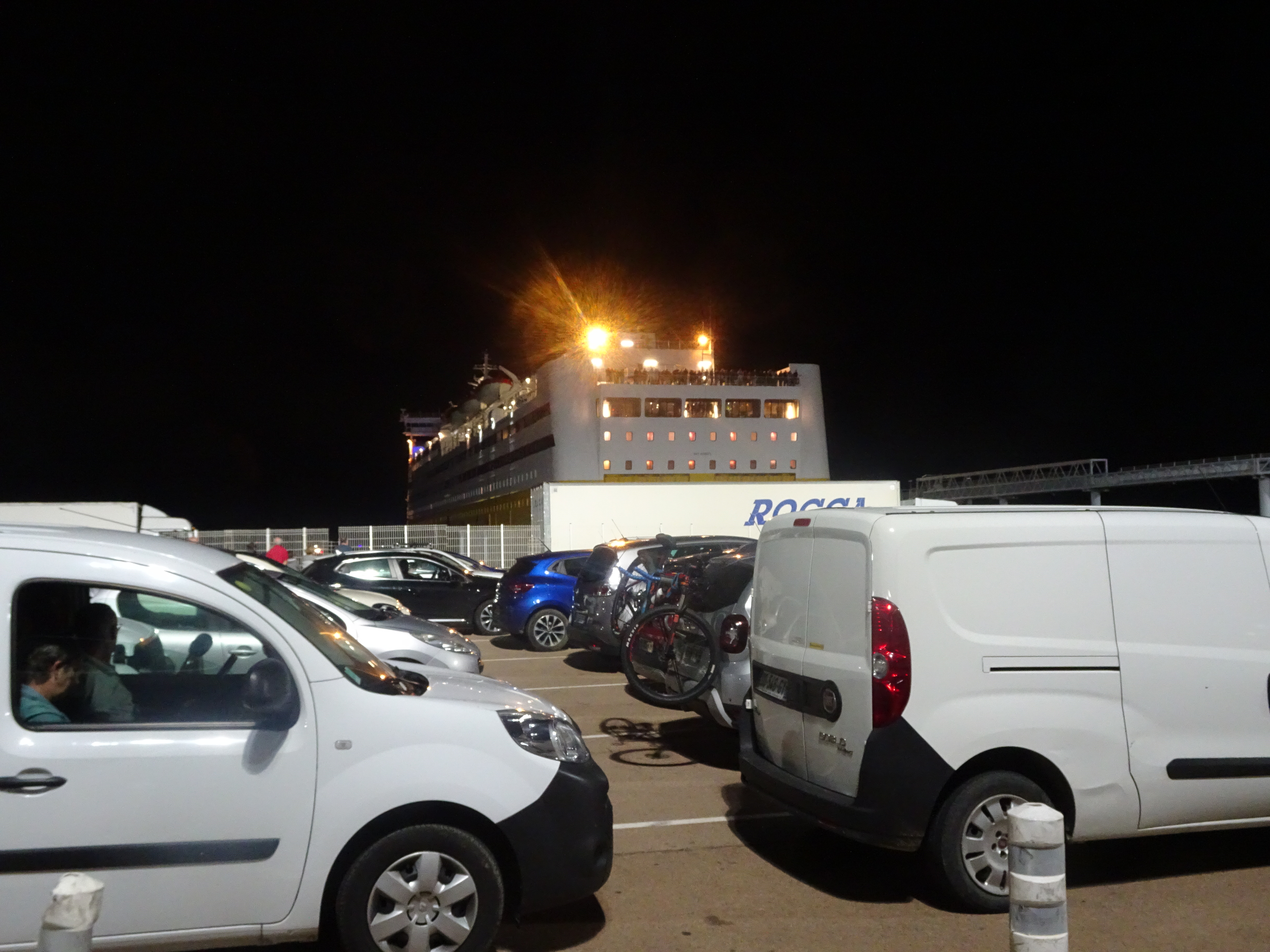
Then we’re negotiating the complex maelstrom of roundabouts and slip roads which take us to the port and thrusting phone screen barcodes at various neon-vested ferry workers. A group of three lads seem to have a bantering discussion over the size of our van, despite us telling them the length but at last we’re directed into the appropriate lane and just have to wait. We’ve done all this enough now, to know the routine. There’s a long wait but once the ship arrives everything happens quickly, the inbound vehicles streaming out and disappearing into the [by now] dark and the processing of the outbound traffic. It’s like some complicated puzzle, fitting all the assorted cars, vans and motorhomes into the hold and then it’s our turn.

There’s little information or direction to the way we must access the passenger decks. This is not Brittany Ferries- where a member of staff hands you a ticket with the coded exit and stairs you need to use. We are left to work it out. We’re sandwiched tightly between huge lorries but there is a lift nearby that we can squeeze our way through to. When we get up to the passenger deck we exit into a large, shiny space with lifts either side of us. I’m weary by now and in an addled state, neglect to notice where we are. We’re intent on 1] finding our cabin and 2] finding the bar, both of which we manage to do.

I’m a little dismayed to find that our cabin has bunk beds, meaning that one of us will have to clamber up and down a ladder. This is not good. Nowadays, both Husband and I need to take nightly trips to the toilet, which is housed in a bijou en-suite in a corner. There’s a hiatus while we both ponder whether we will be the one to undertake this, then I volunteer to sleep on the floor and remove the mattress from the top. There’s just about room to put it on the floor with the end tucked under the bottom bunk.

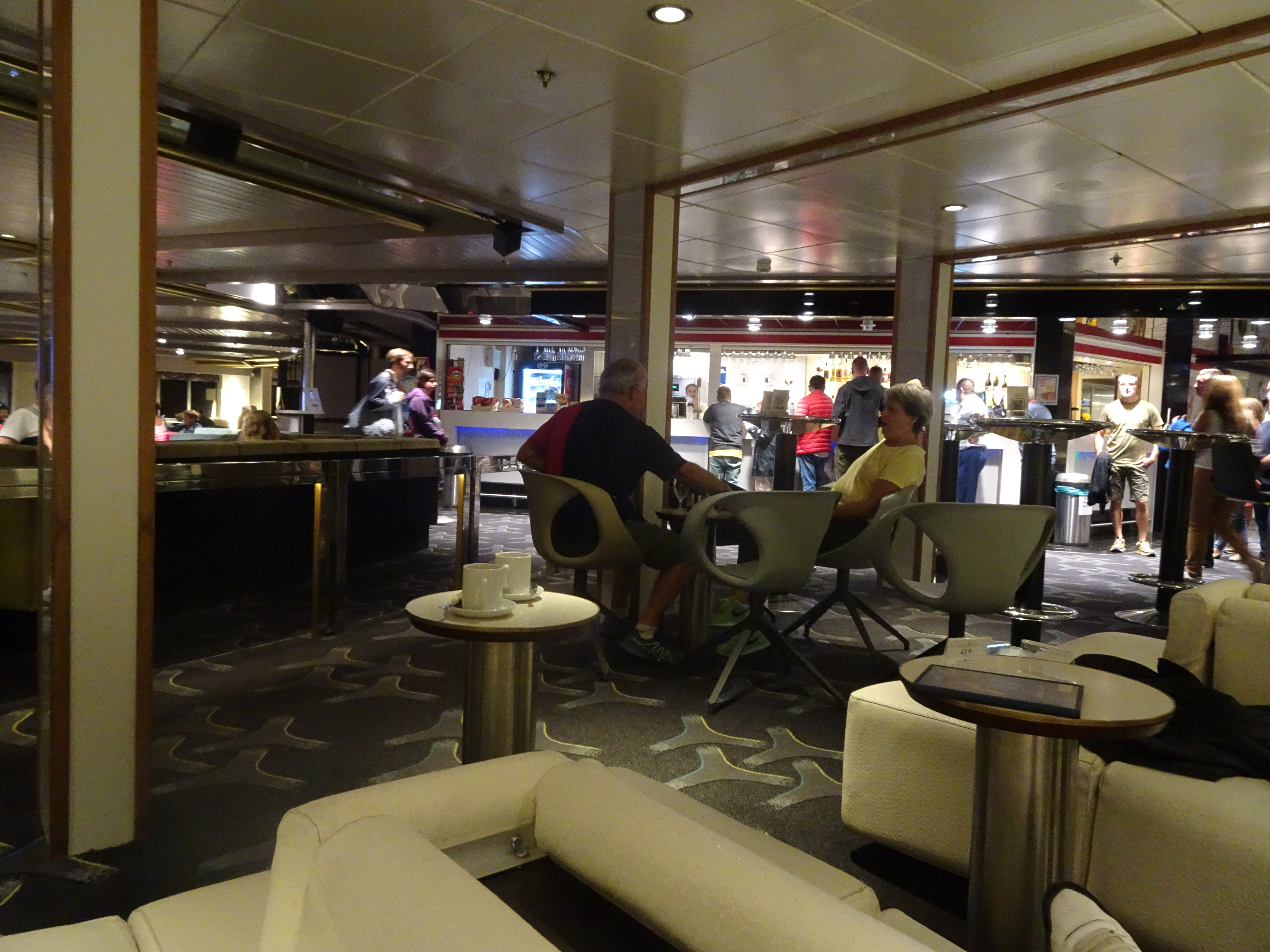
We decamp to the bar, where we toast our departure amongst a throng of fellow passengers. Through the blurry windows Ajaccio recedes. There’s nothing else but to retire to the cramped cabin. I tuck myself into the duvet on the floor, hoping not to be trodden on by a bathroom visiting Husband.

In the event, it’s not a restful night’s sleep and I’m glad of my Kindle for whiling away the hours until we pull into Toulon. I’m unrested, stretched and brain-fogged from lack of sleep as the ship shudders up to the quayside. It’s still dark outside as we stumble up and stow our things. Now, how do we find the van? Hmmmmm……

Grace is also known as the novelist, Jane Deans. Her new novel, The Conways at Earthsend is available from Amazon, Waterstones, Goodreads, W H Smith, Pegasus Publishing and many more sites. Visit my website: janedeans.com or my author page on Facebook: (1) Jane Deans, Novelist, Short Fiction and Blog | Facebook.

Corsica- the Last Gasp

When we get back to the south of Corsica from Sardinia we head towards Propriano, slightly to the west, although en route we’ve a plan to see a startling outcrop of coastal rock called the ‘Rocher de Lion’. It’s more wiggly, mountainous terrain but worth it, as the lion rock is amazing. We’re lucky to be able to stop for photographs in a small lay-by which houses a cafe, closed when we arrive. It’s also a convenient place for us to make a coffee.

There’s an ancient, neolithic site we’d like to see, inland at Finistola. We’ve left it until now as it’s not too far out of our way. It’s on the outskirts of the village and has a roomy car park, empty when we arrive. There’s a modest charge for tickets but once we’re through the site is extensive and has a wow factor, huge, mossy boulders framing cave entrances, stepped pathways and standing stones everywhere. The Corsicans have done a good job restoring and preserving the site and there’s an excellent visitors centre, too.

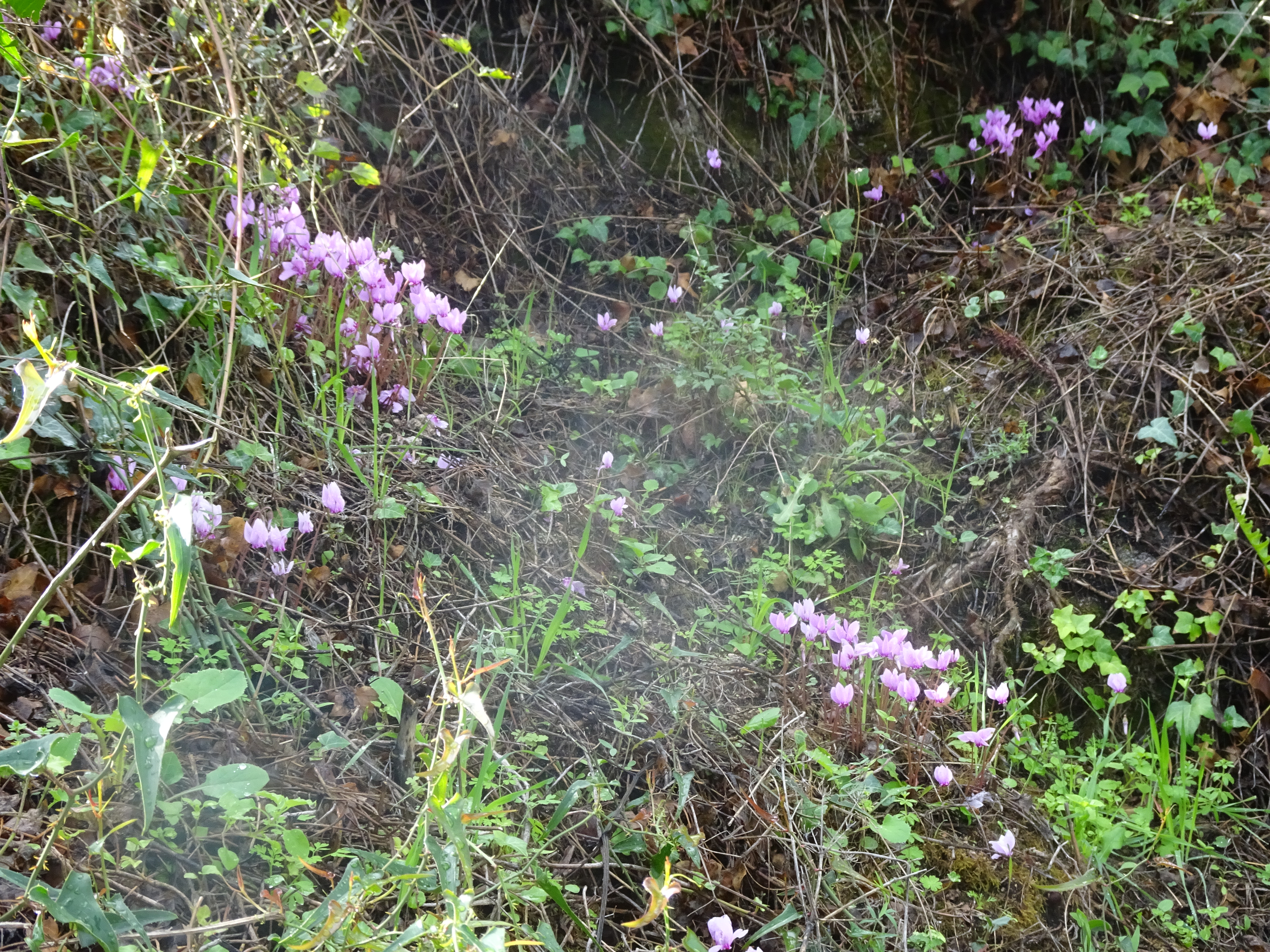
There are carpets of tiny, pink cyclamen everywhere, reminders that even here, in the Mediterranean, Autumn is hovering.

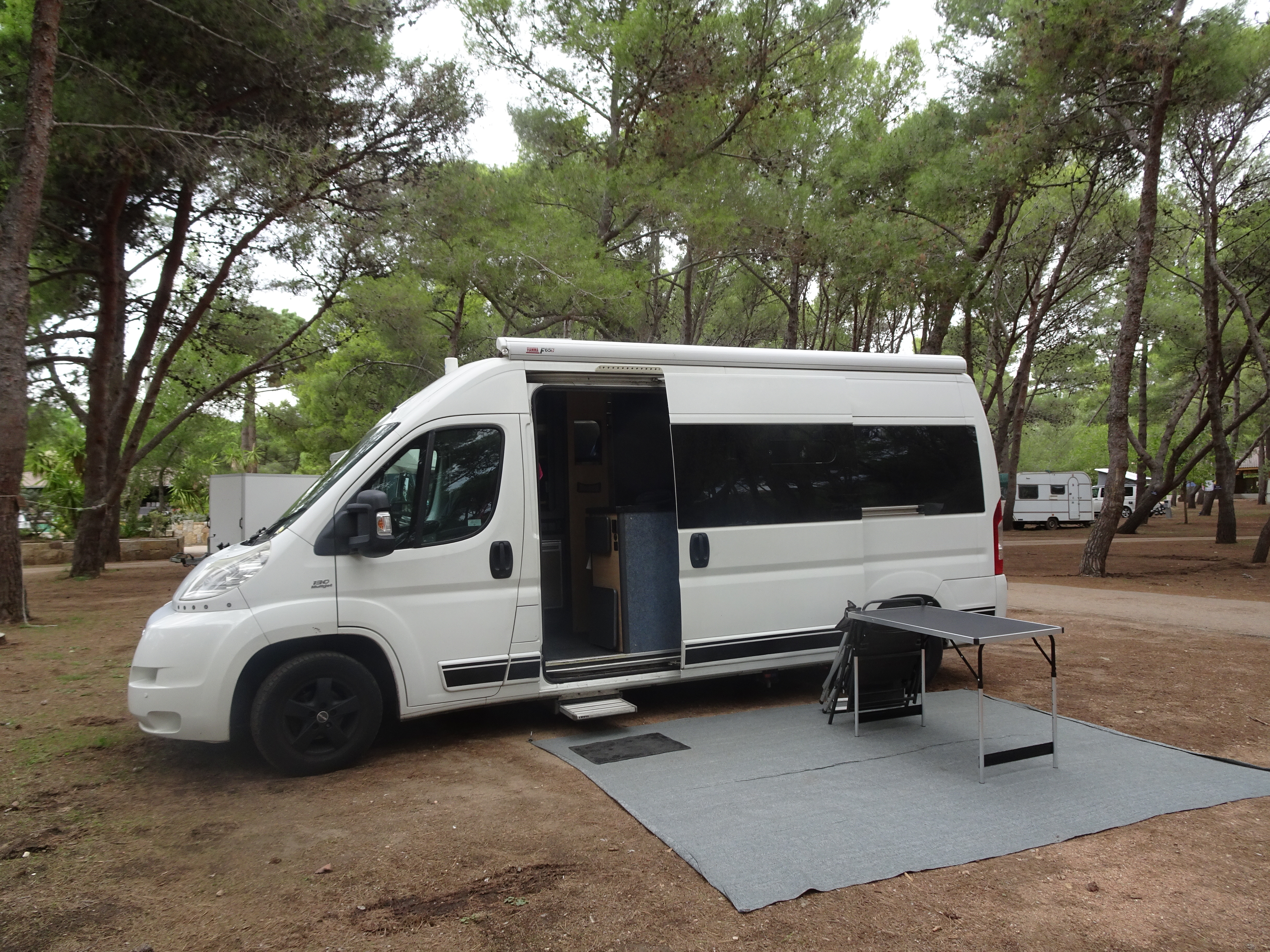
Then we’re off again, making for a site around the bay from Propriano. There’s a descent down to the coast before a long strip along by the beach. Again, the site is away from town in a residential area opposite the sea. It’s wooded and very, very quiet with only a handful of vans and one or two tents.

The weather has turned truly autumnal now and begun to be wet and windy. The ground in places is waterlogged too. End of season is upon us! There’s a longish walk to the nearest bar or restaurant, not tempting in a squally gale. A walk along the road in the opposite direction takes us a short way before the footpath peters out. In addition to this, the campsite bar and restaurant seems to be closed, meaning we’ll be thrown back on our own resources once more. I’m full of admiration for those who’ve pitched tiny tents on the soggy, puddle-ridden ground. We’ve brought our half-dried laundry from the previous site, which I hang out between the trees in a dry spell in hopes it will dry.

Two nights is enough and we move on again, this time near to Ajaccio, Corsica’s present capital, to a site near Porticcio, just around the bay. The pitches are a little soggy and the services antiquated but it will do until we depart. A tabby cat takes a liking to us and makes himself at home on our groundsheet but we’re not inviting him inside!

This time we’re in walking distance of the small seaside town so we take advantage and go to look. And it’s just that- a seaside town, with beachside bars, restaurants and shops. Ajaccio can be seen across the bay. It’s tempting to book a table for the evening but the walk home is quite long to be doing late at night. There is also a small bar outside the entrance to our site but it closes in the evening.

Our ferry from Ajaccio to Toulon does not leave until late evening, leaving us a full day to explore the city. It’s not far to get round to the outskirts but finding somewhere to park for the day seems impossible. There’s a car park on the way in, although the town is miles away around the bay. We drive through the centre, which is completely jammed with every kind of traffic. All car parks are full. We drive to the other side, beyond a long strip of cemetery and find a seaside car park, again, a long way from town.

After a coffee we try again, travelling back through the snarled-up streets, parking in a space near the port for a short time, just to have some lunch then noticing the railway station car park is opposite! Hooray! We’re off to explore the town!…

At Last! Return to Corsica

We’re aware that we must pay up for our stay at the site near Santa Theresa Gallura the evening before we leave, while reception is still open, as we’ll need to be early next morning to catch the ferry to Corsica. Feeling noble, I volunteer to make the descent down to the gate and pay, negotiating all the levels then flogging back up all the slopes and steps to our pitch at the top. Getting to the door of the van, I see Husband talking on his phone and once he’s done, he shares the news that our ferry for next morning is cancelled due to inclement weather and we won’t be departing for another couple of days.

‘Your turn’ I tell him. And he makes the steep descent back down to reception to re-book for two more nights. It leaves us with the knotty problem of how to occupy two days here in relative wilderness without beach weather. But it’s true that the skies are overcast and the stiff breeze is strengthening to gale level. Later, squally rain is added to the mix. I’ll admit to disappointment that we’re not leaving for Corsica just yet. There are a few places there left to see and not a lot besides reading or internet we can do here in the middle of nowhere except beach, which is not tempting in the wind and wet. Hmm-

With a day to fill, we opt to secure the van’s interior and go for a look at Santa Theresa Gallura, where we’ll be leaving from when the coast is clear. It’s only a couple of miles down the road. The town is hilly, with narrow streets but we find a car park that will accommodate the van and walk towards the beach front area. It’s very windy though not raining and when we reach the sea, we can see the strip of limestone cliffs that is the coast of Corsica across the choppy waters.

If you cross the sand into the corner of the small, sea-front beach there are steps up to a cliffside walkway. It doesn’t go all that far but is fun to walk round, especially with choppy waves splashing up, although the only option is to return via the same route. After this, we wander the town a bit. It’s pleasant enough, with some attractive squares and plenty of gift shops. Then it’s on to have a look where we’ll be getting the ferry and to ‘Eurospin’ for groceries.

Next morning we’re up early to prepare for the crossing, arriving at the port to join a queue for the ancient ferry, which is already waiting. We get a coffee and pastry from the portside cafe then I’m told to vacate and board as a pedestrian while Husband waits. Soon I can watch while he turns the van and reverses into the mouth of the boat whilst being shouted and gesticulated at. We’re learning, by now, that this is the way of Italian ferry workers.

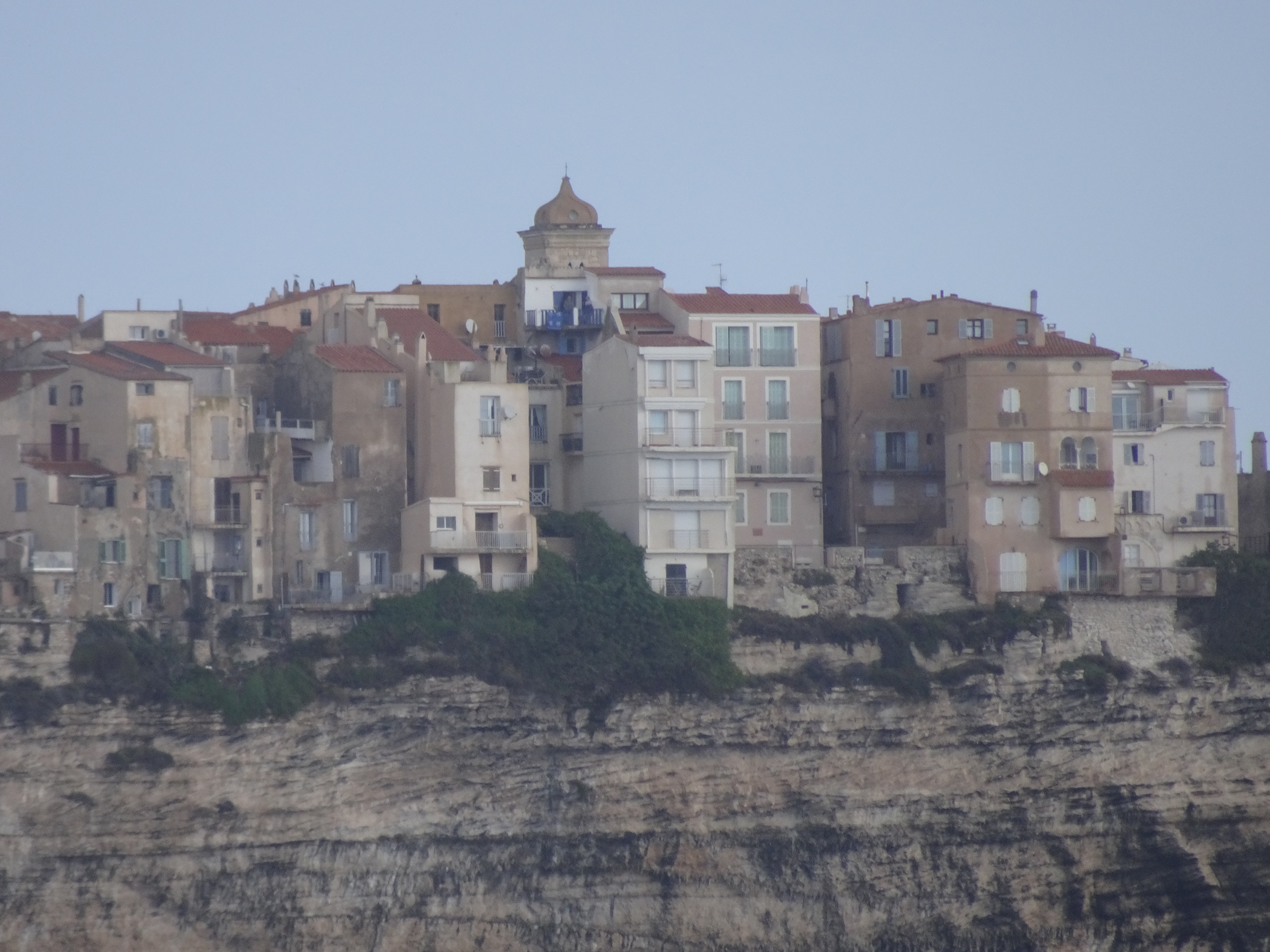
There’s not much sun, but I can’t help standing to watch as our vessel approaches Bonifacio, the white cliffs growing larger, the medieval buildings on their overhanging ledge. I’ve already taken far too many photos of this picturesque city! Then we’re rounding the cliffs into harbour and as Husband descends to the hold to get the van, I follow the pedestrian walkway out to meet him. There’s just the steep ramp of road up from the quay to negotiate- thankfully without obstacle or need to pause this time. We’re back on Corsica!

Grace is also known as the novelist, Jane Deans. Her new novel, The Conways at Earthsend is available from Amazon, Waterstones, Goodreads, W H Smith, Pegasus Publishing and many more sites. Visit my website: janedeans.com or my author page on Facebook: (1) Jane Deans, Novelist, Short Fiction and Blog | Facebook.

Isuledda? Yes we is…

In a typical episode of senile dementia fog memory lapse, neither Husband nor I remember the Costa Smeralda site of Isuledda until we’re about half a mile away, then bells begin to ring and once we’ve turned off the road and up their driveway we pass a spot with a hosepipe where we’d washed our [previous] van prior to departure and I’m certain. Yes. We stayed here in 2016, on our way up from Sicily.

But wow, has it changed! Their reception building is familiar, but that’s about all. Last time we chose our pitch, down by the water on a terraced section. This time the waterside pitches are ‘premium’, meaning you pay more. We’re taken on a zooming golf cart ride to view available pitches away from the water, round some bends, up a hill and along some lanes. There’s been an explosion of chalet installation and the entire place has expanded, spreading over far more land. We choose a place and get returned to reception, where we check in and we’re soon installed among the German vans. This trip, as well as the last excursion to the south-west of France, has been dominated by German tourists. We’ve no problem or complaint with this. They are always friendly, chatty and pleasant. But we’d have liked a more cosmopolitan set of neighbours- for variety.

In the next aisle there’s a bus. It’s there for a group of Czech cyclists, who are camping just down the lane from us, have their own caterer and pile on to the bus each day with their packed lunches, followed by a trailer carrying their bikes. They are brave and fit to be cycling the roads here in Sardinia!

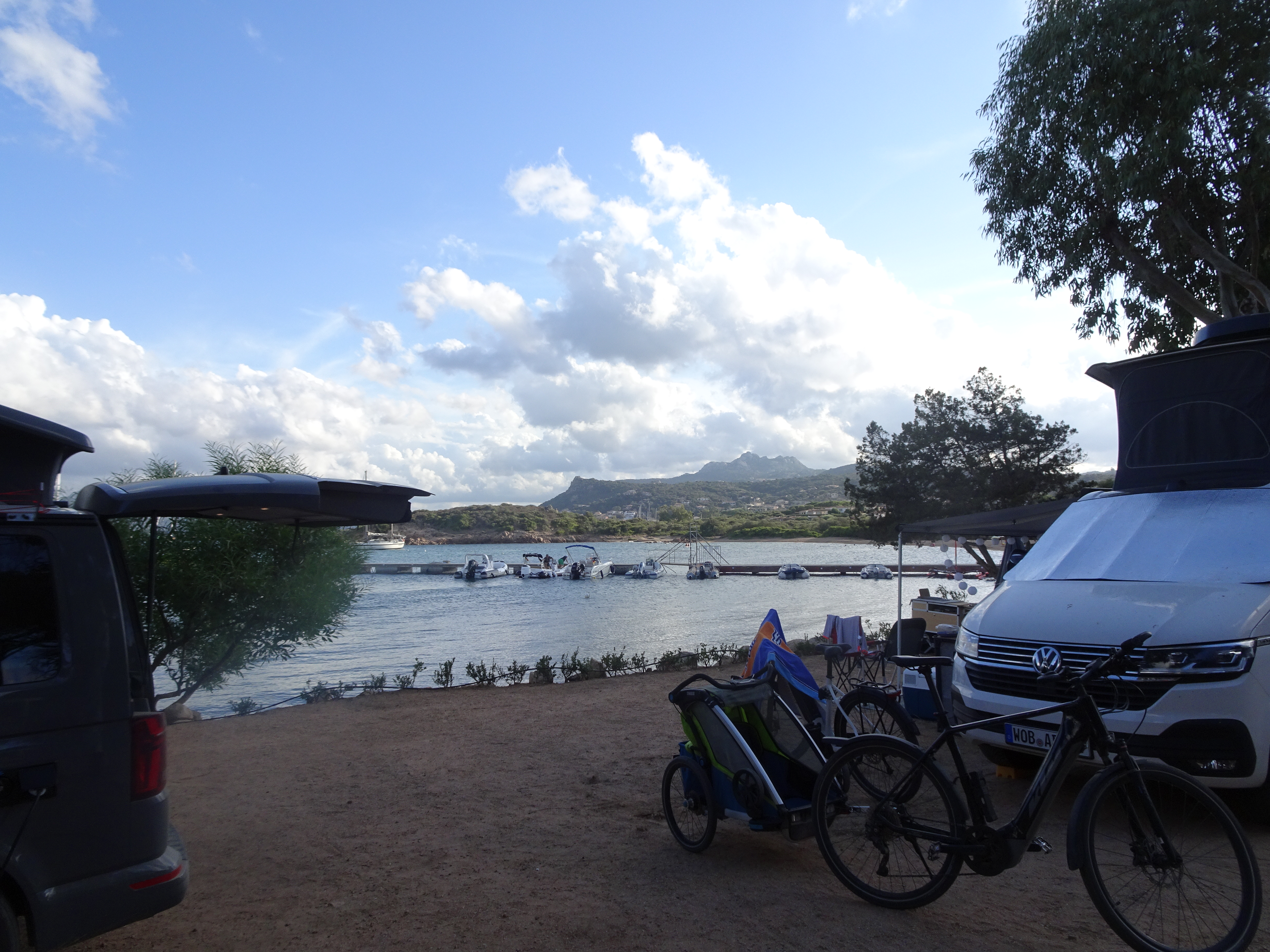
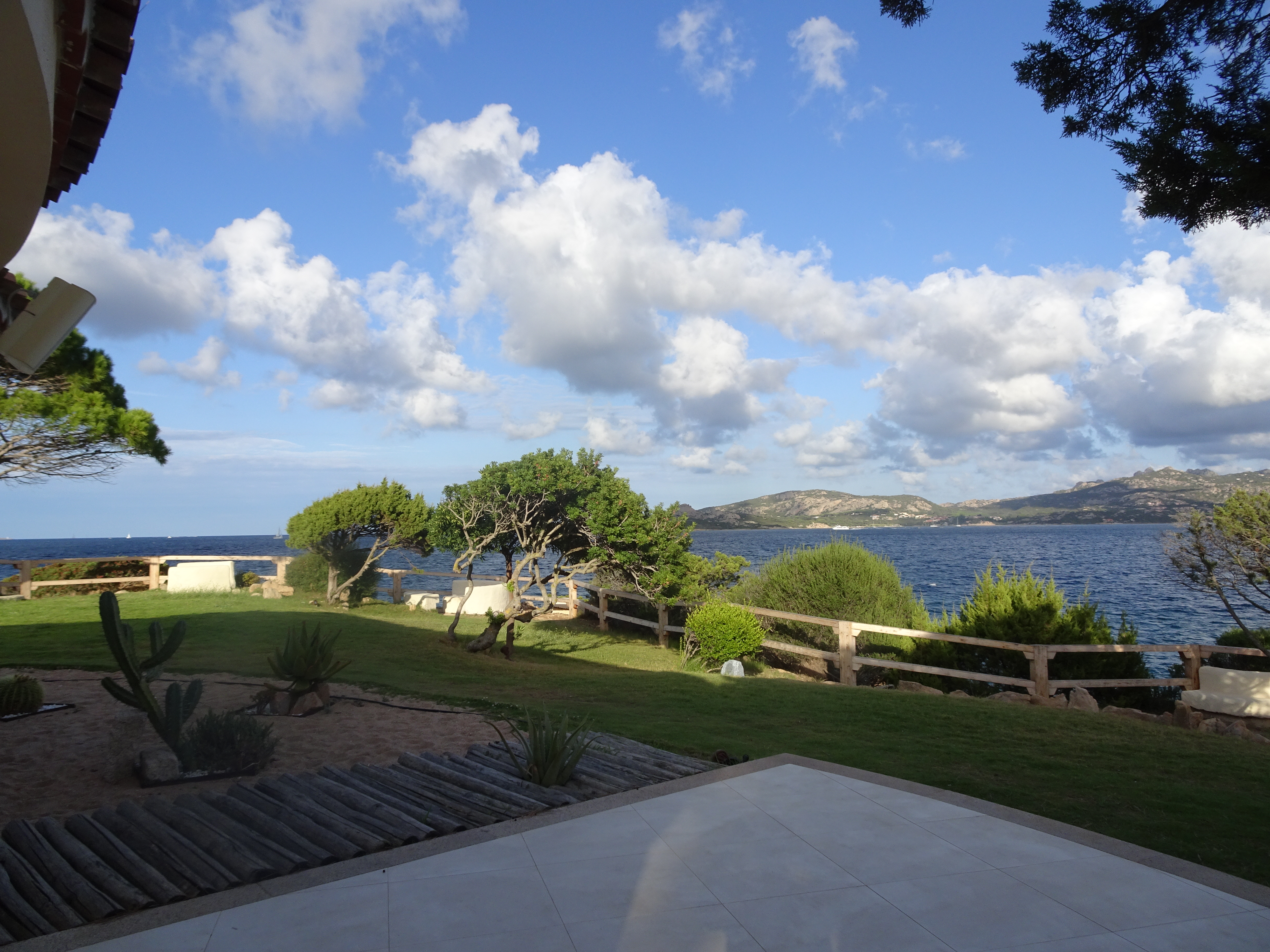
We’re on a kind of hillock, almost overlooking the sea. If it felt like end of season was approaching in one or two of the previous sites, here there’s no sign of it. The place is full to bursting. There’s a waterside cafe and a new bar area, besides the restaurant that was here before, also some kind of performance arena- not in use this late in the season, for which we can be glad.

We spend our first day walking along to the nearest town, Cannigione, to get lunch. We’ve been before but it’s a pleasant walk with lovely coastal views. There isn’t a lot to the town but we find a pleasant cafe on the front and afterwards it takes next to no time to see the rest of the place.

We can access the beach near our pitch but an attempt to spend time relaxing there next day is thwarted by a strong, cool breeze so we opt to walk instead, falling foul of the billowing drizzle that begins to fall. It all lends more ‘end of season’ to the days, especially after all the heat.

It’s time to move on to our last Sardinian destination, a couple of miles outside Santa Theresa Gallura, where we’ll be getting the ferry in two days’ time. The site is steep and terraced, the road curling up and up. We opt for a pitch at the top, near the bar and restaurant where wifi is available.

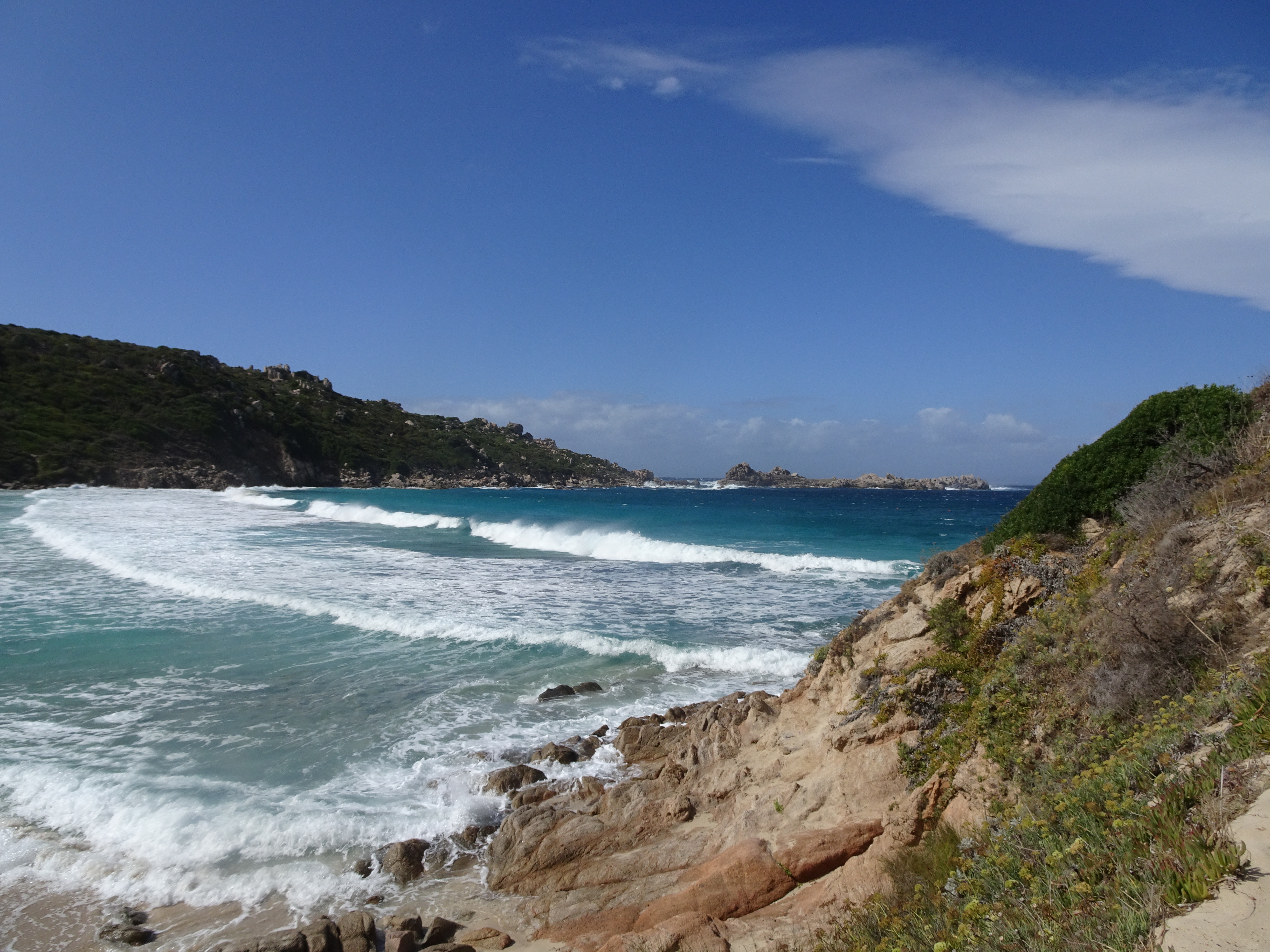
There’s beach access down a steep and rocky track but it’s worth the walk and the climb back up. The coastline here is rocky and characterful, although there’s a stiff breeze again.

Our neighbours on site are a couple from Luxembourg, very proud owners of a brand, new VW van. They are new to touring but enthusiastic. We show them our https://www.acsi.eu/en/ discount card and campsite book and they discover the savings they could have made!

Grace is also known as the novelist, Jane Deans. Her new novel, The Conways at Earthsend is available from Amazon, Waterstones, Goodreads, W H Smith, Pegasus Publishing and many more sites. Visit my website: janedeans.com or my author page on Facebook: (1) Jane Deans, Novelist, Short Fiction and Blog | Facebook.

Two Sites and a Funeral

With all avenues having been explored at the Tortoli site on the Sardinian east coast, in other words a short, hot walk along the road as far as it goes and back again- we up sticks once more and ready the van for another hop north, this time towards Siniscola. There’s a site at Santa Lucia, a small seaside village. I look at the map. The road is ominously wiggly, heralding more mountain road terrors.

You’d have thought I’d be getting used to staring dizzy drops and horrific hairpins by this time, but rather than finding it all thrilling [as, admittedly. does Husband] I continue to perspire and grimace. But I’ve perfected the art of taking long, slow breaths as we approach bends or vehicles career towards us. This time, the journey is not aided by the scores of motor bikers who roar up behind us and swerve away at breakneck speed, sometimes enhancing the thrill by zig-zagging across the road. It’s clearly a favourite for motor cycles, also the one and only road where we spot three- yes, three British vehicles- all in one day; and having not spotted a single Brit during the entire trip to this date.

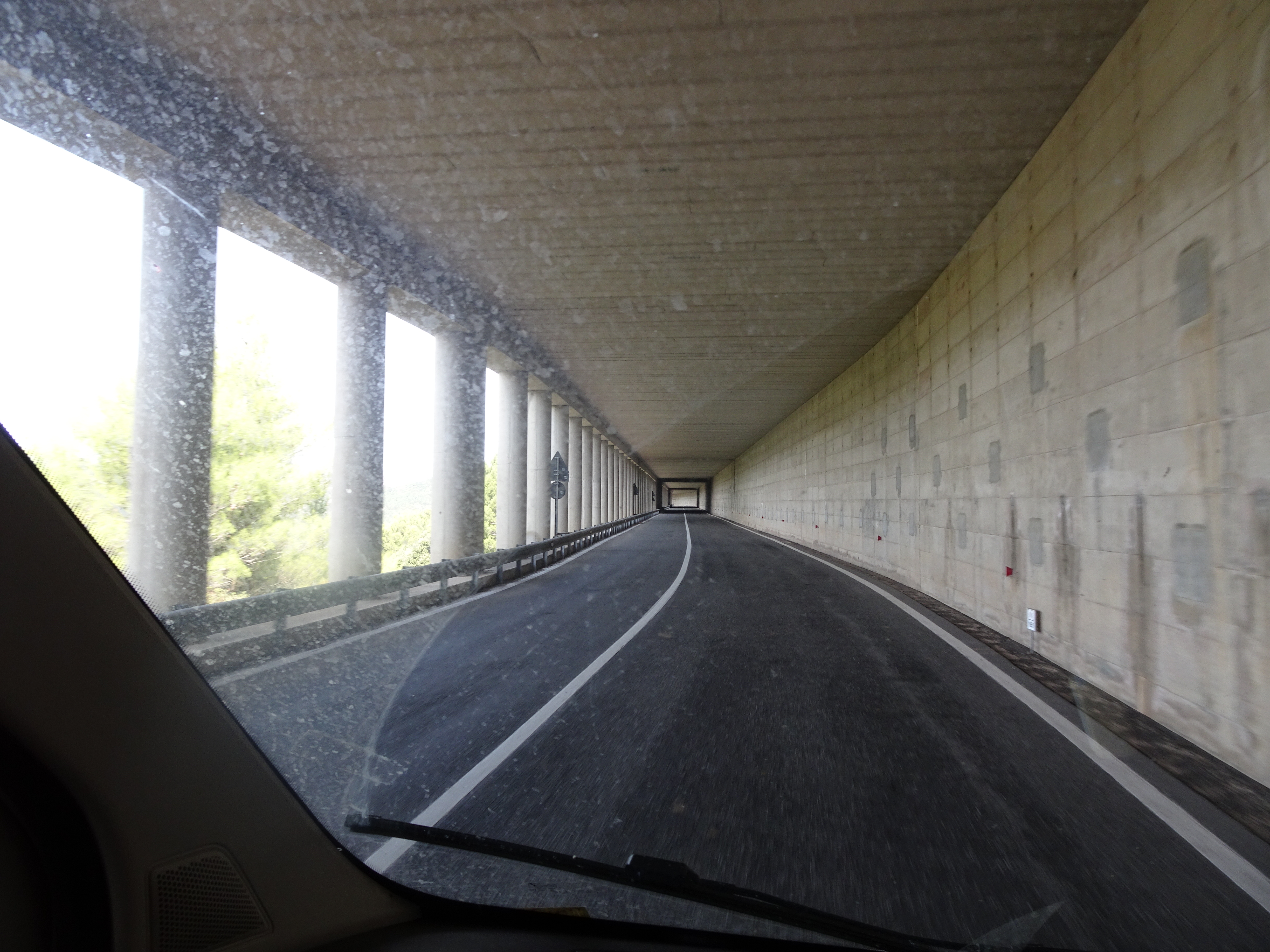
On this route, though there are some short stretches of respite, semi-tunnels where the outside edge is guarded by columns, and by the time we’re dropping down towards Santa Lucia it’s all become much more sensible. A search for a suitable place to stop for lunch gets tied in with supermarket shopping then we’re good to go to the site.

While we’ve been in Sardinia, our own, home, UK news has been full of the Queen’s death- a momentous event for many in our home country. And while any death is sad for those involved and close family of course I can’t help feeling relieved not to be saturated in the details and outpourings all day every day.

We pull up at the gates to our site. The woman in reception is pleasant and welcoming. ‘But you don’t want to watch the funeral?’ she asks me. For a moment I’m not sure what she means. ‘We’re showing it in the bar’ she tells me. I thank her, but say no, thanks, we didn’t know the Queen. [We still haven’t watched any of the ceremony/pomp/footage in spite of it’s remaining on YouTube], which the woman appears to find amusing.

The site is large and wooded with beach access via a woodland path. Getting into pitches is a little tricky, the first we choose being hampered by a gargantuan, Italian motorhome protruding into the access lane. The occupant makes a sudden appearance as Husband begins to manoeuvre into the space, gesticulating and waving like a banshee on speed. As I’m the other side of our van undertaking my own, usual, time-honoured signals, I find this frantic takeover annoying, as does Husband, so we roll across to the next space, away from the hyperactive, oversized-motorhome-owning Italian and his panicky signals.

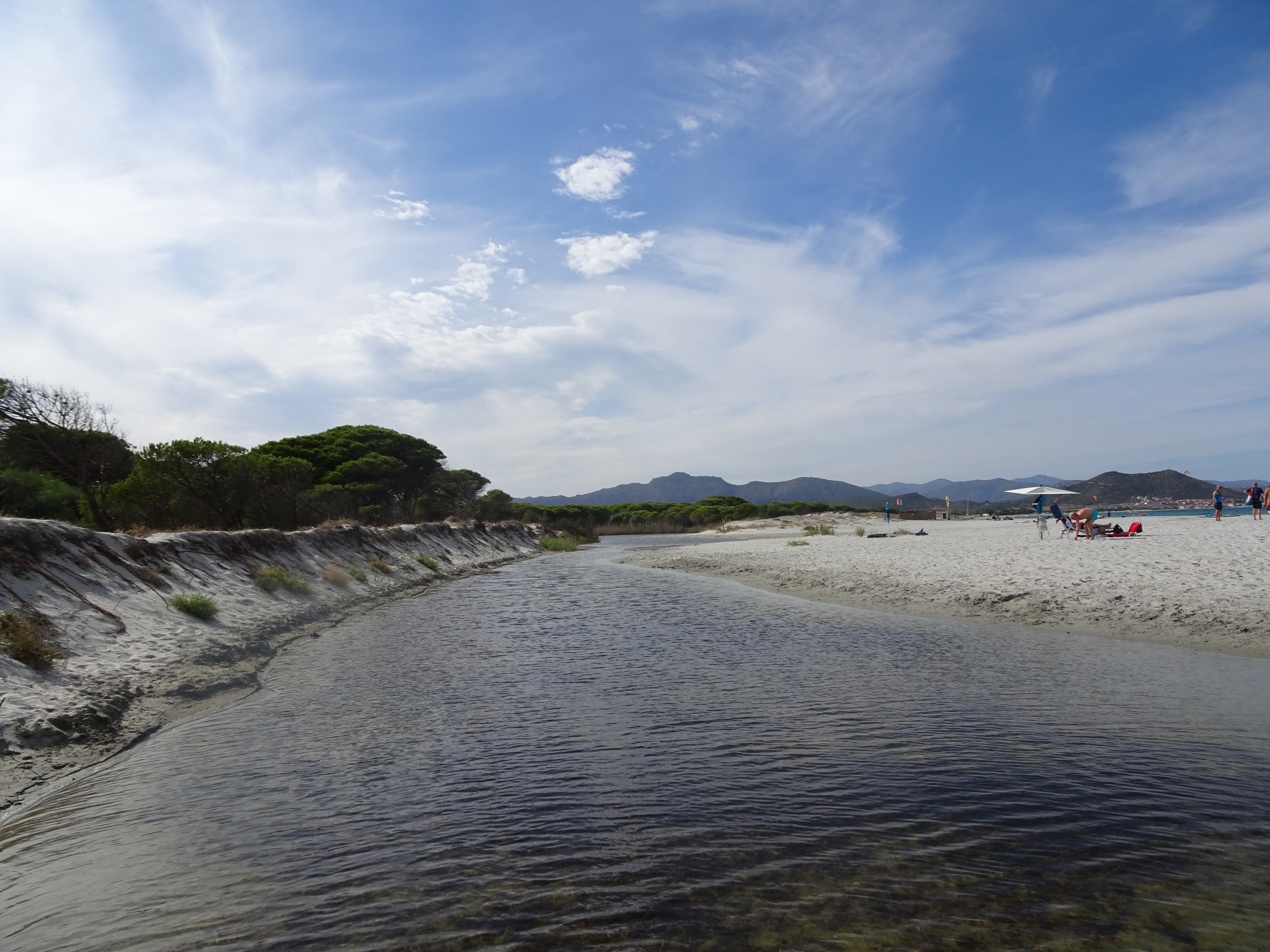
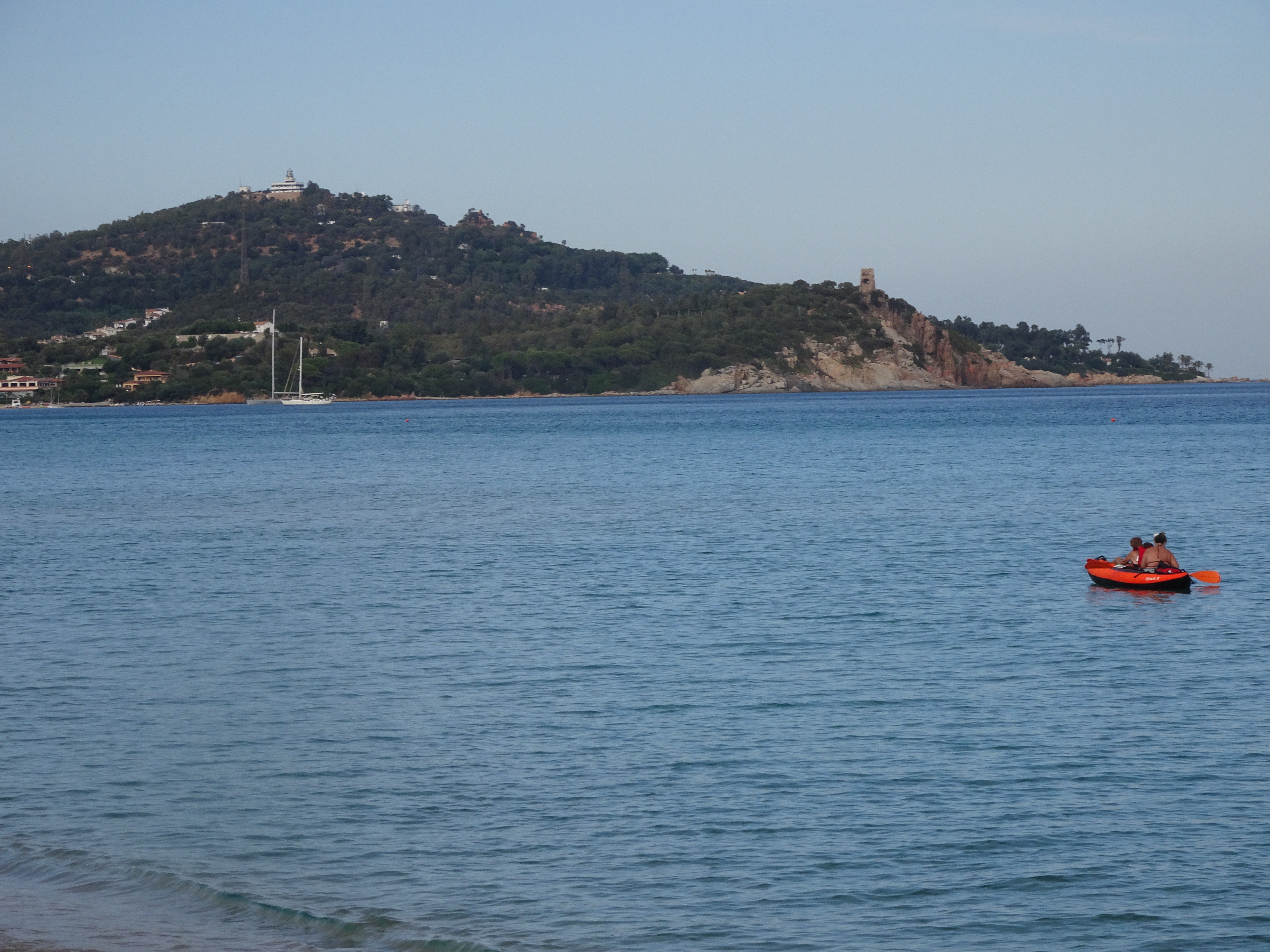
Again, the site is ideal for beach lovers. This time, we can walk along the road into Santa Lucia, although it is tiny and while it’s attractive and has a relaxing, seaside holiday feel it has nothing of particular interest.

It’s on again, then- this time only a shortish hop north and to the Costa Smeralda, Sardinia’s famous millionaire playboy playground which was developed in the 60s by the Aga Khan, who poured milions into the area. Lucky for us it still has campsites!…

Grace is also known as the novelist, Jane Deans. Her new novel, The Conways at Earthsend is available from Amazon, Waterstones, Goodreads, W H Smith, Pegasus Publishing and many more sites. Visit my website: janedeans.com or my author page on Facebook: (1) Jane Deans, Novelist, Short Fiction and Blog | Facebook.

Close Encounters of the Polizi Kind

After a few days at the site near Tharros, we decide to ditch the plan to go south to Cagliari and drive across the island of Sardinia to the east coast at Tortoli. We’ve seen nowhere on our site to empty the grey water waste from the tank under our van, so we ditch it on the dirt track that leads to the road. We need to shop for groceries. A quick sweep via SATNAV tells us there’s a ‘Eurospin’ at Cabras, ten miles down the road, so we head there, following the directions. Upon entering Cabras, a somewhat nondescript town, I spot the ‘Eurospin’ sign, its tall, blue, star-studded emblem standing in front of a bulldozed building site.

We turn around and head back towards a brand new shopping centre up a ramp, where I catch sight of ‘Conad’ [renamed ‘Gonad’ by us on a previous occasion]. As we move to the access lane I notice a vehicle pulling level with us, then see it is a polizi car and worse, the window is down and the police officer is screeching something at us. Horrors! He points to our waste outlet, now dribbling a miniscule drip on to the road. ‘Es una problema!’ he shouts at me. ‘It’s nothing’ I say, ‘it’s just water!’ He continues to shout and we turn off up the ramp. I look behind and offer thanks to some unknown deity that the polizi are not accompanying us to Gonad.

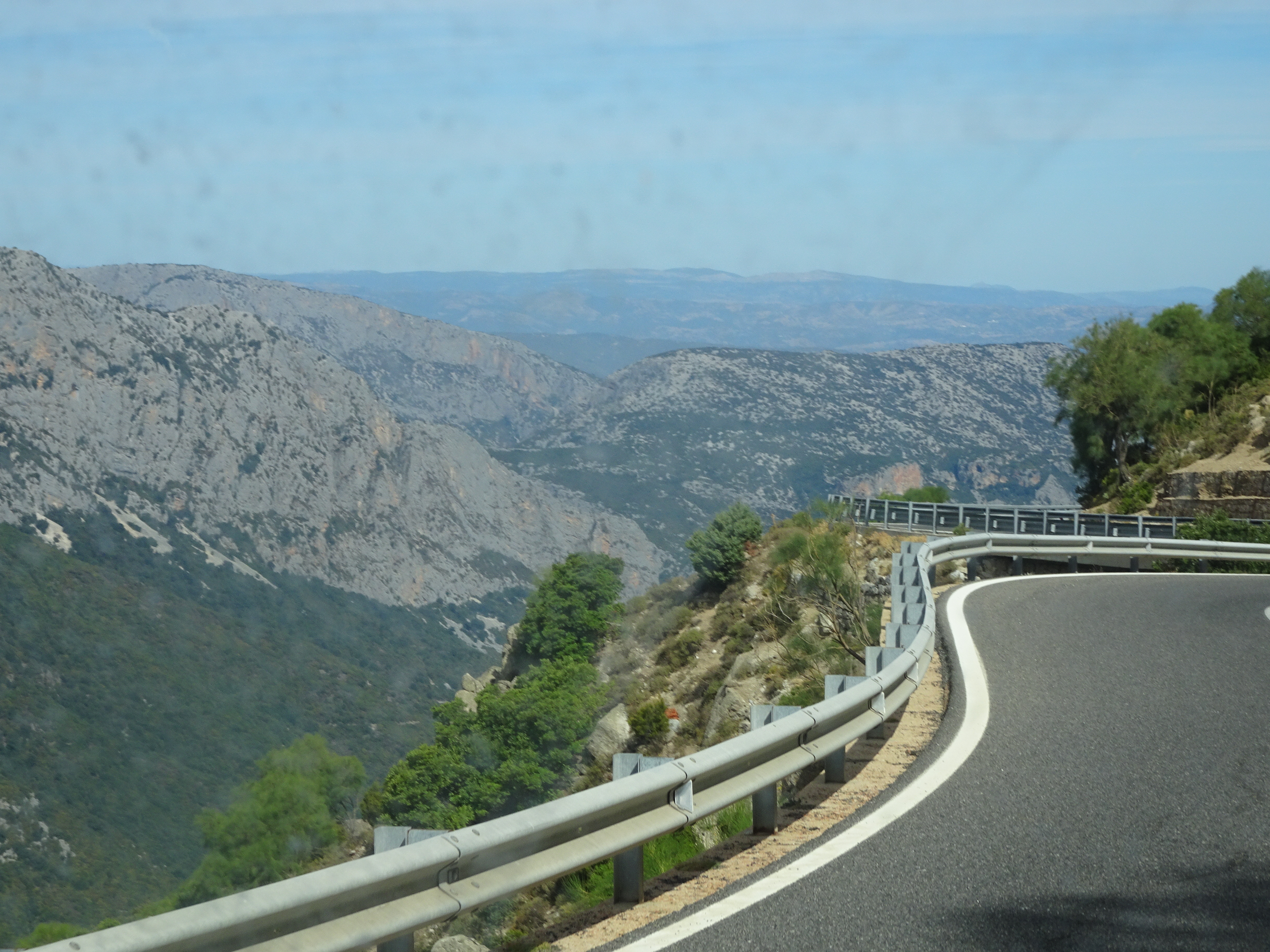
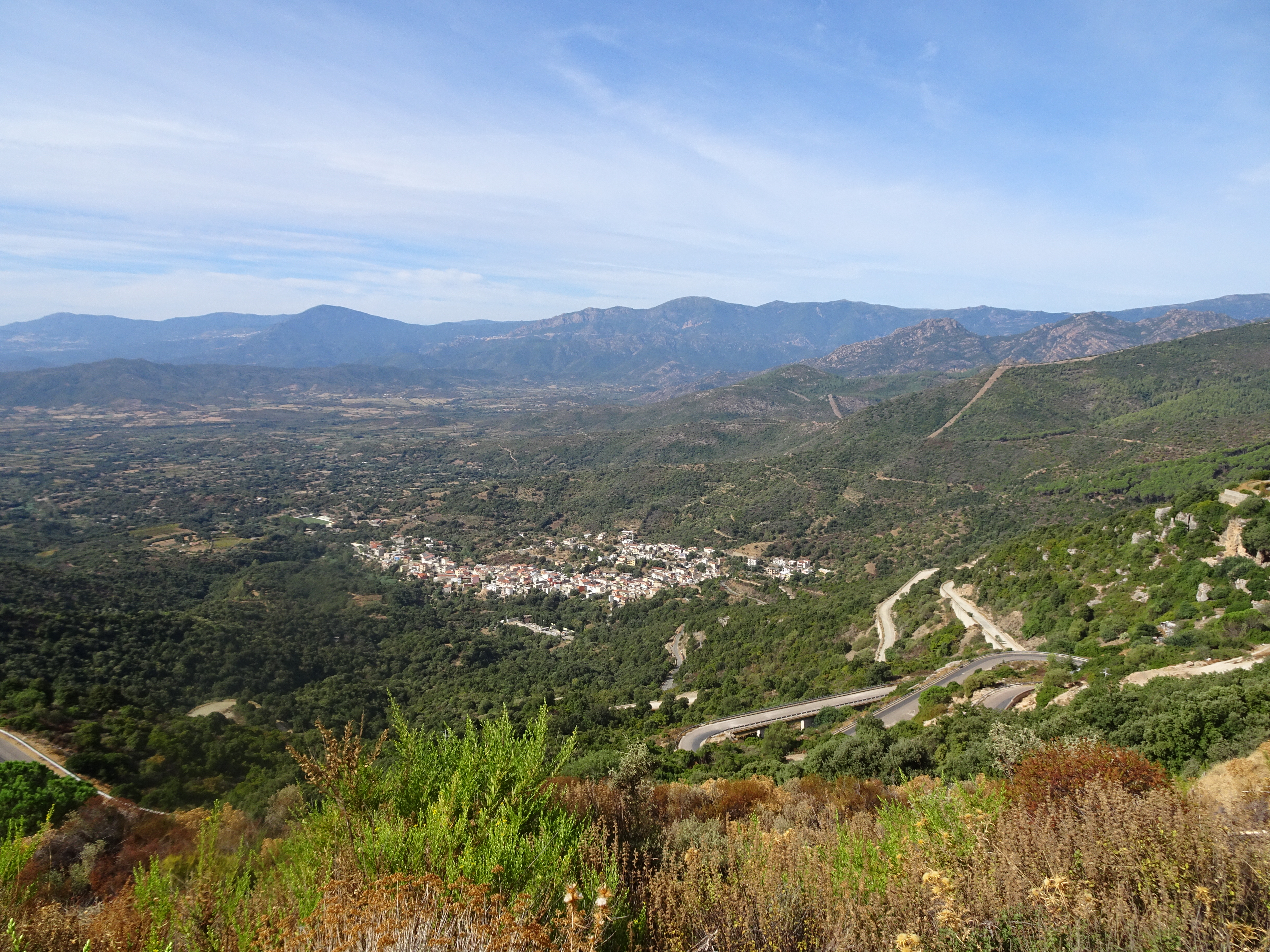
We strike out across the countryside, soon beginning an ascent on a mountain road which feels too narrow to me, the passenger sitting on the left with vehicles hurtling towards me round hairpin bends. It’s up and on up, winding high until we enter one of those villages that clings to the mountainside as if a giant has thrown armfuls of toy houses down the hill. It’s pretty as a picture but with nowhere whatsoever to park a van we’re obliged to drive through to the other side- where at least we do find somewhere to stop and photograph the views. But they do not do justice to the panoramic vista stretched out below, a snaking series of hairpin bends and, incongruously, a football pitch halfway down.

We continue on the mountain road, stopping for coffee at almost the top, by a sign warning us of stray cattle- not a worry that had preoccupied me on the white-knuckle drive. At last we’re following the road through a quarry, the entire plant occupying both sides of the road and drop down towards the sea and Tortoli. We find the site we’ve chosen, as usual a good way out of town and away from any village or community, which appears to be the norm in Sardinia.

It’s one of those swish, ‘village’ type sites with pool, loungers, beach access through a swathe of palm trees and what looks like a creditable restaurant. This is lucky, as we’re not anywhere near the town of Tortoli although we can see the port, way around the bay along the huge, breezy beach.

The site is half empty. Our neighbours are two young Italian couples and a small boy. The women wander off with the child while the young men set to pitching the tents, stringing up the fairy lights and installing hammocks between the trees. Once the hammocks [four] are in place, the larger man, who clearly enjoys his pasta, tries out a hammock, instantly stretching it to the ground where it tips him out. The fact that we’re watching with interest places no constraints on the pair’s activities. They’re delighted to have caught our attention, especially when the two light bulbs they’ve inserted work and we applaud.

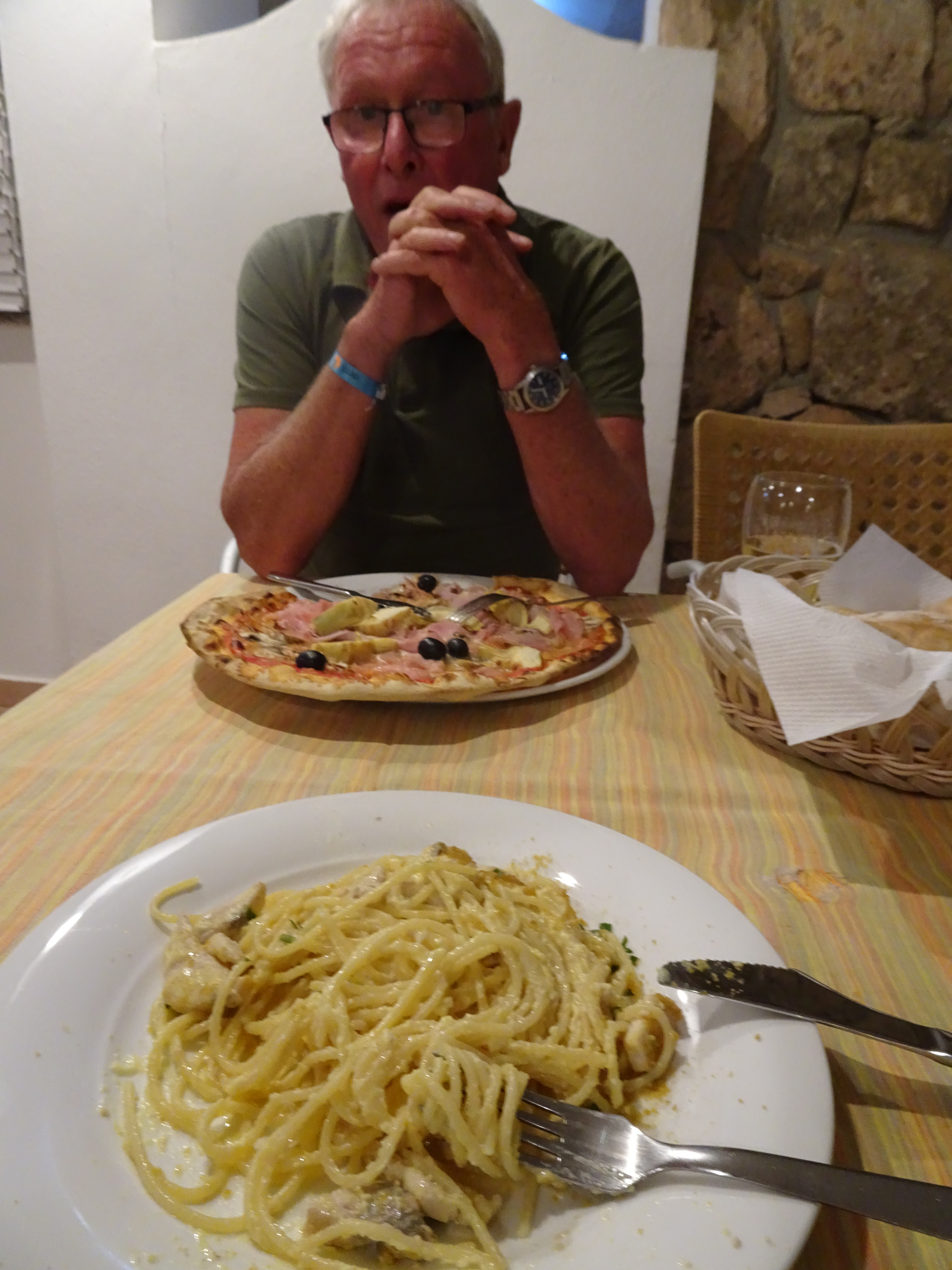
In spite of being way out of town and the only place to eat, the restaurant is excellent and I select a fishy carbonara which is simply delicious.

With nothing other than beach we decide to make the next hop up the coast, working our way up northwards towards the Costa Smeralda…

Grace is also known as the novelist, Jane Deans. Her new novel, The Conways at Earthsend is available from Amazon, Waterstones, Goodreads, W H Smith, Pegasus Publishing and many more sites. Visit my website: janedeans.com or my author page on Facebook: (1) Jane Deans, Novellist, Short Fiction and Blog | Facebook.