Unknown's avatar

About Grace Lessageing

I am writer of novels, short stories, flash fiction, blogs. I lead a creative writing group. I am an Ex infant teacher, living in Christchurch, Dorset, UK. My brand new novel, The Conways at Earthsend was published on January 28th 2021 can be found on Amazon, Waterstones, Hive and Goodreads and is available in either paperback or e-book versions. You can also read The Year of Familiar Strangers, available as an e-book from Amazon. You can visit my website: janedeans.com or my author page on Facebook: https://www.facebook.com/Jane-Deans-Novellist-Short-Fiction-and-Blog-102757711838272 Happy reading!

Turning Portuguese

P1070246

The first time we visited Portugal was with a tent, a giant, swish ‘pyramid’ tent that we’d borrowed from Husband’s colleague. I had to crawl in and hold the central pole, getting hot and sweaty while Husband hammered the pegs in outside. On a site at Ancora [north Portugal] where an interested neighbour ‘advised’ us on where to have our doorway, we pitched under some sap-dropping trees that stained said tent for ever, resulting in our having to buy the colleague a brand new pyramid tent when we returned. [We’d also torn the fabric attempting to dry it out in a French motorway services car park].

P1070338

This was also the trip when we visited Porto by train from Viano do Costelo, buying return tickets and discovered on our return to the station to get back, that the train ‘does not return from here’. We had a wonderful, dockside meal and returned on a ‘milk’ train, from a different station at about 2am.

During this and subsequent visits, with various vans we’ve done the major must-sees of Portugal: Porto, Lisbon, Guimares, Coimbra, Sagres, Faro-

Mostly we’ve found the west coast to be more pleasant and less developed than the Algarve, but there are exceptions.
P1070360

Portugal, like Greece is one of those countries that never fails, with luscious countryside, beautiful historic cities, reliable, warm weather, delicious food [including the famous ‘pastel de nata’ custard pies], a gorgeous coast line and friendly people.

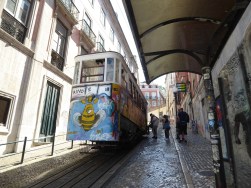
We find Lisbon much changed, with the addition of hideous cruise ships blocking views and throngs of tourists everywhere. Our previous visit was quiet and we were able to stroll the narrow lanes without stepping around selfie-takers. To anyone intending to visit Lisbon and considering an open top bus tour I’d say, ‘Don’t!’ You pay 11 euros to inch along for hours in stifling traffic, a woman wailing Fado songs in your ears. You get to see very little and anything of interest is zipped past or around before you’ve got your finger on your camera shutter.

I can get no purchase on the Portuguese language whatsoever. Spoken, it sounds eastern European with lots of sch, z and cz. Written, it looks remarkably like Spanish and meaning can often be deduced. We know we must take care not to speak Spanish to the Portuguese in spite of so many words being similar, nevertheless Husband is inclined to say ‘gracias’ instead of ‘obrigado/a’ for the first few days. My own knowledge of Portuguese is restricted to ‘obrigado/a’, ‘Bom dia’ and ‘ola’ so it is fortunate that almost everyone here speaks English very well indeed.

The Portuguese are fond of tiling the outside of their homes, which can look beautiful or tawdry; railway stations, hotels, churches-no building is safe from this treatment.

P1070332

And neither are the bone-shaking, tooth-grating streets, which are tiled in cobbles.

The Portuguese countryside is strewn with cork oak trees, the cork continues to be harvested and goods such as cork handbags can be seen in the shops. Perhaps the backlash against plastic will see a resurgence of the cork industry? It does seem to be a versatile material with useful properties: lightweight, water repellent, attractive.

In recent years, wildfires have decimated much of Portugal’s forests and evidence of this is everywhere.

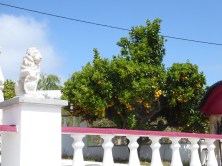
Orange and lemon trees abound, in gardens, parks and along the streets. They are all hung with tons of fruit which nobody seems bothered to pick, the ground around the trees littered with fruit just as the plums lie fallow in Gloucestershire.
P1070325

Before using the [very quiet] motorways you must register your bank card and attempt to forecast how much toll you will be using, which is tricky. Otherwise you can register at the first ‘portagem’ [toll booths] but then you’ll have no clue as to what is being deducted.

We’ll soon be leaving Portugal and crossing back to Spain-but I’ve no doubt at all that we’ll be back!


Santiago de Compostela-for Philistines.

Travel along Spain’s north coast and you will be guaranteed stupendous views, beautiful beaches and the sight of a great many ‘pilgrims’ trudging along the Camino de Santiago, following thousand upon thousands of sunburst signs as they make their way towards their Mecca, Santiago de Compostela.

P1070112

In true martyr-ish style, wholly in line with Catholic traditions, this Easter’s weather helps them on their way by being utterly appalling. This part of Spain is renowned for wet weather but this year’s exceeds all expectations. The entire country is deluged with torrential downpours while the UK basks in unusual warm sunshine.

Groups of walkers line our route, clad in voluminous, dripping capes that cover them and their rucksacks, giving them the appearance of soggy, deformed camels. Many have walking sticks and a fair number use Nordic walking poles. Is this a true dedication to the cause of suffering, I wonder?

The pilgrims come in all shapes, sizes, nationalities and ages; entire families with children, pairs of young girls, single people. Many meet up along the way and travel together, like the two young American girls with a short Portuguese man we met on one of our [non pilgrim] walks. Some look grimly determined, some chat as they walk, others sport beatific smiles as though already transported by their ordeal.

The nearer you get to Santiago, the more pilgrims there are, waiting at crossings, standing on corners, munching things, looking at phones.

P1070199

We’ve waited until Easter is over to visit Santiago and arrive on the Tuesday after, thinking it will be less fraught to negotiate the traffic, but we are still caught out by a parade of some kind and must effect a slow crawl through the narrow streets to find the camper-stop, which is situated up above the city-at least we can’t be flooded out. It is well organised and well used, a manned entrance cabin, tickets, a useful city map, water and emptying supplied.

Since there is no sign-from any source-that the rain is going to abate we don raincoats, grab umbrellas and run for the city centre bus, which takes us down into the heart of what is a beautiful, elegant place, wet or not.

Santiago seems designed for rain, cloistered walkways abound and there is no shortage of drains, into which rainwater gushes or tips from rooftop spouts. Crowds accumulate in the worst showers, huddling in doorways or squeezing into tiny shops selling religious icons and souvenirs.

P1070196

We are spoilt for choice for our naff shelf collection [read here].

At last we seek refuge from the showers in the cathedral museum, where I am clucked at for photographing. The art works are fascinating and also slightly bonkers, as religious art can be. The topmost floor is open to the elements with rooms off, containing cases of bejewelled, silver or gold crosses and paraphernalia in abundance-a demonstration of the wealth of the Catholic church.

Another set of rooms has wonderful, wall-sized Belgian tapestries depicting country scenes of people carousing at Inns. The detail is worth studying-drinkers at tables, dogs stealing food, babies being fed, a man peeing up against a wall-all most un-ecclesiastical.

When we tire of the relentless deluge we get the bus back to our warm and cosy van.

Next day there is a lull in the rain, long enough for servicing the van, then we’re off to brighter skies, drier roads and a quieter time-and Portugal!

It’s not so far. We stop for lunch on a small quay by the River Minho, choppy waves in the stiff breeze.

P1070217

Onwards to Vila Cha, the latter stages of the journey corrugated by cobbled roads. After a series of winding lanes we reach our chosen site, but as we approach we realise-of course! We’ve stayed here before. This is not bad news-the excellent restaurant opposite the entrance is still thriving!

The Rain in Spain

Comillas is a small, pretty town, a stone’s throw from the Northern Spanish coast and home to architect Antonio Gaudi’s ‘El Capricho’, a typically wacky house commissioned by a wealthy lawyer. It is one of Gaudi’s first works and one of only three buildings of his outside Catalonia.

On Good Friday of Semana Santa, Comillas is seething with day trippers and we are glad to have caught the bus here from our site. We join the queue for El Capricho and once we’ve bought tickets we have to run the gauntlet of hordes of visitors and guided tours throughout the rooms and on the balconies. But it is worth it. The villa is a joyous, colourful creation bedecked in sunflower glazed and vibrant green tiles, odd terraces and tiny windows giving on to views of the town’s terracotta roofs or of the surrounding parkland.

The rooms are beautiful, restful spaces with examples of quirky furniture and clever technology like slatted blinds that roll up sideways to open. This would be a wonderful home-and I hope it was enjoyed by the inhabitants!

Comillas is choc-a-bloc with market stalls, the cafes and restaurants full to bursting. We content ourselves with an ice cream in the square while we watch the stallholders pack up-then head to our bus stop for the ride back.

Next day we set off to Cudillero, an authentic fishing village akin to a Cornish coastal settlement. There is enough time for a walk down into the town, although it is a steep and treacherous one, the pavement horribly narrow and winding. En route the street is lined with buildings in various stages of decline and later exploration reveals a town of quaint charm but shocking decadence. Here and there are pockets of redevelopment-tricky given that the sides of the ravine are impossibly steep and homes are accessed by a tracery of stone steps, slopes and pathways in a higgledy-piggledy web.

Down at sea level the street is lined with bars and fish restaurants, everyone drinking until about 8.00pm, [by which time we are famished] and at last there are a few diners and we can sit down to peruse the menu. We choose a prawn salad and a seared octopus dish to share and a hake dish each. It is all delicious.

After lunch the next day we find an off-road footpath leading down to the town. We walk down-and up-and down-and up, by which time my knees are wobbly as jelly from steps and slopes.

Time to leave Cudillero. We make for Louro, just beyond Muras and rain sets in with a vengeance. The small town is nondescript but has a good beach along an attractive bay. It rains in a relentless deluge so that by next morning we feel it necessary to hunker down and ride it out.

Then we head off to Santiago de Compostelo, renowned for its rainfall, justified on this occasion as it rains en route, rains when we arrive, rains throughout the visit and continues to rain as we leave. But that, reader is another story…

A Dog’s Breakfast of Linguistics

Driving towards the Spanish border and San Sebastian I am attempting to reclaim, renovate and restore my rusty Spanish, a language that’s languished unused for a couple of years. A few words and phrases float in- ‘Si’ ‘No’ ‘por favor’ ‘gracias’ ‘lo siento’ ‘la cuenta’ ‘cervezas’ and ‘banos’. All the essentials. Then I get to wondering what the word for breakfast is and it becomes an irritation. I can find the German word-‘fruhstuck’ but I’m frustrated by Spanish breakfast. This is absurd, mainly because we’ve no need whatsoever to be ordering breakfast in Spain.

P1070024

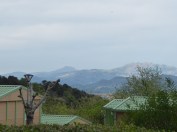
We locate a site with great mountain views and stretch legs by plunging down a steep, bendy road towards the sea. The weather has turned hot and muggy and by the time we’ve returned and got some chairs out the first drops of thunderous storm have arrived. Rain continues until bed time but by morning it has all cleared and it’s bright, sunny and fresh.

P1070028

A convenient bus ride takes us into San Sebastian via Monte Igelda [where our site is], stopping at the ancient funicular en route. After locating the tourist office we follow a suggested walking route around the city which takes in major plazas, the waterfront and important landmarks such as the Basilica. We stop for tapas lunch at ‘Tapas Santana’, where a sumptuous display of tapas dishes fills the counter and hordes crowd in. I look at the menu and there it is: desayuno-breakfast. Of course!

Husband waves me to the counter to order, although I’m not ready, not well enough rehearsed in my renaissance Spanish. I muddle through aided by the kindness of the waiter and we are rewarded with a delicious lunch.

We leave next day for San Juan de Gaztelugatxe and get hopelessly muddled when our new SATNAV decides the best route is along unmade mountain cart tracks, but at last we find a sensible coast road, albeit winding and tortuous. The terrain here resembles the Amalfi coast but with fewer tourists even now at Easter time. After a number of glitches, including a near-death experience on the motorway when a bendy bus decides we are a pesky nuisance and attempts to do away with us, we arrive to San Juan de G, a destination better known as a location for filming Game of Thrones than for scenic or religious significance. It is, however spectacular.

P1070079

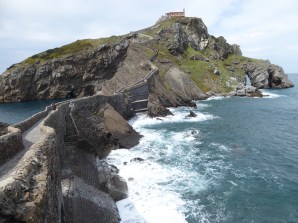
The tiny church of San Juan, dating from AD890,  is perched upon an island rock accessed by a winding path across a stone causeway. The path down [and up!] is steep and arduous. But plenty of people of all ages, sizes and fitness are tackling the walk. Remembering the Tiger Cave Temple climb in Thailand we decide this is a doddle, which it isn’t, but we make it down and up.

It is only a stone’s throw then down to Bakio, where a perfectly nice, free, well-serviced aire awaits. Here is surfing galore so of the many vans parked up a lot are typically bohemian and strewn with the paraphernalia of the sport.

Leaving Bakio we head off towards Comillas, the steady drizzle strengthening into steady rain, which continues throughout the day and is still dropping relentlessly when we arrive to our selected site. On into the evening it rains…and rains. Next morning it is still raining. So the rain in Spain is not restricted to the plain, clearly…

Normal for Now

I was sitting in the bar area of the Barfleur on its way into Cherbourg, reading Sally Rooney’s ‘Normal People’ when I glanced up as we were gliding past the Irish ferry, ‘W B Yeats’.

I’d just reached the part in the novel where Trinity student Connell gets totally wasted during his summer break and is lured back to the flat of his former secondary school teacher where she has the intention of ravishing him [until the excess of alcohol precludes the act].

I got to thinking, then that I’m pushed to recall the names of any of my secondary school teachers. I can remember my very first teacher, Miss Hunter, who I loved. I can almost   remember the name of my next teacher, in the juniors, Mrs  Someone. We moved. I know who my next teacher in the juniors was because it was my dad.

I passed the ’11 plus’ and had the dubious reward of going to Wisbech High School, where our newbie form was ruled over by an austere and frightening Scottish woman whose name escapes me, but might have been ‘Miss MacFarlane’. I was anxious the entire time, for two terms. Then we moved again and there was a plethora of remote characters who entered classrooms, delivered their notes and left.

In the sixth form, studying English literature, among other things W B Yeats was on the syllabus. I developed a lifelong dislike of W B Yeats’ work and to this day I shudder when I hear mention of ‘The Lake Isle of Innisfree’. We were never given a chance to explore and enjoy the work; never had the background explained or saw how it related to Irish history and politics-let alone to my own, teenage self.

‘Normal People’ explores a teenage love story from more contemporary times. In the story Connell connects much more to the texts he is studying. As students, he and Marianne drink, do drugs, party in much the same way that I did during my 70s student-dom in London. How long ago it all seems now-and it is!

P1060995

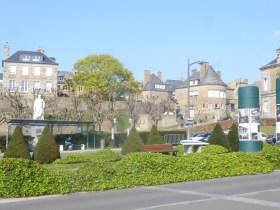
Now here we are in Avranches in the warm sunshine of an April evening, having driven off the ferry to travel hopefully and with the relief of the Brexit delay wrapped around us like a snug blanket-for now. It is pleasant enough to sit outside in the square with a beer and survey the elegant decadence that is commonplace in French architecture.

P1060994

When we pulled into the ‘aire’ there were already French motorhomes in place. We reversed back just as a couple were leaving to walk the few hundred metres into town. They turned, smiled and waved in greeting and I realised I was almost holding my breath until this moment. Maybe, just maybe we are still as welcome as ever in the places we love and will always love to go…

What Kind of Parent are You?

P1060990

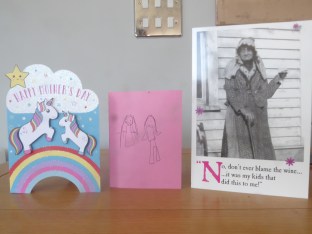
I was lucky to receive three cards on Mothers’ Day. The first to arrive was a sparkly depiction of two unicorns-large and small-portraying an idealised, rainbow-backed vision of motherhood, cosy, pretty and delightful. The second a hand-drawn picture of two figures side-by-side, one larger in trousers [me], the other small in a dress [Grand-Offspring]. The third a photo of a ravaged old hag.

Of course I’m delighted by all of these depictions of myself, as parent and grandparent, for a variety of reasons. For one thing, they’ve all remembered the day. If your Offspring have negotiated all the hurdles on the way to adulthood and continue to communicate with you it must be some kind of miracle.

Parenting is like navigating the seas, periods of calm punctuated by violent storms. Sometimes the storms are catastrophic. Sometimes the calms are flat enough to believe you are becalmed and stranded, never to reach the shore.

When the offspring are safely grown and in their own nests you may consider your duty done but that is very far from the truth. You continue to feel responsible, to offer support, to care, in a way that few creatures in the natural world do [except perhaps for elephants?].

Myself, 38 years ago and pregnant, I was an ignoramus on the subject of babies. While I was acquainted with the development and behaviour of young children, when I had the first I was exhausted and  panicky in equal measures-a rabbit caught in the headlights. My long held belief that babies ate and slept was shattered. As they grew I was unprepared for the frustration, penury and utter boredom that life with toddlers can be. But in other ways they were, at that time, the very best part of my life.

Becoming a grandparent is well documented as delightful and easier [in that you ‘can hand them back’] although there are hazards and traps to avoid. I was prey to much advice as a new mum-‘Pull yourself together; you’ve only had a baby’ was one gem [as I lay strapped to various devices in the hospital bed, post Caesarian Section]. So I try to stick to merely describing my own experiences while also attempting to adhere to parental rules and guidelines regarding treats etc

There is a huge variety of parenting styles, from controlling to liberal and most are dependent on our personalities as adults and, perhaps, our own experiences as children. There is no such thing as a perfect parent so we must rely on guesswork, friends or manuals to solve conundrums like faddy eating. The fact that I came to depend on the quaintly old-fashioned ‘Baby and Child Care’ by Dr Benjamin Spock demonstrates how long ago I became a mum. But if not trendy, his approach to child rearing seemed calm and sensible at the time.

Above all I do hope I’ve managed to maintain some vestiges of humour as they’ve grown up. Long may it continue!


Imagine…

P1060987

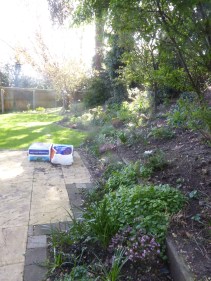
On a recent walk we came across a community garden.

The latter stages of the route, near to the shopping centre took us through a housing estate which, in the past, had a reputation for being somewhat ‘rough’, resulting in school numbers dropping and so on. The housing is mixed-blocks of flats, terraced homes, semis and detached, much ex-council and now presumably housing association. The estate is not pretty but neither is it hideous since there is a great deal of green space, trees, open areas. And in the midst of one, large, open space was an enclosure laid out with raised beds, a neat row of compost bins and a shed.

A father and small daughter were working in one of the raised beds, planting and tidying. It was all shared, the dad explained and the produce from one bed could be harvested by anyone for their needs. Fresh, home grown fruit and vegetables!

To work in a garden is one of life’s pleasures. You are outside in the air, serenaded by birdsong, creating, nurturing, coaxing, often accompanied by a cheeky robin and some industrious bumble bees. It can be frustrating when plants refuse to thrive or are consumed by pests but this is more than offset by the satisfaction of seeing flowers or vegetables flourish from your ministrations. Gardening also exercises a lot of muscles you didn’t know you had!

Walking along past the community garden I allowed my mind to wander. One day I may not be able to tend my own garden. But there are long waiting lists for allotments and in our squidgy, little country space is becoming squeezed by the need for housing-new homes’ gardens becoming smaller.

What if elderly and disabled people who wanted to stay in their own homes but were unable to garden were paired with those who wanted allotments but perhaps couldn’t afford one or didn’t want the long wait? There would be a shed-full of tools. The results of the labours could be shared-as could the expertise of the person who used to tend the garden.

The garden owner would get visits-perhaps even someone to keep an eye on their wellbeing. The gardener may get a cup of tea!

I read of a scheme in the Netherlands [where ideas to help the elderly and disabled seem to abound] where a student could receive accommodation free in the home of an elderly person who might need a little help with housework etc. Of course I can think of many students who it wouldn’t suit at all-and many elderly would be horrified at the thought of a stranger in their house-but still there must be a lot more who’d be happy to share if it meant they could stay at home.

For now, though it’s back to mulching for me-backache or not…

P1060986


Sunshine Blogger Award

sunshine-blogger

Fellow blogger Janet has kindly nominated me for this award. To find her blog, which describes her travels around the UK and includes all kinds of eclectic details, visit here: https://tidalscribe.wordpress.com/

The Rules….Well, there are always rules are there not?

1.Thank the blogger who nominated you in a blog post and make a link back to their blog.
2.Answer the 11 questions sent to you by the person who nominated you.
3.Nominate up to 11 new blogs to receive the award, and then write them 11 new questions – or cheat and use the same questions
4.List the rules and display the Sunshine Blogger Award logo in your post and/or your blog.

So here are my answers to Janet’s questions:

1.Tell us three things about the place and country where you live now.

a] The small, Dorset town where I live has the largest parish church in the country.

b] Its harbour is host to 2 rivers.

c] British bitter [of which the British are very proud] is unlike any other beer anywhere in that elsewhere beer is what we would call ‘lager’. British bitter comes in myriad tastes, flavours and colours from pale honey to chocolate.

2.Can you name a teacher you remember for their influence or words of wisdom?

I loved my very first infant teacher, Miss Hunter, who was kind and innovative, bringing in a beautiful Battenburg cake to teach us fractions. Sadly I was only with her for 2 years. Thereafter no teacher seemed so lovely.
3.Have you been to a school reunion, if so were you glad you went?

I moved schools several times and lost contact with friends each time. I was invited to a student reunion but having looked ant the list of respondees could find nobody I recognised, so no-I haven’t!
4.If money or rarity were not problems, what would you like for your next birthday present?

I would like a contract with an agent or publisher! [and an interview with Jenny Murray for my newly published novel!]
5.If you were stranded on a desert island with nothing and let’s face it, if you were shipwrecked you are not likely to have your favourite books etc. Would you rather have any person with you or be alone?

If I could have a choice I’d have Husband, for his practical skills and his unfailing sense of humour-otherwise I’ll take solitude.
6.If you were offered a part as an extra in a film, what would you like to be?

In the previous life as a teacher I was usually type-cast as a witch, so I suppose that’s where my thespian skills lie…
7.If reincarnation is true, who or what would you be next time?

I’d like to be someone who understands science [especially chemistry] or a brilliantly successful novelist. A combination of the two would be good [like Barbara Kingsolver?].
8. What is your favourite mode of transport?

Easy. Our beautiful, comfortable, versatile motor home, which takes us anywhere in Europe and provides me with the security to travel without worries. [Regular readers may know I have a health issue that can make travel tricky!]
9.City, suburbs or rural retreat?

I’m unsure whether this refers to home or visits, but living on the edge of a small town with excellent transport links and water meadows extending from our garden could not be better.
10.What is your idea of a dream night out?

There is no single answer to this. I love to dine out with friends or family, I love the theatre or live music or comedy performance. We were at a festival once and Russell Howard popped up on to the stage unannounced which was wonderful. Sometimes the best night out happens without any planning, but good company/music/entertainment all makes for a good night out.
11. When you are buying birthday cards do you choose flowery or funny ?

I always go for humour, unless it’s funerary or someone I don’t know well.


Sacrilege

NZ Queenstown

We travelled to New Zealand in the autumn of 2011 when the Rugby World Cup was scheduled to be held there. This was to be our retirement treat-a three month stonker of a trip that also encompassed Australia [where I have cousins] and a small add-on of a stay in Hong Kong on the way home.

The thrill of such an enormous piece of travel was tempered, initially by having our flight from Heathrow cancelled by Quantas for no reason we could discern. This meant that our onward flights from Brisbane were scuppered, messing up our arrival to Christchurch, New Zealand and losing us a night of accommodation.

2011 was also the year of Christchurch’s catastrophic earthquake, which was heartbreaking in itself, besides disrupting the Rugby matches and venues involved.

After a tortuous and exhausting series of flights we arrived to Christchurch’s small airport. In the arrivals hall we staggered to the information desk and were directed out into the sunshine of the afternoon, where a kindly driver took our bags and we slumped into the back of his car to be taken to the hotel. I felt I’d stepped into a warm bath.

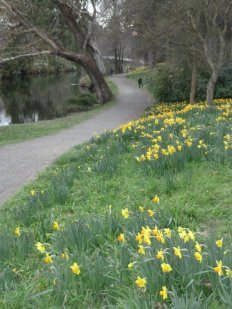
Even in my almost comatose state I was thrilled to see the verges and green spaces which were lined with nodding daffodils-a novelty for we northern hemisphere-ites in autumn.

NZ Xch

Although our hotel was a forest of steel ceiling supports and those roads that had not been blocked off were cracked with fissures the hotel staff welcomed us in.

Having slept we explored our area, Hagley Park and looked at the quake-damaged centre of town. The park hosted an exhibition of the proposed rebuilding of Christchurch.

A couple of days later we collected our rental camper-van, which was exquisitely equipped and set off to explore beautiful, pristine South Island on a gentle, meandering road that followed the railway track and took us through small communities, past stunning scenery and into wonderful camp sites.

Throughout this time I don’t think I ever stopped smiling. People were unerringly kind, the ease of travel unprecedented. In spite of the terrible earthquake we were welcomed. Even the creatures were friendly.

NZ ducks

The rugby games were like huge, joyous parties with dancing displays, music, dressing up and buzzing atmosphere. I lost count of the number of times we engaged with those around us, laughing, conversing and getting hugged.

In between matches we went sightseeing-following the beautiful, wild south coast road to stunning Milford Sound, viewing penguins and snow-capped mountains and scoffing New Zealand pies and scones from the dairies. Then we turned north via Kaikoura, went whale-watching and walked in glorious Abel Tasman National Park before taking the ferry to North Island.

In Wellington the camp site was full so the local rugby club accommodated us, throwing open their showers and their clubroom and even offering us a curry sauce to go with the chicken we’d bought to cook. We visited the amazing hot springs and geysers at Rotarua, 90 Mile Beach, Coromandel, the gigantic Kauri pines.

The trip remains, to this day my favourite to date. If asked I don’t hesitate to say that New Zealand is my favourite of all the destinations we’ve visited for the reasons I’ve detailed and so much more.

What has happened there is heart-breaking. This most beautiful and idyllic of countries has been sullied for it’s innocent beauty.

If you peddle hate posts on social media; if you keep recycling jingoistic, populist, right-wing propaganda; if you keep screeching about ‘taking back control’ and closing borders, building walls to keep people out and showing hate to other races and religions you are perpetuating acts of violence and terrorism.

Enough said.


A Take on Transport

I used to love driving. I was late to learn, at 25, pootling around Putney in south London all of one cold, dark, snowy winter in the evenings after work, with my British School of Motoring instructor. My steering was unorthodox, he told me and said that I should have some lessons in daylight since I’d only ever driven at night.

I passed my second test, at Teddington-a place I knew no more of than Guildford, where I’d failed 2 weeks before. Then I acquired my little old, faded green Austin A40 with a steering wheel like a bicycle wheel and doors that stuck and had me crawling through the hatchback to enter and exit. But I was ecstatic to be independent at last.

Throughout the early years of motherhood, when there was only one family car, the independence was gone with the vehicle and I was reduced to shank’s pony, pounding the streets with a mewling sprog in a pram and wondering how it had come to this?

In the single-parent-working-full-time years I regained some autonomy with a battered Volvo and could load kids inside and camping gear on the roof rack in the holidays or collect bits and pieces for the ramshackle home I’d purchased and was attempting [on evenings and weekends] to do up. I loved to drive. I enjoyed long journeys-even when it took 9 hours of traffic jams to get to the Kendal home of friends I been invited to for a weekend.

Somewhere along the years to old age however a gradual falling out of love with driving took place; not that I won’t or don’t drive, but I’ve come to appreciate other modes of transport, becoming a fan of buses, especially with the gaining [finally] of my pensioner bus pass. I’m not the only bus-pass-holder to take a child-like pleasure in gaining the front seat on the top deck, either…

Then there’s the train, where a ‘seniors’ railcard gives a worthwhile discount. Of course it isn’t as glamorous as it was when I was a child, when you walked along the corridor and slid open a door to a compartment, but if you are lucky enough to get a seat it’s possible to drift into a reverie and gaze out; or listen to others’ conversations [real or phone]. These days train travel can be a frustrating and tiring business, as we found when, having travelled, 2 weeks ago, 4,000 miles by air through the night on a trans-Atlantic flight to Gatwick, arriving at 5am, all the trains south towards Southampton and beyond had been cancelled ‘due to signal failure’. Lovely. Just what you’d wish for after an 8 hour night flight.

On flights, ferries, trains and buses, where someone else has the responsibility, I think the trick is to sit back and relinquish control. Watch the movie, look at the view, listen to the conversations, read your book. Better to travel hopefully [and also to arrive!].