Tented Travels. Portuguese Tours and Tribulations.

After having explored the area around Ancora and its beaches and experienced an eventful time in Porto [as described in last week’s post] we determined it was time to up tent poles and meander southwards down the coast.

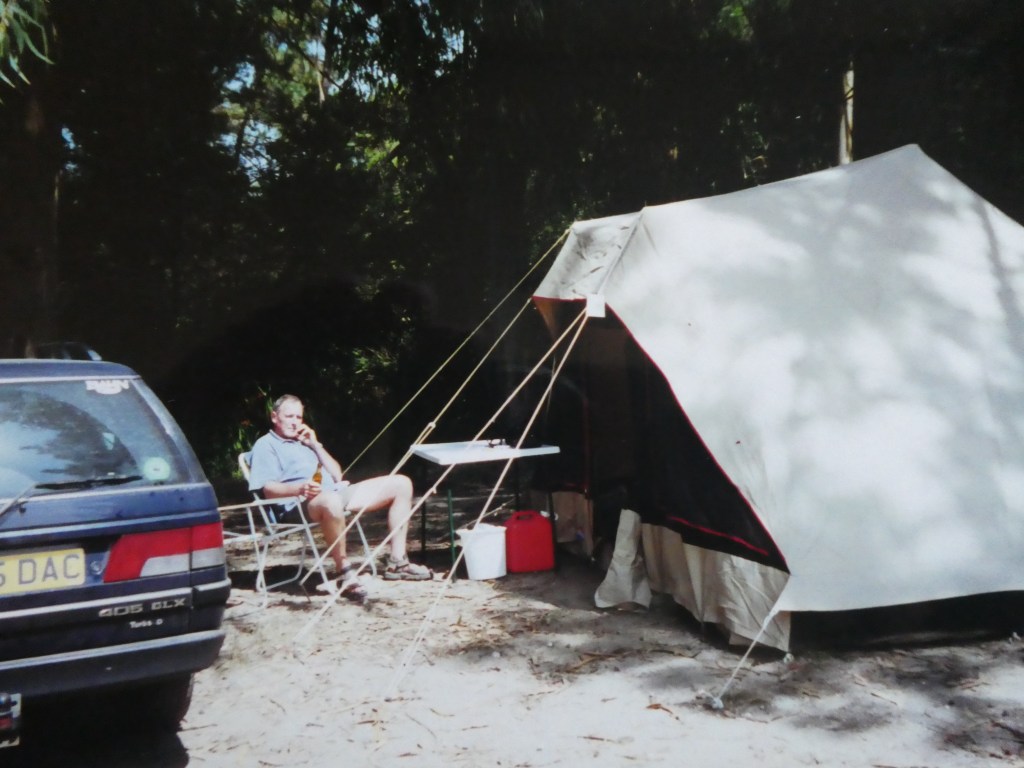
There is as much of an art to dissassembling tents as there is to erecting them-more so sometimes. The borrowed pyramid tent was large and we were only beginning to get a technique for using it, especially folding it small enough to cram into the bag. When we came to collapse the tent ready for folding we discovered, to our horror that the beautiful conifer that had provided our shade in this corner of the site had also dripped unsightly resin all over the pale beige canvas, leaving it stained and blotchy. We were horrified. This tent had been kindly loaned by one of Husband’s colleagues. Whatever would they think of us returning it in such a terrible condition?

Perhaps the elderly Portuguese neighbours who’d been so ready with the advice we didn’t understand had been trying to tell us this all along?

For now though, there was nothing to be done so we packed up and departed to have a look at some more of Portugal, winding up at the whimsically named Figueira da Foz, which was then a modest seaside town with an attractive sea front and of course, beautiful, surfable waves. I believe that, like most places Figueira has undergone significant development in subsequent years but then it all seemed quite basic and unspoilt.

After we’d settled we wandered along for an evening drink at what appeared to be the only seafront bar. The night was breezy and the prom almost deserted, but there were lights on and as we pushed the door and entered there was only one group of revellers inside-a family enjoying a birthday celebration. We sat down to enjoy a glass of wine, making for a table a little apart but soon we were sucked into the revelries just as if we were distant relations, and plied with slices of birthday cake.

At the time, there were few sites near enough to Lisbon to make it easily accessible, but we could drop into the beautiful old city for a day en route south towards Portugal’s corner, which we did, strolling the lanes and gazing at the iconic funiculars and elevators. This first visit to Lisbon was quiet and untroubled by traffic whereas a subsequent trip saw us mired in gridlocked jams and breathing in noxious fumes during an open-top bus tour. How times change!

On we went to Sagres, in the south west corner before the coast turns into the popular Algarve. Here it was wild and breezy. We camped in a small, wooded site and were delighted to help out our young, Portuguese neighbours with the loan of a tin opener! At sundown people congregate to watch the sun set on this furthest west point of mainland Europe, perching on the rocky clifftops above frothing waves. It is a lovely place.

We bimbled [Husband’s word] along the Algarve, avoiding the high-rise hotel developments where possible and eventually on back up through Spain and France. At some point we had to pack the ill-fated pyramid tent wet and discovered it had torn in a couple of places. Horrors! Now it was stained, wet, torn and sporting gaffer tape. Stopping at a motorway service station we removed it and attempted to dry it out, with limited success. There was no way we’d be able to return it in this parlous condition. We’d simply have to buy the kind lenders a new one-and keep this one….which we did!

Tented Travels: Porto-a Divine Debacle

Now where were we? Ah yes-Portugal, the west coast, staying at Praia di Ancora, having pitched our borrowed, pyramid tent [disregarding advice from our elderly Portuguese neighbours, whose comments we could safely disregard by claiming ignorance of their language]. A few kilometers down the road lay the attactive town of Viana do Costello where we could get a train to Porto, thus avoiding the need to find a parking place in a city where streets are narrow enough to string laundry across between the homes.

We parked the trusty Peugeot in the station car park and went to buy tickets. But what a spectacle the interior of the station was! Every wall boasted stunning tiled murals in customary blue and white. Here was a beautiful art gallery before we’d even left! In our innocence we bought return rail tickets and established the latest return time. Then we boarded and sat back as the wheezing, rumbling train took us down the coast.

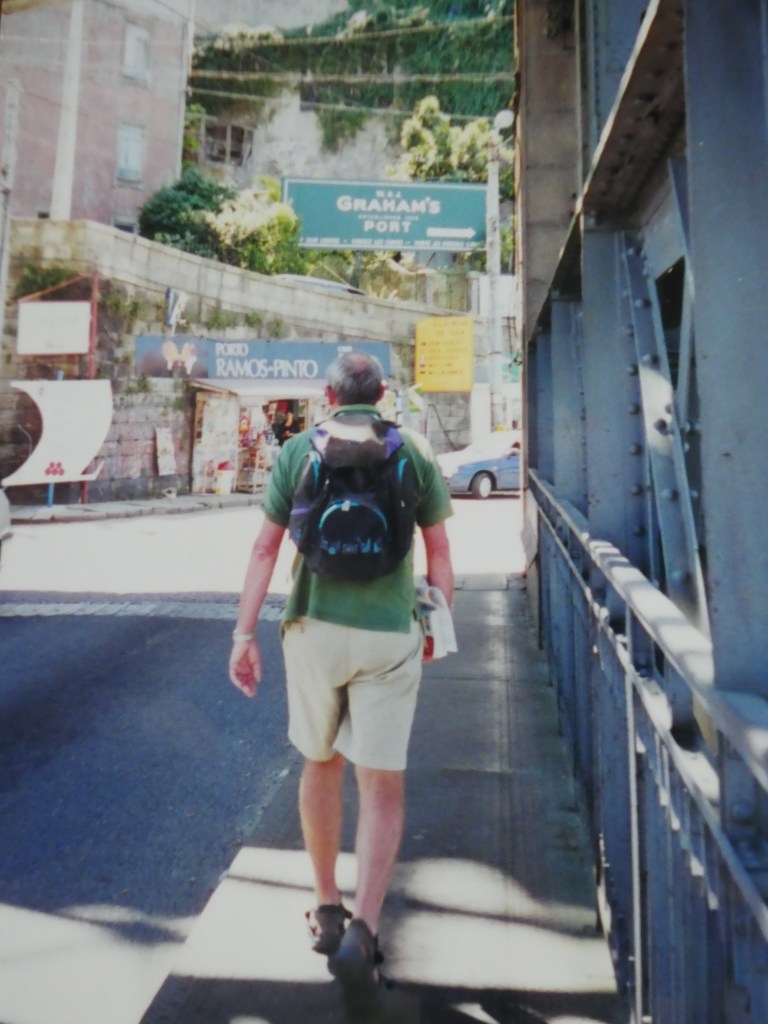
Porto [or Oporto to the Portuguese] is a stunner of a city, tall umber houses squeezed together on the slopes down to the Douro river and dotted with old churches, frescoes, balconies-all with that beautiful decadence that only grand old cities display. My favourite streets are the narrowest, cobbled and where the balconies almost meet in the middle, as I said-strings of laundry across them.

On the River Douro there are traditional Rabelo boats that were once used for transporting wine barrels but can now be used for tourist trips. As we sat down by the riverside we peered into the waters where the river was boiling with thousands of fish, so that you might be tempted to reach in with a net and scoop some out-until you notice that what is attracting them is a sewage outlet…

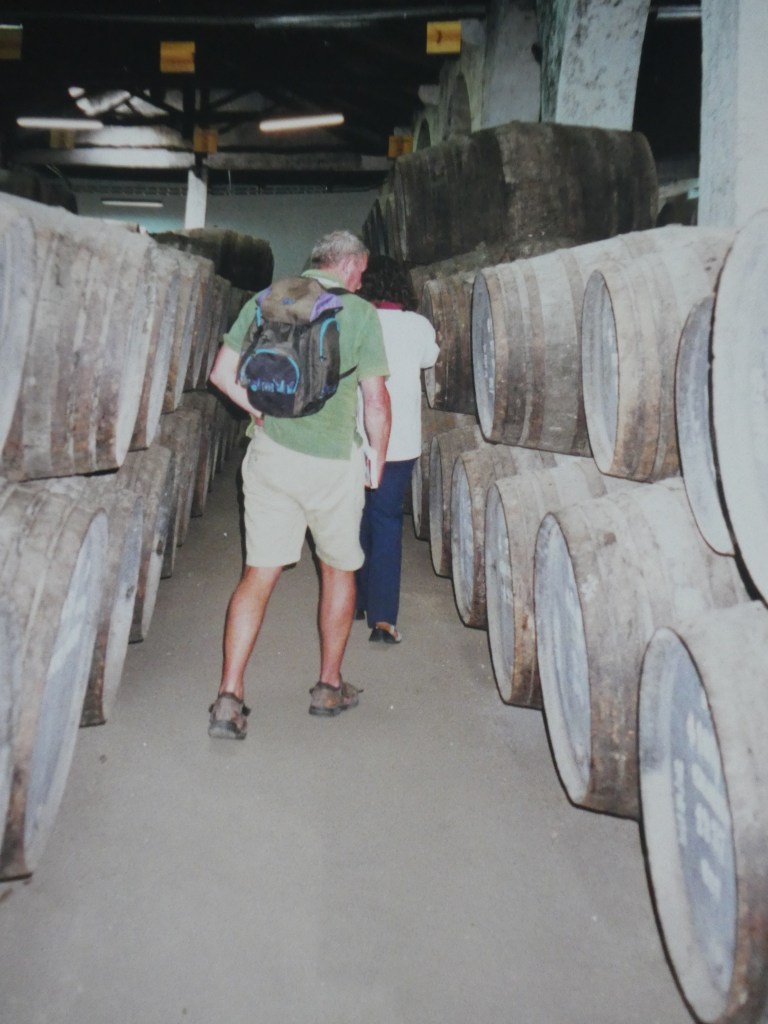
No visit to Porto is complete without looking at a Port lodge, of which there are many; cool, cavernous warehouses accommodating rows and rows of barrels full of delicious port in various stages of maturity; Heaven for Husband, who has a penchant for port.

At last we felt we’d done Porto justice and began to consider our return to Viana do costelo. We wouldn’t want to miss the last train back. We returned, footsore by now to the station and presented our tickets. And this is where the vagaries of timetables, coupled with breakdowns in communication failed us. ‘Ah no’, declared the gentleman in the ticket booth. ‘The return train does not leave from here.’ Who knew? How foolish of us to imagine for one moment that our train would be returning from the point where we’d left it? And of course, the station from which it would leave was now too far to get to. We had missed it. But he offfered us one glimmer of hope. A late, late ‘milk’ train would be trundling up the coast in the small hours and we could get back on that.

While it was a relief to learn we weren’t entirely stranded we were left with the conundrum of what to do with our evening and opted for a long, leisurely meal. We found ourselves drifting along to the port area, where a swathe of restaurants fringed the dockside, then selected one. It was quiet, early and there were pleanty of empty tables in the long, thin dining area past the bar. We soon had the feeling that tourists were not regular visitors and this was reinforced by the way the waiter ran to get me clean cutlery when I knocked a knife on to the floor! Though I’m sure the meal was delicious and would have been fish-biased my memory of it is eclipsed by the thrilling sight of a regular who’d been drinking at the bar being roundly ejected by the seat of his pants-an entertaining event.

We spent as long as we were able with our meal, then with drinks, until we could reasonably toddle off to get our train, by which time we were full of food and wine and very sleepy. The train’s old-style compartments seemed inviting and I felt anxious that we’d travel past our destination if we slept too soundly, but we managed to exit the train at Viana and arrived, very late to our site. We’ve been caught out by timetables on plenty more occasions since then!

Tented Travels-Portugal

Back in the 70s and 8os I seem to remember Portugal having a reputation for being expensive, but one of our early tenting expeditions in the 90s was to this small, sunny, friendly country tacked on to the side of Spain.

By the time we got round to our Portugal trip we’d upgraded from my ancient Volvo hatchback to ‘Mick’, Husband’s beloved Peugeot Estate, a heroic vehicle that took us thousands of miles and accommodated tons of equipment. We’d also swapped the aged, leaking frame tent inherited from my parents for a [admittedly borrowed] ‘pyramid’ tent, which was beautiful and roomy, but involved someone [ie me] crawling underneath the skirt of the tent to hold the central pole up while Husband secured the guy ropes. In hot weather this could be a sweaty task.

We still needed to make overnight stops in hotels and since a road trip to Portugal involves passing through Spain we had no option of a ‘Formule 1’ as we did in France, so we had to find somewhere en route, which we did, and perfectly acceptable I believe it was.

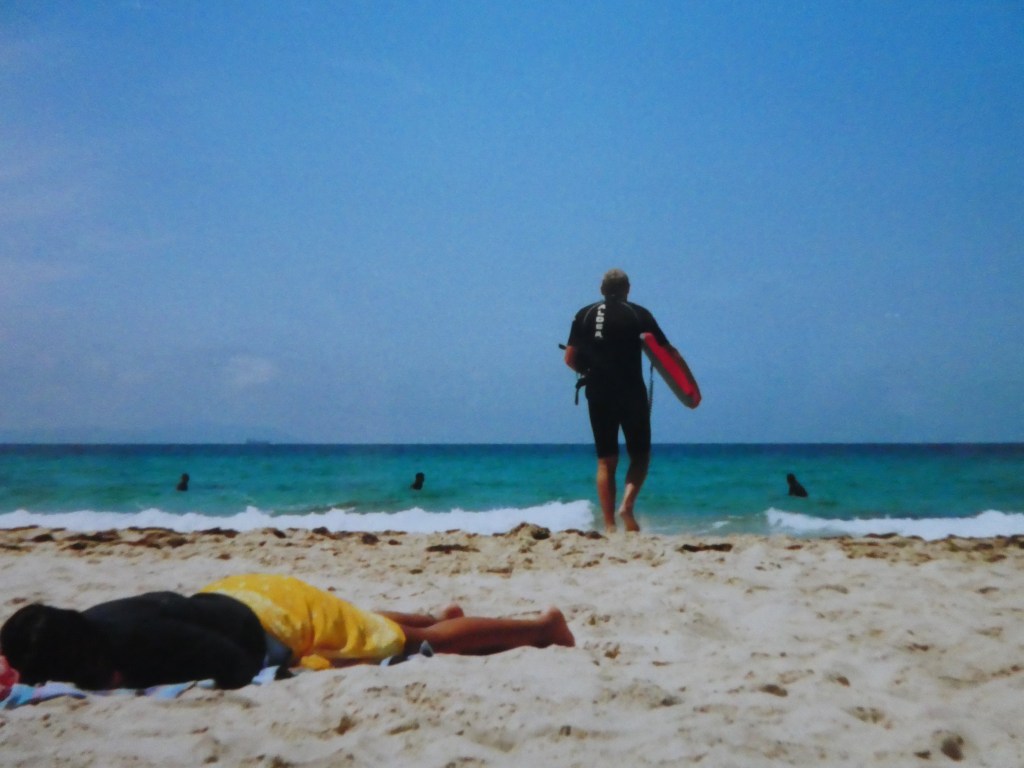
We cut off the corner of Spain and entered into the north of Portugal and to the coast. The west coast is green and less built up than the popular Algarve, which accommodates large numbers of package tourists every year. Husband was into body-boarding and was keen to try the waves in this area, which are great for surfing. We stopped at the small seaside town of Vila Praia de Ancora, where a large, wooded site gave access to the beach across a railway line and found a corner to begin setting up the pyramid tent.

It is customary on a site for those already installed to show an interest in new arrivals. On this occasion we were ‘helped’ by a Portuguese gentleman nearby, who was keen to advise where our entrance should face etc., whereupon we determined the entrance should face away from our neighbours.

The little town was [and still is-we’ve been back since] delightful, boasting beautiful sandy beaches and characterful streets with restaurants and bars [then, at any rate]. We got our first experience of Portuguese hospitality and cuisine, eating in a modest town restaurant, characteristic of so many in the area, with simple but delicious food and wine sourced from the local district. And as tradition dictates, our menus were accompanied by tasty nibbles-a lovely touch.

Our site was a short walk from the town and also close to a handy Intermarche supermarket. We also discovered that the railway behind our site could give us easy access to Porto, further south down the coast, which meant we would not have to up poles and move from this perfect spot. We’d need to drive to Viano do Costelo, a short way south, and park there to get a train. Wonderful! What could possibly go wrong? …

Tented Travels Portugal continues in the New Year 2021. Anecdotage’s next post will be my travel review of the year-a little different this year. In the meantime, I’d like to wish all regular readers, followers and visitors a safe, healthy and happy Christmas, wherever you are. And thank you for visiting!

Tented Travels 2. Early Days.

Looking at old photos from our 90s camping expeditions, it’s easy to assume that the sun always shone, that nothing ever went wrong, that there were no problems to overcome. The trips were lengthy [as they often are nowadays, too], we needed to work out where campsites were, public transport options, timetables, routes. There was no internet to consult, no smartphone to rely on, no holiday ‘rep’ to ask, no coach tour. We relied on publications like ‘Rough Guide’, which were ground-breaking in their day, as well as atlases and local tourist information.

A photo of that first, thrilling trip to Italy in my ancient Volvo with a roof-rack [which I’d been lucky to pick up at a local auction] shows a typical scene-pitched up old frame tent on a sunny, pine dotted site, a glimpse of the bikes [useful for local shopping and for leisure rides], a towel draped over a wing mirror. I’ve no clue where we were at that point, but I’d guess at the south of France, since the scene could be any one of hundreds of sites in that area and we’ve visited or passed through more there than anywhere else.

Back then our trips were confined to the long summer holidays, when we’d have the time to go long distance and forget about the stresses of our busy teaching jobs.

I do remember wandering around Monaco [my second visit] and pursuing a mission to get Husband’s passport stamped. This was something I’d got on my first visit and was heartily proud of, a piece of bureaucracy long since abandoned. We travelled via both the French and Italian Riviera, taking a look at St Tropez, Juan les Pins, Nice and Cannes en route.

That time, we drove as far as Viareggio, on the Italian west coast, stopping at a site belonging to an eccentric collector of vintage cars. We spent some time on the beach, as well as making trips to both Florence and Pisa. In those days I’d need to sleep a great deal to get over the long summer term of teaching I’d had and had perfected the art of beach snoozing, despite it leading to unsightly dribbling and snoring.

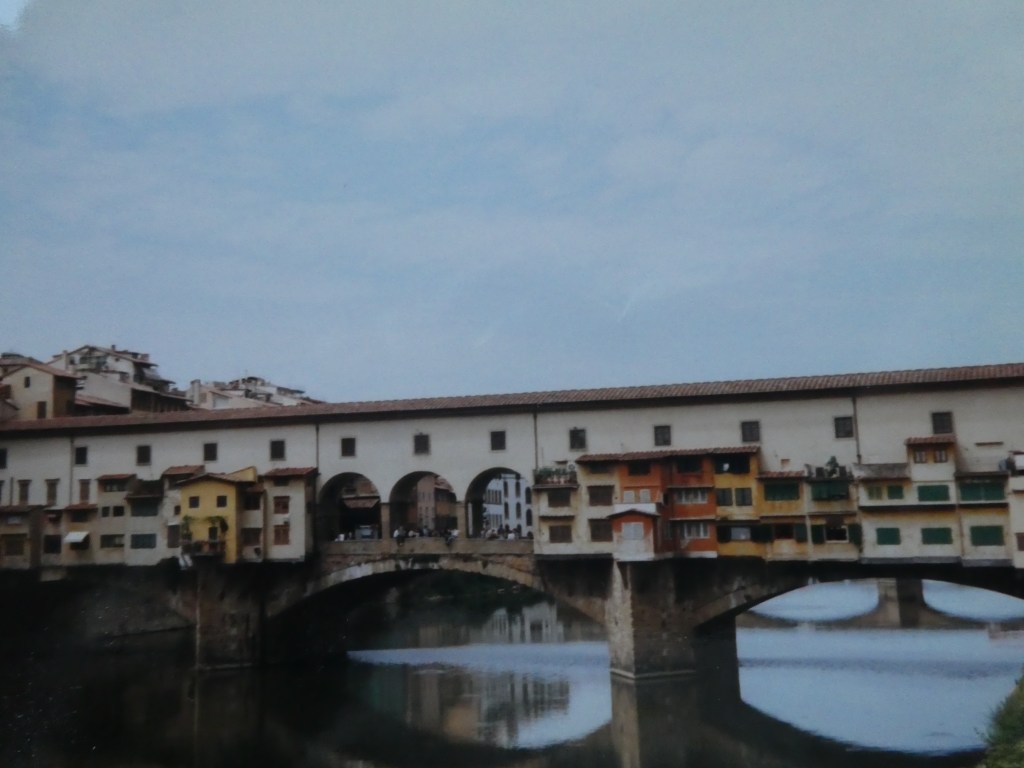
In one of those bizarre coincidences we happened upon one of my daughter’s school friends as we walked past a row of tourist stalls on the way to the Ponte Vecchio. She enthused to us over the array of tourist tat on display whilst standing with her back to Florence’s famously beautiful bridge with its umber and pink hues, straddling the Arno river. Walking across makes you think of how London Bridge must have been when it was similarly lined with shops and dwellings, their overhanging eves almost meeting in the middle.

We managed to be photographed in front of the leaning tower at Pisa without feeling obliged to pretend to hold it up. I suppose a passer-by must have taken the shot, since this was long before the ‘selfie’ era [regular readers will Know I’m not a devotee of the selfie cult].

So with very little in the way of swanky equipment we’d embarked on what was to be a long [and continuing] series of European tours, with many adventures thrown in!

Tented Travels-1

Before we got our first van, during our first few years together Husband and I toured European countries using tents. This was in part due to the penurious nature of our lives [we’d come together in similarly, newly-single circumstances] but also knowing that travel was a shared interest. We’d also both gained plenty of experience as campers from both childhood and as adults. I’d already single-handedly hauled four children off camping in my battered Volvo, with mixed results.

One of our very first trips as a couple was to the South of France and on round to the Italian Riviera, then Tuscany; an ambitious holiday to undertake in my ancient car with my parents’ cast-off frame tent. In its heyday, the tent had already been many miles, but still had some usage in it. Nowadays of course, tent technology is much advanced and bendy hoop tents have more or less taken over the camping market.

Husband, ever the map fanatic, is a competent route planner. We travelled down the centre of France. Overnight stops are tedious when using a frame tent, so we planned our sleepovers using Formule 1 hotels. For the uninitiated, these are remarkably cheap, chain hotels dotted all over France on industrial estates. They are clean and comfortable, and usually situated next to a budget chain restaurant, too. The drawback is that the rooms do not include en-suite and employ a colour-coded system for the bathrooms, which is tricky if you need the loo during the night, since the rooms are accessed by numbered code. We used to overcome this by leaving a shoe lodged in the doorway when we dived out at night. Red-doored rooms must use the red-doored lavatories, and so on, which might mean a bit of a trek.

On our odysseys through France we still see Formule 1 hotels, flanked by Buffalo Grills or some similar restaurant, although they’ve largely been superceded by Premier Classe hotels, superior only in that they have a tiny, integrated toilet and shower cubicle in one corner.

I’ve no idea whether, in these early days of tent touring, discount camping cards existed, but if they did we had no knowledge of them, no ACSI or Camping and Caravan Club cards. We simply did a day’s travel, stopped to look for a site and pitched up.

To begin with we had lilos, inflated by foot pump, and sleeping bags which zipped together. After a couple of trips I decided I’d become too old to dive out and across fields for the loo, so Husband recycled an old toilet seat by attaching it to a bucket. This became the precursor of the porta-loo.

Our tented trips were made not only from necessity, but for preference. We’ve always enjoyed the freedom of touring this way, but there is something magical about sleeping in a tent-a magic that I still feel nostalgic about, even though we’ve swapped tents for vans. It’s something about how close you are to the air, warm and cosy with a waft of breeze and a gentle flap of canvas…magic!

Autumn Getaway 2

When I am kept from sleep by a dull ache in my hips and knees I wonder why I’m so enthusiastic about walking the Cornish coast path and then I remember that a time is coming when I won’t be able to.

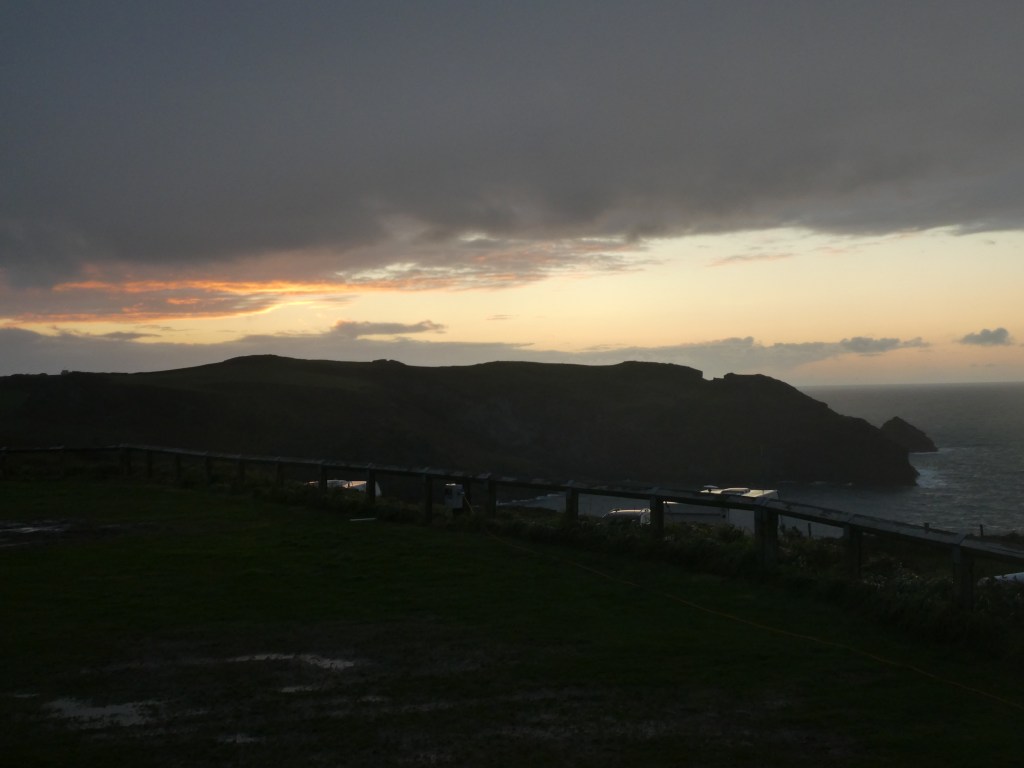
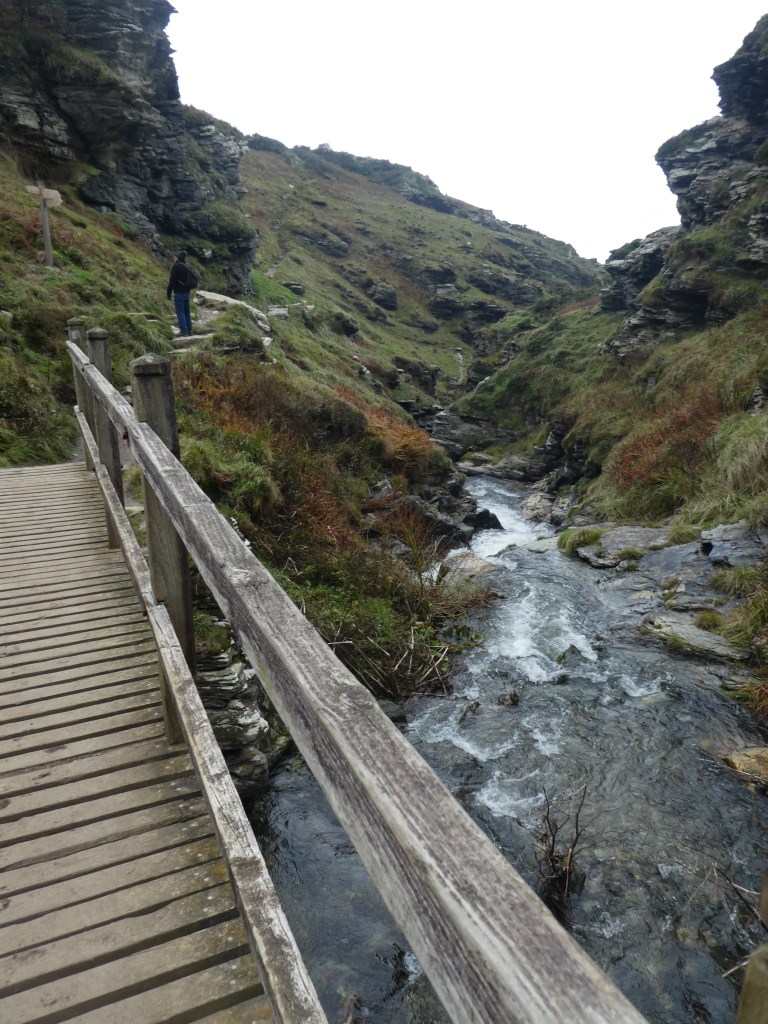
We move on from Batallack, near St Just, to a site with wonderful, dramatic views at Trethevy, near Tintagel. Tintagel always sounds as if it should be a settlement for an elven community and it transpires that there are Cornish influences in Tolkien’s Lord of the Rings. It’s breezy but dry, as once installed, we set off to walk into Tintagel, short in distance and long in time. The descents and climbs begin quickly with a sharp drop from our camp site into a deep ravine and across a footbridge then up the other side with steps and slopes until we reach a gentle, upward field.

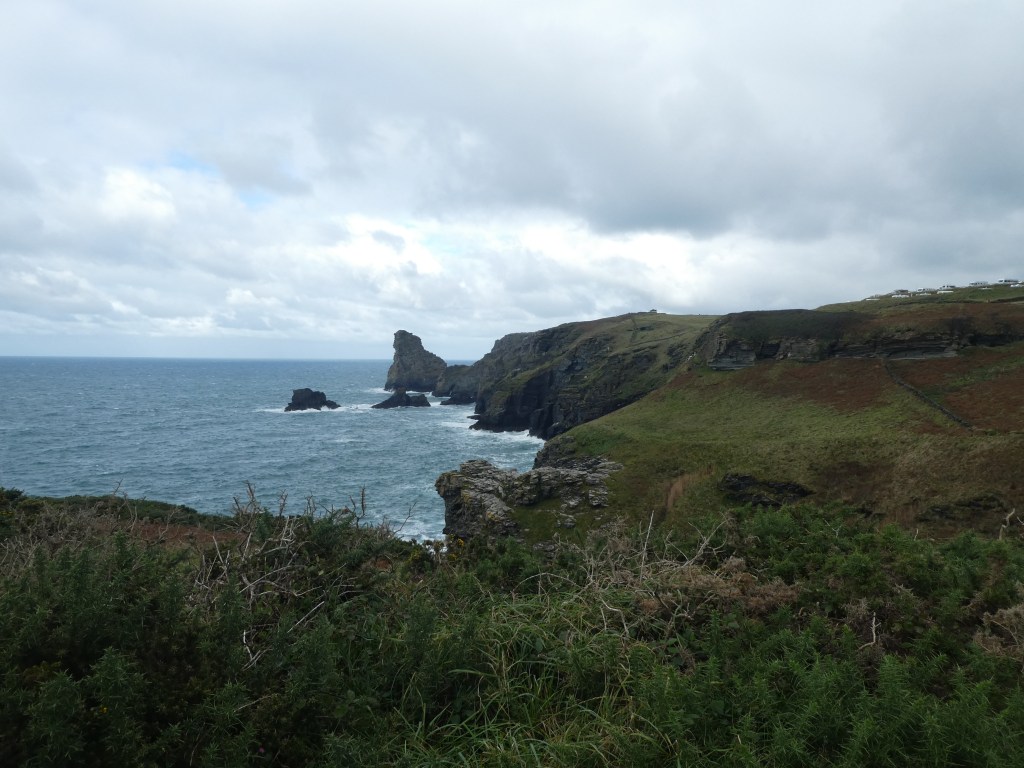
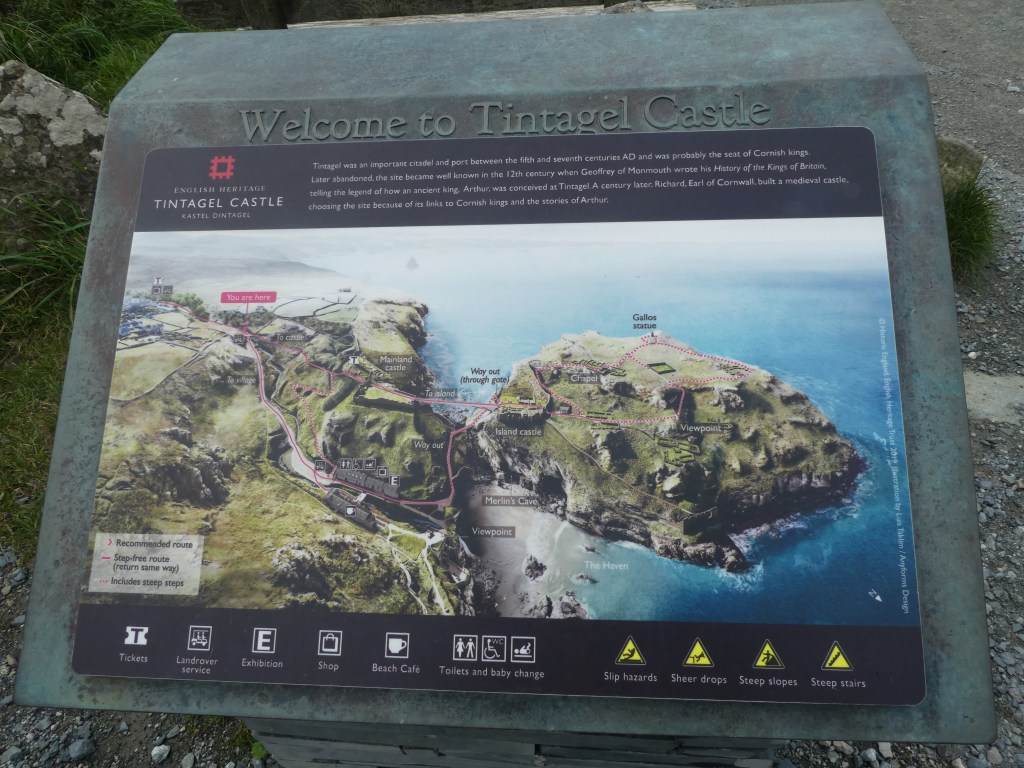
We reach the top of the field where a glimpse of a turret suggests Tintagel Castle but is, in fact a grand hotel, then we round the rocky headland and drop down again, this time for a view of the footbridge across to the castle, now a ruin and accessible only by reserving tickets from ‘English Heritage’. Foiled again, by our ineptitude in booking ahead!
We aren’t devastated. It’s another steep walk up to the village [on the road this time] passed by shuttle runs of land rovers taking sightseers down to the castle and back and those of us who walk it feel smug, if not achey, from gaining the top under our own steam.

We’ve a couple of hours to kill in Tintagel village, which we fritter by having tea then meandering in and out of gift shops and picking up a few things, which helps the local economy in these straightened times.

For once, we’ve been prepared and booked a table for dinner at the excellent ‘Olde Malthouse Inn’, a lovely old stone building in Fore Street. The meal is delicious enough to merit being Husband’s birthday dinner, even though there is still a couple of days until this milestone is reached. There is a relaxed ambience and we are not too out of place in our muddy walking gear. But we are saved from braving the soaring and plummeting coast path home by an elderly, jovial taxi driver who proudly declares he’s never set foot on the coast path.

Next day it’s our last walk, in the opposite direction to Boscastle, famously devastated by floods in 2004. The walk is mostly undulating but punctuated by steep steps in places. We climb to the coastguard lookout in a white tower, where it feels like the top of the world, then down into Boscastle’s tiny harbour, now restored and lined with tourist shops.

Further up there are cafes, pubs and a smattering of shops. It only remains to find the bus stop for our return to the site, where a visiting fish and chip van is the main attraction of the day!

Goodbye Cornwall, for now. But we’ll be back!

Autumn Getaway

I’ve returned from time-travelling travel to present day travel for this week’s post.

It occurs to me that we, [that is to say, Husband and myself] have not got the hang of this Covid thing at all. Yes-we are practised in the art of mask-wearing. Yes-we wash our hands lots. Yes-we keep our distance [not from each other, you understand]. Yes-we don’t throw big parties. But we haven’t got to grips with planning ahead, reserving, booking and being organised.

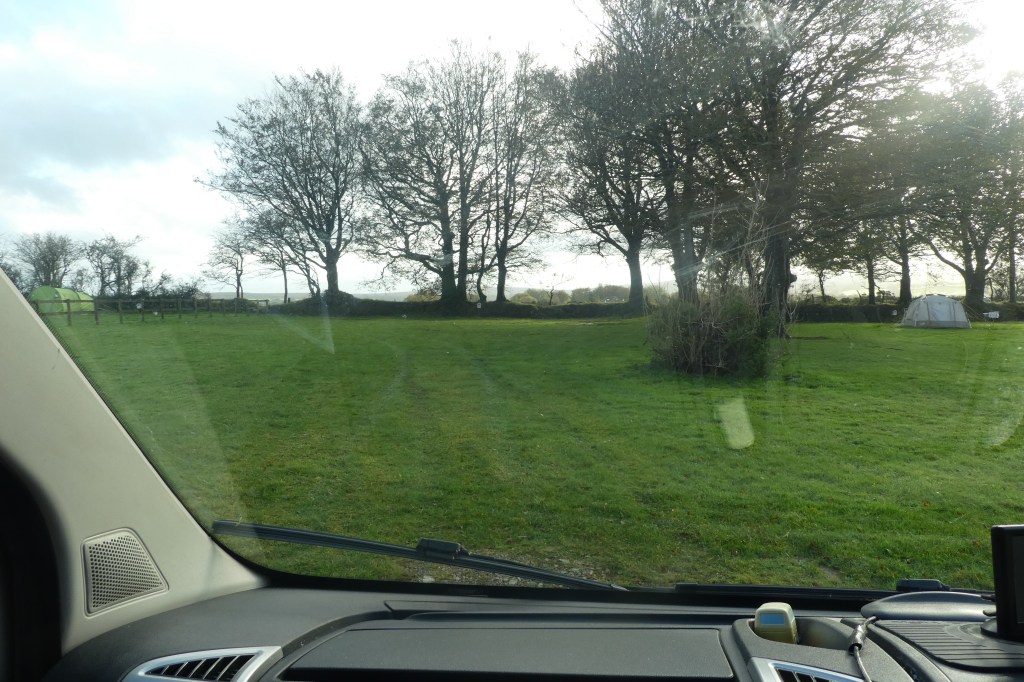
We have come west to Cornwall, via Dartmoor in Devon, where we stayed at a pub campsite and took advantage of the hearty meals on offer. Our departure was delayed due to Biblical quantities of rain which penetrated our house roof [again]. But that is another story. The rain has turned from relentless deluge into squally, intermittent showers punctuated with gusts of wind, a marginal improvement, although I wouldn’t volunteer to swap places with the occupants of the two tents on the site.

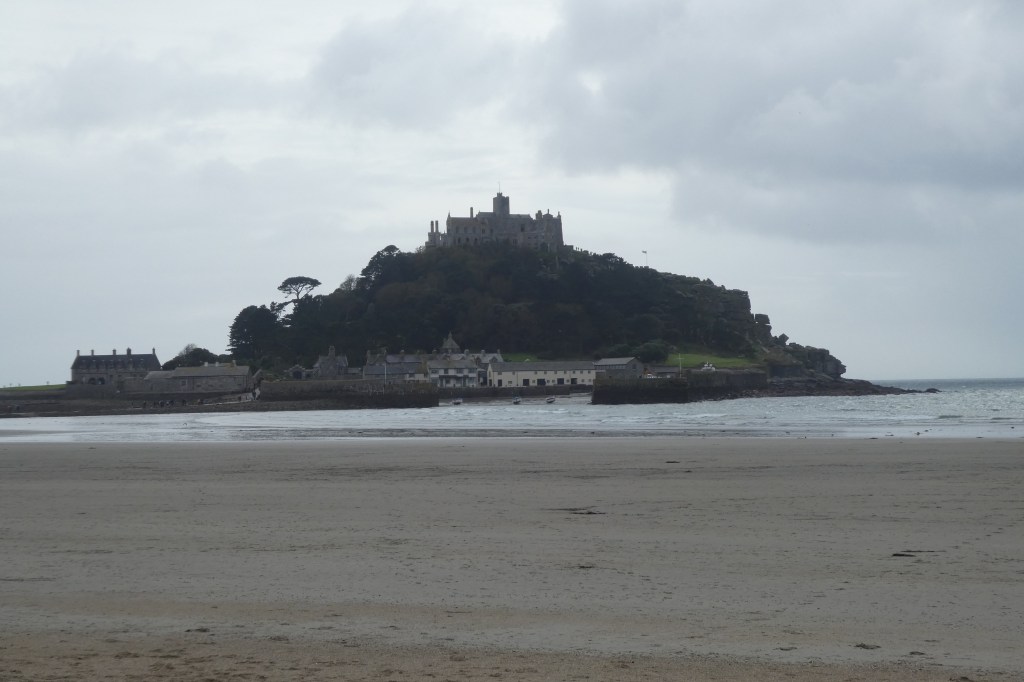
We head off in the morning, making for St Just, beyond Penzance, which is towards Cornwall’s ‘toe’ and on the Atlantic coast. But we aren’t in a hurry and having picked up home-made pasties in a farm shop we attempt to park in Launceston without success then find a picnic area where we can stop, make coffee [a distinct improvement on the kiosk Nescafe from yesterday] and continue on our way. After a blustery drive we stop for a break and spot a castle perched on a hill, poking up behind a field. It is, of course, St Michael’s Mount, twin of French Normandy’s Mont St Michel.

It’s years since I visited St Michael’s Mount. We decide to take a detour. When we reach Marazion, the tiny town that faces the mount, the car parks are choc-a-bloc and having been denied access to the National Trust park we have no choice but to pay a steep £8 to park in the ‘alternative’ one.

Then we battle our way across the cobbled causeway towards the Mount, sandblasted and peppered with rain, but when we get to the threshold there are NT staff in masks checking tickets and there is nothing for it but to turn back. We fight our way back across the causeway, mercifully still not breached by the waves and have a stroll up through Marazion, which, though pretty enough is upstaged by St Michael’s Mount sprouting from the broad beach in a dramatic fashion.

We return to the car park where we feel smug making a cup of tea to utilise our £8 fee.

We head off to our pre-booked site at Batallack, near St Just and a few strides from the coast path. The owner is amenable, the site pleasant, with a smattering of occupants.

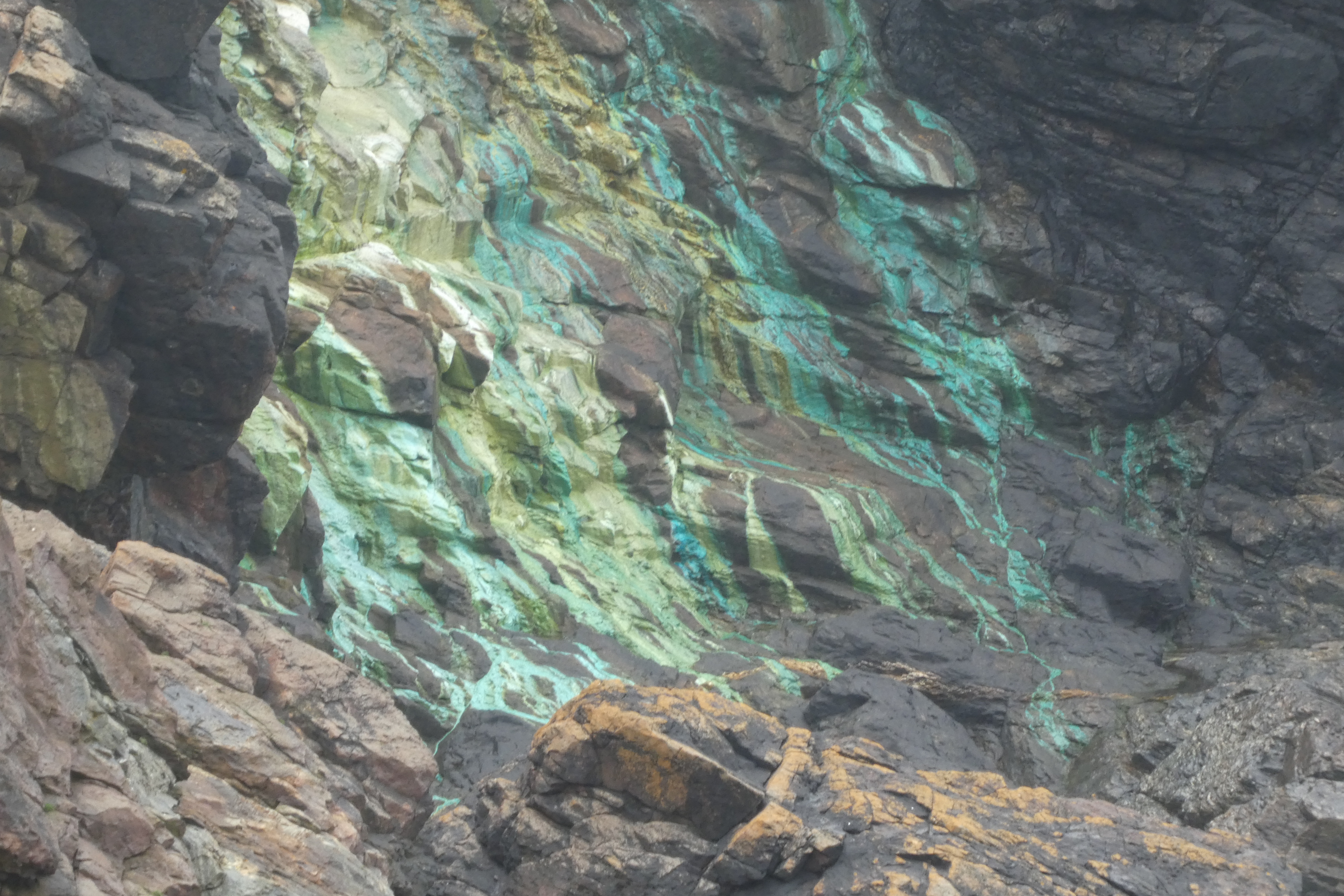
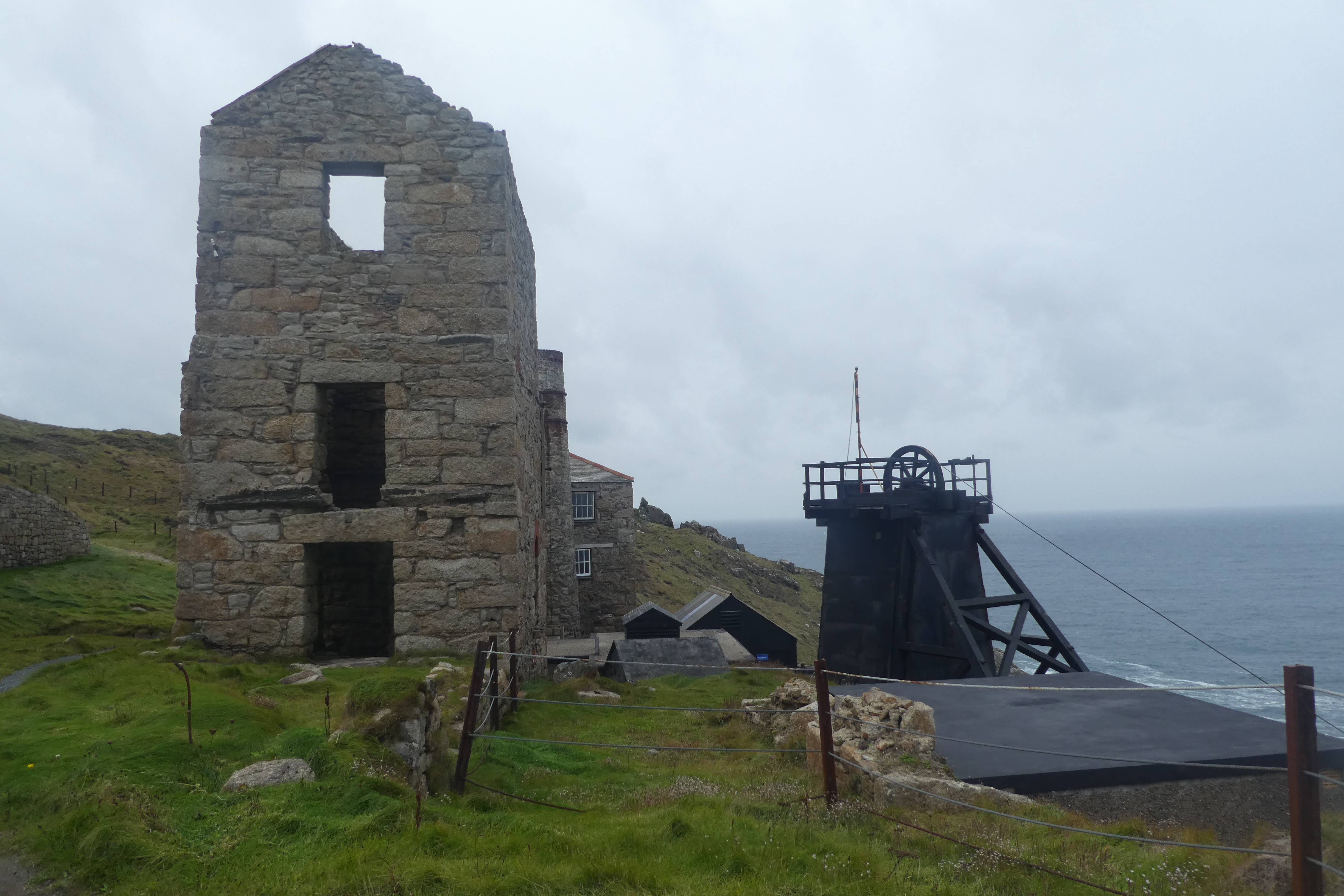
Next day is cloudy but dry as we set off to walk along the coast path towards Pendeen, where we can get a bus back to the site. As soon as we reach the path the scenery is rugged, rocky cliffs falling steeply down the sea and peppered with the remains of chimneys and wheelhouses from all the old tin mines, all of which have been at least partially restored. The path dips and rises, providing some stiff climbs and descents. In one cove the rocky cliffs are striped with green where arsenic has leeched from the old mines.

After a couple of hours a dank October drizzle sets in, soaking us as we climb steeply up towards the road to Pendeen. We reach the village, legs aching, and scan the main road for a bus stop. The map app on Husband’s phone has disappeared so having spotted a car park sign I make the assumption this is the village centre and we make for it, nipping into the village pub to confirm we’re en route. Sure enough there is not only a bus stop but a shelter! and a few minutes later the double decker ‘coastal breezer’ comes around the corner to take us back to our site. Bliss!

The Power and the Story

A chance meeting with neighbours on our site at Felixstowe, who’d recommended a site to us, had sent us scuttling back to the coast at Sizewell. Sizewell was an old fishing village once. Now it is better known for accommodating a notorious nuclear power station, Sizewell ‘A’, now decommissioned and encased in 3 metres of concrete. Sizewell ‘B’ sits next door to this huge, grey, man-made monolith and is sky-blue with a white dome, like a space-age cathedral. On arrival to Sizewell I experienced an irrational frisson of trepidation, perhaps brought on by a recent viewing of the hit series, ‘Chernobyl’.

Sizewell ‘C’ is now on the agenda, unpopular with many, judging by the signs dotted around the surrounding villages.

An extensive wind farm, Greater Gabbard was just about visible on the horizon out to sea. Once we were installed at our site and settled outside the bar, [which overlooks the wild beach], I eavesdropped on a neighbouring conversation in which a woman expressed vitriolic hatred for the wind farm, barely visible even on this clear, sunny evening. To her near left the twin power stations rose up menacingly, compounding the irony of her invective.

But despite the power monsters in their varied forms, this is a wonderfully wild and unspoilt piece of coastline, rich in wildlife. There are extensive marshes, forests and beach habitats. At the entrance to the beach car park a jaunty cafe, ‘Sizewell ‘T”, was doing a roaring trade in chips and ice creams.

It is a popular spot for locals and the touring section of our site was busy with a steady stream of visitors, although the shower blocks are closed.

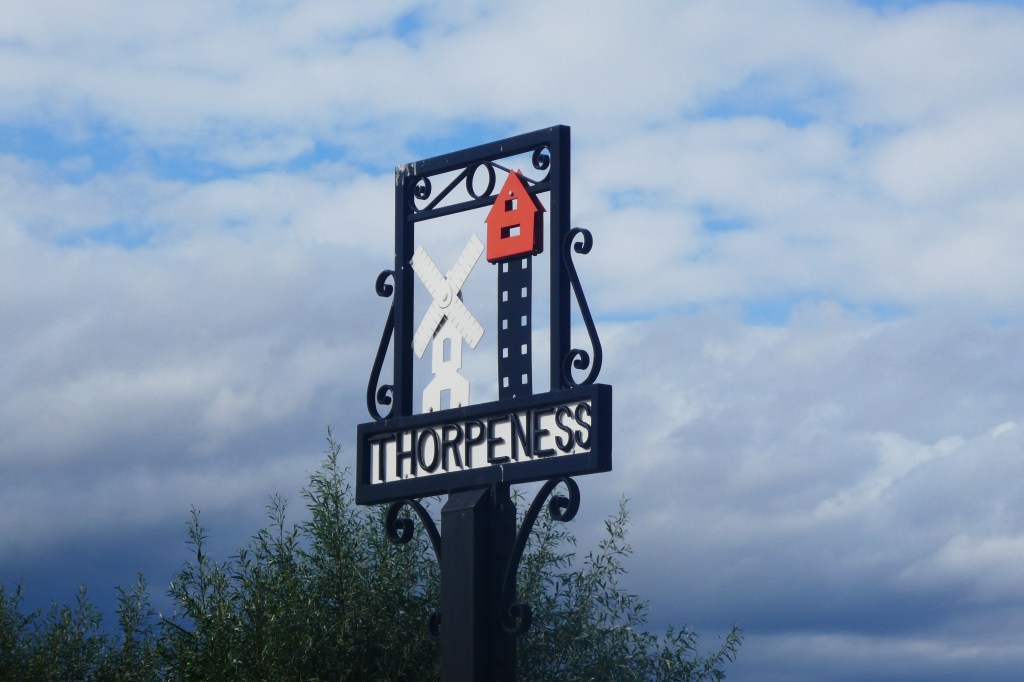
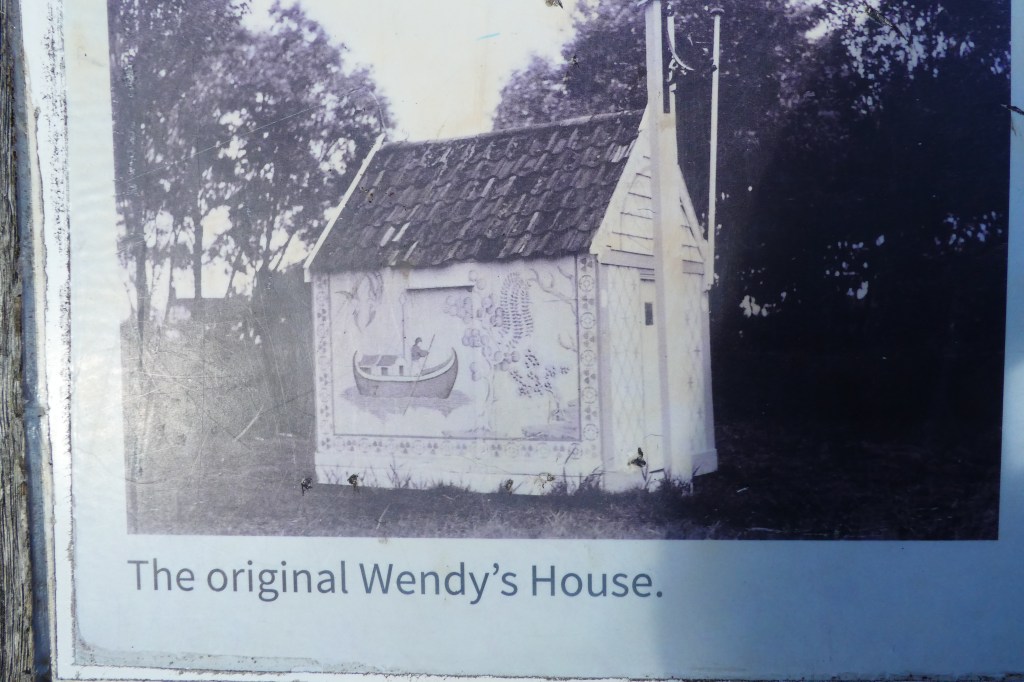
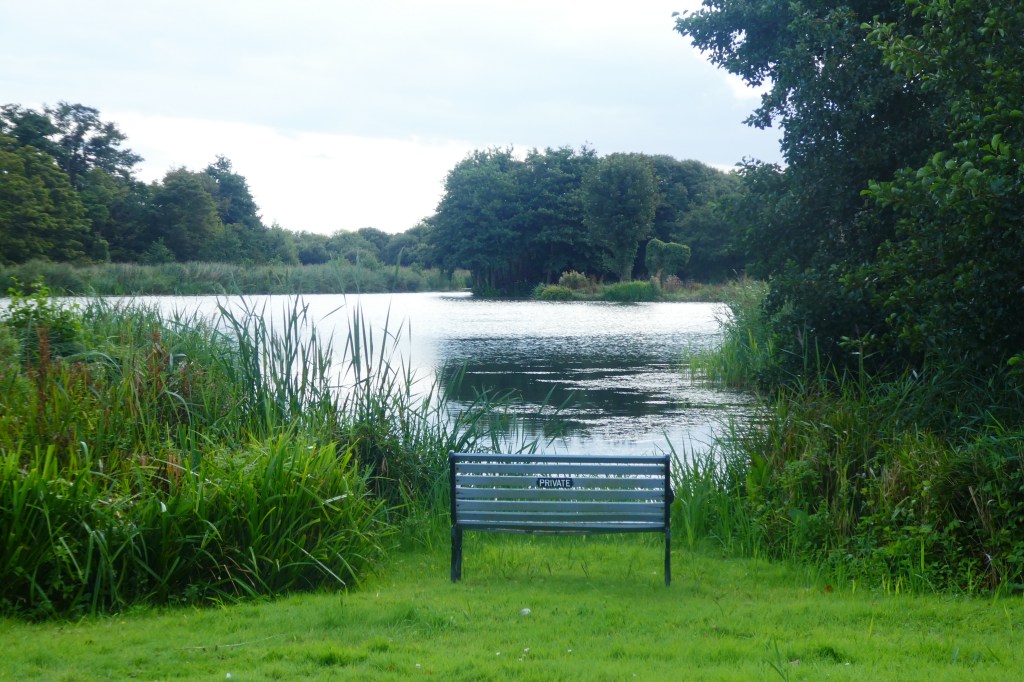
We strode out along the beach, the weather clear and balmy and then down into Thorpeness, a cute, coastal village, thronged with visitors on this sunny afternoon. The village boasts a ‘mere’. Here was the original ‘Wendy’s House’ of J M Barry fame, also an immaculate windmill and the famous ‘house in the clouds’, which can be rented for holiday stays.

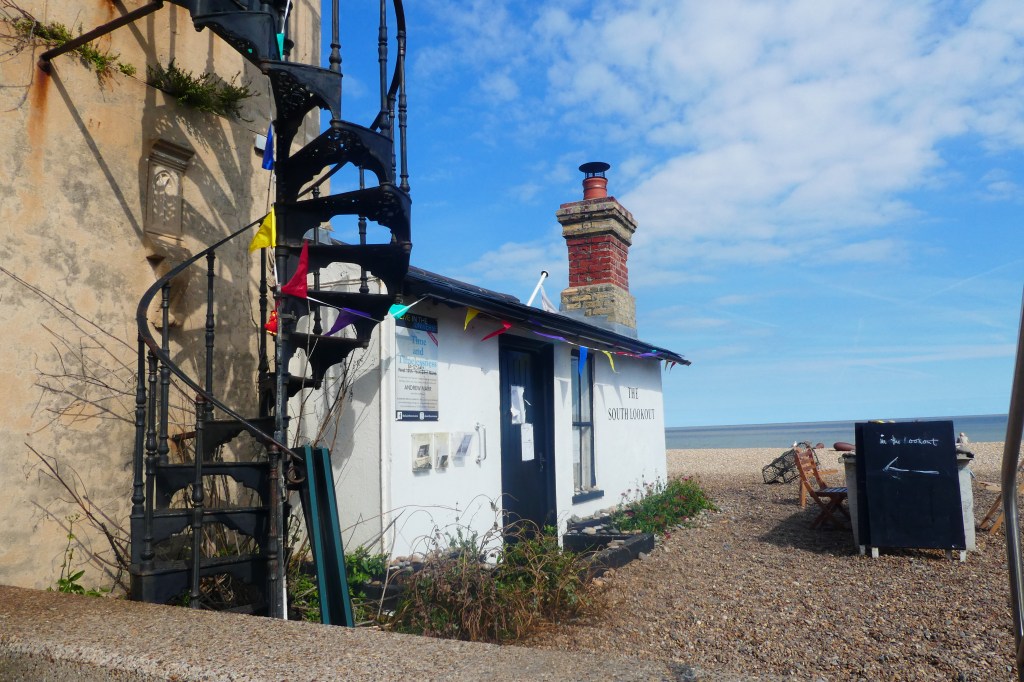
Aldeburgh is supposedly a simple cycle away from our site, though the path morphed from flat tarmac to rutted, sandy track in no time. Again, the town was busy with tourists, too many for the High Street pavements to cope with. It’s a pleasant seafront with fish smokeries and a broad, green swathe on which stands the ‘Moot House’, a half-timbered building housing what must be a tiny museum.

It took longer to queue for the checkouts at Aldeburgh’s High Street co-op than to explore its two or three streets. Provisions were running low and Sizewell is short on grocery stores [there are none].

Next day, with the promise of rain on our last day we cycled again, this time to Dunwich. The route was hilly, a surprise for the knees. Dunwich is a minute village, one street of cottages dominated by a pub/hotel, but with a cafe and kiosk near the beach. There is also a ruined abbey and a museum of sorts. Taking what Husband termed a ‘short cut’ back to our site at Beach view, we found ourselves in the National Trust reserve. ‘Strictly no Admittance without Tickets’ stated the sign as Husband rode through, oblivious. A second turning before the entrance booth took us along a heather lined track. ‘No Horses, no Bikes!!’ proclaimed the sign, which Husband peddled past, heedless. After several wrong turnings we arrived at a ‘kissing gate’ and were obliged to manhandle the bikes through it by up-ending them.

Our last day at Sizewell dawned humid and drizzly. After lunch we walked, taking in the beach and a dripping forest, sweltering in rainwear; and returning to our site for tea and cake.

Lake Annecy and the Mountain Rescue

The cycle path to Annecy runs past our camp site entrance and it’s an easy ride into the town centre, all off road and tarmac, which is commonplace for France. Since this is an add-on to our Italian lakes trip and part of our return journey I’m not prepared for the gorgeous sight of this lakeside city with it’s historic centre so it comes as a bonus.

And it’s clear from the numbers of tourists swarming all over the streets, embarking and disembarking from leisure boats, sitting at pavement cafe tables and browsing the gift shops that we are not the only fans of Annecy on this warm, late summer day.

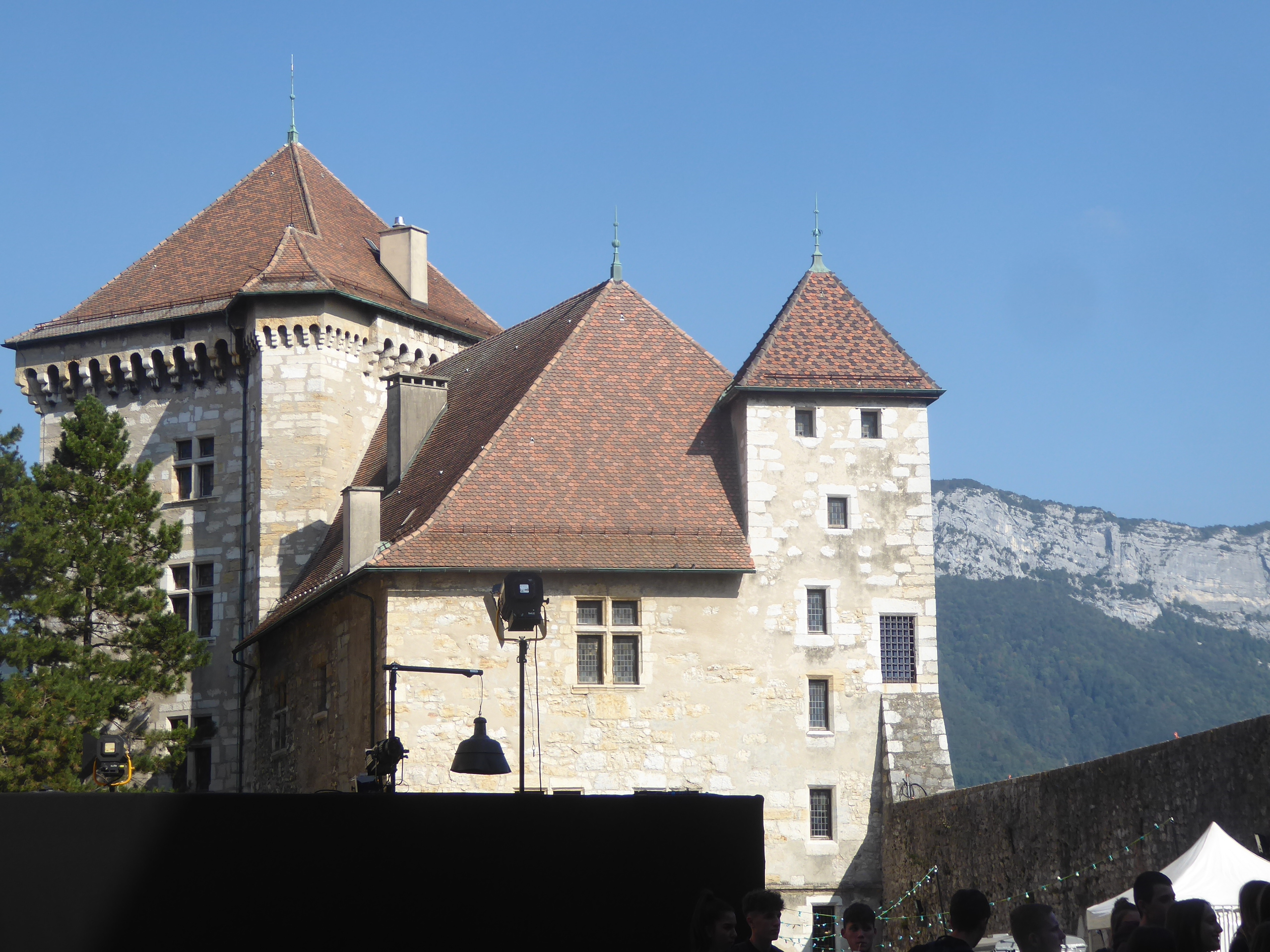
The narrow streets and ancient buildings are centred on and around the waterways that snake through and there is also a handsome chateau perched up high in an imposing position above the commercial areas.

P1080454

All this is against a backdrop of craggy mountains and serves to assuage some of the mourning I felt on leaving Lake Maggiore.

Next day we are up for a more challenging cycle and take the path the opposite way from our site, around the lakeside until it leaves the water and begins to wind upwards, inevitably.

It is Sunday. The cycle path is full of Sunday cyclists of all descriptions, from family groups with tiny tots to fully fledged, serious sports enthusiasts. We are in neither of these categories but we do still use pedal power and have not succumbed to the relative ease of the electric ‘E-bikes’ that appear to have exploded in popularity in recent years. As a result, I labour up each hill getting overtaken by breezy, carefree cyclists [of all ages] for whom an incline is not an effort. It is impossible to resist a rude gesture at each receding back as they whizz past us. It also becomes clear that the path is congested, with families, E-bikes and sports cyclists all sharing the same route.

P1080473P1080484

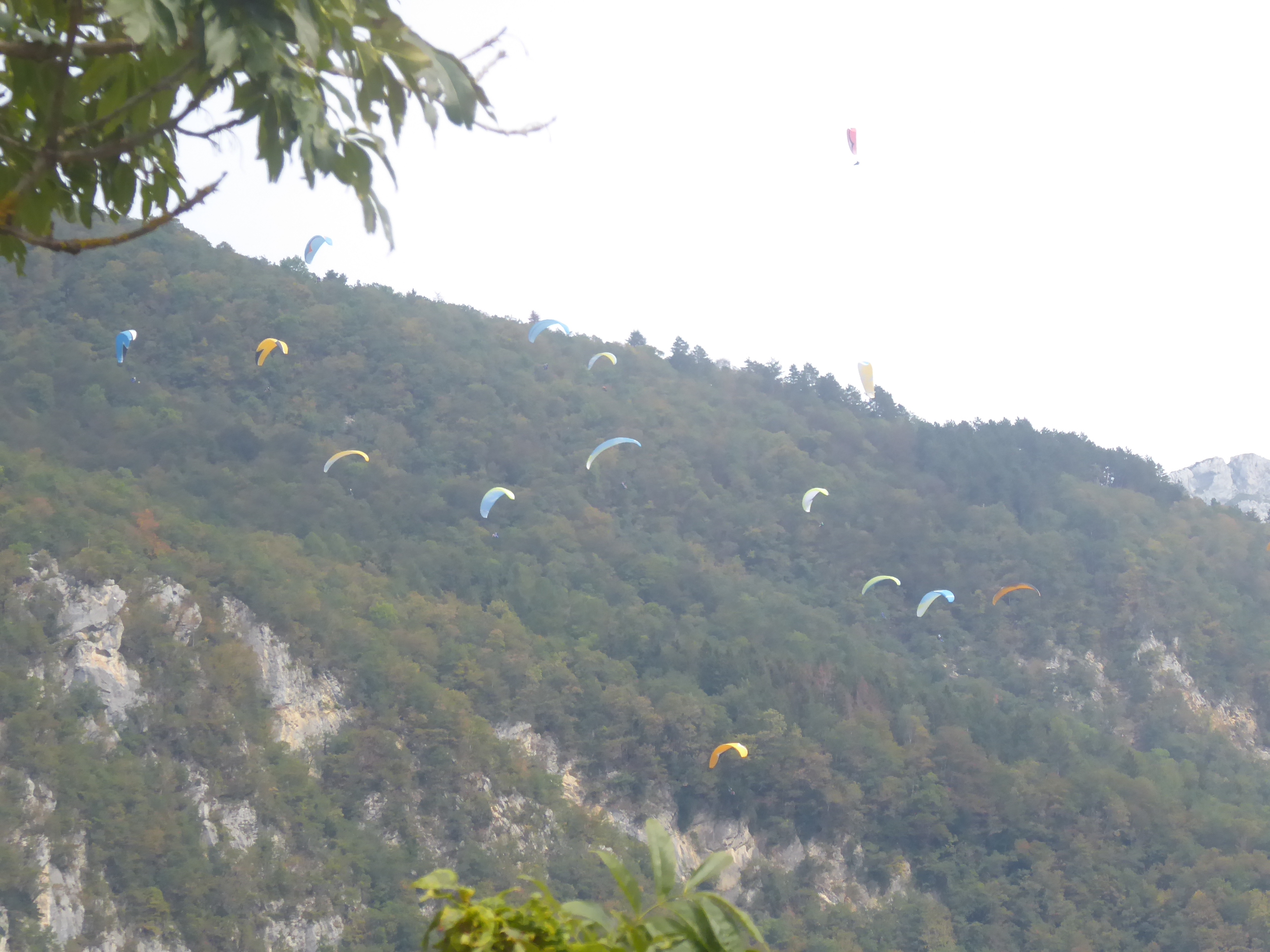
There are points of interest along the way, including clouds of hang-gliders raining down from the mountainsides as the path becomes a little quieter when it leaves the waterside.

After a decent mileage we opt for turning back rather than ploughing on and we begin to make our descent, heading towards a cycle-themed cafe Husband spotted on the way. We pass a gentleman cycling with a large box attached to the front of his bike, which on closer inspection reveals a disabled young person being transported along, musical accompaniment and all, and I give him a wave before crossing the road on to the next bit of path. Straight away we need to pause at a busy bike junction and it is here that a violent impact from behind catapults me over the handlebars of my bike and on to the tarmac, where I lie feeling helpless and trying to decide what has happened!

The man on the bike+box has stopped, having shunted me from behind, his vision obliterated by the buggy he’s been pushing along. Husband comes around and hefts me to my feet and a kind cyclist picks the bike up as I limp to a nearby tree stump to inspect the wounds; nothing broken but a fair bit of skin flayed from arm and leg. There is much apologising and Husband saying ‘It’s ok, it’s ok’ while I continue to be struck dumb, although I’ve dug out my mini first-aid kit and am cleaning up.

After a while we resume, slower now, passing a spot where a sports cyclist has also suffered a crash-but far worse, as he’s lying on the tarmac waiting for an ambulance. When we reach the café we are lucky to find a table but having waited too long to be served we give up and head back to site to sit in the sun. I may be classified as in ‘older age’ but not yet completely decrepit-

It’s time to return-after all we’ve another trip to prepare for!


Simplon or Simpleton?

It is a wrench to tear ourselves away from beautiful Lake Maggiore, but the weather is due to deteriorate and we must begin the slow haul north and west. To do this we must cross the Alps, and the nearest pass happens to be The Simplon, a route that we have not used before.

In the beginning I am confused by large signs displaying ‘Sempione’, which I’m unable to locate in the road atlas, until I realise this is the Italian for ‘Simplon Pass’, which is an example of my ineptitude with map reading…

As you might expect, though it is sad to leave the lakes, the scenery soon becomes breath-taking in an Alpine way; the villages picturesque as we wind up and through the mountains on what is an unexpectedly quiet road.

P1080372

The engineering along the pass, the road constructed through, around and over mountains is spectacular and it is not long before snow-topped peaks appear. Before long we’ve crossed into Switzerland again.

The landscape, as we continue to ascend becomes bleaker and less green, the conditions less hospitable to vegetation.

P1080387

You know you’ve reached the top of the pass, because the road widens, there is a lay-by, a restaurant and a gift shop. We make coffee and I scoot across to the shop, which is lined from floor to ceiling with all the objects you would never need, from gaily painted miniature cowbells to carved wooden whistles adorned with jaunty birds-all very ‘Alpine’.

We are not alone in the lay-by, and two of our fellow parkers are gargantuan, lorry-style motor-homes travelling in convoy.

P1080388

The German occupants hop out for a quick cigarette then rumble on again, leaving us wondering if we’ll be stuck behind them on the hairpin bends, but when we resume our journey they are long gone.

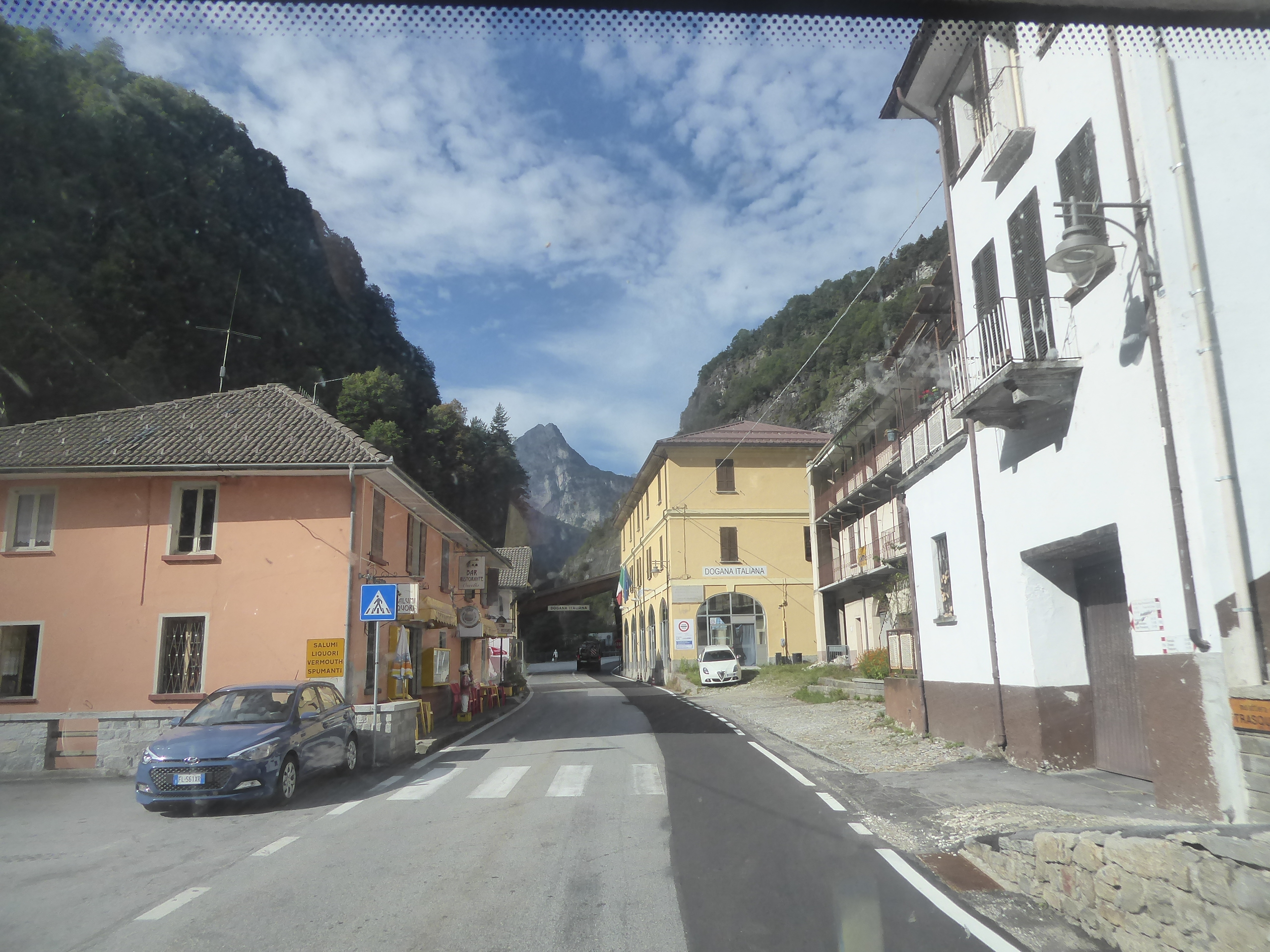
It’s down the other side of the pass and an hour or so later we are alongside Lake Geneva, passing through the Swiss border with France.

Then it’s a quick whisk through ‘Evian-les-Bains’ [where the expensive bottled water comes from] on to our destination for the next couple of days-Lake Annecy; distinctly non-Italian, cooler and decidedly popular, much to our dismay. Every lakeside site is full-and it’s getting late. We are obliged to make a night stop in a site on a hillside, which at least has a lake view. We’ll try the lakeside sites in the morning.

P1080471

And when we do we are not disappointed. Lake Annecy may not be Italian but it does have a charm of its own. We discover that the cycle path runs from the site entrance and that the historic town of Annecy itself is not so far-nor is the Carrefour supermarket. The morning dawns clear and sunny and we are set to explore.