Two Sites and a Funeral

With all avenues having been explored at the Tortoli site on the Sardinian east coast, in other words a short, hot walk along the road as far as it goes and back again- we up sticks once more and ready the van for another hop north, this time towards Siniscola. There’s a site at Santa Lucia, a small seaside village. I look at the map. The road is ominously wiggly, heralding more mountain road terrors.
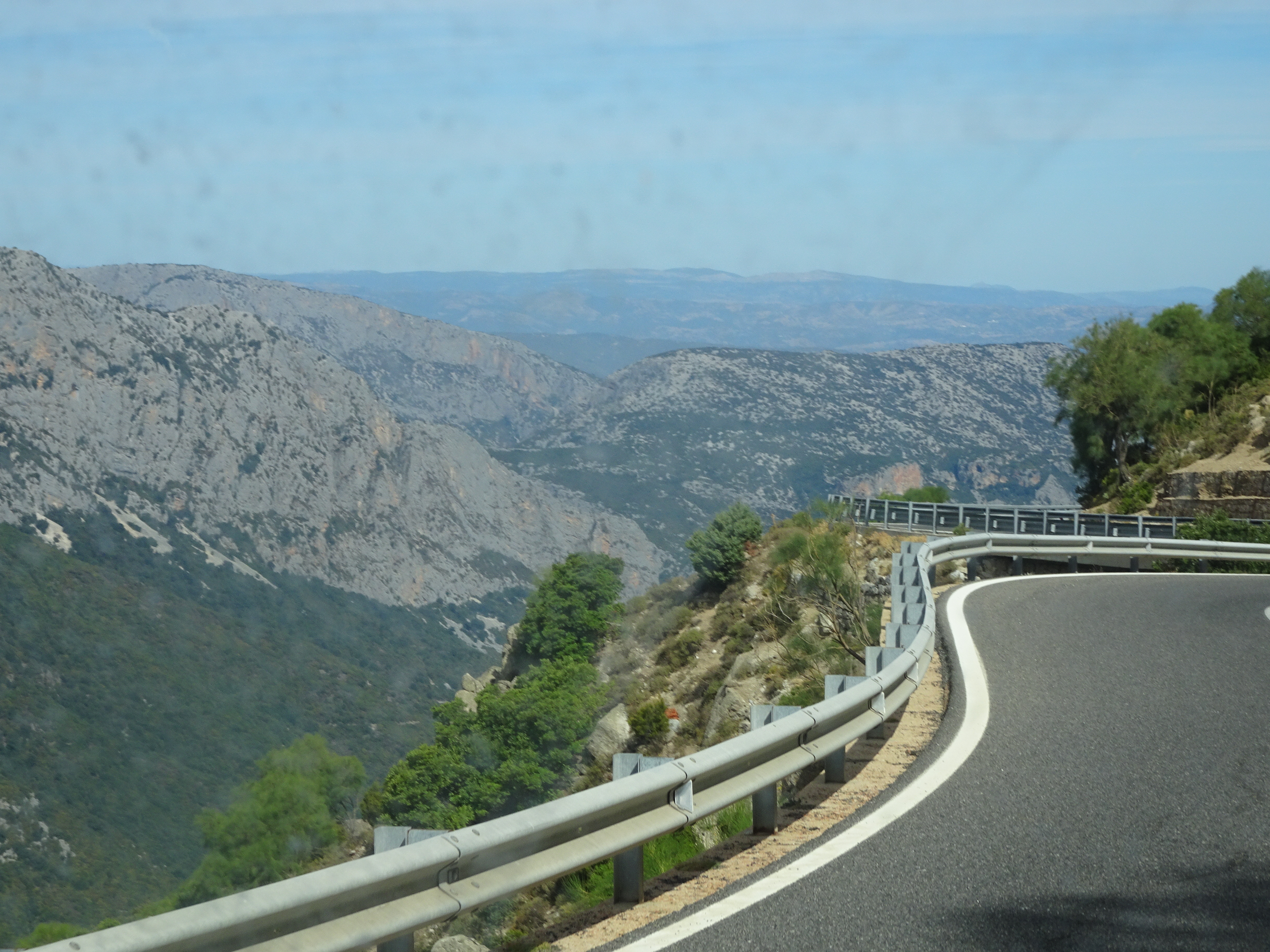
You’d have thought I’d be getting used to staring dizzy drops and horrific hairpins by this time, but rather than finding it all thrilling [as, admittedly. does Husband] I continue to perspire and grimace. But I’ve perfected the art of taking long, slow breaths as we approach bends or vehicles career towards us. This time, the journey is not aided by the scores of motor bikers who roar up behind us and swerve away at breakneck speed, sometimes enhancing the thrill by zig-zagging across the road. It’s clearly a favourite for motor cycles, also the one and only road where we spot three- yes, three British vehicles- all in one day; and having not spotted a single Brit during the entire trip to this date.
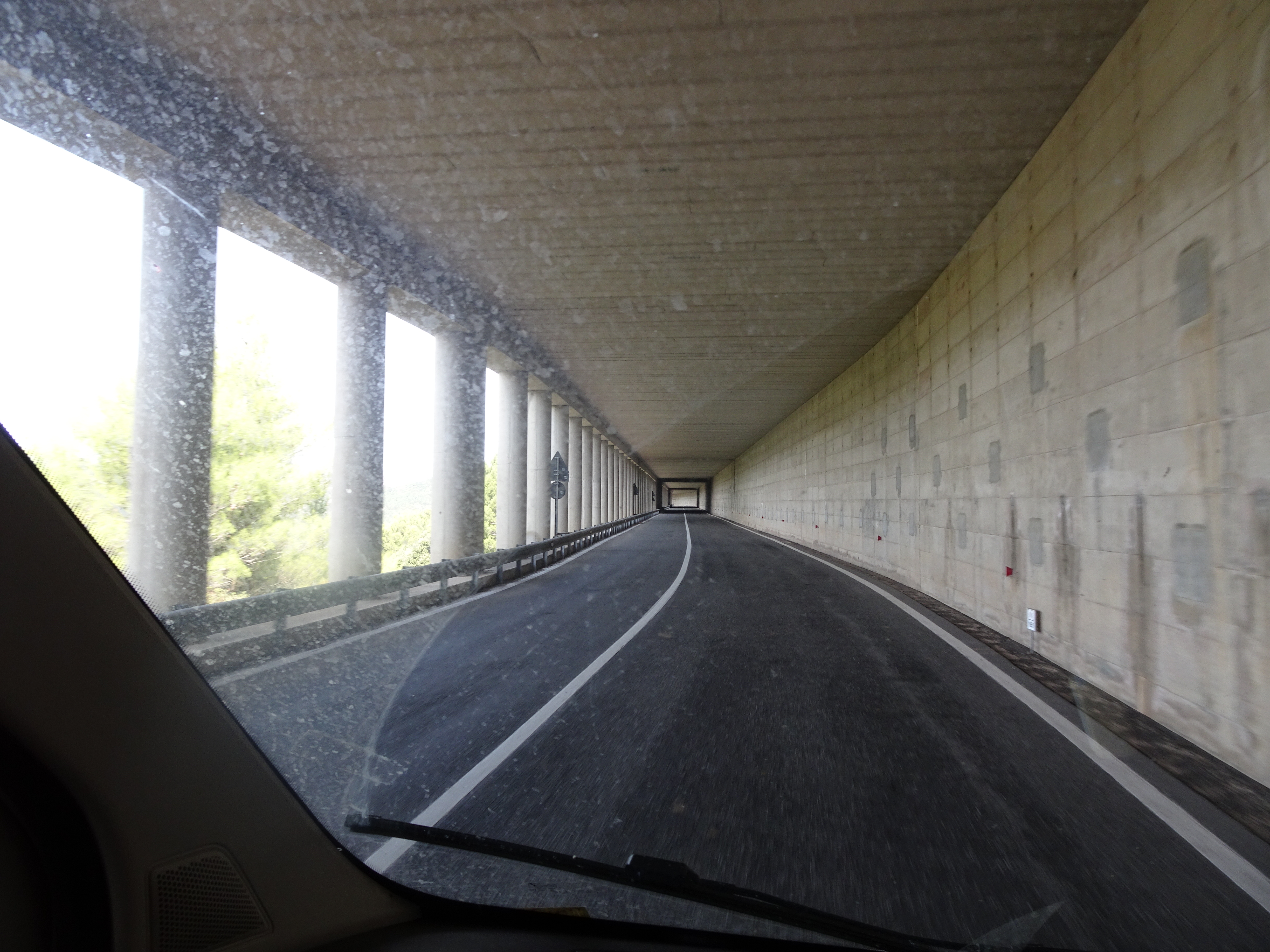
On this route, though there are some short stretches of respite, semi-tunnels where the outside edge is guarded by columns, and by the time we’re dropping down towards Santa Lucia it’s all become much more sensible. A search for a suitable place to stop for lunch gets tied in with supermarket shopping then we’re good to go to the site.

While we’ve been in Sardinia, our own, home, UK news has been full of the Queen’s death- a momentous event for many in our home country. And while any death is sad for those involved and close family of course I can’t help feeling relieved not to be saturated in the details and outpourings all day every day.

We pull up at the gates to our site. The woman in reception is pleasant and welcoming. ‘But you don’t want to watch the funeral?’ she asks me. For a moment I’m not sure what she means. ‘We’re showing it in the bar’ she tells me. I thank her, but say no, thanks, we didn’t know the Queen. [We still haven’t watched any of the ceremony/pomp/footage in spite of it’s remaining on YouTube], which the woman appears to find amusing.
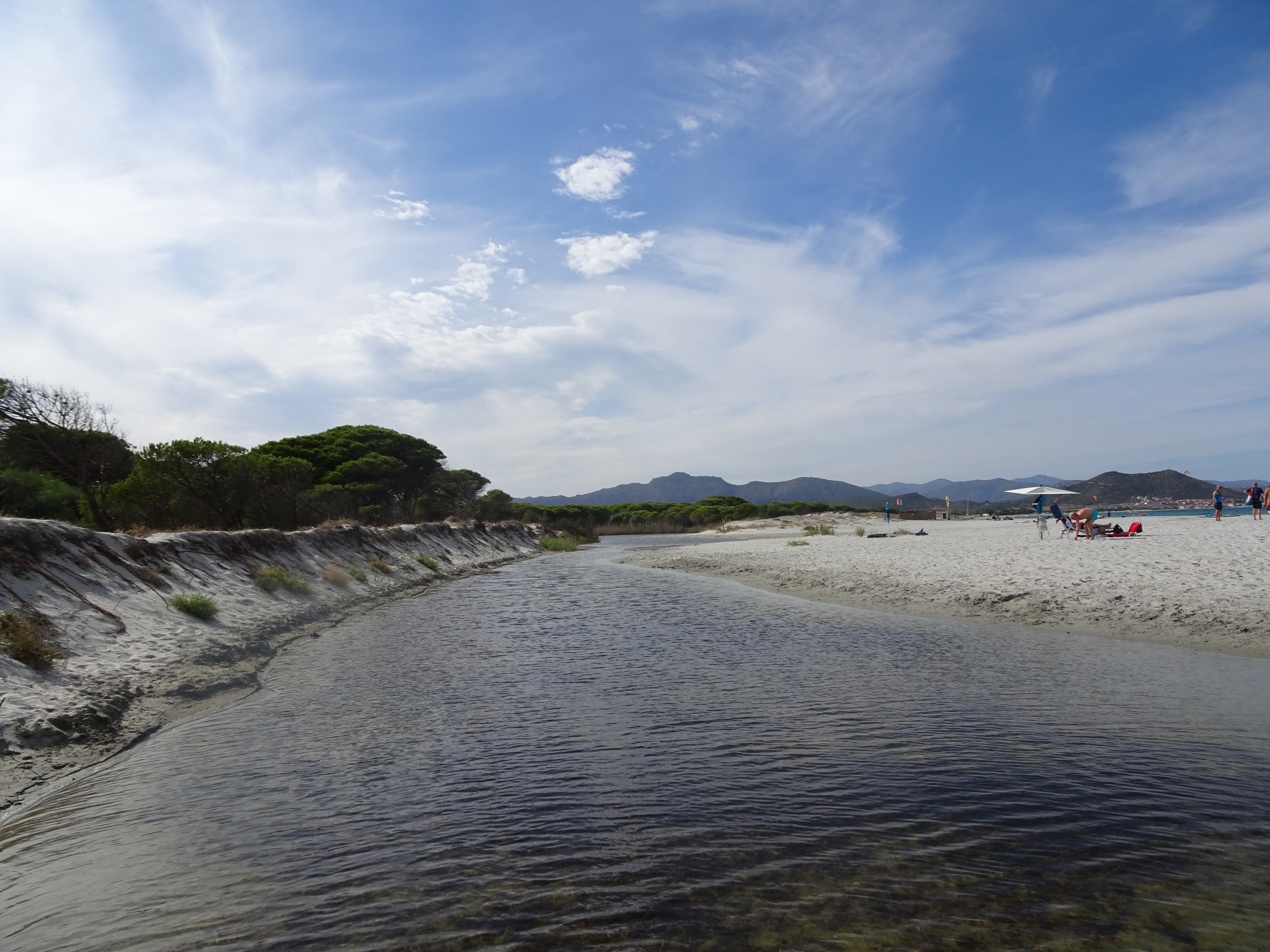
The site is large and wooded with beach access via a woodland path. Getting into pitches is a little tricky, the first we choose being hampered by a gargantuan, Italian motorhome protruding into the access lane. The occupant makes a sudden appearance as Husband begins to manoeuvre into the space, gesticulating and waving like a banshee on speed. As I’m the other side of our van undertaking my own, usual, time-honoured signals, I find this frantic takeover annoying, as does Husband, so we roll across to the next space, away from the hyperactive, oversized-motorhome-owning Italian and his panicky signals.

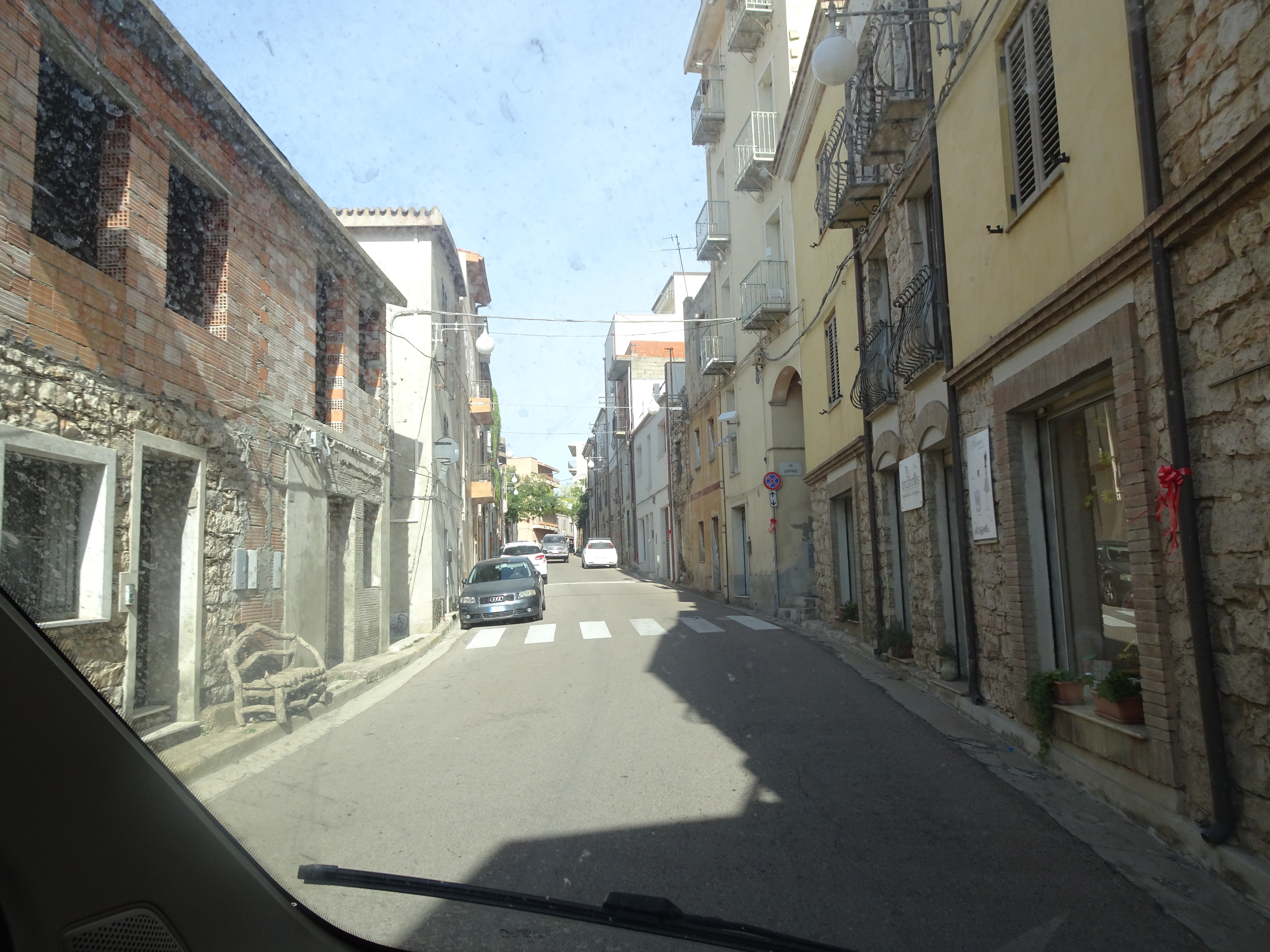
Again, the site is ideal for beach lovers. This time, we can walk along the road into Santa Lucia, although it is tiny and while it’s attractive and has a relaxing, seaside holiday feel it has nothing of particular interest.

It’s on again, then- this time only a shortish hop north and to the Costa Smeralda, Sardinia’s famous millionaire playboy playground which was developed in the 60s by the Aga Khan, who poured milions into the area. Lucky for us it still has campsites!…

Grace is also known as the novelist, Jane Deans. Her new novel, The Conways at Earthsend is available from Amazon, Waterstones, Goodreads, W H Smith, Pegasus Publishing and many more sites. Visit my website: janedeans.com or my author page on Facebook: (1) Jane Deans, Novelist, Short Fiction and Blog | Facebook.

Close Encounters of the Polizi Kind

After a few days at the site near Tharros, we decide to ditch the plan to go south to Cagliari and drive across the island of Sardinia to the east coast at Tortoli. We’ve seen nowhere on our site to empty the grey water waste from the tank under our van, so we ditch it on the dirt track that leads to the road. We need to shop for groceries. A quick sweep via SATNAV tells us there’s a ‘Eurospin’ at Cabras, ten miles down the road, so we head there, following the directions. Upon entering Cabras, a somewhat nondescript town, I spot the ‘Eurospin’ sign, its tall, blue, star-studded emblem standing in front of a bulldozed building site.

We turn around and head back towards a brand new shopping centre up a ramp, where I catch sight of ‘Conad’ [renamed ‘Gonad’ by us on a previous occasion]. As we move to the access lane I notice a vehicle pulling level with us, then see it is a polizi car and worse, the window is down and the police officer is screeching something at us. Horrors! He points to our waste outlet, now dribbling a miniscule drip on to the road. ‘Es una problema!’ he shouts at me. ‘It’s nothing’ I say, ‘it’s just water!’ He continues to shout and we turn off up the ramp. I look behind and offer thanks to some unknown deity that the polizi are not accompanying us to Gonad.

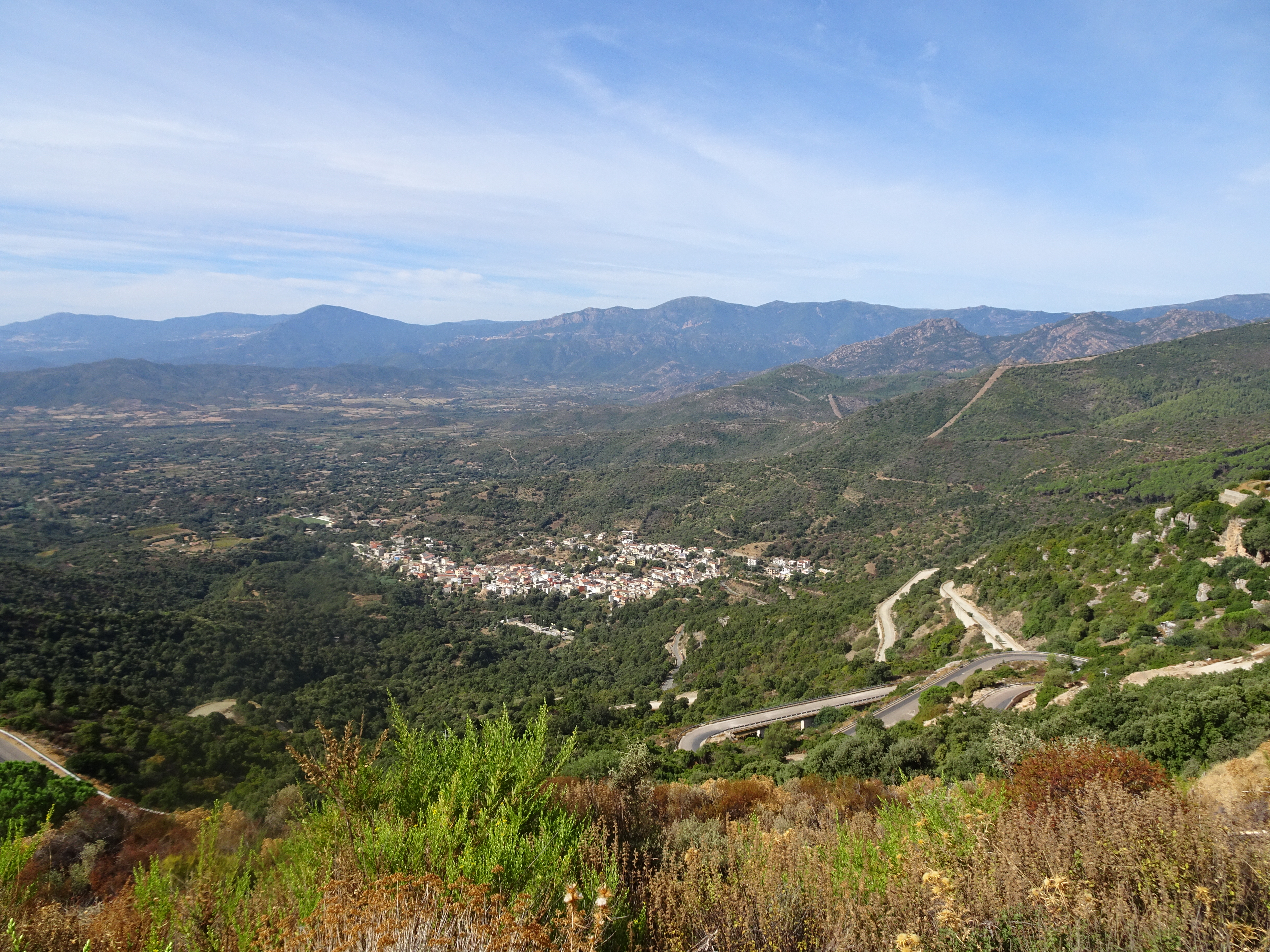
We strike out across the countryside, soon beginning an ascent on a mountain road which feels too narrow to me, the passenger sitting on the left with vehicles hurtling towards me round hairpin bends. It’s up and on up, winding high until we enter one of those villages that clings to the mountainside as if a giant has thrown armfuls of toy houses down the hill. It’s pretty as a picture but with nowhere whatsoever to park a van we’re obliged to drive through to the other side- where at least we do find somewhere to stop and photograph the views. But they do not do justice to the panoramic vista stretched out below, a snaking series of hairpin bends and, incongruously, a football pitch halfway down.

We continue on the mountain road, stopping for coffee at almost the top, by a sign warning us of stray cattle- not a worry that had preoccupied me on the white-knuckle drive. At last we’re following the road through a quarry, the entire plant occupying both sides of the road and drop down towards the sea and Tortoli. We find the site we’ve chosen, as usual a good way out of town and away from any village or community, which appears to be the norm in Sardinia.

It’s one of those swish, ‘village’ type sites with pool, loungers, beach access through a swathe of palm trees and what looks like a creditable restaurant. This is lucky, as we’re not anywhere near the town of Tortoli although we can see the port, way around the bay along the huge, breezy beach.

The site is half empty. Our neighbours are two young Italian couples and a small boy. The women wander off with the child while the young men set to pitching the tents, stringing up the fairy lights and installing hammocks between the trees. Once the hammocks [four] are in place, the larger man, who clearly enjoys his pasta, tries out a hammock, instantly stretching it to the ground where it tips him out. The fact that we’re watching with interest places no constraints on the pair’s activities. They’re delighted to have caught our attention, especially when the two light bulbs they’ve inserted work and we applaud.

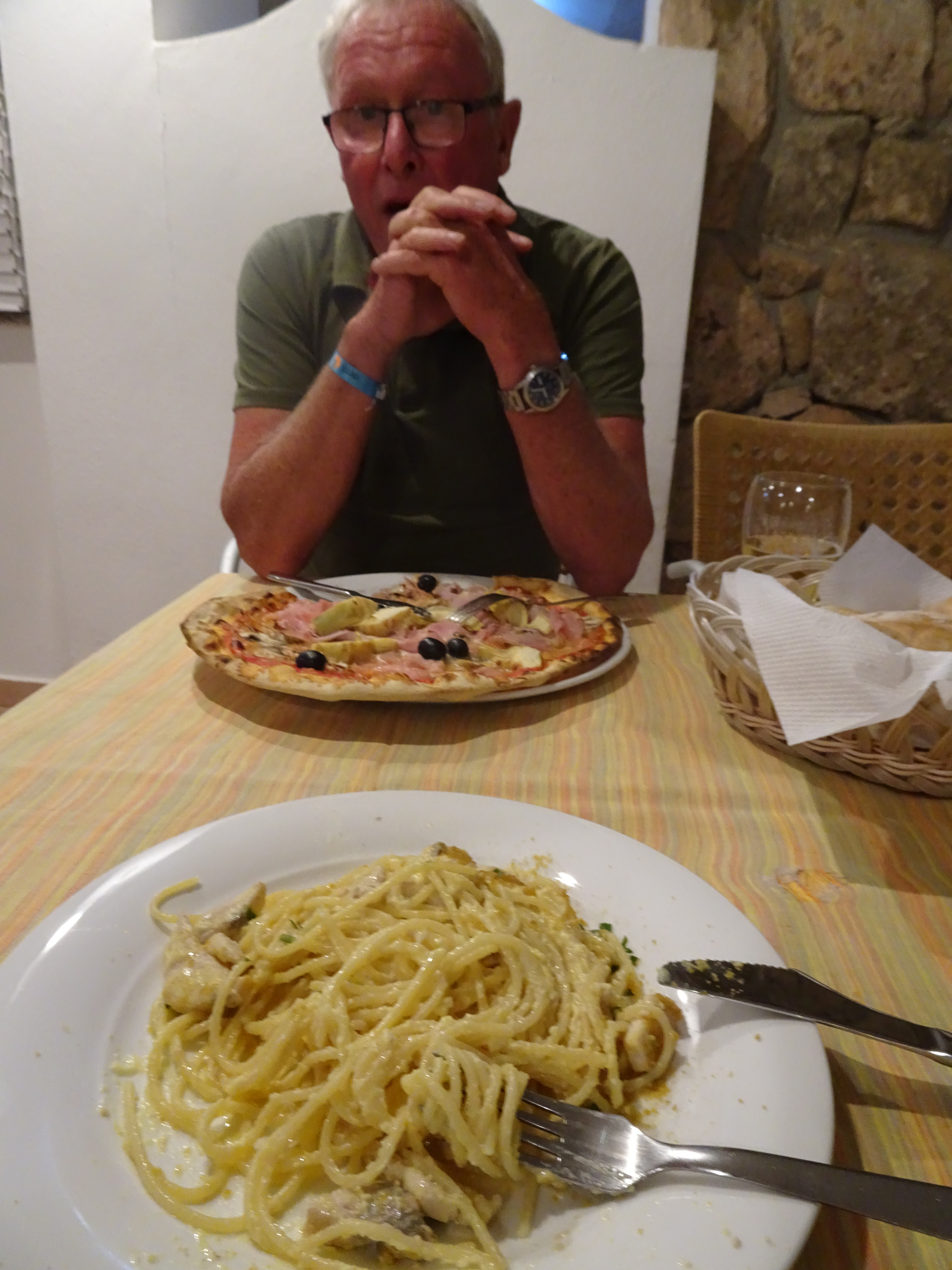
In spite of being way out of town and the only place to eat, the restaurant is excellent and I select a fishy carbonara which is simply delicious.

With nothing other than beach we decide to make the next hop up the coast, working our way up northwards towards the Costa Smeralda…

Grace is also known as the novelist, Jane Deans. Her new novel, The Conways at Earthsend is available from Amazon, Waterstones, Goodreads, W H Smith, Pegasus Publishing and many more sites. Visit my website: janedeans.com or my author page on Facebook: (1) Jane Deans, Novellist, Short Fiction and Blog | Facebook.
Alghero to Tharros via the Nuraghi

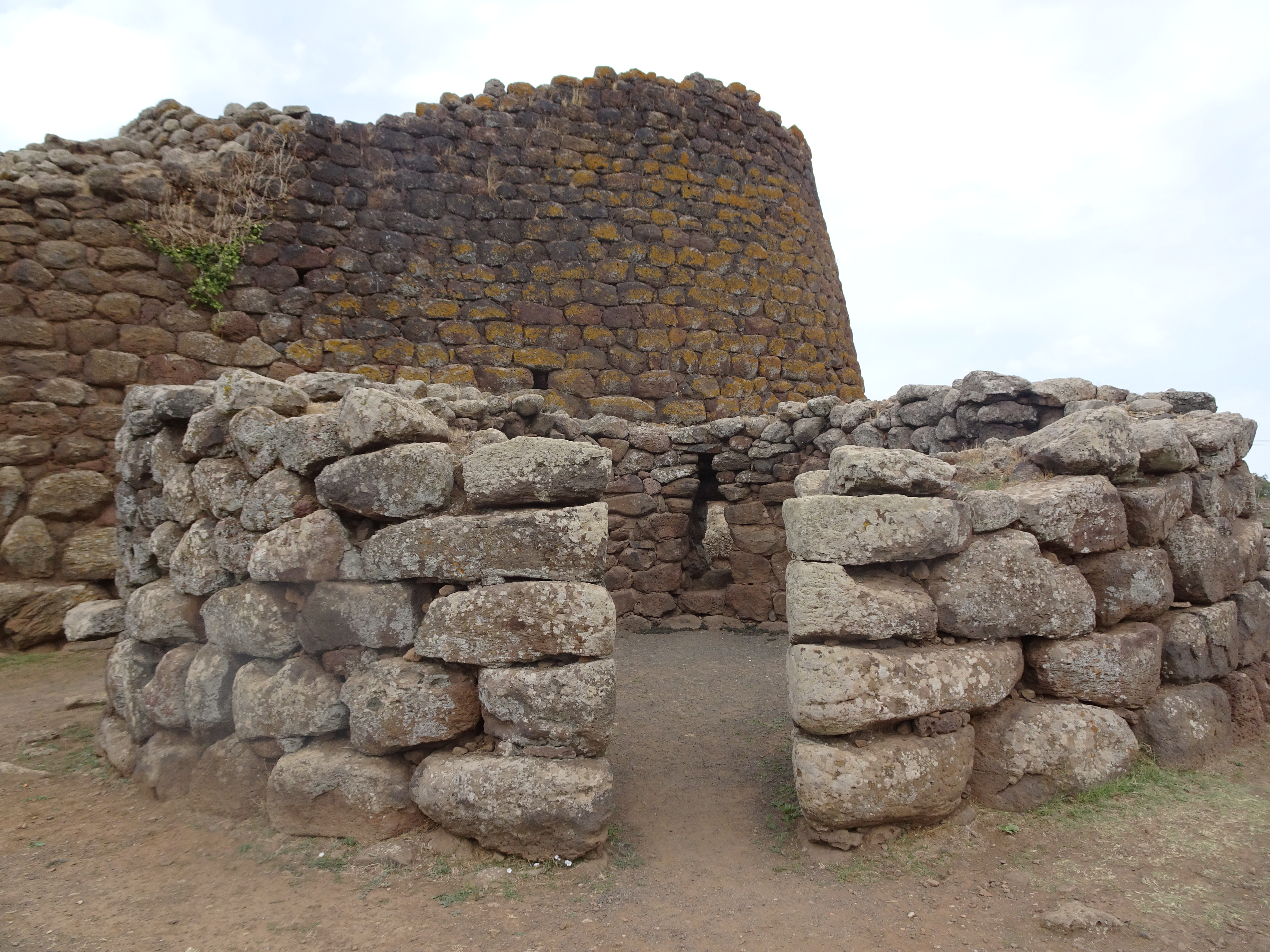
We’re keen to get a close look at a Sardinian ‘nuraghi’. Sardinia is littered with the remains of these circular, stone buildings in various states of preservation. Many are simply piles of stones lying around in the countryside or in the fields. Others have been preserved. They are ancient megalithic buildings and were constructed during the nuragic era from between 1700 and 730 BC.

So, on leaving Alghero we strike out into the interior with the intention of stopping somewhere near Tharros but taking in a nuraghi en route. The landscape is rocky and barren. Nuraghi Losa seems to be on our way and in fact is only just off the main road we’re taking, providing not only a cultural, historic experience but also, with a spacious car park, an excellent lunch stop on the way. Sardinia, we’ve found is not overrun with picnic stops and rest areas.

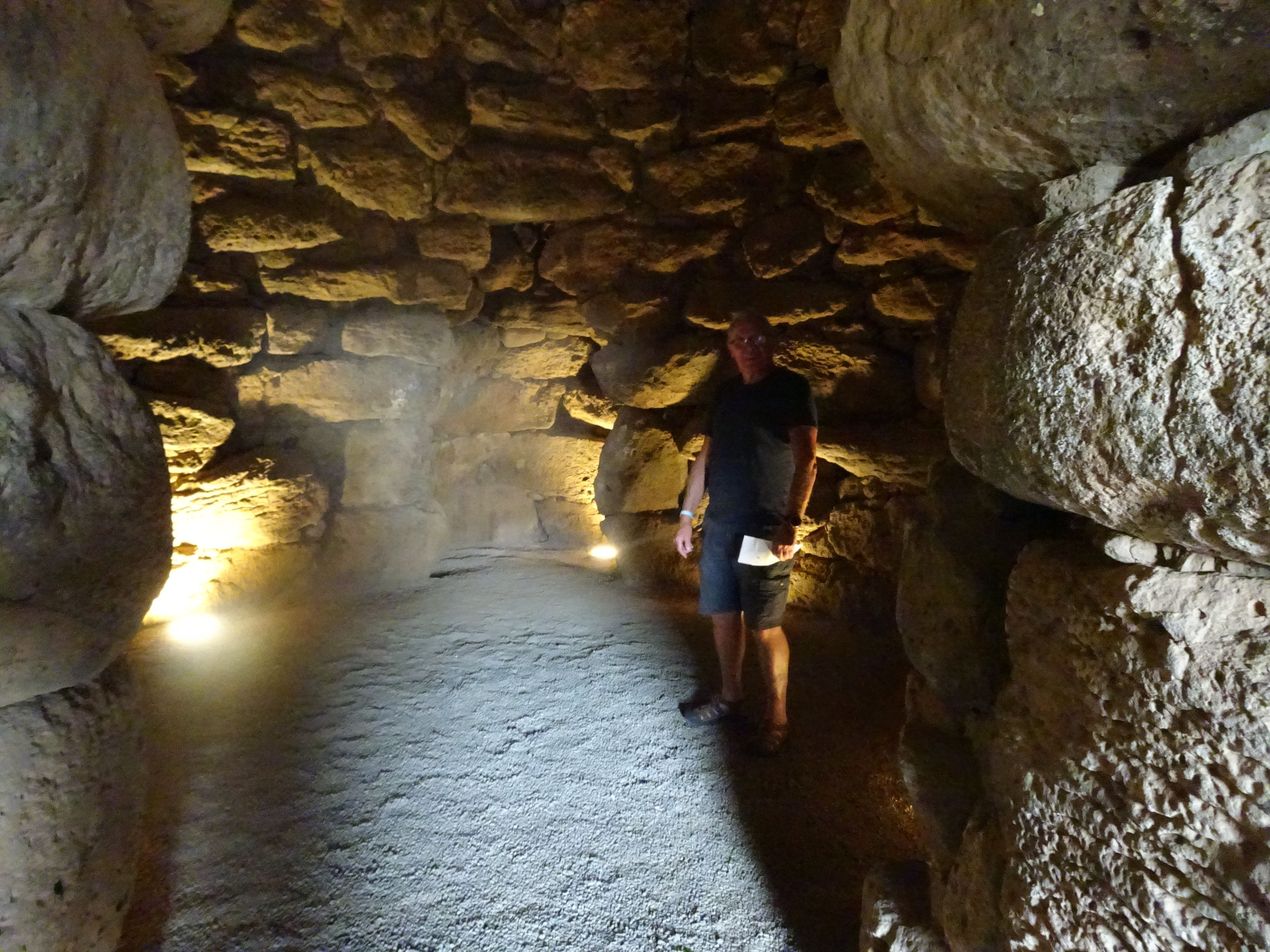
At the site there’s a ticket counter and also a small cafe and gift shop. The two women running the enterprise seem a little disorganised, but we do obtain tickets and manage to avoid too much of a lecture, preferring to read the texts at the site for ourselves. We are almost alone as we walk up the track towards the imposing nuraghi and begin to explore. It’s impressive, the central structure surrounded by further, circular rooms and there are two ‘floors’ accessed by haphazard, stone steps. Inside the gloom of the main part it’s cooler, with small recesses like cupboards around the walls.

We ascend to the top, from where a panoramic view over the surrounding countryside can be seen. Then it’s time to press on towards the coast at Cabras, where we’ll check into another site. Relying on our ACSI campsite book, we find our preferred site, but for the first time we’re out of luck and it’s full up. We move to another one. It’s right out in the middle of nowhere, with beach access down through a field- a huge, windswept expanse of beach, the sand consisting of fine grains of quartz.

The site is basic, the showers containing nothing except the shower hose- no shelf, no rail, not so much as a hook! My ‘bag-for-life’ has never been more essential and has to go on the wet floor. The water supply, once we’ve found it, is brackish and unpalatable. There is allegedly a restaurant, although it all looks as if it’s been packed away for the end of season. There is a rudimentary bar, complete with live, dancing parrot, but internet is non-existent.

It’s around 7.00pm when some women appear and begin flourishing tablecloths, cleaning chairs and bustling about in the kitchen area behind the bar and in an astonishing metamorphosis the covered platform is converted into a thriving restaurant where people begin to gather up. Soon most of the tables are occupied so we hasten to join them. The menu is limited to half a dozen dishes, a great idea- I’d much prefer a few delicious options than dozens of mediocre offerings. The Sardinian pasta dishes are quite specialised and our food is great.

While we’re in the middle of nowhere here, the ancient site of Tharros is about 10 miles away. This would be a good cycling distance, but unlike our Swiss neighbours here on site we haven’t brought our bikes, there being few opportunities on the tricky roads and mountain passes [although keen sports cyclists are everywhere, of course].

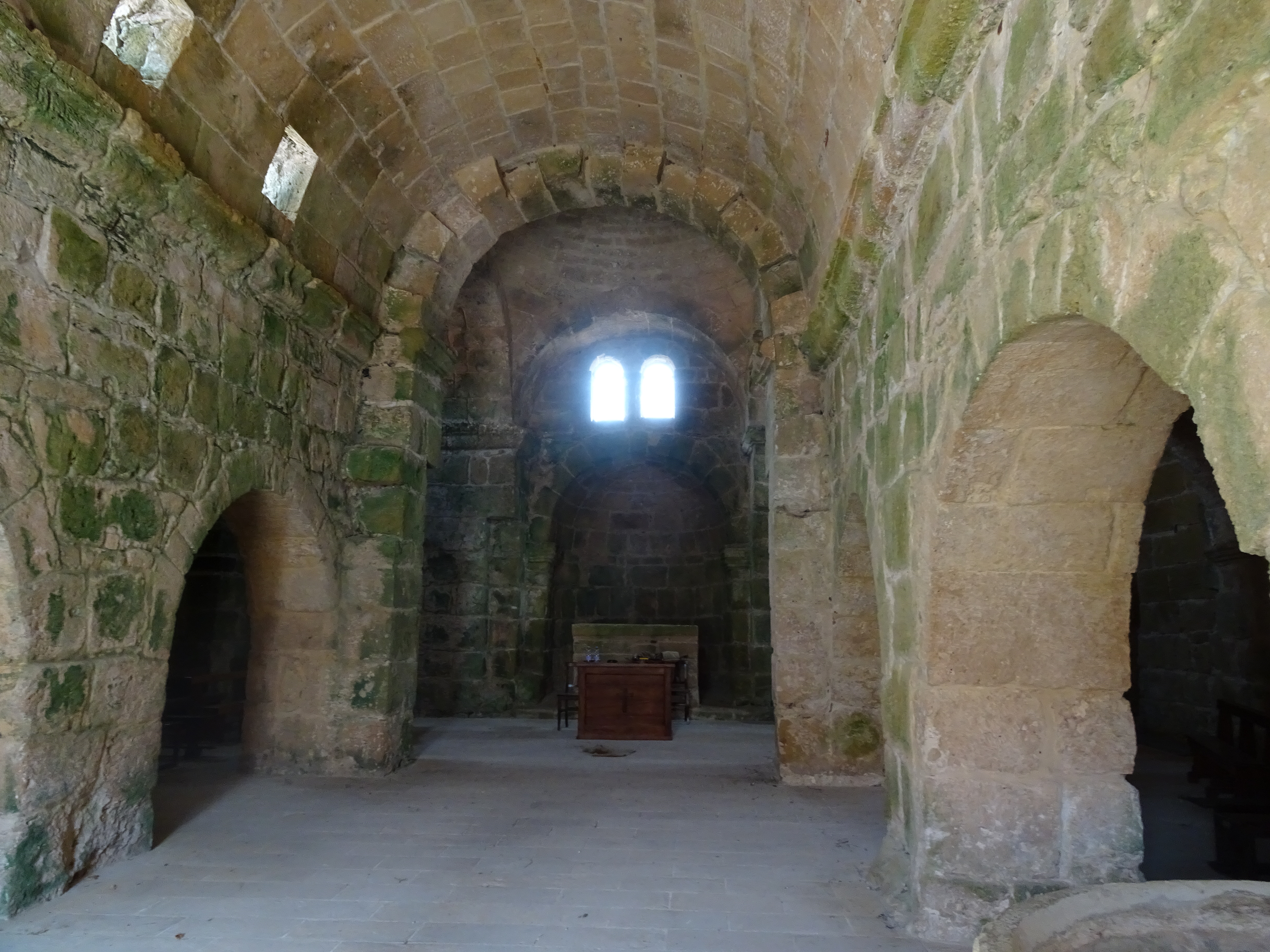
The weather remains stiflingly hot but turns overcast and breezy- not beach weather, so we opt to take the van out to Tharros and to the tiny village of San Giovanni Battista, which has a 6th century church. Once we’re there I remember visiting the charming old church and the village before, although I don’t think we toured the archaeological site last time, which we do now. There is a mere handful of fellow visitors as we follow the path around the [mostly rebuilt] ruins. It’s a fine view, then we walk up to the tower on the hill behind and clamber up the steps- to be told we’ll need to buy a ticket to peer out of the small window at the top. Needless to say, we descend without looking. The view from outside the tower is adequate!

Back at the site, we deliberate long and hard about getting down to Cagliari. The fact is- our leisure batteries aren’t holding their charge long enough for us to use an aire and the wifi is too poor for us to find a site near Sardinia’s capital. There isn’t one in our ACSI book. Reluctantly, we give up and decide we’ll cross over to the east coast, to Tortoli.

Grace is also known as the novelist, Jane Deans. Her new novel, The Conways at Earthsend is available from Amazon, Waterstones, Goodreads, W H Smith, Pegasus Publishing and many more sites. Visit my website: janedeans.com or my author page on Facebook: (1) Jane Deans, Novellist, Short Fiction and Blog | Facebook.
A Shady Retreat and Breathless in Bergerac

A treat is in store as we leave Beynac with the aim of visiting Bergerac before we drive out of the Dordogne. Nearby are the beautiful Gardens of Marqueyssac, up high on a hillside, just a short drive away and perfect for a morning visit. There are only a couple of motorhomes parked up in the allocated van parking as we arrive mid-morning.

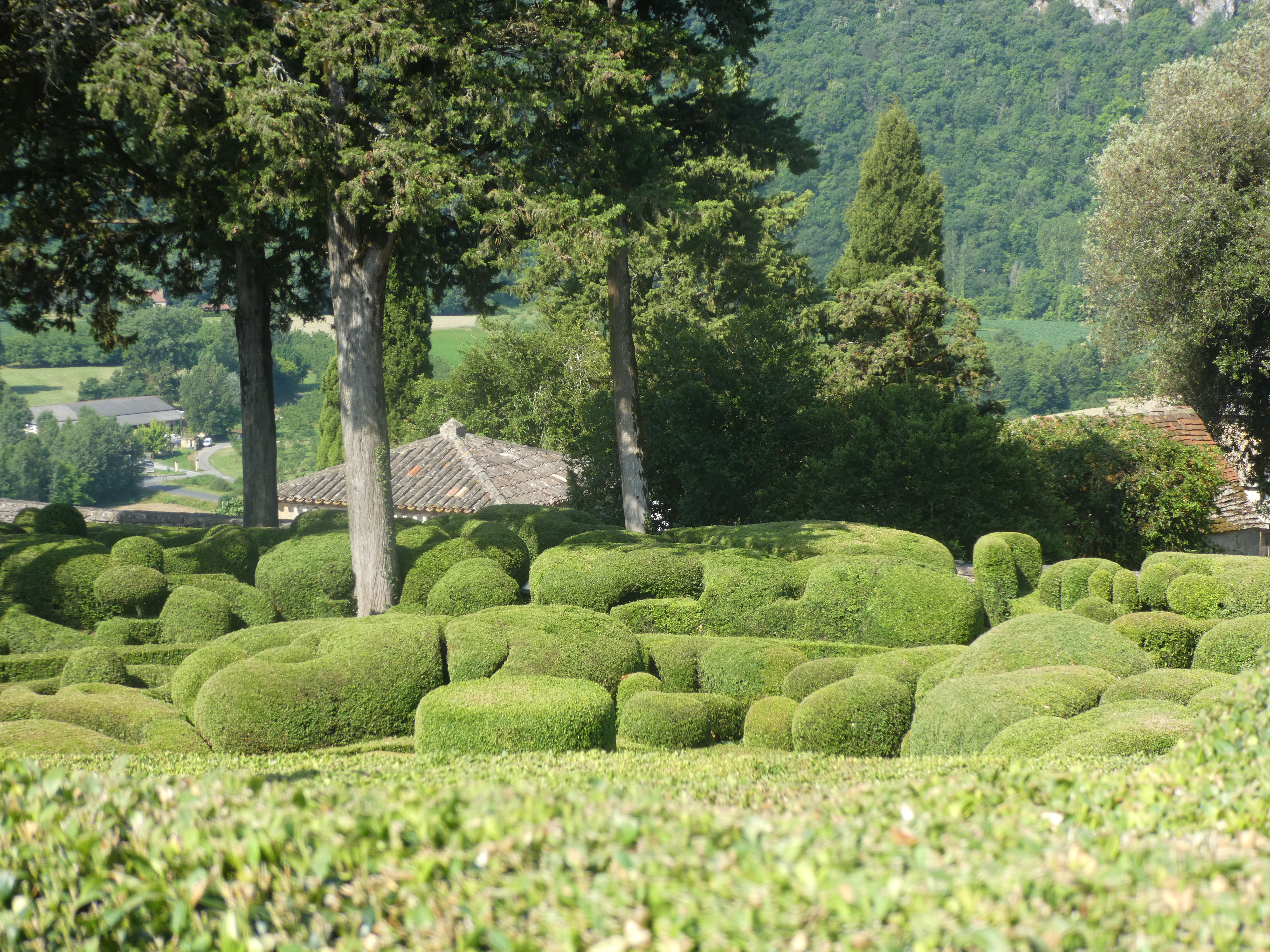
As is usual in the Dordogne, a climb is involved in seeing the chateau and gardens, but we’ve started in the relative cool of the morning and the gardens promise to be shady. We enter via an elegant pergola and the views of the countryside below are already startling. The first thing you see as you enter the garden is a green sea of curvaceous, organic hedge baubles in assorted sizes, interwoven with meandering pathways. The topiary is immaculate with not a twig out of place, a theme continued throughout the gardens, which also display ferns, trees and shrubs but little in the way of colourful floral borders. While this may not be to everyone’s taste it makes for a resful, shady landscape- ideal on this, another fiendishly hot day.

We wander the paths, seemingly endless and without plan or pattern. There is a path along a cliff face ending with a flow of water plunging into a pool, pumped up of course, from below. There are spiral paths winding up to more stunning viewpoints. There are tiny clearings with benches. There is, bizarrely, an occasional coffee machine encased in rustic planking in an effort to make it blend in.

When we’ve had our fill of walking the paths- and it is still ferociously hot- we stroll down to the tiny chateau which boasts just five renovated rooms, elegant but not the star of the show. Outside on a terrace overlooking the valley below are wrought iron tables so, tempted by the idea of coffee and pastries we sit down and wait…and wait. The cafe is clearly too much for the one waiter. We give up and go and get lunch in the van, which is parked in a shady spot and well stocked with lunch items.

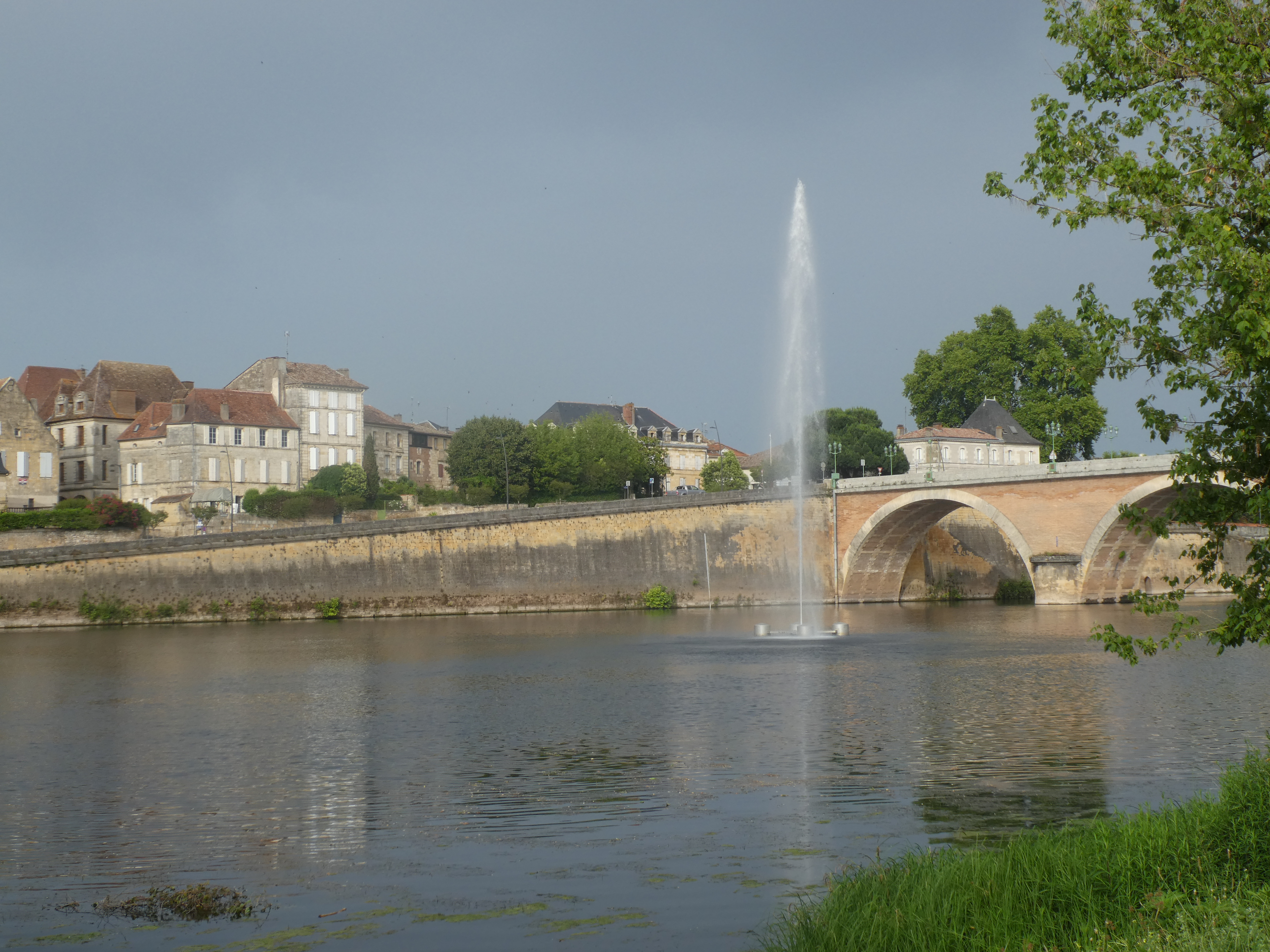
We head towards Bergerac and a site we’ve found by the river, although once inside the town’s maze of streets the Satnav [Mrs G] becomes hopelessly confused. We find the site by aiming for the river. By now it’s mid-afternoon and hot as ever. In the decrepit, dingy office I check us in and we’re directed to a spot overlooking the Dordogne, under some substantial trees which we’ll be glad of for their thick shade. The site is in need of some renovation and tidying up but is an easy walk along a footpath and across a bridge into Bergerac. The heat, though is a deterrent to activity and once we’re set up all we can do is read or doze. Then the reading option is off when my Kindle informs me it is beyond temperature range and will need to shut down. I know how it feels.

By evening I’m in serious need of a shower. The shower block is housed in an antiquated, two-storey building fabricated, bizarrely, from perspex- maybe the least practical material in these 40+ temperatures, producing a sauna-like effect; so that a shower is not the refreshing experience I’d hoped for.

We stay outside until we must sleep then keep everything open, including the door, using our Husband made insect screen and our ceiling fan. But it’s hot. And I lie beneath the fan listening to the frog symphony as hundreds of them croak their wobbly love songs…

Grace is also known as the novelist, Jane Deans. Her new novel, The Conways at Earthsend is now out and available from Amazon, Waterstones, Goodreads, W H Smith, Pegasus Publishing and many more sites. Visit my website: janedeans.com or my author page on Facebook: (1) Jane Deans, Novellist, Short Fiction and Blog | Facebook.

The Last Days- St Cast le Guildo

For our final site and last couple of days before departure from Bretagne we’ve chosen St Cast le Guildo, a stone’s throw from St Malo and Dinard, both of which we’ve stayed at and visited, St Malo being fairly well known to us. It’s another glorious stretch of Bretonne coast and moves us nearer to our departure point of Caen.

The site is perched high above the sea. We choose a pitch ovelooking a vast bay where the tide recedes to expose a huge field of oyster beds, beach tractors working quickly at the low tide to harvest the oysters before the beds are once more submerged. The site is another being newly refurbished with an impressive, lofty bar/cafe [not yet fully open].

The campsite’s position, high above the town means a steep walk down to the seafront and commerce and a hard climb back up. But, keen to maximise our last days we wander down in the late afternoon sunshine to scope out the bars and restaurants. The seafront faces a broad stretch of sandy beach and like Dinard, there is a seawall walkway around to the harbour area.

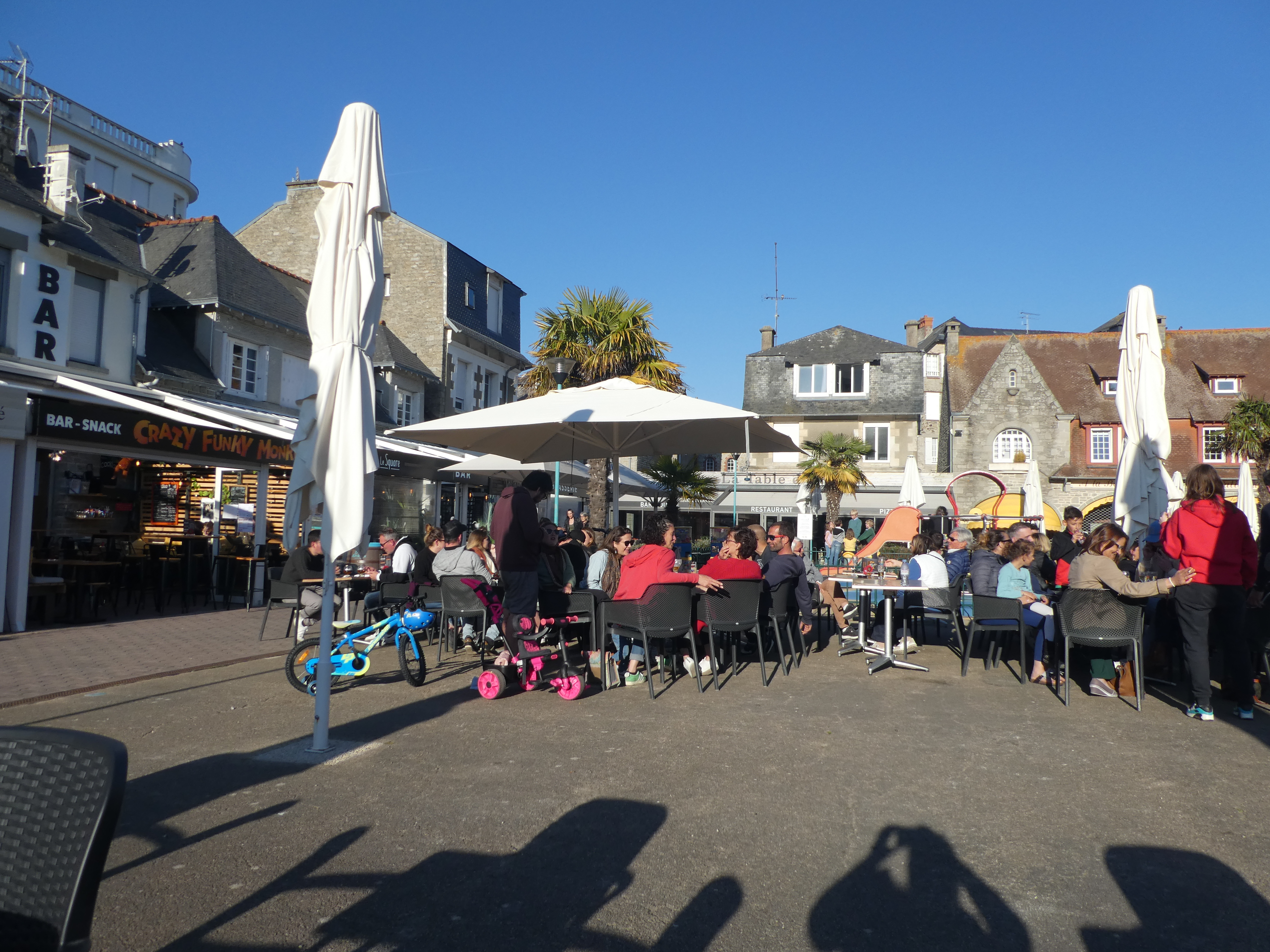
The small town centre square has a sunny area laid out with tables and chairs from two or three bars, busy on this weekday evening with groups of friends and families. After a beer we select a restaurant- part of a hotel- and are shown to a table, although there is only a handful of fellow diners. It’s clear when we begin to make choices that much of the menu is ‘off’, at which point we should really make our excuses and leave, but we opt for simple fare and make the best of it. Then it’s a slog back up the steep hill to the campsite.

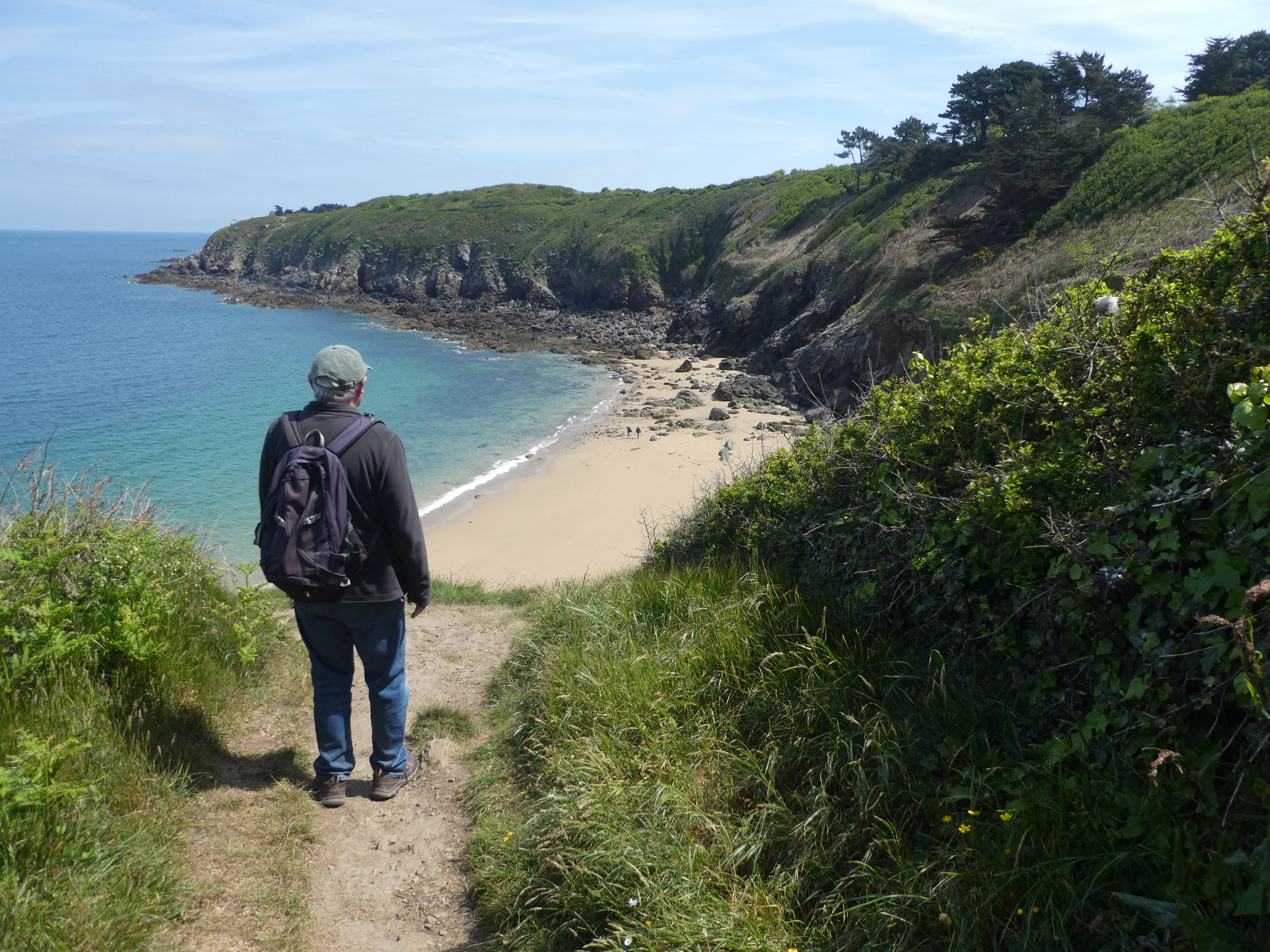
Next day is bathed in warm sunshine, perfect for a walk around the coast path. The views are magnificent and the meandering path is flanked by a huge variety of wildflowers, a magnet for speckled brown butterflies. The first stretch of path plunges down then quickly begins to climb a steep and rocky hill. Once we’ve reached the top it’s merely undulating rather then steep.

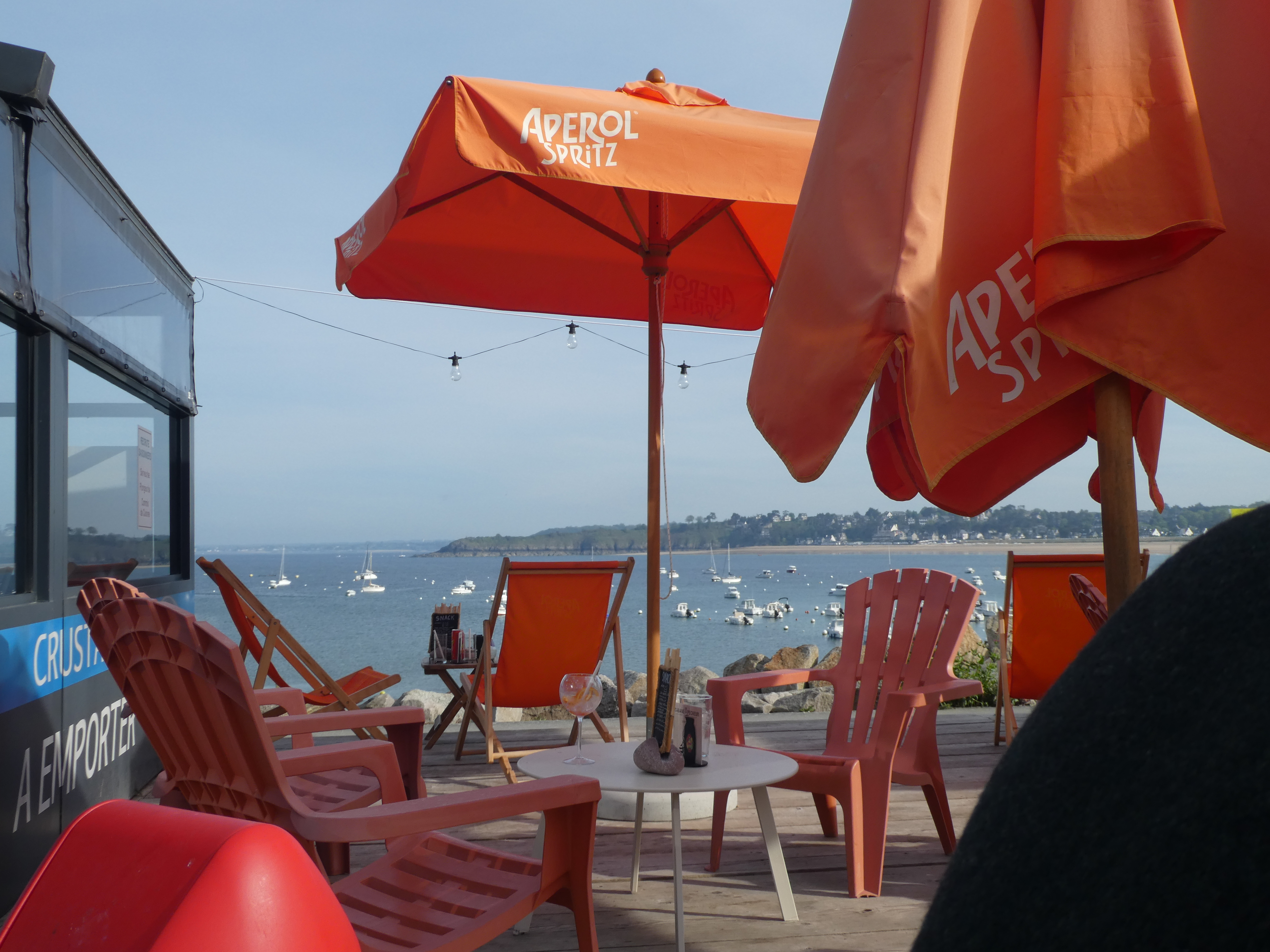
At last we reach a point above St Cast’s harbour with a panoramic view of the surrounding coast, then it’s a short stroll down to the port, which is a proper working base for fisherman, and where the dockside has a few promising restaurants and bars. We reward ourselves with a beer before slogging back up to our site- but not before inspecting the restaurant menus.

Later we return via the town route to get dinner. The restaurant is quiet, with only a handful of early evening drinkers besides ourselves, but we sit down and order. A little later a family arrives and the two young daughters tuck into plates of crevettes with gusto, which is a sight to behold!

The climb back up to our site is the last, as we’ll be off up to Caen next day…

Grace is also known as the novelist, Jane Deans. Her new novel, The Conways at Earthsend is now out and available from Amazon, Waterstones, Goodreads, W H Smith, Pegasus Publishing and many more sites. Visit my website: janedeans.com or my author page on Facebook: (1) Jane Deans, Novellist, Short Fiction and Blog | Facebook

NZ 2011. Queenstown.

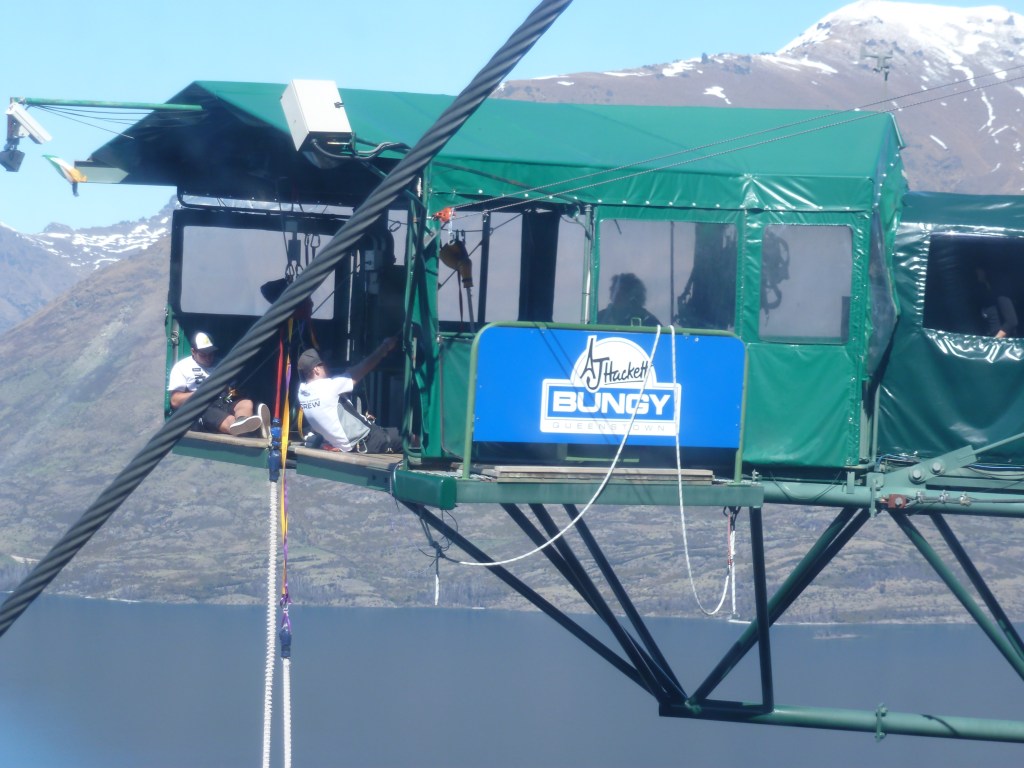
You have only to make a cursory search into New Zealand’s highlights for Queenstown to come up in the results. It is known, not only for its stunning scenery but for its opportunities to be active in all kinds of ways. Jet skiing, jet boating, boating, kayaking, walking, mountain biking are just a few. But above all, Queenstown’s biggest draw for thrill-seekers is bungee jumping. And the most famous of all bungee jumps, the place where it all began is the Hackett Bungy at Jack’s Point.

The Queenstown campsite is elevated enough to provide spectacular snow-topped mountain views but was busy, accommodating all kinds of travel vehicles, from bells and whistles motorhomes to spartan, cleverly converted estate cars with cunning stoves that pulled out under the boot lid. The showers were beautiful but, unusually, needed a coin in the slot. In the bitter cold evening I walked across between the rows of campers to the block with my two coins clutched in my hand, intending to wash my hair. When ready, I inserted both coins into the meter, after which the shower ran tepid so I shampooed quickly, expecting the water to heat up. It didn’t. In fact it ran colder than any shower I’ve had before or since, the water feeding down from the snow clad slopes. With a head full of shampoo there was nothing for it but to continue and get finished as fast as possible! Invigorating but brutal and I was never more glad to be dry, dressed and back in a warm van.

Next day we were up for exploring Queenstown.

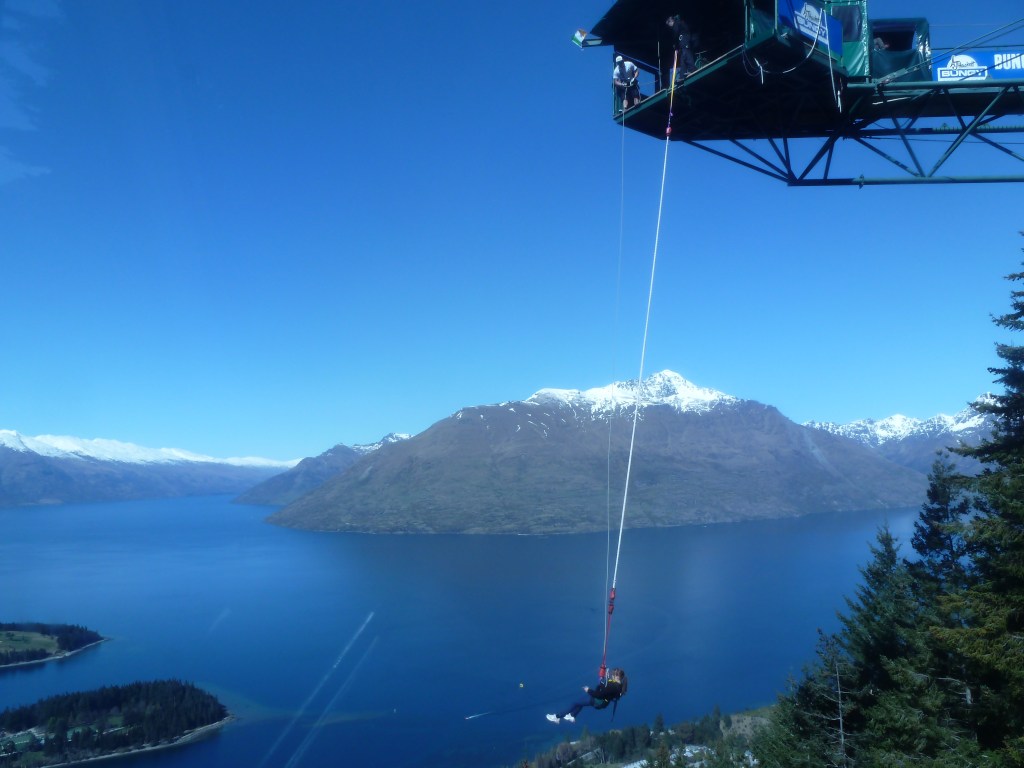
Now neither Husband nor I was ever likely to willingly throw ourselves off a spindly platform into the void attached to an insubstantial bit of elastic, but we were excited to see others take the plunge.

At Jack’s Point a footbridge spans a deep gorge with a rushing river below. A platform attached to the outside of the footbridge exists for those brave or foolish enough to want to experience the rush of adrenalin that accompanies hurling yourself into a chasm. There was no shortage of these, although most were young. One young boy was clearly terrified as he teetered on the platform, procrastinating until the operator helped him with a friendly shove. We watched him plunge towards the foamy water and bounce back up and down until the movement slowed and he was hauled into the waiting boat, an enormous grin on his face.

Our own modest venture into activity was a jet boat ride, during which we were given helmets and life vests, crammed into a fast boat and swooshed around on the lake.

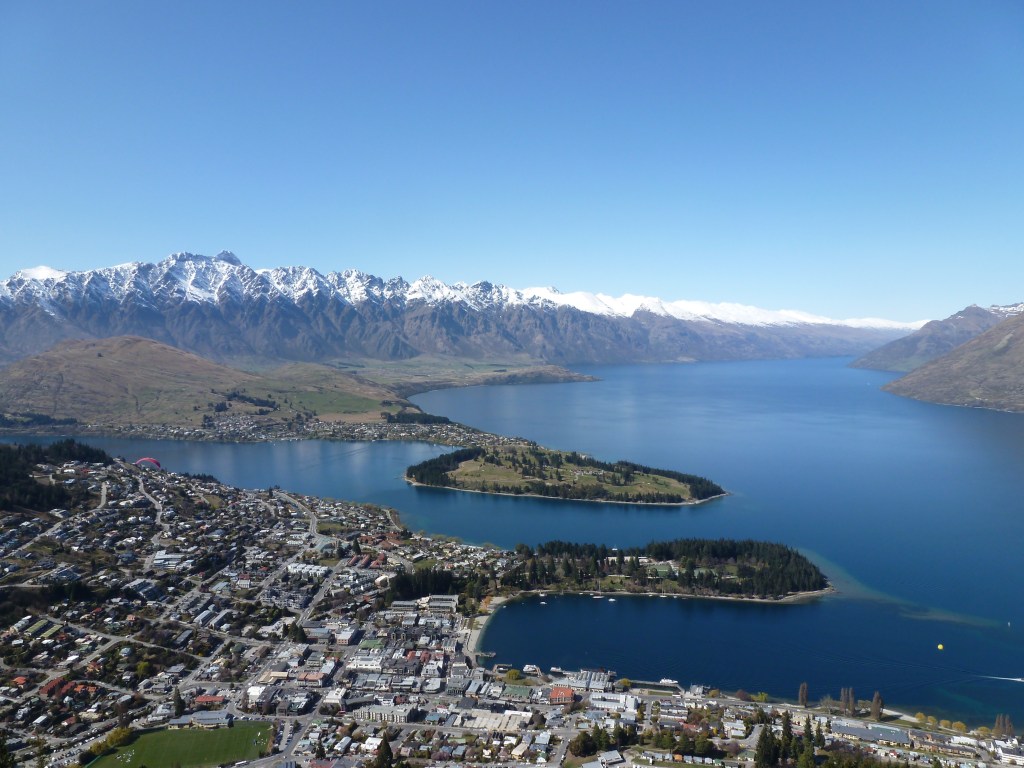
Best of all, though was to be lifted up the mountain in a cable car and to step out for the most stunning mountain panorama I’ve seen; the bluest blues, the clearest air and a perfect circle of snow capped peaks. Some had travelled up with mountain bikes for a thrill-packed hurtle down, some were undertaking bungee jumps here at the top, but for me, to stand above Queenstown and gaze was breath-taking enough.

Grace is also known as the novelist, Jane Dean. Her new novel, The Conways at Earthsend is now out and available from Amazon, Waterstones, Goodreads, W H Smith, Pegasus Publishing and many more sites. Visit my author page on Facebook: (1) Jane Deans, Novellist, Short Fiction and Blog | Facebook

Tented Travels-Portugal

Back in the 70s and 8os I seem to remember Portugal having a reputation for being expensive, but one of our early tenting expeditions in the 90s was to this small, sunny, friendly country tacked on to the side of Spain.

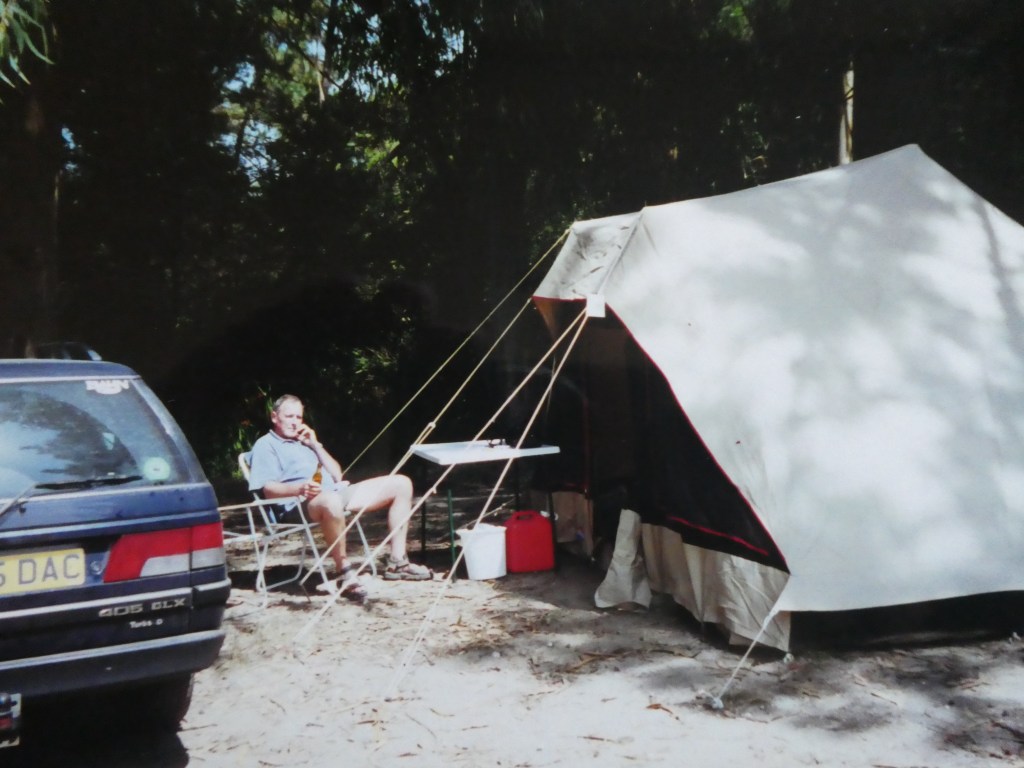
By the time we got round to our Portugal trip we’d upgraded from my ancient Volvo hatchback to ‘Mick’, Husband’s beloved Peugeot Estate, a heroic vehicle that took us thousands of miles and accommodated tons of equipment. We’d also swapped the aged, leaking frame tent inherited from my parents for a [admittedly borrowed] ‘pyramid’ tent, which was beautiful and roomy, but involved someone [ie me] crawling underneath the skirt of the tent to hold the central pole up while Husband secured the guy ropes. In hot weather this could be a sweaty task.

We still needed to make overnight stops in hotels and since a road trip to Portugal involves passing through Spain we had no option of a ‘Formule 1’ as we did in France, so we had to find somewhere en route, which we did, and perfectly acceptable I believe it was.

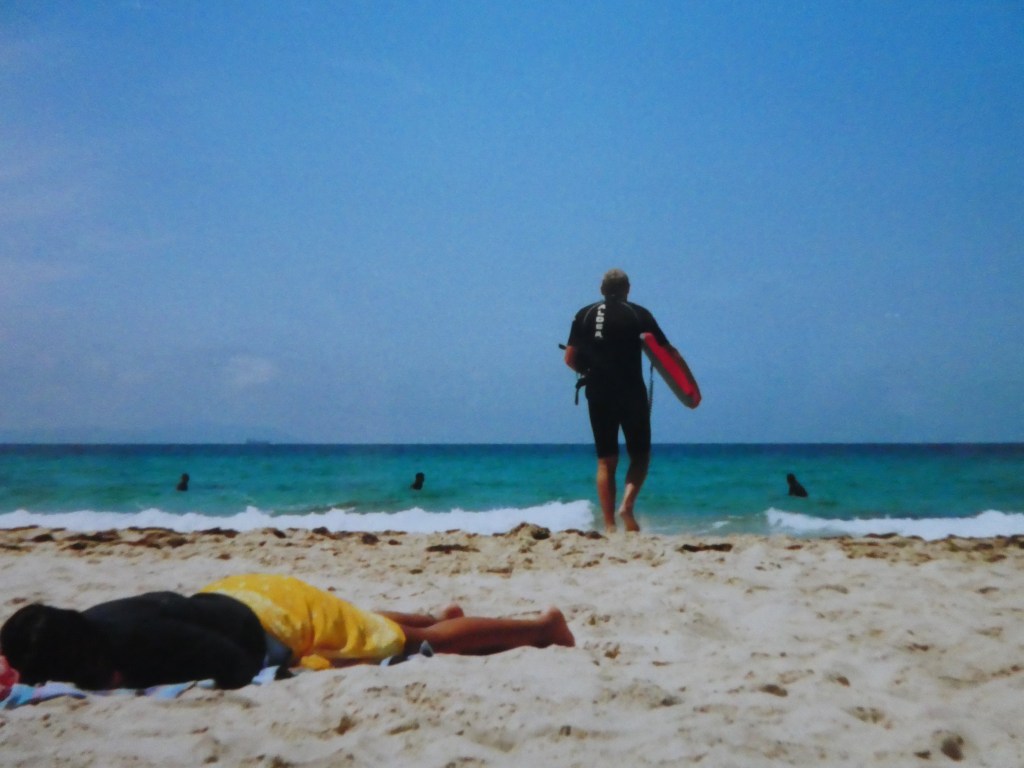
We cut off the corner of Spain and entered into the north of Portugal and to the coast. The west coast is green and less built up than the popular Algarve, which accommodates large numbers of package tourists every year. Husband was into body-boarding and was keen to try the waves in this area, which are great for surfing. We stopped at the small seaside town of Vila Praia de Ancora, where a large, wooded site gave access to the beach across a railway line and found a corner to begin setting up the pyramid tent.

It is customary on a site for those already installed to show an interest in new arrivals. On this occasion we were ‘helped’ by a Portuguese gentleman nearby, who was keen to advise where our entrance should face etc., whereupon we determined the entrance should face away from our neighbours.

The little town was [and still is-we’ve been back since] delightful, boasting beautiful sandy beaches and characterful streets with restaurants and bars [then, at any rate]. We got our first experience of Portuguese hospitality and cuisine, eating in a modest town restaurant, characteristic of so many in the area, with simple but delicious food and wine sourced from the local district. And as tradition dictates, our menus were accompanied by tasty nibbles-a lovely touch.

Our site was a short walk from the town and also close to a handy Intermarche supermarket. We also discovered that the railway behind our site could give us easy access to Porto, further south down the coast, which meant we would not have to up poles and move from this perfect spot. We’d need to drive to Viano do Costelo, a short way south, and park there to get a train. Wonderful! What could possibly go wrong? …

Tented Travels Portugal continues in the New Year 2021. Anecdotage’s next post will be my travel review of the year-a little different this year. In the meantime, I’d like to wish all regular readers, followers and visitors a safe, healthy and happy Christmas, wherever you are. And thank you for visiting!