The Last and St Vaast

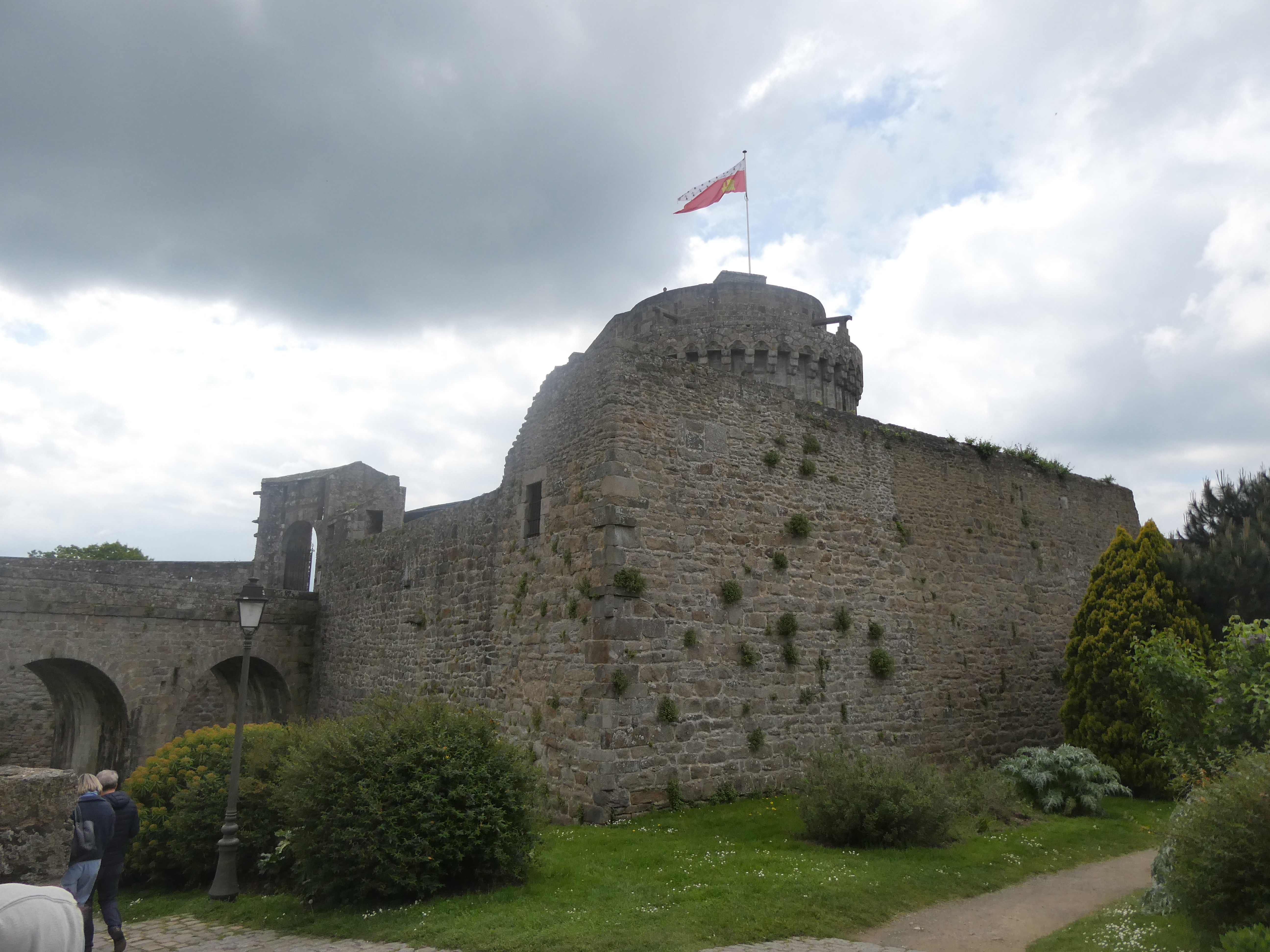
Continuing back up towards Caen, we’ve still a couple of nights to go before our crossing back to the UK and we’re taking things easy, visiting a few places we’ve tended to drive through or past instead of stopping to look. We’d driven through Dinan before and thought it very photogenic- an interesting place to explore. So we opt to stop here first. There is a municipal camp site near the castle and I book us in there. It’s a devil of a place to find though, down a steep hill and left into a narrow opening.
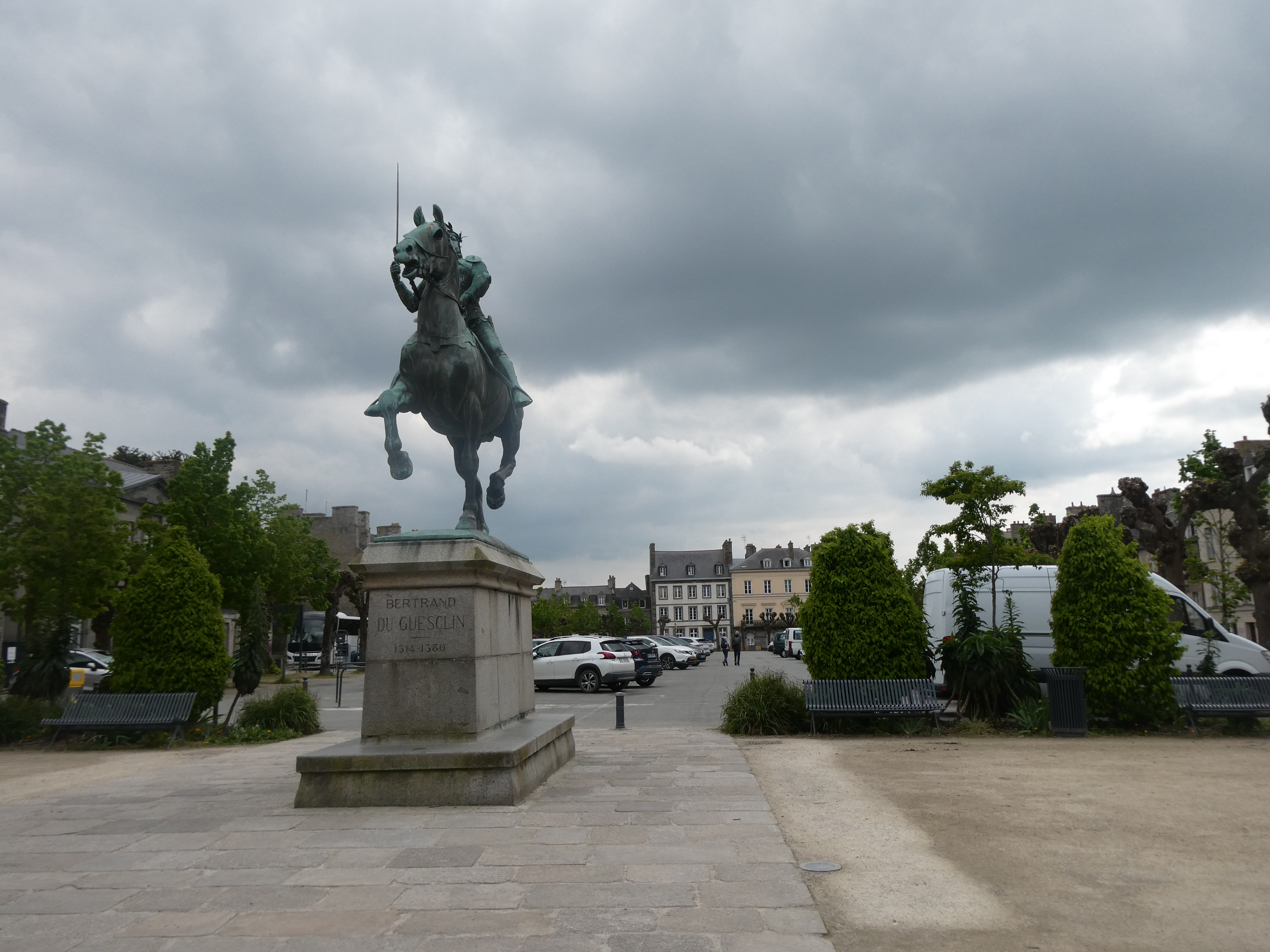
This site is basic- little better than an aire, really, and it’s sloping. The pitches are all grass and are decidedly soggy. Monsieur, at reception, once he’s turned up and had a chat with a friend, a cigarette drizzling ash on to his desk, allocates us a pitch and tells us to leave our front wheels on the tarmac aisle. We go to inspect the pitch, which is down at the lower end of the site and bathed in shade. This is all a bit mystifying, given that there are, at best, four other units occupying this modest site.
We return to reception and change to a better location.

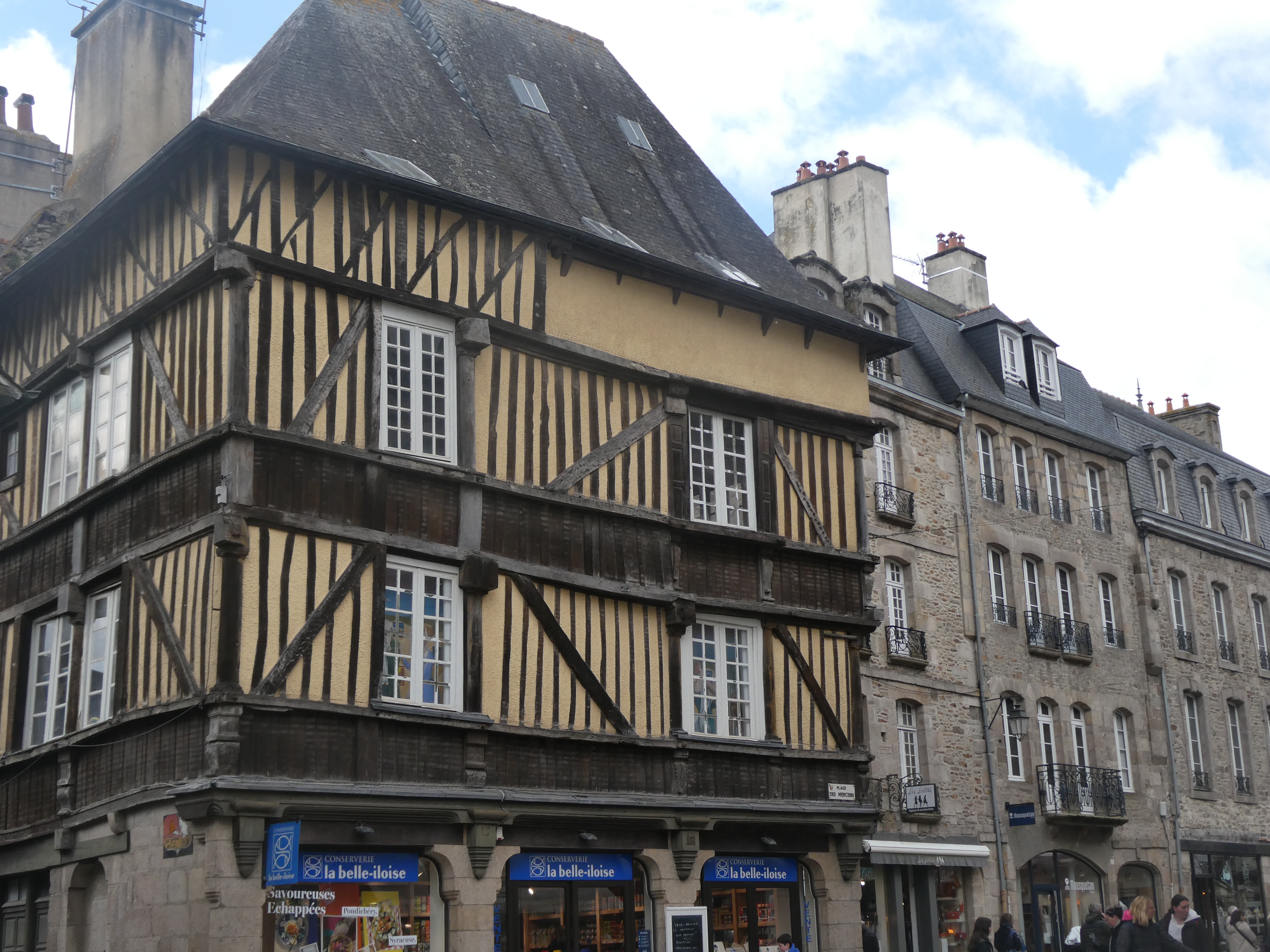
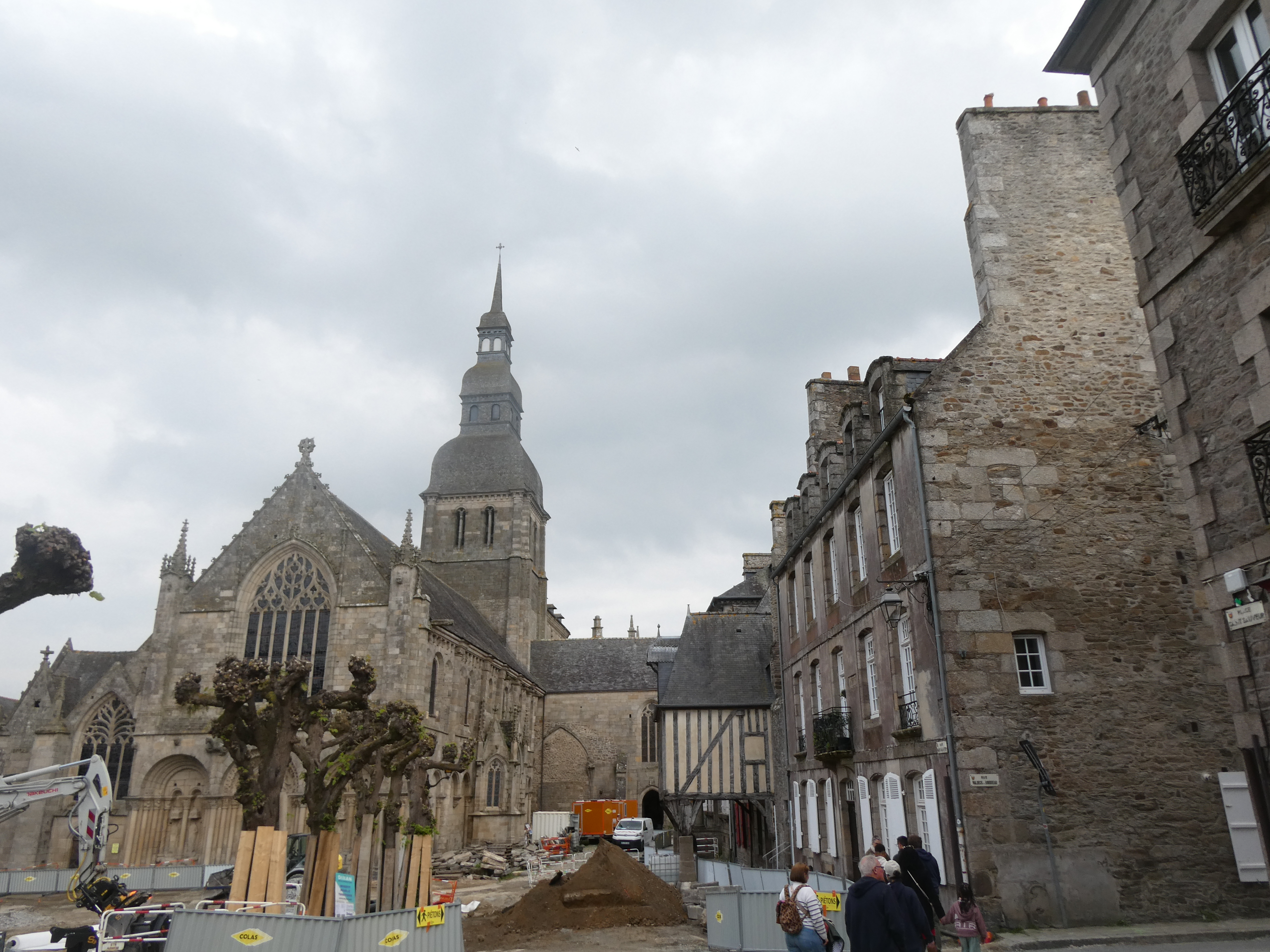
It’s a steep walk up into the centre of town, past an excellent castle, across a huge market square, currently car parking, and on into streets of half-timbered buildings, gift shops, cafes, cobbled streets et al. It’s proper olde-worlde and busy with tourists. We cast around for somewhere to eat but are surprised to find it isn’t gourmet central and we may find ourselves making do with a takeaway- or chips to go with something we cook.
Back at the campsite we make use of the utilitarian showers- water not quite hot enough, only 2 cubicles, dark, light cuts out after a couple of minutes. This is the first unsatisfactory shower this trip.

We begin to feel we may have done Dinan, pretty and historic though it is. We’ll cut our losses and move on tomorrow to somewhere on up the coast where we just might be able to get our last oyster fix. Perhaps we’ll stay at an aire overlooking the sea where the oyster tractors chug along the sand in the evenings and visit a beachside cafe we’ve used? But we change our minds. We’re off to a site in another harbour village we’ve stayed in before. This pleases Husband as he can indulge his nostalgia remembering a past trip with students in the dim and distant past.
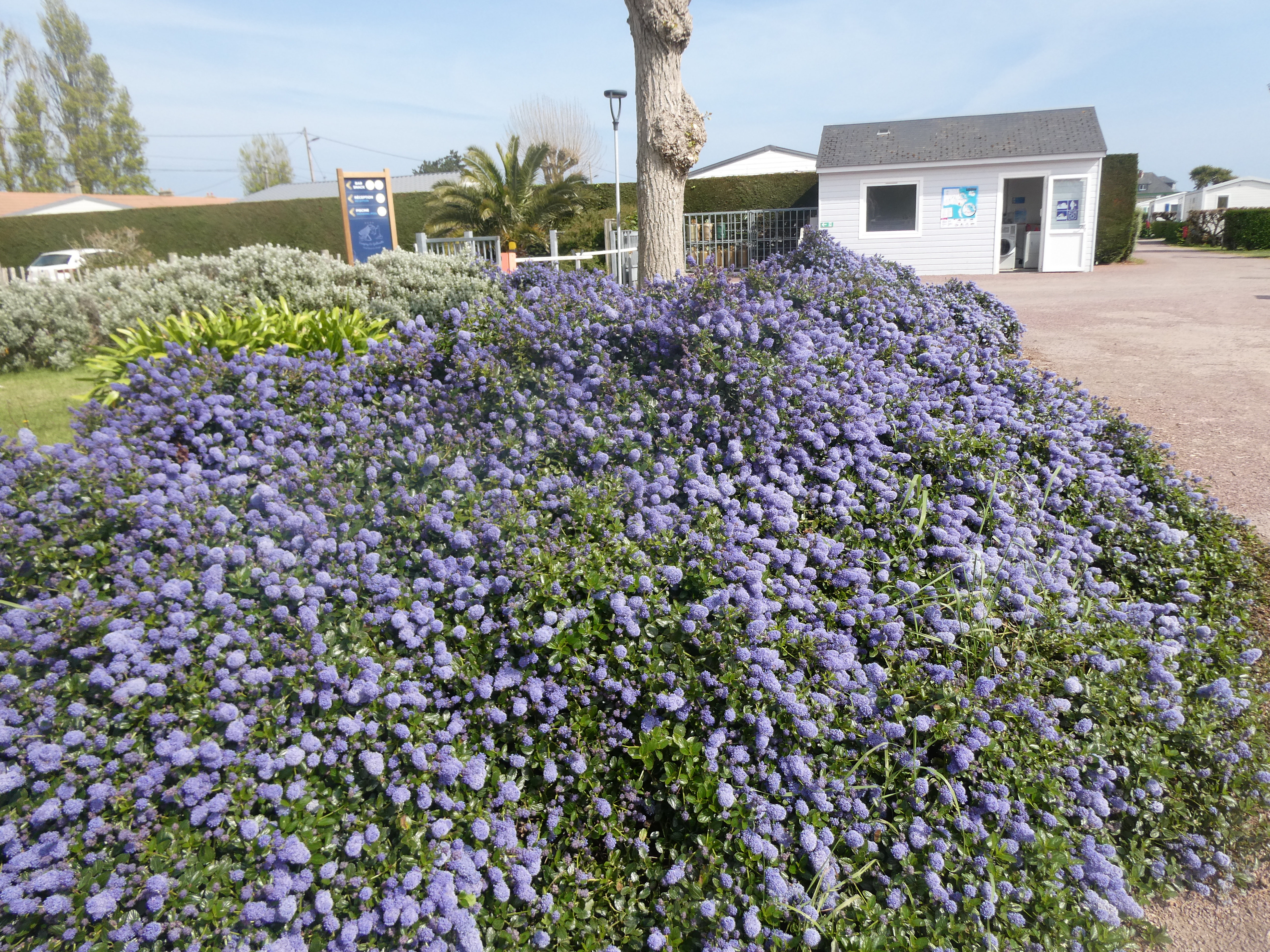
The sun is out for our last gasp of trip, although there’s a stiff breeze. This is Saint Vaast la Hougue, another oyster mega-town, trailer loads of them up and down along the quayside.

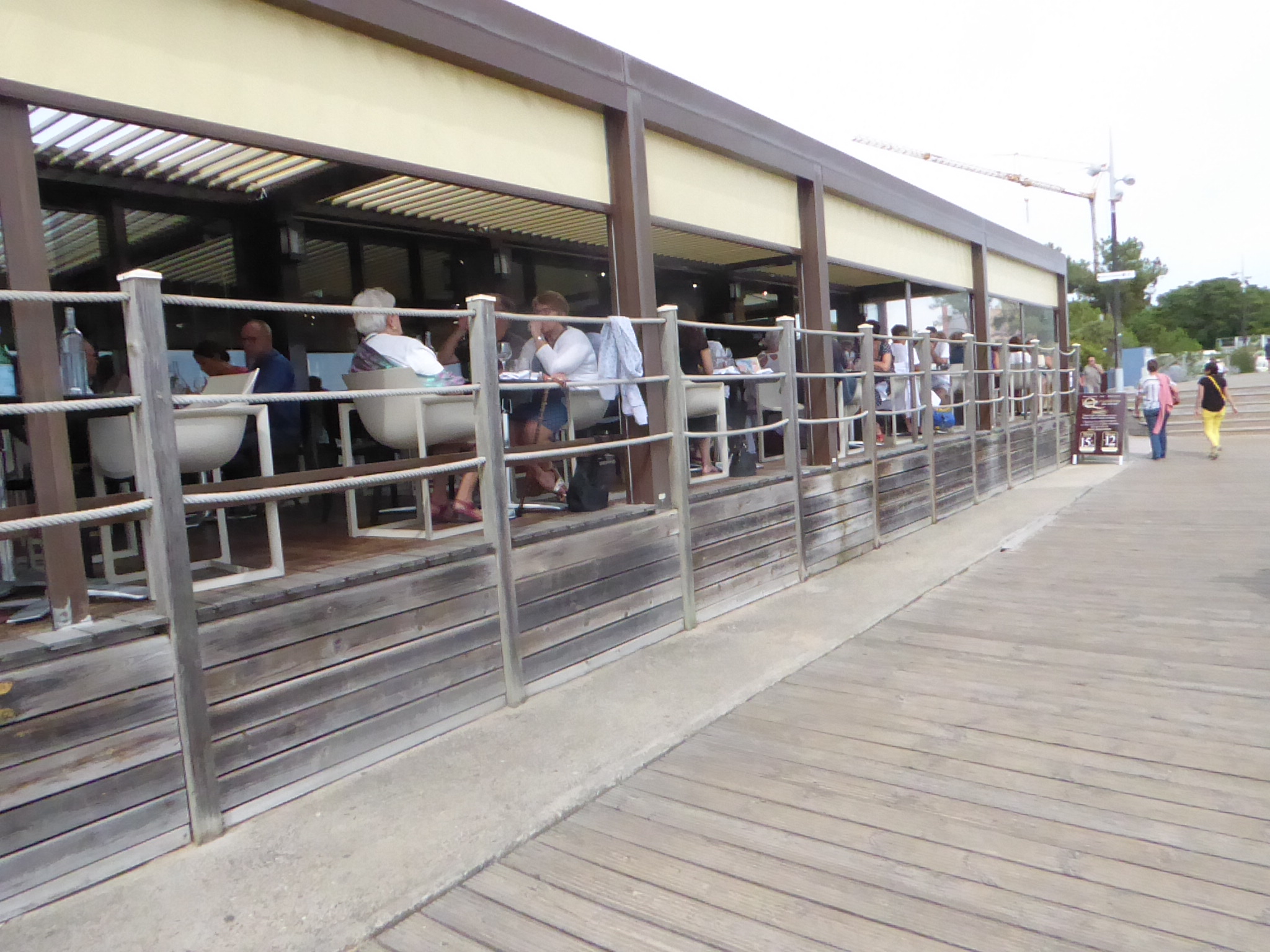
We spend some time checking out the seafront restaurants, settling on one for later, then attempting to book a table with no joy. We wander, later to our second choice. As long as we can get a shedload of oysters to share it matters little.

That’s it then- in the morning it’s back to port and back to the UK, for, as it happens, some rather wonderful spring weather…

Novels by Jane Deans [Grace]: The Year of Familiar Strangers and The Conways at Earthsend. Visit my website: janedeans.com

Wine and Oysters

The islands off the west coast, the Atlantic coast of France are all beautiful and all worth visiting for their individual attributes, but Ile de Re has a special place in the hearts of many, for a plethora of reasons. We haven’t visited for years, so this is the destination for this jaunt to France.

To get to this small island you only need to cross a bridge from La Rochelle- first paying a toll, of course, which pays for your trip there and back.

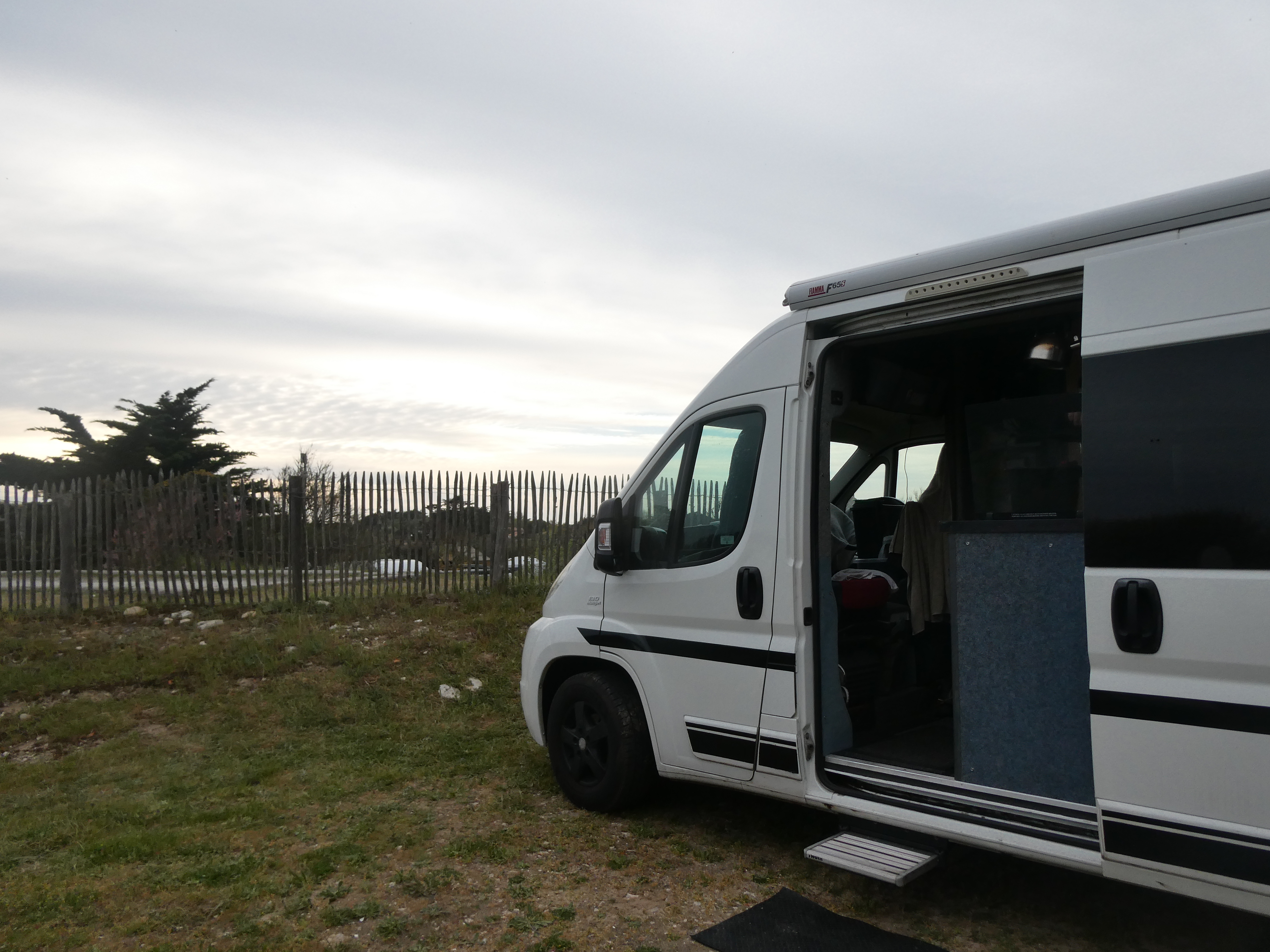
Once across, we only have a couple of miles to our first, chosen site, at Bois de la Plage. And it’s much as its name describes, a wood at the beach, the site nestling in the dunes, which makes it undulating but with a good choice of pitches. We select from the options- an elevated pitch, although the beach and sea are not visible over the next line of dunes.

There are more tourers here, even a few British, the first we’ve seen on this trip. however there’s a brisk, cool wind, so lolling around in the sunshine is less likely than at Vannes.

The island is a cyclists heaven and you could be forgiven for thinking it was The Netherlands, since the off-road cycle tracks are everywhere and busy with whole families or individuals in the saddle, enjoying the easy, flat terrain. Besides beaches and oyster beds there are acres of vineyards between the communities.

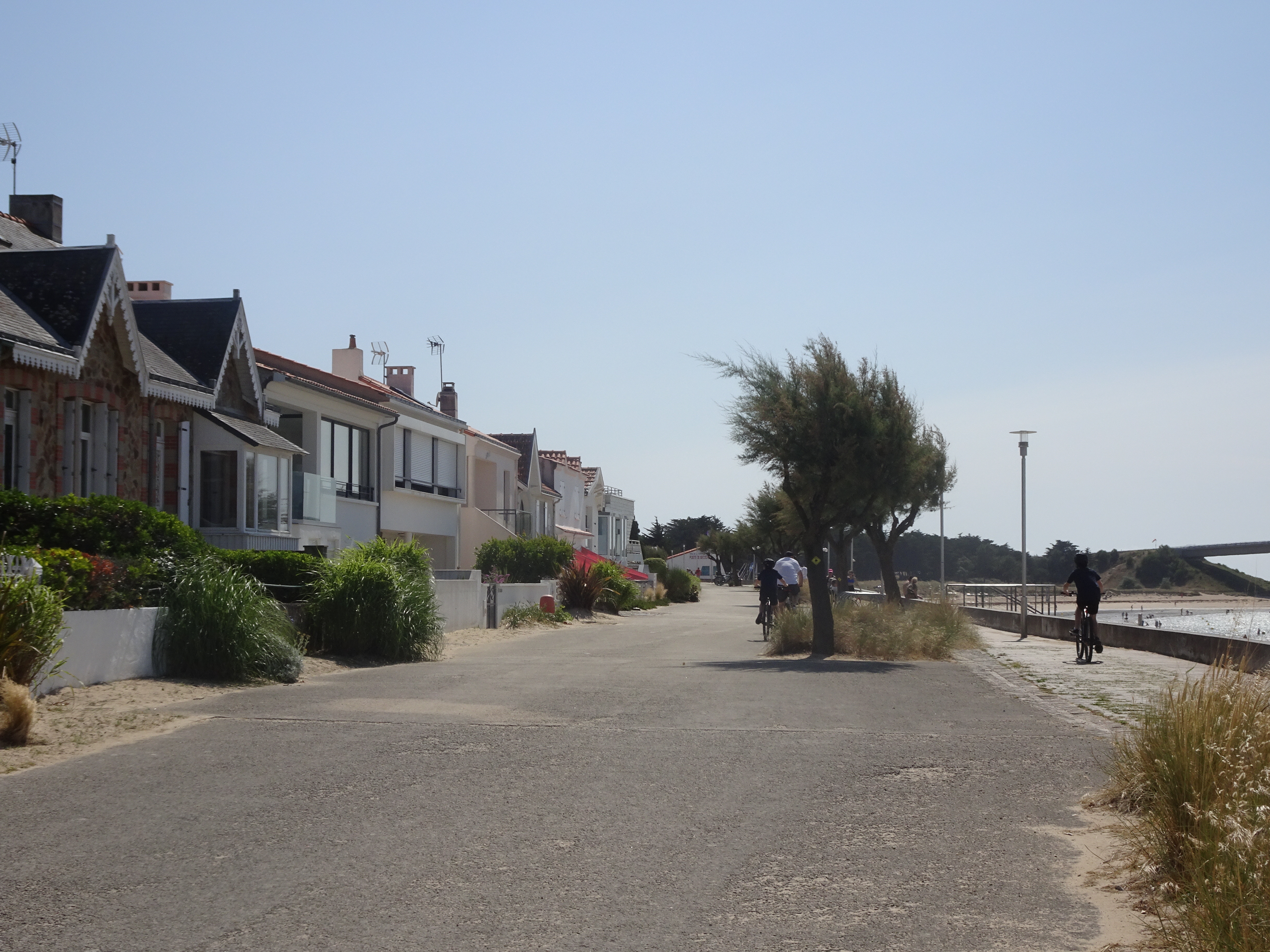
Nowhere here is large or sprawling, the biggest town being the island’s capital, Saint-Martin-de-Re. We’ve visited before [and photographed] so we’ll by-pass it this time. But we’ll take a look at Bois de la Plage while we’re here. It’s just a 15 minute walk from our site, along residential lanes, the homes white-painted, single storey with shutters and neat gardens- some clearly holiday homes.

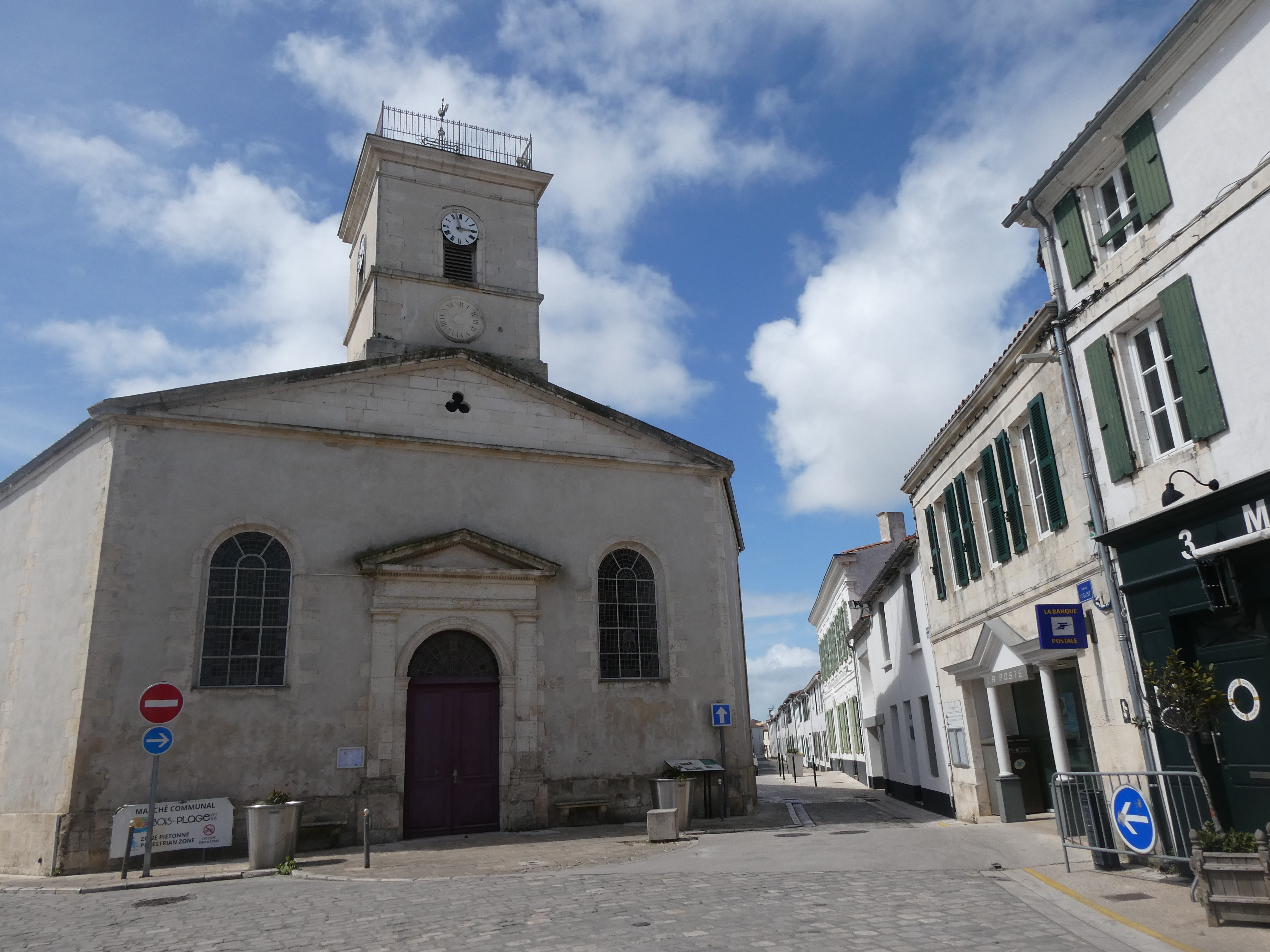
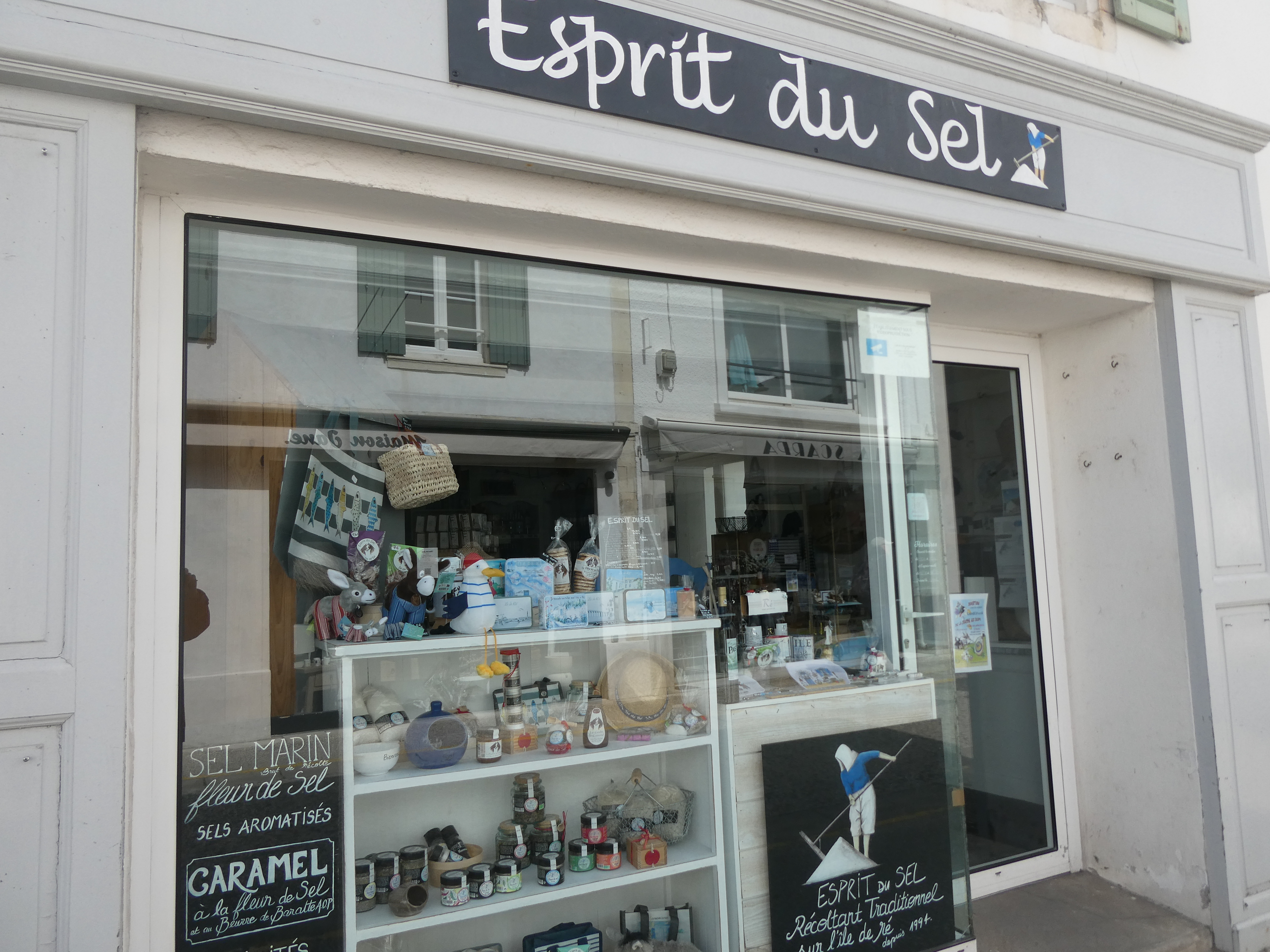
Bois de la Plage is not a throbbing metropolis and has a few small shops- a salt seller, shoe shop, florist, tobacconist. There’s an indoor market, closed today, a picturesque church and a few cafes. We’re on the lookout for somewhere to eat, and while a restaurant near the beach looks lovely, the menu is offering too much ‘tartare’ for our liking. One on a corner in the little town centre, though, Le Moulin a Cafe, offers a good looking menu and, crucially, oysters.

At the entrance to our site there is a bar/cafe, which is fine for a drink- and even has a selection of cocktails, although the food offerings are of the burger and pizza variety. It’s noticeable that French diners appear to be going for more fast food options these days. We wander down in the early evening but there’s a chilly wind and it’s not cosy inside the canvas dining and drinking area, as the breeze blows in.

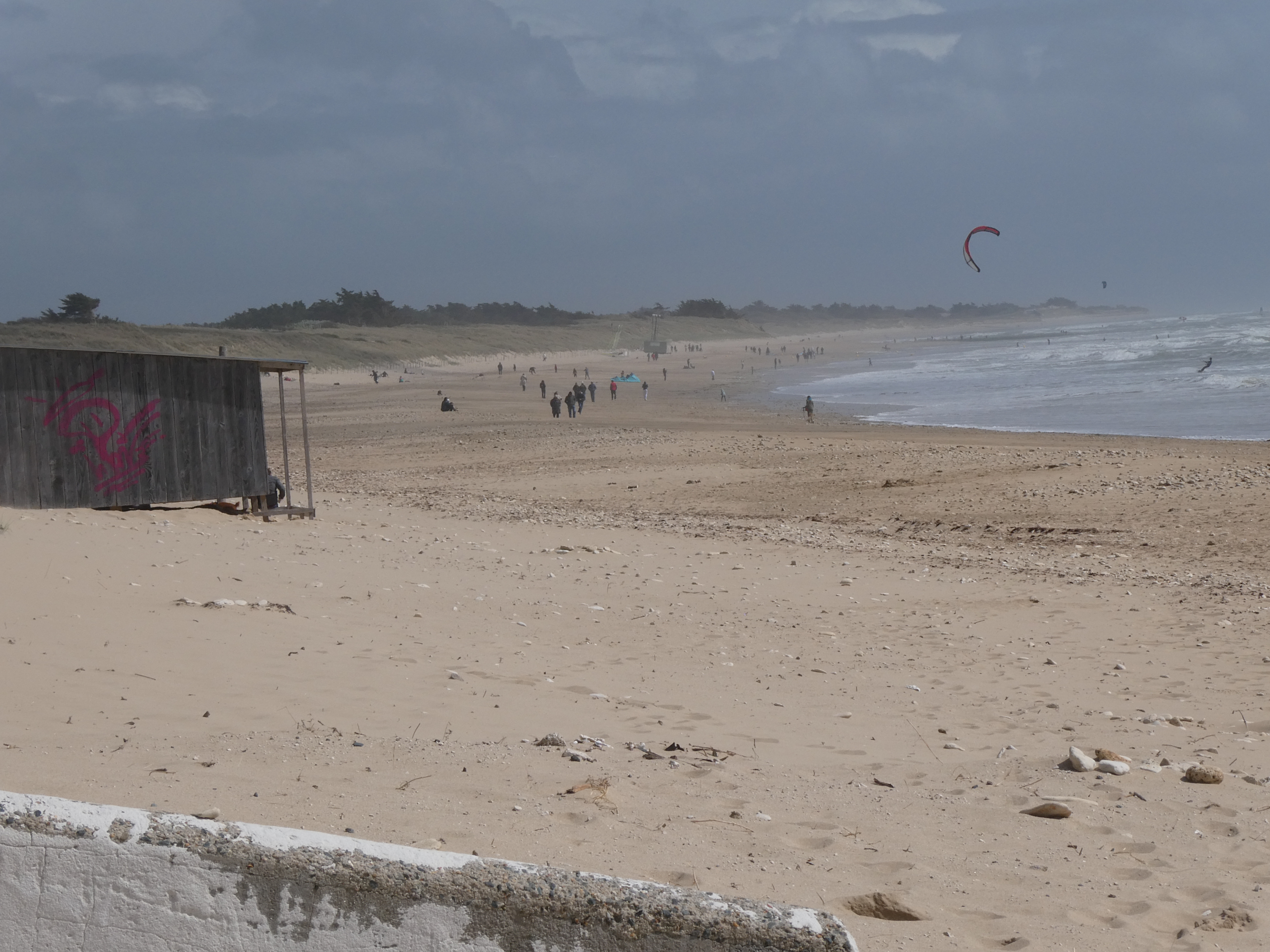
The beach here is typical of this French Atlantic coast, vast, sandy and with lively rolling waves, the kind of beach that surfers love, and one afternoon we return to our site along the sand, turning into the site beach access.

We go to eat at the Moulin. It’s a little quiet, which is unnerving, and we’re led into the back, but as usual we’re out to eat much earlier than the French so as the evening progresses more diners arrive. We have oysters. I didn’t try an oyster until I was in my fifties and immediately became a fan, which was a surprise!

It’s time to move on- but we’re not done with Ile de Re yet…

Erquy and the Elusive Oysters

With just a couple of days left of our latest French trip, we head up to the coast to be in spitting distance of the return ferry. This time we’ve broken with tradition and opted to return from Cherbourg instaed of Caen.

A town called Erquy looks promising and a campsite overlooking the beach. We leave poor Machecoul and the hopeful ducks, who place themselves stolidly behind the van so that I have to make stern and noisy gestures before we can reverse out of the space.

On arrival to Erquy we become confused, as does the SATNAV, trying several lanes and being instructed be various trying-to-help passers-by. Erquy appears to be spread over a vast area. At last we locate the track down to the site- and it’s steep. We check in and are given a pitch number, 61, although when we find it on this huge site, it’s steeper than any chocks can deal with. As there seem to be plenty of empty spaces, we walk back to reception, where the two young women look mystified by the problem. It’s now I realise that the pitch number is not 61, but 19. Problem solved.

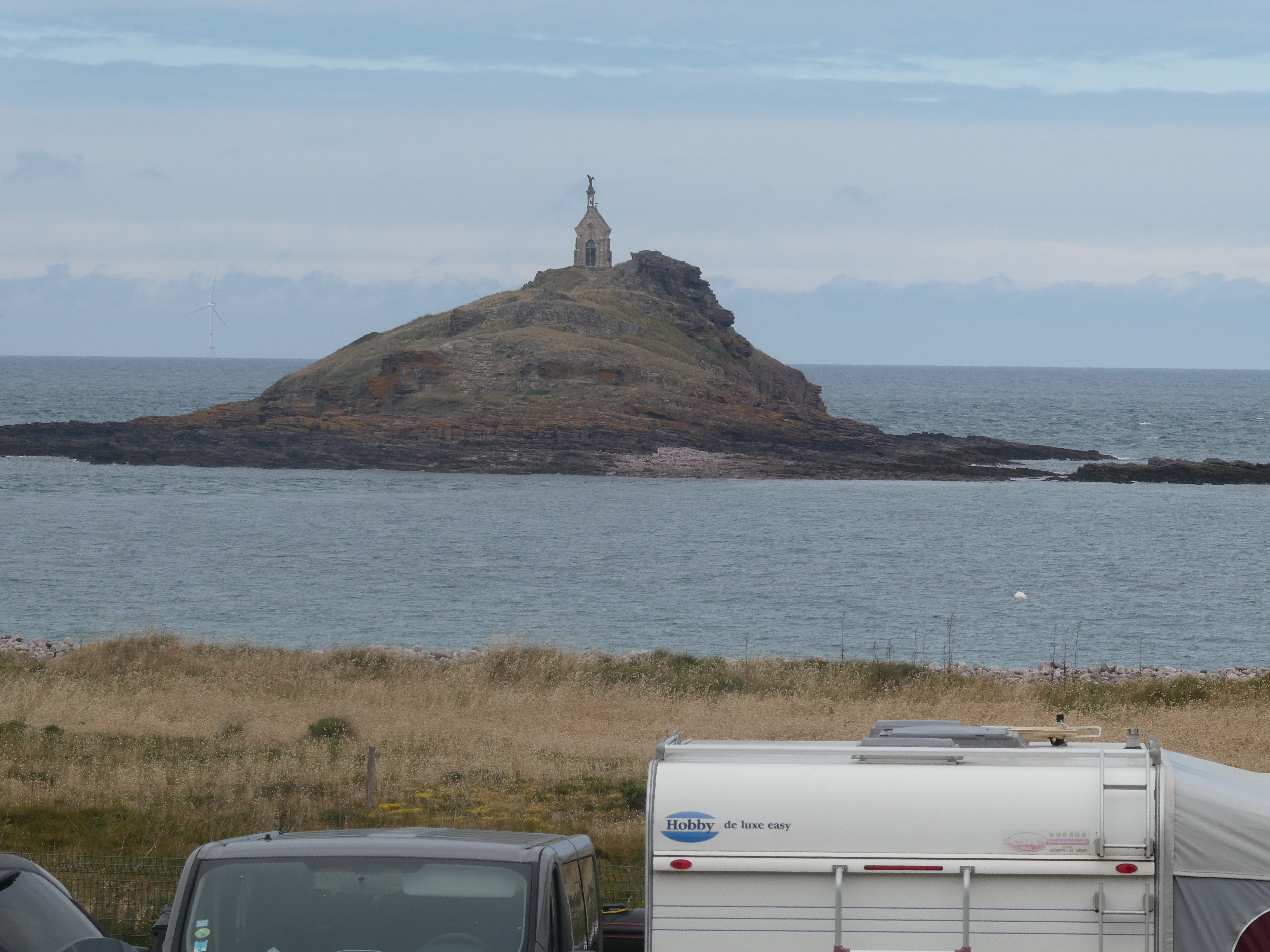
We park up and put chairs in the sun and there’s a view over the rocky shore and ‘Petit Saint Michel’- a tiny island that replicates Mont St Michel and has a miniature chapel perched on top.

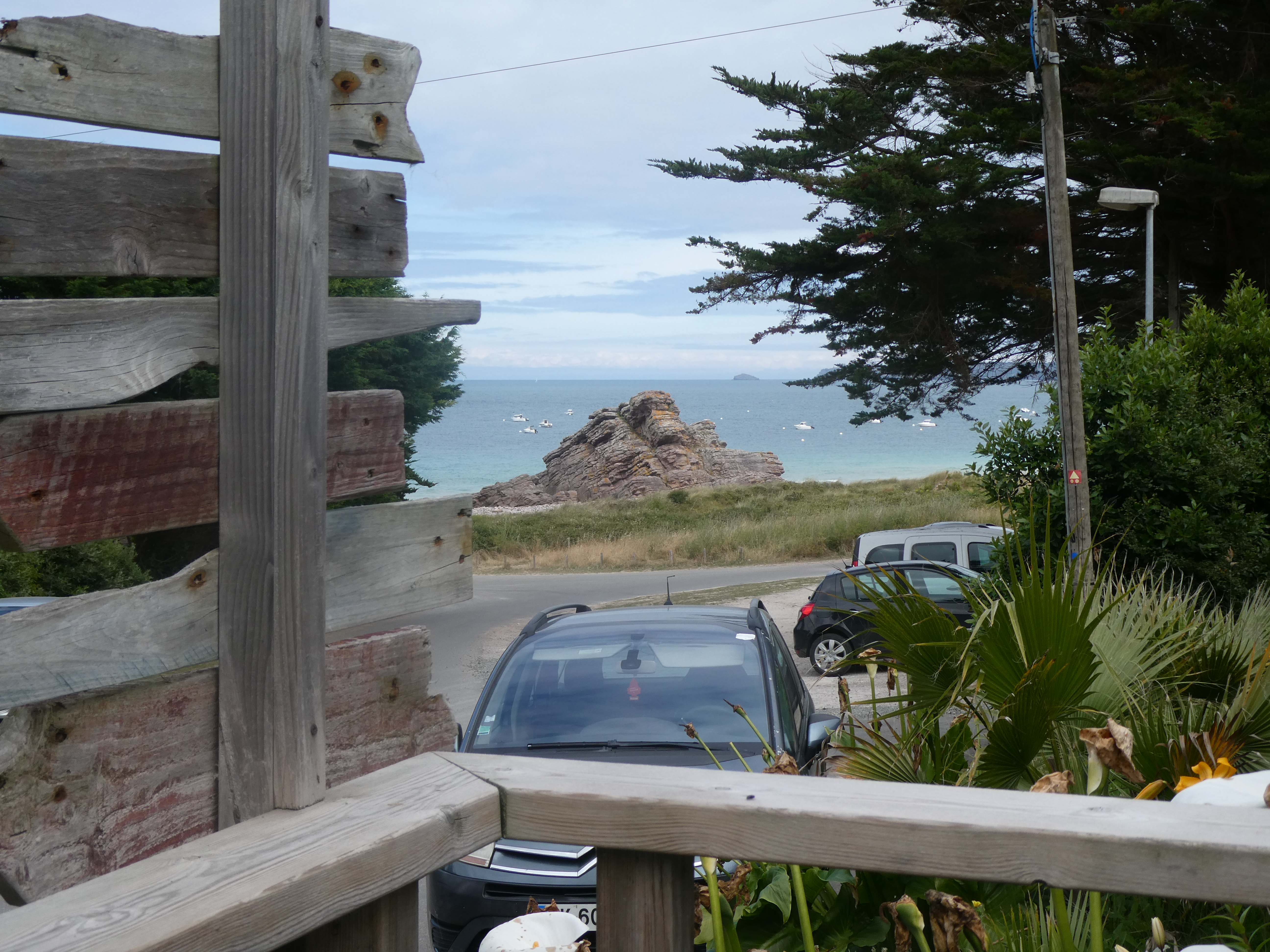
But we are dismayed by the distance to Erquy port, where we’d assumed there’d be bars and restaurants, fertile hunting ground, perhaps, for the elusive oysters we’re after. A quick look online shows there’s ONE cafe/bar in striking distance, so we wander along the road outside the site to take a look and yes- past the end of the campsite and around the corner is a small bistro with an outside terrace and a conservatory. Phew! We sit in the sun with beers- there is a narrow view of the shore, then we book a table for later.

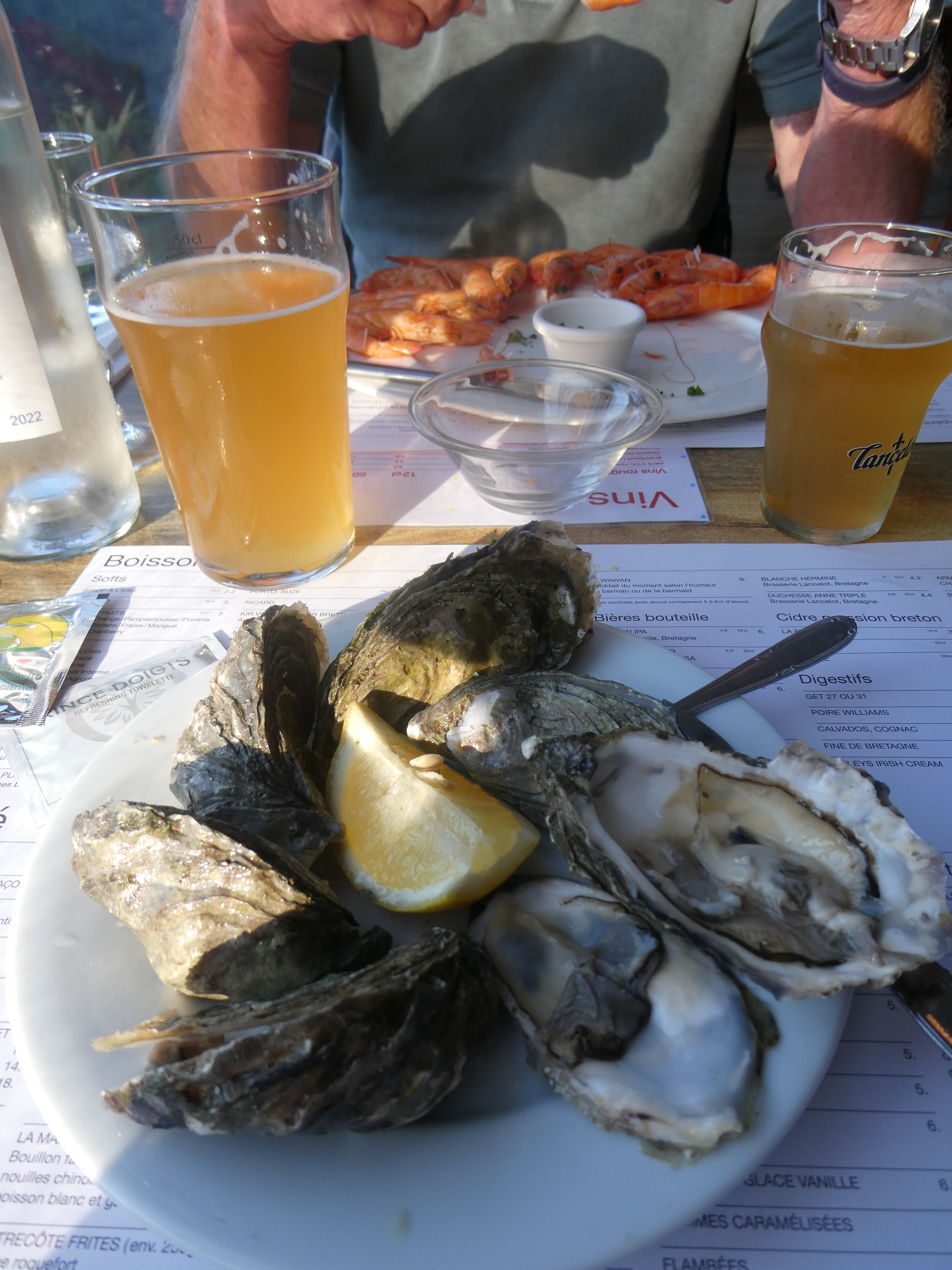
At last- there are oysters- and a big plate of crevettes for Husband.

Next day we set off on the coast path, which dips, climbs, crosses roads, goes through a strange housing estate where there’s nobody to be seen, through woods and to some stunning beaches with barely a soul on them.

Eventually we arrive on the outskirts of Erquy the town and port- although it’s still quite a hike- and a steep descent down to the port, although when we get there it’s pleasant but not stunning. We treat ourselves to an ice cream as a reward for trekking so far and to reinforce ourselves for the steep climb back out of town. But it feels like an achievement.

We leave Erquy and travel on to an aire overlooking the sea in striking distance of Cherbourg, where we’ve stayed before. It’s another achievement to have managed the entire trip without electric hook-up. Now- home to get it fixed!

For fiction by me, Jane Deans, search for novels: The Conways at Earthsend [an eco-thriller] and The Year of Familiar Strangers [mystery drama]Visit my website: janedeans.com

West is Best

We leave Montjean-sur -Loire on a steaming hot Sunday, while a bike race/rally/event is taking place, stewards, barriers and throngs of cyclists making things less straightforward for an exit of the town, but not unsurpassable.

We’re heading for the coast, to revisit a site we stayed in 10 or 12 years ago, at Fromentine, which overlooks the island of Noirmoutier on France’s west side where the Atlantic rolls in. When we came before we had our first little van, a beautiful VW with a pop-up top. We were still finding our van feet at this time and the Fromentine site, lying under the pines and with beach access, was sparsely occupied- no more than a handful of occupants.

Nowadays sites have developed and are chocablock full of ready-made chalets. We tourers must park in whatever spaces are left between the huts. But Husband thinks he’s identified the site we stayed in and we pull up and check in with no trouble. Later we discover that it isn’t- but our previous stay was next door.  It’s still hot but there’s a fresh breeze here and we know there are excellent cycle paths criss-crossing the forests as well as a 20-minute walk into the little, beach-side town and port. A passenger ferry makes trips out to another island, Isle de Yeu and holiday makers make their way to and from the terminal trundling cases back and forth. The tiny town’s main street is a little busier than it was but not greatly changed.

We set off on to the cycle paths through the forest and head towards Notre-Dame-de-Monts, taking the roads where it’s quiet. In the centre there’s a handsome church with a striking tower but nothing much else of note, except that the flower beds are spectacular and a quick mooch yields a Super-U supermarket for picking up a couple of things.

The return becomes tricky once we get hopelessly lost, all woodland paths looking much the same as we try different routes and attempt to work out the way from the [very few] unhelpful maps. My enquiry to a walker confirms we’re heading in entirely the opposite direction to Fromentine.

It’s time to dine out so we opt for a beach front restaurant which we may have visited on the previous occasion, although it’s busy, perhaps due to most other establishments being closed. I’m going for oysters, an order the waiter appears not to have heard, since he brings Husband’s giant crevettes and nothing else but they do arrive at last and are worth the wait

Wanting somewhere new to cycle, next day we pootle off towards the ‘Marais’, the marshes, where the roads are flat and quiet. The cycle path signs give no indication until we try a lane through a housing estate then we’re there- more by luck than judgement.

All goes well and the cycling is pleasant. I’ve already told Husband that if he looks over his shoulder and I’m not there it’s because I’ve stopped to photograph something, so I stop in a gateway, calling to him. He cycles away, disappearing into the distance and I take my shot, thinking he’ll wait at the bridge where we turned; but when I reach the bridge he’s gone without a trace. I track back through the village, taking the exact same route we came on, until I reach a corner where we’d stopped to consult a [useless] map. I call him. It goes to voicemail.

              I deliberate, as there are about 4 options from this junction. Which path did we arrive on? I’m about to set off on one when I remember that we were following a family who crossed the road here and it’s a lucky break because I cross back and take the correct path. Then I navigate back to camp just exactly as we came, because what else can I do?

              And of course, Husband is there in the doorway of the van, phone in hand, not lying supine in the middle of a road or crashed into a tree. Phew!

Grace is the alter ego of novelist and short story writer, Jane Deans. To date I have two published novels to my name: The Conways at Earthsend [https://www.amazon.co.uk/Conways-at-Earthsend-Jane-Deans-ebook/dp/B08VNQT5YC/ref=sr_1_1?crid=2ZHXO7687MYXE&keywords=the+conways+at+earthsend&qid=1673350649&sprefix=the+conways+at+earthsend%2Caps%2C79&sr=8-1 and The Year of Familiar Strangers [https://www.amazon.co.uk/Year-Familiar-Strangers-Jane-Deans-ebook/dp/B00EWNXIFA/ref=sr_1_1?crid=2EQHJGCF8DSSL&keywords=The+year+of+familiar+strangers&qid=1673350789&sprefix=the+year+of+familiar+strangers%2Caps%2C82&sr=8-1 Visit my writer Facebook page [https://www.facebook.com/search/top?q=jane%20deans%2C%20novellist%2C%20short%20fiction%20and%20blog or my website: https://www.janedeans.com/

South West France- a Default Destination

Not everyone enjoys travel. But those who do like it for a plethora of reasons, not least because there is so much pleasure to be had from exploring a new destination. I believe this is due to our innate thirst to learn, which does not [as far as I’m concerned] become less with age.

Having said this, there are favourite places for all travellers that they love and return to repeatedly. Call these places ‘default’ destinations. For some it’s the theme parks of Florida, others love the Canary Islands or the Costas, or Scotland.

For us, the default is France, and more specifically, south west France, everywhere from south of Bretagne down to below Bayonne and around the corner to the Spanish border has been visited, stopped at, tried and tested. Some places have become regular stops over the years, like the unappealingly named, ‘Le Gurp’ in the Gironde, a municipal camp site, pine woods stretching out into dunes, a few minutes walk up over a hummock to a minimal row of shops and bars and then the vast expanse of creamy white beach. The Atlantic Ocean rolls huge, frothy waves onto the sand. To the left are concrete remnants of old military bunkers, liberally graffitied. To the right the beach romps away into the distance. Walk far enough and you’ll be right in among the naturists!

In the beginning we travelled with a tent- or rather a series of tents, then later with our first, small van [A VW pop-top, much beloved by Husband], later still, newer vans with enhanced facilities, and while we’ve explored much further afield and completed vastly longer trips, we continue [when possible] to revisit SW France.

The few bars offer just enough in terms of evening entertainment, a couple of beers and a meal seated out on the decking to watch the beach world pass by. We’ve been visiting Le Gurp since our tent travels of the 90s and I’ve no doubt we’ll return.

On the coast near Bordeaux, Le Porge is another favourite, recommended by an American we met at Bordeaux’s own site [a convenient, easy cycle from the centre] it also has a handful of beach bars and a wide, wild beach.

Further south, in Les Landes, we’ve enjoyed some wonderful times at camping St Martin, which again has direct access to an outrageously gorgeous beach plus a range of restaurants, bars and shops. From here, beautiful, paved cycle routes extend along the coast both ways, even and into miles of pine forests. The site provides pristine facilities and has become a firm favourite that we’ve returned to many times over the years.

Further north there are beautiful islands: Isle de Re, Isle de Noirmoutier and Isle d’Oleron, accessed via arching bridges and each with their own character; they are marvels for those who enjoy seafood and especially oysters [a pleasure I came late to but have embraced!].

There are countless, tiny places up and down the long Atlantic coast that we’ve stayed in; Conti Plage, Moliets, Arcachon- too many for me to recall. There are many cycle routes we’ve repeated, cafes and bars we’ve revisited, stores we’ve returned to.

On occasions we’ve left if the weather hasn’t been good, perhaps to dash south or drop around the corner and across to Portugal. But we know we’ll be back again, parking the van up in old haunts that feel like coming home.

Grace is also known as the novelist, Jane Deans. Her new novel, The Conways at Earthsend is now out and available from Amazon, Waterstones, Goodreads, W H Smith, Pegasus Publishing and many more sites. Visit my author page on Facebook: (1) Jane Deans, Novellist, Short Fiction and Blog | Facebook

Mangez comme les Francais!

P1060214

One aspect of life the French have perfected is the art of dining out. And anyone who wishes to observe the French at this only needs to visit a restaurant on a Sunday afternoon to understand how seriously mealtimes are treated. Every bistro, brasserie and café is packed.

But restaurants are not the sole venues for the French penchant for large, family gatherings to share food and company. Any park, aire, picnic area, seaside bench, canal side or car park will be packed with groups of friends or family sharing a meal.

And this Sunday meal will not be some hastily wrapped cheese and pickle sandwich, a packet of Golden Wonder crisps and bottle of coke. Oh no. This will be a proper full-on, sit-at-a-table, cloth, knife and fork, wine and glasses, side salad, napkins, several courses kind of meal. During a cycle ride from Jard sur Mer to La Tranche sur Mer we passed a large family party seated at two tables [one for adults, one for children] made up of all manner of picnic tables. Everyone had a seat and a laid-up place-and all under the trees in the woods by the beach.

So how, then did the French acquire their reputation for sylph-like, uber-cool, modelly bodies? It is my theory that they [the women, especially] chain-smoked their way to skeletal skinny-ness. In any case the same cannot be said these days, for the French are no longer slender wraiths like Coco Chanel and Francoise Hardy but have become as chubby as every other nation.

Their haughty, sniffy attitudes to cuisine have taken a slight tumble, too since they embraced MacDonalds and took to fast food. Yes-you’d still be hard-pushed to find a better cooked steak than in France, but along every street there is a pizza joint, a burger bar, a kebab shop, ice creams galore and the inevitable chi-chis, galettes, crepes and doughnuts.
P1060216

And what is more-the French are not averse to strolling along with a bag of chi-chis [for the uninitiated these are strips of fried dough rolled in sugar-sometimes dipped in melted chocolate] munching as they go.

Pockets of resistance do exist, though. A mayor on Isle d’Oleron, Gregory Gendre is fighting to keep MacDonalds off the island [https://www.theguardian.com/world/2018/aug/24/choose-a-side-fight-keep-france-ile-doleron-mcdonalds-free ]

Most days we endeavour to choose and buy fresh produce and prepare meals in the van, [see last week’s post for the shopping experience]. We like to make the most of such delicious items as the huge, luscious tomatoes, sweet, juicy melons, smooth, creamy cheeses and salty Toulouse sausages, sometimes using the deli counter to buy slices of thick quiche or pork cutlets.

But when in France it would be sacrilege not to dine out on occasion so every few days we do. I indulge in my very favourite French menu: oysters/steak/crème brulee, and very delicious it almost always is.


How we Roll-

P1060057

These days we cross the English Channel [our most trodden travel path] by taking the line of least resistance-and since we live a few miles from Poole that line is Brittany Ferries to Cherbourg, a four-hour crossing leaving at 8.30am.
Despite the proximity we know better than to hang about and we are sure to leave home by 7.00am. Once, inspired by Husband’s ‘It’s only half an hour away-we’ve got oodles of time-we don’t need to be there until five minutes before’, we arrived at the barrier just as the ferry was about to leave and winged it up the ramp with minutes to spare.
The ferry, the ‘Barfleur’ [named after a Normandy coastal town] is comfortable and familiar by now. We know that once on board there will be good coffee and fresh, buttery croissants as well as comfortable reclining couchettes in a quiet salon in the bowels of the ship. We know that we can mooch around the small boutique and peruse the eclectic array of merchandise both useful and otherwise. There will be WiFi and television news.
Mostly, these days the ship is peopled with retirees or young couples with pre-school children because since retirement we have the choice of avoiding school holidays. This time, however by setting off a little earlier we are beset by knots of excited, shrieking children who still have time for a quick taste of France before knuckling down to learning their tables. They gallop about the ship, throng around the games room, chase each other from the bar to the restaurant, use loud devices and shout to each other. I surprise myself by enjoying their excitement, which reminds me how I felt on early trips abroad when every experience was new.
A sulky boy wearing a onesie in a bear design makes several circuits past our table with his lecturing mother, prompting me to wonder what he has done and if his excitement got the better of him. A tiny, table-height toddler staggers about, chased by his doting father and shielded from protruding table corners by the various diners he is entertaining.
In the quiet zone I open my Kindle and continue reading Alan Bennett’s ‘Keep On Keeping On’, which is part diary/part memoir/part lecture in itself and a treasury of informative and amusing anecdotes. A couple of rows behind us two men slumber whilst between them a young boy plays on and with a mobile phone, the sound of which is just a little distracting-loud enough to hear but not enough to decipher. Husband, whose own hearing has been compromised during the last few years is immune to such irritations and dozes off easily.
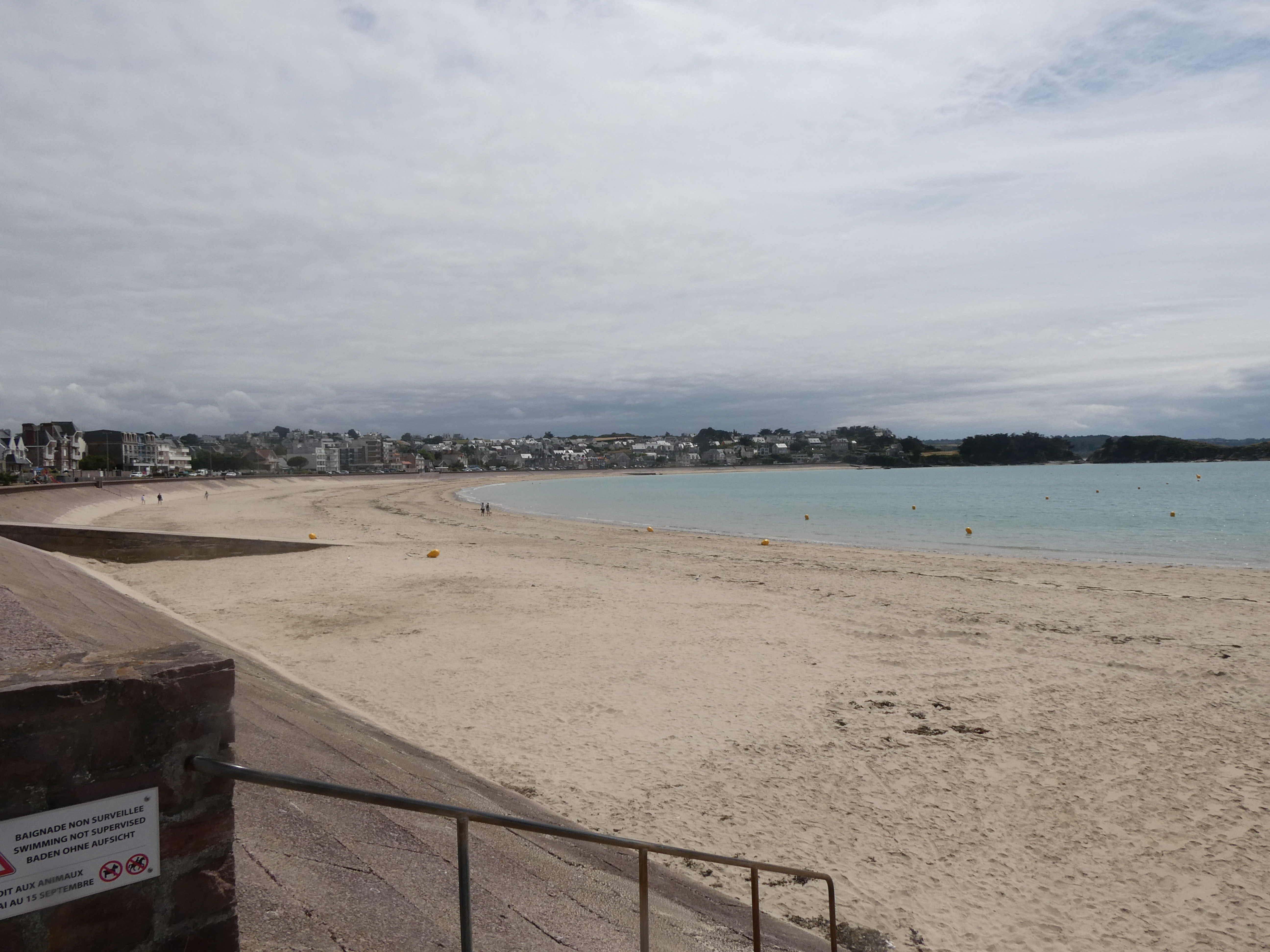
We arrive to Cherbourg, disembark and set off-not tearing southwards as usual but this time meandering across the Cherbourg peninsula to the coastal town of Barfleur itself, where we have lunch and a wander around the curving harbour followed by drinking coffee. Then we continue a few miles on to St Vaast, another harbour town with a convenient aire for us to park up in.

P1060046  P1060055  P1060053

St Vaast is a delectable place; full of seafood cafes, narrow alleys lined with pretty seaside homes and beautiful gardens, boulangeries packed with luscious pastries, breads and tarts, a crowded marina and a working fishing harbour where sturdy mussel boats are tied up.

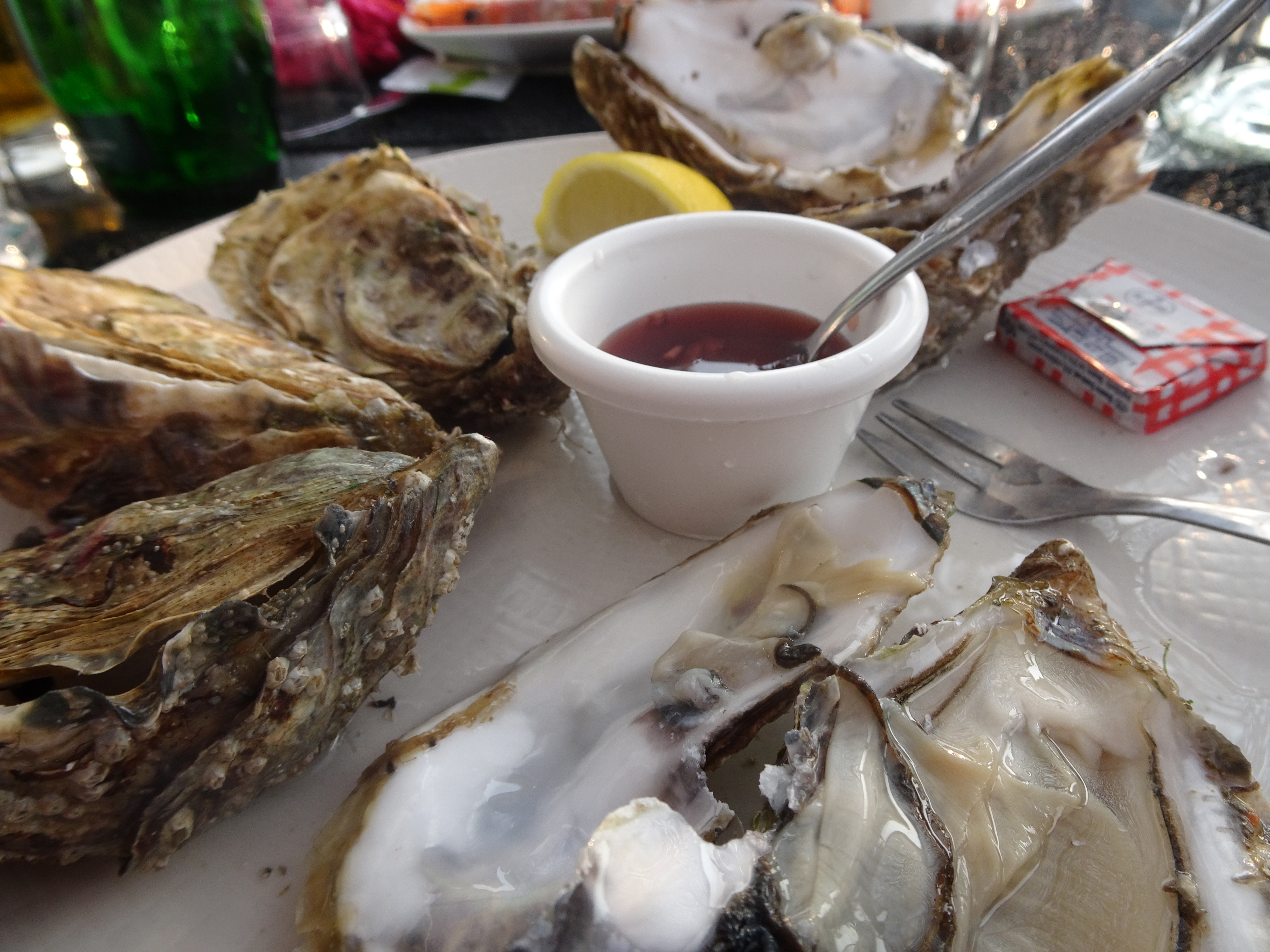
There are many, many West coast ports like this, with harbourside brasseries serving the freshest shellfish you can get. We take advantage and I am able to enjoy my favourite treat-a plate of fat oysters nestling on a bed of ice and tasting of the sea.

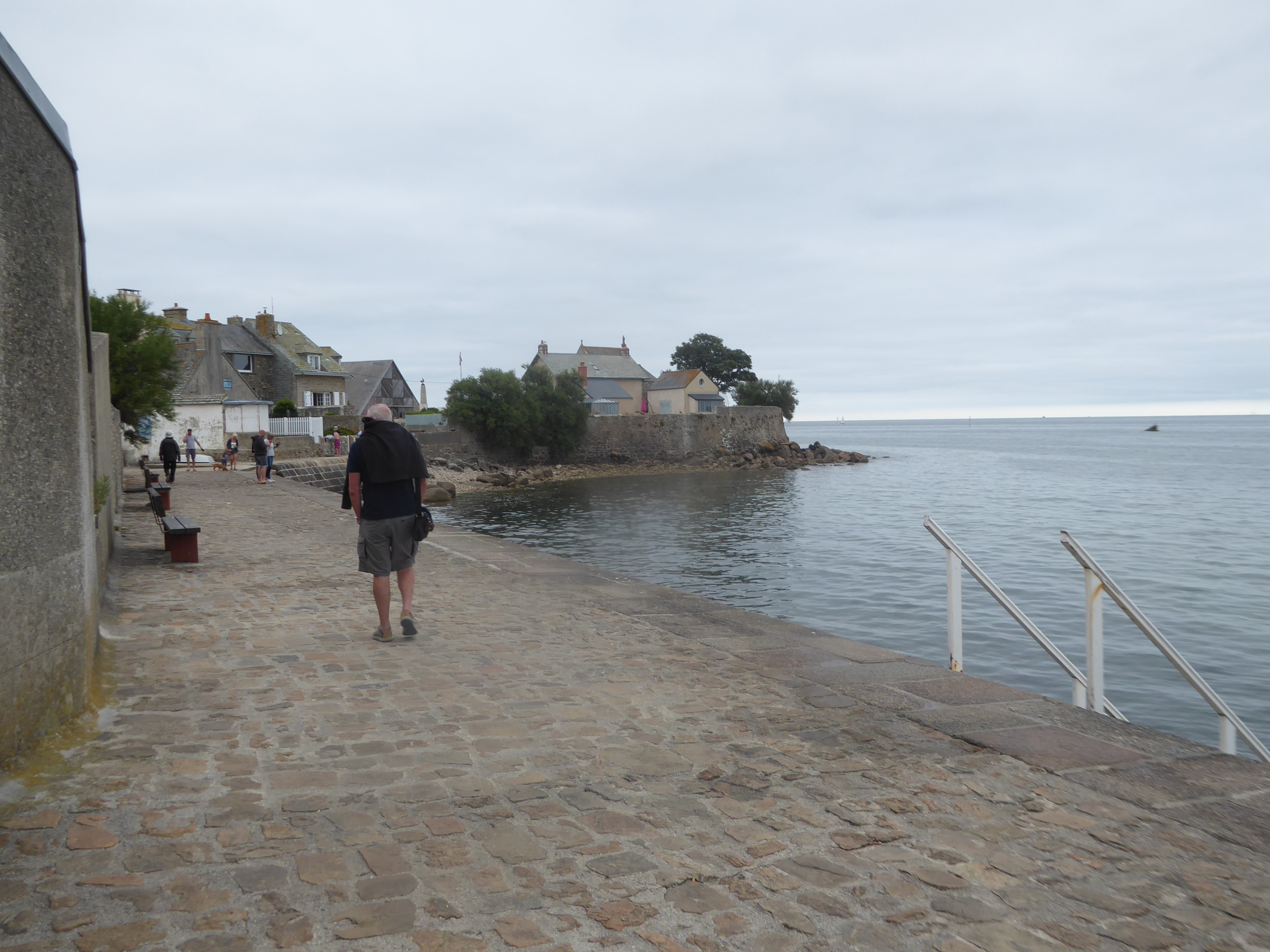
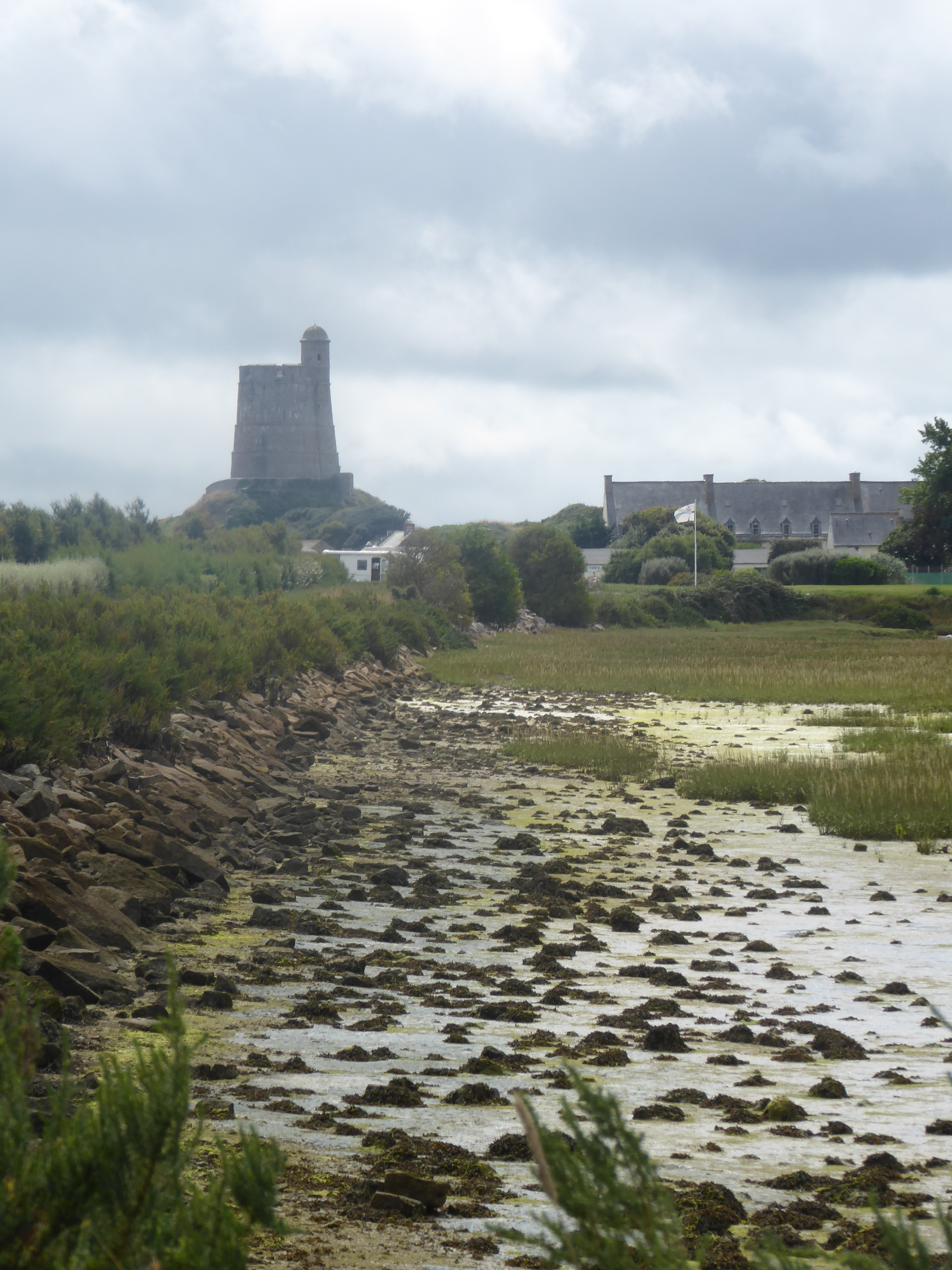
We stay 2 days despite the drizzly intervals and walk the coastal sea wall to see ‘La Hougue’, part of some anti-British defences of 1664. Then it’s time to move on.


Eating Lessons

We are approaching the end of another extended trip, meandering around the South of France but this time, with somewhat more sophisticated facilities we have taken advantage of what the French call ‘aires’. The French have taken to motor-homes more than any other nation. The vehicles are becoming larger, more equipped and more elaborate. One result is that an industry has sprung up to address the needs of ‘camping car’ owners with numerous, vast areas set aside for, and only for campervans. Tent campers and caravanners can eat their hearts out. They are not invited.
An ‘aire’ will typically have a services point consisting of clean water, electricity, waste water disposal and a ‘vidange’ [for emptying toilet cassettes]. These facilities are more than enough to satisfy the needs of your average motor-homer. Increasingly aires are unmanned, with entry via a machine like a parking meter. Some are little more than vast car parks with electric points and waste disposal. Others are beautiful, landscaped spaces with attractive planting.
Getting sandwiched in our modest van between two gargantuan motor-homes allows plenty of opportunity to study the dining habits of others. In fact, anyone who is thinking of swapping their regime of TV dinners for something a little more formal, sociologically developed and a more gratifying gastronomic experience should look no further than the French model of dining, which can, it seems take up almost all of each day.
Take the three elderly folk sharing an equally elderly motor-home in an aire at Hourtan Port [for 10€ per night-a lovely, spacious, shady, tree-lined area]. They ambled out together mid morning-two mature monsieurs and a madame-returning at midday laden with bulging plastic bags plus several, substantial ‘artisan’ loaves. The bags turned out to contain dozens of fat, glistening oysters. Lunch was sorted! Later in the afternoon they wandered off again and reappeared with more bags, this time containing kilos of mussels. The next day’s catch was a batch of enormous fish, one of which filled an entire plate. Each meal, of course was accompanied by a bottomless bottle of wine.
At an unashamedly seaside aire in Gruissan a couple nearby would take their breakfast [plucked from the nearest ‘artisan’ boulangerie] of croissants, orange juice and coffee, then cycle off together purposefully. By lunch time their bike baskets would be laden with all the goodies they’d acquired. Lunch was prepared together-a serious and painstaking task of cleaning, chopping, table laying and cooking [no quick sandwich job for them!] There would be three courses and of course, wine. Later they would disappear again to seek out the components of the evening meal, when the procedures would be repeated.
In the small town of Gruissan, market day clogs the streets as everyone turns out to fill their basket with cheeses, charcuterie, fruit and vegetables, olives and preserves. Everything can be sampled before purchase, making the shopping excursion a gastronomic pleasure in itself. We joined the crowds, queuing for tasty lunch items and bearing home the spoils in anticipatory glee.
In contrast, the weekly supermarket drudge seems an impoverished experience, as does the regular ‘what can we have tonight?’ conundrum. Ho hum!

TMTE than TOWIE…

               Here in the UK where get our share of reality TV the creative whizzes behind the shows display no signs at all that they are running out of ideas. One such programme is a day-to-day look at life in the county of Essex, a county that has gained itself quite a reputation during the last fifteen years or so, for its characterful populace and their antics.

                I must confess I am not a follower of ‘The Only Way is Essex’ and that all of my knowledge of said show has been gleaned from reading reviews or catching glimpses of the ‘slebs’ in glossy magazines whilst waiting for appointments [as explained in previous posts], but I’m guessing that fans of the programme could be forgiven for thinking that all there is to Essex is London overspill towns, spray tans, vajazzles and estuary vowels [for the uninitiated-Essex edges itself around the mouth of the Thames as it joins the North Sea and the inhabitants speak in a distinctive, unmistakeable accent]. It is easy to gain a preconceived idea of a place.

                I consider myself, as far as the UK is concerned, to be a South Wester-that is to say I was born in the South West I’ve spent most of my life living there, however I did spend some significant periods of my childhood living in both East Anglia [North Norfolk] and Kent, and although I know and recall both of these areas well I knew nothing of Essex until this week, when we journeyed Eastwards to rectify this gaping void of ignorance.

                Of course I was well aware that besides the sprawling conurbations of Basildon and Romford there were whole tracts of beautiful countryside, swathes of marshes teeming with wildlife, charming coastal towns and quaint villages and I have not been disappointed. We made first for Mersea Island in the south-an island only in that a wide, muddy causeway separates it from the ‘mainland’, given over largely to holiday parks, but also home to manicured villages with black, clapperboard houses with voluptuous gardens, village duck-ponds and wonderful pubs. We visited the Oyster Bar, indulging in an enormous sharing platter of crab, prawns, mussels, cockles, smoked salmon, smoked haddock and of course, oysters-accompanied by a Guiness [Husband] and a chilled white wine [me].

                Colchester, towards the East boasts the reputation of being the earliest recorded town in the country, although here my expectations were a little dashed. It is a handsome town, with some fine buildings but not spectacular. It has a modest, well-tended castle but I suspect all vestiges of antiquity were thrashed out of it long ago to make way for the ubiquitous likes of H&M, Marks and Spencer, Greggs and Tesco Express.             

                On again then to the East coast beyond Colchester, where were truly in the depths of the countryside, but near to the ports of Harwich and Felixstowe [across the water to the North in Suffolk]. It is an exemplary scene of rural England. So much for preconceptions-and all about three hours away!