Unknown's avatar

About Grace Lessageing

I am writer of novels, short stories, flash fiction, blogs. I lead a creative writing group. I am an Ex infant teacher, living in Christchurch, Dorset, UK. My brand new novel, The Conways at Earthsend was published on January 28th 2021 can be found on Amazon, Waterstones, Hive and Goodreads and is available in either paperback or e-book versions. You can also read The Year of Familiar Strangers, available as an e-book from Amazon. You can visit my website: janedeans.com or my author page on Facebook: https://www.facebook.com/Jane-Deans-Novellist-Short-Fiction-and-Blog-102757711838272 Happy reading!

Not That Ancient!

There are some nasty tricks played by ageing. They creep up in unexpected ways and follow you around waiting to remind you at inopportune moments, peeping over your shoulder into the mirror in the changing cubicles of women’s sections of department stores and mocking you as you attempt to run for the bus.

A couple of weeks ago, whilst waiting in a queue to gain access to the auditorium hosting a Christmas concert by the inmates of my granddaughter’s nursery I was spotted by an acquaintance who told me I looked ‘sprightly’. Sprightly? I am a woman in her [still relatively early] sixties. I am not ready to be called sprightly-a term I feel is reserved for anyone in their eighties or above who has not yet resorted to a Zimmer frame.

Then there was the occasion when I followed a bus-pass wielding woman on to a bus and got waved through by the impatient driver who clearly needed to make up some time and must have assumed I was another pensioner, despite my brandishing the cash in his face.

The fact that I am a pensioner does nothing to alleviate the shock of incidents like these.

I use a strategy to dull the injury of each passing birthday. It is thinking of myself as being the next age number months before it arrives. I call myself ‘old’ or ‘elderly’. I acknowledge arthritic jabs and aches as part of the decadent process. I’ve adopted ‘Granny’ as a grandparent pseudonym in order to brazen out the image it creates. And yet, when the perceptions of others bear it all out I am taken by surprise!

This is the well-known paradox of getting older; the mismatch of how you see yourself v how others view you. What is to be done about it? A friend called before Christmas to tell me she was scheduled for a face-lift, that she ‘should not be so wrinkly at her age’. She, like me is in her sixties. Admittedly she has suffered the indignity of being dumped by her husband of 40+ years [a blessing for her, to my mind] but what if she feels no better after the procedure?

Myself, I think I simply have to do my best. I can scrub up alright if an occasion demands, struggle through a dance-exercise class and get up and down the stairs. I can do basic things on a smartphone, manage to communicate on social media, follow a conversation and even contribute. I won’t pretend I know anything about contemporary music [is there any?] but I have a reasonable grasp of today’s cultural achievements and try to keep up with events in domestic and world politics. I like to think I’ve kept a sense of humour, particularly as it relates to my own state-in other words I don’t get offended by gentle mocking of my ageing state.

BUT- I’m not ready to be called ‘sprightly’. OK? Save it for twenty years time.

2016? Sleep on it…

Christmas-yes it’s lovely, yes it’s festive. There is a warm, fuzzy glow everywhere-in the shops, in the pubs, in the cafes, along the streets and in the homes. We decorate, we shop, we cook. We send cards and receive them, exclaim over seldom contacted friends’ messages, speak to long-distance relatives. We deck the halls. We peel, chop and baste. We make table decorations, lay out crackers, pass things around, pour drinks, make toasts, watch the Queen/don’t watch the Queen,  play games, hand out gifts, open gifts, watch TV’s lack-lustre, festive offerings, crash out, wake, get up and begin again.

We eat too much, drink too much, feel bloated. In the mornings there is a swathe of last night’s glasses bearing dregs, demanding to be washed; and chocolate wrappers festooning the surfaces along with crumbs and pieces of nut shell. The dishwasher groans as you heave open its door, its bulging contents demanding to be dispersed.

I look forward to Christmas as much as the next person, preparing and anticipating but then when it comes all I really want is for it to be over. It belongs to children, this winter celebration with its pretence of magic and if you’ve access to a small child there is pleasure to be got from their enjoyment-otherwise there is a tendency towards anti-climax.

Nobody should wish their life away, especially when what remains is dwindling but 2016 needs to be behind us. It has been the year the world turned grim, forgetting any lessons history should have taught and returning instead to crude, emotions-led political decisions, territorial feuds and downright bestiality.

I’ve said before that I don’t do resolutions but planet earth needs to do some. There is an alarming deficiency of concern over climate change as we are about to be plunged back into over-reliance on fossil fuels. Genocide and brutality abound within and outside of conflict zones and how on earth is any of this to be tackled if we exacerbate hostility to foreigners and visitors by cutting ourselves off?

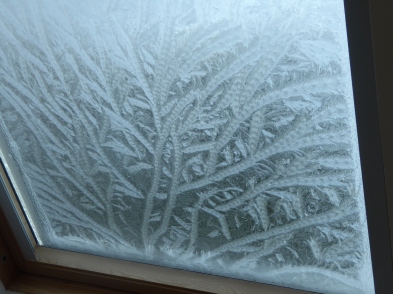
Though not a fan of cold weather I’m feeling introspective at this, the dormant part of the year. Yesterday the frost painted a stunning picture of a tree on our bedroom window, reminding me that there is still a lot to love about the world around us if we choose to preserve it. In winter nature reins in, hibernates, repairs and prepares. We should do the same, appreciate and cherish what matters the most. So I’m not going to feel guilty for spending time doing very little; for watching the garden birds or staring at a view or sitting quietly and thinking-because it’s just me doing what the season dictates and having a dormant spell until spring rushes in and stirs everything up!

p1020574

Happy New Year, Anecdotage readers-here’s to better things in 2017!


A Very Happy Christmas to all Anecdotage Followers and Visitors-

Since Anecdotage is on Christmas Day this year I’m posting a seasonal story on the blog. While it is a story for children it is also a parable of our times. The birds in our own garden seem to have definite characters, making them ideal fodder for fiction…

Goodwill to All Birds

                  Rowena Robinson was huddled on the spindly branches of the lilac tree. Her feathers were puffed up like a seeding dandelion while Roy, on the branch above her was filling the garden with a selection of his latest songs.

“I don’t know why you’re bothering with that rubbish!” Rowena nagged. “Nobody is taking any notice. It won’t get us any nearer to the peanuts; not with that rabble hogging the bird feeders.”

She jerked her beak at the bird table across the lawn. The Starling family, all seven of them, were feasting there, tearing into the peanuts and the suet as if it was their last meal on earth. Shreds of food rained down upon the grass. Rowena shook her head. “Their manners are terrible! Look at the mess they make! No wonder their chicks are so badly behaved, with the bad example they set. And why do they have so many children? Three or four is enough for any bird, surely?”

Roy hopped down to join his wife. Cold and hunger was making her bad tempered.

“They are hungry too, my love. Perhaps we should call them the Starvling family! And if they drop scraps on to the grass it’s easier for some of the smaller birds like Jenny to pick it up. Wrens prefer the ground for feeding after all. Stevie and his chicks will be done in a minute then we will get a turn at those nuts. We’ll need some supper. It’ll be dark soon.”

Sure enough a light came on in the house, illuminating the garden and prompting the Starlings to rise up like a cloud and swoop away over the fence. As the Robinsons prepared to fly over to the bird table a door slid open on the patio and the giant figure of a girl chick stepped out. Rowena turned back with a squawk of alarm as her husband landed on the stones next to the girl’s feet. He bowed several times in front of the enormous figure, who stood still and murmured to him in her strange tongue. In her hand she held a bag and now she shook it over the stones, peppering the ground with delicious seeds, nuts and mealworms.

Roy called to Rowena, “Come on over, dear. There’s enough food here to feed a flock!” But she shrank back into the tree, trembling.

“Roy! Get out of there! It isn’t safe.”

He hopped over and looked up at her. “Dear, the people won’t hurt us. They like us. They are the ones who put all this food out. We must show them we like them too. When we gather around them and sing they keep feeding us.”

He coaxed her from the tree, leading her on to the stone slabs to where the girl, Millie was standing.

Later, feeling well-fed in their cosy roost as they prepared for sleep, Roy was explaining about the family in the house. “That one you saw, the one who served us the meal; that was a hen-chick. They call it a girl in human language. I don’t think she lives in the house but she visits quite often”

“Girl” Rowena murmured.

“Then there’s an old hen. She lives there all the time. They call it a woman.”

Rowena yawned. “How do you know she’s old?”

“Well her feathers are all white and straggly. Of course, the poor things only have feathers on their heads and they can’t even fly.” He turned to his wife but she was asleep.

The next morning, after a quick preen and a beak wipe they peered out to see Mark and Mandy Magpie strutting around as if they owned the place and making their usual racket. The other birds hung around at a distance listening to what sounded like pistol volleys. Rowena sighed.

“Not much chance of breakfast any time soon, then.”

“No-but they are the only ones who can keep Squirrel at bay, so they have their uses! What do you think that is?” Roy indicated a bedraggled, grey mound of feathers on the slabs by the door. Rowena stared, aghast. “Oh Roy! Do you think that dreadful cat’s been here again?” She shuddered, remembering the last time the fearful beast had terrorised the inhabitants of the garden.

“I’m going to take a closer look.”

“Roy you can’t! It isn’t safe with the Magpies there!”

But he’d already taken off. He flew over to the patio and perched on a window ledge above the feathers, ignored by Mark and Mandy who were squabbling and squawking over a fat ball they both wanted. Rowena saw Roy bend towards the feathers as he chirped at it then was astonished to see the feathers move! A bedraggled head appeared and peered up at her husband.

Just then the door opened and Millie stepped out. Mark and Mandy screeched and rose up grumbling to retire to the nearest tree but Roy stayed where he was, watching. When the girl-chick spotted the heap of feathers and got down to look at it Rowena gasped, for the heap of feathers did not get up and fly away or even try to move. The girl-chick went back inside the house and Roy glided back to his wife.

“It’s a pigeon, Row. His name is Preston. I know pigeons aren’t very clever and they’re a bit common but he’s in a bad way. I think his wing is injured. He says a car hit him. Look-the girl-chick is coming back out.”

Millie returned. In one hand she held the peanut bag they all knew so well, in the other a saucer of water. She knelt by the pigeon and placed the water and some peanuts next to him. Then withdrew to the other end of the patio. Preston raised his head to stare over at Roy.

“It’s alright” chirped the robin. “The girl-chick won’t hurt you. She helps us all.”

“Shush, Roy! You know we don’t talk to pigeons! They come in here from miles away and take all our food and water!”

Roy cocked his head to one side. “My love, we are lucky to be very well looked after here in this garden. Does it really matter where this poor bird is from or who he is? He may not be like us but he is a bird all the same. There is enough to go around, whoever needs it, isn’t there?”

“I suppose so. But he won’t stand much of a chance if he stays there anyway. Fox will get him.”

She was right, thought Roy.

The next morning Preston wasn’t there and in his place was a box. Millie stepped outside and poured some nuts into it. “Is it some new kind of bird feeder?” Rowena asked and Roy went to look. “He’s in the box, Row! Preston is in there!”

“Don’t be daft, Roy. Have you been eating those rotten apples again?”

“It’s true-go and see for yourself.”

She took off and made a cautious circuit over the patio, peering down at the box before returning to their branch. “He seems a bit better today-more perky and he’s tidied himself up a bit.”

Two days later they woke to see Preston standing on the slabs tucking into a saucer of peanuts. Roy called to him. “How’s it going? You’re looking much better.”

The grey wood pigeon took a few wobbly steps towards the edge of the slabs. “Since the girl-chick gave me food and a safe place to sleep my wing is starting to feel less painful. I might try a few exercises after breakfast.”

“Take care, friend,” warned Roy, “The Magpies can be very rough and we sometimes get Fox here in the garden, too!”

They watched as Preston hopped around the garden, flexing his wings and wincing then propelling himself half a metre into the air in a series of leaps whilst flapping. At last he flopped on to the slabs for a rest.

“He’s persistent. I’ll give him that.” Rowena glanced sideways at her husband.

Preston got stronger every day until one morning they woke to see him flying around the garden and making experimental landings on branches and the grass. He stopped on the ground flower bed below them and squinted up with one beady eye.

“I’m off this morning. I’ll say Cheerio. Might be back some time. Thanks for all your help.”

Roy flicked his tail. “Take care friend. You know where we are.”

Preston bowed deeply before making an ungainly ascent, circling once and then heading west. They watched in silence until he became a tiny speck. The patio door slid open and Millie stepped out, looking about her and into the box, which was empty. She called something into the house behind her and a short, old hen-person came out to stand by her.

Roy took off, calling to Rowena. “Come on!”

“What are you?…” Rowena spluttered but flew to join him on the patio next to the two humans. “Sing, my love. Sing with all your heart!”

The Robinsons perched together on the edge of the bird bath, serenading the hen and girl-chick as they stood smiling outside the door. Millie clapped her hands. “That was so beautiful. Thank you. I expect you’re hungry after all that singing!”

She sprinkled a liberal helping of peanuts on to the slabs in front of them.

“There-you see?” Roy nodded at his wife. “We are so lucky. We live in the best garden in the world.”

What a Card!

Just as the sending of holiday postcards has [mercifully] almost completely died out, the sending of Christmas cards is a dwindling occupation, according to recent news articles. Reasons given include the cost of postage and the rise of popularity of social media.

In our household we still send cards, although in a true portent of how life will become in the future, the number of cards we must send has reduced.

Among those of us [mostly older] who uphold the tradition of sending cards there are various methods of acquisition, from those who manufacture their own-from family photos or recycling last years’ to my own preferred method of buying charity cards. The purchase of the cards is probably the most pleasurable part of the process, since many of the major charities’ cards are sold by volunteers in our local library along with wrapping paper, gift tags and so on.

I am sorry to say that my criteria for choosing are not altogether altruistic in the sense that I tend to choose by design rather than choice of charity. This year, for example I was much taken by a design featuring a shelf of books on winter and Christmas-related topics. Steering clear of anything religious I eschew biblical scenes such as the night sky over a fictitious Bethlehem, camels, three ships or whimsical stables. I also reject ‘humour’ in the form of comical Santas, reindeer or snowmen in cartoon poses. I don’t like glittery snow scenes either.

It must be tricky for card designers to produce originality nowadays. Old masters are acceptable, as is anything well drawn or a stunning piece of photography.

With a few exceptions the writing of Christmas cards is not a task I enjoy. The exceptions are the cards for people with whom I have little contact apart from this. There is a friend from student days, a friend from single-dom days [whose card, by tradition must be from one ‘Archers’ character to another; this year it was from Lilian to Justin-a story line only die-hard Archers fans will understand].

In an unprecedented effort, this year’s cards were written early in the month. This was in order to apprise those of a Luddite nature that we have moved house. There are few of them, now-friends and relations who do not use email, let alone social media.

As we begin to receive cards it is clear that the early writing formula has succeeded, with cards from the ‘once-a-year’ contacts plus a smattering of cards from our neighbours. Notable among these is a ‘home-made’ card from the single gentleman at number 2. He has already done sterling service as the basis for the character, Jeffery Marsh in my story ‘The Courtyard Pest’ [see last month’s posts for the story] and has much more potential for creative fact and fiction. The card, in a large manila envelope is shoved through our letter box. An autumn leaf has been glued on to a piece of gold card-clearly recycled from some packaging, although one corner of the card is missing as if torn off. There is some hastily scrawled writing ‘Happy Xmas’ in red, replicated as Happy New Year inside. Has he taken irony to an unprecedented level? We can only hope…

p1020533

Christmas is not for Life-it’s just for Christmas.

Christmas is almost upon us again, returning with almost indecent speed. With a couple of weeks to go I’ve begun to turn my attention towards gathering up some gifts and writing some cards.

As I stood at a till yesterday the cheerful sales assistant enquired as to whether this was the end of my Christmas shopping quest [we were waiting for the card issuer’s response]. It made me smile. “No!” I told him. “This is my first go.” His eyebrows shot up. “I did all of mine in September. I’ve followed my mum’s example. She always begins in January and does it all throughout the year.”   I explained that in September I would just be going off on holiday and still in summer mode but his behaviour is not unusual. What kind of lives do people lead, that their entire year from January is devoted to preparing for the one day that is Christmas?

Husband is at the other end of the extreme, proclaiming each year that he will begin on Christmas Eve and reminding me of the time-honoured male boast that ‘the garage will be open late the night before’.

Christmas, however is changing. It takes on elements of other cultures and evolves like other celebrations and festivals. In my childhood my mother made Christmas puddings months in advance to allow the flavours to develop and we undertook the magic ‘stir-up’ process of making a wish. I am sorry to say that I haven’t perpetuated this tradition due to the fact that none of our progeny can stand the sight or smell of Christmas pudding. The same applies to mince pies and Christmas cake. Having been brought up in a similar way, Husband and I are more partial to these treats than is good for us, so I’ll be purchasing a tiny, delicious pudding for us to share and some chocolatey, indulgent desert for the next generation. I will, however be making some mince pies because it is an activity and an outcome that I cannot resist.

As a child Christmases followed a routine-from the arrival of one or other maiden aunt to the strict recording of who’d given what [in preparation for the hated ‘thank-you’ letters]; from the division into three of the pound or ten shilling notes [a tricky business] given by aunts and uncles to the round of Boxing Day visits and evening party games. If we’d seen Santa Claus it would have been in a department store with a sparkly grotto.

We woke on the morning to feel the weight of a crackly, knobbly, woolly sock filled with the expected items [a tangerine, a sixpence] and some unexpected ones. I can still remember the excitement of finding a hardback copy of ‘The Lion, the Witch and The Wardrobe’ next to my stocking, the gift I had longed for more than anything on earth.

Christmas is no less exciting for small people these days but I do wish it didn’t have to start cranking up in September!


Fiction Month: Renaissance.

      Fiction month concludes today with an extra story-dedicated to anyone who, like myself was a child of the fifties when television was in its infancy and children’s programmes reflected the times. This was an era that pre-dated political correctness, colour TV, children’s presenters and all that ensued and for all its crude presentation held a kind of naive innocence. One of my own childhood favourites was ‘The Woodentops’ which first aired in 1955. To view a sample, visit youtube.

Renaissance

                She stirs. Her eyelids part in a narrow slit although it is still dark. What has woken her? She shudders and feels a sharp intrusive dig on her left side, wedged as she is between two others.  There it is again; a blow to her ribs. Her eyelids widen as she gasps, feeling around with her right hand for the offending weapon. An elbow.

‘Jenny!’

She stiffens. ‘Get off me! What are you doing?’ Her small, high voice is thick and slurred from under-use.

‘There’s someone out there. I can hear sounds-steps. Listen.’

Jenny groans. ‘Leave me alone, Will. I’m asleep.’

‘You’re not asleep. You are talking to me.’

She lifts her head as far as the space will allow. In the oppressive darkness of their space there are rhythmic snores amid the sighing breaths and snuffles of sleep as well as an occasional whimpering yap from the dog as he dreams of biscuits and buried bones.

‘There!’

She feels her brother’s hissing breath as the sound of steps approaching and receding invades her consciousness. In the gloom she knows he is listening too just as she knows everything he is thinking. After a moment a thin strip of light appears below them along the floor. She takes in a sharp breath and needs to cough but stifles it, reaching instead for her twin’s hand. There is an abrupt rattle as the door knob is twisted which prompts rousing from the others and whimpering from the baby, who threatens to howl.

‘Did you hear the voices?’ Jenny can feel Will trembling. The dog is stirring, a low growl heralding what could become a tirade of barking.

‘Don’t panic. I’ve got him.’ It is their father who has wrapped a restraining hand around the dog’s muzzle.

They are all awake now and straining to hear. The footsteps have disappeared but the light remains. Jenny frowns, trying to think how long they’ve been here and what prompted them to have been banished to this dark, musty cell. She can remember someone saying they should be kept as she was brought in but none of them knew what they did to be banished and hidden away like pariahs. If the footsteps return they might find out. She allows herself to hope.

She tries to stretch her limbs but in doing so elicits an outraged ‘Oy! Watch yourself!’’ from Sam who is squeezed next to her other side.

Mrs Scrubitt’s voice is tremulous as she utters, voicing all their thoughts into the half- light. “What are they going to do with us? They might be having a clear-out, like. Will they be…doing away with us, do you think?’

Jenny trembles. Sam’s mum is right. They could be cast into a bin somewhere or thrown on to a bonfire. Mummy intervenes. ‘There’s no use in worrying what’ll happen. What will be, will be. Whatever they do we’ll be all together, like always.’

They are startled into silence then as the footsteps return, more this time. There are voices at the door and they hear a key in the lock. The door opens, deluging their small closet with blinding light, forcing them to wince and squint at the unaccustomed brightness.

Jenny swallows and lifts her chin as they prepare to face whatever fate awaits them. A large face looms into hers and she shrinks back into a space she does not have. There are two of them scrutinising, exclaiming.

‘Take care! They’re very old, you know-nearly seventy years!’ The voice booms like a fog-horn in the little cupboard until Jenny’s ears feel like exploding balloons.

‘They’re in good shape though!’ The second voice is softer. After a moment a warm, scooping hand envelops her and she is off the shelf, travelling outside the safety of the cubby-hole and along a bright, white corridor. She closes her eyes as the glare prompts tears to stream down her face. Then she is in a large room, comforted to be sitting on a surface she recognises as wood and mummy and baby are placed next to her.

The two giants discuss them. ‘Of course, if we’re going to remake it there will need to be changes. The show was made before political correctness was thought of.’

The other one chuckles. ‘Yes of course. We can’t have a Mrs Scrubitt and we’ll need to address the nuclear family issue. Plus the fact that they are all white, fully-abled and middle class.’

Jenny glances across at Mrs Scrubitt whose face has become an unnerving, chalky white and whose mouth is open in a silent cry.

‘I’m not so sure that they were middle class. He is a farmer.’

‘Yes but Mum doesn’t go out to work and they can afford to employ servants.’

‘OK. Well maybe we can use Mrs Scrubitt as extended family and Mum can be a farm worker, too? And how about giving one of the twins a disability? I don’t know about Sam Scrubitt though. There may not be a role for him.’

Jenny and Will exchange a stricken look as Mrs Scrubitt claps a terrified hand over her mouth.

Four months later they are on set. Jenny has become adept at the sign language she must use to communicate with her twin, they have all learned to call Mrs Scrubitt ‘Grandma’, Mum has had a new wardrobe consisting of overalls, has got the hang of the power tools she must use and they’ve all adjusted to their new, ebony colour as well as remembering to call Sam, who’s been given some exuberant dreadlocks, ‘Denzil’.

Fiction Month. ‘The Courtyard Pest’ [Part 2]

               Nancy has heard enough from Jeffery and takes an escape route. Will she be able to integrate into her new community and can it offer her any of the comfort and friendship she misses?  Part 1 of this story can be found in last Sunday’s’s post on ‘Anecdotage’

The Courtyard Pest

Part 2

               Having had to demonstrate her intention by leaving the flat, she wanders along the High Street and turns down the lane leading to the library. There may be a noticeboard showing local events, groups and activities or at least someone who could point her in the right direction. The building is new with lots of internal glass. She spots a small, neat, grey woman like herself wearing a navy raincoat and realises it is herself, reflected in a rotating door.

The vast space is decorated in garish lime greens and scarlets. At a circular desk she has to wait as one librarian is attending to a young woman with a foreign accent and another is talking on the phone.

At last she is directed across to an area designated ‘local information’ where there are brochures, wall maps and a noticeboard advertising special interest groups and activities. She reads each flyer. There is a cycling club, meeting each Sunday morning at seven, a ‘knit and natter’ group in a church hall on Monday afternoons, there is the WI, the University of the Third Age and Psychic evenings. On a low table is a file labelled ‘cultural events’ and she bends to begin flipping through but is interrupted by a commotion around the reception desk.

Nancy straightens to peer around a bookcase and sees a figure in a beige waistcoat gesticulating at the librarian, who is responding by adopting a decidedly non-library tone and pointing in the direction of the exit doors.

“Mr Marsh, as I’ve said before we cannot stock every periodical and the library is run according to local authority guidelines. Now I’m sorry but unless and until you are able to follow our code of conduct I am going to have to ask you to leave the building and you may be barred from entering the premises in future.”

Her neighbour doesn’t spot her as he is escorted out of the exit doors. She sits down to look through the file of cultural societies, noting one or two phone numbers down then waits ten minutes before she leaves to avoid bumping into him.

She has walked twenty five yards before a dizzy spell threatens to topple her and she stops by a bus stop, clutching the side of the shelter until it has passed, then perching on the narrow plastic bench inside. A bus pulls up, disgorging several passengers; the driver leaning forward to see if she’s getting on. She shakes her head and takes a few deep breaths as the doors wheeze closed.


Back in the flat she feels jittery and unsettled. Perhaps getting on with her unpacking will help. But when she leans down from her bed to get a box out from underneath the dizziness descends like a fog and she sits back up, closes her eyes and sinks on to the pillows. A deluge of jumbled images gushes in to a background of piercing squeaks which rise to a crescendo, at which point her eyes fly open and she is aware of the door bell ringing with an insistent, lengthy clang.

“I didn’t know if you were in.” There is an element of reproach in his frown. “I thought I’d better let you know I’ve put some rat poison down in the alley. In case you go out that way. Let me know if you see anything, won’t you?”

It takes Nancy a moment to gather her thoughts. “Yes. Thank you. I will”.

He clears his throat. “Can I interest you in an early evening glass of wine? Over at my place?”

She pulls the edges of her cardigan together, aware that she is dishevelled from sleep. “Just a small one” he continues and she can think of no excuse to refuse. She keeps him at the door while she slips her shoes on and fetches her bag and keys. “All secure?” he asks, as she locks the door.

His flat is as different from hers as an identical design could be, the surfaces crammed with objects, odd-shaped stones, pieces of wood, metal parts of things; the walls clad in pictures, photos, mirrors and hangings. It feels claustrophobic, as if the entire space is closing in on her. She murmurs ‘thanks’ as he hands her a glass, watching as she takes a cautious sip. “Know your wines?” he asks, “Where do you think that one’s from?”

Tempted to say ‘Tesco’ she perches on the edge of a sagging sofa covered in piles of magazines and shakes her head. He grins, holding his glass up to an imaginary light. “Algeria! You wouldn’t know, would you? A friend brought it back from a trip for me. I love the stuff.” He places his glass on the edge of a shelf, snatches up an object from the coffee table and offers it to her. “What do think this is? Any ideas?” She turns the small, circular, metallic item in her hand. It has an opening with a serrated edge like tiny, sharp teeth

“A nut-cracker?”

He chuckles. “It’s a pepper grinder. African. I bet you’ve never seen one like that before!”

She clears her throat. “I must go, Jeffery. I have some calls to make. Thank you for the wine.”

“You haven’t finished it!”

“No. It’s very nice. But I’m not much of a drinker. It goes straight to my head I’m afraid”. She picks up her bag. He continues to stand, tilting the glass up to drain it then twirling the stem as he watches her.

Back in her flat Nancy makes some tea and takes it into the sitting room. She finds the numbers she wrote down in the library. As she picks up the phone she is distracted by a sound. She sits still and concentrates. There! A scraping, grinding sound, like a pot sliding along on the slabs of the courtyard. Jeffery told her if the rats got into the yard they might dig up the bulbs. She goes to the patio door and pulls a curtain back, peering along the shaft of light that’s been cast. But there is nothing other than the pots standing motionless in their places.     A rat, however large would not be strong enough to move a large, terracotta pot full of earth. The sound must have come from something in the alley; someone trundling something along there, perhaps. She picks up the phone again.

It is two twenty three when she wakes, having fallen asleep thinking about her telephone conversation with Rebecca Fripp, of the local amateur dramatic society. Rebecca’s response to Nancy’s enquiry had been Luke-warm, as if she’d be doing her a favour by allowing her to attend a rehearsal. But they always needed ‘front-of-house’ help, she’d said, even though Nancy’d explained about her experience in set design. Once she is awake, she is unable to drift off again and thinks that perhaps she should get up and make tea. She stretches out her hand to the light and there! There is the sound: scrape. Outside the windows.

She freezes, stomach churning, her skin prickly; but forces her feet to the floor; tiptoes through to the kitchen. She takes her time in the half light, pulling open a cupboard door to withdraw a heavy pan with a long handle. She breathes in long, slow pulls like an automaton. She returns to the living room, pan held to her side in one hand and uses a finger to create a slit of light in the long curtains.

A wind has got up, stirring the trees over the alleyway and chasing leaves around the small yard; but there is also a dark, rounded shape moving around the pots. Nancy grips the pan handle and uses her other hand to inch the patio door open. The swishing breeze is louder as she steps outside, flattening her nightie against her legs. She searches for the shape then spots it-moving from behind one pot to another. In two paces she is there. She pulls her arm back straight like a forehand smash and swings hard at the shape. Crunch! The contact is sickening, jarring her arm as she stumbles. The shape topples and she drops her weapon. She takes a step forward to look but the foot gives way, sliding and she falls to her knees in the wetness, confused. There has been no rain so why is there a puddle? Reaching out she feels fur, wetly sticky; then she is swaying, sinking as the fog descends.


She is dressed and in the chair when Sarah arrives. “Ready, Mum?”

Got your tablets and everything?”

Nancy nods. She stares at her daughter, eyes wide. She swallows. “Sarah-I can’t, I don’t…”

“Shh-Mum it’s ok. You don’t have to go back to the flat. Danny and I have packed all of your stuff. You can take a case with you today and the rest will follow.”

“How…how is he?”

“He’s doing alright, Mum. He’s a tough old boy. His skull has a small fracture but it will heal. He doesn’t blame you. He’s an idiot to have been there in the middle of the night! ‘Checking the rat bate’, apparently.

A solitary tear rolls down her mother’s face. “I’ve caused so much harm. I’m so sorry”

Sarah takes her hand. “No, Mum. I’m the one who should be sorry. I should never have nagged you to come. Now we must go or we’ll be late.”

Nancy stands and accepts her daughter’s supporting arm. In the car she sinks back, closing her eyes to picture Meg’s sparkly eyes and the way specks of scarlet lipstick are visible on her teeth when she grins. “You don’t have to downsize, dear” her friend had told her, sitting by the hospital bed. “Just come back and live at my place. We can look after each other, can’t we? And you can come back to The Nettlehide Players, where you belong.”

Nancy had nodded, feeling relief course through her like a transfusion. Of course. It was all anyone wanted or needed. To belong.


Fiction Month: The Courtyard Pest

             A new, two-part  story  begins today. Nancy has moved to be near her daughter but has left her old life behind. How will she adjust? A neighbour is offering support; or is he?

The Courtyard Pest

                  Nancy wakes again. The grey glow of an autumn dawn is seeping between the curtains. This room is still new, shadows in strange places. She pushes the quilt back, eases pale legs over the bedside then pads across the carpet to the en-suite, shaking her head at the incongruity of it. An ‘en-suite’! Imagine!

On the way back she pauses by the window to peer out at her tiny patch of yard, bare except for the wooden bench, a flat-warming gift from Sarah. “What will you do with this courtyard?” her daughter had asked her as they sat on it, only three days ago. Nancy shrugged. “Not sure yet. A few pots. A bird feeder.”

Sarah laughed. “You and your birds!”

But they were company; bird company was easier to come by in a strange town than the human sort.

There is a movement, a flicker in the passageway outside the yard gate, caught in the corner of her eye as she stares. But it is nothing; a moving branch across the faint light. She sighs. It is still only six. She must try to get back to sleep. The days are already too long to fill.

She is washing up her breakfast bowl when the doorbell rings, a shrill unaccustomed sound above the murmur of the radio news programme. A silhouette fills the door’s frosted glass as she fumbles with the key. “Won’t be a minute!” she calls and at last the door yields, revealing Jeffery, from number five. He leans down towards her, eyes protuberant in his florid complexion. “Is the door a bit stiff? I can fix it, if you like.”

She knows her smile is weak. “It’s just new, that’s all; new to me.”

Clad in a beige waistcoat with pockets, he is grasping a canvas shopping bag. “I’m off down the road. Can I get anything for you? Hexton’s bread is marvellous. Shall I get you a loaf? And I’m going to D0-IT-ALL for a few bits this afternoon if you need anything”.

It is only eight. Early, Nancy thinks, to be setting off for the shops. What time does he get up, this neighbour? She has a sense that he must have been waiting until it was an acceptable time to call on her. She shakes her head. “It’s kind of you but I’m going out myself later.”

“Like a lift?” He breaks in. Too fast. She maintains the narrow opening, lifting her chin. “I shall walk. I like to walk. It does me good.”

He takes a step back and she lets out a breath.

“OK. By the way-watch out for rats, won’t you? Some have been seen in the alley at the back. They’re probably from the social housing in the close. Vermin, that’s what they are.” Nancy nods, unsure whether he means the rats or the residents of the housing association development opposite their flats.

He turns with a wave and withdraws, swinging the canvas shopping bag as he plods around the corner.

Later, as she drifts along the unfamiliar High Street Nancy wonders if she should have asked Jeffery to fetch her some compost for her courtyard pots. Has she been a little hard on him? He is only being neighbourly. She did ask Sarah if Danny might be able to take her to the garden centre but they are so busy all the time.

It had been Sarah’s idea for her to move here, to be nearer the family. Nancy was reluctant at first, then attracted by the notion that she might be of some help now that Sarah and Danny were both working full time. She’d thought she might be able to collect the boys from school, help with homework, even make some meals when the parents had to work late. But Sarah pointed out that the boys had little need of childcare and either went to clubs and after school activities or messed about with their friends.

Nancy stops to study a display in the window of ‘Chic Shack’, a small shop selling household items, many of which appear to have been made from driftwood, or been painted and subsequently had patches worn off. She snorts. These are things that wouldn’t have got into a jumble sale in her day.

Since she moved to be near Sarah she’s had no more contact with her and the boys than she did when she was seventy eight miles away. At least then they’d talked on the phone every evening.

Later, when she’s finished clearing up her supper things and is settled in front of the TV the phone rings.

“Will you be in tomorrow evening, Mum? Danny can drop your compost off then. He’ll pick it up on the way home from work”.

Nancy had been looking forward to a morning at the garden centre and had been going to suggest she treat them all to lunch. “It’s very kind, when he’s so busy.”

“It’s nothing. How are you settling in? How are the neighbours?”

“Oh-the couple in the flat above are very nice. They say Good Morning”. She hesitates. Jaqui and David are polite but self-contained and disinterested.

“Anyone else?”

“There’s Jeffery.”

“Is that the man with the wild, grey hair and the county accent?” Sarah met Jeffery when Nancy was moving in. He’d been on the forecourt sweeping up and had introduced himself, shaking their hands and offering assistance. “Has he been a nuisance?”

“No. He’s friendly enough. I’ll see you later.”

“Not me, I’m afraid Mum. Just Danny. I’ve got to collect Lewis from football training.”

Danny arrives with the compost, leaving the engine running while he heaves the bags into the small yard outside her living room and waving a cheerful goodbye as he drives off. Nancy surveys the three bags stacked against the fence. At least she’ll have something to be getting on with tomorrow. She can’t get to the garden centre for spring bulbs but the ‘Supercuts’ shop had some mixed bags on offer outside in a basket. She is about to close the curtains when a face appears above the fence, prompting her to cry out in alarm, hand over her mouth. An arm waves at her. She opens the patio door. Jeffery.

“You’ve got your compost then? Want a hand with the planters tomorrow? I can bring a trowel.”

She sighs. “Alright. Just not too early.”

Nancy’s sleep is restless. In her dreams giant rats stream over the gate, flooding her tiny yard, squeaking at her, hectoring, chastising, although she can’t catch the words. She wakes many times, hears scraping sounds, feels disorientated and sleeps on to an unaccustomed eight o’clock.

She is on the phone when the doorbell rings, chatting to Meg. When she’d heard her friend’s voice she’d visualised her unruly hair and bright lipstick and felt tears pricking her eyes. ‘Yes’ she tells Meg, ‘the move was fine. The flat is perfect. Just what I wanted.’ She doesn’t say it was what Sarah wanted.

“And how have you been, dear? Any more falls?”

Nancy shakes her head then realises Meg can’t see. “No. And I don’t need to use the stick Sarah got me. I’m as steady on my feet as I’ve ever been. I’m not sleeping well, but I suppose it’s just the newness of the place.”

There is a pause.

“We all miss you here, Nancy. ‘The Nettlehide Players’ isn’t the same without you.” The tears are threatening again. “We should arrange a meet up. Shall we? A weekend, even! There’s always the coach-why don’t you come to me? Or I’ll come down if you’ve room. What do you say?”

“I’d like that.”  The bell is ringing. “I have to go, Meg. We’ll arrange it.”

Jeffery is wearing overalls and brandishing a trowel. “I’m not quite ready” she tells him. “You’d better come in. Would you like a cup of coffee?” He takes up all the space in her miniature kitchen, scrutinising the tiny room, unabashed.

“You don’t have much…” he sweeps the trowel around at the walls “…stuff, do you? My place is an Aladdin’s Cave! You must come round.” She brushes past him to get to the kettle before reaching into a cupboard for a small jar of Nescafe. “Could I have tea? I’m not a fan of instant. I grind my own beans. Costa Rican. A friend gets them for me. Have you tried Costa Rican? It’s marvellous!” She replaces the jar and pulls out tea bags. “I’ve got a spare tea pot at mine. Do you want it?” he asks, watching her. She takes the two mugs of tea outside and places them on the wooden seat.

“Where are you having the pots?” Jeffery gestures at the tall, terracotta planters which are dotted about on the paving slabs in what Nancy considers a satisfying, random arrangement. She stares at him.

“They’re staying where they are.” Nancy’s chin lifts a little then she stoops to take the bags of bulbs from under the bench. He shrugs. “I prefer a bit of symmetry myself.”

When Nancy can take no more advice about which bulbs to put where she goes in to make more tea. They sit on the bench to drink it.

“So, Nancy, what did your husband used to do?”

She frowns at the paving slabs by her feet, taking a sip of the tea. “I’m sorry?”

“Your husband. What was his line of work?-if you don’t mind me asking. I was a financial adviser myself. Got it all up here still.” He places a finger on his unruly hair. “If you need any help with investments, that kind of thing, you have only to ask!”

She is silent for a moment, placing the mug on her lap between her hands.

“I’ve never been married”.

“Oh I’m so sorry!” he blurts, drops of tea splashing on to his overalls.  “I’ve been married three times. Had five children. Not that I see much of them of course. They’re spread far and wide. One in Singapore, one in America. I expect they’d contact me if they were in trouble. No news is good news, as they say.”

Nancy stands up and holds out her hand for his cup. “Thanks for helping. I’ll have to leave it there for now, though. I have an appointment after lunch and will need to clear up and get changed.”


The Crackling Feast [Part 2]

As Alex’s repugnance at the hog roast grows, her sister Chrissie’s appetite for the savoury treat increases. Chrissie and Simon seem to have developed a relationship. What have they been up to? And where has Jacintha gone?

The Crackling Feast concludes today. Part one is in the previous post.


Their father had been unusual in leaving express instructions that he didn’t want a funeral. He’d wanted this; a celebration, party, get together-call it what you like. He’d left it to Jacintha to issue invitations so she’d been surprised to have received the card-an elaborate, hand-painted creation on Jacintha’s own, customised, recycled paper. The woman had not been immune to the sisters’ antipathy, since they’d been at best Luke-warm when they’d greeted her at their infrequent meetings with their father. She must have realised she was the reason their visits had dwindled to annually, duty stops while en route somewhere. ‘Just a cup of tea, don’t want to put you to any trouble’. Jacintha would produce some herbal infusion picked from the hedgerows and proffer something inedible like nettle scones with tofu. It occurs to Alex now that these efforts may have been attempts to buy their approval, though in her own unorthodox way. Their father never commented on their lack of warmth towards his new wife, nor did he complain at the sporadic nature of their visits. Perhaps he felt it was the price he’d paid for her, for Jacintha; to lose the affections of his daughters.

Chrissie and Simon have settled at a table with their plates of hog roast. Chrissie appears to have overcome her repugnance and is tucking into a pork roll with gusto in between slugs of wine and peals of laughter at whatever Simon Patterson is saying. She glances at Alex then says something to him before getting up and approaching her, stumbling a little on her spindly heels. She sits down and drapes an arm around her younger sister, close enough for Alex to smell her hot, grease and wine laden breath.

“You should get something to eat, Alex. It’s really very good.”

“In a minute.” Alex stares at her lap. She and Chrissie have grown apart, their mother having been the glue that cemented their closeness as sisters. Now they rarely see each other and on the occasions when they do they’ve only had the one same conversation, one shared dislike of Jacintha. After a few minutes she allows Christina to pull her up and tow her to the table where Simon still sits and accept the glass of wine her gets for her. The plate she is handed is loaded with a pork roll, cole-slaw, apple sauce and a heap of greasy crackling, brown scored skin with a few blackened hairs still clinging. She nibbles at the roll and salad.

“So you’ve left the family at home then, Alex?” Simon Patterson is making an attempt at small talk. She shrugs. “It didn’t seem fair to drag them up here.”

Chrissie makes a face. “I’d have got to see my nephews! You’ve deprived me of the pleasure!” Alex looks sideways at her sister, who has never been shy about expressing her dislike of children.

The solicitor continues “She is quite a character though, Jacintha-a strange choice for your father to have made, don’t you think? All those odd tattoos in Greek letters and the dreadlocks?”

Alex puts her plastic fork down. “I suppose she made him feel younger-and I expect he got lonely. You must know where she is now though, don’t you? You must have been acting for them both-for Jacintha and our father?”

Chrissie is watching them, her small, white teeth nibbling on a piece of pork scratching. There are faint vestiges of blue ink near her fingers, indicating that this must be from the etched area of pig. Alex feels her stomach lurch as she recalls Jacintha’s ample, decorated thighs. Simon laughs. “All will be revealed” he tells her as the distant ringing of a spoon against a glass signals silence among the revellers.

The vicar asks for their indulgence, rising from his seat, paper in hand. He has a message for all of them, from Jacintha:

Dear Friends,

I hope you are all having a wonderful afternoon in the sunshine enjoying the good company, the delicious food and wine and the memories.

Edgar and I were only together for a short time before he was cruelly taken but for me it was the happiest time of my whole life…

Alex glances at her sister, who raises her eyes to heaven.

I ask you to understand that I am not able to be with you today to celebrate Edgar’s life as it is too soon for me to face people who knew us as a couple. In order to grieve I am leaving for pastures new and will be settling in Corfu where I am setting up a studio in order that my emotions can find an outlet in my work.

So it’s ‘Goodbye’. Bless you all and enjoy the remainder of the party.

In Edgar’s memory

Jacintha.

There is a pause before the guests begin to murmur again. Chrissie is still clutching the spear of pig skin marked in blue ink. Alex sees her peer at it, then across at Simon Patterson who returns her look with an almost imperceptible wink.


So Long Leonard!

So Long Marianne

We did love our Leonard Cohen! We’d sit around singing along to ‘Hey That’s No Way to say Goodbye’, or ‘Suzanne’, instead of sweating over essays or reading the next chapter of ‘Ethics and Education’.

“Why does she give him milk and oranges?” I’d always say. “It’s a horrible combination.”

We knew all the harmonies, even recording our own versions of the songs on her battered reel-to-reel tape recorder then shrieking with laughter at hearing ourselves on the playback.

When we went out we’d communicate in code, using pre-arranged phrases for unwanted attention from members of the opposite sex. At the never missed Thursday night discos we leapt around to the Rolling Stones or The Faces until a slow number prompted one of the lads to ask us to dance; then we revolved as couples, coming into contact with each orbit, when she’d make faces at me and whisper. “Double Gristle!” she’d hiss, meaning ‘Get me out of this’.

We lavished too much of our meagre grants on cheap wine from plastic barrels in the Union bar, resulting in puerile practical joking such as crawling back to our rooms on hands and knees or writing notices for all the doors we passed; the inevitable outcome of over indulgence being our failure to attend any of the following day’s lectures. We had endless discussions analysing budding or fading relationships, boys we liked, boys we wanted to be rid of, whether we had, whether we hadn’t, wishing, regretting.

When, in the second year I was forced out into a depressing bed-sit with a repressive landlady I missed her so much I spent regular nights propped up at the end of her bed eating cheese and pickles, envying her for having the foresight to claim ill health and keep her room at the halls of residence.

Once it was clear I’d have to undertake some work if I was to gain a qualification that would lead to employment I began to knuckle down, completing mediocre essays, attending lacklustre lectures, keeping appointments with disapproving tutors and applying myself to placements. As the lucky recipient of a modest income from some shares, Marianne did not feel the pressure to strive for academic success and continued to maintain a hectic social life, made all the more pleasurable by the acquisition of a small car. She continued to live in her tiny room, spend her days shopping in ‘Chelsea Girl’ or ‘Top Shop’, date hapless men and leave a string of lovelorn boyfriends in her wake. Her health issues, a useful weapon in the defence against obligation or duty, morphed slowly into hypochondria and each time we met she regaled me with some new symptoms she’d noticed, or tests or treatment she’d been undergoing, difficulties that prevented her from completing the course.

With no other option than to join the grown up world, at the end of the three years I became a career woman with a flat and a boyfriend I’d picked up along the way. I still met up with Marianne, though less often. She’d found another tiny room, a bedsit in a shared house that eked out the modest income she still had. She spent her days attending hospital appointments, researching alternative therapies and taking courses in obscure, esoteric fields. Our lives began to diverge. I was promoted to a new and better job, split with the boyfriend, moved to a different, leafier part of town. She took a course as a ‘holistic’ healer and did freelance astrology readings in between courses of treatment for various ailments. She moved to a small flat, subsisting on benefits to augment her income, inconsistent now that the shares had crashed.

In another ten years I’d married, moved away to the coast, taken a career break and had two children. We corresponded, letters documenting lives that seemed to be led on separate planets. I was mired in the minutiae of domestic triviality; she was taking to the stage in her debut as an exotic dancer whilst continuing in her quest to find the perfect man, though available men were becoming scarcer and more selective.

I resumed my career, became single again and sought to rekindle friendships that had foundered in the wake of my marriage. When I began a long distance relationship with a London man I contacted her and arranged to visit her at her Streatham flat during one of my metropolis weekends.


I got to her road. I stood on the pavement opposite her house and gazed up at her window; but I didn’t cross over, didn’t ring the bell. I turned back and made the long trek back to Hampstead. She rang me, later.

“Where were you?” she said.

“I rang the bell and no one answered” I lied. She was angry. I felt tearful. There would never be another chance.

I continued to send letters and cards for a couple more years with no response. I look at the photos she sent me of herself posing in a leopard print bikini against a background of tropical plants on a night club stage and I wonder what she is doing now, but the clock is set firm in the present; no going back. Here’s to you, Marianne. So Long!