The Uninvited Guest

Today’s and next week’s posts are short fictions as we are away. Normal service resumes in 3 weeks time with travel notes.

The Uninvited Guest

How many there are! The only space remains here at the back, near the door. I’d have chosen to sit here anyway, since I am less likely to be spotted and can make a swift exit whenever I choose.
Who selected this music, I wonder? It makes me realise how little we know those who are closest to us. I wouldn’t have opted for ‘You’ll Never Walk Alone’. It is far too gloomy. ‘Always Look on the Bright Side of Life’ would have been a more cheerful opener-and more appropriate, of course.
Ah-someone is closing the door. The service must be about to begin. And there is someone approaching the podium, the woman they’ve chosen to officiate. She’s Pastor Mona Chesterton, according to the programme. They’ve got that correct, at least; getting a woman to do it.
I can just about see the casket from here, between the heads of those in front. I’m hoping it’s cardboard, sustainable and eco-friendly; only one spray of flowers so they must have asked for donations instead.
Pastor Mona has asked Val to take the stand. She’s going to read a poem. Ha! This will be interesting! Although I love my sister Val, she isn’t the most literary of people. I think her reading material consists mainly of ‘Hello’ magazine and the Daily Mail so she’ll have had to Google funeral poetry or ask someone for a suggestion. Yes. Just as I thought: ‘Stop All the Clocks’. She’d have remembered it from ‘Four Weddings’. When it comes to Auden I’ve always thought ‘Tell me the Truth about Love’ was one of his best. She must have practised reading the poem but she’s made the classic mistake of reading too fast. I notice she’s sat herself next to Stan, close enough for their arms to be touching and a little too close for mere comfort. I suppose she’s got what she wanted now, hasn’t she? Good luck to them is what I think.
Stan isn’t going to say anything. That’s wise of him. The hollow echo of his words would be magnified in this cavernous building with its barrel-vaulted ceiling.
They’re all standing to sing ‘All Things Bright and Beautiful’. What a cliché! The singing is a bit weedy, as if they are a load of drunks at four o’clock in the morning, which is disappointing. I’d have liked some gusto, a rousing chorus of enthusiastic mourners.
Ah, here are James and Becca, together, for moral support, perhaps? They’ve got scruffy pieces of paper. I suppose James has scribbled something on the way here, which is his normal approach to any task. Becca looks pale but dignified and I expect she’d be delighted to be described so. They are a handsome pair of young adults, considering the genes they’d have been handed. I’ve enjoyed hearing their childhood memories but I was startled by their choices. Camping? When was that? Perhaps they went with Aunty Val…
Pastor Mona is summing up now, with the platitudes used by those who never knew the deceased. She’s asked everyone to stand for the final hymn, ‘Abide with Me’, which will be appropriate for Stan and Val, at least, as the carton begins to slide away behind the blood red curtain.
It’s time for me to leave so I’ll slip out during this dirge of a hymn. I’m glad I came but happier still to be outside in the fresh air of this April afternoon.
I know what you did, Stan and Val. They say revenge is best served cold and cold is my future now. I’m going to extract a great deal of entertainment from watching your regrets as I occupy your dreams and loiter around your shared bed disturbing your recreation.
I feel a new spring in my step and a soaring joy to be away now. You’re a long time gone. Can’t wait to get started…

A Reading Life

P1080883

I’ve been interested in the readings of ‘Why Women Read Fiction’ by Helen Taylor, being read on BBC’s Radio 4. A recent episode explored women’s favourite childhood novels, giving clues as to why the books instilled a lifelong passion for fiction reading.

Children’s books are glorious. I have a collection of my own [the only paper books I tend to want, these days]. Some of the precious treasures on my shelves, tucked away in the bedroom reserved for small grandchildren are saved from my childhood, notably a beautiful copy of ‘The Wind in the Willows’ with stunning colour plate illustrations I saved up my pocket money to buy, the leather-bound copy of ‘Alice’s Adventures in Wonderland’ and ‘Through the Looking-Glass’ that I discovered nestling on the end of my bed one Christmas morning and the romantic ‘The Glass Slipper’ by Eleanor Farjeon that I read and re-read with all the others. I also have an age-spotted copy of ‘Struwwelpeter’, a book of rhyming cautionary tales I found in a second hand bookshop and had to buy because it had held a horrific fascination for me when I attended my first school at 4 years old and I spotted it on the shelves in our small, village classroom.

P1080886

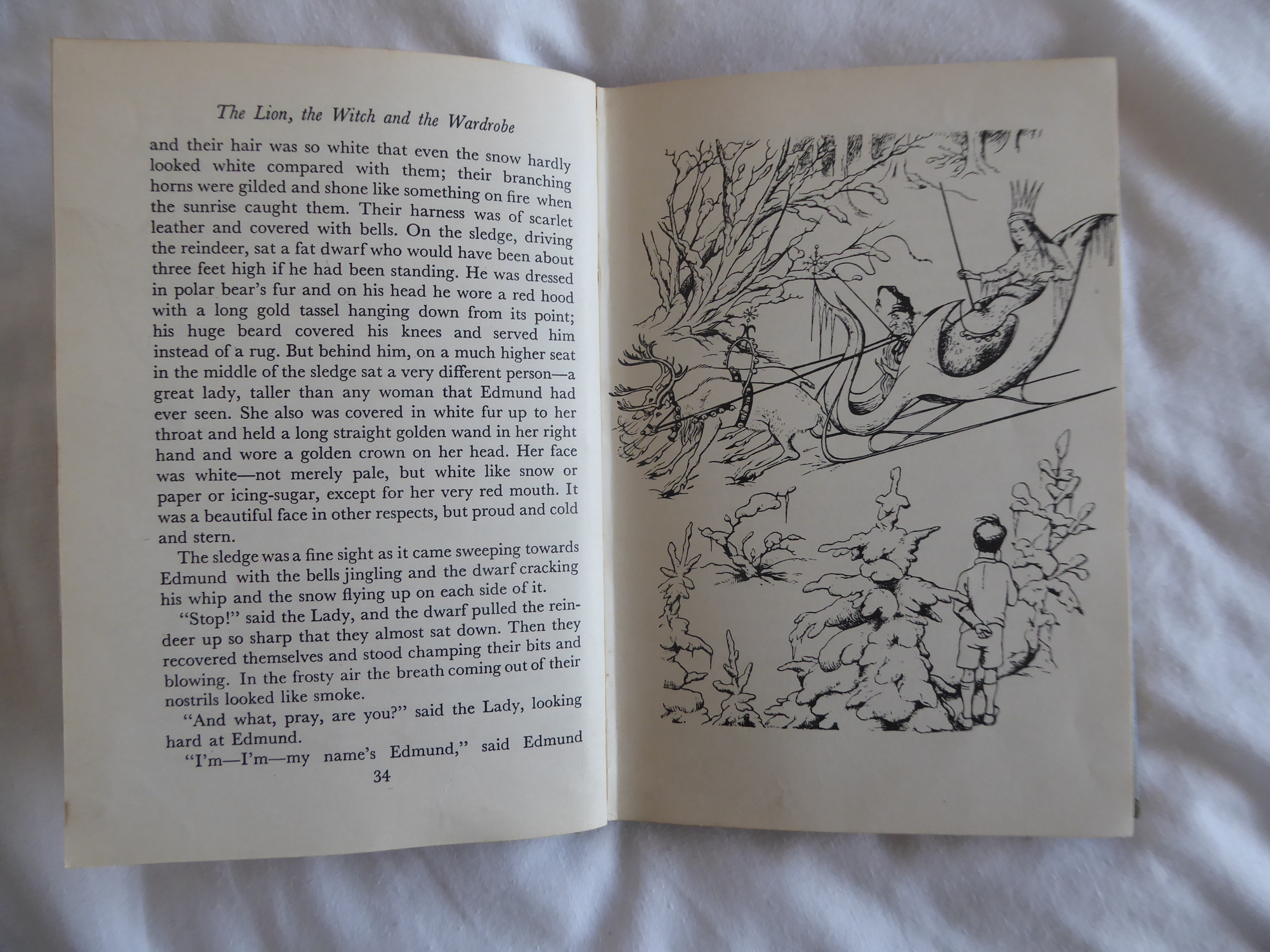
I have described before how I became fixated on some books after hearing them read on the radio [The Lion, the Witch and the Wardrobe was one]. As a child, along with my two brothers we read weekly comics and were familiar with the characters in ‘Beano’, ‘Dandy’ etc. We couldn’t imagine a weekend without Dennis the Menace or Minnie the Minx.

Offspring 1 and 2 loved books, although Offspring 2 [female] was the more voracious, famously in our family history for being fleeced by Offspring 1 [male] 20 pence each time she wished to borrow a book from his shelves. I was never sure whether to be horrified at the cavalier treatment of his younger sister or impressed by his early entrepreneurial skills…

Research shows that women read far more fiction than men and that the fiction that this minority of men do read is mainly by male writers. Do those men who dislike fiction feel it to be less valuable in some way? Or is it less manly to waste time in such a frivolous pastime as fiction? Myself I believe there is as much to be learned from reading [good] fiction as anything else.

I know for sure there are men’s book clubs out there, although few and far between. My own book club is all female. When we meet up [large enough in number for it to be tricky to get a word in!] it must seem daunting to other users of the hotel bar we inhabit. Our chatter is animated, enthusiastic, argumentative, often rowdy in the way that all female groups can be. The discussion ranges from what we’ve read to politics, relationships, childhood, environment, psychology and everything in between but is never dull. There is no ‘ban’ on male members, but I wonder how the dynamic would change if there were some?

In the meantime I have a good book to get on with. It’s ‘Where the Crawdads Sing’ by Delia Owens [soon to be released as a movie].

P1080887

How was it for You?

January is my least favourite month-cold, dark and seemingly interminable. Many like to begin the month with a party. Here’s a story I wrote years ago about a New Year’s party that did not go according to plan…

The Rescue Party
Brian Meadon peers out into the darkness and is forced to admit a grudging fascination for the way the snowflakes are looming out of the sky and settling in an ominous and ever growing heap on his car’s windscreen. His initial feelings of hot anger and frustration with the car’s failings have ebbed away to be replaced with somewhat colder resignation. There is still just enough light outside to make out the writing on a road sign beyond his lay-by. ‘Stoodley Interchange’, it asserts, taunting Brian with confident superiority, even though accumulations of snow are creeping up its legs.
Settling back into his driving seat once more, Brian decides to give his phone another go. He is pleased with the way he’d remembered to charge up the battery, a task he’d frequently been accused of neglecting by his ex-wife. This small celebration of competence affords him a slight, smug smile until yet again ‘no signal’ appears on the screen in an impudent gesture almost as if it were conspiring with the road sign to humiliate him. At least the phone’s tiny screen casts a little light.
Brian shivers. He attempts to recall the advice being provided by experts on this morning’s Beeb’s news programme but it had been burbling away as a background to packing. If he’d not been carried away with optimistic anticipation of the evening revelries he might have paid more close attention to the weather warnings and in particular to dire predictions concerning road travel. What was one meant to do? Firstly, you should not travel at all unless your journey is absolutely vital. ‘Well’, thinks Brian, ‘It is vital to my wellbeing to have a bit of fun, so I’ve covered that one’. Secondly, you should ensure that loved ones know your whereabouts and your travel plans. Brian feels uneasy about this one, since although he has made Jackie, his ex aware that he has been invited to a ‘country house New Year festivity’ somewhere in Berkshire he had not been motivated so much by a need for self preservation, more a desire to demonstrate what a popular, well-connected and upwardly mobile fellow he has become since they split up. ‘Neither is she a loved one!’ he speaks aloud into the silent phone. He has not brought a shovel or a torch, but these would be of no assistance as the car is going nowhere, snow or not. A flask of coffee, however and a warm blanket, he has to admit, would have been very welcome by now.
An exploratory foray into his overnight bag yields little of any use to Brian except for a towel, which he drapes around his shoulders like a cape. He has also brought some pajamas which, whilst the additional layer would be beneficial, he feels reluctant to don in case of rescue. After deliberating he decides to bear them in mind as emergency clothing supplies. His feet are by far the most pressing problem, having become totally numb inside his shoes so that he compelled to scrunch his toes up periodically in attempt to regain some feeling. Should he, perhaps break into the bottle of wine he brought along as a contribution to the New Year do? He thinks not, for now; best to keep something in reserve in case, Heaven forbid, the situation worsens.
Another glance at the phone reveals the time to be 8.57pm, and forty five minutes since the last vehicle passed by. Brian realizes with a grimace that his careful calculation of timing in order to arrive not too early and not too late will now be academic. His arrival will now be, at best, late. What will the reception be like if, and when, he arrives? Misgivings flutter through his digestive system like tipsy hens and peck away at his confidence. Rob and Shelley are people he met almost a year ago and spent one week with, when comradeship was enhanced by the thrills and spills of the ski slopes. But they were charming, friendly and fun, seemed to really like having him around, have kept up with emails. The invitation had been issued with genuine warmth and re-issued as a result of his last email enquiry as to whether the party was going ahead.
Brian decides that he can utilize more of his clothing resources if he curls up on the rear seat. The time has come to employ the services of his pajamas-which he acknowledges he only brought as an afterthought, thus freeing up his towel as a foot-wrapping. The achievement of all this takes some time and energy, resulting in the opening of the wine, thankfully of the screw topped variety. He lifts his head up enough to swallow a mouthful and then shudders as a yawn escapes him. He wonders what is happening at the party now and imagines he is there, glass in hand, chatting up a woman, asking her to dance, getting close, feeling the rhythm, moving his feet, becoming warm, hot, sweating, thumping.
Thumping! Brian starts awake, wild eyed, dropping the wine bottle into his overnight bag, an intense, dazzling light in his face and an urgent thumping on the window. ‘Just a minute!’ he tries to shout, managing a feeble croak. He fumbles with frozen fingers to open the rear door which eventually opens with a gasping crack, having been yanked from the outside. A large, unearthly figure swathed in black is bending in to scrutinize him, playing a flashlight over the interior of the car. For a fleeting, delirious moment Brian believes he has expired; that this horrific apparition has materialized in the afterlife to exact retribution for his earthly sins.
“Good evening sir. Are you alright?”
Speechless, Brian feels an ignominious, hot welling of tears behind his eyes as he struggles to get a grip on his emotions at being found. Minutes later he is sitting in the police land rover clutching a hot cup of tea while the officer calls the AA number he has given him.
“Rescue vehicle is on its way sir,” the policeman tells him. The dashboard clock is showing 10.48pm. Flooded with a surge of optimism, Brian grasps that he has not missed the entire party, because it is a New Year’s celebration, and the nature of New Year’s parties is to extend up to, and indeed well beyond midnight. He pictures himself arriving at Rob and Shelley’s, hearing raucous laughter and the thudding beat of loud music, windows all lit and pulsating figures gyrating within. He will apologize for his lateness, explain his predicament, present the remnants of the wine, be hailed as a hero, exclaimed over, pressed with drinks and nibbles, surrounded by sympathetic, admiring women.
Whilst it takes longer than Brian has anticipated for the AA man to attach the defective car to the breakdown truck he calculates that he will still get to the party in plenty of time.
“Are you sure you wouldn’t rather go home sir? You won’t be the only person not attending, I’m sure, then there’s the car. You’ll have that to deal with. How will you get it back?”
“No! These friends of mine, they’re almost family! They’ll be disappointed if I don’t turn up, and Rob’ll help with the car tomorrow. He knows loads about electrics.”
“How about calling them, though, sir? Just to be sure?”
“I doubt if they’d hear it!” Brian chuckles. “No, let’s just carry on and get there. It’ll be fine.”
They lapse into a silence burdened with the AA man’s skepticism.
It is 11.52pm when they pull in to the entrance to the lane leading to ‘The Orchard’.
“I’m going to have to leave the car here, sir. I don’t want to be going up there and not be able to maneuver or turn the rig round.”
“No problem! We can sort it out tomorrow. As I said, Rob will know what to do.”
Once the offending car has been detached from the truck the AA man is as eager for departure as Brian is for merriment. Brian pumps his hand, more in a desire for him to disappear than in gratitude, staying only briefly to wave as the truck rumbles away. Having stuffed his pajamas back into the overnight bag he sets off round the bend towards ‘The Orchard’.
It has stopped snowing. Against the inky sky there is the silhouette of a house, but as yet no sound or hint of light. He walks on to find a gate, more easily visible now that his eyes are accustomed to darkness, unlatches it and continues up a path to the front door. He stops to listen, straining to hear a hint of music or a voice, gazing at the windows for some chink of light, any sign of activity or, as a frisson of anxiety begins to insinuate itself, an indication of occupation. There is a small click. Brian is instantly illuminated by the security light, setting off a tirade of furious yapping from the bowels of the house. ‘Strange’, he muses ‘that they never mentioned owning a dog’. He procrastinates on the doorstep in a doldrum of indecision. It is clear even to him that there is no party taking place. The unnerving idea that this may be the wrong house fills him with dread, since he has waved off the kindly AA man to whom he’d exaggerated the description of his acquaintances as ‘almost family’. It is now twelve twenty one am and he is freezing.
Faced with the choice of once more donning his pajamas and towel and sleeping on the back seat of his car or rousing the inhabitants of this house, whoever they may be, Brian opts for throwing himself on the mercy of the householders even if they are strangers. At the sound of the doorbell the yapping acquires new vigor and he feels both anxious and relieved as an interior light is switched on and he hears a muffled voice. There is a momentary hiatus while locks and chain are undone then the door is opened a little to reveal part of a pajama-clad body topped by a pale, wary face. The face speaks.
“Yes?”
Brian feels weak with gratitude to some unformulated source that it is Rob who has answered the door, albeit not the party-animal Rob he’d envisioned, the ‘life-and-soul’ Rob of the pistes. Nevertheless this suspicious, guarded individual is recognizable as Rob.
“Hello Rob. Happy New Year!”
He proffers the half bottle of wine, affecting a merry grin in the hope that his teeth are not chattering too much. The distrustful figure in the doorway peers further out at him, blinking until recognition dawns.
“Oh it’s um..”
“Brian. From skiing! You know. Last February”
“Brian. Yes. Brian. From skiing.”
There is an interval during which Brian lowers the wine bottle to his side and Rob continues to stand in the small gap he has allowed between the door and the frame and contemplate the visitor. Somewhere in the background the yapping continues apace.
“What did you want Brian?”
Brian swallows. His lips have become dry and numb, his voice a timorous squeak.
“The party. The New Year’s do.”
“Party?” Rob’s eyes widen as he stares at him. The moment is interrupted by a woman’s voice.
“What’s going on? Who is it Rob?” and Shelley appears, swathed in a white toweling bathrobe and a bewildered expression. Rob half turns to speak over his shoulder.
“It’s Brian. From skiing. He’s come for a party, apparently.”
It is Shelley’s turn to squint at him, looking closely from behind Rob’s shoulder. Brian dangles the wine bottle, nervous snicker hovering on his lips. Shelley appears to rally, declaring,
“Well we can’t all stand here letting cold into the house. You’d better come in, er, Brian.”
He steps over the threshold, still clutching the wine bottle and continuing to sport what he hopes is his most affable and charming smile despite the ambiguous welcome.
“I seem to have got you up, don’t I? Was the party cancelled at the last minute? Only I’ve got a slight problem with my car. The recovery vehicle has had to leave it at the end of your driveway. I can probably get it moved tomorrow. Do you think there’ll be any taxis tonight?”
Their confused frowns lead him to pause as he glances from one to the other.

Fifteen minutes later he is plumping up a cushion on the sofa in their lounge and unzipping the side of a threadbare sleeping bag that is most likely a relic of Rob’s past travels. At last the dog has lapsed into merciful silence. He takes a sip of the tea he’s been given and moves stealthily to the living room door, the better to hear what is being shouted in the kitchen.
“What the Hell were you playing at, inviting that bloke here?” Rob’s anger has broken out now that he is no longer in the room with Brian.
“We were all pissed, Rob, if you recall and we came up with the idea of getting together at New Year. He wasn’t asked specifically. He was just there. He was always hanging around. Don’t you remember? We couldn’t shake him off; odious little man! We must have overlooked him when we decided to cancel.”
Brian listens in for a few more minutes until the recriminations and accusations begin to be repeated, then he pads quietly back to the sofa to insinuate himself into the moth-eaten sleeping bag. He lifts the remnants of the wine to his lips, whispering ‘Happy New Year’ before knocking it back in two mouthfuls. In the morning he will have to phone up and get his car taken home and with luck, scrounge a lift for himself. Once he is home he will ring Jackie. If she is feeling magnanimous he might get invited round there, especially if he says he’d like to see the kids on New Year’s Day. She might ask about the party. He will tell her all the details. How the champagne flowed like water, the house was a mansion lavishly decked out, the women gorgeous. He will name drop a few minor celebrities and hints about not sleeping alone. Yes. She will be impressed. The bickering voices seem further away now. Brian sighs. The bottle slips from his hand on to the carpet where it leaves a blood red dribble. A gentle snore escapes him. ‘Happy New Year’. Well it didn’t turn out so bad.

Fiction Month. Extract 4.

      In this, the last extract of my new novel, ’til It’s Gone’, a sea captain, Hooper is taking the undercover researcher, Uzza to the poisoned ‘Wasteland’ to research a disease. During the voyage Hooper becomes fascinated by the sight of Uzza writing with pen and paper…

After dinner Hooper went up on deck to check that the mast and rigging were secure and to scan the horizon and coast manually, a task which instrumentation had replaced but which she continued to undertake herself as a safety measure. When she returned Uzza was again writing in a small book, an activity which fascinated the mariner as she had seldom seen anyone using a pen and paper except in footage from history lessons as a child.
“Why do you write” she asked her passenger, “when technology has replaced manual writing?”
Uzza finished the line she was writing and looked up. “Our ancestors would consider it a paradox, but paper has become the means of messaging that is most secret. Since communication became restricted to PAM, broadcast, V-meet and voice-technology there is no other secure way to record data, observations and conversation. Think about it. Surveillance has increased beyond calculation in our lifetimes. Here at sea we can perhaps enjoy a relative degree of privacy where a signal may not reach but on inhabited land there is no such luxury. Life for most is lived under a scrutiny so ubiquitous it is akin to living under a microscope. Paper can only be seen by the person who has it. Paper can be destroyed.”
“Where did you learn it?”
“I taught myself to write from watching history footage. It is not so difficult, although of course it is laborious in comparison to voice recording!” She bent her head to the notebook, signalling an end to the conversation and continued to make lines of marks on the paper with her pen.

In another day they were far enough north to need to make preparations for disembarkation. Hooper stood Fulmar out from the shore, far enough to be free of the poison zone but near enough to be able to get Uzza dressed and masked for her expedition. She would need to don the protective gear and wait outside while the yacht pulled in. Hooper explained how she would stand Fulmar as close as possible to the remains of the jetty using the small bio-motor, giving the woman as much of a chance as she could to step up on to it.
“But it has not been maintained” she advised her, “So you must be very careful to tread on the firmest parts. If you fall into the water it will be certain death and I cannot save you. The water will poison you in minutes, your skin, your lungs, your…”
“Yes, yes I realise, thank you.” Uzza frowned in irritation, anxious to be getting on with her project. She had a small bag containing vials which she intended to use to collect samples. She peered out at the shoreline. “What is that, Hooper? Is a factory of some kind?” She pointed to an enormous structure consisting of once tall, grey chimneys, crumbling warehouses and the skeletal remains of high scaffolding.
“It is the ruins of an old fossil fuel processing plant” she told her. “They used to call them refineries. The oil would be piped from the wells across the land to the coast then prepared for use before being shipped on flat vessels they called tankers, which then used vast quantities of the fuel to transport it. It seems a nonsensical process to us now, but it was all they knew.

This is the final sample of ‘Til It’s Gone’. Any feedback comments are appreciated. Updates on publication will be posted on ‘Anecdotage’. [Normal service resumes next week!]

Fiction Month. Novel Extract 3

  In Extract Three of my new novel, ‘Til It’s Gone’ Grandfather, Hugh Conway has opted for travel to the solar fields of the African desert rather than euthanasia. He has forged a bond with Ahmed, the African superintendant of the scheme. Here, Ahmed takes Hugh to visit the solar fields and they discuss the state of the world as they travel:
Ahmed was taking Hugh out to visit a solar farm, a two-hour journey by solar powered vehicle across the desert. It was strange, Hugh considered that the desert he’d first seen and thought so uninteresting, so devoid of features he now realised was as varied and fascinating as any landscape in the world. The vista changed from rocky outcrops in myriad colours sprouting from undulating sands to boulder-strewn plains stretching to the horizon, or sumptuous, curving dunes, silky smooth at a distance, the sand shifting visibly on occasions.
Ahmed was a comfortable travel companion, sensing when Hugh needed silence to appreciate the sights and occupying him with conversation or information when time lagged. The two had become friends, finding they had much in common despite their disparate cultures. Hugh felt fortunate to have been accommodated in Ahmed’s own village and whilst the other two elders, Anders and Peter, were pleasant enough he enjoyed the challenging discussions he had when Ahmed dropped by for tea or when they sat together at the edge of the village to watch the sunset-an event he never tired of seeing.
To an extent he was embarrassed, that he was learning more than he was imparting, though when he expressed this his friend disagreed.
“No, no, no my friend! There is no real distinction between teaching and learning. They are two points on the same circle, are they not? What better way to learn than to teach? And what better way to teach than to be constantly striving for understanding?” Ahmed was an optimist by nature as well as by religion. He challenged Hugh’s view of the world as doomed.
“Why would you think this?” he demanded, “Since the beginning of mankind people have adapted, learned, made the best of what they had. This is why mankind has endured. And to be adaptable is to be optimistic. When your road is blocked you try another pathway. When he needed to eat and feed his family ancient man-made tools to make it easier and learned how to grow food. When he was cold, he began to make clothes. Other ancient species did not survive. Perhaps they could not adapt or were not optimistic enough to try!”
Hugh protested. “But the poisoning and exploitation of Earth’s resources has itself been wrought by mankind. He has orchestrated his own downfall!”
Ahmed shook his head. “Not so, friend Hugh. It is a mere chapter in our history. Men will put the poison to some use, will find alternative resources. It happens already! What did you have too much of, back in your homeland? What was a surplus, a problem to be eradicated?”
Hugh did not hesitate. “Water! Water rising and water falling. Too much, always. Leeching the land of nutrients and forcing people from their homes.”
His friend nodded. “And yet here, as you see we have none of our own at all. We could equally say our problem is sun. We have too much. This is a paradox, is it not?” He laughed, throwing his head back at the clear blue sky. “Between us we have found the solution, your people and mine. We provide your power. You provide our water. Perfect, is it not?”
Hugh grimaced. “It isn’t much of a deal. Our water is poisoned with acid. Even rainwater can no longer be used untreated for irrigation or anything else. Then we create more pollution cleansing it for our own use.”
“Hugh! See here, we have no shortage of a power source. It never fails. And it is all we need to purify your water. You pipe it over. We clean it. Problem solved.”
When they were within half an hour of the solar farm Hugh was given a visor to wear to avoid glare damage to his eyes, his protest about deteriorating eyesight overruled. “No, no-we have use of your eyes my friend.”
In the distance a pinpoint of white light hovered near the horizon, expanding as they drew nearer. The extent of the solar field took his breath away. It was vast, stretching across the desert and disappearing into the earth’s curve; a silent, recumbent country of plates, as if the entire desert had been tiled over. It was unfenced, unguarded, unpatrolled. Ahmed shrugged. “The desert is its own defence,” he explained.
They travelled down a passageway between the plates, like the corridors between the polytunnels at Earthsend, until they came to some low, white buildings in the same style as his village house. A single, modest sign by the road was all there was to say that it was the property of SOL, the energy giant.
Ahmed turned to Hugh as they drove past the sign and pulled up outside the building. “Did you know, Hugh that SOL now owns and runs installations in the deserts of America, Australia and Europe? It is a powerful world force. I wonder what our African predecessors would think of that? Only a hundred years ago the African continent was on its knees, begging the rest of the world for help. It was decimated by corruption, wars, misguided ideology, famine, cruelty. Now it has become a world energy superpower, looked up to by everyone.”
Hugh experienced a wave of despondency, as if a heavy weight had been hung around his neck. He’d expected to freed of concepts such as ‘energy superpowers’ by relocating here. It was a land of purity, of high ideals; an egalitarian society that valued individuals and revered the elderly, wasn’t it?…

Further extracts from ‘Til It’s Gone’ can be read in this November’s posts. Comments and feedback will be much appreciated. Thank you in anticipation…

Fiction Month: Extract 2

In this second extract from new novel, ‘Til It’s Gone’, food producer Joshua Conway and his employee, Farlow are watching a protest march as they wait to store their cargo in a warehouse on the quayside. As they watch they discuss their precarious situation in the light of recent developments in politics and the merging of large power corporations:

Joshua
Josh turned the engine off. There was no point in wasting valuable fuel. From their place in the queue on the Pontoon Road he and Farlow watched the gathering crowd of protesters as they milled about by the waterside brandishing banners and chanting, hoods up against the relentless, blustery rain.
“What are they saying this time?”
Farlow lifted the magnifiers to peer out of the side window through the small rivulets forming on the glass.
“It’s the usual issues, I think-food prices, fuel prices, flooding, homelessness. I suppose the coming election will have stirred up more unrest. A lot of people who wouldn’t have been interested in politics twenty years ago realise what’s at stake now, so they can’t afford to be apathetic.”
On the periphery of the crowd there was a modest but significant police presence. Farlow continued to scan the quayside, panning round with the magnifiers.
“Josh, what’s going to happen if Power Alliance gets a majority this time?”
Joshua rubbed his eyes. He felt stretched from lack of sleep. He shook his head.
“We can’t know what they’ll do, but it won’t be good for us, that’s for sure. Berenson’s hinting about takeovers; starting to get impatient now that I’ve made it clear I’m not interested in selling up. He may know more than he lets on. Once Power Alliance gets into government there’ll be nothing to prevent a monopoly of all the industries. Food, recycling, water, transport, construction, even media will belong to them.”
“How can they do that? How can they take businesses and livelihoods from people?”
“It isn’t without precedent, Far. Throughout history there were revolutions and dictatorships all over the world. In Russia, back in the twentieth century the regime was overthrown and the owned lands were redistributed.
Thing is, the way the fuel prices are going we will have to think seriously about how we can continue to run independently anyway. It would be different if there was another provider, but there isn’t. Greenergy have bio-fuel all sown up. Berenson knows that when the price of running the tunnels becomes too much, we’ll have no option.”
The younger man lowered the magnifiers as a gust of wind rocked the vehicle and splattered the windscreen with a squally burst of rain.
“Suppose that happens. What will we do?”
Joshua placed a large, calloused hand on his companion’s shoulder, recognising the fear in him, a man with responsibilities now; a wife and a small baby to care for.
“Oh, I don’t doubt they’ll keep us on as managers. We are very good at our job so it wouldn’t be worth replacing us. But they would probably put a lot more security in and tighten up regulations, inspections and so on. We wouldn’t be working for ourselves any longer.”

Soon after this conversation, a catastrophic event occurs at the Conways’ farm…


Fiction Month. Extract 1

If it’s November it’s Fiction Month on ‘Anecdotage’. This is the time I usually post short, new fiction stories. In a departure from short stories, however this year I’m posting some extracts from my new novel, ‘Til It’s Gone’, a work of speculative fiction telling the tale of a late 21st century Welsh farming family battling climate change, economic difficulties, sinister takeovers and a brutal killing within the boundaries of their property. This week’s post is part of the prologue…

                                                                         The Kill
The storm gathers for four days before keeping its promise, loosening a cacophony of thunder and howling winds and a deluge.
In the chaos, vessels buck and rage against their moorings. Dwellings shudder and creak in their weaknesses. People stay in, cowering, sheltering, whatever damage ensues. The hillside above the village becomes a furious torrent; a tumbling waterfall then a landslide as the soil gives way and a gushing brown channel of mud races down carrying soil, rocks, roots and debris.
In the sky intermittent flashes expose the silhouettes of the towering turbines across the hilltop, skeletal against jagged forks of lightning. Along the tunnels, tattered edges of white plastic flap like so much unruly laundry, beginning with a border here, a corner there then ripping in abandoned strips. Wind and water race into the gaping chasms they’ve made, desecrating all inside.
A tall eye on a stalk swivels in a slow revolution, water cascading from its top as it detects warmth and movement. A figure darts into view, swathed in a cape and hood, head first bent then upturned, reaching up to catch a flap of torn fabric, grasping, pinning down.
Below, in the darkness and the ferment an unlit vehicle approaches, creeping its way up along the track, lashed by the driving volley, buffeted by the cyclonic gusts and beset by loose rocks hurling themselves against its sides and beneath the sturdy, all-terrain wheels, two pale faces inside leaning forwards, straining for a view of the upward track as it curls around the hill, black water streaming across their route before hurtling down towards the river mouth.
Unknowing, the caped figure works on, lashed by the storm, pegging, weighing down, battening as the grey truck draws closer, invisible in the curtains of rain and silent in the screaming wind as it whips and sings around the tunnels.
The truck halts beyond the outer fence, disregarded by the frantic worker. More bolts of lightning split the sky illuminating vast structures shifting, protesting under the onslaught and giving brief insights into the hopelessness of the task; more and more material wrenching free to flap like hapless sails in a shipwreck.
Now the passenger is clambering out, reaching back inside for tools, hunched against the elements, chancing the small pinpoint of a flashlight. A blaze of lightning bursts over the razor wire as he inserts first one clip then another before applying bolt cutters. In a few moments a gap appears wide enough for the truck to pass through.
The caped one has disappeared up along the side of the tube, doing what he can, saving, preserving.
The truck pulls through into the security channel ready for the cutting process to be repeated on the other, inner fence and it rolls through the second breach. The driver emerges, fighting his way to the rear of the vehicle and wrenching the tailgate open before joining his companion. They move quickly into a breach in a tunnel, emerging with cartons, battered, fighting the gusts as they place their booty into the truck bed, returning for more, their arms piled with boxes four high, the shorter, slighter of the two staggering sideways as the bulkier and taller figure grips his arm. He indicates they should move on to the next tunnel as his partner hesitates. He stores his boxes then lifts his hand in protest.

         ‘Enough! Let’s go!’ But the other is off into the neighbouring cavern, reappearing with another load, water coursing down his face and beard. Then in an instant both figures freeze, one laden with cartons, the other by the truck’s open tailgate as the dark shape of a dog appears in front of them, a black shadow outlined by lightning flashes, long head low, sodden fur raised up in a barb of wet spikes along its back. Its ears are flat alongside its head and its open mouth a snarling saw of serrated teeth, white razor points dripping drool, slavering, growl unheard in the screech of the gale.
Bulky makes a gradual half turn to Slight, the indication clear.

          ‘Get in the truck!’

           Slight stands fast. The dog raises its head, mouth open, tensing to spring. Bulky lifts the cartons high and hurls them in the beast’s direction before jumping sideways into the open aperture of the cab. The dog leaps towards him as the door closes on its head, its jaws fastened tight upon Bulky’s arm. He works in a frantic bid to free it, smashing the door repeatedly with his right hand until it withdraws then slamming it shut. One in, one out. Slight still stands amongst the crates, rooted…


I’ll be posting more extracts from ‘Til It’s Gone’ this month. Feedback will be very much appreciated. Thanks in anticipation!

Second Time Around

You know that adage about clouds and silver linings?

One side effect of rain and of confining illness is productivity.

I have been sporadically working on ‘that difficult second novel’ for several years, blocked at times, stuck at times, making excuses, indulging in displacement activity and generally procrastinating. I have taken the almost finished first draft away with me more times than I’ve cared to admit.

When I finished writing the first novel, ‘The Year of Familiar Strangers’

I experienced a euphoria. I had written a book, and not just any book, but one that had rattled around in my head for years, niggling away at the edges of consciousness and invading my dreams. The euphoria that accompanies the completion of a novel lasts until the first rejection letter/email appears, or at the first, coldly polite ‘You’ve written a book? Well done!’ from friends and family.

The finishing of a second novel is tempered by your experience of how your first has been received. There is a satisfaction at having got to the end. There is a wry anticipation of the huge mountain to climb that is editing. There is a reluctance, this time, to confess to having produced another tome.

But alongside all this doubt there is a satisfaction and a steely, stubborn streak of determination to have another go. To this end I’ve bought a new copy of this:

P1070552

Which must be the first, actual, real, paper copy of a book I’ve bought for a number of years [since becoming a Kindle convert]. The Writers’ and Artists’ Yearbook has to be a paper copy in order for scribbling, highlighting, asterisking and tearing out of pages to be undertaken.

When I dip into this writer’s Bible I note that some articles remain from my last copy, as do many of the agents and publishers whose stinging rejections I was handed last time. But there are new, useful chapters. For starters, I’ve learned that my new novel’s genre is known as ‘speculative fiction’. This is useful because I’ve been thinking of it either as science fiction-a genre that appears to be reviled by many agents, judging by their preferences, or as an ‘eco-thriller’; this being a term invented purely by the writer [ie myself] and thus unlikely to score any pints with the publishing business.

Speculative fiction is a genre I’ve been reading for some years, including such novels as the brilliant Margaret Atwood’s ‘The Handmaid’s Tale’, several books by Barbara Kingsolver such as ‘Flight Behaviour’ and most recently, John Lanchester’s ‘The Wall’. ‘The Wall’ is a chilling forecast of what could occur in the not-too-distant future if we in the UK continue to pursue current paths and neglect issues like climate change. When I read examples of speculative fiction I am both encouraged by the ideas-some of which are addressed in my own work, and dismayed at how much better written their novels are.

So it’s back to The Writers’ and Artists’ Yearbook, with my highlighter pen in hand. Because you never know…

February Fiction 2


In Part 2 of ‘Lewis’s Basement Herbs’, Lewis’s mother’s mood becomes relaxed until the two receive an unexpected, early morning visit which is less than welcome…


Lewis’s Basement Herbs

Part 2

He waited for her to tell him to go to his room, to remind him of the ‘no TV’ sanction or to say it was bedtime, but she began to watch the next programme, a sport games show, not her usual choice. He noticed that she was smiling, another unusual event and once or twice she sniggered in an uncharacteristic way. At the end of the programme she turned to him and asked him to fetch a bag of crisps from the kitchen, which he did; one for her and another for himself. She tore into the crisps then requested the biscuit tin, helping herself to at least four, an unprecedented action. She sighed, wrapped her arms around him and kissed him, telling him what a good boy he was. Lewis grinned. The herbs must be making her feel better.
During the course of the next week Lewis sneaked a few more bags from the herb garden box and stashed them in his bedroom. When the tea caddy ran low, he topped it up with the herbal mixture. Life became more relaxed as he bathed in his mother’s benevolence and her tranquil good humour.
It was still dark on a school morning ten days later when Lewis was woken by strong light through his thin curtains, the sound of vehicles down in the road and heavy footsteps running into the building. He looked out of his window to see several police vehicles, their lights blazing and a number of police officers scurrying around, some of whom were accompanied by dogs sniffing the ground and wagging their tails. Soon the sound of their feet was echoing in the corridors and along the narrow balconies of the block and he could hear shouts and the banging of doors. He pulled a hoodie over his pyjamas and went out to the living room just as his mother appeared from her bedroom, wrapped in a voluminous towelling robe. It was five o’clock.
His mother was beginning to speak when their door was hammered by a loud knock and a voice calling, “Police. Open up please!”.
Lewis and his mother exchanged puzzled looks before she went to the door and opened it. A policeman, bulky in a yellow vest, with items hung about his waist and holding a leash attached to a laughing, wagging spaniel stepped into their small living room, filling it.
“I’m sorry to get you up but we have to search each flat I’m afraid.” He looked around. “It won’t take long and we’ll try to leave things as they are.”
Lewis thought he’d like to pat the dog, which looked friendly, but the policeman’s brusque manner was discouraging. The boy’s mother drew herself up into a statuesque stance, arms folded across her stout chest and scowled. “Officer! We are a law-abiding household. You won’t find any drugs in this flat!”
The policeman nodded. “I’m sure you’re right, Madam. But it’s procedure and as I say we’ll be out of here in a minute or two.”
The dog was whining and pulling, tail whipping to and fro like clockwork. They were in the tiny kitchenette in three strides, the woman and the boy following to lean in the doorway while the dog yapped and stood up with paws on the worktop, excitement vibrating through every hair of his curly coat. The officer turned to the woman. “Dog seems to be interested in your containers, Madam.”
Lewis’s Mum frowned at the policeman and pushed her arms higher over her bosom. “I don’t have anything except food in there-sugar, sweeteners, coffee and tea. That is all.”
The Officer withdrew a pair of gloves from his pocket. He took a caddy from the shelf, opened it and looked inside while the dog jumped beside him, barking, whining and wagging. The officer took another tin down, peered in and replaced it. He went for the third. Lewis heard his mother grunt in disapproval then the dog went wild, leaping up at the tin and barking in a frenzy. The lid was removed and the policeman shook it before sniffing the contents. He turned to the woman, tilting the caddy towards her.
“I’ll be taking this tin, Madam. And I’ll have to ask you to accompany me to the station. You might want to get dressed first. I’ll wait out here.” Now that the thrill was over the spaniel lay down on the floor, head between its paws.
Lewis’s mother’s mouth hung open as she stared at the officer. She tried to speak but no words came out. She frowned at Lewis as if begging him to help. After a moment she gathered her wits. “And what about my little boy? I can’t just leave him here you know. He’s only nine years old.”
Lewis licked his lips. He felt hot. He glanced at the policeman then at his mother, then back at the policeman. He cleared his throat, prompting them both to look at him. “Wha…what is in the caddy?” he stammered. The policeman waved the tin at him. “I believe this caddy contains an illegal substance, young man. Do you know anything about it?”
Lewis felt his face grow hot as he studied the laminate flooring. He mumbled, “Herbs-it’s just herbs.”
They were both staring at him now. He could feel their eyes on him, turning him to stone where he stood riveted to a fake knot in the plastic floorboard. “I put some herbs in the tea caddy” he managed to whisper, risking a sideways peek at his mother, who was gawping at him as if he was an alien. The policeman strode back into the living room and spoke into his radio.

Lewis led them down the steps to the basement room. Behind him he could hear the dog wheezing as he strained at the leash, enthusiasm rekindled at the prospect of more discoveries. As the boy reached the bottom of the steps and stood before the door with its frame of light, he felt a sense of loss at this, his own private retreat exposed to others’ eyes. He bent to swivel the numbers and pulled the lock open. The policeman, dog panting at his side, touched his arm. “Alright son, I’ll take it from here” and he reached in front of Lewis to pull the door open then he and the dog went in.
Lewis’s mother fixed him with what he had come to think of as the death-stare. “What” she hissed, “have you done?”

The new house still seems vast. Lewis’s new, bigger bedroom looks out over their small patch of garden and sometimes he just stands at his window smiling. Today he can see his mother sitting out on the patio and he thinks he’ll go down and offer to make her a cup of tea because this always makes her hoot with laughter. Nowadays she calls him her ‘lucky star’ for getting them this new home, away from dangerous gangs and threats, away from graffiti and basement drug manufacture. Once Lewis had convinced the police of his innocence, he and his mother had needed to be whisked away from the flats to avoid reprisals.
He wanders downstairs and outside to the tiny garden, his favourite part of the new house. His mother has sat down again so he perches next to her. “Mum” he says, bestowing on her his most guileless smile, “I’d really like to grow something in our garden, like we do at school. There’s a space at the end by the shed. I know what to do. I can grow some herbs. Please will you let me try? Please?”

I hope you enjoyed reading this 2-parter. Comments, whether you liked the story or not are much appreciated. Normal blogging will resume next Sunday. Thanks for visiting!

February Fiction.

By the time this post is published I will have deserted the gloomy shores of the UK to enjoy some respite from the wintery weather and the wintery political climate in the sunny Caribbean. While the West Indies is a fine and inspirational place for writing my budget does not stretch to the huge sums needed for internet use. Hence the next 2 posts are a BRAND NEW short story, which begins today and concludes with Part 2, next Sunday…


Lewis’s Basement Herbs

Part 1

The first time was spooky. From the top of the last flight down the steps an eerie glow radiated from a line around the metal door and a soft hum throbbed from whatever was inside. Lewis had been both intrigued and nervous as he edged down the last few concrete treads and stood listening, riveted to the soft line of light.
He knew nobody lived down here in the basement because the numbers on the ground floor flats began upstairs where the lift stopped. He’d been subjected to repeated warnings from his mother not to come downstairs to the basement; warnings that whetted his curiosity, seducing him down into the bowels of the block even as she was glancing at the clock in their cramped kitchenette and preparing to summon him to supper.
He wasn’t supposed to wander off, although he was allowed to venture down to the lobby floor and outside to the bleak, graffitied playground as long as there were no teenagers there to intimidate or indoctrinate him. But the play area held few pleasures for Lewis, who was an introverted, solitary child, small for his nine years and not easily able to make new friends. The dark basement with its narrow shaft of light, its smooth concrete walls and gentle hum had a womb-like comfort that soothed him after the rigours of a tumultuous school day and kept him from his mother’s irritable nagging over chores and homework. He began regular descents to what he considered to be his own, private retreat, sometimes bringing his tiny games console or a notebook and pen and after a few visits he’d managed to sneak a small cushion out of the flat to make the concrete step where he sat more comfortable.
One late afternoon he was ensconced on his cushion and engaged in drawing a monster in his notebook when he heard some quick, light footsteps approaching the basement door above him. He closed the notebook, pocketed the pencil and, taking his cushion crept around the corner of the steps into the dark alcove behind them where he crouched, making himself as small as possible while the mouse-like steps pattered down.
A short, slight figure, silhouetted in the shaft of light stood at the metal door fiddling with its padlock, which Lewis already knew to have a combination like the ones on the bikes in the racks at school. The door sighed opened with a rasp, flooding the small space at the base of the steps with white light. Holding his breath, Lewis edged back tight into the shadow but caught a momentary glimpse of the interior before the door was pulled to; what appeared to be a still, silent row of slender, dark structures, their base a glinting, reflective surface like the Christmas decorations in the city centre. He could hear the person inside bustling about and see her-he was sure the figure was female-flitting backwards and forwards across the narrow gap in the doorway. Supposing she was busy on some task, he crept from his corner and across the passageway towards the metal door, where the combination lock lay open. He looked at the barrel of the lock. There was enough light to see the numbers along the shaft opening: 6628.
By the time the girl came out of the room he was back behind the steps, having written the number in his notebook. He watched as she clicked the lock together before pattering back up the stairs and opening the basement door, leaving him once again alone in his den.
Lewis was thrilled. He felt like a detective looking into a mysterious incident, except that no crime was being committed. He was determined to investigate the basement room further but would have to try tomorrow as his grumbling tummy told him his tea must be ready by now. He gauged that the woman would be clear of the ground floor and went up the steps to the lift.
As he exited the basement door a voice assailed him.
“Whoa! What you at, fella?”
Lewis flattened himself against the door as the tall, rangy figure of Desi loomed up against him. Desi was a member of the notorious Bunja gang whose antics terrorised the inhabitants of the block and who Lewis’s mother had instructed him to avoid. Now he was trapped, his mouth dry, his throat constricted as though strangled, unable to utter so much as a squeak. But Desi persisted.
“What you doin’ down there, eh?” The tall youth jerked his head at the closed door behind Lewis and stepped forward so that he squashed the smaller boy, his tobacco breath hot and nauseous.
Lewis made a frantic effort to think of a reason for being in the basement. A lost cat? But tenants were not allowed pets. An errand for his mother? But he couldn’t think of anything. A game? But there were no other kids around. He held his breath.
Across the lobby a voice echoed. “Eh Desi! Time to go! C’mon!”
Desi gave the boy a hard shove against the door before turning and loping off to join his companion and Lewis slumped forward, exhaling with closed eyes as the two Bunja gang members disappeared out of the building.

Next day was Saturday and he was obliged to help out with going to the launderette, tidying his bedroom and accompanying his mother to the shops and back, carrying his share of bags. After tea and washing up he asked if he might go out to play, as it was still light and after some hesitation his mother agreed, although she stipulated that he must be in again by seven thirty.
He was careful to look around before opening the basement door. This time he’d brought a tiny torch he kept in his bedroom. He was breathless as he swivelled the numbers on the barrel into position and breathed out as the barrel unclipped, freeing the padlock, allowing him to grasp the handle and push gently, whereupon he was bathed in the white light of the compact room and stepped in, mouth agape.
The structures in rows were dark green, spiky plants, all the same, their bases encased in silver foil like his mother used for lining the roasting tin. There were bright, white lights directed at the rows and the entire room was warm and damp like the launderette on a busy morning. But the smell was not at all like the launderette. It was fragrant and herb-like. Lewis walked up and down the rows for a few minutes then he realised. Of course! This must be a herb garden. They had one at school in a raised bed outside in the playground; only this one was indoors and this one had only one type of herb, not the mixture they’d grown at school.
He sat down on a box in the corner, enjoying the warmth and the cosy, aromatic atmosphere and forgetting how long he’d been there. At last he remembered he should not stay too long in case the girl came back so stood to leave. He stepped away from the cardboard box he’d been sitting on and looked at it. It was not sealed. He pulled up the flap and peered inside. It was full of small plastic bags containing what looked like tea leaves. He knew about tea leaves because his mother was fussy and refused to buy tea bags, preferring to spoon tea into a pot. After a moment’s hesitation he pocketed one bag, replaced the flap and crept from the room, giving the door a gentle push and locking the combination. He hoped the girl wouldn’t notice that the numbers, when he swivelled them around were different but he guessed she wouldn’t look too closely as long as it was locked.
It was later than he realised. As he ran to the lift he glanced at his watch. It was seven fifty. The lift, when it sank into place contained one person: his mother, coming to look for him.
Lewis was grounded for the next three days. His mother gave him chores and stood over him while he learned spellings and times tables. He was sent to tidy his room each day after school and was denied TV. Seeking to sweeten her up a little, on the third day Lewis offered to make his mum a cup of tea while she watched Coronation Street, a proposal that led to a narrowing of her eyes in suspicion but an acceptance. He filled the kettle and took down the tea caddy. When he glanced into their narrow living-room he could see that she was engrossed in the programme so he withdrew the plastic bag of dried herbs from his pocket and mixed them in with the tea leaves in the caddy, augmenting the amount by about one third. His mother was always moaning about aches and pains. They had learned at school that people used herbs to treat illnesses. Maybe the herbs would help. He took her a cup of tea and sat down next to her while she sipped it and watched her programme…

Check in next Sunday to find out how the ‘herbs’ affected Lewis’s mother and what happened next…