Unknown's avatar

About Grace Lessageing

I am writer of novels, short stories, flash fiction, blogs. I lead a creative writing group. I am an Ex infant teacher, living in Christchurch, Dorset, UK. My brand new novel, The Conways at Earthsend was published on January 28th 2021 can be found on Amazon, Waterstones, Hive and Goodreads and is available in either paperback or e-book versions. You can also read The Year of Familiar Strangers, available as an e-book from Amazon. You can visit my website: janedeans.com or my author page on Facebook: https://www.facebook.com/Jane-Deans-Novellist-Short-Fiction-and-Blog-102757711838272 Happy reading!

The Power and the Story

A chance meeting with neighbours on our site at Felixstowe, who’d recommended a site to us, had sent us scuttling back to the coast at Sizewell. Sizewell was an old fishing village once. Now it is better known for accommodating a notorious nuclear power station, Sizewell ‘A’, now decommissioned and encased in 3 metres of concrete. Sizewell ‘B’ sits next door to this huge, grey, man-made monolith and is sky-blue with a white dome, like a space-age cathedral. On arrival to Sizewell I experienced an irrational frisson of trepidation, perhaps brought on by a recent viewing of the hit series, ‘Chernobyl’.

Sizewell ‘C’ is now on the agenda, unpopular with many, judging by the signs dotted around the surrounding villages.

An extensive wind farm, Greater Gabbard was just about visible on the horizon out to sea. Once we were installed at our site and settled outside the bar, [which overlooks the wild beach], I eavesdropped on a neighbouring conversation in which a woman expressed vitriolic hatred for the wind farm, barely visible even on this clear, sunny evening. To her near left the twin power stations rose up menacingly, compounding the irony of her invective.

But despite the power monsters in their varied forms, this is a wonderfully wild and unspoilt piece of coastline, rich in wildlife. There are extensive marshes, forests and beach habitats. At the entrance to the beach car park a jaunty cafe, ‘Sizewell ‘T”, was doing a roaring trade in chips and ice creams.

It is a popular spot for locals and the touring section of our site was busy with a steady stream of visitors, although the shower blocks are closed.

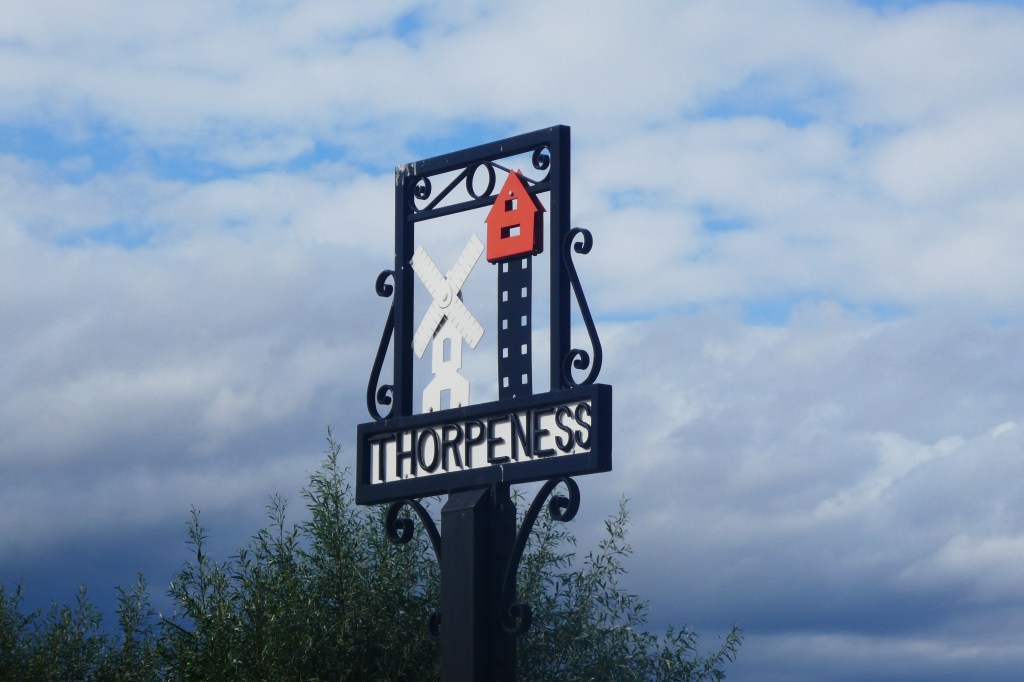
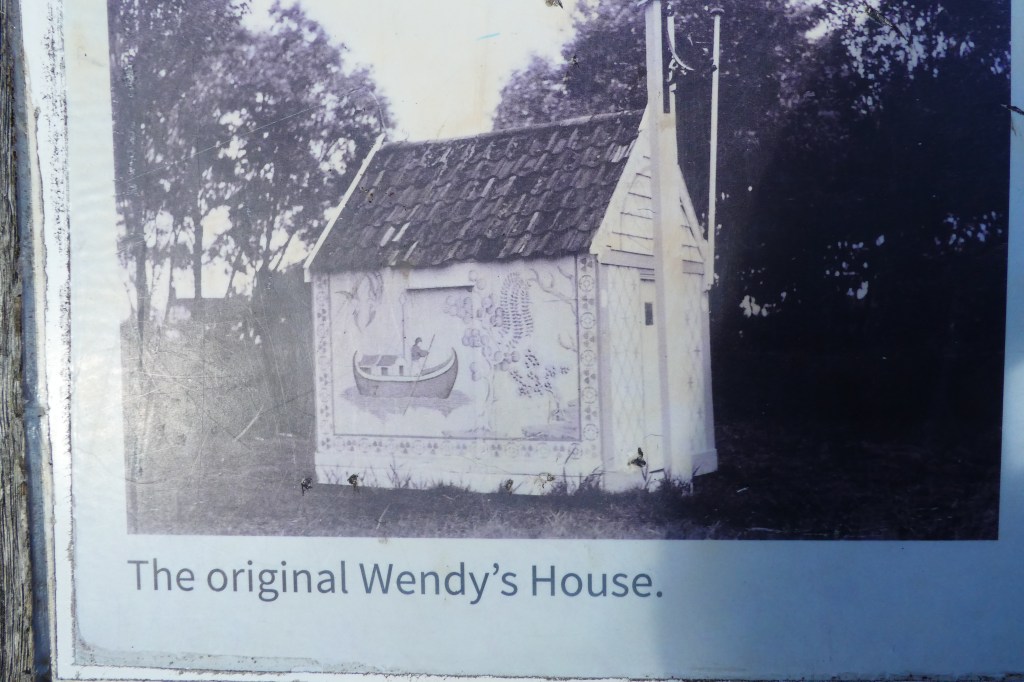
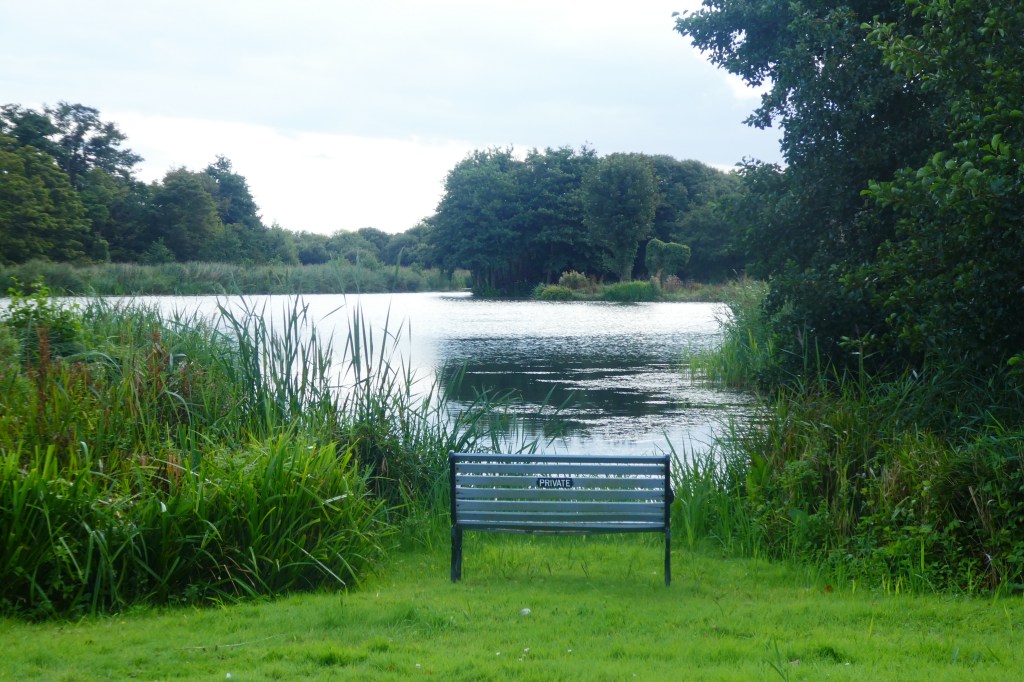
We strode out along the beach, the weather clear and balmy and then down into Thorpeness, a cute, coastal village, thronged with visitors on this sunny afternoon. The village boasts a ‘mere’. Here was the original ‘Wendy’s House’ of J M Barry fame, also an immaculate windmill and the famous ‘house in the clouds’, which can be rented for holiday stays.

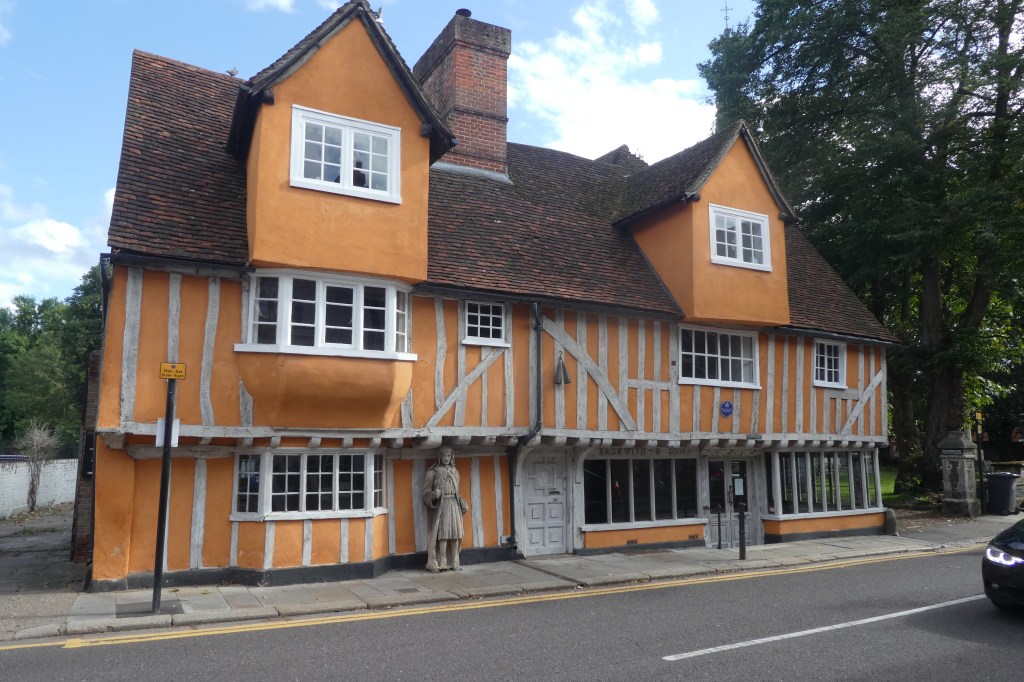
Aldeburgh is supposedly a simple cycle away from our site, though the path morphed from flat tarmac to rutted, sandy track in no time. Again, the town was busy with tourists, too many for the High Street pavements to cope with. It’s a pleasant seafront with fish smokeries and a broad, green swathe on which stands the ‘Moot House’, a half-timbered building housing what must be a tiny museum.

It took longer to queue for the checkouts at Aldeburgh’s High Street co-op than to explore its two or three streets. Provisions were running low and Sizewell is short on grocery stores [there are none].

Next day, with the promise of rain on our last day we cycled again, this time to Dunwich. The route was hilly, a surprise for the knees. Dunwich is a minute village, one street of cottages dominated by a pub/hotel, but with a cafe and kiosk near the beach. There is also a ruined abbey and a museum of sorts. Taking what Husband termed a ‘short cut’ back to our site at Beach view, we found ourselves in the National Trust reserve. ‘Strictly no Admittance without Tickets’ stated the sign as Husband rode through, oblivious. A second turning before the entrance booth took us along a heather lined track. ‘No Horses, no Bikes!!’ proclaimed the sign, which Husband peddled past, heedless. After several wrong turnings we arrived at a ‘kissing gate’ and were obliged to manhandle the bikes through it by up-ending them.

Our last day at Sizewell dawned humid and drizzly. After lunch we walked, taking in the beach and a dripping forest, sweltering in rainwear; and returning to our site for tea and cake.
The Back and Front of Beyond

Kessingland may sound like it’s a theme park, but it’s a sprawling village on the Suffolk coast between Lowestoft and Southwold.

We arrived to our first site, located at the ‘top’ end of the village next to a zoo. i’ve no complaints, but to access the very best part of Kessingland, the bit at the ‘bottom’, by the sea entailed a long, boring walk down a street in which the immaculate allotments provided the only interest. During a wild, windy walk along Kessingland’s unspoilt, shingle beach we discovered another, beachfront site and, feeling a little treacherous for having booked 4 nights at the top end site, we moved.

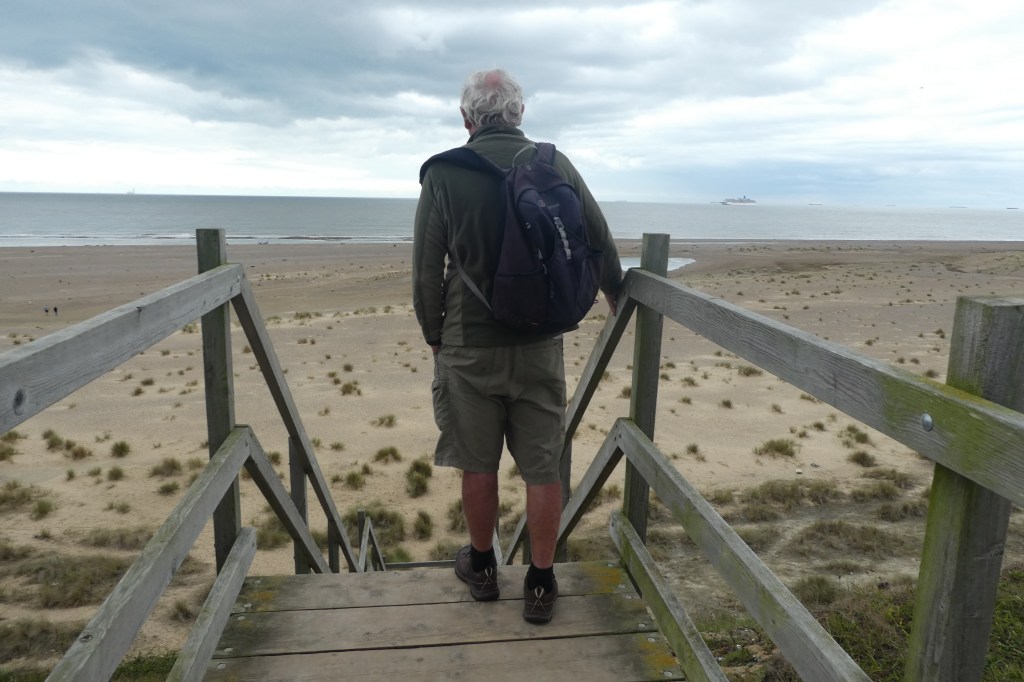
On the new pitch we faced the iron grey North Sea and a wide shingle beach dotted only with clumps of hardy vegetation and a few dog walkers, miniature tankers and container ships making stately progress towards Harwich broke the horizon, lit up like decorations at night.

Kessingland is devoid of massed terraces of gift shops or coffee shops, boasting only 2 pubs and a tiny Tardis of a shop, ‘The Beach Hut’, in which a customer must vacate before another can enter [and this, even before the advent of the dastardly virus!].

Too windy for cycling, we opted for a long walk along the broad beach and dunes, almost to Lowestoft, meeting few others. Back at Kessingland we ‘helped out’ by eating at the pub, ‘The Sailors’ Home’, where the meals are a triumph of economy over gourmet dining.

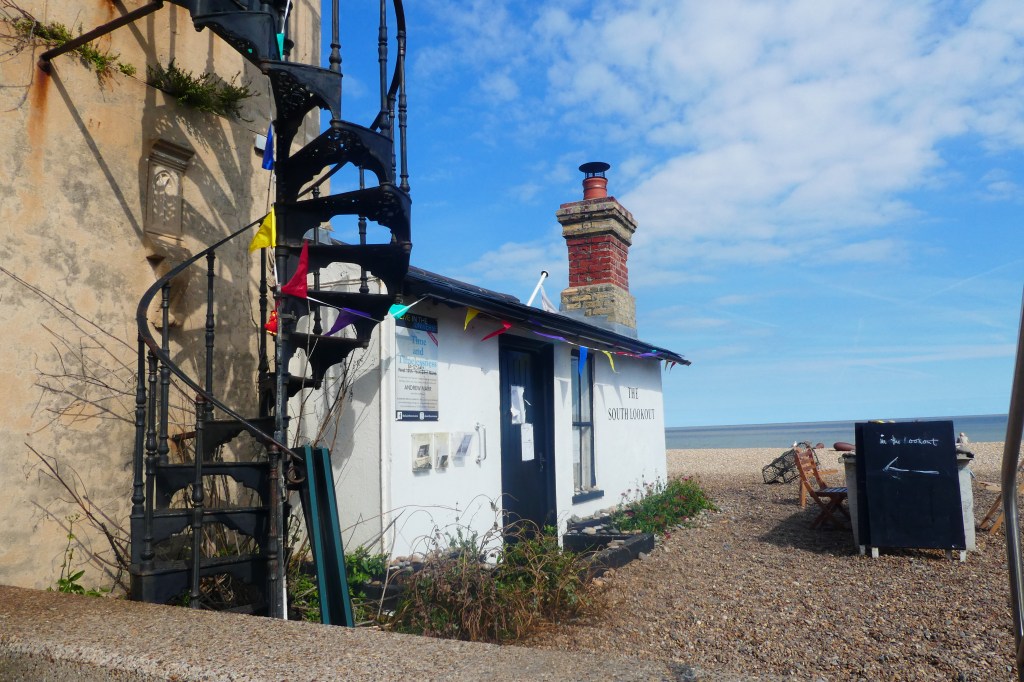
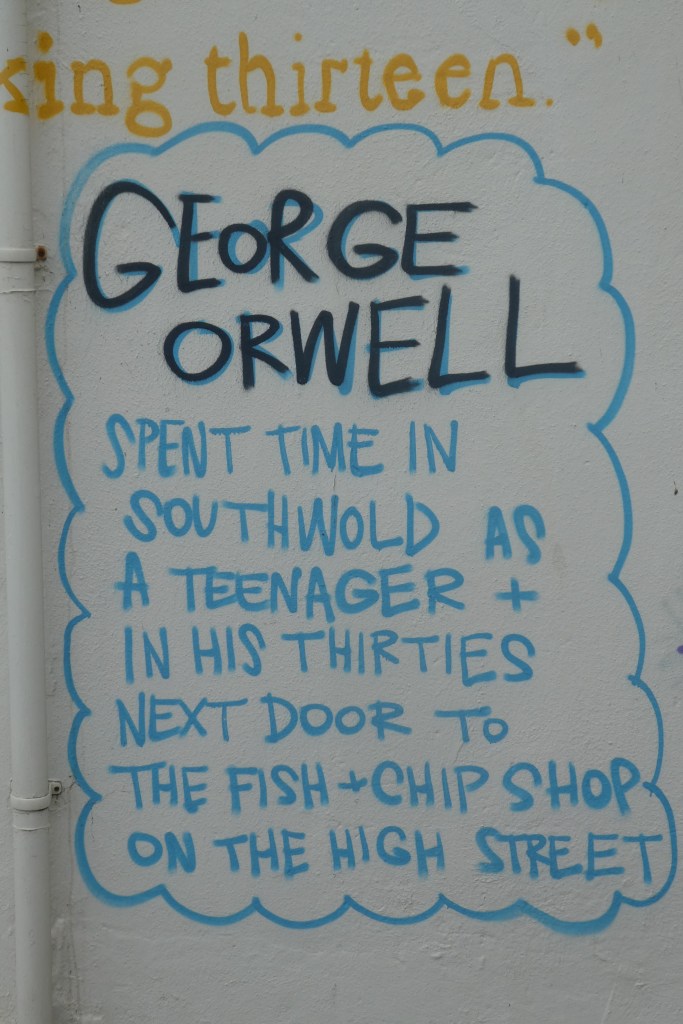
Next day we took a bus into Southwold, Kessingland’s opposite; tourist Mecca, with gifts, galleries, bakeries, coffee shops, a pier, a market, rows of colourful beach huts, amusements and thousands of visitors, few of whom seem able to observe the pedestrian one-way system. There are some tenuous links to George Orwell, a dedication to whom is splattered over a large wall on the pier.

Following our 4 nights in Kessingland, we headed inland, first to Oulton Broad, a large lake and a marginal draw for visitors, although the neglected pleasure boats languishing at their moorings tell a Covid story of their own. Some access to the lake is restricted due to private homes but we could see the old ‘wherries’, flat, barge-like vessels that were once used for freight. In the afternoon we struck off into the marsh, following paths through the reed beds.

Then it was off to our next destination, a pub site in an inland village near Diss, Norfolk. The weather was turning gloomy and rain threatened as we turned into the entrance. Here a few pitches had been carved out of the land behind the pub and a shower shed constructed for the half dozen units. We adopted a ‘beggars can’t be choosers’ mentality as the rain closed in. The pub is clearly in difficulties, offering some meals and entertainment but attracting few revellers.

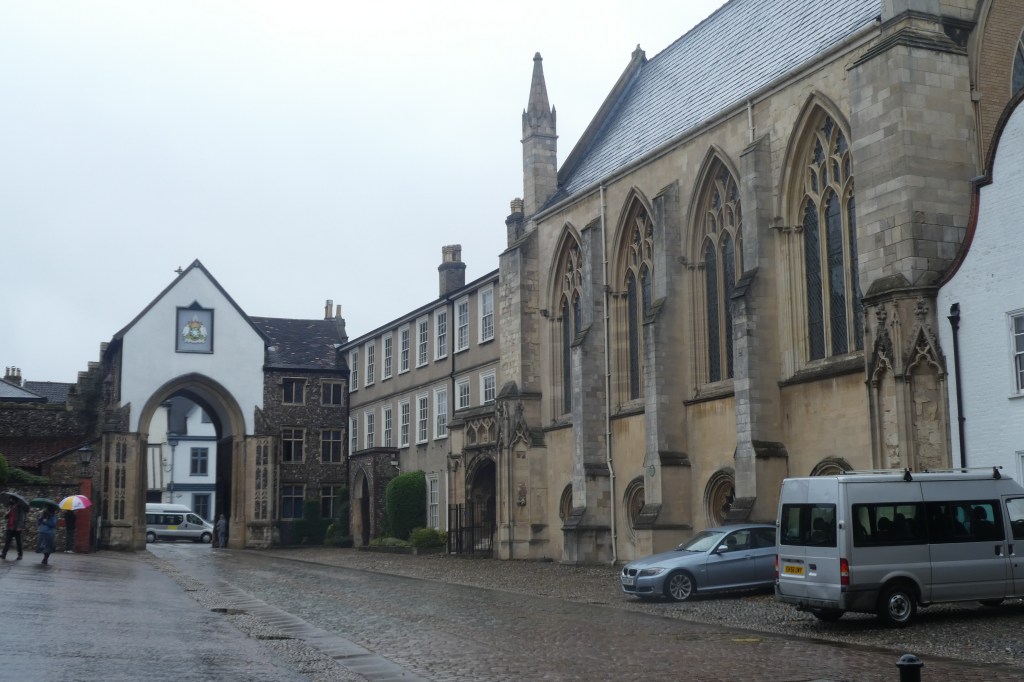
Next day rain was firmly established and we set off to Norwich, using the ‘park and ride’ system and well prepared with raincoats and umbrellas. Norwich is a beautiful and historic city, which compensates, perhaps for some of Norfolk’s less gorgeous attributes. There is a magnificent cathedral, a renowned market, numerous museums [closed], a castle [closed] and ‘the lanes’, a series of narrow, cobbled streets flanked by old buildings. Having met friends for lunch we wandered for as long as we could manage in the rain.

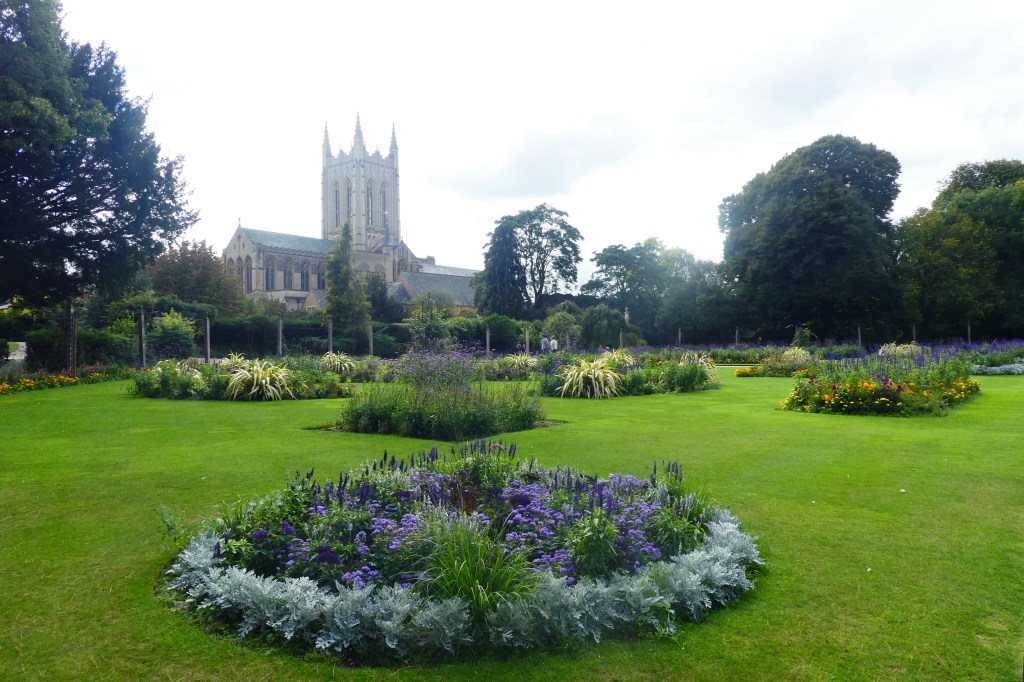
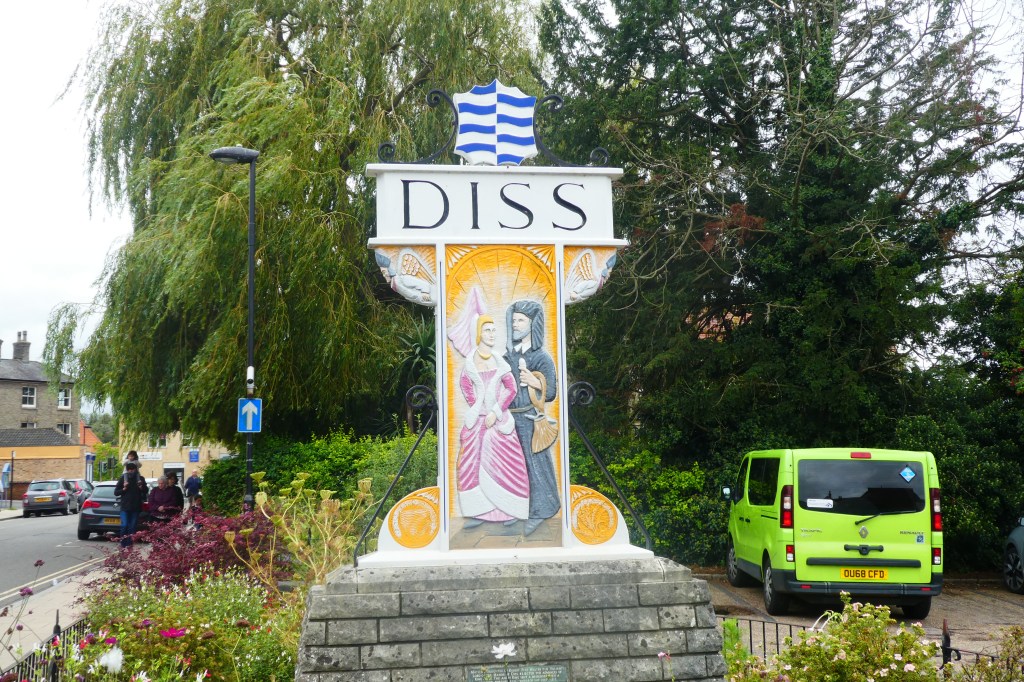
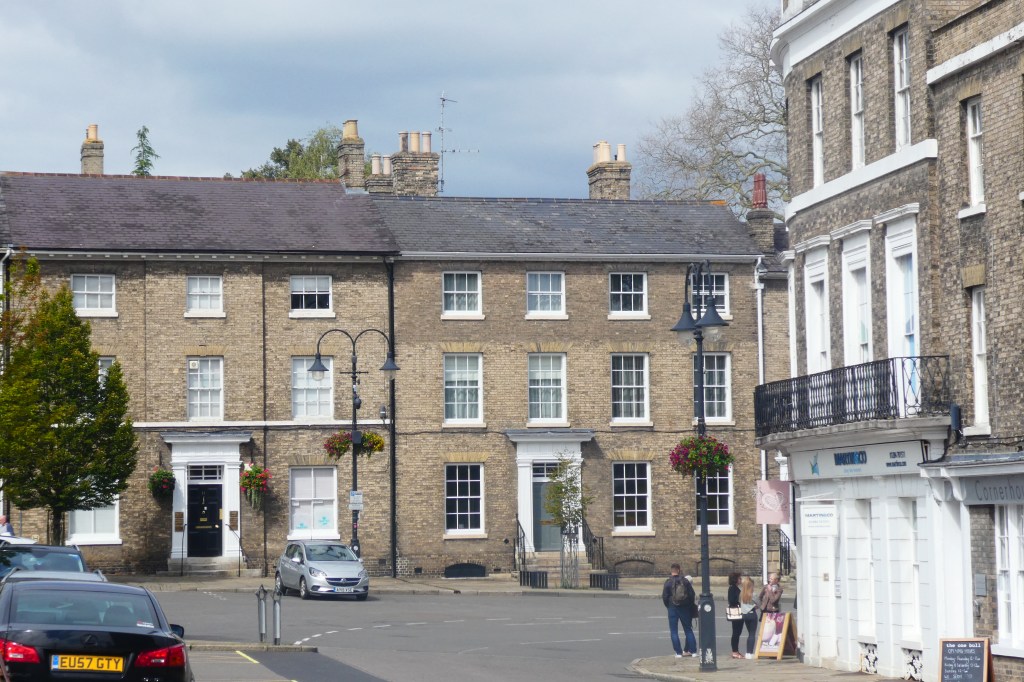
Though dry, the next day was cold and having cast around for a nearby sightseeing tour we decided on Diss and Bury St Edmunds, Diss being a smallish but not unattractive place with a ‘mere’ and Bury St Edmunds a well-to-do town with an abbey and immaculate gardens.

I was not sorry to leave the pub site. We were to head back out to the coast and the sun was shining…

Unknown Territory in our Back Yard

Four years of my childhood were spent in north Norfolk, in the environs of ‘The Wash’, a flat, featureless, agricultural landscape devoid of trees or anything of interest. You would only consider holidaying there if you were an obsessive ‘twitcher’. The Wash has a large population of water and shore-loving birds.

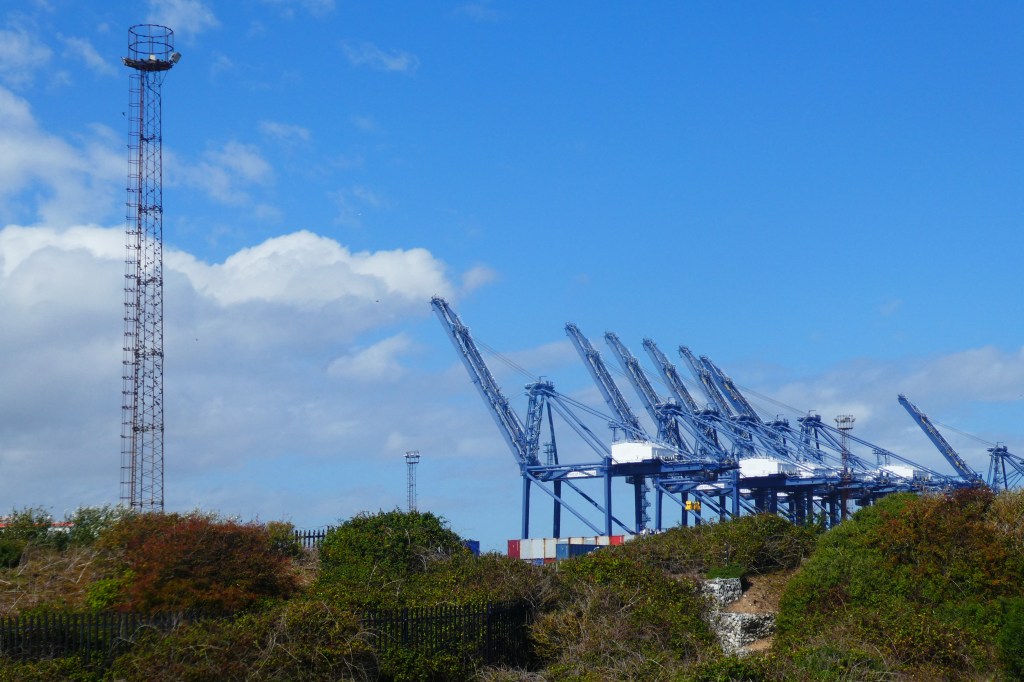
Other than this area, I know little of the area of the UK known as East Anglia, the part that sticks into the North Sea like a rounded carbuncle and boasts the largest container port in the UK, Felixstowe, in Suffolk. The town is also a seaside resort of the traditional British kind, with an abundance of fish and chip shops, ice cream vendors and gaudy amusement arcades. If you look along down along the handsome promenade from the north end, towards the pier you will see the pier head and rows of tall, port pylons rising above it. It makes for an interesting view.

Looking for hitherto unexplored parts of our island we stop at a site here, near enough to hear the cranes grinding and clanging at night as they reach down for each container and hoist it up high on to the impossible stack of the ship that is to transport them somewhere.

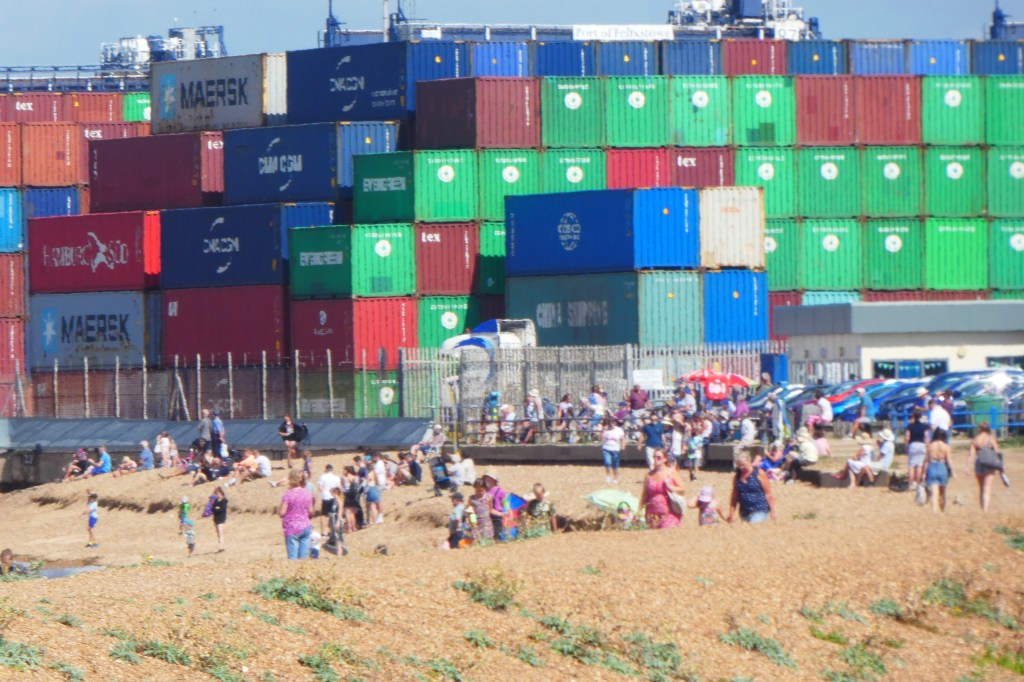
Next day we cycle through the nature reserve on a stony track dotted with clumps of hardy sea cabbage and when we reach the end the giant ship with its towering cargo is almost within touching distance, rearing up behind a shingle beach scattered with bathers and sunbathers.

Away from here, back at the seafront, the prom and gardens are pristine monuments to tourism, without a trace of irony. After a cycle northwards up the coast we take a ferry ride across the Orwell estuary, a staggering £12 return for a 2 minute voyage! But the last ferry returns at 5pm and we’ve scarcely half an hour’s cycling. When we get back the cafes and kiosks have closed.

On a patch of grass by the prom we can sit in the sunshine with a beer and watch the container ships queuing to get into port. Later we dine at the Steak and Lobster Restaurant, taking advantage of the cut-price, early weekday deal the government has provided, though we need no motivation!

The UK weather unleashes its predictable inclemency and a whole day is spent confined to van, writing. Valuable but not physically tiring enough to allow sleep.

Unable to reserve nearby sites we are forced outwards to Hertfordshire, to spend 3 nights outside the county town, which is ok, since neither of us has visited before. A late afternoon stroll around the town in the sunshine is enough to see the place-a pseudo castle, one or two historic buildings and a welter of pubs besides the usual high street carrying the usual stores.

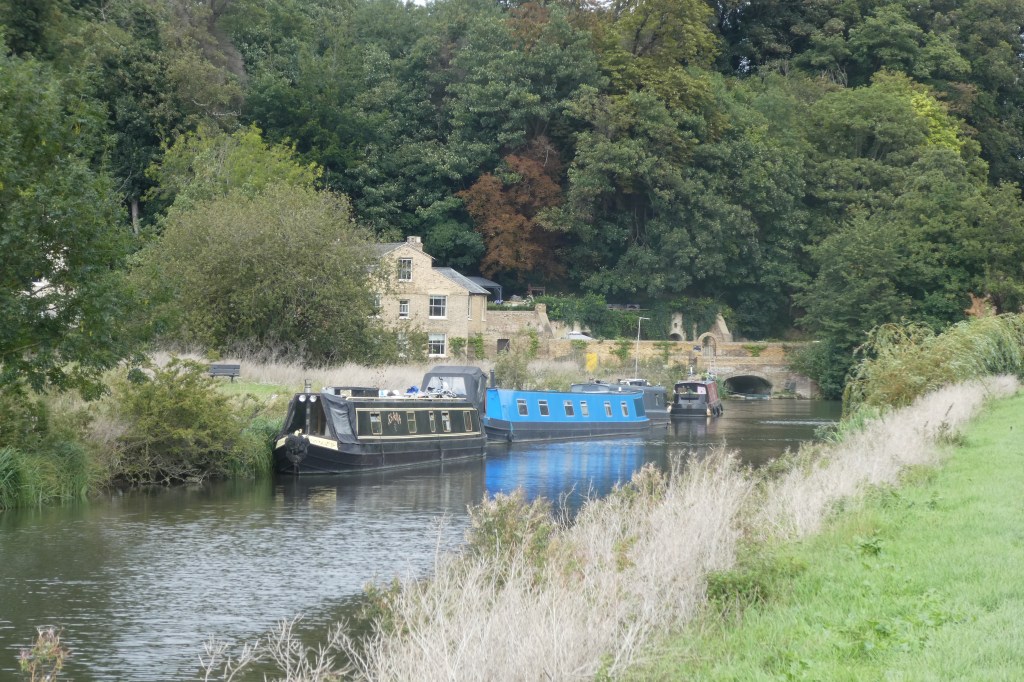
But it does have a creditable cycle path along the Herford canal, continuing along the River Lea, and with a dry-ish day we spend a few hours cycling the tow path, past more narrow boats and barges than I’ve seen on one stretch, ever. The water is busy with river revellers, shouting, splashing, occupying locks, attempting to open/close locks, or [for those whose boats are their homes] pottering on their rooftop gardens and undertaking repairs.

Later, in a quiet, more picturesque part of town we find ‘The Barge’, a beautiful old pub by the canal offering splendid food in a lovely setting.

Then it’s time to move back East…

The Way we Were

Having resorted to trips down the highways of past excursions for inspiration, this week ‘Anecdotage’ returns to present day. 2020. The internment year.

I’ve had to take a break from my long-term photo-essay on French net curtains. I realise this is going to sound like figurative nimbyism, but I’ve taken camping holidays all my life and now everywhere is blocked up with new campers. And I’m deeply suspicious that these are the same, lip-curling, sniffy holiday makers that have turned their noses up at the very thought of camping until now.

We’ve never felt the need to plan-or wanted to. The spontaneity of our kind of travel is one of the joys. We have a vague idea of where we’d like to go. We set off. We research nearby sites. Where is the weather lovely? What is of interest? Where looks good? Are there accessible bars and restaurants for some evening life? Are there walks and cycle paths? Having selected a few possible sites we head for one. In reception we are asked how many nights we’d like. We choose. Maybe two? Maybe more if need be?

Once we’ve explored a place we leave; we move to the next desirable location. We stop en route for some groceries or to have lunch overlooking a beautiful view. If we are travelling in Europe and want to do some distance we may only want overnight stops, in which case we can stay in ‘aires’, often paying only a few euros, sometimes paying nothing. Some aires are in the centres of iconic cities, such as one in Reims. You can park up and be sitting in the sunshine outside a bar sipping a glass of champers in the champagne capital of the world within five minutes of arrival.

Now here we are in 2020. We are contained within our own island of the UK. Many people are contained within their own homes. We must be content with travel within our shores.

But what is this? In an unprecedented rush, a huge portion of the nation wants to camp! Each and every site is as full as they can be [given the distancing] with new vehicles, hastily bought tents, hired rigs. In an instant, pre-booking is mandatory. Spontaneity? Not a hope in Hell. We have to plan ahead. This does not come easily to us.

We are on our third van outing of the year, the first having been a short, local break on the Dorset coast, close to where we live. Stuck with booking, these were possibly the first cloudy, drizzly days of the summer. We walked. We made the best of it. The second trip was to the Kennet and Avon canal at Devizes and it rained-and rained.

Now we are attempting to tour in East Anglia, a place where some of my childhood was spent. We came via Chertsey, where the Thames Path provides some wonderful walks and cycling, as we know from a previous visit. So far so good. We had reserved a place. Now we’ve moved on up to Suffolk, to another pre-booked place [Felixstowe]. This is as far as our bookings went. We had thoughts of visiting Cambridge, Southwold, Aldeburgh.

It is all full. And while the sun shines this morning, rain is promised.

Felixstowe is an odd mix of gargantuan port and archetypal British seaside. Tall pylons and cranes form a backdrop for garish amusement arcades and fish and chip shops.

There is scope for walking and cycling-if the weather holds.

We’ll be continuing our exploration of the Eastern UK-bound by where there is availability.

I’ll let you know…

India 1998: Down

As we continued our tour bus descent out of Ladakh, following the shelf-like, dirt roads and stopping to wait for repairs en route, the temperature warmed a little and the mountainsides became greener, whilst also gaining humidity. Pockets of cloud hugged the hillsides and hung in the air. But there were also remnants of snow clinging to shady rock faces, grimy with road dirt and fume deposits.

In a valley with a gushing river tumbling over rocks was the De Lai Llama’s residence, allegedly, modest, elegant and spare. Opportunistic sellers of warm socks and prayer flags were dotted around the villa, their stalls canvas tents.

One spot had become a shrine dedicated to lovers, where couples came to be photographed having taken marriage vows, framed in front of an elaborate heart.

P1000861

We came to Manali and the ‘Highland’ hotel-an unappealing travelodge-style building made from white concrete, but with views down the misty valley. Manali was damply humid and thronged with backpackers, its shopping areas bustling, its streets and entrances occupied by stray dogs. There were myriad ‘health’ shops touting remedial medicines for all kinds of ailments, the town having a reputation as a health spa. We took advantage of the ‘hot baths’, donning our swimming gear and piling into a steaming pool with fellow tour members.

In a back street we encountered a hairy, white yak, and extraordinary beast with alarming curved horns and long, flowing white hair, looking like a creature from a Grimm’s Fairy Tale. But while the yak was saddled and available for rides we declined the offer.

Next day our bus continued on downwards until the steeply plunging sides of the valleys petered out into hillsides. Husband had been missing coffee, a beverage that had been lacking from our diet for many days, so at our morning rest stop we asked for a cup each, a request that was met with a glass of hot, sweet milk. Several attempts and glasses later we gave up and had tea.

P1000867

For our last night’s stop before returning to Delhi we got to stay in unaccustomed luxury in a beautiful hotel called ‘Timbertrail’, which boasted magnificent views over the surrounding, wooded hills and a sun terrace with a swimming pool. The sun emerged and by now the temperatures were warm enough for a dip, plus some relaxing on a sun-lounger.

The next day’s travel was by train, on down to Delhi. Trains in India are a delight, with a gentile, 50s ambience. Uniformed staff walked the carriages, serving meals on trays. No sawdust sandwiches and plastic-wrapped flapjacks here-but pristine crockery and cutlery and a freshly prepared curry.

And so back to Delhi, to our original hotel.

We planned to go out for a meal together, our entire group with Adrian, who’d been our excellent guide and good-natured companion throughout the adventure, coaxing, explaining, planning and keeping everyone on track and happy.

This was India’s national day, their Independence Day. Delhi was closed. In our hotel, quiet as the grave, there were no bar facilities, no leisure facilities, no facilities. The swimming pool had been drained.

We had a day to kill before our flight back to the UK. We had a desultory walk in the nearby streets, which were deserted. Our fellow tourers lolled around in the lounge area, although when one or two began to play cards they were prohibited from such a frivolous activity by members of staff.

This, then was the mother of all anti-climaxes. Adrian succeeded in finding a restaurant that was open. We went there. We ate a meal [alcohol-free]. We slept, rose, got our flights. A strange ending. But the entire escapade made memories to last a lifetime.

India 1998: The Come Down

P1000842

The Tanglang-La Pass, reckoned at the time to be the second highest road pass in the world, [although now allegedly the twelfth highest]. Still, this was a high altitude road trip and we were fortunate to have undertaken our trek, which had toughened us up and got us acclimatised. Our conveyance was a bus, driven by an experienced driver of course, into whose hands we’d be committing ourselves. The road, if it can be described as such, was single track and largely unpaved-at times a mere dirt shelf carved from the mountainside. This was manageable, with our brilliant driver in charge, but became hair-raising when vehicles approached from the opposite direction [mostly lorries] and our far-side wheels would overhang the ledge.

P1000858

We’d be travelling down from Ladakh, where we’d been hiking, to Delhi, but the final part of our journey back to where we’d begun would be by train.

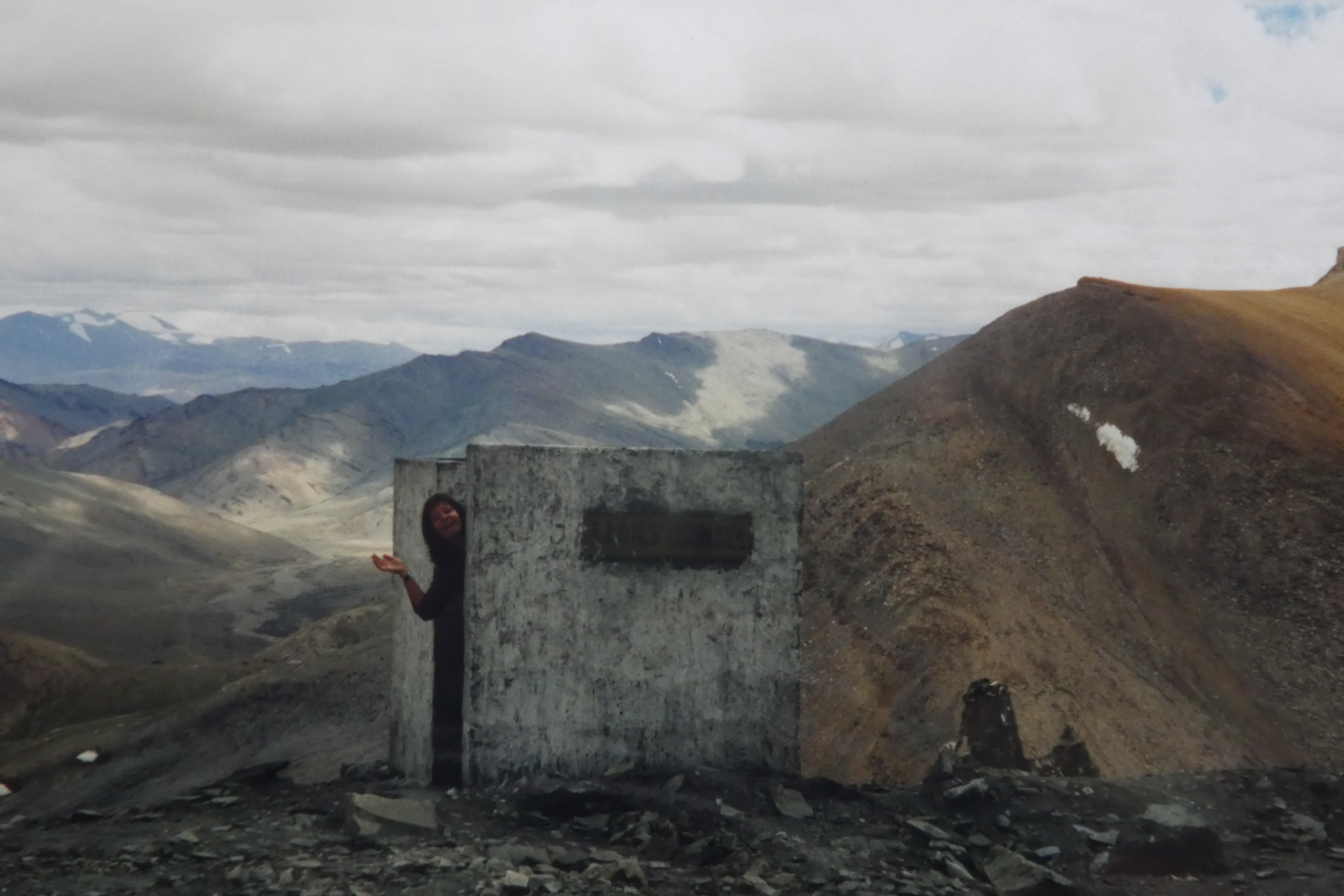
There were plenty of opportunities to stop and take in views, or to use such facilities as existed-the most notable being what [unless you, reader, know different] must take the accolade for most lofty loo, [and with a view].

P1000844

Along the way strings of prayer flags hung in forlorn tatters, meaning someone had taken the trouble to place them-prayers from the roof of the world. Small wonder they were in tatters when you consider the parlous state of the world today.

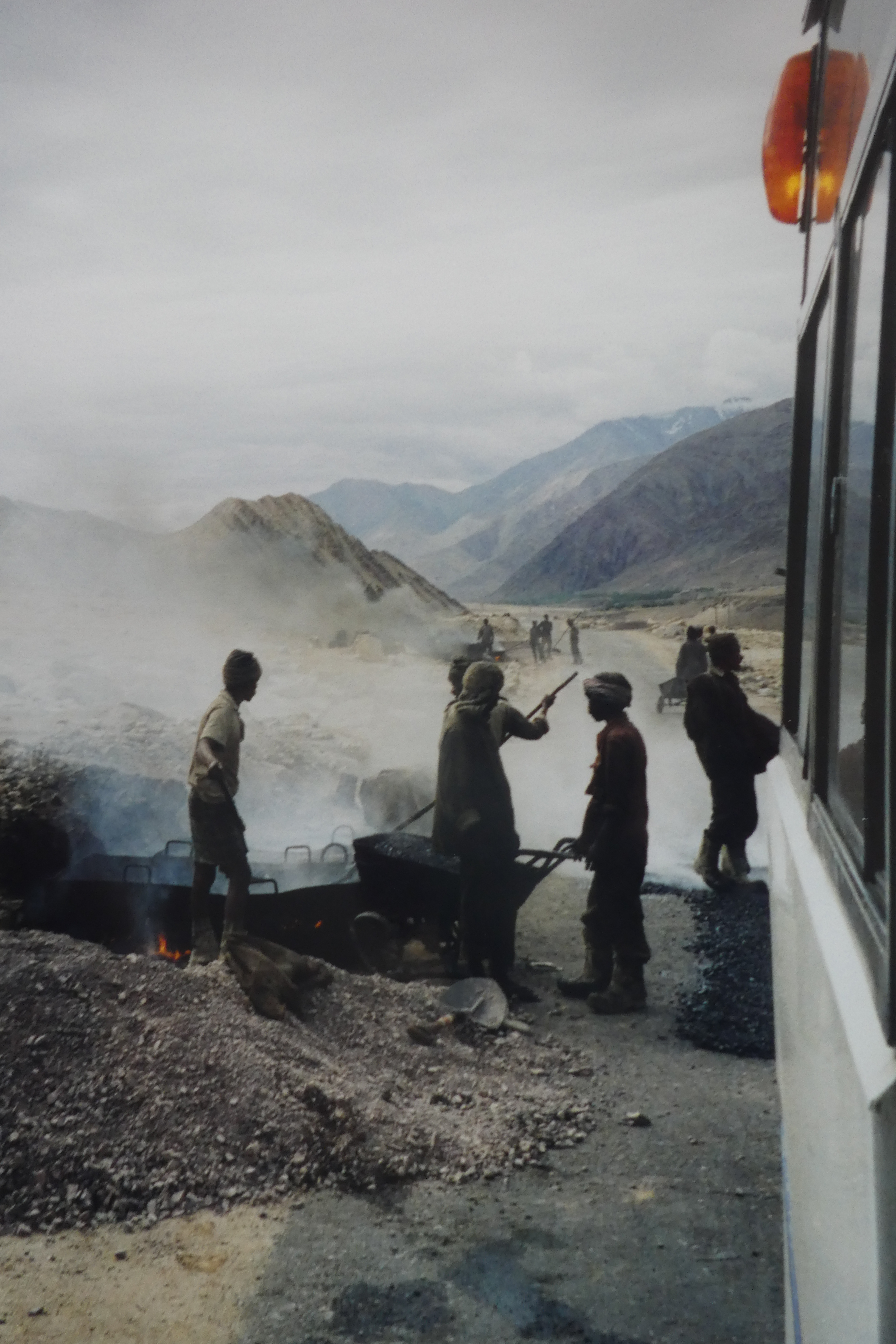
Sometimes it seemed the road was being constructed ahead of us while we motored, although it must have been repairs that were being undertaken. There was little mechanisation, the workers using woven baskets for rubble and boiling up tar on fires by the roadside then spreading by hand-gruelling work.

P1000845P1000847

The terrain varied, providing fascinating views, sometimes a group of riders, sometimes a facsimile of a fortress or palace, sculpted from a hillside by fierce winter winds.

There would also be refreshment stops. Forget motorway services. They would be solitary tents by the roadside containing a small range of canned drinks and snacks and offering cooked dishes such as fried egg sandwiches, produced from a stove with a cylindrical chimney poking our through the top of the tent. High up here where the temperature was punishing and the wind chilly, these tents were warm and cosy. There would sometimes be one or two stalls selling hand-made goods like knitted socks made from course wool. My investment in a pair of these was to prove a godsend in the coming night.

During this long journey there were no hotels. We were not put up in Travelodges or hostels. Overnight stops had to be spent in tented villages. We arrived at ‘Sarchu’ camp, where the standard tents were set up in neat rows and we were allocated one, before joining our group in the open-sided dining area for an evening meal. By now we’d donned warm clothing seeing as we were no longer trekking and the weather was cold-made colder still by a cruel wind and the night approaching.

That night in our tent we rummaged through our bags and unearthed every wearable garment we had, layering up until we resembled Michelin men, then got into our sleeping bags for what must have been the coldest night I can ever remember spending-even with the addition of my newly purchased socks. There was also a point when it became necessary to prize myself from the sleeping bag, out of the tent, into the dark and over to the toilet tent, an undertaking requiring true grit. I was never so glad to see morning arrive and with it a warm coach to continue our descent out of the north.-

India 1998: Ladakh. The Donkey and the Dzo-

To undergo a trek in a remote region with a group of strangers can be an interesting and sometimes challenging experience. In our group of a dozen or so, most people were amenable, adaptable types-as you would expect for anyone choosing to take a hike in some of the most inhospitable landscapes the world has to offer. Added to this, our two guides, Adrian and Sonam were both amiable and fun.

P1000830

But a small group holiday is ideal for singletons and while most of us were in couples there were also some singles; a rather unfit guy, a youngish woman, a teenage boy [with parents] and two older women. One of these older women, Anna, a widow, was pleasant, open and friendly and made for a good, conversational walking companion, as I often found when falling into step with her [the two of us frequently bringing up the rear]. The other woman, let’s call her Margaret, was a bit frosty and possessed of little sense of humour, also perhaps somewhat unworldly in certain areas.

We were walking down a slope into a valley one afternoon, the bare, rocky terrain giving way to vegetation as the path flattened, when we came across some donkeys grazing. The animals were friendly, happy to be stroked as we stopped to greet them. Margaret became unusually animated by the encounter, though not as animated as the donkey, whose excitement on gazing at Margaret was expressed in an immediate erection. This reaction went unnoticed or unrealised by Margaret, who exclaimed ‘The donkey likes me!’ but was nevertheless witnessed and enjoyed by all of the rest of the group, so that most of us found it necessary to impose self control over the general hilarity that ensued.

P1000836

On another occasion we reached the top of a climb to meet a family dressed in their Sunday best, on their way to a festival in the Gonpa [monastery] at the next village-the next village being many miles away across a mountain pass. They were carrying all the essentials for a picnic-including a well-used teapot!

On our descent into Ang village we were to see the wondrous beast of burden that is a ‘Dzo’, an odd mixture of yak and cow. But sometimes our very presence at a village was as of much interest to the locals as they were to us!

At Thimmisgamm village we made our last camp, where we had to bid farewell to our lovely crew and goodbye to this beautiful place. The next day we walked back to Leh and our delightful hotel where we had one more day to get a last explore before we were to travel back towards Delhi-by coach this time-to ride over the second highest road pass in the world, among other notable experiences!

India 1998. Ladakh Trek 2

Our trek in the mountainous region of Ladakh took us close to villages and down through some. Sometimes our camp for the night would be next to one, on a flat area by a stream. Though the villages were rustic idylls during the summer months, the roofs of the homes covered in drying apricots, families working in the surrounding terraced fields, animals grazing, the long winter months would be cruelly hard. Those working in the fields would always straighten up to greet us as we passed by.  A smiling ‘Julay’, we’d hear and do our best to reply.

We were privileged to be able to visit a village house, the home of our Ladakhi guide, Sonam’s parents. We were invited inside and offered ‘butter tea’, a beverage I’d been warned to avoid if possible. The tea was presented in beautiful, painted porcelain teacups. But the trick, I knew, was to take the smallest of sips so that the rank taste was barely perceptible, then smile, nod and replace the cup in its china saucer on the table.

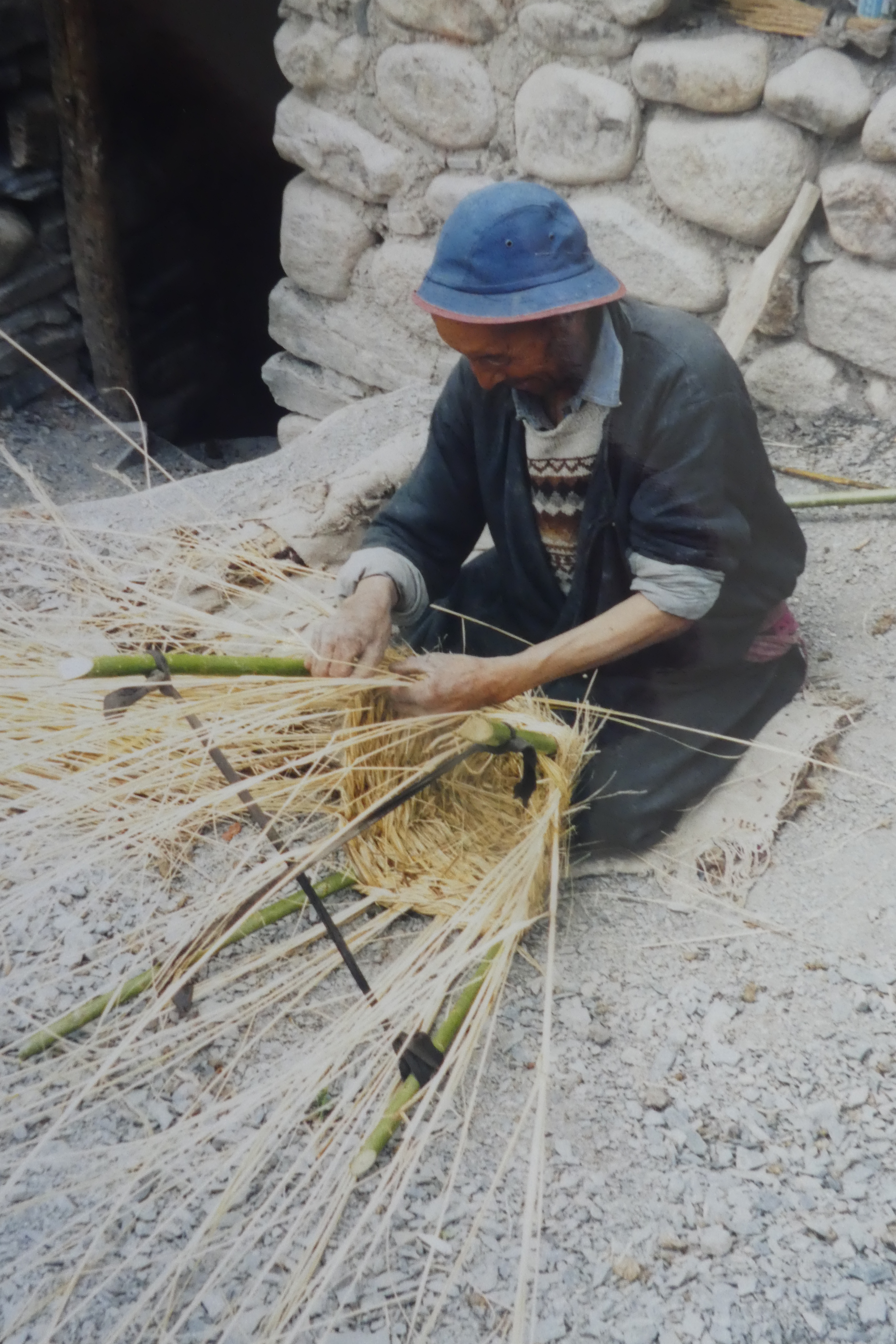
The kitchen was cosy, a wall of shelves holding burnished cooking pots, a black iron stove for cooking and heating. For tea we sat on colourful rugs before low tables in a room whose windows looked out over meadows, summer green; and a backdrop of towering mountains. Outside, Sonam’s father demonstrated basket-making, deftly weaving one in minutes.

P1000714

Later, at our encampment, Adrian wondered aloud if anyone would be interested in a beer. Beer? During our long hikes we’d not spotted anything resembling a retail outlet-not an off-licence, a corner shop, a mini-market, a stall or a kiosk. There were no roads-hence no roadside offerings. At our universal cries of affirmation he leapt up and disappeared, returning some time later with a crate of bottles and an air of nonchalance.

P1000712

The mystery of his providence was solved on another occasion when our route took us past some rough, wooden doors covering a rocky cave like Aladdin’s. Once unlocked, the doors revealed a ‘shop’, containing all manner of items. How the goods were transported to such an inaccessible area is a further mystery, but we did not go beer-less on our trek.

Each day when we stopped for a breather and to rest aching legs we’d open our lunch packs, provided for us by our hard-working crew. And each day the lunch would be the same: a boiled egg, a [cold] baked potato, a cereal bar. I remember that we’d fall upon these lunches that seemed the most delicious meal in the universe as we’d sit on a rock or a mound of grass overlooking the highest mountain range in the world, sometimes also getting mugged for our food by tiny pygmy goats!

Occasionally there would be an option to clamber up to a higher point while others rested, Adrian leading; an option that Welsh Gareth was always keen to choose, fit as a flea on his chocolate and bread diet and sometimes we would follow, burning muscles a small price to pay for such amazing views.

P1000719


India 1998: Ladakh Trek

At breakfast, taken in the beautiful garden of our Leh hotel before we began our trek, I discovered that some members of our group had taken preventative medicine for altitude sickness. I’d wondered why I’d been the sole sufferer of our group to have succumbed to this debilitating condition! But I had rallied and was now feeling up for a trek. We were used to vigorous exercise at home, being habitual daily runners.

This second tour group consisted of several couples [including ourselves], a couple with a teenage son and some singles; a couple of older, single women [one rather type-cast spinster and the other a charming widowed lady who I walked alongside for much of the route], a somewhat unfit looking, younger man who’d brought walking poles, a youngish woman. One half of a Welsh couple, Gareth had the most extreme eating phobia I’d ever witnessed [including the fussiness of my own children as toddlers] and seemed to exist solely on bread and chocolate, a tragedy in a country such as India. Despite this he was the fittest of all of us, with calf muscles like beer bottles and an ability to run up a mountain slope faster than a goat.

P1000699

While the mountain scenery was often stark and unmarked with vegetation in the higher levels there were stunning views as well as encounters along the way. On our first day we paused on meeting a group of schoolchildren making their way to school, an arduous hike they must make twice daily. They were cheerful and friendly, wanting to show us their exercise books, shaking our hands, their warmth shining from their smiling expressions.

Further along we caught up with a lady whose sheep had escaped and who’d clearly had to track the animal for miles across the peaks before capture, so some of our group [Husband included] gamely took turns to carry the sheep for her. The creature was extremely smelly, which resulted in a transfer of aroma to Husband, of course.

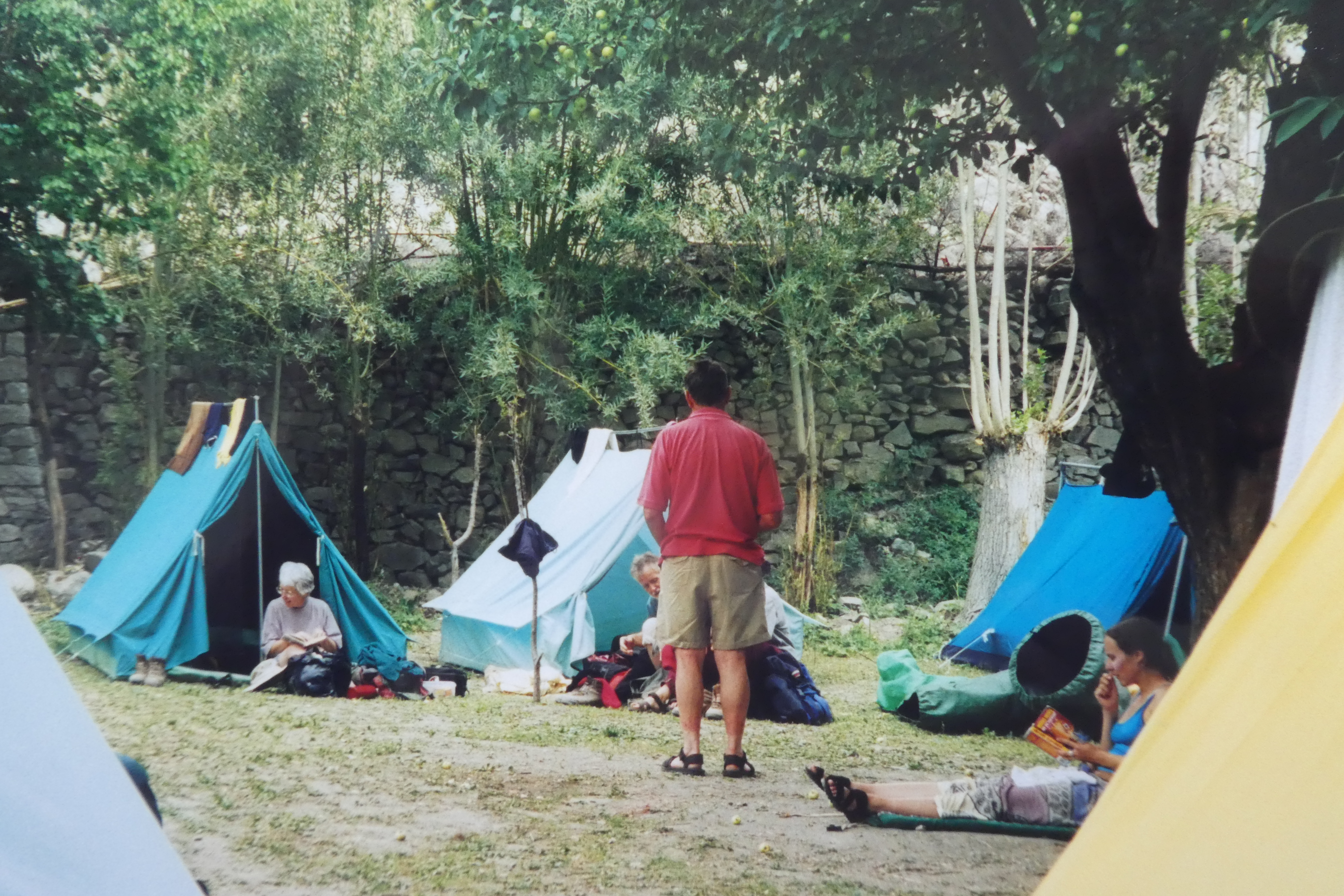
At the end of each day’s walk the bathing facilities on offer were a small bowl of warm water or a bathe in the snow-melt stream using eco-friendly mountain suds. Most chose the freezing water after a sweaty hike up and down slopes but it needed to be undertaken quickly while the sun was still up because, as is typical in mountain terrain the daytime temperature was hot, the nights cold. Toilet provision en route consisted of ‘behind the nearest large rock’ and in camp there would be a small tent over a hole in the ground, which was filled in on our departure.

Our tiny, 2-man ridge tents would be up and ready by the time we got to camp, also the the dinner table. The pack ponies would be set free of their loads and be enjoying a well-earned graze. Then we’d sit together at the long table and enjoy a meal prepared by our crew.

India 1998: Ladakh

Before I ever experienced altitude sickness I’d assumed it meant breathlessness, struggling to inhale and chest problems. How wrong can you be? I first suffered mountain sickness on a trip to Peru and Bolivia, succumbing to a debilitating headache and accompanying nausea, so I knew when the tell-tale signs grew that I was heading for another bout there in Leh.

As we travelled back to our hotel, following our visits to some local Gonpas my headache became worse and I needed to exert some strict control over the nausea that overwhelmed my system. Once back in our room I began throwing up and continued to do so throughout the night, kneeling on the concrete floor of our little shower room, grateful for this small luxury, at least.

Our tour guide, Adrian was aware of my problem. As we were due to go rafting on the River Indus the next morning he explained that I’d have to miss out on it, which did nothing to lighten my mood. Worse still, if I didn’t improve there’d be no trekking either. The walking would be hard, with some steep climbs and long days at altitude. I missed out on dinner and tried to sleep. Maybe I’d have rallied by the morning.

I did manage to sleep, waking next day and feeling wrung out but much improved. When I begged to go on the river trip Adrian relented but instructed me to ‘sit at the back and do NO work’, meaning I wasn’t to take an oar but was allowed to do some light baling, using a plastic bucket. In the event the rafting was quite tame, the rapids mild and we all survived intact. The Indus here was monochrome, sepia, without vegetation and flanked by steep, rocky peaks.

As I’d no ill effects and seemed to be acclimatising it was decided I’d be ok to trek. We gathered to meet Sonam, the Ladakhi guide who was to accompany us, a slim young man about Adrian’s age with a charming smile. We’d be visiting his parents’ home along the way.

We were to carry day-packs, small rucksacks packed with our water [minimum 2 litres], small items we’d need, and our picnic lunch, made for us firstly by the hotel and thereafter by our crew. The crew consisted of three guys and a string of small, hardy ponies who were to carry our main luggage as well as the tents, the cooking gear and all of the food we’d need for the next few days while we were tramping around in the foothills of the Himalayas. These brilliant guys went ahead of us, taking our luggage, pitching our tents and preparing our evening meal whilst we trudged up and down mountains and hills experiencing some of the most extraordinary scenery the world has to offer.