You could not, as they say, make it up. Gentile, refined, sedate, medieval, touristy cathedral city Salisbury has been the unwitting scene for a clandestine but audacious attempted murder of an international spy.
This is a bizarre story. We are used to the spy yarns of fiction. They are the tales that have informed we lay people over the years. We think of The Third Man, staged melodramatically in a post-war, crumbling, gothic Vienna or of Le Carré novels such as The Spy who came in from the Cold, set in the cold war era of the 1960s with brooding double agents and East German backdrops. Or our experience of spies may be based upon James Bond, whose daring exploits, car chases, gadget-ridden confrontations and glamorous lifestyle has become increasingly divorced from reality.
On a serious note, the use of a lethal nerve poison in a public space is a frightening prospect and who is to know what the effects on the fellow diners at Zizi’s restaurant have been? I think, ‘I’ll never go to Zizi’s restaurant again’ and then of course I realise that I have never been to Zizi’s and never will, since there is a plethora of beautiful, cosy independent Italian bistros to frequent.
As the substance is Russian made it is safe to assume that the attacker is Russian, particularly since so are the victim and his daughter. How should we respond, then to this outrageous assault in poor, provincial Salisbury? Should we, it was suggested, boycott the football world cup? I’ll admit to finding this idea hilarious as a] Who would care if little old England was not there and b] The absence of our national team [whose track record at world cups is less than exemplary] serves a useful purpose in terms of face-saving for we English.
So now our government has slung out a number of Russian diplomats-those deemed to have been conducting espionage and perhaps, amongst them, the attacker him or herself? The Russian government [Putin] has responded by holding up their hands and saying, ‘What, us?’ The next action will be expulsion of British diplomats from Moscow. Wonderful. Back we go into a cold war. We are advised against travel to Russia in case we are ‘harassed’. ‘Does this mean,’ I ask Husband, ‘that a visit to St Petersburg must be crossed off my list?’
Personally, I’m all for ousting Russian property investors from our little land. Goodness knows we’ve enough need of the housing. I’d love to think that all those homeless people displaced by the Grenfell fire and those in sub-standard accommodation could reside in the glitzy towers that lie empty in the capital. I doubt, however that the government would have the backbone to requisition the properties.
I am sorry for the terrible toll wrought on the victims of the crime and hope that they will be able to recover; but at the same time I’m intrigued by the story and to learn how the repercussions might play out.
In the meantime I’m off to persuade Husband to build a bunker in the back garden…
Author Archives: Grace Lessageing
What not to Eat [clue: anything]
OK. New government health advice. We eat too much [we know this]. We must restrict our intake to 1,800 calories per day. The recommendation is 400 at breakfast, 600 at lunch and 600 at dinner. Great.
I watched the ‘experts’ on a daytime news programme showing us how this looks in terms of meals. Breakfast was a child’s bowl with porridge and a few blueberries. Lunch was two miniscule ‘spinach’ muffins and some tiny, doll’s house dishes with miniature tomatoes and a strawberry. Dinner was another child’s bowl with some chicken risotto. The expert generously suggested that the risotto could be accompanied by a small side salad. There, readers. Don’t eat it all at once.
Here at Lessageing Manor we don’t actually do breakfast, which leaves us a whole 400 extra calories to have at lunch! Whoopee!
It is certainly true that Husband and I have consumed too much during the winter and have been attempting to correct the ensuing spare flesh by cutting down on carbs and so on. But I can’t help feeling that these suggestions of tiny, dolly-sized helpings are not going to convert the mountainous, British obese into svelte, MacDonald and KFC refuseniks.
In other, dangerous-food-related news there was a long, detailed item on the subject of that most lethal of breakfast staples: BACON.
Some time ago the demon bacon was heralded as the greatest poison known to man and the consumption of it foremost in the list of behaviours most likely to cause bowel cancer. Like many such revelations this is not a happy discovery for those who’ve based a lifetime of breakfast experiences upon it. This bacon scare, having frightened devotees of the ‘Full English’ enough to prompt a boycott of the sausage/ham/cured meats aisle then appeared to die away and bacon consumers resumed their perilous habit, returning to Greggs for their bacon rolls and Burger King for their additive rashers.
Now however the bacon threat is re-awakened. This is not due to bacon itself, or any other treated meats, but the mass-production technique of adding nitrates to them. Following advice, I prowled the aisles of Waitrose in pursuit of nitrate-free bacon and ham, with limited results.
Every day, it seems another food aisle is closed off. Don’t go near biscuits! Keep away from crisps! Touch fizzy drinks at your peril! Don’t touch fruit juice with a barge pole!
It’s no to alcohol, bacon, carbohydrates [especially evil sugar], processed foods, red meat and fruit! Fruit, apparently will not only make you fat but will simultaneously rot all of your teeth. This is the single most depressing news amongst all of it.
Perhaps the simplest approach would be for our health gurus to suggest what would be acceptable for us to eat and drink. What would they say was alright? I’m guessing kale, lettuce, lentils and beans washed down with water would be the answer. Am I right?
Playing Host to the Beast
In what is clearly a gift to 24-hour news broadcasters, newspapers and weather people, ‘The Beast from the East’ has chosen to visit the UK. I’m sceptical. I’m inclined to think that this blanket of snow, ice and bitter winds has been engendered by the Russians [or to be clearer, Putin] in order to further de-stabilise poor, beleaguered Europe; to undermine the infra-structures, to disrupt our transport systems, to bring manufacturing to a halt.
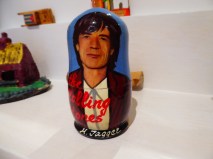
Once all this has happened, Russia can flood our [and for the purposes of this post I’m considering we are part of Europe-mere wishful thinking on my part] markets with their own products. So along with the eventual thaw we can expect a deluge of potatoes, petrol, samovars, beetroot and nesting Russian dolls. This is fortunate for me, since I’m partial to beetroot and potatoes and have two small granddaughters, although there is a limit to the quantity of petrol our lawn mower can consume in one season.
Conspiracy theories apart, this late spell of winter sparks the usual flurry of journalistic activity, producing every kind of article from ‘how to care for the homeless’ to ‘what to wear in cold conditions’ to ‘what to carry in the boot of your car in the event of becoming stuck in snow’. This is all very useful and informative-to someone who has recently moved here from Death Valley, California or the Australian Outback. The rest of us are only too aware of what to put on [layers of woolly clothes], how to provide for the homeless [inviting them in to your spare bedroom, lobbying your local council/contributing to homeless charities/adding blankets and scarves to their belongings] and what we should put in our vehicles [hot drinks/blankets/spades].
I know I’m risking eye-rolling as I mention it, but anyone who was born before the 1960s and especially in a rural location will have experienced winter weather in a home without central heating and perhaps without a bathroom. Ice on the insides of windows and across the surface of the cess pit outside in the garden latrine was the norm. We did, of course have lovely, sooty coal fires to sit around and even to bath in front of.
As a child I loved snowy, icy days; loved splintering up the ice on a frozen puddle and making footprints in virgin snow. School playtimes were a riot of fun without any health and safety guidelines or gritting procedures as we worked together to manufacture the longest, smoothest, glassiest, most slippery ice slide imaginable in a diagonal strip that we queued up for whenever we were released from the classroom. We’d return to find our beautiful little, third-of-a-pint milk bottles were filled with lumps of ice so large they had pushed the foil lids up.
This morning we woke in our centrally heated house to find glassy ice had frosted all the windows, creating an interesting, bathroom-type effect; not the fancy, curly patterns I used to find on my bedroom windows as a child but at least this ice is on the outside, which is progress.
Is Rock Music Dying? Answers on a Comment at the End of this Post…
As you get older it is natural to feel nostalgic at times. For me, music will often provide a prompt for it, so the news that rock music is beginning to disappear from the listings on our iconic summer festivals makes me a little despondent, while also reinforcing the sensation of ageing.
Once upon a time an award ceremony such as The Brits would have been compelling viewing; would have been packed with enthralling acts and a must-see event. Nowadays, if I’ve heard of any of the artists I’d be hard pushed to know what genre they purveyed, still less come up with a song title.
I accept that rapping is a skilled, cutting-edge, universally popular style of music. I am just unable to find anything to enjoy about listening to it. There also seems to be a veritable explosion of confident, young girls plying their songs, using the internet to publicise themselves, singing in [to me] identical, jerky, husky tones. Until the appalling massacre at the Manchester Arena in May 2017 I’d never heard of the singer Ariana Grande and I’ll admit to being amazed she had such a huge following. This is what happens as you age; you get out of the loop.
Some time during the last twenty years large swathes of popular music got hijacked by music moguls and star-makers. This imbues any creativity with a cynical, contrived quality, which is not to say that some talented individuals have not gained success from this route but that flooding the market with cloned and honed hopefuls does nothing for the music market.
History shows that often, when musical trends become tired and tedious a new, innovative, anarchic style will emerge to attract both fans and appalled detractors. This happened during the seventies when glam rock had run its course and become a parody of itself. In a movement that both shocked and appalled the mainstream and entranced those wanting change Punk arrived, spitting and snarling its grubby, vomit-laden way into pop culture. Now those born-to-shock Sex Pistols numbers like God Save the Queen, Anarchy in the UK and Pretty Vacant have become classics.
Of course devotees of rap music would say the same of their favourite style. And it would be fair [though sad] to say that in the next ten or twenty years, those ageing rock musicians who’ve dominated the stages for the last twenty or so years will [like me] be shuffling off to the immortality of Classic Gold. So maybe it is time to give over the stage to rap artists, grime artists and whatever is due to come next. Just please, please don’t let it be some karaoke-style competition winner from a tedious, Saturday night reality game show. And I’ll respect any genuine attempt at a new musical genre-but don’t expect me to like it, or to have heard of it!
Slip Sliding Away
I’ve never been much of a sports spectator. Other than a brief phase of tennis watching in the 70s [I happened to live in a flat a few minutes’ walk away from Wimbledon’s famous club]. I’ve positively avoided watching the sporting activities of others. Exceptions include international rugby games [I’m currently enjoying the six nations championship] and winter sports.
There is something magical about the winter Olympics. The settings are beautiful; other-worldly and mountainous landscapes providing a background for breath-taking races and stunts. Watching daring ski jumpers hurtling down a slope and flinging themselves skywards before landing the right way up and sliding away is enough to make your stomach lurch, as is the downhill skiing or the crazy free-for-all of the speed-skating.
Most of all the new [since 2014], tricksy snow-boarding contests are spectacular and a compelling watch.
It is more than twenty years since I had my own, brief taste of snow-related activity, when I took myself off for a week of beginner skiing in the much-poopooed [by seasoned skiers] resort of Borovets, Bulgaria. I’m sure it wouldn’t do for those who take to the slopes on a regular basis or those for whom a fashionable resort matters most. But for someone who was new to skiing-and approaching middle age, Borovets was just cheap, cheerful and more than demanding enough.
To this intrepid week of discovery I’d added an extra anxiety-inducing element. I was travelling solo. I did have the advantage of being physically fit, having undertaken running and aerobics in the preceding years but I was also reeling in the aftermath of a relationship breakdown, which meant that solo travel would be a risky business for my battered emotions. Would I be able to forge friendships, find some kind of transitory support network, have any conversations, bond with fellow novices? Friends counselled for and against but in the end the ‘for’ camp won for advising me to see it as learning a new skill-just like going on a course, which of course, I was!
There is an art to lone travel. When I boarded the transfer bus at the airport I was asked which ‘party’ I was travelling with, a difficult question. When a couple, faced with no spare seats at the hotel’s evening meal, were forced to share my table I thanked them for joining me, shifting my novel [a prop] across to make room. Next morning’s breakfast was a solitary affair.
Then I had to find my ski class. I headed down to the boot room, where we virgin skiers were to be parcelled up into groups, get our lift passes and our boots and skis. Once I was in a group everything changed. We were united in anticipation, endeavour and terror! We laughed, clutched each other, fell over, encouraged one another, made progress. At the end of that first, exhausting, exhilarating day I had a group of friends. We ate together, went out together, drank together, shared our stories.
I loved skiing, but I never did it again. It was not long before he who was to become Husband came along and lone holidays became a thing of the past. There is no doubt that, like most sports, skiing needs to be taken up when young. But that holiday holds fond memories for me, as does skiing, so for anyone who is wavering about skiing-or indeed about holidaying as a singleton I’d say go for it! What can go wrong?
A Struggle too Long
One hundred years ago in the UK women got the right to vote. There! None of us can really imagine what a hard struggle it was to gain this crucial entitlement, but some brilliant, brave women strove for it and got it and we must never take it for granted.
There have, of course been many ‘watershed’ moments along the path to equality of gender but the most important thing to remember is that the path has not yet reached its destination. That is to say, women still have a long way to go before they can live lives as free and as privileged as men.
It seems to me that the principal reason for true gender equality taking such a long time to achieve is that, having enjoyed the benefits of privilege for centuries many men [not all] are unready and unwilling to give them up and the very fact of them being in positions of power and wealth [in boardrooms, for example] is self-maintaining.
You have only to glance at the vitriolic comments following any article on inequality to see how reluctant many are to surrender the superior lifestyles, the casual attitudes to degradation, the enhanced salaries and all-round benefits of not being a woman.
Here in the UK some areas are gradually improving. The number of women members of parliament has increased slowly over the years, although in 2017 the ratio was still 70:30 per cent in favour of men. There are some women cabinet ministers. The prime minister is a woman [although it is a downright shame that the only two women prime ministers in UK history are both from the political right].
But on the whole progress is slow. That even within the ongoing ‘me too’ campaign, an organisation [The President’s Club] sees no shame in staging a men-only night of debauchery in which women are paraded and objectified demonstrates how little men of certain wealth, status and notoriety care or notice. And until men [mainly white and older] begin to sit up and take notice and understand that they should not abuse their power in this way gender equality will continue to be an uphill slog.
Then in the wider world, daily, systematic abuse of women continues, with underage marriage [still legal in a number of US states], rape as a weapon of war, slavery and traffic endemic in many countries, repression and deprivation of rights rife in still more.
I had my own brush with the equal pay issue over 40 years ago when a student, working a summer job, nights in a soup factory, where we students manned machines packing powdered soup. Six or seven of us would work at the machine, moving place every hour in a non-discriminatory way. When I discovered the male students were paid more each week and asked why I was told that they ‘might be required to lift something’. Were they ever? What do you think?
Grace’s Guide to Scones, for the Uninitiated.

You know you’re advancing in years when you begin to frequent coffee shops on a regular basis. You begin to have favourites. You get to know what’s on offer besides the coffee, too. For me this is likely to be a scone. For overseas readers here is an explanation of ‘scone’: https://en.wikipedia.org/wiki/Scone
I consider myself to be something of an expert on scones and it is this, besides the quality of the tea or coffee that determines whether a coffee shop makes it onto the favourites list or if it is cast into the venues that are forever shunned. I have fond memories of scones in New Zealand, where the ubiquitous dairies produced substantial offerings boasting dried fruit in abundance, or made from wholemeal flour, often warmed and with ample butter on the side. Ireland also serves up generous, delicious scones in their many forms.
And yes, for the uninitiated there are several forms of scone, the most common being the fruit variety. This is best enjoyed with butter only but is too often used as part of a cream tea [that is to say, with jam and clotted cream: [https://en.wikipedia.org/wiki/Clotted_cream]. The most suitable scone for a cream tea is a plain or ‘Devon’ scone, since fruit detracts from the whole jam/cream experience. The best establishments may also offer cheese scones, which are a nod towards the less unhealthy option, being free of sugar, although it has to be said that dietary health is not a feature of this post.
Sometimes, having established that a café has scones before we select a table there is a prolonged wait for the scones to arrive. This is because the scones are already plated up and part of the [aforementioned] cream tea. Please note, café proprietors, that if we, the customers request a scone, this is not the same as a cream tea and while we are unlikely to turn it down we are not in the habit of devouring cream teas [treats that should be enjoyed on an infrequent basis].
Scones that do not pass muster tend to be dry, with a consistency akin to sawdust [such as those from a prestigious castle tea room in our locale] and too flat, with the appearance of an inflated biscuit. Mass produced scones may also have a slightly bitter taste, from having had too much raising agent added or with a leaden texture that sticks to the roof of the mouth and are sometimes available in the cafés of large department stores. Best are the offerings of small, independent coffee shops with their ranges of homemade cakes.
I am of course perfectly capable of baking scones at home and have done so in the past, but these days baking at home is an activity best avoided due to Husband and my propensity for eating the results.
For the foreseeable future, scone research has been put on hold. This, reader is due to the fact that overconsumption of scones has lead the researcher to begin to look like one. So having imparted what I know I leave you to pursue your own investigations. Enjoy!
The All-inclusive Trap
Searching for winter sun, an escape from the dreary, grey drizzle or the bitter winds of this UK winter means travelling long-haul. The options are: far east [Thailand etc], Africa [tried, tested and now not tempted] or Caribbean. We’ve sampled a few islands in the West Indies now, with pleasing results, Barbados and Antigua having proved particularly lovely destinations. Mexico, last year’s experiment boasted beautiful weather but was less fun in that there were few options outside of the hotel.
And here’s the difficulty. In choosing a Caribbean or most other long-haul destination you are stuck in the inevitable groove of ‘all-inclusive’ deal, as after intensive research we have found it to be cheaper than either flying and booking hotels separately or B&B. An all-inclusive deal is likely to mean a vast, corporate hotel sprawling on a coastal strip and boasting several restaurants, bars, pools, terraces, a spa, a gym, shops, ‘entertainment’, beach with loungers and umbrellas and the ubiquitous ‘buffet’.
Hotels like these are betting on the hunch that most guests prefer to stay within the confines of the hotel complex and couldn’t give a cow’s udder about setting foot outside the gate to meander in the environs and hobnob with the locals. And it is true for many, who like to get up, sling their beach towels on their preferred loungers, wander into breakfast, order a cocktail and slump then slump on their sun bed until a member of staff bearing a tray offers more refreshment. There’ll be a further stint of slumping followed by lunch…
For some with a more active schedule in mind there might be a short session of aquarobics or pool volleyball-but then it’s back to the more serious business of slumping, punctuated by propping up one of the many bars.
We can manage a day or so of this, given sunny weather and a beach walk. But after a while some ennui creeps in. This is when we need to get out.
On our recent trip to Cuba the few days in Havana was perfect. We had breakfast in the hotel, we were within walking distance of the delights of the city and had the remains of our days free, at liberty to explore. Once we’d moved to the beach hotel, however there was a short stretch of beach to walk and everything else required a taxi or a bus ride-both of which we did. In one direction lay a sterile and uninspiring marina; in the other the town yielded more sightseeing and entertainment and it was there that we avoided incarceration.
One of the reasons for avoiding cruises is the enforced imprisonment aboard a floating, all-inclusive hotel, with nothing to do but eat and drink.
Our next expedition, already in the planning stages will be very different, involving an extensive road trip by camper van. On our journey we’ll stay where we want for as long as we want, moving on when we’ve had enough of a place and opting to explore by foot or bicycle. What a pity we can’t take the van to winter sun destinations!
Fresh from Cuba-

We have returned from ten days in Cuba, leaving the frozen, grey UK and taking almost ten hours to fly to a warm, bright and colourful Havana. After hearing about the plight of tourists to Jamaica, who must remain in hotel lock-down due to violent crime I’d advise anyone with Caribbean travel plans to choose Cuba-one of the safest holiday destinations in the world.
Even in my deprived-sleep-addled state, on the journey to the hotel I could see that there is NO advertising of any sort along the roads, not on the highway from the airport or in the suburban streets and nowhere in the bustle of the city. It is refreshing not to be faced with hoardings and neon everywhere.
Continuing this theme, there is nothing anywhere that resembles a ‘chain’ company. No Starbucks, MacDonalds, KFC, Wagamama, TGI Fridays, Specsavers, H&M, Monsoon, Wallmart, Top Shop or IKEA. Magic! It is, in fact difficult to determine where there are any shops at all. There are tiny corner kiosks nestling among crumbling facades or murky windows displaying manekins sporting faded, dusty outfits. There are also alleyways with market stalls touting Che Guevara T-shirts, baseball caps and a range of hand-made items. There is also a riot of lively, busy bars and restaurants thronged with tourists and locals alike and often alive with a band of musicians.
Bars. There is no shortage of these; some mere holes in the wall, others ornately panelled, art-deco monuments to a rum-and-salsa culture much celebrated by writer Ernest Hemingway [whose heritage is much exploited by Havana traders]. There is a limitless supply of musicians. In a small street outside a Hemingway-themed bar where exuberant music is entertaining the area an impromptu accompaniment was played on water bottles as several individuals ran fingernails up and down the furrowed sides [proving my theory that almost anything can be employed as a musical instrument].
Cars. Cuba is well-known for its old, American classic cars. I was unprepared for the number of them [allegedly 150, 000].They range from lovingly restored, smooth, gleaming limousines to pitted, filled and battered jalopies. All, however spew out a filthy, noxious cloud of lung-clogging fumes which requires some adjustment of the respiratory passages when out walking.
People are friendly, happy and not above exploitative. We were offered welcome, advice, conversation and cigars or a visit to an outlet. We were never, at any time hassled or pursued. Rejection was accepted with relaxed, good-natured smiles. There were a small number of beggars, some of which had gone to lengths to create artful outfits to enhance their plight-a frayed and patched jacket or [in one case] a masterpiece of sackcloth trousers. There was no evidence at all of rough sleeping.
There was an overall sense of well being. Nobody appeared embittered or unhappy with their lot. The population is a mixture of black and white with all groups of diners, musicians, shoppers and travellers joining in together as one, never allied to one or other ethnic type. It is safe; a tourist could walk alone anywhere at any time of day or night without fear of molestation. We were unlucky with the weather, which was uncharacteristically overcast and windy. Otherwise it was a fun-filled and happy experience. Thank-you Cuba!
Ripple [Part 2]
Part One of ‘Ripple’ can be found in last week’s post [January 7th]. In this concluding episode Oliver is drawn to the canal he’s avoided for so long…
Ripple
…His phone rings. Wrenching his eyes from the laptop he dives from the swivel chair and snaps the lid down on the device.
“Oliver Grantley” he croaks into his phone.
“Olly it’s only me, Mel! What’s with the formality?”
There is a pause. “Nothing. It’s nothing. I was working. The phone has broken my train of thought.” Oliver doesn’t want this. Doesn’t want his sister to know what he’s seen. She will think he’s lost it. Maybe he has lost it.
“I’m really sorry, Olly. It’s good that you’re working though. Are you sure you won’t change your mind and come round tonight?”
“I’m busy tonight, meeting a friend. We’re going for a drink.”
“Oh Olly! That’s great! Is it anyone we know? Male or female?”
Oliver stutters, frowning. “No. No one you know. It’s someone from work.”
“What’s her name then?”
Now all he wants is to tell his sister to get lost. “Paula. Her name’s Paula. Look, I have to go. I have a report to finish.”
“Alright Olly. But I want to know how it goes tonight. Call me back tomorrow!”
At last she hangs up. He tosses the phone on to the sofa, folds his arms and looks out at the city. After a moment he goes to the kitchen and swallows a couple more pills before going to his desk and glowering at the offending computer. He lunges forward, snatches it and stuffs it into his bag.
Outside the breeze has stiffened, whipping up eddies of litter and dust and tugging harder at his collar as he strides along. His deceased wife’s throaty laugh swirls around him in the wind. How many nights had he spent in the guest room after her claims of feeling ‘too exhausted for company’? How many times had he put his hand in his pocket to fund yet another ‘night out with a friend’? He could stand these deceits, and more if she’d shown him some affection instead of scornful jibes and mocking laughter.
He’s walked half a mile or so before he realises where he is; on the tow path. He stops, hitching the bag higher on his shoulder, takes a few steps to a bench and sits. The flowing canal is mesmerising, travelling along in it’s relentless passage to the harbour, carrying small islands of detritus-tangled sticks, discarded coffee cups and bits of polystyrene packaging or plastic bottles. He shivers. When they’d walked here last summer it had seemed romantic. He’d felt proud showing her the waterside. There had been swans bobbing on the water and a kingfisher darting amongst the willow trees that hung over the bank trailing leafy fronds, leaving ripples.
Today’s ripples are from the insistent, blustery wind. Beneath the surface there are dark, wavy shapes like hair; like black, glossy hair and the air is rank with an earthy smell of rotting vegetation. He leaves his bag on the bench and shuffles towards the canal side, drawn by the undulating contours below the water. He peers down. She’d asked him if there were fish he remembers and they’d leaned down to see. He’d put a restraining arm around her for protection. Weeks later he’d followed her, watching her swaying hips as she made her way down to the canal, hiding in the lush undergrowth while she lay on the bench with her lover, her skirt pushed up and her head thrown back as the other man drew his lips along her long, white throat.
Afterwards the man had left without a backward glance, striding away on the path, smoothing his hair and tucking his shirt in.
Under the wrinkly surface there are pale shapes, sometimes still, sometimes moving like soft, creamy limbs in the flow. This is where they’d found her. Oliver had been in the flat when they came to tell him how they’d pulled her from the canal, speaking in hushed voices, solicitous, offering counselling, offering to call someone. He shouldn’t be on his own, they’d said.
Later he’d had to go and identify her as she lay on a slab, her cold features bleached, her ivory skin blue-tinged; no trace of scorn remained on her pale lips, no remnant of guile under her dark eyelashes.
They’d traced the man from forensic traces along the path.
“He got what he deserved” Mel had said when Nerina’s lover was sentenced to life. But Oliver knows better.
He is on the edge now, leaning forwards towards the shapes, drawn by them. She’d stood on the verge, her back to him as he’d emerged from his hiding place. He’d only meant to shock her, to make her see sense, to see how angry he was. She’d hit the water without much of a splash and the sounds were more like strangled squeaks than a scream, her slender arms flaying a little, making circles of ripples that radiated out from her head as it sank. A steady flow of bubbles rose to the surface, slowing after a couple of minutes then the brown, snaking canal had continued on as before.
A white hand flutters among the weed, beckoning. On the surface her face is appearing again, swaying in the ripples, mouth half open, smiling. A gust of wind rushes through the trees on the bank, roaring in his ears as he takes another step towards the undulating shape, where her arms are open to receive him.
In the bag on the bench Oliver’s laptop is wide awake, its blue screen oscillating as a gentle stream of bubbles rises from the bottom to the top in a never-ending stream.