Aires-and Grace’s Guide…

P1060059

Nowhere in Europe has motor-homing taken off more than in France and while just about every nation has its devotees, the French have thrown themselves with gusto into holiday-homes-on-wheels, the bigger the better.

You can generally guess the nationality of motorhome owners without glancing at the coded number plate. A German will drive a camper-van fabricated from a vehicle that had a former life as a fire engine/horse box/burger van/security van/army lorry and will have been furnished with a wood-burning stove and decorated with artistic graffiti. The French will drive white, shiny, gargantuan gas-guzzlers furnished with their beloved net curtains crocheted with images of kittens, roses or boats.

In response to the explosion in French motor-homes businesses and councils of almost every community have capitalised on these tourist convoys by providing overnight parking with or without services, sometimes for a few euros-sometimes with no charge at all. The idea is that by attracting camper-vans [‘camping cars’ as the French call them] to their town the owners will spend money in shops, bars and restaurants.

Aires vary. Some are landscaped with trees and verges. Most are basic car parks with marked spaces and the addition of a machine selling water [typically 2 euros to fill the vehicle’s fresh water tank] and providing an emptying slot, a ‘vidange’ for the toilet cartridge. You have to hope that your fellow motor-homers are conscientious about keeping loo and water hose outlets separate [hence my regular disinfection of our hosepipe!].

Many aires are part of a larger, town car park. For a large proportion entry is gained by way of a ticket machine-and there are various types with vastly different operating systems for entry and exit. Heaven help those who mislay their exit ticket or number!

The French are cunning about their use of aires and over-night their motor-homes just about anywhere, on pieces of scrub land, beside canals, in lay-bys or in town car parks. They’ll choose any spot with a view or that is convenient then come into an aire to use the services [especially if free of charge]. The powers-that-be are as laisser-faire about parking as the owners are gung-ho but we, the timorous foreigners tend towards towing the line and we park up carefully in a marked bay, whereupon subsequent travellers enter and take up any available spot as long as it isn’t next to us. We’ve grown used to this now-nobody wishing to have the Anglais for neighbours. Perhaps post-2019 we’ll be banned altogether?

In the morning there will often be a queue to empty and refill the vans-an opportunity to observe and to indulge in ‘compare and contrast’. You have to beware of ‘services rage’ or those who take a studied, unhurried approach to the task.

Of course other European countries provide stopover sites [although not the UK] but they are never so widespread as in France. Once we got the hang of using aires we never looked back. You wouldn’t want to use them all the time-although I suspect many French do; we use them for night stops and sometimes 2 nights if we want to visit a city. They are not to be confused with motorway ‘aires’-those landscaped picnic areas along the roadsides which are useful lunch stops but must never, never be used for overnight sleeping!
How we Roll-

P1060057

These days we cross the English Channel [our most trodden travel path] by taking the line of least resistance-and since we live a few miles from Poole that line is Brittany Ferries to Cherbourg, a four-hour crossing leaving at 8.30am.
Despite the proximity we know better than to hang about and we are sure to leave home by 7.00am. Once, inspired by Husband’s ‘It’s only half an hour away-we’ve got oodles of time-we don’t need to be there until five minutes before’, we arrived at the barrier just as the ferry was about to leave and winged it up the ramp with minutes to spare.
The ferry, the ‘Barfleur’ [named after a Normandy coastal town] is comfortable and familiar by now. We know that once on board there will be good coffee and fresh, buttery croissants as well as comfortable reclining couchettes in a quiet salon in the bowels of the ship. We know that we can mooch around the small boutique and peruse the eclectic array of merchandise both useful and otherwise. There will be WiFi and television news.
Mostly, these days the ship is peopled with retirees or young couples with pre-school children because since retirement we have the choice of avoiding school holidays. This time, however by setting off a little earlier we are beset by knots of excited, shrieking children who still have time for a quick taste of France before knuckling down to learning their tables. They gallop about the ship, throng around the games room, chase each other from the bar to the restaurant, use loud devices and shout to each other. I surprise myself by enjoying their excitement, which reminds me how I felt on early trips abroad when every experience was new.
A sulky boy wearing a onesie in a bear design makes several circuits past our table with his lecturing mother, prompting me to wonder what he has done and if his excitement got the better of him. A tiny, table-height toddler staggers about, chased by his doting father and shielded from protruding table corners by the various diners he is entertaining.
In the quiet zone I open my Kindle and continue reading Alan Bennett’s ‘Keep On Keeping On’, which is part diary/part memoir/part lecture in itself and a treasury of informative and amusing anecdotes. A couple of rows behind us two men slumber whilst between them a young boy plays on and with a mobile phone, the sound of which is just a little distracting-loud enough to hear but not enough to decipher. Husband, whose own hearing has been compromised during the last few years is immune to such irritations and dozes off easily.
We arrive to Cherbourg, disembark and set off-not tearing southwards as usual but this time meandering across the Cherbourg peninsula to the coastal town of Barfleur itself, where we have lunch and a wander around the curving harbour followed by drinking coffee. Then we continue a few miles on to St Vaast, another harbour town with a convenient aire for us to park up in.

P1060046  P1060055  P1060053

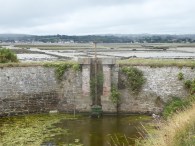
St Vaast is a delectable place; full of seafood cafes, narrow alleys lined with pretty seaside homes and beautiful gardens, boulangeries packed with luscious pastries, breads and tarts, a crowded marina and a working fishing harbour where sturdy mussel boats are tied up.

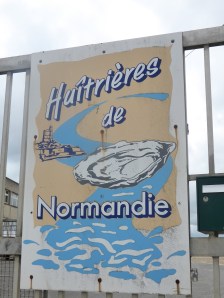
There are many, many West coast ports like this, with harbourside brasseries serving the freshest shellfish you can get. We take advantage and I am able to enjoy my favourite treat-a plate of fat oysters nestling on a bed of ice and tasting of the sea.

We stay 2 days despite the drizzly intervals and walk the coastal sea wall to see ‘La Hougue’, part of some anti-British defences of 1664. Then it’s time to move on.


Silly Season Selfi-shness

Here we are in the midst of the holiday season; overpriced, wet [now], crowded and frustrating [airports and traffic queues].

Schools are out, parliament is out, railway networks and road systems have chosen to upgrade or get repairs done as usual.

At the seafront in our nearest town the beach was thronged with families on Wednesday, so that finding a small space where we [GrandOffspring and I] could plop down long enough to construct a teeny-weeny sandcastle proved problematical. We’d already had a bus ride, done lunch and visited the funfair [a serious blow to the granny purse] and this next activity was sandwiched [see what I  did there?] between expenditure of industrial proportions on the rides and the obligatory ice cream.

For a brief rest [essential for grannies] we sat on a bench, where I was asked by a smiling young woman to take a photo of her with her husband and two small children-which I did, taking an extra one for luck. She thanked me, whereupon GrandOffspring was moved to ask me if the woman was my friend.

In these times, a request to take a photo is a refreshing breeze wafting through the forest of selfie sticks that crowd into every popular view. I read this morning that an unseemly scuffle broke out at The Trevi Fountain in Rome between two rival selfie-takers competing for the best spot [ fisticuffs at the Trevi Fountain ] and I remembered when, a few years ago whilst being escorted around The Alhambra Palace in Granada it was nigh impossible to photograph any of the inner courtyards, fountains and architectural marvels owing to a posing woman and her doting husband, who insisted on draping her coiffed and made-up body over everything and snapping all angles.

There was also last year’s visit to Venice, during which hoards of excited teenage girls were selfy-ing themselves to death on every bridge, corner, fountain, square, path, archway and step, taking up their ‘model’ poses with a leg bent out, chin up, breasts stuck forward and lips duly pouted.

My nearest and dearest know only too well that I am phobic about having my own photograph taken and that few images of myself exist since about 2003 [when Husband and I took the plunge into matrimonial decorum].

You have to wonder why this self-obsession has taken hold, why this desire to show oneself off at every opportunity is so overwhelming. I have a modest collection of grainy, black and white photos of previous generations of my family and something they have in common is that they are all taken whilst everyone is engaged in some kind of activity. There is a picnic, a walk, playing cricket on a beach. There are uncles with trouser legs rolled up, aunties with skirts hoisted ready to paddle, people eating ice creams and children batting at makeshift wickets.

This is why, when I photograph my own grandchildren I like to capture them doing what they do, not posed. Maybe the selfie fashion will die a death one day-I can only hope…

Two Memorable Summers

The summer of 1976. Long, hot, dry days. A summer that stretched on in an endless, sweaty haze punctuated by occasional fires, hosepipe bans and exhortations to ‘bath with a friend’.

I was still in the early years of my career, although I’d switched jobs and had moved from a school in a 3 story tenement building in Stockwell to a light, airy, leafy special school [for ‘delicate’ children] in Putney where I was responsible for all of twelve children in a huge classroom. I loved everything about my new job, from the joys of working with such a small number of children to the social life of the staffroom; from the three delicious meals each day, [cooked on site] to the convenience of living a twenty minute walk away. I’d moved from Wimbledon to share a flat in Putney with a girl who’d begun working at the school at the same time.

One wall of each classroom in this modern building was glass, giving a view on to landscaped grounds but in a hot spell heating the rooms to oven temperatures in the afternoons. Our gregarious, eccentric boss, who had a gammy leg and was given to gesturing wildly with his stick, instructed us to take the children outside under the trees, a directive that we were only too delighted to follow. These were sick children, suffering from a range of conditions that included chronic asthma, heart problems and cycstic fibrosis. They flopped down under the trees and slept while we worked on our tans, having given up all pretence of holding meetings or making teaching aids.

By the time the long summer holiday came I’d acquired skin the shade you would expect from a long sojourn in a tropical location-and remember this era pre-dated any enlightened warnings about sunbathing.

This summer is the longest and hottest in the UK since that heady season of 76. And while I may not tolerate blistering sunshine as well as I could in my 20s I continue to love hot weather. I love soft, still early mornings and long, light, balmy evenings. Yes, the garden is dry. The grass is golden and crispy. Bumble bees have taken up residence in the lawn, tunnelling underneath the decking. The come and go in a relentless, dedicated relay, circling drunkenly before they make their inelegant landings then disappearing into the grassy tunnel.

As yet we’ve been spared a hosepipe ban, unlike 1976. I no longer loll around in the sun and am more likely to be walking, cycling or gardening. To relax I’ll seek out some dappled shade and settle with a book. I’ve become a conscientious user of sun cream and wearer of hats. We eat dinner with the doors wide open and a view of the river at the lowest it’s been since we moved here, flowing slowly and exposing islands of weed for hopeful moorhens to pick over.

Some day soon it will be over, this hot spell-and autumn will be upon us. But for now I’m going to enjoy every day, just as I did 42 years ago.


Lower Your Expectations!

A wonderful lady I worked with years ago sometimes used to say ‘Lower your expectations’. She would use this phrase whenever we felt jaded or that events were taking a downward turn. It was intended to be droll-and it was, because it always brought a smile to our faces.

But the idea of lowering expectations is not without advantage. If I consider a worst case scenario in life then the outcome will either be a] as I expected or b] not as bad as I expected, both of which are better than a disappointment.

I can apply this approach to all aspects of life. We have just embarked on a new expedition into Europe, intending to travel in directions hitherto unexplored [by us]. The preparations for this odyssey seem endless and difficult, partly due to it’s being the first major road trip of the year and partly because my brain is losing its propensity to be sharp. I appear to spend a great deal of time writing lists and forgetting to add items, or writing lists that prompt further lists. I begin a task and become distracted by another. I forget what I do, forget how to prepare.

Eventually, however we seem to be ready. We get away on time. We arrive at the ferry port on time. The crossing is uneventful-pleasant, even. We breakfast, we slump, we snooze in the recliner seats of the quiet lounge [both of us having had a fitful and short night’s sleep]. The weather is warm and sunny. This is a bonus, since cold, wet weather was expected for a few days at least. See what I mean? Expect the worst, lower your expectations.

It is easy to see why many prefer the simple process of buying ready-made holidays. Everything is done; everything laid on. You are transported somewhere, you are ferried to sights and brought back [as on cruise ships]. You follow an itinerary someone else has prepared. You look, perhaps take snaps, perhaps buy a souvenir. You are taken home.

The road trip requires planning and preparation. We [mostly Husband] plot each day’s route, we search out possible destinations, we fuel up, shop, service the van [water, waste]. We make decisions, try to agree. We problem-solve. Sometimes we are successful. In the two days since we began we’ve had to overcome irritants like lights that will not switch off, devices that bleep in the middle of the night, van alarm going off [also in the night] and no internet access. Above all we have to adjust back into camper-van life, remembering where we store stuff, routine when we park up, routine when we leave each day.

But we know we must make our brains and bodies work for us if we want to get into healthy old age and I imagine that it’s one of the reasons there are so many ancient motor-homers out here in Europe, just like us. Oh-and there’s the freedom of course. Who wants to be told what to do and where to go? Now what on earth has happened to all my ‘Word’ documents???


Slip Sliding Away

I’ve never been much of a sports spectator. Other than a brief phase of tennis watching in the 70s [I happened to live in a flat a few minutes’ walk away from Wimbledon’s famous club]. I’ve positively avoided watching the sporting activities of others. Exceptions include international rugby games [I’m currently enjoying the six nations championship] and winter sports.
There is something magical about the winter Olympics. The settings are beautiful; other-worldly and mountainous landscapes providing a background for breath-taking races and stunts. Watching daring ski jumpers hurtling down a slope and flinging themselves skywards before landing the right way up and sliding away is enough to make your stomach lurch, as is the downhill skiing or the crazy free-for-all of the speed-skating.
Most of all the new [since 2014], tricksy snow-boarding contests are spectacular and a compelling watch.
It is more than twenty years since I had my own, brief taste of snow-related activity, when I took myself off for a week of beginner skiing in the much-poopooed [by seasoned skiers] resort of Borovets, Bulgaria. I’m sure it wouldn’t do for those who take to the slopes on a regular basis or those for whom a fashionable resort matters most. But for someone who was new to skiing-and approaching middle age, Borovets was just cheap, cheerful and more than demanding enough.
To this intrepid week of discovery I’d added an extra anxiety-inducing element. I was travelling solo. I did have the advantage of being physically fit, having undertaken running and aerobics in the preceding years but I was also reeling in the aftermath of a relationship breakdown, which meant that solo travel would be a risky business for my battered emotions. Would I be able to forge friendships, find some kind of transitory support network, have any conversations, bond with fellow novices? Friends counselled for and against but in the end the ‘for’ camp won for advising me to see it as learning a new skill-just like going on a course, which of course, I was!
There is an art to lone travel. When I boarded the transfer bus at the airport I was asked which ‘party’ I was travelling with, a difficult question. When a couple, faced with no spare seats at the hotel’s evening meal, were forced to share my table I thanked them for joining me, shifting my novel [a prop] across to make room. Next morning’s breakfast was a solitary affair.
Then I had to find my ski class. I headed down to the boot room, where we virgin skiers were to be parcelled up into groups, get our lift passes and our boots and skis. Once I was in a group everything changed. We were united in anticipation, endeavour and terror! We laughed, clutched each other, fell over, encouraged one another, made progress. At the end of that first, exhausting, exhilarating day I had a group of friends. We ate together, went out together, drank together, shared our stories.
I loved skiing, but I never did it again. It was not long before he who was to become Husband came along and lone holidays became a thing of the past. There is no doubt that, like most sports, skiing needs to be taken up when young. But that holiday holds fond memories for me, as does skiing, so for anyone who is wavering about skiing-or indeed about holidaying as a singleton I’d say go for it! What can go wrong?

The All-inclusive Trap

Searching for winter sun, an escape from the dreary, grey drizzle or the bitter winds of this UK winter means travelling long-haul. The options are: far east [Thailand etc], Africa [tried, tested and now not tempted] or Caribbean. We’ve sampled a few islands in the West Indies now, with pleasing results, Barbados and Antigua having proved particularly lovely destinations. Mexico, last year’s experiment boasted beautiful weather but was less fun in that there were few options outside of the hotel.
And here’s the difficulty. In choosing a Caribbean or most other long-haul destination you are stuck in the inevitable groove of ‘all-inclusive’ deal, as after intensive research we have found it to be cheaper than either flying and booking hotels separately or B&B. An all-inclusive deal is likely to mean a vast, corporate hotel sprawling on a coastal strip and boasting several restaurants, bars, pools, terraces, a spa, a gym, shops, ‘entertainment’, beach with loungers and umbrellas and the ubiquitous ‘buffet’.
Hotels like these are betting on the hunch that most guests prefer to stay within the confines of the hotel complex and couldn’t give a cow’s udder about setting foot outside the gate to meander in the environs and hobnob with the locals. And it is true for many, who like to get up, sling their beach towels on their preferred loungers, wander into breakfast, order a cocktail and slump then slump on their sun bed until a member of staff bearing a tray offers more refreshment. There’ll be a further stint of slumping followed by lunch…
For some with a more active schedule in mind there might be a short session of aquarobics or pool volleyball-but then it’s back to the more serious business of slumping, punctuated by propping up one of the many bars.
We can manage a day or so of this, given sunny weather and a beach walk. But after a while some ennui creeps in. This is when we need to get out.
On our recent trip to Cuba the few days in Havana was perfect. We had breakfast in the hotel, we were within walking distance of the delights of the city and had the remains of our days free, at liberty to explore. Once we’d moved to the beach hotel, however there was a short stretch of beach to walk and everything else required a taxi or a bus ride-both of which we did. In one direction lay a sterile and uninspiring marina; in the other the town yielded more sightseeing and entertainment and it was there that we avoided incarceration.
One of the reasons for avoiding cruises is the enforced imprisonment aboard a floating, all-inclusive hotel, with nothing to do but eat and drink.
Our next expedition, already in the planning stages will be very different, involving an extensive road trip by camper van. On our journey we’ll stay where we want for as long as we want, moving on when we’ve had enough of a place and opting to explore by foot or bicycle. What a pity we can’t take the van to winter sun destinations!


Fresh from Cuba-

P1040382


We have returned from ten days in Cuba, leaving the frozen, grey UK and taking almost ten hours to fly to a warm, bright and colourful Havana. After hearing about the plight of tourists to Jamaica, who must remain in hotel lock-down due to violent crime I’d advise anyone with Caribbean travel plans to choose Cuba-one of the safest holiday destinations in the world.

Even in my deprived-sleep-addled state, on the journey to the hotel I could see that there is NO advertising of any sort along the roads, not on the highway from the airport or in the suburban streets and nowhere in the bustle of the city. It is refreshing not to be faced with hoardings and neon everywhere.

Continuing this theme, there is nothing anywhere that resembles a ‘chain’ company. No Starbucks, MacDonalds, KFC, Wagamama, TGI Fridays, Specsavers, H&M, Monsoon, Wallmart, Top Shop or IKEA. Magic! It is, in fact difficult to determine where there are any shops at all. There are tiny corner kiosks nestling among crumbling facades or murky windows displaying manekins sporting faded, dusty outfits. There are also alleyways with market stalls touting Che Guevara T-shirts, baseball caps and a range of hand-made items. There is also a riot of lively, busy bars and restaurants thronged with tourists and locals alike and often alive with a band of musicians.

Bars. There is no shortage of these; some mere holes in the wall, others ornately panelled, art-deco monuments to a rum-and-salsa culture much celebrated by writer Ernest Hemingway [whose heritage is much exploited by Havana traders]. There is a limitless supply of musicians. In a small street outside a Hemingway-themed bar where exuberant music is entertaining the area an impromptu accompaniment was played on water bottles as several individuals ran fingernails up and down the furrowed sides [proving my theory that almost anything can be employed as a musical instrument].

Cars. Cuba is well-known for its old, American classic cars. I was unprepared for the number of them [allegedly 150, 000].They range from lovingly restored, smooth, gleaming limousines to pitted, filled and battered jalopies. All, however spew out a filthy, noxious cloud of lung-clogging fumes which requires some adjustment of the respiratory passages when out walking.

People are friendly, happy and not above exploitative. We were offered welcome, advice, conversation and cigars or a visit to an outlet. We were never, at any time hassled or pursued. Rejection was accepted with relaxed, good-natured smiles. There were a small number of beggars, some of which had gone to lengths to create artful outfits to enhance their plight-a frayed and patched jacket or [in one case] a masterpiece of sackcloth trousers. There was no evidence at all of rough sleeping.

There was an overall sense of well being. Nobody appeared embittered or unhappy with their lot. The population is a mixture of black and white with all groups of diners, musicians, shoppers and travellers joining in together as one, never allied to one or other ethnic type. It is safe; a tourist could walk alone anywhere at any time of day or night without fear of molestation. We were unlucky with the weather, which was uncharacteristically overcast and windy. Otherwise it was a fun-filled and happy experience. Thank-you Cuba!


Think Yourself Lucky!

It is generally agreed by those of us who live here in the UK that 2017’s summer has been, at best, disappointing. Other than one or two early heat waves, when you had to take to the shade or expire, the traditional July and August holiday’s weather has been unpredictable, heavy showers alternating with wind and cloud, occasional bright patches but never a sustained period of warm sunshine.

This has been good for some; UK tourism is booming [see last week’s post] with ancient monuments, museums, attractions and theme parks all doing well. Other customary, outdoor summer events such as festivals have fared less well, with many having been cancelled altogether.

As a teenager and a young adult I adored hot weather. There was never a hint that exposure to hot sun could be in any way detrimental to health. On a [somewhat abortive, though that is a different story told in an older post] trip with fellow students to southern Europe I equipped myself with some dubious tablets that purported to allow tanning without burning, thus imbuing me with the confidence to strip off and fry myself to a crisp. Later, with the advent of sunblock creams I became more circumspect but nevertheless continued to sunbathe in the interests of maintaining a glowing, tanned skin.

For many retirees a home in the sun is a longed for goal with the result that areas like the Spanish Med are crowded with ageing ex-pats, [many of whom were further encouraged by the ability to draw their pension and enjoy free healthcare whilst living in Europe-benefits that may not, now sustain].

Despite the few remaining climate change deniers, such as Trump, our weather patterns are altering. We bemoaning Brits may grumble about our ropey summers, but southern Europe has begun to experience heat waves with unprecedented frequency and to extremes. Will those who abandoned Great Britain for warmer climes be able to manage life in the dangerously high temperatures we have begun to see?

Myself, while I love the sunshine as much as anyone else I am no longer able to tolerate the punishing heat that I used to enjoy when young and this is a feature of older age. Extreme heat is dangerous for older people as it is for the very young. We travel widely in Europe, Husband and I-but outside of high summer, in late spring or early autumn, when the edge of heat is no longer there, nor are the crowds.

I am as guilty as anyone of moaning about the British weather, but perhaps we Brits should consider ourselves lucky that we are not yet too drought-ridden and baked to live our lives here. We are starting to see the impact of too much rain on our country’s crops and we are prey to floods but other, less lucky parts of the world are seeing far worse conditions. Perhaps a cloudy, breezy, showery summer is not so bad after all!


Speaking the Lingo and Talking the Talk-

A language cannot be hard to learn. A child can do it.

OK, although most linguistics experts agree that children are quicker and learn new languages with ease than adults.

Of course there are some notoriously difficult languages, such as Japanese and many of the obscure African languages that utilise clicks and other sounds that are not in our sound vocabulary, but where European languages are concerned I don’t believe there is anyone who cannot become familiar enough to understand and make themselves understood in a relatively short space of time. And while heavy work is made of conjugating verbs and swatting up vocabulary lists in schools it is only necessary to spend some time living, working or travelling in a country to learn the basics of that country’s language.

For some, however even the radical step of moving to a new country does not lead to language acquisition-you have only to visit some of the areas of the Spanish Mediterranean with large concentrations of British to see this. Many ex-pats remain solely English-speakers in spite of adopting a new land. Heaven knows what the Spanish think of this…

Our latest trip covered a number of countries and languages, prompting some challenging demands on my inconsistent language skills. As a schoolgirl I learned French, German, Latin and Spanish with varying degrees of success. That I had most success with French I attribute to long summer camping holidays in France with non-French-speaking parents. Like many I gave up on Latin early, seeing no point in continuing and I was a miserable failure at German, whose grammar mystified me [and still does]. The Spanish was an add-on to A-levels, and seemed easy for being similar to French.

We travelled across Northern France into Germany, then Austria. Unlike the French, Germans are not only excellent English speakers but are also happy to speak in English-particularly, at this time on the subject of Brexit. ‘We DO NOT understand the Brexit!’ they told us on more than one occasion. What are we to say? We could only agree that, no, neither could we. On then to Italy. Italian is a most beautiful and musical-sounding language, enough to make anyone want to learn it for the sheer pleasure of speaking it, but for anyone who has learned Spanish the similarity between the two languages leads to much initial confusion. I consistently muddled my ‘grazie’ with my ‘gracias’, my ‘due’ with my ‘duo’ and my ‘per favore’ with my ‘por favor’ etc. After a week or so I fared better and, armed with the ‘Lonely Planet Phrase Book’ was able to stumble through some phrases. I felt inordinately proud when my much practised ‘lavatrice giettone, per favore’ resulted in the swift handing over of a washing machine token, more so when ‘prego’ was the response to my ‘grazie’.

Of course most people understand a nod or a shake of the head and when one set of words doesn’t work another way of saying something often does. And we are yet to meet anyone who doesn’t understand a smile-